Unreal
Game
Documents about Unreal

Creatives end cards arms-race, why is soft launching in US a terrible idea? Night crows review (#69)
The mobile gaming industry is currently grappling with an escalation in aggressive advertising tactics, specifically regarding rewarded ad end cards.
- Aggressive rewarded ad end cards, including 45-second durations and deceptive design patterns, are actively degrading player retention and brand sentiment.
- Publishers should prioritize long-term player health over short-term click-through metrics by using negative user feedback to demand more equitable ad formats from network partners.
- Soft-launching in the U.S. is often misguided due to high acquisition costs and intense competition that obscure accurate performance data.
two & a half gamers session #3 - Is Roblox evil mega corp or money making machine?
Roblox functions as a massive, closed-loop economic ecosystem that leverages its 47.3 million daily active users to maintain a dominant position in the gaming industry.
- Roblox maintains a highly profitable business model by taking a 30% cut of all transactions while retaining 75.5% of total platform revenue, effectively operating as a closed ecosystem with its own internal currency, Robux.
- Roblox bypasses 'store within a store' platform guidelines by classifying its 20 million games as 'experiences,' allowing it to avoid direct competition or restrictive policies from Apple and Google.
- The platform creates significant financial friction for creators by requiring a $5 monthly subscription to withdraw earnings, with a minimum withdrawal threshold of 100,000 Robux ($1,000) and only 17% of total revenue actually exiting the platform to users.
The Impact of Team Size, Community, and Industry Trends on Game Development | 345
The global game industry is currently undergoing a structural correction characterized by widespread layoffs and a strategic pivot toward risk mitigation.
- The global game industry is undergoing a structural correction characterized by widespread layoffs and a strategic shift toward risk mitigation, prioritizing established franchises, sequels, and remasters over original intellectual property.
- Development is pivoting toward smaller, agile teams that utilize Early Access models to secure funding and build organic player engagement, moving away from traditional high-cost marketing.
- Large studios are currently hindered by bloated budgets, proprietary technology, and the technical debt of legacy systems, while smaller developers are finding success with high-quality, replayable titles that prioritize long-term retention.

Brackeys Is Back (And I Have Some Things To Say)
The return of the prominent game development educator Brackeys after a three-year hiatus serves as a focal point for discussing the evolving landscape of game engine technology and the importance of creator consistency.
- Commercial engines like Unity and Unreal remain the industry standard for professional, multi-platform studio projects due to their established infrastructure and console-porting capabilities.
- Open-source alternatives such as Godot have matured significantly, with the release of Godot 4 marking a milestone that makes it a viable, community-funded competitor to commercial software.
- The adoption of open-source tools is driven by the removal of financial burdens like subscription fees and revenue sharing, though professional studios still face 'growing pains' when transitioning away from established commercial engines.
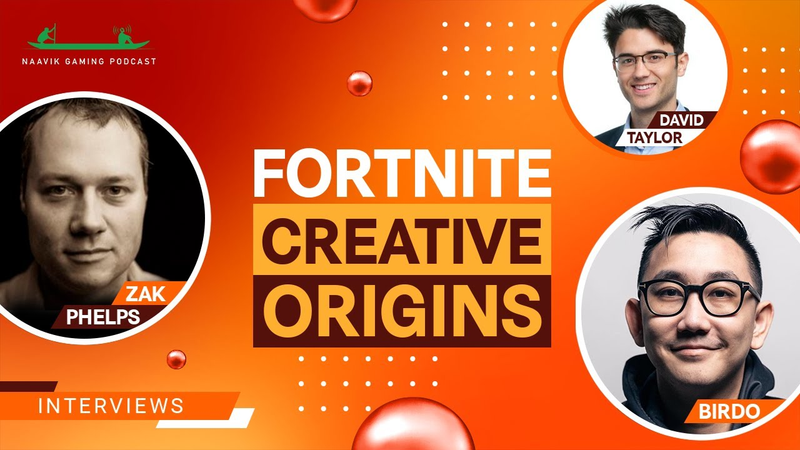
Fortnite Creative Origins
Fortnite Creative has evolved into a dominant user-generated content engine, fundamentally shifting the platform’s engagement model.
- Fortnite Creative now accounts for 35 percent of the platform's total player engagement, marking a fundamental shift toward a user-generated content model.
- Epic Games distributes 320 million dollars annually to a network of over 25,000 creators to incentivize ecosystem growth.
- The transition from a basic playground mode to the Unreal Editor for Fortnite has enabled professional-grade development, though it has also created a steeper learning curve for creators.
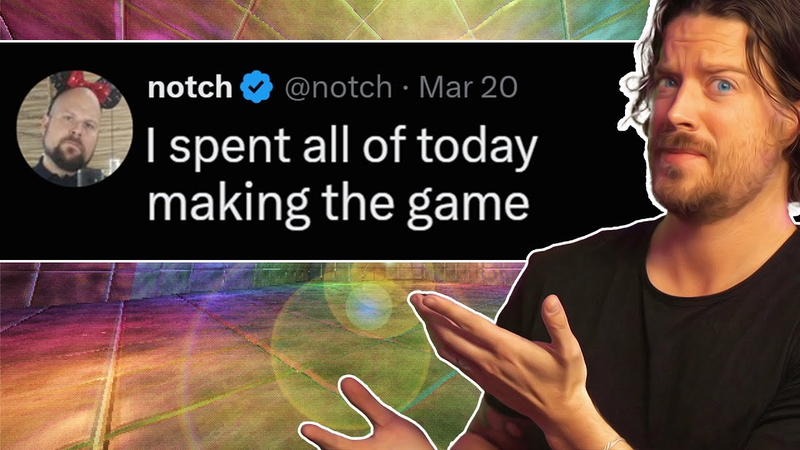
Notch Has A New Indie Game! (Minecraft Creator)
The career trajectory of Markus Notch Persson serves as a primary case study for the challenges of indie game development, the psychological impact of extreme financial success, and the enduring motivation found in the creative process.
- Markus 'Notch' Persson has returned to active game development with the launch of Bitshift Entertainment, a studio currently building a voxel-based dungeon crawler.
- The new project utilizes a custom-built engine rather than industry-standard tools like Unity or Unreal, a strategy intended to achieve a unique visual and technical aesthetic.
- The game is currently evolving into a looter-shooter hybrid, signaling a shift back to the iterative, daily development process that characterized Persson's early career.
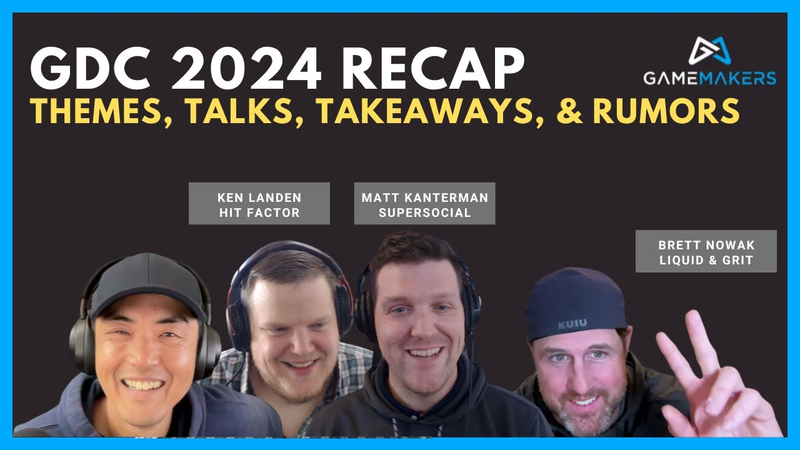
Game Developer Conference (GDC) 2024 Recap: Themes, GDC Talks, Takeaways, and Rumors
The gaming industry is currently undergoing a period of intense rationalization, characterized by a shift away from speculative, large-scale funding toward a model defined by operational efficiency and disciplined, milestone-based capital deployment.
- Venture capital funding for game studios has shifted from 'PowerPoint-based' raises to requiring tangible prototypes, following a period of overinvestment in 2021 and 2022.
- AI is not currently transforming core content pipelines, but its rapid evolution makes it a mandatory inclusion in funding pitch decks to remain competitive for future investment.
- Technical demonstrations at GDC showed that AI can reduce the time required for game designers to create new levels by approximately 65%, though this efficiency is leading to reduced headcount rather than increased production cadence.

GDC Vibes / data.ai x Sensor Tower / Epic Announcements / US v. Apple
The gaming industry is currently navigating a period of significant structural adjustment, defined by a transition from speculative growth toward an era of efficiency and operational discipline.
- Mobile consumer spending is projected to decline in 2024, with 32% of all users and 41% of high-value spenders planning to reduce their in-app purchases.
- The gaming industry is shifting from speculative growth to operational discipline, characterized by widespread layoffs and a trend of experienced developers launching new studios focused on core quality.
- The U.S. Department of Justice’s antitrust lawsuit against Apple and Epic Games’ launch of a mobile store represent a direct challenge to the dominance of closed, vertically integrated mobile ecosystems.
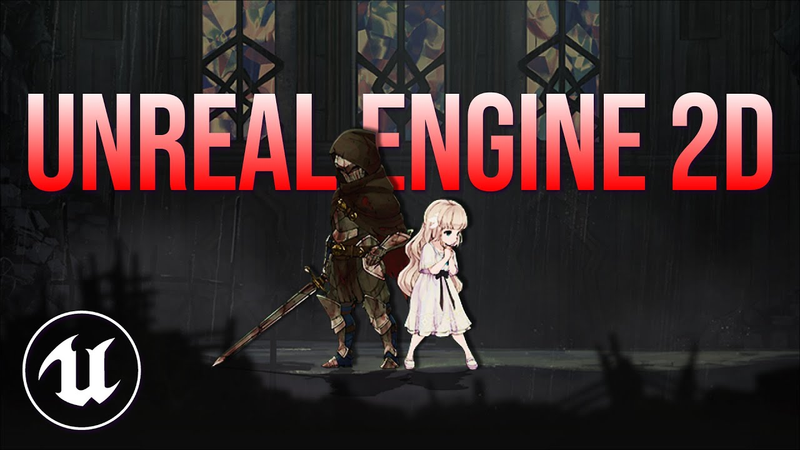
Can You Really Make A 2D Game In Unreal?
Developing 2D games within Unreal Engine is a viable, albeit often overlooked, path for independent developers.
- Unreal Engine is a viable platform for 2D development, evidenced by the success of professional-grade titles such as Octopath Traveler and Ender Lilies.
- The engine's licensing model is highly favorable for independent developers, requiring no royalty payments until a project generates $1 million in gross revenue.
- Performance testing confirms that 2D projects in Unreal can maintain stable frame rates exceeding 300 FPS on hardware like the Steam Deck, debunking concerns that the engine is too resource-heavy for 2D.

Web3 Mech Combat with MetalCore
MetalCore represents a strategic effort to merge high-fidelity, open-world mech combat with integrated blockchain utility.
- MetalCore is a PC-based, open-world mech combat game developed by Studio 369 using Unreal Engine 4, focusing on large-scale, three-way faction warfare.
- The game utilizes Immutable’s middleware to integrate Web3 elements, employing a dual-currency approach that limits blockchain transactions to high-value events to maintain a traditional user experience.
- The economy is driven by the $MCG utility token, allowing players to scavenge resources, craft mechs, and mint them as NFTs for trading or renting.

Games: Once Upon Now in Hollywood
The entertainment industry is undergoing a fundamental shift as video games emerge as the primary source of intellectual property for Hollywood.
- Hollywood is shifting its primary source of intellectual property from comic books to video game franchises, following the commercial success of titles like The Super Mario Bros. Movie and The Last of Us.
- Game developers are increasingly retaining significant creative control, including script and director approval rights, to ensure adaptations remain faithful to their established canon.
- Upfront royalty payments for game-to-film adaptations currently range from $1 million to $20 million per project.
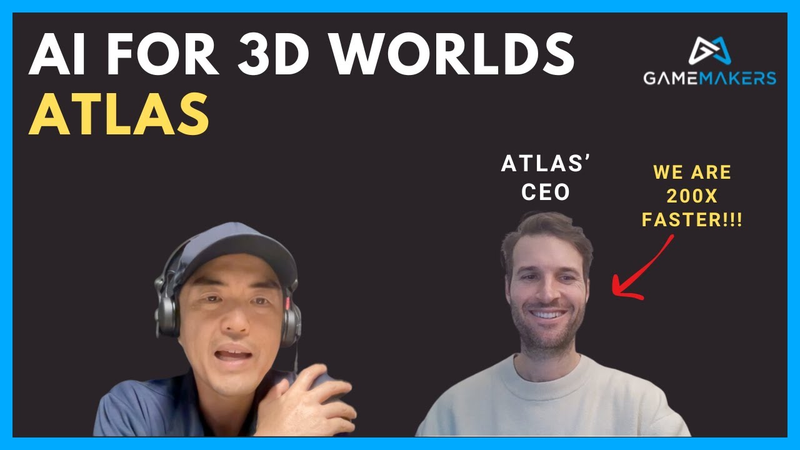
Gaming x AI: How Atlas makes models for 3D worlds 200X faster! (ft. CEO Ben James)
The integration of generative AI into 3D asset production marks a significant shift in game development, enabling the creation of complex, game-ready environments up to 200 times faster than traditional manual modeling.
- Generative AI tools can accelerate 3D asset production by up to 200 times compared to traditional manual modeling methods.
- The technology converts 2D inputs, such as sketches and photographs, into structured 3D geometry that integrates directly into Unity and Unreal Engine pipelines.
- AI-driven workflows are designed to be non-destructive, providing artists with editable, clean assets that allow for rapid iteration rather than replacing human designers.