Unreal
Game
Documents about Unreal

Which Engine Is Best? (Unity / Godot / Unreal / Game Maker)
The selection of a game engine is a strategic decision that significantly influences a developer’s creative output, technical workflow, and long-term career trajectory.
- The choice of game engine is a strategic decision that dictates a developer's creative output, technical workflow, and long-term career trajectory.
- Unreal and Unity offer advanced features like real-time global illumination but present steep learning curves that can lead to bloated, generic-looking projects for small teams.
- Specialized 2D engines like GameMaker provide a constrained environment that promotes faster iteration and a distinct, personal artistic style by avoiding the complexity of 3D pipelines.
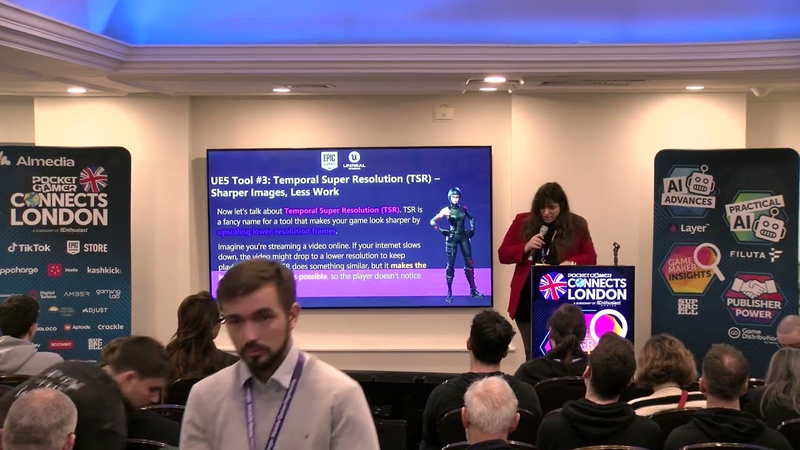
Session: Mobile Gaming With Unreal Engine – Performance, Optimisation, And Fortnite Mobile.
This presentation outlines strategies for optimizing mobile game performance using Unreal Engine, with a specific focus on the technical architecture behind Fortnite Mobile.
- Unreal Engine utilizes three core technologies—Nanite, Lumen, and Temporal Super Resolution (TSR)—to bridge the gap between mobile hardware limitations and AAA-quality visual fidelity.
- Nanite optimizes complex 3D environments by dynamically adjusting geometric detail based on camera distance, functioning similarly to a digital map that only renders high-resolution data when zoomed in.
- Temporal Super Resolution (TSR) enhances performance by rendering at a lower resolution and upscaling the image, allowing mobile games to maintain high visual sharpness without taxing the GPU.
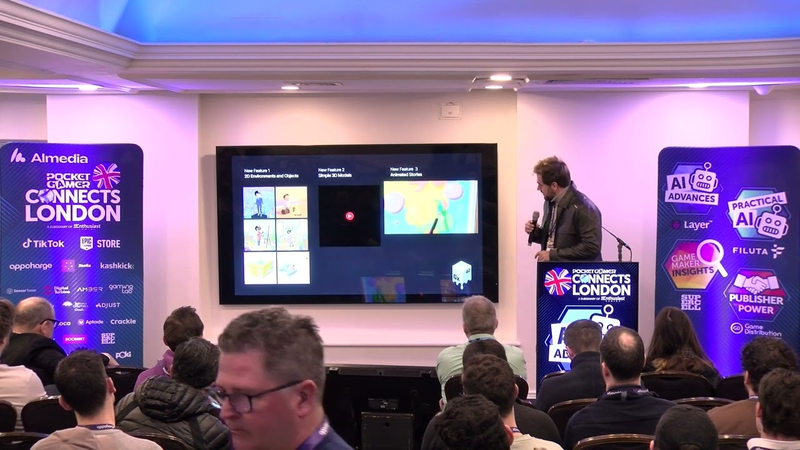
Session: AI Production for Game Studios – How it's Going And What To Expect In 2025.
The current landscape of game development is undergoing a fundamental shift as generative AI transitions from a novel competitive advantage to an operational necessity.
- Generative AI is shifting from a competitive advantage to an operational necessity, with studios focusing on integrating AI into 2D, 3D, video, and audio production pipelines.
- Enterprise adoption is currently hindered by a lack of security compliance, the rapid pace of model innovation, and the difficulty of integrating AI tools with standard engines like Unity, Unreal, and Blender.
- Studios require enterprise-grade security standards, specifically ISO 27001 and SOC 2 certifications, alongside audit trails and copyright-safe environments to scale AI operations.

Project R.I.S.E Alpha Test First Look: Gameplay & impressions! What's next for @supercell?
Project R.I.S.E. represents a strategic shift for Supercell as it explores the cooperative PVE roguelite genre.
- Supercell is diversifying its portfolio by developing Project R.I.S.E., a cooperative PVE roguelite built on Unreal Engine that marks a strategic departure from the company's traditional PVP-focused titles.
- The game features a complex meta-progression system centered on the 'Tower Forge,' which utilizes a currency-based economy and gacha-style mechanics for skill upgrades.
- Technical performance is a critical barrier, with alpha testers reporting severe hardware issues including rapid battery depletion and device overheating.

Why His Game Has Taken 10 Years To Make (Ken Levine) — Full Time Game Dev Podcast Ep. 034
The decade-long development of the title Judas represents a fundamental shift in creative methodology, moving away from traditional production cycles toward a research-heavy, iterative process.
- Ken Levine’s upcoming game, Judas, has been in development for 10 years, reflecting the extreme time and resource investment required for modern high-end game production.
- The 'Narrative Lego' system is a modular design approach that allows developers to create highly personalized, non-linear player experiences by rearranging story elements rather than relying on a strictly linear script.
- Effective game development requires a willingness to kill features that do not serve the core identity of the project, even if the developer initially believes they are essential.

Let's Review Your Games — Ep. 002
The evaluation of independent game titles reveals that success in the current market relies heavily on the synergy between responsive mechanics, cohesive aesthetic presentation, and intuitive user interface design.
- The game 'Constance' was rated the highest among the five titles reviewed, receiving a 9.8 score from the host.
- The review session covered five specific games: Blood Rush, Constance, Crimson Tide, Dragon Paw, and Legends of Mythology.
- Effective UI design, such as centering text for a 'kubrickian' aesthetic, can provide a sense of authority and visual impact in game menus.

TWIG Bonus Episode: Holiday Special (UEFN, Royal Kingdom, and the Steam race)
The Unreal Editor for Fortnite (UEFN) serves primarily as a foundational training ground for Unreal Engine development rather than a viable ecosystem for venture-scale independent studios.
- UEFN is currently better suited as a training ground for Unreal Engine development than as a viable platform for venture-scale independent studios due to limited monetization and restrictive analytics.
- Independent developers on UEFN face an uneven playing field against Epic Games, including a 15% revenue share penalty for projects utilizing licensed intellectual property.
- The mobile puzzle market is closely watching the maturation of Royal Kingdom to determine if it will cannibalize the player base and revenue of established hits like Royal Match.

Why Do Unreal Games All Look This Way — PontyPants
The discussion centers on the growing trend of asset-flipping in the indie game industry and the resulting homogenization of visual aesthetics, particularly among games developed in Unreal Engine.
- Creating custom assets instead of using store-bought ones ensures visual cohesion and prevents the 'generic' look often associated with Unreal Engine 5 titles.
- Relying on third-party assets carries legal risks, as demonstrated by the removal of the game 'Only Up' from Steam due to copyright issues regarding asset ownership.
- Players possess a subconscious ability to distinguish between 'asset-flipped' games and those with custom, intentional design, which can negatively impact the perceived quality of a title.

Session: From Sounds of Chilling Winter to Voices in Outer Space - Audio Behind Frostpunk 2 & …
The development of audio for narrative-driven titles like The Alters relies on maximizing efficiency through modular design and automated middleware workflows.
- To manage limited audio team resources in The Alters, 11 bit studios implemented a modular foley system where designers were provided with a library of pre-defined events, allowing them to implement sounds without requiring constant direct input from sound designers.
- The team utilized Wwise's TSV import feature to manage voiceover implementation, providing a flexible, spreadsheet-based workflow that bypassed the need for constant audio programmer support.
- Base audio in The Alters uses a grid-based system where shared reverbs are dynamically assigned to modules based on their size (ranging from 2 to 8 units plus storage) to simulate realistic room acoustics and sound bleeding.
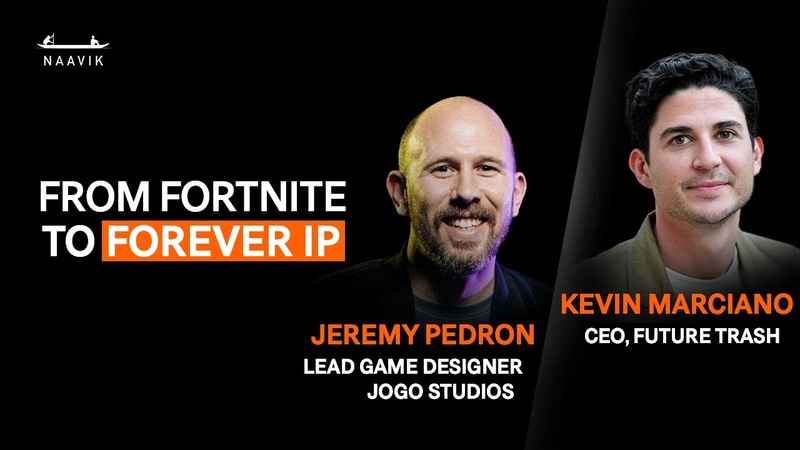
Gaming IP in 2024: How to Create Lasting Impact on UEFN
The Unreal Editor for Fortnite (UEFN) has emerged as a transformative ecosystem for intellectual property development, effectively lowering the barriers to entry that traditionally hindered independent studios.
- UEFN functions as a high-fidelity incubator that allows studios to bypass traditional AAA development cycles by rapidly testing minimum viable products and gathering immediate player feedback.
- Successful studios are adopting open-IP strategies by encouraging community members to build with their assets, which fosters cultural relevance and creates brand moats that extend beyond the Fortnite ecosystem.
- Developers must balance platform-specific optimization, such as designing for algorithmic visibility and thumbnail-friendly aesthetics, with the creation of distinct, narrative-driven brand identities to ensure long-term loyalty.
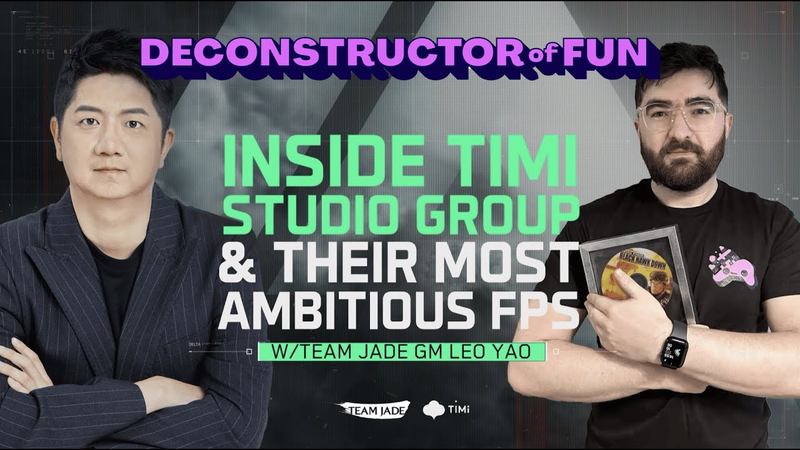
Inside Timi Studio: How Call of Duty Mobile Set the Stage for Delta Force
TiMi Studio Group’s evolution from a mobile-centric developer to a global powerhouse is defined by a strategic shift in platform priority and genre focus.
- TiMi Studio Group is shifting from a mobile-first strategy to a PC-first development model with the upcoming Delta Force title to capture Western audiences accustomed to higher production values.
- The studio has scaled its development team from under 200 people for Call of Duty: Mobile to 400 people for Delta Force to support a more rigorous content cadence.
- Delta Force utilizes Unreal Engine 4 to enable cross-progression across PC, console, and mobile while explicitly excluding cross-play to maintain competitive integrity.
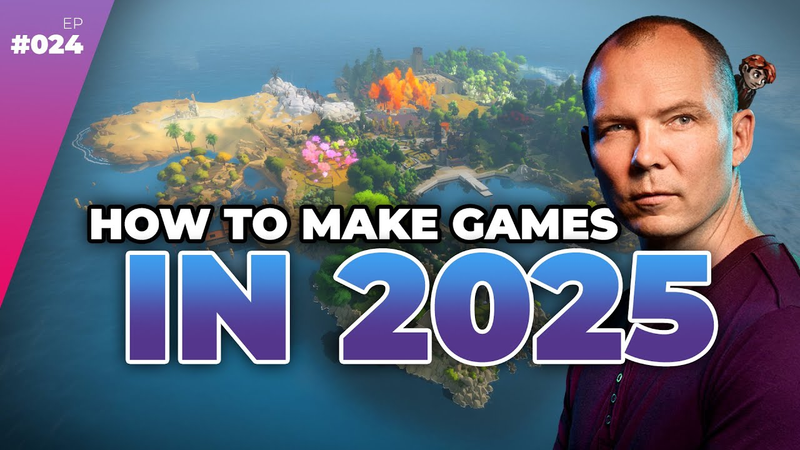
How To Make Indie Games In 2025 w/ Jonathan Blow — Full Time Game Dev Podcast Ep. 024
The contemporary game development landscape faces its most precarious period since the 1980s, defined by a saturated, "red ocean" marketplace where high-quality titles struggle for visibility amidst a deluge of low-effort releases.
- The current game market is a 'red ocean' characterized by extreme saturation, where high-quality titles are frequently obscured by a high volume of low-effort releases.
- Modern game engines like Unity and Unreal have lowered barriers to entry but introduced significant technical overhead, including software bloat and performance inconsistencies.
- Developers should consider building custom engines to regain technical control and efficiency, despite the increased labor and operational demands this approach requires.