Unreal
Game
Documents about Unreal
The Holy Grail of Multiplayer Level Design: Casual and Competitive Maps
The design of multiplayer maps requires balancing the distinct needs of casual and competitive players, a challenge often referred to as the pursuit of a "holy grail" map.
- Successful multiplayer map design requires balancing the needs of casual players, who seek recreational play, with competitive esports players who prioritize strategic depth and tournament viability.
- Designers should categorize player skill progression into layers: basic mechanical movement and shooting, map-specific tactical knowledge, and high-level meta-game strategy such as character bans and team compositions.
- Casual-friendly maps often rely on 'single-scan' layouts that allow players to process the entire environment quickly, whereas competitive maps require complex, multi-option layouts that prevent stale gameplay.
ILMxLAB: Pioneering Immersive Entertainment
Immersive entertainment is undergoing a fundamental transformation, moving away from isolated virtual reality experiences toward a model of persistent, interconnected digital worlds.
- Location-based VR experiences can serve as a primary retail anchor, as evidenced by a Westfield London location where 71.6% of visitors reported the VR attraction was their sole reason for visiting the mall.
- The future of immersive entertainment lies in a multi-platform ecosystem where a single identity and narrative persist across devices, ranging from mobile AR and tablet-based crafting to console gaming and full-immersion VR.
- Hyper-reality experiences like 'The Void' successfully leverage untethered headsets, motion capture, and multi-user networking to create social environments where strangers often leave feeling like close friends.
Your Virtual Game Arts Studio PG Connects Digital #2
The presentation outlines the expansion of Creadits, a creative services firm, into the game art production sector.
- Creadits has expanded from performance marketing into a virtual game art studio, providing on-demand access to a global network of talent for concept art, 3D modeling, animation, rigging, texturing, and lighting.
- The service operates as a scalable extension of internal teams, utilizing centralized management hubs in the US, UK, Japan, and Singapore to maintain quality control while developers retain creative direction.
- Typical project-based outsourcing engagements range from $1,000 to $10,000, with $5,000 serving as the common baseline cost.
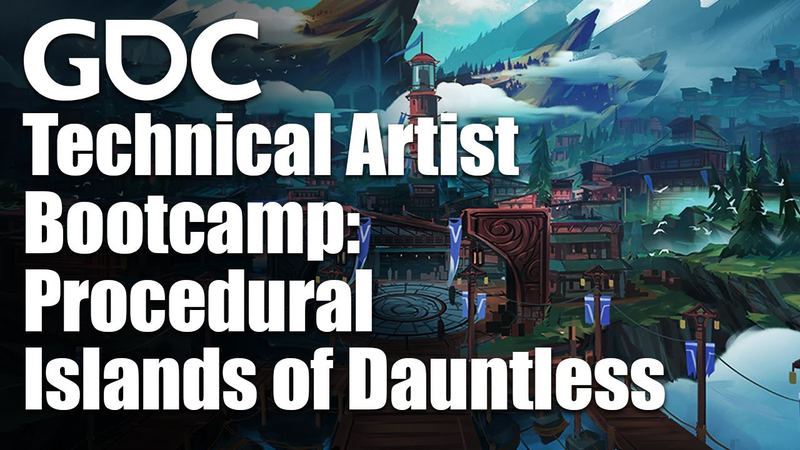
Procedural Islands of 'Dauntless'
The procedural island pipeline developed for the action RPG Dauntless addresses the challenge of creating diverse, high-quality game environments with a small development team.
- The Dauntless island pipeline integrates Houdini Engine with Unreal Engine to automate environment generation while maintaining manual artistic control over topology and foliage.
- The system utilizes a modular 'recipe' architecture that defines biomes by aggregating specific parameters, meshes, and foliage types.
- The generation process follows a multi-stage workflow, beginning with 2D Voronoi-based layout constraints and concluding with 3D landmass and asset instantiation.
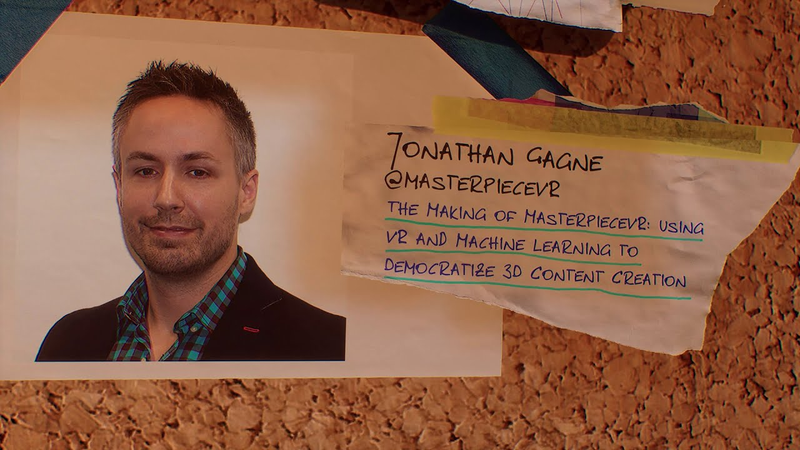
The Making of Masterpiece VR with Jonathan Gagne | GduX.me 2020
The democratization of 3D content creation relies on shifting from traditional 2D interfaces to native virtual reality environments.
- VR-based 3D modeling, supported by machine learning, can increase production speeds by up to 10x and reduce the learning curve by a factor of 200 compared to traditional 2D interfaces.
- Masterpiece VR currently supports a user base of over 30,000 individuals and maintains seamless integration with industry-standard pipelines including Unity, Unreal Engine, and Substance Painter.
- The VR industry is maturing through the combination of high-fidelity software and lightweight, cloud-enabled hardware, with a long-term shift expected toward augmented reality as motion-tracking constraints are resolved.
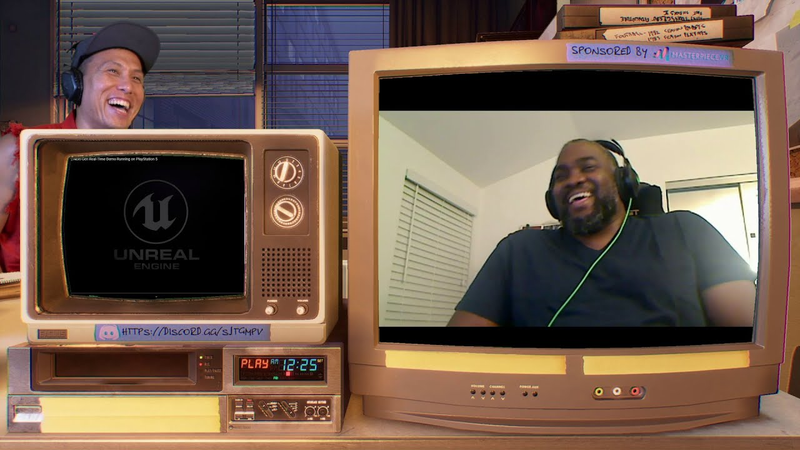
Unreal Engine 5 Reactions, And Last of Us 2 Ending a Generation | Game Dev Unchained Roundtable News
The introduction of Unreal Engine 5 marks a pivotal shift in game development, primarily driven by the integration of Nanite geometry and Lumen real-time global illumination.
- Unreal Engine 5 introduces Nanite geometry and Lumen real-time global illumination to automate light-baking and eliminate traditional optimization bottlenecks for high-fidelity assets.
- Despite technological advancements, Unreal Engine 5 does not remove the need for rigorous character animation, physics simulation, and efficient asset management in full-scale production.
- Industry experts view high-end tech demonstrations as aspirational marketing tools rather than immediate standards, as most studios continue to prioritize cohesive art styles over raw photorealism.
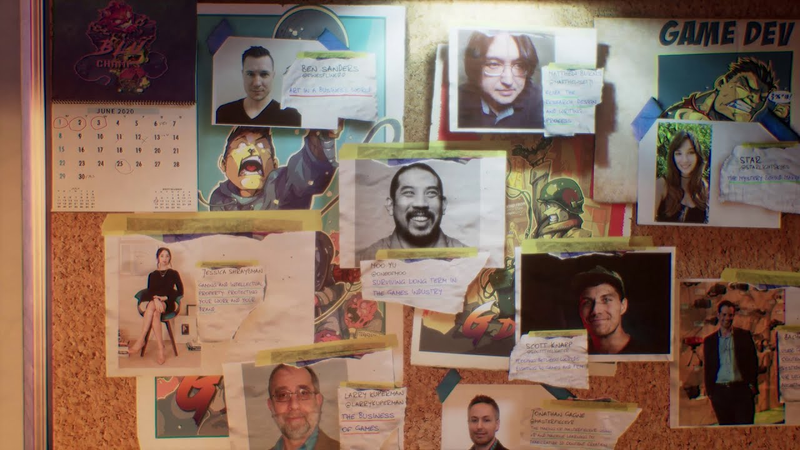
GduX.me 2020 | Day 3
The Game Dev Unchained Expo (GduX.me) 2020 serves as a comprehensive forum for navigating the complexities of the modern gaming industry, emphasizing the necessity of balancing artistic ambition with pragmatic business strategy.
- Long-term success in game development requires shifting focus from 'external quality' (visual polish) to 'internal quality,' which prioritizes business strategy, asset reuse, and process replicability.
- The 2020 pandemic accelerated a permanent shift toward remote work, enabling studios to access global talent pools while necessitating more resilient and flexible operational infrastructures.
- Lighting has evolved from a secondary task into a foundational storytelling discipline that requires balancing artistic composition with GPU performance constraints.
GduX.me 2020 | Day 2
The GduX.me 2020 conference served as a comprehensive forum for independent game developers to navigate the intersection of creative integrity, business acumen, and evolving technical standards.
- Sustainable studio growth requires balancing creative passion with a professionalized business framework, including rigorous time-investment tracking and clear milestone scheduling.
- Unreal Engine 5’s Lumen and Nanite systems enable smaller teams to achieve AAA-quality visual fidelity, though they remain secondary to fundamental artistic discipline and optimization.
- Protecting intellectual property is a critical operational necessity, requiring proactive legal management of user-generated content, robust terms of service, and consistent DMCA compliance.

Enabling Creators: The Unreal Ecosystem | PGC Digital #1
The Unreal ecosystem functions as a comprehensive support framework designed to democratize high-end game development by providing creators with professional-grade technology, financial backing, and distribution infrastructure.
- The Unreal ecosystem provides independent developers with the same professional-grade tools and technology used in large-scale internal projects like Fortnite.
- The Epic Games Store supports developer profitability by offering a competitive 12 percent revenue share model.
- The Unreal MegaGrants program provides direct financial capital to support game development, educational initiatives, and open-source projects that demonstrate technical viability.

PocketGamer.biz Podcast Episode #4: Nintendo's mobile growth, Summer Game Fest, Skate 3 rumours
The gaming industry is undergoing a fundamental structural transformation, characterized by a move away from centralized trade shows like E3 toward decentralized, digital-first publisher showcases.
- Playrix has reached a market inflection point with its portfolio, led by Gardenscapes and Homescapes, which have collectively surpassed 1.1 billion downloads to challenge the dominance of Candy Crush Saga.
- Nintendo maintains a conservative mobile strategy where mobile revenue accounts for only 4% of its total earnings, relying on established titles like Mario Kart Tour and Animal Crossing: Pocket Camp rather than aggressive expansion.
- The gaming industry is shifting from centralized trade shows like E3 toward decentralized, digital-first publisher showcases to maintain direct control over marketing narratives.
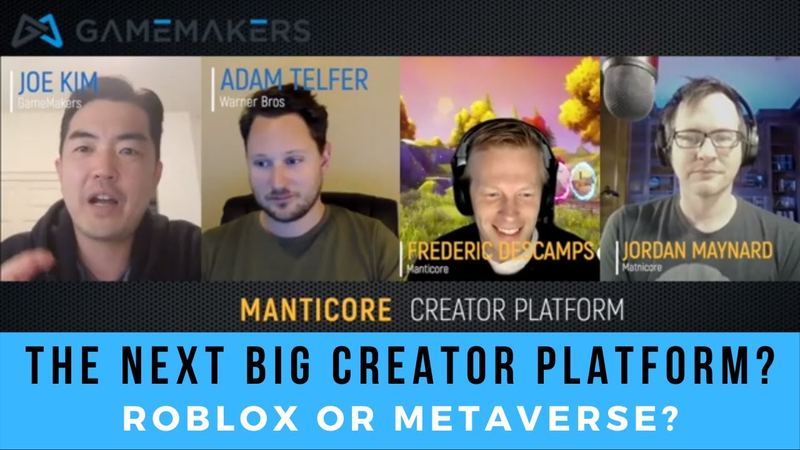
Manticore: The Next Big Game Creator Platform?
Core functions as a comprehensive, two-sided marketplace designed to democratize game development by abstracting the technical complexities of multiplayer infrastructure, live operations, and server management.
- Manticore functions as a two-sided marketplace built on the Unreal Engine 4 runtime that abstracts multiplayer infrastructure, live operations, and server management to democratize game development.
- The platform utilizes a drag-and-drop interface, pre-built assets, and Lua scripting to allow creators to build and publish real-time multiplayer games without traditional, labor-intensive development pipelines.
- A proprietary, cloud-agnostic infrastructure facilitates automatic server deployment and enables seamless, web-like navigation between different game experiences within the ecosystem.
Game VR/AR: Make Your Game Run on Quest (and Look Pretty Too)
Achieving high-quality virtual reality experiences on the Oculus Quest requires a rigorous commitment to performance optimization, as maintaining a consistent frame rate of 60 to 72 frames per second is essential to prevent user discomfort.
- Maintain a consistent frame rate of 60 to 72 frames per second to ensure user comfort and prevent motion sickness on the Oculus Quest.
- Limit draw calls to fewer than 120 per frame to stay within the hardware's strict mobile performance budget.
- Prioritize efficient rendering pipelines by utilizing forward rendering, single-pass stereo, and fixed foveated rendering.