Resident Evil
Game
Documents about Resident Evil
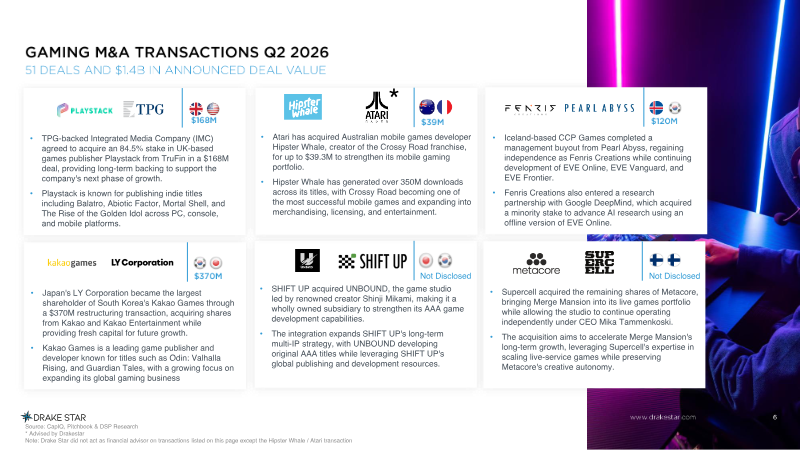
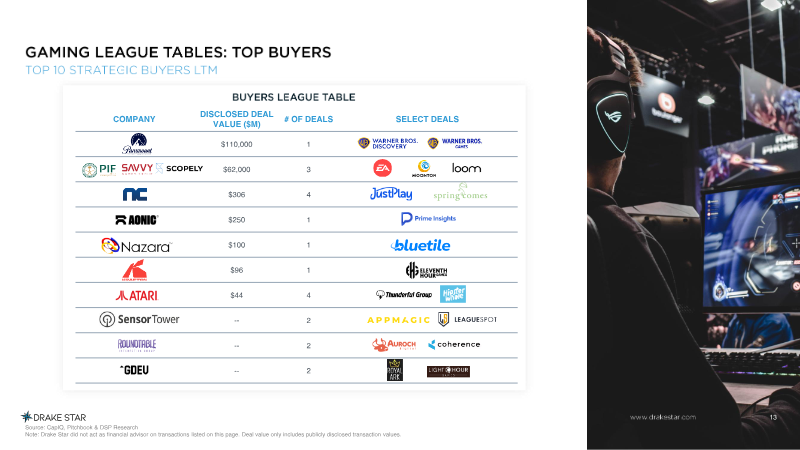
Global Gaming Report: Q2 2026
The global gaming industry experienced a period of financial divergence during the second quarter of 2026, characterized by robust private capital formation despite broader equity market volatility.
- Private gaming financing reached a one-year high in Q2 2026, with 96 deals generating over $2.5 billion in capital.
- Institutional investors committed over $2 billion to new gaming-focused funds, signaling sustained interest in indie projects and long-term content strategies.
- The gaming market showed significant divergence, as Western gaming stocks rose 4.8% while mobile gaming and Asian markets declined by 11.6% and 6.4% respectively.


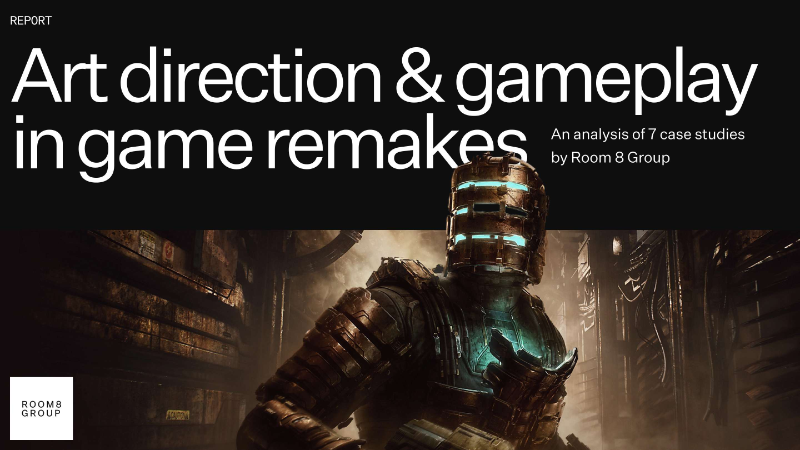
Art Direction in Game Remakes: An Analysis of 7 Case Studies
The pursuit of a successful game remake requires a delicate equilibrium between honoring the original creative spirit and meeting the heightened technical expectations of modern audiences.
- Successful remakes prioritize the recreation of a game's original 'spirit' and atmospheric intent over simple increases in visual resolution.
- Critical and fan reception serves as the primary metric for quality in modern remakes, often outweighing raw financial performance.
- Developers achieve the highest success by rebuilding visual assets from scratch to leverage contemporary lighting and 3D environments, overcoming the technical constraints of original releases.
Mobile Game Market Review: November 2023
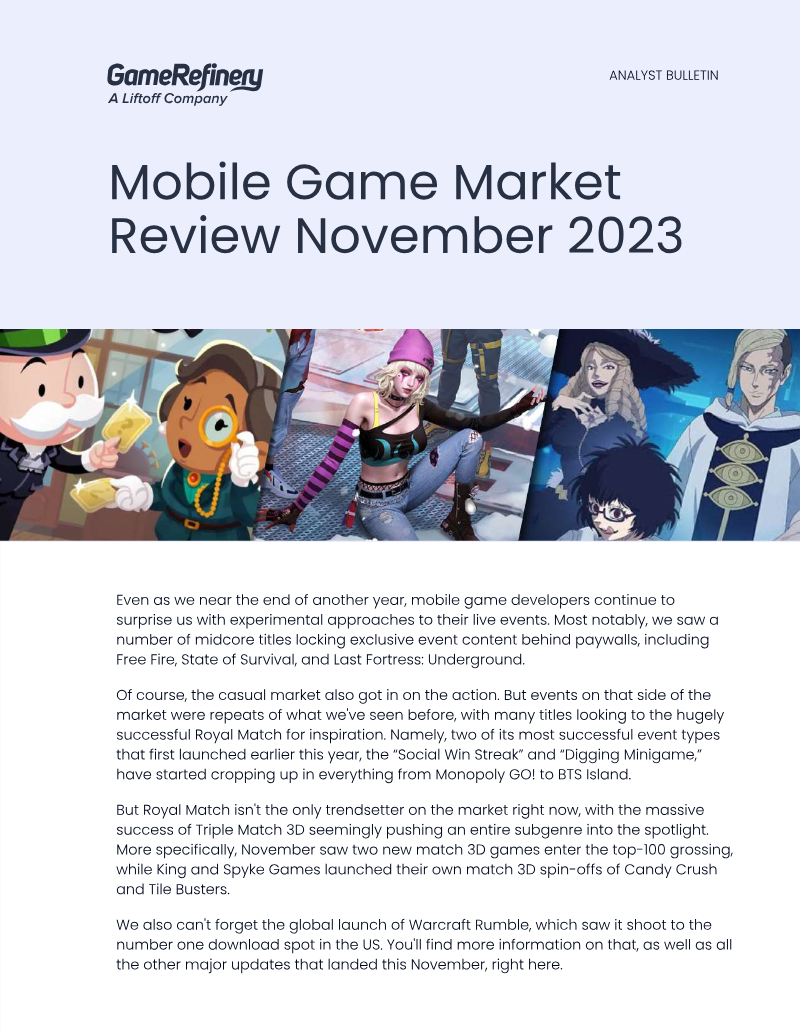
This market review analyzes mobile gaming trends and performance for November 2023, focusing on the United States and Chinese markets.
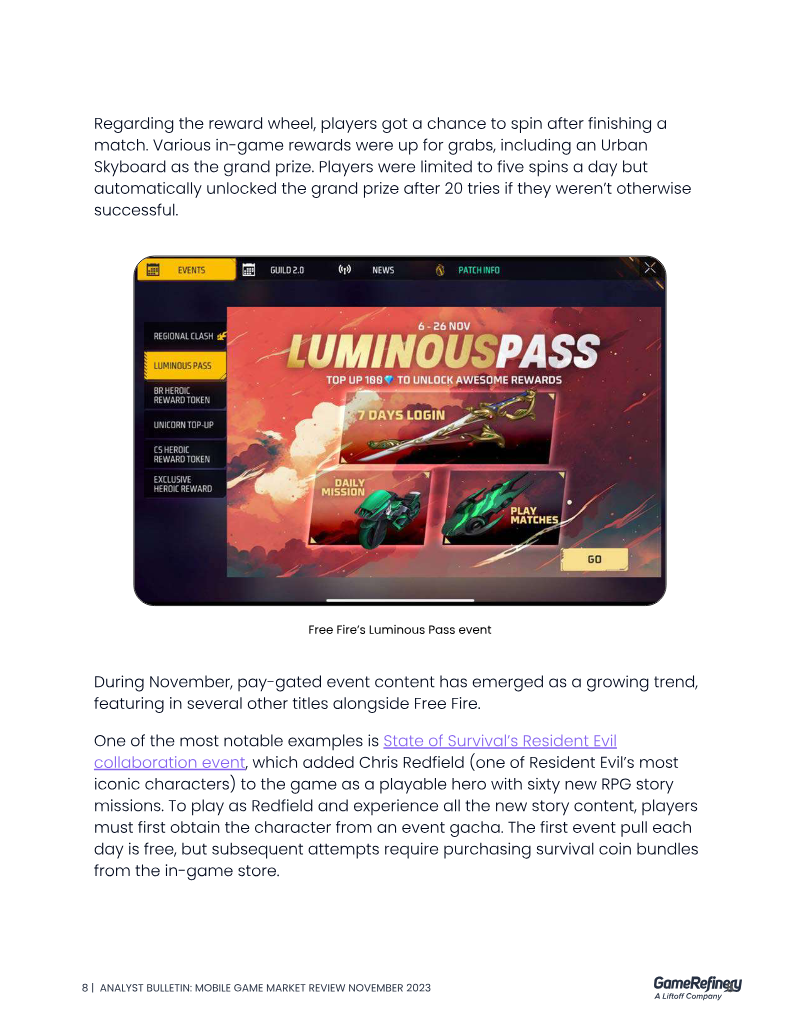
- Midcore mobile titles are increasingly gating core event gameplay and story missions behind paywalls, as seen in Free Fire’s Luminous Pass and State of Survival’s Resident Evil collaboration.
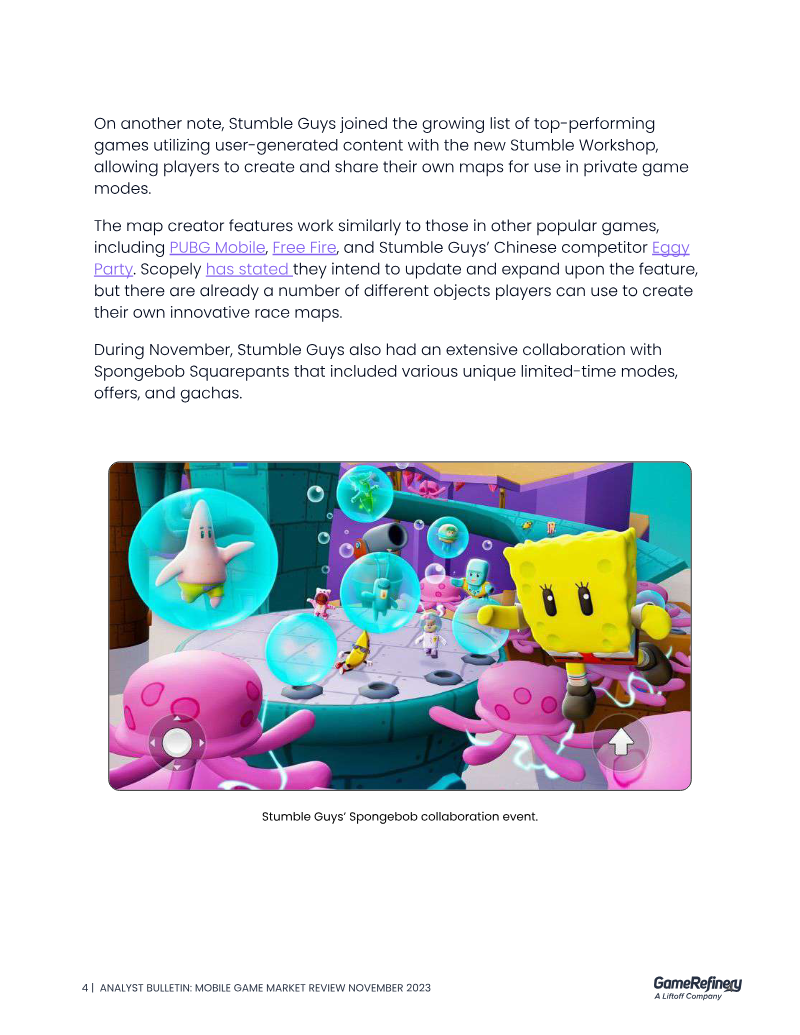
- The casual gaming sector is experiencing widespread mechanical imitation, specifically the adoption of 'Social Win Streak' and 'Digging Minigame' features by major titles like Monopoly GO! and Matchington Mansion.
- The 3D match subgenre is seeing rapid expansion and increased competition from industry leaders, with King and Peak launching Candy Crush 3D and Match Factory to challenge the success of Triple Match 3D.

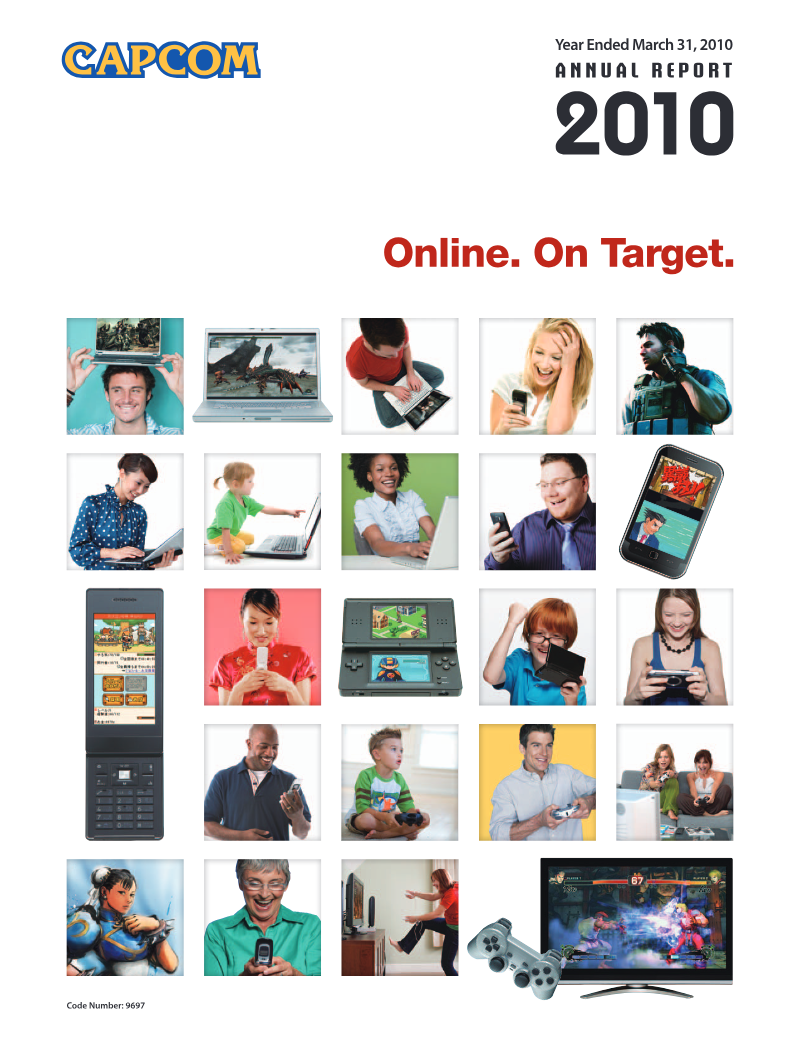
Capcom Annual Report 2010
The 2010 fiscal year represented a period of significant financial contraction and strategic realignment for Capcom.
- Capcom experienced a significant financial downturn in fiscal year 2010, with net sales dropping 27.3% to 66.8 billion yen and net income falling by 73.1%.
- The company is pivoting to a 'Single Content, Multiple Usage' strategy to leverage core IPs like Resident Evil, Street Fighter, and Monster Hunter across consoles, mobile, and online platforms.
- Management implemented a new matrix management structure and separated CEO and COO roles to improve operational accountability and decision-making speed.
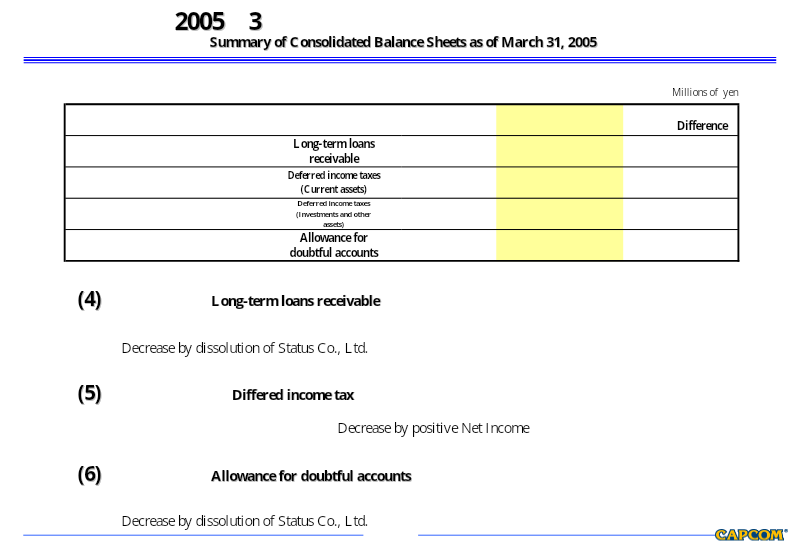
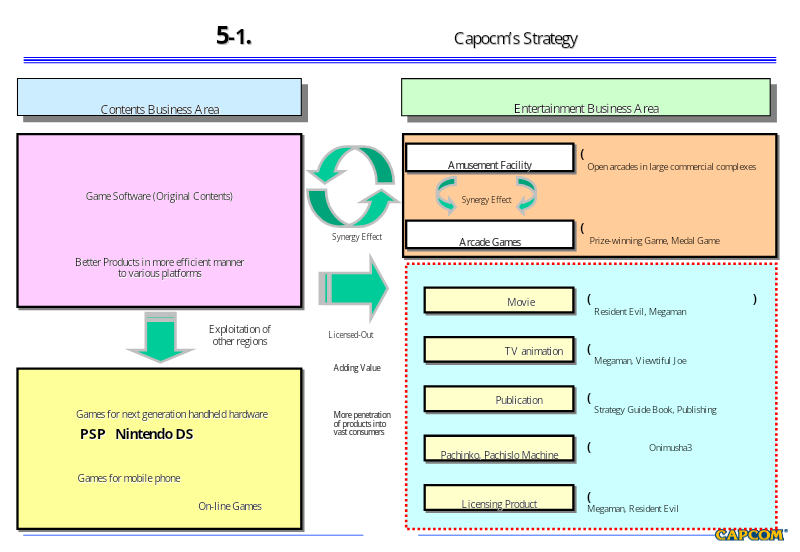
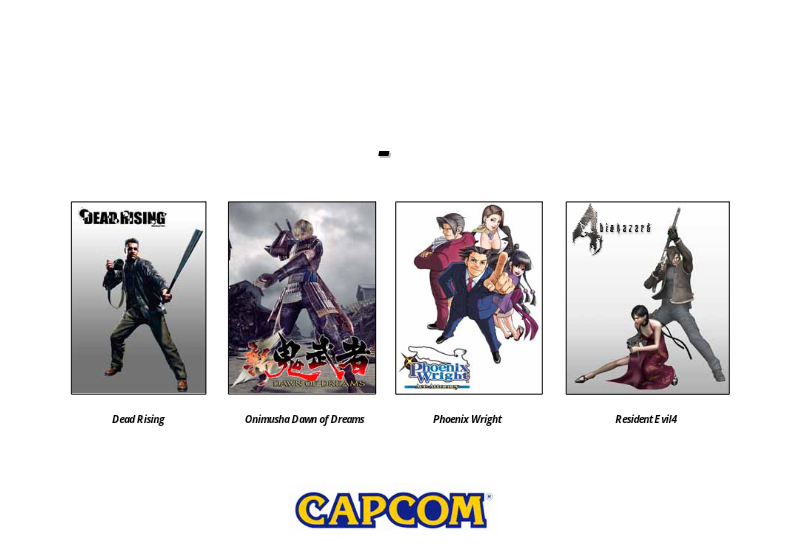
Company Profile: May 2005
Capcom concluded the fiscal year ending March 31, 2005, with robust financial results, reporting net sales of 65.8 billion yen and an operating income of 7.7 billion yen.
- Capcom reported fiscal year 2005 net sales of 65.8 billion yen and an operating income of 7.7 billion yen, driven by Resident Evil 4, Mega Man, and the pachislo LCD business.
- The company projects net sales of 70 billion yen for the 2006 fiscal year, despite acknowledging volatility in the hit-driven home console market.
- Capcom is targeting a global sales distribution ratio of 2:5:3 across Japan, North America, and Europe to mitigate the maturity of the domestic Japanese market.

Live-Streaming Trends Report: Q1 2026
Live-streaming has solidified its position as a primary pillar of global entertainment, reaching a total of 17 billion hours watched during the first quarter of 2026.
- Live-streaming reached 17 billion hours watched in Q1 2026, with TikTok Live accounting for nearly 50% of total volume.
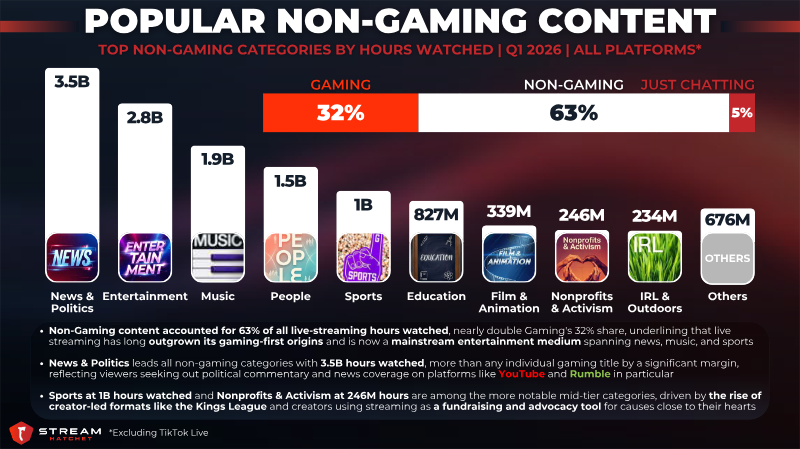
- Non-gaming content now dominates the ecosystem, representing 63% of total viewership with News and Politics as the leading category.
- Gaming engagement is shifting away from traditional esports structures toward mobile-friendly, community-centric, and creator-led events.
Companies behind it

As the documents state it.