
Pokémon GO
GameBy Niantic Labs · Released Jul 6, 2016
Documents about Pokémon GO
Pokémon GO Ends 2016 with Its Strongest Week of U.S. Revenue Since Launch
Pokémon GO experienced a significant resurgence in U.S. revenue during the final week of 2016, marking its strongest performance since the game’s initial launch in July.
- Pokémon GO achieved its highest U.S. weekly revenue since July 2016 during the week of December 26, generating approximately $22.1 million.
- On December 31, 2016, Pokémon GO recorded its best single-day U.S. gross revenue since July 18, totaling approximately $4.9 million.
- During the final week of 2016, Pokémon GO was the No. 1 grossing app in the U.S., outperforming Supercell's Clash of Clans and Clash Royale.
Increasing Revenue 47%: Pokémon GO's Second In-Game Event
The second in-game event for Pokémon GO, held in November 2016, successfully generated a 47 percent increase in global revenue, yet failed to match the performance of the game’s inaugural Halloween event.
- Pokémon GO's November 2016 Thanksgiving event generated over $31 million in gross in-app purchases, representing a 47% revenue increase over the preceding eight-day period.
- The Thanksgiving event's performance was significantly lower than the game's inaugural Halloween event, which saw a 97% revenue increase during its run.
- Daily net revenue averaged $2.7 million during the November event, a 42% increase from the prior period, compared to the Halloween event which saw a 96% increase to an average of $4.7 million per day.

Cultures Combined: Japanese Gachas Are Sweeping F2P Mobile Games in the West
The gacha mechanic, a staple of Japanese mobile gaming since 2011, is increasingly becoming a dominant feature in Western free-to-play (F2P) mobile games.
- Gacha mechanics are increasingly prevalent in Western mobile gaming, with 58% of the top 100 grossing iOS games in the U.S. now utilizing the feature.
- The adoption of gacha mechanics in the U.S. market is accelerating, with the percentage of top 100 grossing games using five or more separate gachas rising from 12% in April 2016 to 17% by November 2016.
- Gachas are highly effective for monetization, as they are estimated to generate over half of the revenue in top-grossing Japanese mobile games and serve as a primary tool for targeting high-spending 'whale' players.
Pokémon GO's First In-Game Event Boosted Its Revenue 133%
The implementation of limited-time in-game events serves as a highly effective strategy for driving mobile game monetization, even in the absence of new content.
- Niantic's first in-game event for Pokémon GO increased worldwide in-app purchase revenue by approximately 133% over a five-day period.
- During the Halloween event (October 25–29, 2016), the game generated $23.3 million in revenue, compared to $10 million during the preceding five-day period (October 18–22).
- Average daily net revenue rose to approximately $4.6 million during the event, up from $2 million per day during the prior week.

Location-based mobile gaming - How did we get here and what’s next after Pokemon GO?
The evolution of location-based mobile gaming represents a significant shift in how brands and retailers engage with consumers, moving beyond traditional digital advertising toward integrated, real-world experiences.
- Location-based gaming provides a closed-loop system for retailers to track measurable attribution for advertising spend by bridging virtual gameplay with physical store traffic.
- Retailers are rapidly adopting infrastructure to support this, with 80 percent of the top 100 U.S. retailers having implemented or planned beacon technology by the end of 2016.
- The integration of physical and digital retail experiences is projected to influence approximately 40 billion dollars in retail sales.
Semi-Annual Financial Results Briefing: Fiscal Year Ending March 2017
Nintendo’s financial performance for the first half of the fiscal year ending March 2017 reflects a strategic transition period defined by the decline of legacy hardware and the cultivation of new growth vectors.
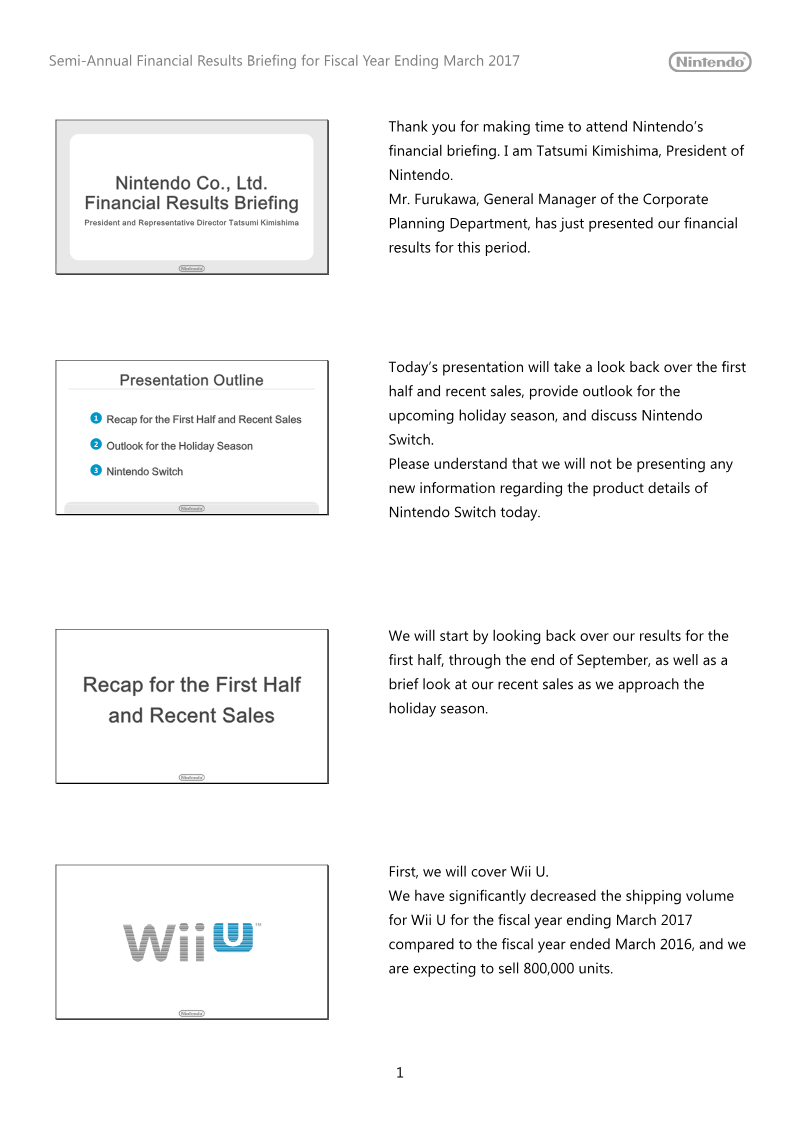
- Nintendo is preparing for the global launch of the Nintendo Switch in March 2017, with an initial shipment target of two million units.
- The company is executing a dual-track strategy to bridge the gap between legacy hardware and the Switch, focusing on 3DS software, the NES Classic Edition, and mobile expansion.
- Nintendo is aggressively entering the smart device market with the launch of Super Mario Run to maintain consumer engagement during the hardware transition.
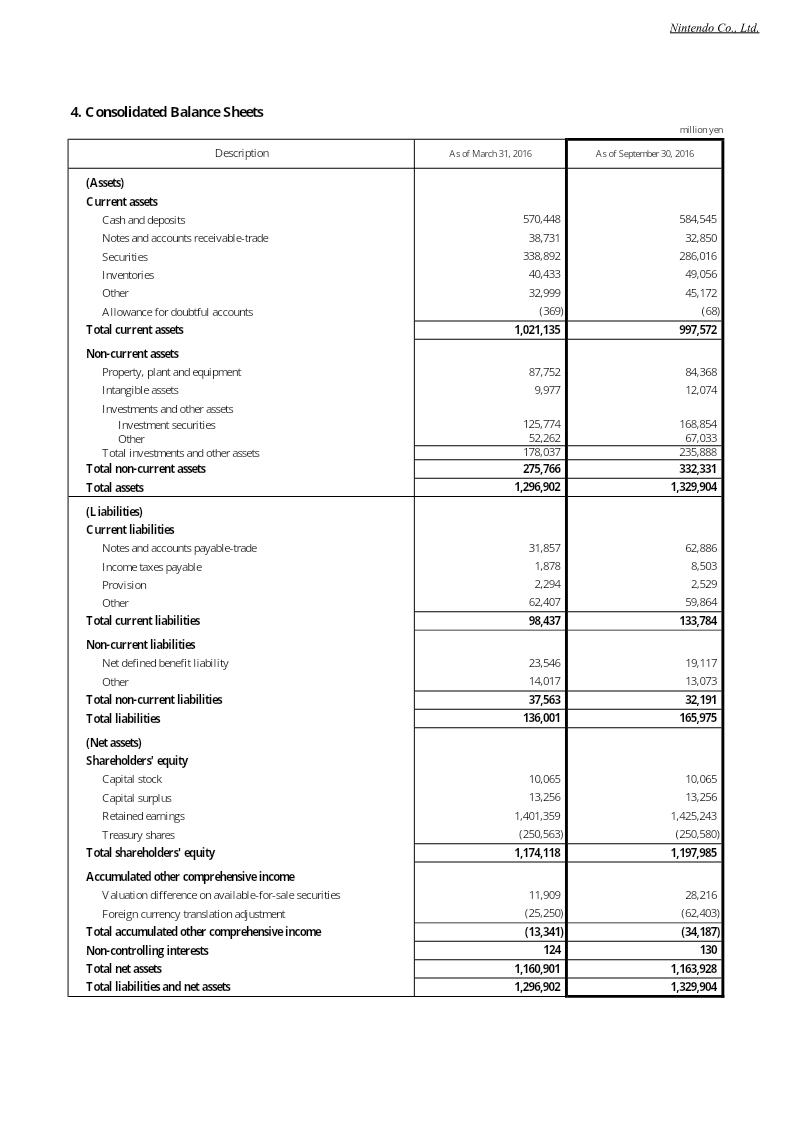
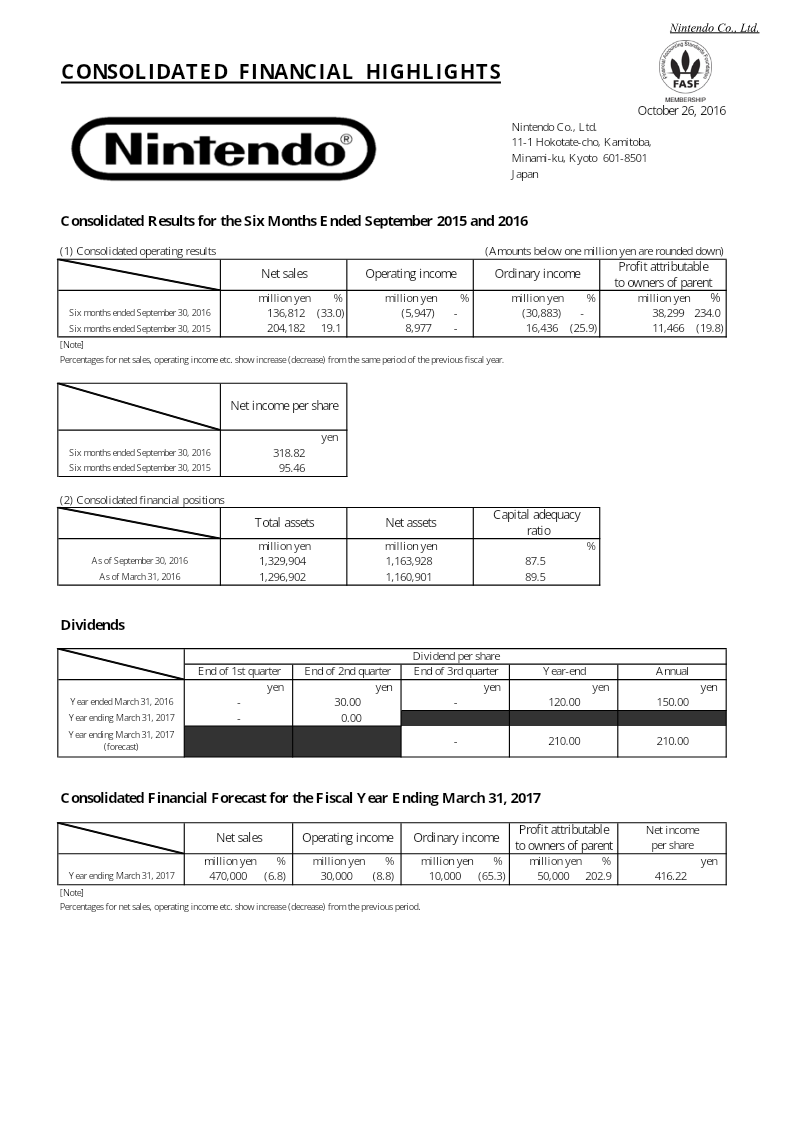
Consolidated Results for the Six Months Ended September 2015 and 2016
Nintendo’s consolidated financial results for the six-month periods ending September 30, 2015, and September 30, 2016, reveal a period of significant operational transition and currency-driven volatility.
- Nintendo reported a 33% decline in net sales to 136.8 billion yen for the six months ending September 30, 2016, resulting in an operating loss of 5.9 billion yen.
- A 62.7 billion yen extraordinary gain from the partial sale of the Seattle Mariners enabled the company to report a net profit of 38.2 billion yen despite operational losses.
- Foreign exchange volatility significantly impacted results, with a strengthening yen contributing to 39.9 billion yen in losses.
4 More Key Features Niantic Needs to Add to Pokémon GO to Keep Us Coming Back
The primary objective is to identify specific game design features that could enhance player retention and monetization for Pokémon GO.
- Daily rewards are essential for retention, with 62% of the top 100 grossing games offering login gifts and 48% utilizing daily quests to drive regular engagement.
- Limited-time in-app purchase (IAP) offers are a critical monetization driver, appearing in 97% of top 100 grossing iOS games as of August 2016, up from 80% in November 2015.
- Competitive features like dynamic leagues and leaderboards are increasingly standard, now present in 56% of top 100 grossing iOS games compared to 43% in late 2015.

Pokémon GO - Designing for Good - Extra Credits
Real-world augmented reality games possess significant potential to foster positive societal outcomes by encouraging players to engage more deeply with their physical environments.
- Location-based AR games can foster positive societal outcomes by gamifying physical activity and encouraging deeper engagement with local environments.
- Developers can transform mundane routines into educational experiences by integrating historical context and cultural heritage information into location-based mechanics.
- Small businesses can utilize location-based mechanics to drive foot traffic and customer engagement, though excessive corporate branding risks undermining the game's immersive quality.
Pokémon GO - Designing for the Real World - Extra Credits
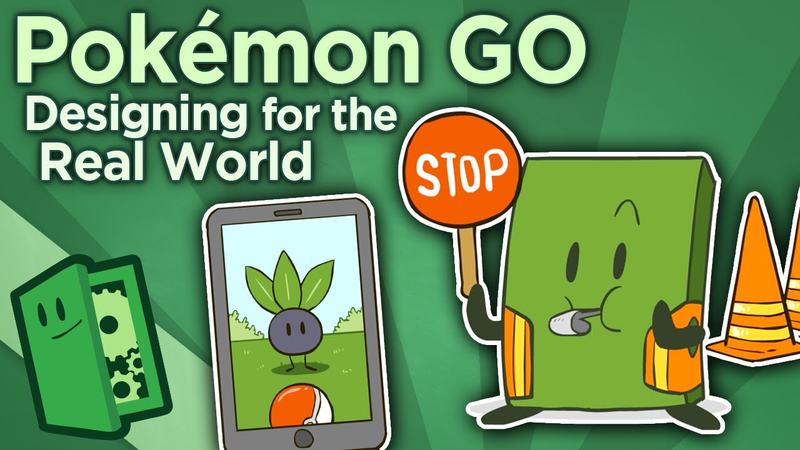
The rapid rise of augmented reality games, exemplified by the massive popularity of Pokémon GO, necessitates a fundamental shift in design philosophy to prioritize real-world safety.
- Developers must prioritize real-world safety in augmented reality games to prevent physical hazards and avoid restrictive government legislation.
- Implementing crowdsourced safety tools allows users to flag dangerous terrain, triggering visual alerts that break immersion to restore player situational awareness.
- Developers should integrate robust safety features for vulnerable players, including parental proximity-tracking, panic buttons, and established emergency protocols for law enforcement cooperation.
Pokémon GO Ends Its Reign as the Top Grossing U.S. iPhone App After 74 Days
Pokémon GO concluded a 74-day streak as the top-grossing iPhone application in the United States in September 2016.
- Pokémon GO ended its 74-day streak as the top-grossing U.S. iPhone app after being unseated by Supercell’s Clash Royale following a content update.
- In terms of consecutive days at the top of the U.S. iPhone grossing chart, Pokémon GO ranks third behind Clash of Clans (347 days) and Candy Crush Saga (109 days).
- Despite losing the top spot in the U.S., Pokémon GO remained the number one grossing iPhone app in eight other countries and maintained the top position on the U.S. Google Play store.
Pokémon GO: Performance Report
This analysis evaluates the commercial performance of Pokémon GO two months after its July 2016 launch, highlighting its status as a significant cultural and financial phenomenon.
- Within two months of its July 6, 2016 launch, Pokémon GO generated over $440 million in worldwide gross revenue.
- The game's financial performance surpassed the global box office earnings of major 2016 summer films like Ghostbusters, Star Trek Beyond, and Warcraft, despite minimal paid advertising.
- As of September 2016, the app maintained a consistent daily worldwide net revenue of more than $4 million.
Companies behind it
- Nianticdeveloper, owner, publisher83
 Scopelypublisher181
 Epic Gamesdeveloper695
 Googlepublisher1,606
 Take-Two Interactivepublisher260
- The Pokémon Companypublisher20
 Nintendoowner1,394
As the documents state it.