1 free read left. Create a free account for unlimited reading + AI research.
Create free account
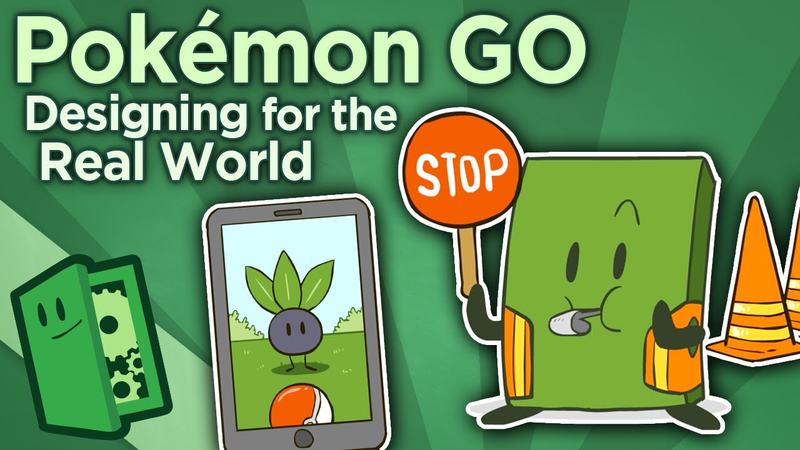
Pokémon GO - Designing for the Real World - Extra Credits
Key insights
5 takeaways- 01Developers must prioritize real-world safety in augmented reality games to prevent physical hazards and avoid restrictive government legislation.
- 02Implementing crowdsourced safety tools allows users to flag dangerous terrain, triggering visual alerts that break immersion to restore player situational awareness.
- 03Proactive self-regulation regarding public and private space usage is a prerequisite for the long-term viability and innovation of the real-world gaming genre.
- 04Developers should integrate robust safety features for vulnerable players, including parental proximity-tracking, panic buttons, and established emergency protocols for law enforcement cooperation.
- 05A streamlined, corporate-level opt-out mechanism is necessary to allow property owners to remove sensitive locations, such as memorials or military sites, from game databases.
Ask AI about this video
Transcript
what can we learn from the game design successes and failures of Pokémon [Music] go more than a year ago we talked on this show about alternate reality games augmented reality games and what happens when gaming spills over into the real world and yeah Ingress has been kicking around for a while but now we've got our first real test case with the massive success of Pokémon go so let's talk about the lessons we've learned and what can be improved as we move forward with the games that lead us into the real world because as difficult as the tech for a game like this is to build Pokémon Go's popularity has ensured that we're going to see a lot more like it and as much fun as Pokémon go is there's still a lot of room to improve on the design there is a lot to cover here so let's split this discussion into two segments first preventing harm second doing good both sides of this are important because as we explore designing games for the real world we need to start thinking in real world terms today I just want to focus on preventing harm because as much
as I hate to say it once you get tens of millions of people playing a game out in a world where not everybody's playing by The Game's rules and there's a lot more going on than just the game itself there's a chance people are going to get hurt I mean we've already seen some examples people have gotten mugged people have walked off cliffs and any injury that could have been prevented with good game design is one injury to many besides if we don't start designing to minimize harm countries are going to have to start making laws regulating these types of games and once people who know very little about games start making different laws in different countries about how real world games have to be run it's going to be a lot harder to create them so minimizing harm first we have to talk about how to keep people from wandering into dangerous areas like Cliffs or active construction sites flooding streams and that sort of thing and while you might think that we can rely on common sense to avoid such hazards the more engrossing the game the less people are going to be aware of their surroundings so we've got to make them more aware of their surroundings from within the game itself now this
part's actually pretty simple Ingress had a system that allowed players to flag Real World locations which have become the Poké stops you know today and while that system was eventually closed off because they felt like they had enough locations a simple system allowing players to pull up a tool that would allow them to paint an area as dangerous would go a long way to making sure that at least the most traveled areas were a bit safer it would work something like this you're playing your real world game and you get to an area like a steep drop and you say to yourself wow somebody could hurt themselves here you pull up your tool to Mark a dangerous location and you start painting over what you think is a reasonable area for people to start being aware that something potentially harmful is nearby this data gets sent to the company running the game and if enough people paint over the same area it starts appearing red on your little GPS map alerting anybody who's absorbed in what's happening on their phone that it's time to start looking around the harder issue both to design for and to accept is the idea of people using these games to lure people to a place where
they're vulnerable back in the early days of MMOs we started to take child safety very seriously part of this was due to the laws around protecting kids on the internet but it was motivated by something greater than that James knew designers who stayed up late having nightmares about a child being harmed because of the game they were making this drove them to think up some really Innovative systems to ensure that their games were as risk-free as possible it's time we do the same with real world games and while having features like a parental mode where the child's game doesn't work unless they're within 100 met of a paired device like the parent cell phone that sort of thing will help but the truth of the matter is eventually Real World game companies are going to have to start working with local law enforcement maybe offering last known GPS coordinates after a crime's been reported or perhaps even including a panic button in their games of course if this button were designed to actually contact emergency services there would also have to be a lot of design work done around preventing people hitting it on accident but still lastly we have to have respect for those not playing the game on the milder end
of things this means taking measures to prevent players from getting in people's way or holding up lines as they attempt to catch their Pokémon but more seriously it means having respect for places that don't want to be a part of your game the Holocaust Museum Arlington National Cemetery even awit berkano has had people showing up to catch Pokémon military installations have had a hard time keeping people from wandering on base for a rare find and governments have even had to issue warnings about taking pictures of secured sites while Pokémon hunting this might need to happen more on a corporate level than a design level but there has to be some easy way to opt out of being a destination for our real world games because frankly our joy shouldn't come at the cost of others if we can do all of these things we can focus on the way cooler way more important part of these real world games the part that James actually wants to talk about the aspect of these games that can be incredibly positive and add to our lives outside of the game rather than just giving us the joy we find in it there is a lot to say about all the
amazing things real world gaming can do though so we're going to save that for next week when we got enough time to do the topic Justice I will see you all then [Music]
Summary
The rapid rise of augmented reality games, exemplified by the massive popularity of Pokémon GO, necessitates a fundamental shift in design philosophy to prioritize real-world safety. As these games transition from niche experiences to mass-market phenomena, developers must proactively address the physical risks inherent in blending digital objectives with uncontrolled environments. Without self-regulation and improved safety-focused design, the industry risks external intervention through restrictive government legislation that could stifle future innovation in the genre.
A primary design challenge involves mitigating physical hazards, such as players wandering into dangerous terrain like cliffs or construction sites while distracted by their devices. To address this, developers should implement crowdsourced safety tools that allow users to flag and paint hazardous areas on the game map. When multiple reports confirm a danger zone, the system should visually alert players to their surroundings, effectively breaking their immersion to ensure situational awareness. Furthermore, developers must address the vulnerability of players, particularly children, by integrating robust safety features such as parental proximity-tracking modes, panic buttons, and established protocols for cooperating with local law enforcement during emergencies.
Beyond individual safety, the industry must cultivate respect for public and private spaces that are not intended for gameplay. High-profile incidents involving sensitive locations, such as memorials, military installations, and secured government sites, highlight the urgent need for a streamlined, corporate-level opt-out mechanism. By allowing property owners to easily remove their locations from game databases, developers can ensure that the pursuit of digital entertainment does not infringe upon the sanctity of private property or public solemnity. Ultimately, establishing these ethical design standards is a prerequisite for exploring the broader, positive potential of real-world gaming.