NieR
Game
Documents about NieR
Top Mobile Games Worldwide for February 2021 by Downloads
This analysis identifies the leading mobile games by global download volume for February 2021.
- Join Clash 3D from Supersonic Studios was the most downloaded mobile game worldwide in February 2021 with approximately 27 million installs, marking a 170-fold increase compared to February 2020.
- Zynga achieved its best month ever for mobile game downloads with 80.5 million global installs, driven by the success of its hyper-casual titles High Heels (24.4 million downloads) and Blob Runner 3D (14.2 million downloads).
- High Heels was the second most installed game globally, with India and the United States accounting for 23.3 percent and 20.3 percent of its total downloads, respectively.

1Q FY2021 Presentation Material: October to December 2020
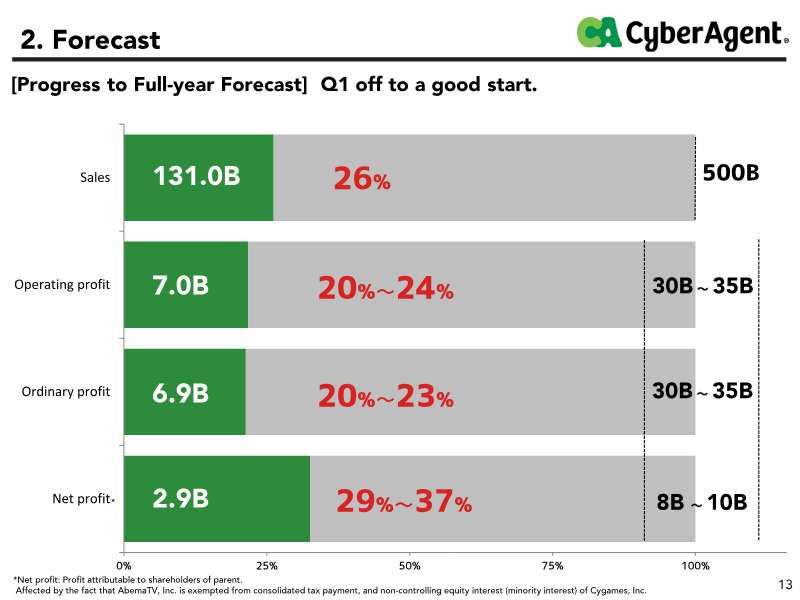
CyberAgent achieved record-high consolidated sales of 131 billion yen during the first quarter of fiscal year 2021, representing a 13.3% year-over-year increase.
- CyberAgent achieved record-high consolidated sales of 131 billion yen in 1Q FY2021, a 13.3% year-over-year increase driven by strong performance in the Media and Advertising segments.
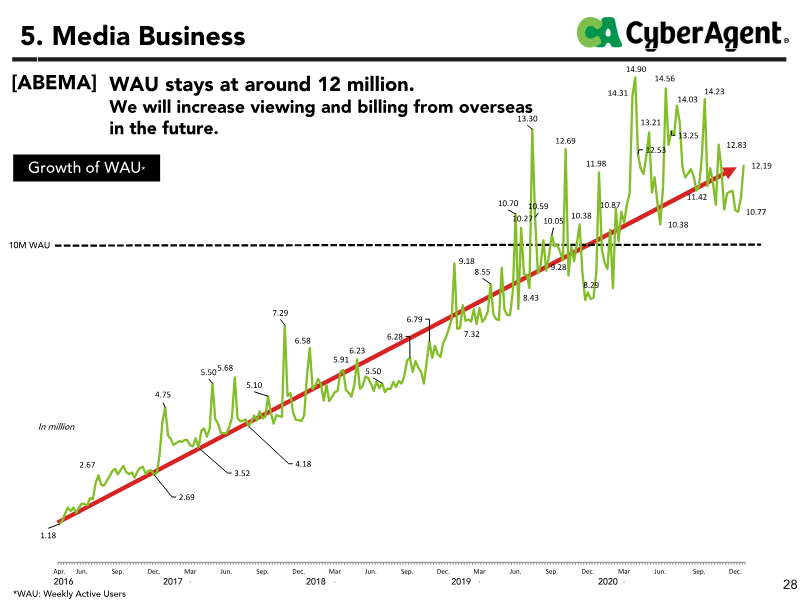
- The Media segment grew revenue by 67% to 20.4 billion yen, bolstered by ABEMA’s premium subscriber base exceeding 921,000 users and an elevenfold increase in WINTICKET transaction volume.
- The Game business experienced a 15% revenue decline to 29.9 billion yen and a 77.8% drop in operating profit, attributed to seasonal factors and increased marketing spend.
Rethinking Failure: Applying Gordon Calleja's Model of Player Involvement to NieR: Automata
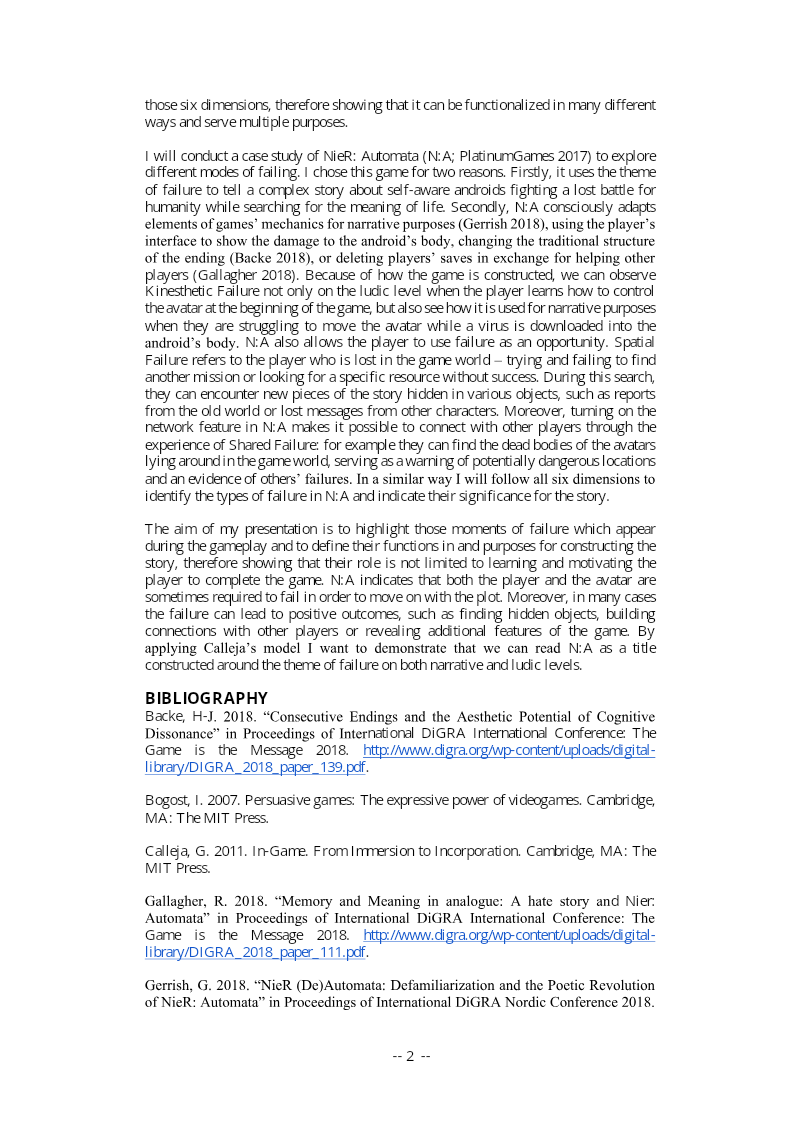
Magdalena Kozyra's paper proposes a new theoretical framework for understanding failure in video games, arguing that the topic has been underexplored in game studies.
- Kozyra argues that failure is underexplored in game studies, where existing scholarship has focused mainly on flow theory and on treating failure as a learning experience rather than a complex phenomenon tied to genre, player communities, or narrative design.
- The paper combines Gordon Calleja's Model of Player Involvement with Jack Halberstam's queer theory, reframing failure as an alternative mode of succeeding, knowing, and playing.
- The case study analyzes NieR: Automata (PlatinumGames, 2017) through Calleja's six dimensions of involvement: kinesthetic, spatial, shared, narrative, affective, and ludic.
The Disrupted Ludic Self: Aesthetics of Character Switching in NieR: Automata
Ryan C. Wright's paper examines how forced changes between playable characters in NieR: Automata (2017) alter the player's relationship to the game's world.
- Ryan C. Wright's paper argues that forced, involuntary character switches in NieR: Automata (2017) alter the player's relationship to the game world, a effect existing scholarship on the game discusses but has not synthesized through theories of perspective, agency, and player-avatar relationships.
- Wright builds on Daniel Vella's ludic subjectivity framework, which replaces "avatar" with the "playable figure" and treats the gameworld as an aesthetic form emerging through play.
- Wright distinguishes involuntary "figure shifts" from voluntary changes such as menu-based character selection, and analyzes three cases: the shift to a small machine tending its fallen brother, the shift to the pacifist machine Pascal, and the rapid A2/9S alternation in the penultimate battle.
Financial Results Briefing: Fiscal Year Ended March 31, 2018
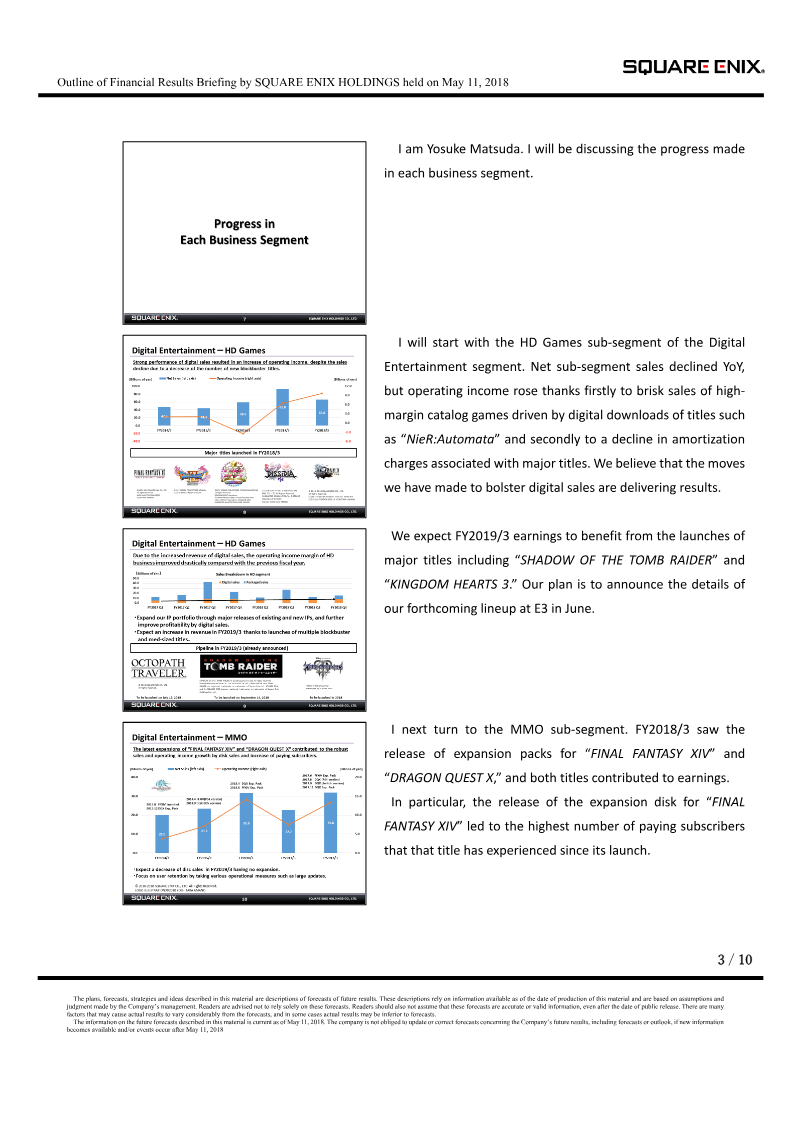
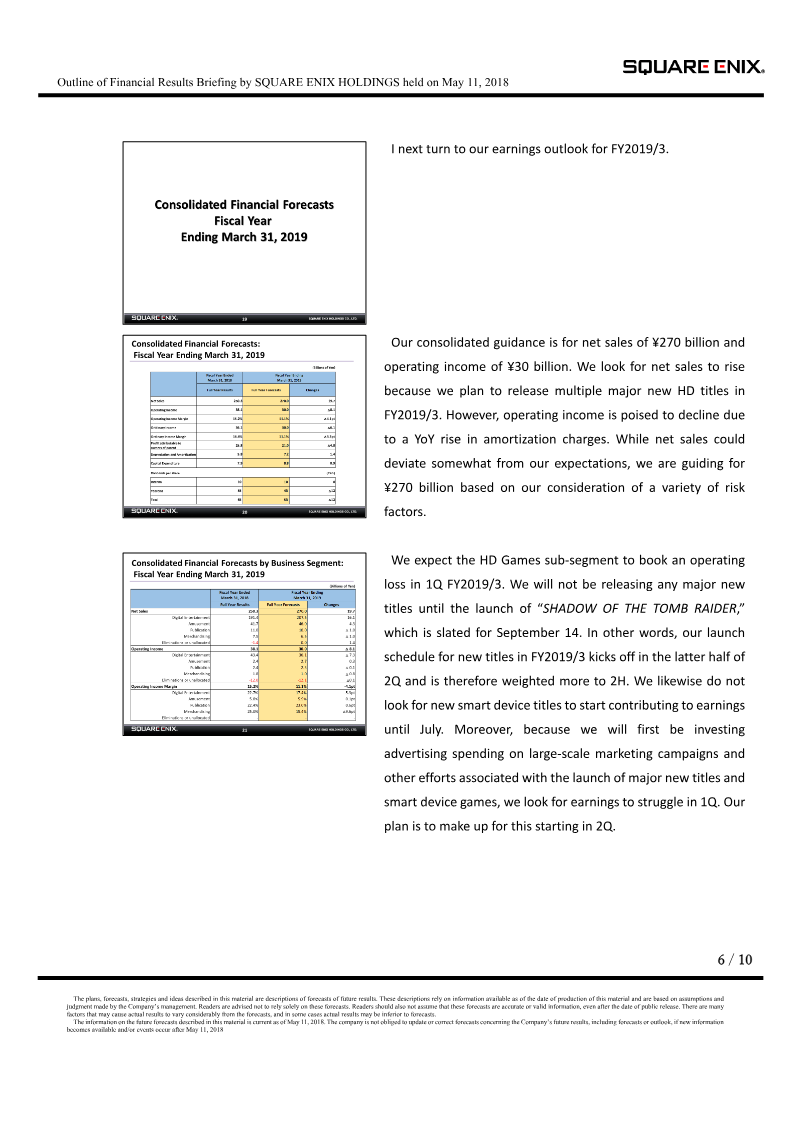
Square Enix Holdings reported its financial results for the fiscal year ended March 31, 2018, highlighting a period of strategic transition toward digital-first revenue streams.
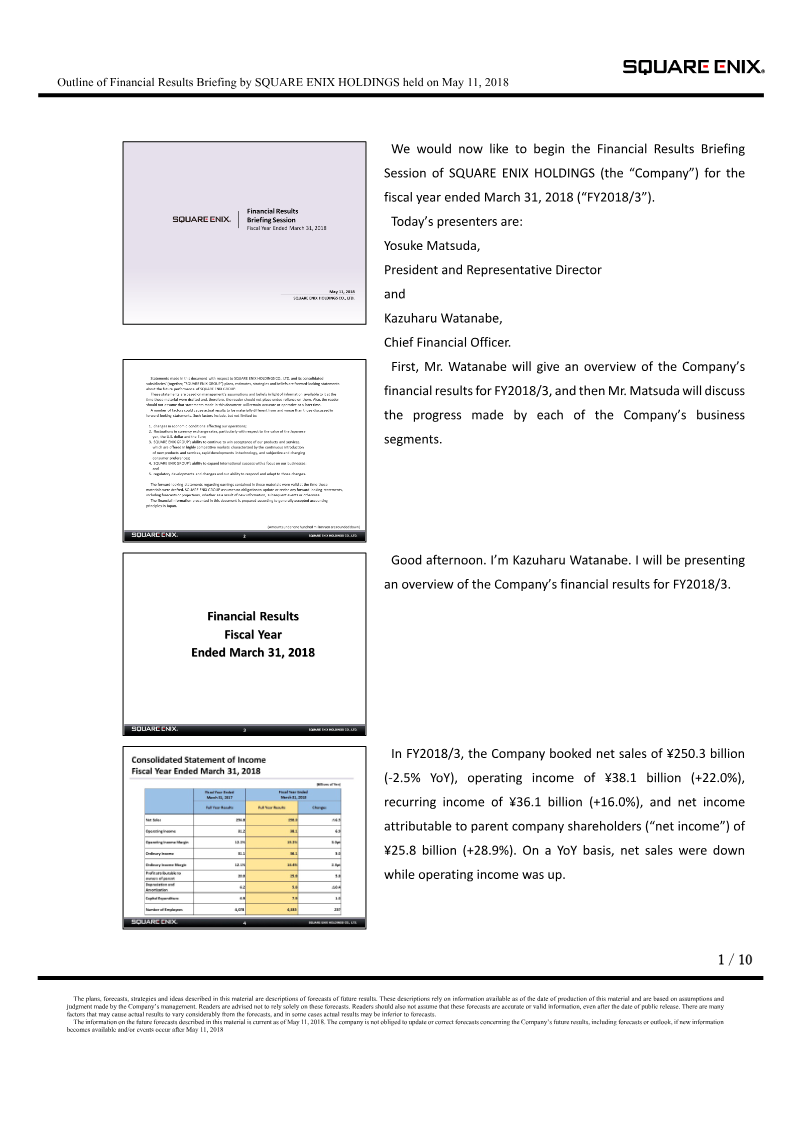
- Square Enix reported FY2018 net sales of ¥250.3 billion, a 2.5% decrease, while operating income grew 22.0% to ¥38.1 billion and net income rose 28.9% to ¥25.8 billion.
- The company set medium-term targets for the fiscal year ending March 31, 2020, aiming for ¥300–400 billion in net sales and ¥40–50 billion in operating income.
- Growth was driven by high-margin digital catalog sales, specifically NieR:Automata, and expansion packs for MMO titles Final Fantasy XIV and Dragon Quest X.
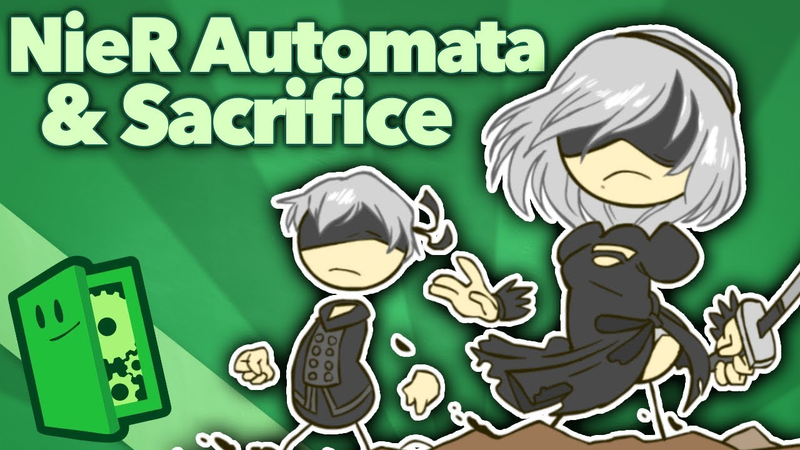
NieR: Automata - Sacrifice and the Meaning of Kindness - Extra Credits
Video games frequently attempt to simulate moral decision-making, yet these systems often fail to foster genuine empathy because they lack meaningful consequences.
- True kindness is defined by the willingness to endure a tangible personal loss for the benefit of another, rather than performing rewarded heroic deeds.
- Most game moral systems fail to foster genuine empathy because they treat altruism as a self-serving transaction that provides narrative praise or gameplay bonuses.
- NieR: Automata forces a moment of pure altruism by offering players the choice to permanently delete their entire save file, including all progress and achievements, to assist an anonymous stranger.

Square Enix Holdings Financial Results Briefing: Nine-Month Period Ended December 31, 2017
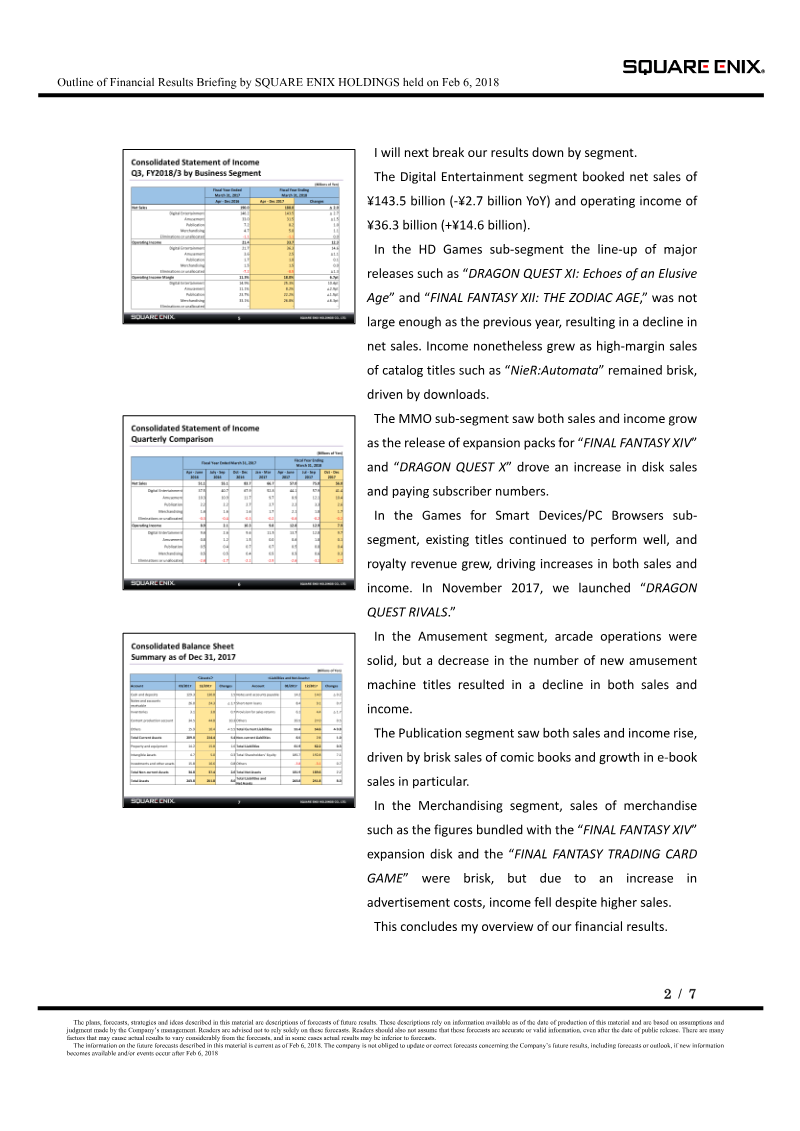
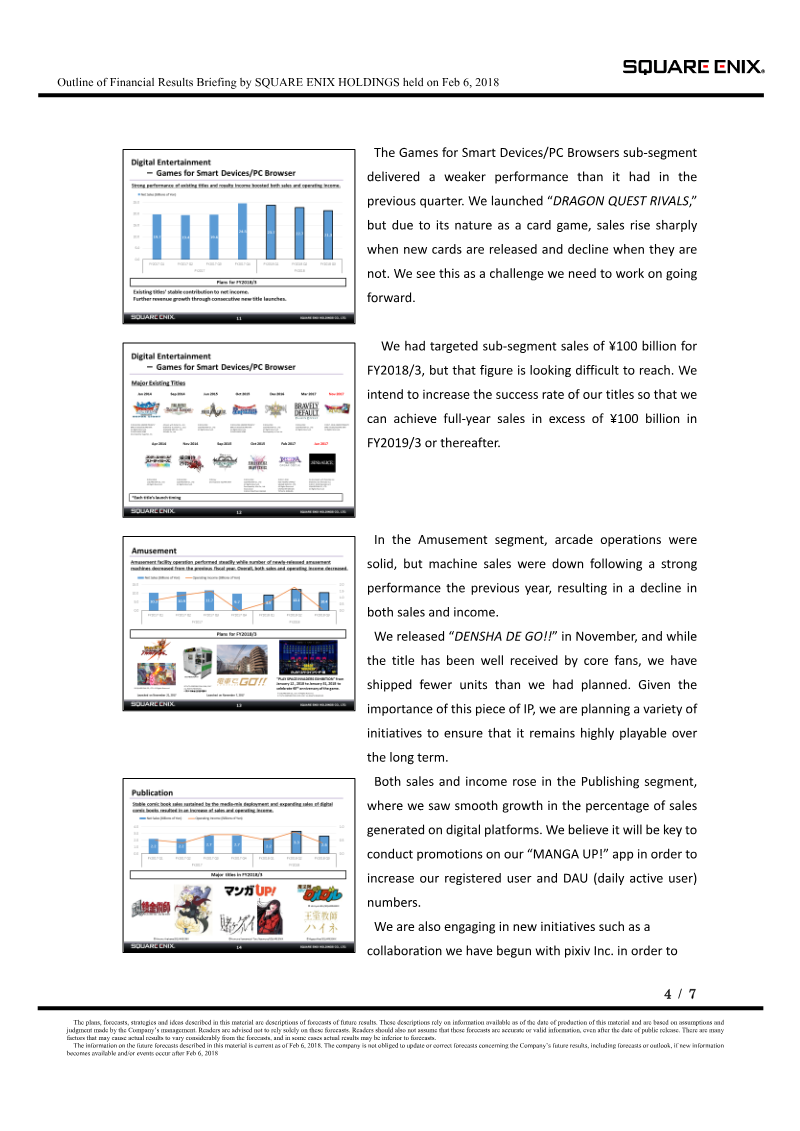
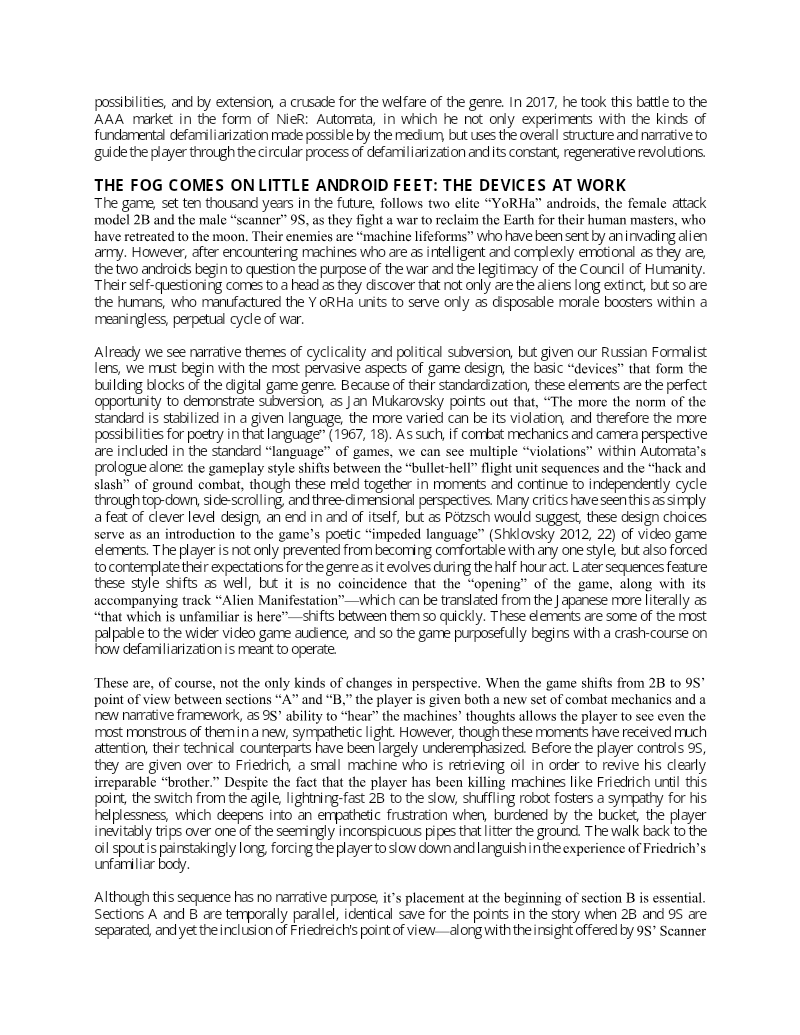
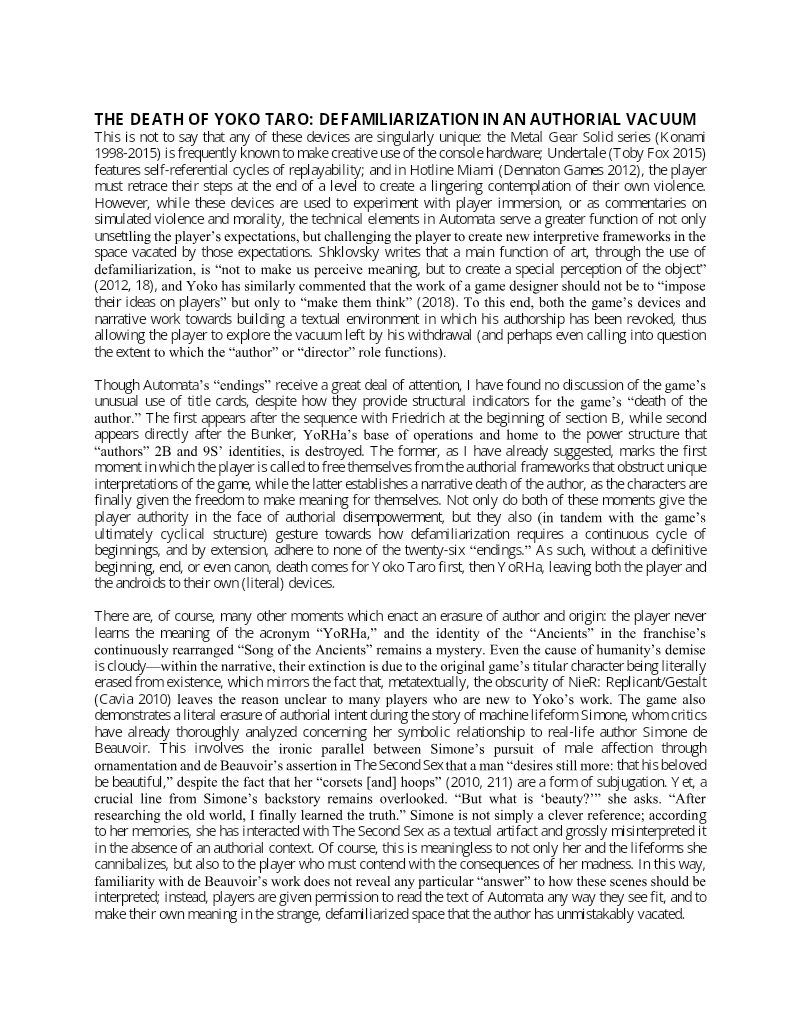
Square Enix Holdings reported its financial results for the nine-month period ending December 31, 2017, demonstrating a trend of declining net sales alongside significant growth in operating and recurring income.
- Square Enix reported a 57.2% increase in operating income to ¥33.7 billion and a 30.9% rise in net income to ¥22.3 billion for the nine-month period ending December 31, 2017, despite a 1.0% decline in net sales to ¥188 billion.
- The Digital Entertainment segment generated ¥143.5 billion in net sales, driven by strong digital catalog sales of titles like NieR:Automata and growth in MMO subscribers following Final Fantasy XIV and Dragon Quest X expansions.
- Profitability improved due to a strategic shift toward high-margin digital sales and catalog monetization, which successfully offset a lighter release schedule for new HD games compared to the previous year.
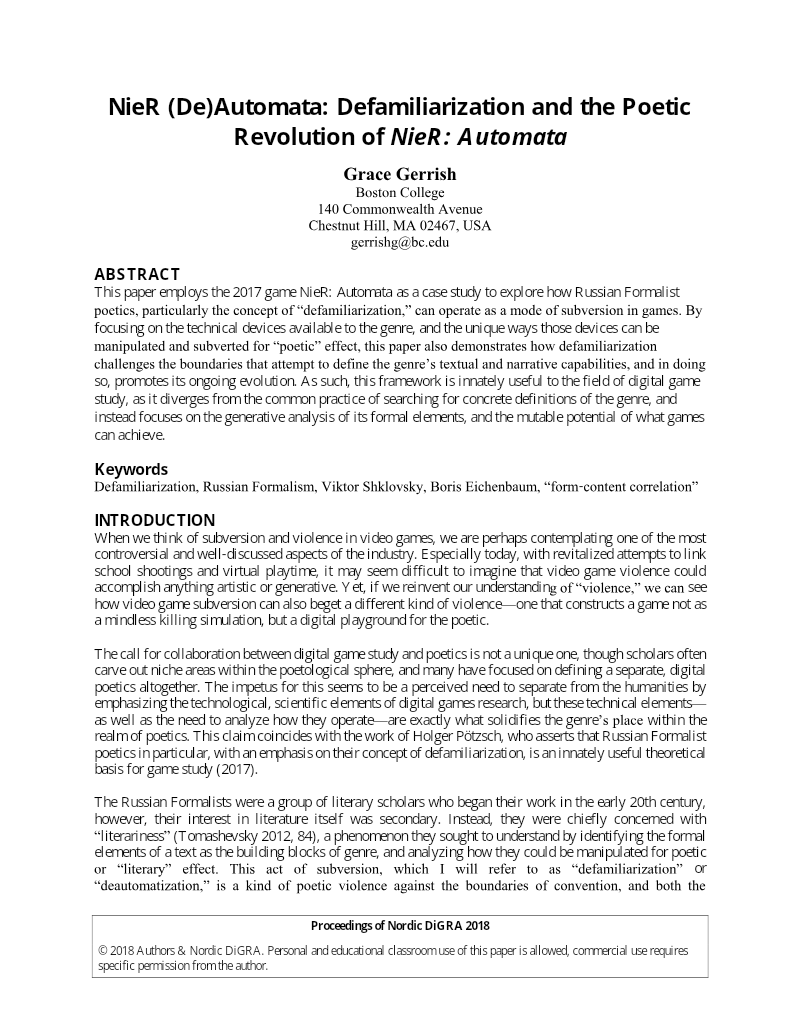
NieR (De)Automata: Defamiliarization and the Poetic Revolution of NieR: Automata
Grace Gerrish's essay examines NieR: Automata as a case study for applying Russian Formalist theory to digital games, with particular attention to defamiliarization (ostranenie).
- Grace Gerrish applies Russian Formalist theory, particularly Shklovsky's and Eichenbaum's concept of defamiliarization (ostranenie), to argue that video games can renew players' perception by subverting their technical devices such as interfaces, controls, music, and language.
- The essay positions NieR: Automata as a deliberate balance between familiar gaming conventions and disruptive innovation, using shifting gameplay styles, perspective changes, and interface-narrative blending to destabilize player expectations about genre.
- Specific examples cited include a treasure-hunt side quest that tricks players into committing violence and the "chaos language" songs that feel both familiar and alien.
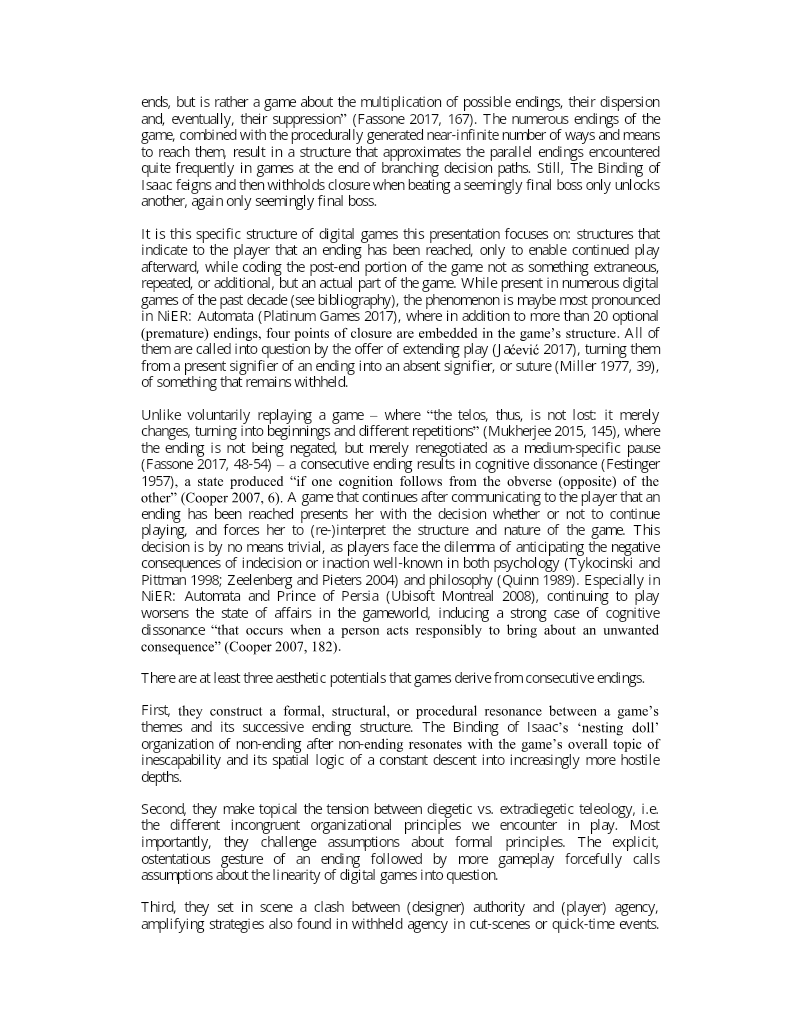
Consecutive Endings and the Aesthetic Potential of Cognitive Dissonance
This extended abstract, presented at DiGRA 2018 by Hans-Joachim Backe of the IT University of Copenhagen, examines a specific structural phenomenon in digital games: "consecutive endings," in which a game signals that it has concluded only to allow play to continue.
- Consecutive endings are a distinct phenotype of game closure in which a game signals that it has concluded yet permits play to continue, building on Riccardo Fassone's (2017) taxonomy of game endings.
- Unlike voluntary replay, consecutive endings create cognitive dissonance: a player facing an apparently final ending must decide whether to continue, weighing the costs of action against inaction and reinterpreting the game's nature in the process.
- The paper draws on Festinger's theory and psychological research on inaction and regret to explain why players experience this dilemma when an ending seems final but play remains possible.


2018 Annual Report
Square Enix's fiscal year ended March 31, 2018 combined slightly lower revenue with record profitability, and its annual report sets out both the financial results and the governance and strategic framework behind them.
- The Square Enix Group's corporate philosophy is to spread happiness globally by providing unforgettable experiences through high-quality content, services, and products.
- The company aims to be a leader in entertainment, focusing on creating new and creative gaming experiences and hit titles, particularly revisiting development and operation organizations in the fiscal year ending March 2019.
- In the fiscal year ended March 2018, the Amusement segment saw sales decline to ¥41.7 billion and operating income fall to ¥2.4 billion, despite stable arcade operations and new initiatives like renovating Taito Station Mizonokuchi and opening MEGARAGE.
Square Enix Holdings 2Q FY2018/3 Financial Results Briefing
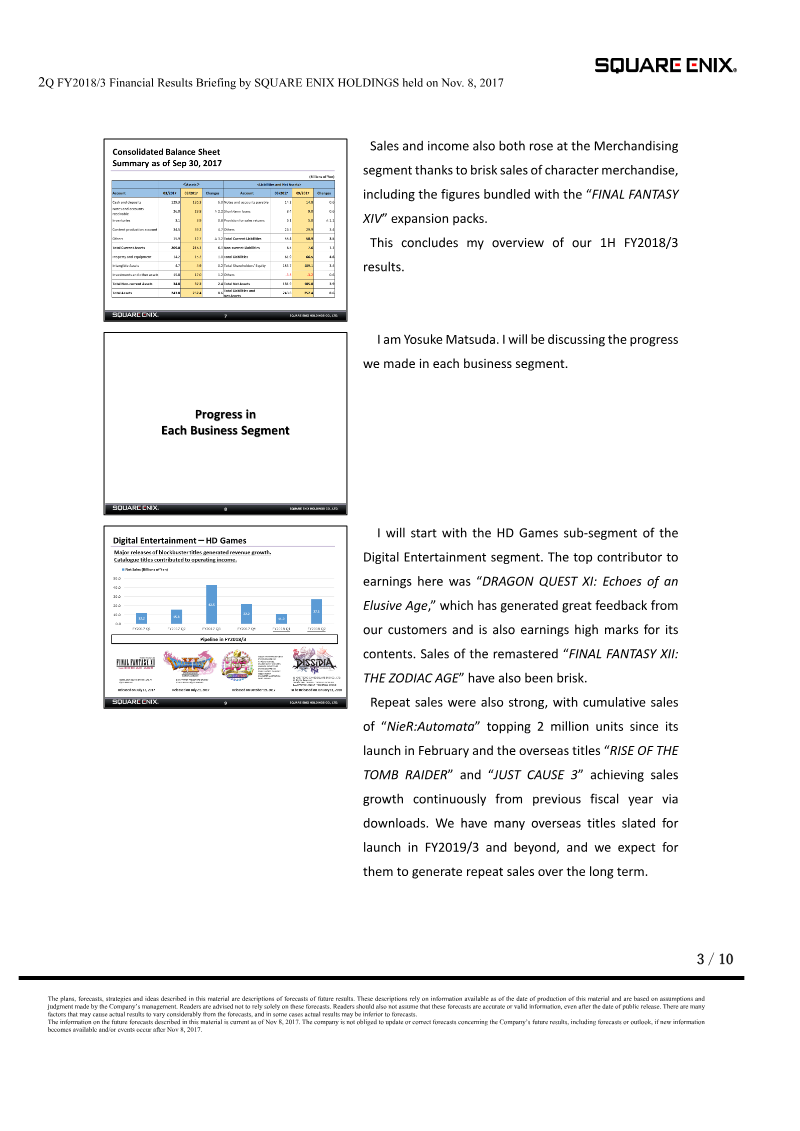
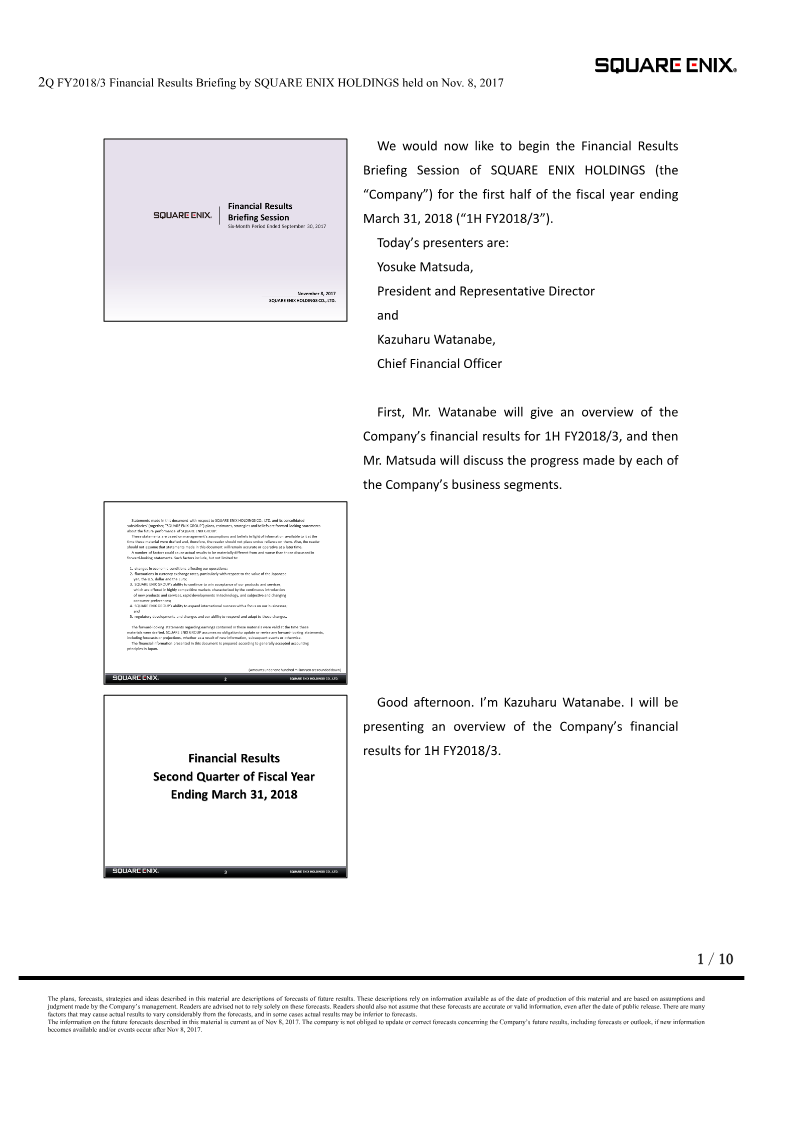
Square Enix Holdings reported strong financial growth for the first half of the fiscal year ending March 31, 2018.
- Square Enix reported strong 1H FY2018/3 financial growth, with net sales reaching ¥132.0 billion (+24.2% YoY) and operating income rising 132.3% to ¥25.8 billion.
- The Digital Entertainment segment drove performance through the launch of 'DRAGON QUEST XI,' increased paying subscribers for 'FINAL FANTASY XIV,' and strong catalog title downloads.
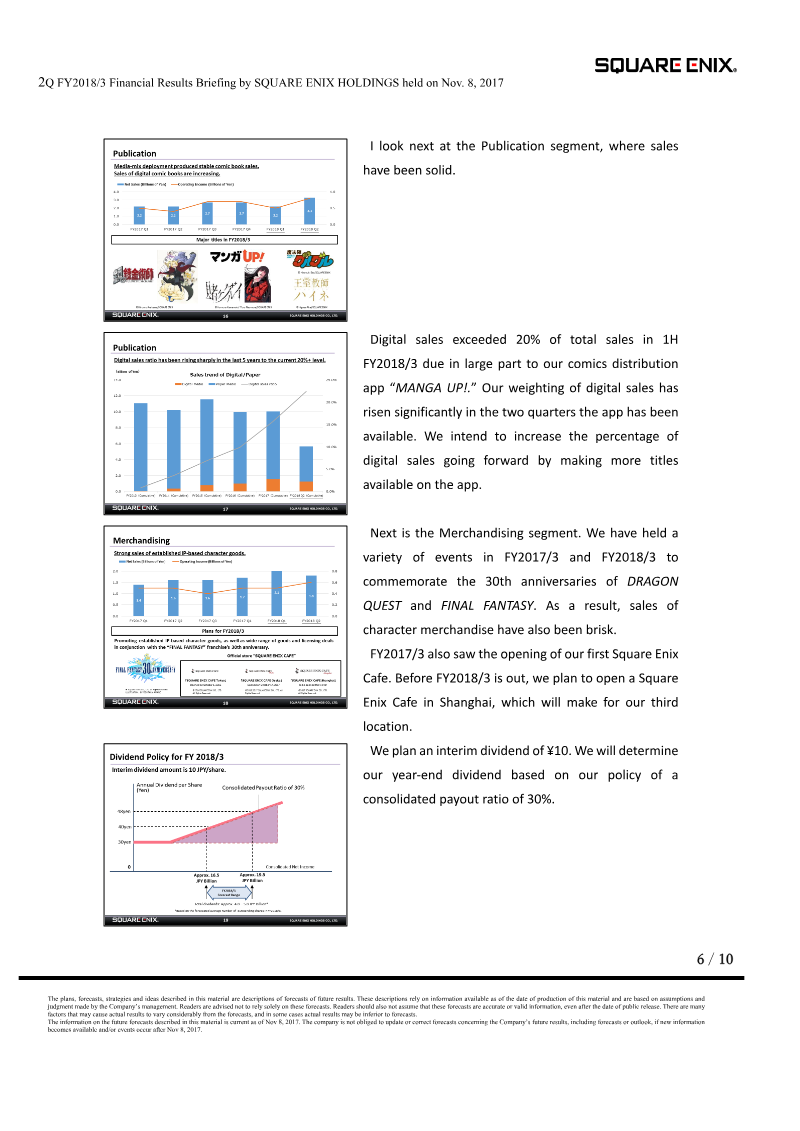
- Digital sales in the Publication segment exceeded 20% of total revenue in 1H FY2018/3, largely attributed to the success of the 'MANGA UP!' distribution app.
Square Enix Holdings 1Q FY2018/3 Financial Results Briefing
Square Enix Holdings reported strong financial growth for the first quarter of the fiscal year ending March 31, 2018.
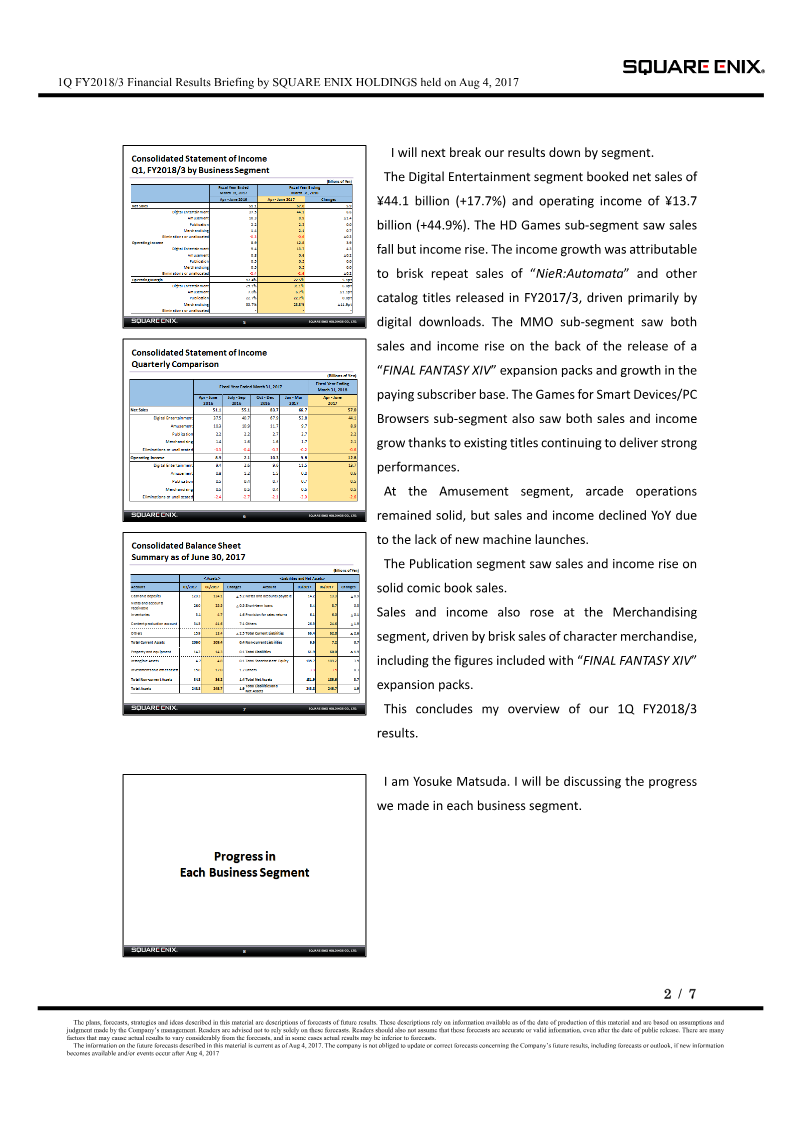
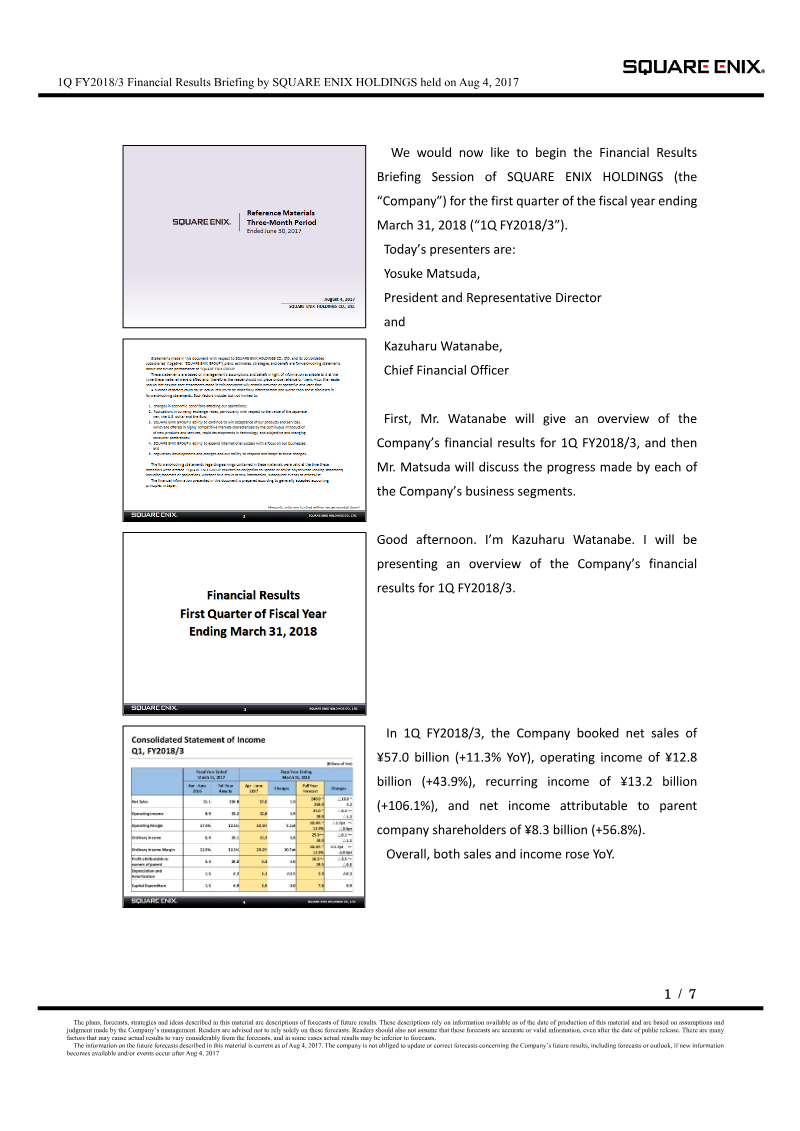
- Square Enix reported strong 1Q FY2018/3 results with net sales of ¥57.0 billion (+11.3% YoY) and operating income of ¥12.8 billion (+43.9% YoY).
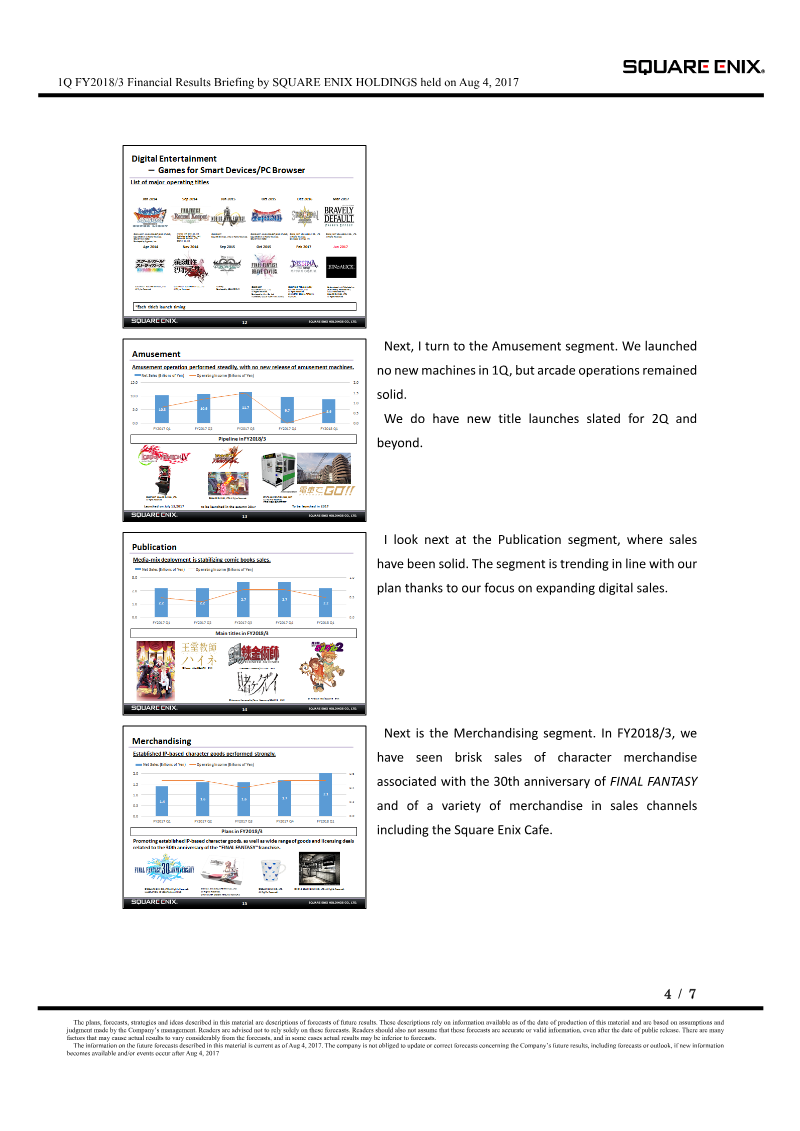
- The Digital Entertainment segment drove performance with ¥44.1 billion in sales (+17.7% YoY) and ¥13.7 billion in operating income (+44.9% YoY).
- Growth in the Games for Smart Devices/PC Browsers sub-segment was bolstered by license fees from Machine Zone, Inc. for 'FINAL FANTASY XV: A NEW EMPIRE' and the full amortization of development costs for existing titles.