NieR
Game
Documents about NieR
Flesh, Plastic, Stone: The Pleasure of Recontextualised Character Models
This paper examines moments in videogames that deliberately undercut their own fictions by presenting characters as inert digital objects rather than lifelike agents.
- The paper argues that moments where game characters appear as statues, toys, or museum exhibits deliberately undercut their own fictions and produce a distinctive pleasure, analysed through theories of comedy, the ontology of digital objects, and the cultural status of games.
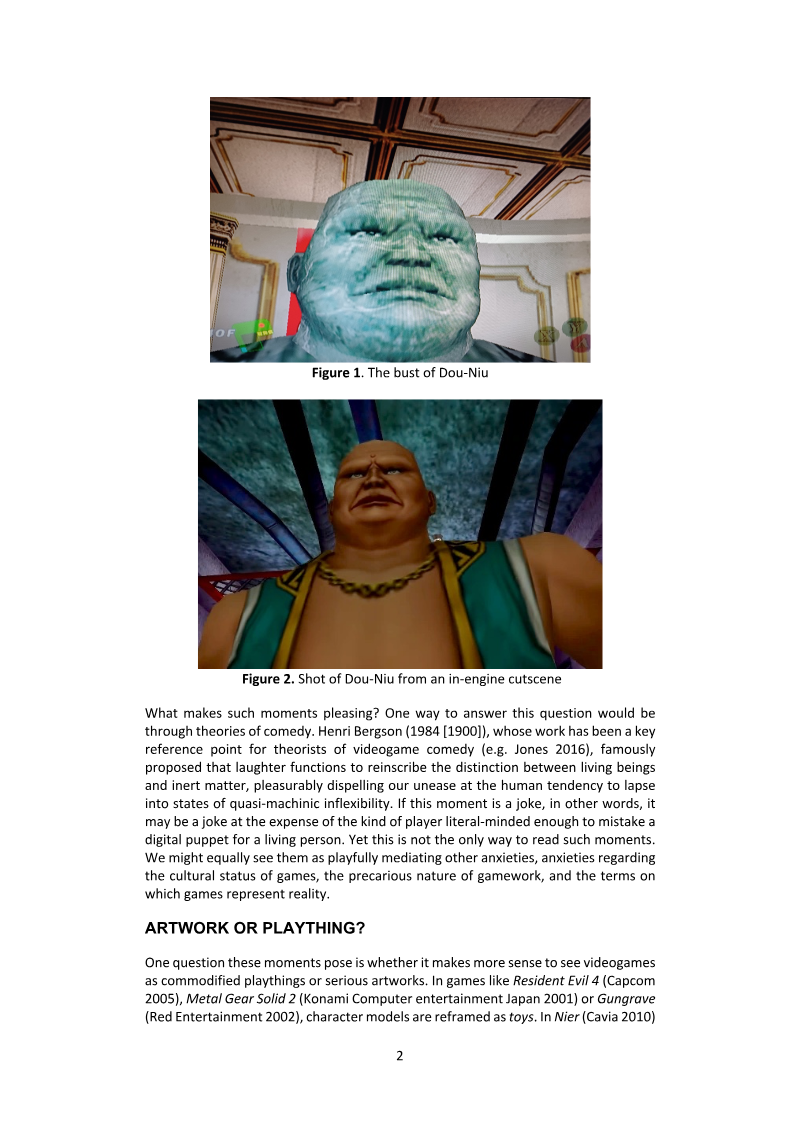
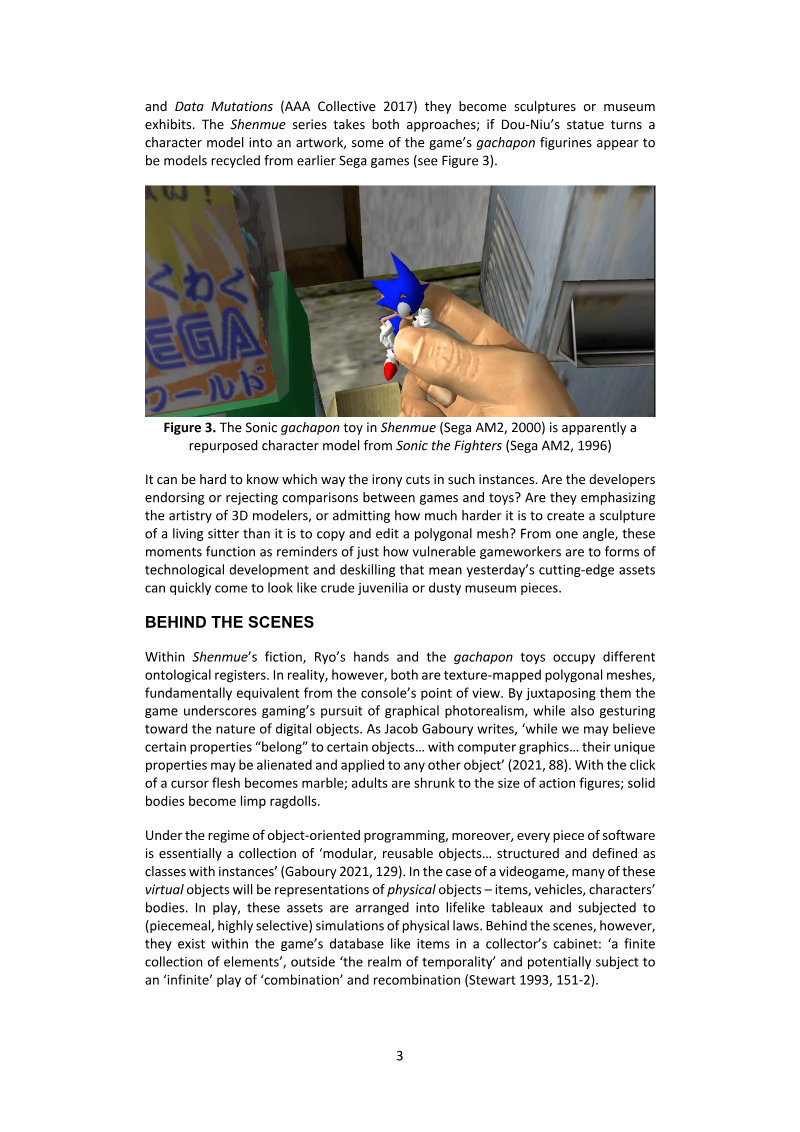
- Its central example is Shenmue II, where a marble bust of a villain turns out to be the same scaled and retextured 3D model used for the character himself.
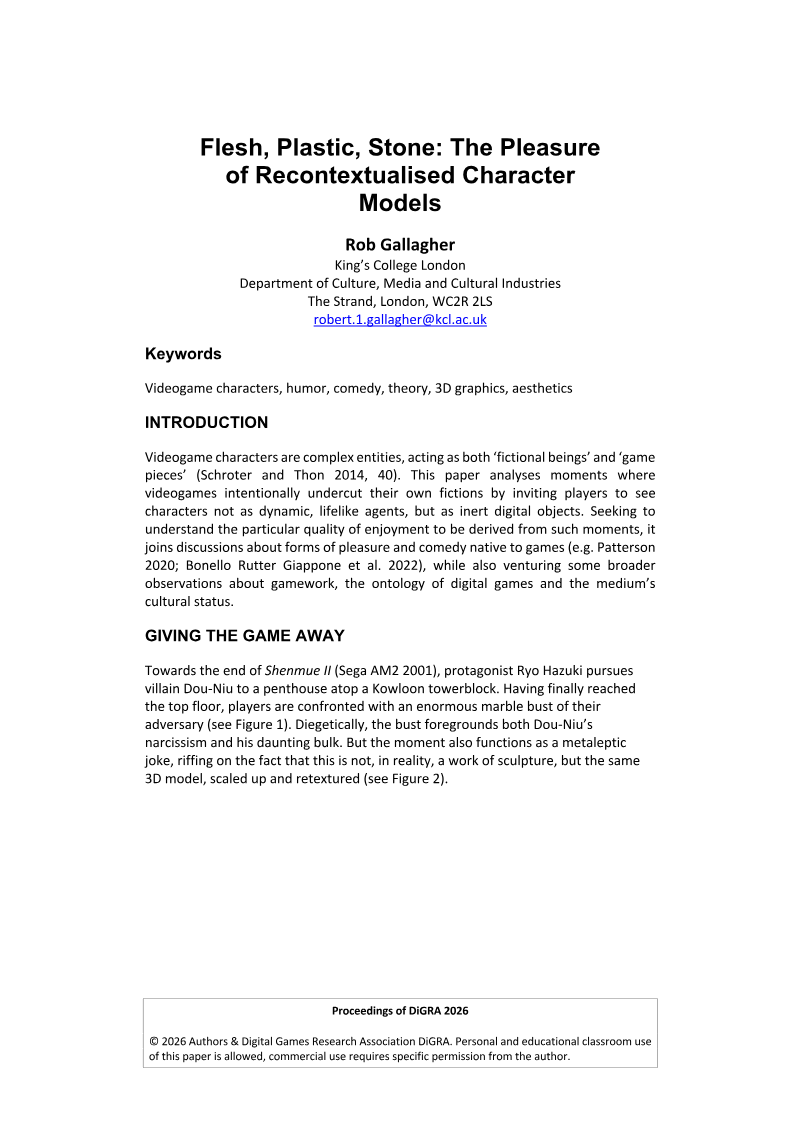
- The author contends such moments do more than mock players who mistake digital puppets for living people (as Bergson's theory of laughter might suggest), also mediating anxieties about games as commodified playthings versus serious art, and the deskilled, precarious labour of developers whose cutting-edge assets become obsolete.

Landscape Shifts in IP Gaming: An Analysis of How the Competitive Landscape of IP in Gaming Has Shifted in 2023
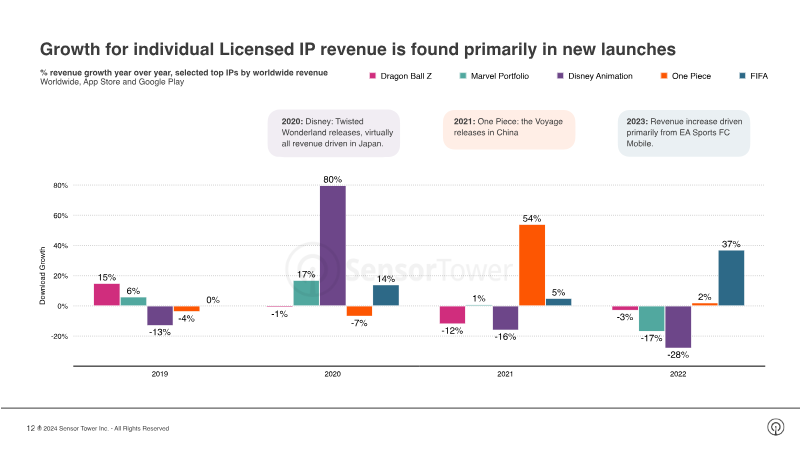
Sensor Tower's analysis of how intellectual property reshaped gaming in 2023 finds that mobile IP games grossed $16 billion in in-app purchases, with the competitive landscape reordered largely by new launches.
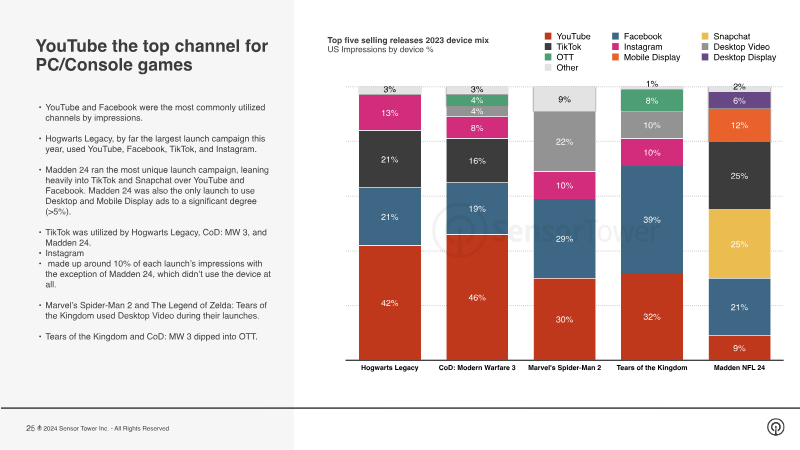
- Established intellectual properties dominated the 2023 market, accounting for every top-performing launch on both PC and console platforms.
- Licensed mobile titles generated $16 billion in gross revenue in 2023, with Monopoly GO! reaching $1 billion in under seven months to drive Hasbro and Scopely to the top of industry rankings.
- Video game and anime IPs dominate the Asian market with a 70% share of downloads, while board game IPs saw a notable revenue surge in the United States.

2Q FY2021 Presentation Material: January to March 2021
CyberAgent experienced exceptional financial growth during the second quarter of fiscal year 2021, characterized by a 26.6% year-over-year increase in consolidated sales to 163.4 billion yen and a doubling of operating profit to 25.8 billion yen.
- CyberAgent’s consolidated sales grew 26.6% year-over-year to 163.4 billion yen in 2Q FY2021, with operating profit doubling to 25.8 billion yen.
- The Game business reached record quarterly sales of 63.9 billion yen, driven primarily by the launch of 'Uma Musume Pretty Derby,' which surpassed five million downloads in 45 days.
- Due to strong gaming performance, CyberAgent raised its full-year sales forecast to 600 billion yen and nearly doubled its projected operating profit range.

1Q FY2021 Presentation Material: October to December 2020
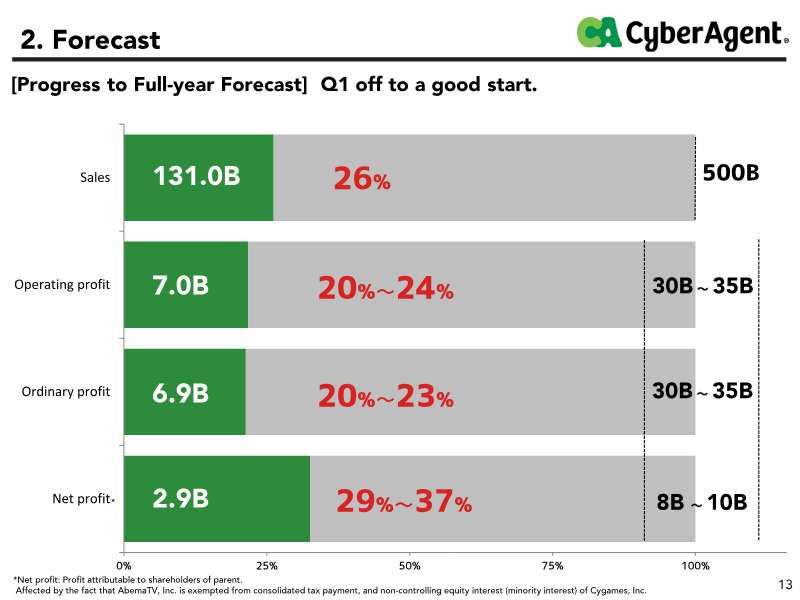
CyberAgent achieved record-high consolidated sales of 131 billion yen during the first quarter of fiscal year 2021, representing a 13.3% year-over-year increase.
- CyberAgent achieved record-high consolidated sales of 131 billion yen in 1Q FY2021, a 13.3% year-over-year increase driven by strong performance in the Media and Advertising segments.
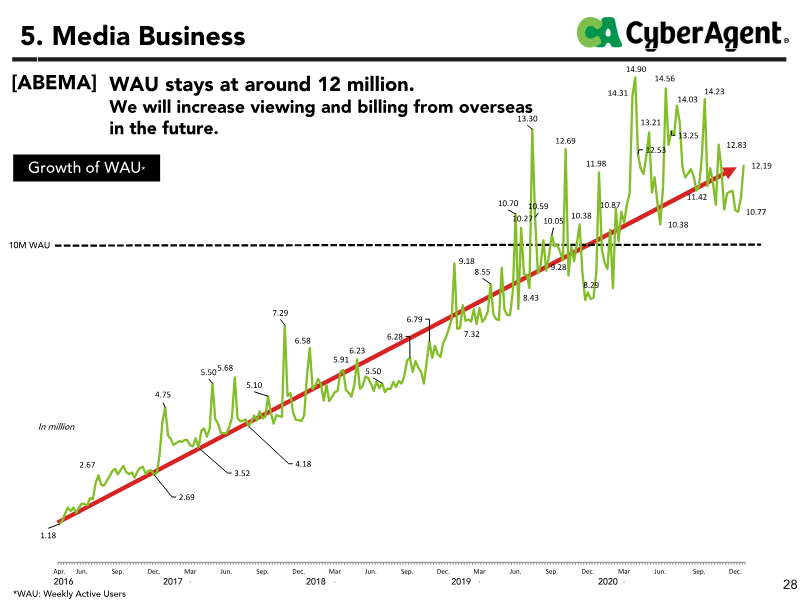
- The Media segment grew revenue by 67% to 20.4 billion yen, bolstered by ABEMA’s premium subscriber base exceeding 921,000 users and an elevenfold increase in WINTICKET transaction volume.
- The Game business experienced a 15% revenue decline to 29.9 billion yen and a 77.8% drop in operating profit, attributed to seasonal factors and increased marketing spend.
Rethinking Failure: Applying Gordon Calleja's Model of Player Involvement to NieR: Automata
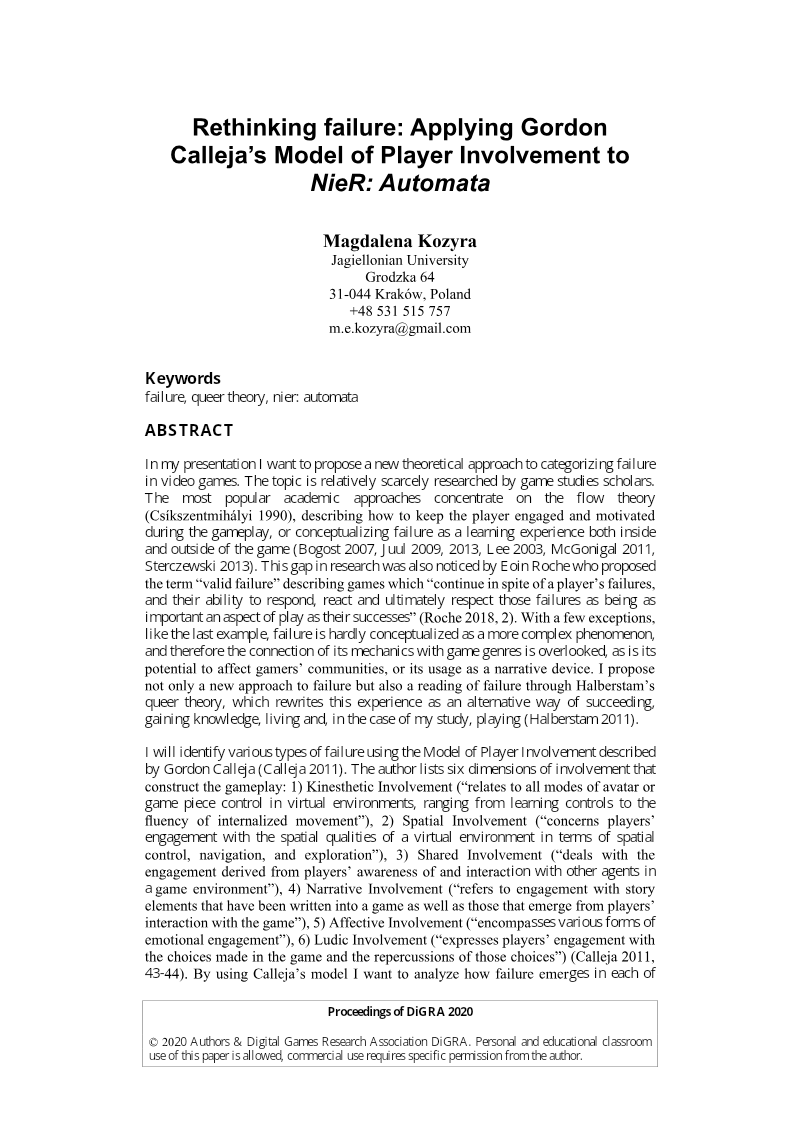
Magdalena Kozyra's paper proposes a new theoretical framework for understanding failure in video games, arguing that the topic has been underexplored in game studies.
- Kozyra argues that failure is underexplored in game studies, where existing scholarship has focused mainly on flow theory and on treating failure as a learning experience rather than a complex phenomenon tied to genre, player communities, or narrative design.
- The paper combines Gordon Calleja's Model of Player Involvement with Jack Halberstam's queer theory, reframing failure as an alternative mode of succeeding, knowing, and playing.
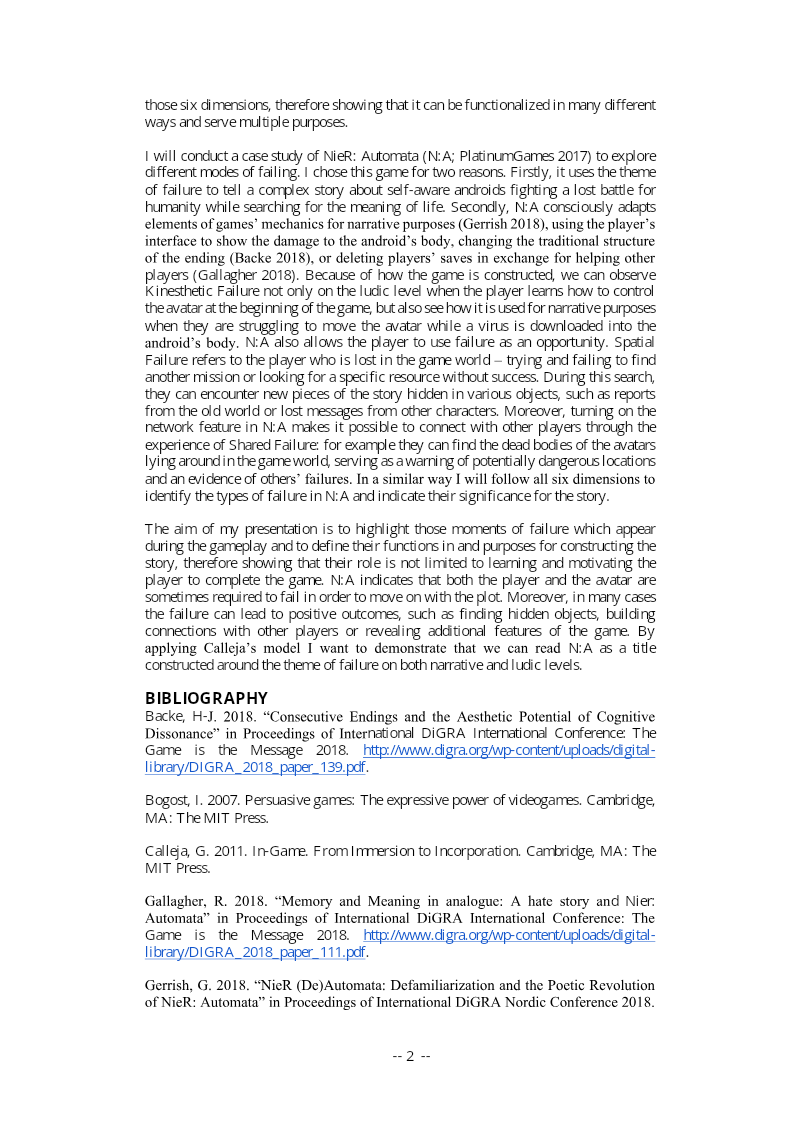
- The case study analyzes NieR: Automata (PlatinumGames, 2017) through Calleja's six dimensions of involvement: kinesthetic, spatial, shared, narrative, affective, and ludic.
The Disrupted Ludic Self: Aesthetics of Character Switching in NieR: Automata
Ryan C. Wright's paper examines how forced changes between playable characters in NieR: Automata (2017) alter the player's relationship to the game's world.
- Ryan C. Wright's paper argues that forced, involuntary character switches in NieR: Automata (2017) alter the player's relationship to the game world, a effect existing scholarship on the game discusses but has not synthesized through theories of perspective, agency, and player-avatar relationships.
- Wright builds on Daniel Vella's ludic subjectivity framework, which replaces "avatar" with the "playable figure" and treats the gameworld as an aesthetic form emerging through play.
- Wright distinguishes involuntary "figure shifts" from voluntary changes such as menu-based character selection, and analyzes three cases: the shift to a small machine tending its fallen brother, the shift to the pacifist machine Pascal, and the rapid A2/9S alternation in the penultimate battle.
NieR (De)Automata: Defamiliarization and the Poetic Revolution of NieR: Automata
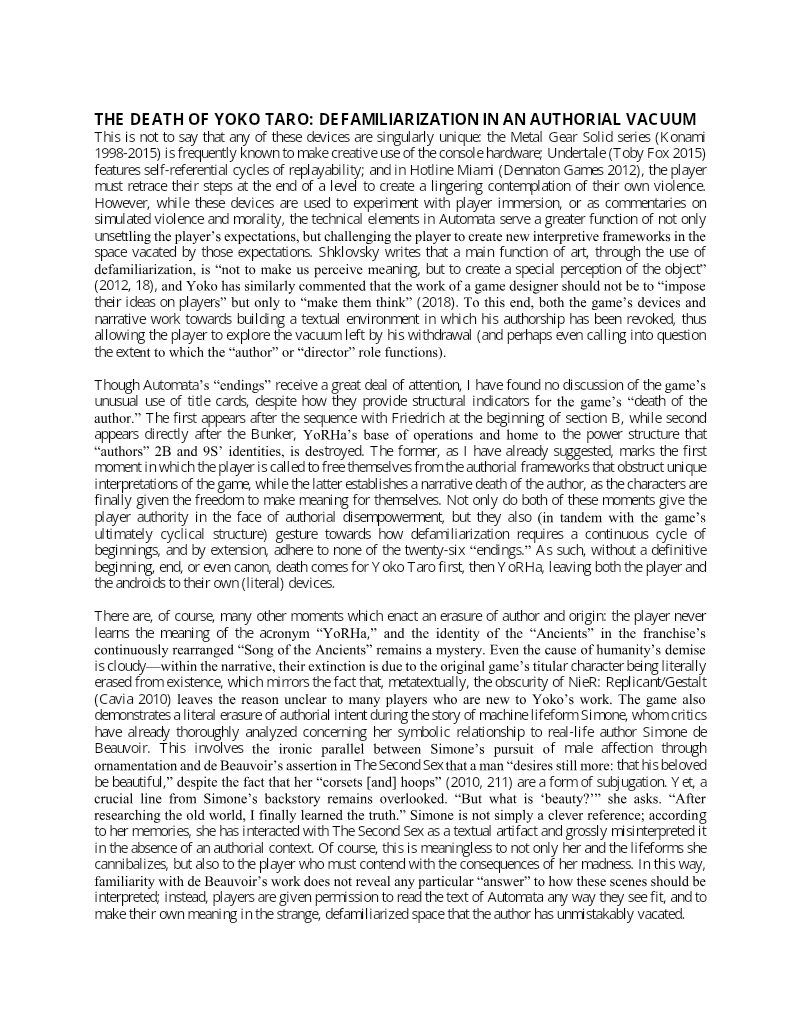
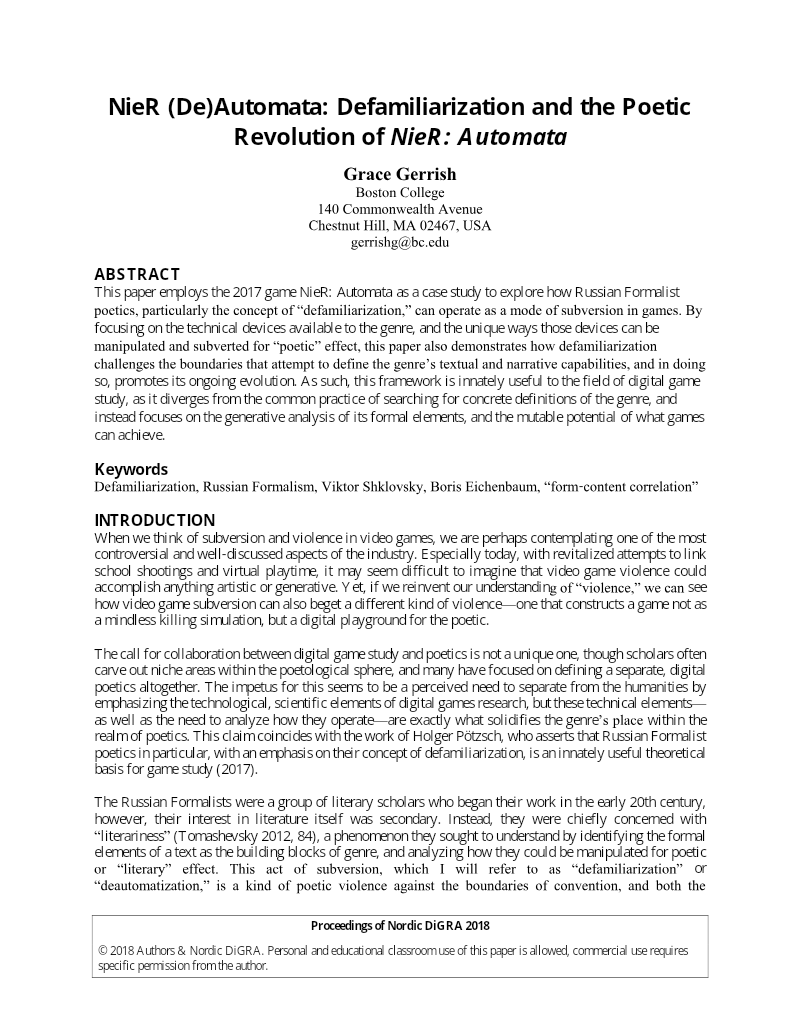
Grace Gerrish's essay examines NieR: Automata as a case study for applying Russian Formalist theory to digital games, with particular attention to defamiliarization (ostranenie).
- Grace Gerrish applies Russian Formalist theory, particularly Shklovsky's and Eichenbaum's concept of defamiliarization (ostranenie), to argue that video games can renew players' perception by subverting their technical devices such as interfaces, controls, music, and language.
- The essay positions NieR: Automata as a deliberate balance between familiar gaming conventions and disruptive innovation, using shifting gameplay styles, perspective changes, and interface-narrative blending to destabilize player expectations about genre.
- Specific examples cited include a treasure-hunt side quest that tricks players into committing violence and the "chaos language" songs that feel both familiar and alien.
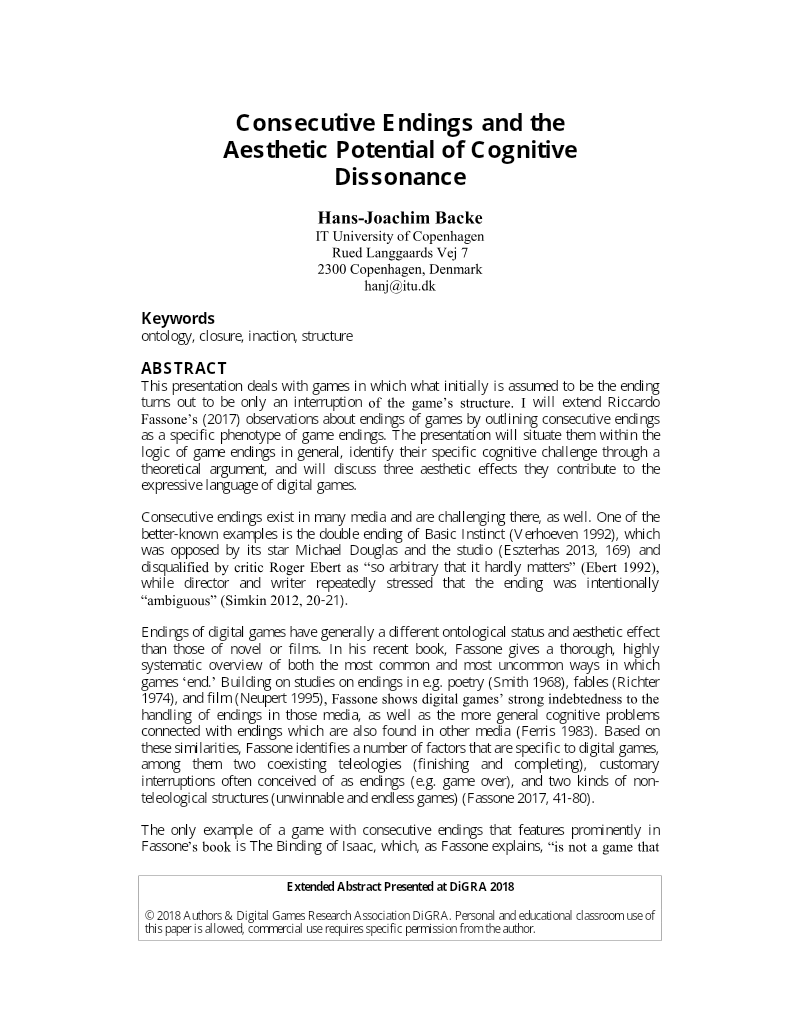
Consecutive Endings and the Aesthetic Potential of Cognitive Dissonance
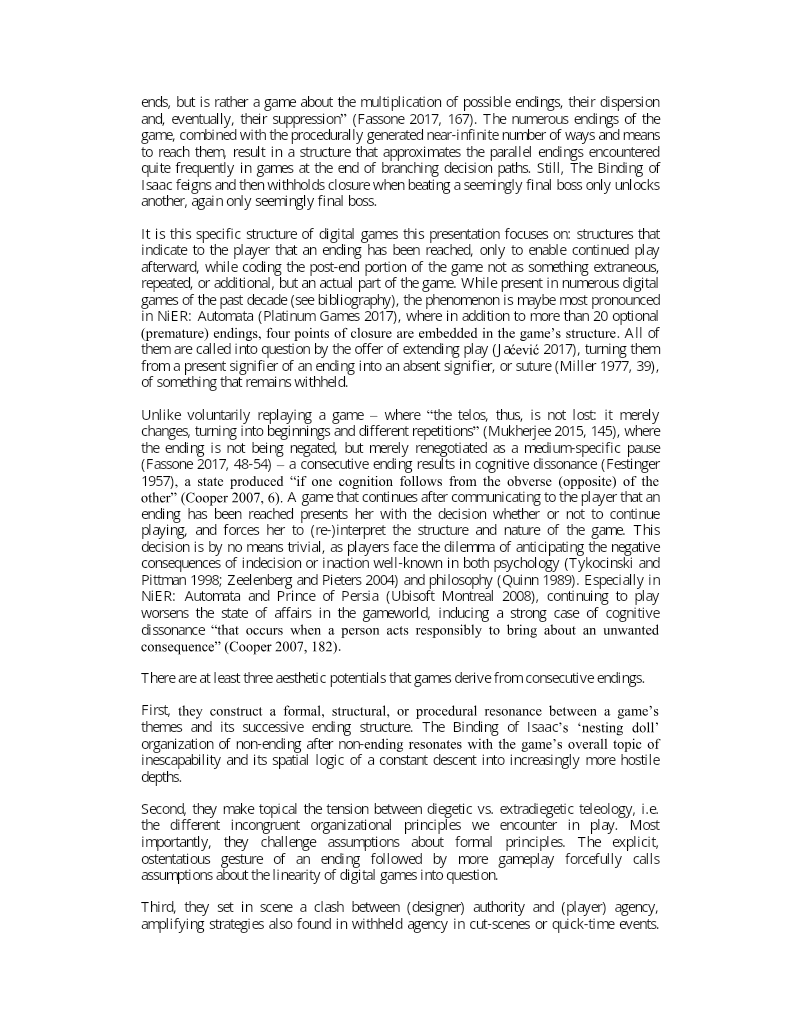
This extended abstract, presented at DiGRA 2018 by Hans-Joachim Backe of the IT University of Copenhagen, examines a specific structural phenomenon in digital games: "consecutive endings," in which a game signals that it has concluded only to allow play to continue.
- Consecutive endings are a distinct phenotype of game closure in which a game signals that it has concluded yet permits play to continue, building on Riccardo Fassone's (2017) taxonomy of game endings.
- Unlike voluntary replay, consecutive endings create cognitive dissonance: a player facing an apparently final ending must decide whether to continue, weighing the costs of action against inaction and reinterpreting the game's nature in the process.
- The paper draws on Festinger's theory and psychological research on inaction and regret to explain why players experience this dilemma when an ending seems final but play remains possible.