1 free read left. Create a free account for unlimited reading + AI research.
Create free account
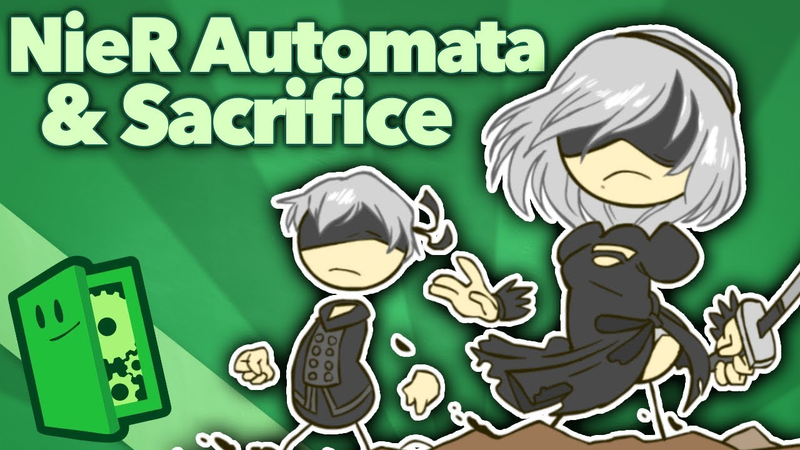
NieR: Automata - Sacrifice and the Meaning of Kindness - Extra Credits
Key insights
5 takeaways- 01True kindness is defined by the willingness to endure a tangible personal loss for the benefit of another, rather than performing rewarded heroic deeds.
- 02Most game moral systems fail to foster genuine empathy because they treat altruism as a self-serving transaction that provides narrative praise or gameplay bonuses.
- 03By requiring the sacrifice of dozens of hours of personal effort without an in-game reward, the game bridges the gap between digital mechanics and real-world ethics.
- 04The game’s final boss sequence utilizes the data of other users to assist the player, creating a cycle of non-transactional support that culminates in the player's own decision to sacrifice their data for future players.
- 05NieR: Automata forces a moment of pure altruism by offering players the choice to permanently delete their entire save file, including all progress and achievements, to assist an anonymous stranger.
Ask AI about this video
Transcript
Games can evoke empathy in us. They can make us desire to be kind. They can help us put ourselves in the shoes of others, but they can also give us an easy way to tell ourselves that we are good people, that we always choose Paragon, that we are light side folk, and always without making us do the work that being a good person actually requires. But there is one recent game that truly did ask us to be kind, and in a brilliant way. Let's talk about Nier: Automata. This episode was made in collaboration with the excellent people over at Wisecrack. Learn more about them and check out their thoughts on Nier: Automata at the end of this video. This episode is going to have a spoiler in it. It won't be a narrative spoiler, but it will be a mechanical one. We are going to talk about the last boss fight and how it plays out. It'll come later in the episode, so feel free to hang out for now. I'll give you a warning later,
you can bail then if you want to, but just be warned that if you're the type of person who wants absolutely nothing spoiled, you should probably turn this off and go play Nier: Automata because it's genuinely great. So, let's talk empathy. You know that moment in Dark Souls where you see a blood stain somewhere you died once, and you feel a tiny pang for the person who just went through that same thing. That is an unmistakable moment of empathy experienced through a game, and I bet more than one of you have acted on it, deciding to leave a message warning other players about the hazard. Not for the reward it would give you, but so that people you've never met and will never meet won't have to suffer the same way you did. That is kind of incredible when you think about it. It's part of what makes Dark Souls such a communal experience, even if you play the whole thing by yourself. But most games don't do that nearly as well. We have all had a moment where a game asked us to save a planet, rescue a cat, help some downtrodden villagers, something like that. And the game tells us that these
are good acts and that we are good people for doing them. We are often even given a goodness stat so that we know just how good we were for helping out. I am so good. Look at how many good points I have. The problem though is that we really weren't. Empathetic acts are fundamentally about doing something for someone other than yourself. But in so many games where you have your save the puppies moment, that moment is really about you, not about whomever you're helping. So many games are so focused on empowering the player that many times acting good in a game ends up being about that, too. Helping somebody isn't really the goal. The reward for helping somebody is the goal. Maybe it's some bonus the game gives you or the praise you receive from characters in the game. Maybe it's the game itself praising you for being such a good person and forwarding your heroic story arc. And even in the cases where games actually ask something of you to do the good
thing, it's often negligible or something you'd want to do anyway. It's not actually a sacrifice. How many times have you been asked to give some trivial amount of gold to help out a poor and suffering group of people? It's one of those silly game tropes, right? I mean, if this village is hurting so much for money, they really should just like leave town and beat up 12 slimes or something. That'll give them all the money they need. I could go do that in 5 minutes. Helping them is easy and meaningless. You're not actually empathizing with the group you're helping because you never have to consider the cost to yourself. The question of should I help these people? Can I afford to help these people? Isn't something the game even makes you think about. Half the time we're really only doing any of these good things because we figure it's what the game wants us to do. And even in the cases where you're asked to fight an additional boss or tackle some really hard level to do the right thing, it's often framed as a sacrifice, but really it's the game designers actually giving you more of what you want to do. Now you get to feel
good helping people and fight a cool dragon. Boy, glad you didn't miss out on that optional dragon boss fight, huh? Oh, right. Yeah, the people. Yes, so thank goodness their lives have been improved. All in a day's work. VIDEO GAME HERO AWAY! NIER: AUTOMATA does something very different. And for those of you hoping to avoid spoilers, here is where I'm going to start dropping them. So, I will now give you a moment to step out. Are they gone? Okay. All right. The final fight in Nier: Automata is hard. Maybe impossibly hard. You throw yourself at it. You want to beat it so bad. You're so close to the end, but you die. And when you die, you're asked if you really want to suffer through this. Do you really want to continue? But littered around the screen are messages of encouragement from players all over the globe. So, you start back up and you try again, and again you die. And again, and again. Then the game informs you that another player has offered to help.
And one by one, ships swoop in. Other players are coming to your aid. The music swells from a single melody to a chorus, and now because of them, you have a real chance. And as they die, one by one, you see that their names and their data has been lost. When you finally make it all the way through, you too get to write a message of encouragement to somebody out there. Somebody you will never meet. You are given the opportunity to tell them they are not alone. Then the game presents you with a choice. You can become one of those ships. You can become one of those fighters and help somebody else like so many people helped you. But there's a cost to doing it, and that cost is your save file. Agree to help another player, and your save will be deleted. You will never meet the person who you help. You will never get any praise for it or even have the satisfaction of knowing when your ship flew in to help somebody. In fact, the game stresses that you may end
up helping somebody you wouldn't actually like or who you wouldn't even talk to. And it's going to cost you everything you've worked for in this game. The dozens of hours you've invested, all the items you found, all the levels you gained. All of those side and the parts of the story you never saw, you won't get a chance to finish them unless you start the game over. And at least in my case, I was profoundly aware in this moment that I would never have time to do that. This was it. This is a real sacrifice. Coming to terms with giving up something you love. Giving up the story you created. The hours you put into building it just so someday somebody you'll never meet will have an easier time. I chose to do it. And I bet a lot of you did, too. You did it because you know what those other people will be going through. Their frustration is something you can relate to. What's more, you know exactly what other people already gave up to help you. And so, you press that button and
you watch as line by line the game deletes all the work you have ever done in NieR: Automata. That is a powerful moment. A true empathetic moment. One that will hopefully stick with us and remind us in real life when we see someone cold or hungry, we've been there, too. Because unlike in most games, kindness in our world usually asks something of us. Something that's hard to give. And it's a worthy thing for a game to remind us that we're not good for simply doing good things when it costs us nothing. That sacrificing something is where true kindness happens. But does this sacrifice also mean something else? By forfeiting your game's progress, the save data and all of your achievements, Nier might also be asking, what makes games meaningful? And to understand why, you'll have to dig deeper into these words from Pascal. It seems this Nietzsche was quite the profound thinker.
Or perhaps he skipped right past profound and went straight to crazy instead. If you want to uncover the hidden, or maybe not so hidden, meaning of Pascal's words, check out the philosophy of Nier: Automata from our friends over at Wisecrack. They dive deep into what might be the most explicitly philosophical game ever made. So, check out their video by clicking here, or find the link in the description. And while you're over there, be sure to subscribe to Wisecrack and tell them Extra Credits sent you. We'll see you next week.
Summary
Video games frequently attempt to simulate moral decision-making, yet these systems often fail to foster genuine empathy because they lack meaningful consequences. In most titles, players are rewarded for "good" actions with narrative praise, character progression, or gameplay bonuses, effectively turning altruism into a self-serving pursuit. Because these choices rarely require the player to sacrifice anything of value, they fail to mirror the reality of kindness, which typically demands a tangible cost to the benefactor.
NieR: Automata distinguishes itself by implementing a mechanical sacrifice that forces players to confront the true nature of empathy. During the game's final, intentionally difficult boss sequence, players are assisted by the data of other users who have previously completed the game. When the player finally succeeds, they are presented with a choice: they may offer their own save data to assist a stranger in the same way they were helped. Choosing to do so results in the permanent deletion of the player's entire save file, including all progress, items, and achievements.
This design choice creates a profound, non-transactional act of kindness. Because the player receives no in-game reward and will never meet the recipient of their help, the act is purely altruistic. By forcing the player to forfeit dozens of hours of personal effort to alleviate the frustration of an anonymous peer, the game effectively bridges the gap between digital play and real-world ethics. Ultimately, the game argues that true kindness is defined not by the performance of heroic deeds, but by the willingness to endure a genuine loss for the benefit of another.
















Comments