Monster Hunter
Game
Documents about Monster Hunter
Capcom Q1 FY2009 Consolidated Financial Results
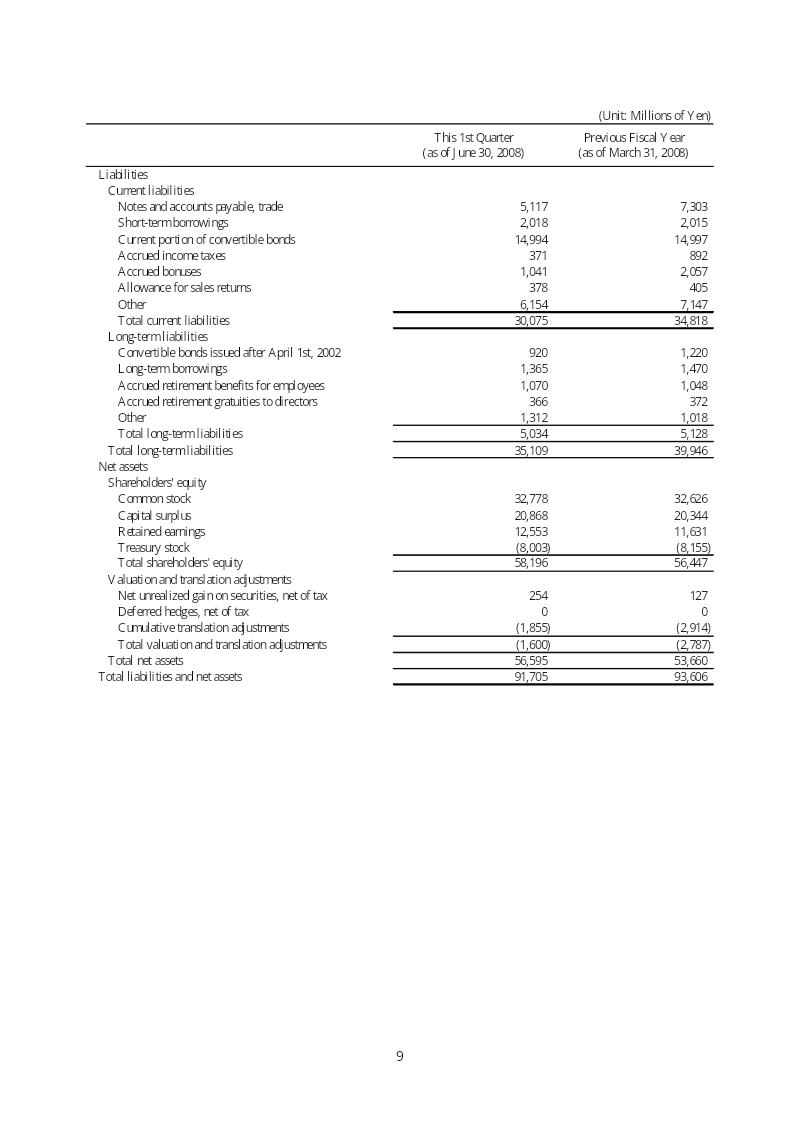
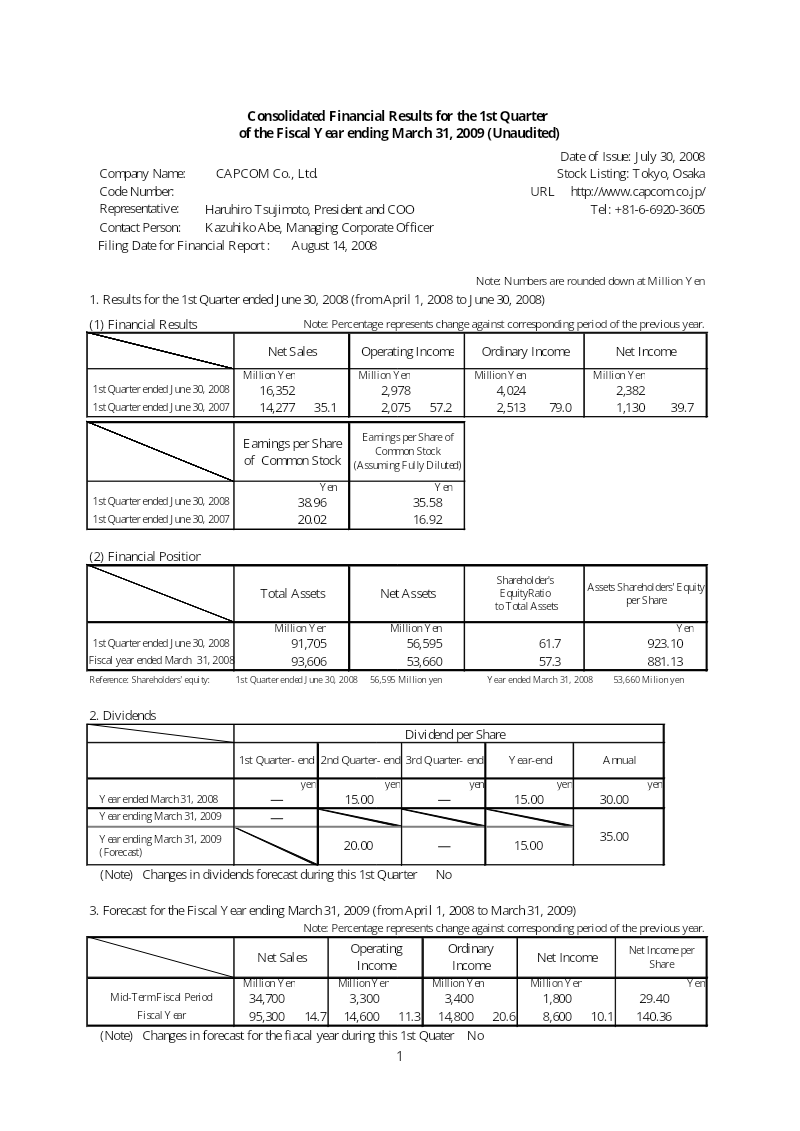
Capcom’s consolidated financial results for the first quarter of the fiscal year ending March 31, 2009, demonstrate strong growth driven primarily by the success of its home video game segment.
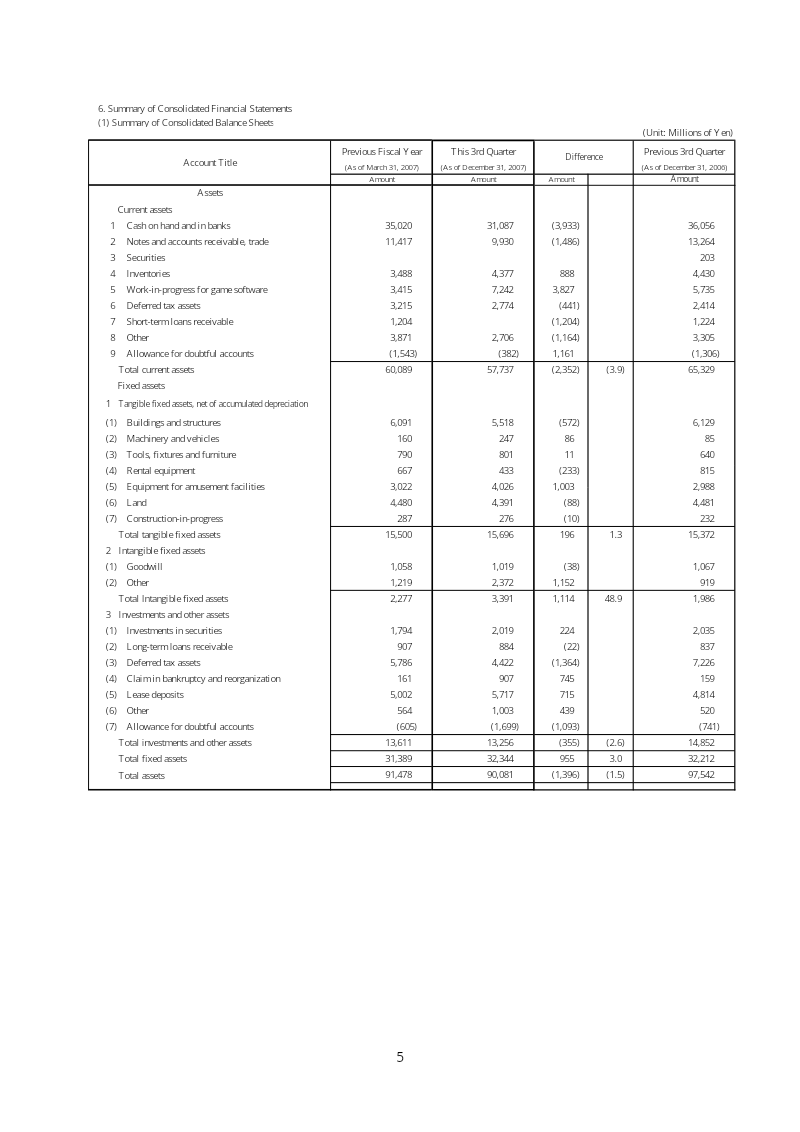
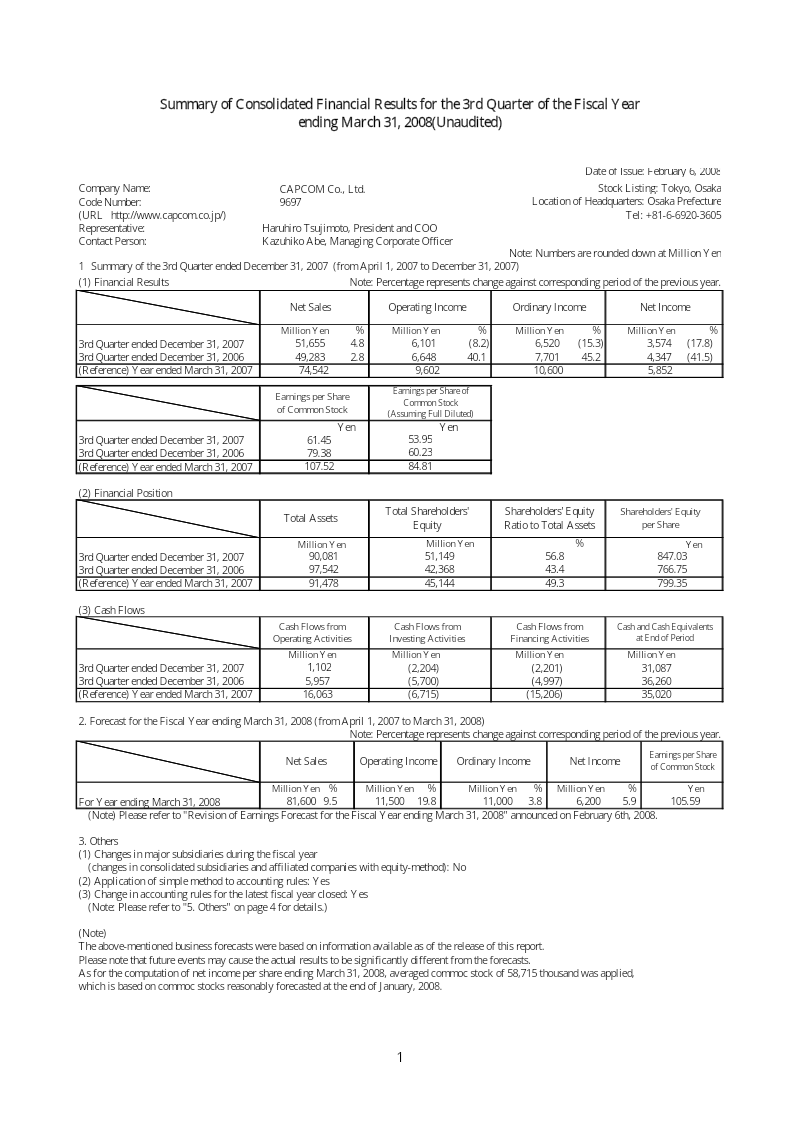
Capcom Summary of Consolidated Financial Results for the 3rd Quarter: Fiscal Year Ending March 31, 2008
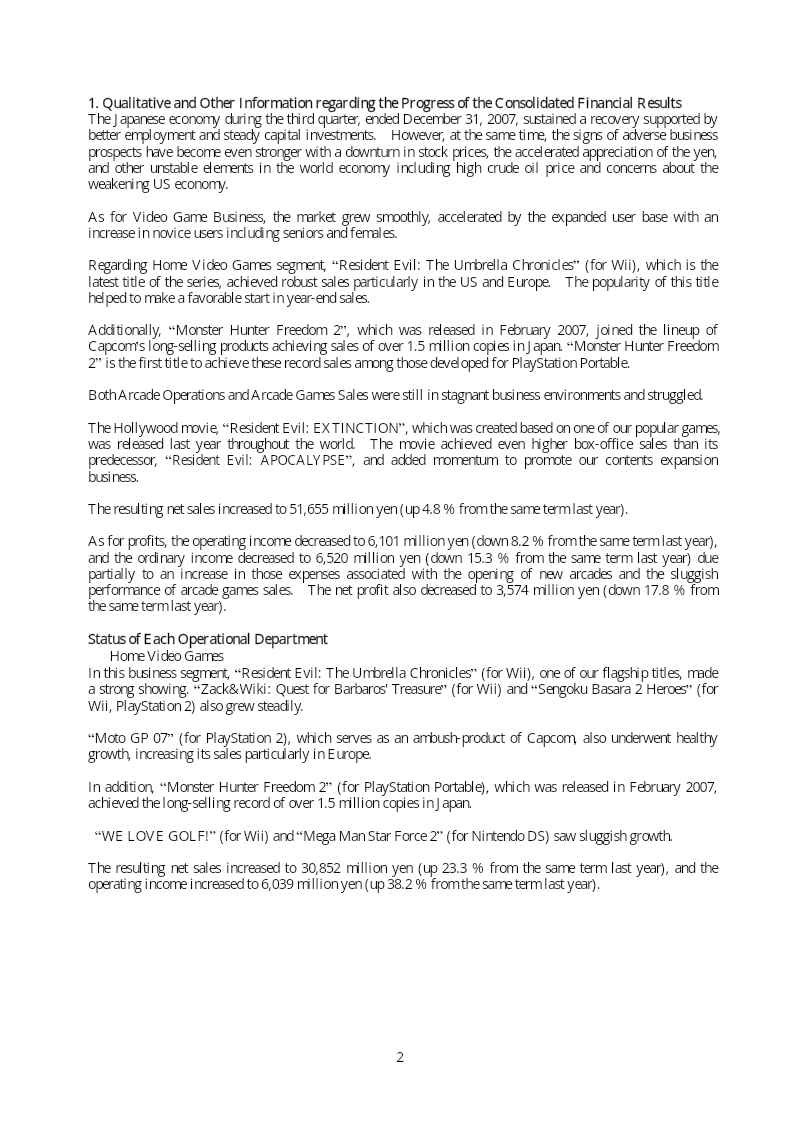
Capcom’s consolidated financial results for the third quarter of the fiscal year ending March 31, 2008, reflect a period of moderate revenue growth tempered by declining profitability.
- Capcom reported a 4.8% increase in net sales to 51,655 million yen for the third quarter of the fiscal year ending March 31, 2008, though net income declined 17.8% to 3,574 million yen.
- The Home Video Games division drove growth with a 23.3% increase in net sales to 30,852 million yen and a 38.2% rise in operating income to 6,039 million yen, fueled by Resident Evil and Monster Hunter Freedom 2.
- Arcade Operations and Arcade Games Sales segments underperformed, with the latter recording an operating loss of 692 million yen due to a lack of flagship software.
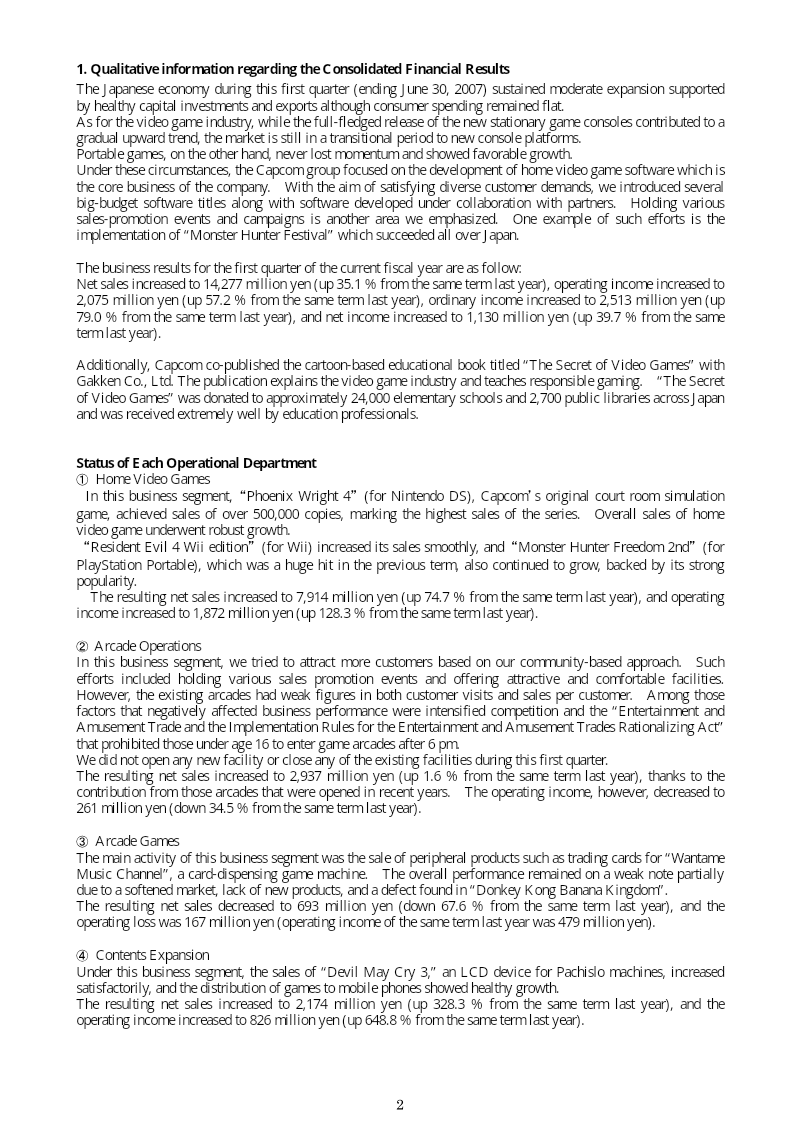
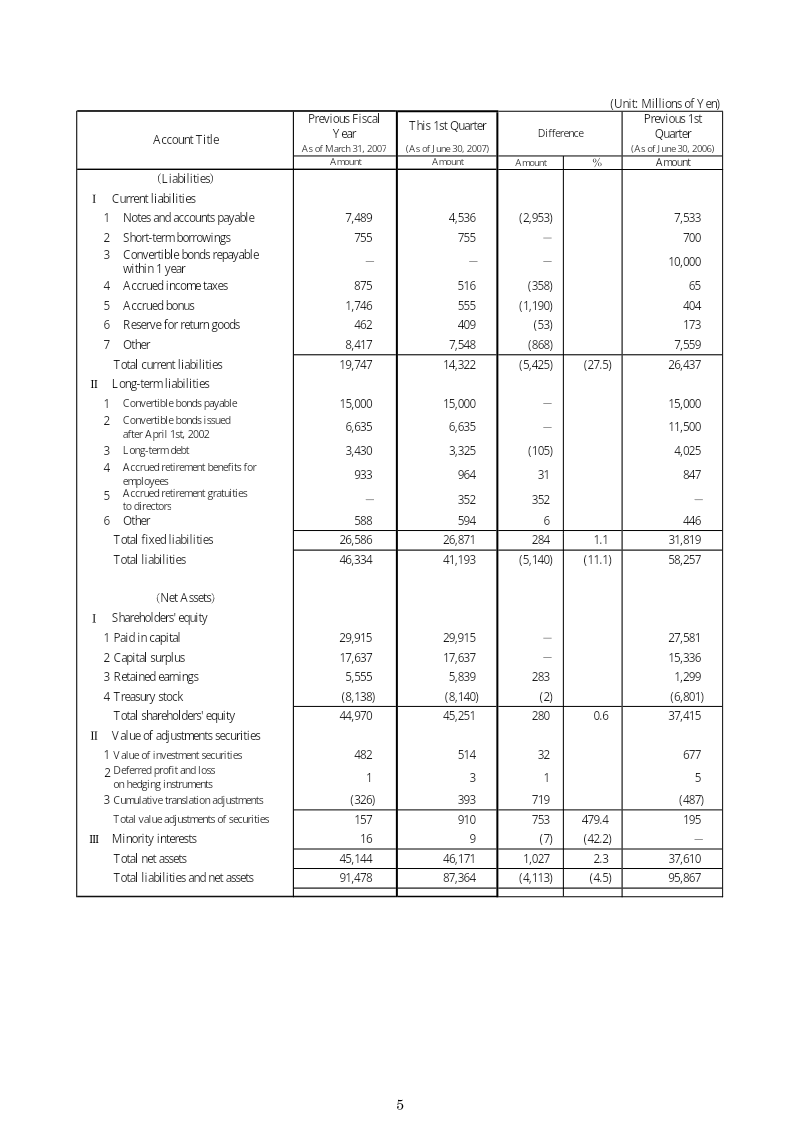
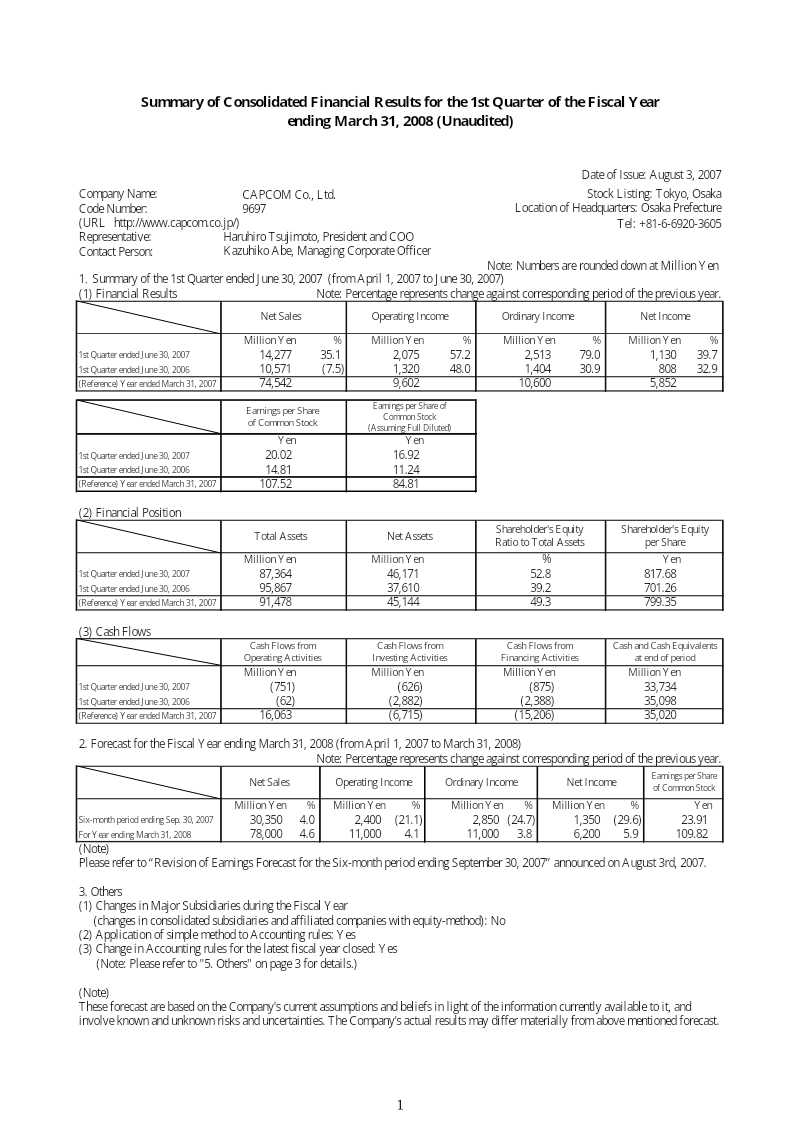
Capcom: Summary of Consolidated Financial Results for the 1st Quarter of the Fiscal Year Ending March 31, 2008
Capcom’s consolidated financial results for the first quarter of the fiscal year ending March 31, 2008, demonstrate significant growth in net sales and profitability compared to the same period in the previous year.
- Capcom achieved strong Q1 growth for the fiscal year ending March 31, 2008, with net sales rising 35.1% to 14,277 million yen and operating income increasing 57.2% to 2,075 million yen.
- The home video game segment was the primary growth driver, recording a 74.7% year-over-year increase in net sales to 7,914 million yen, fueled by titles like Phoenix Wright 4 and Monster Hunter Freedom 2nd.
- The contents expansion segment saw significant gains, with net sales growing 328.3% and operating income surging 648.8% due to mobile game distribution and Pachislo machine peripherals.
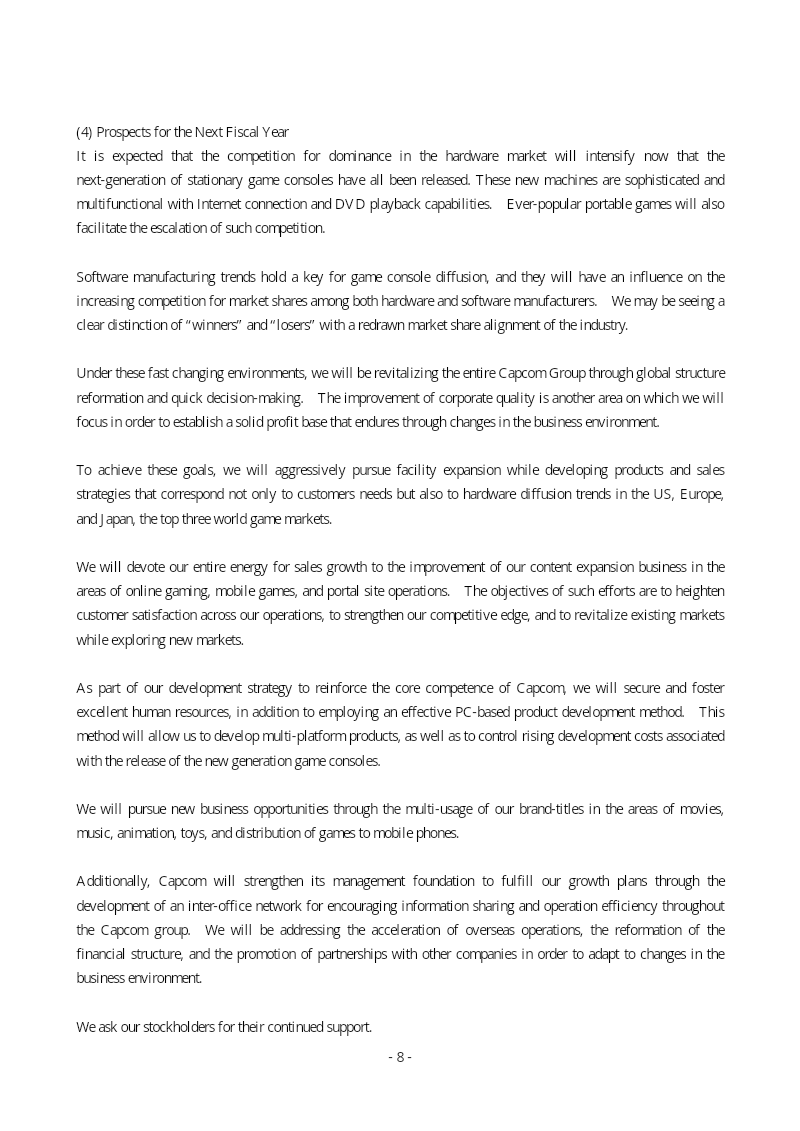
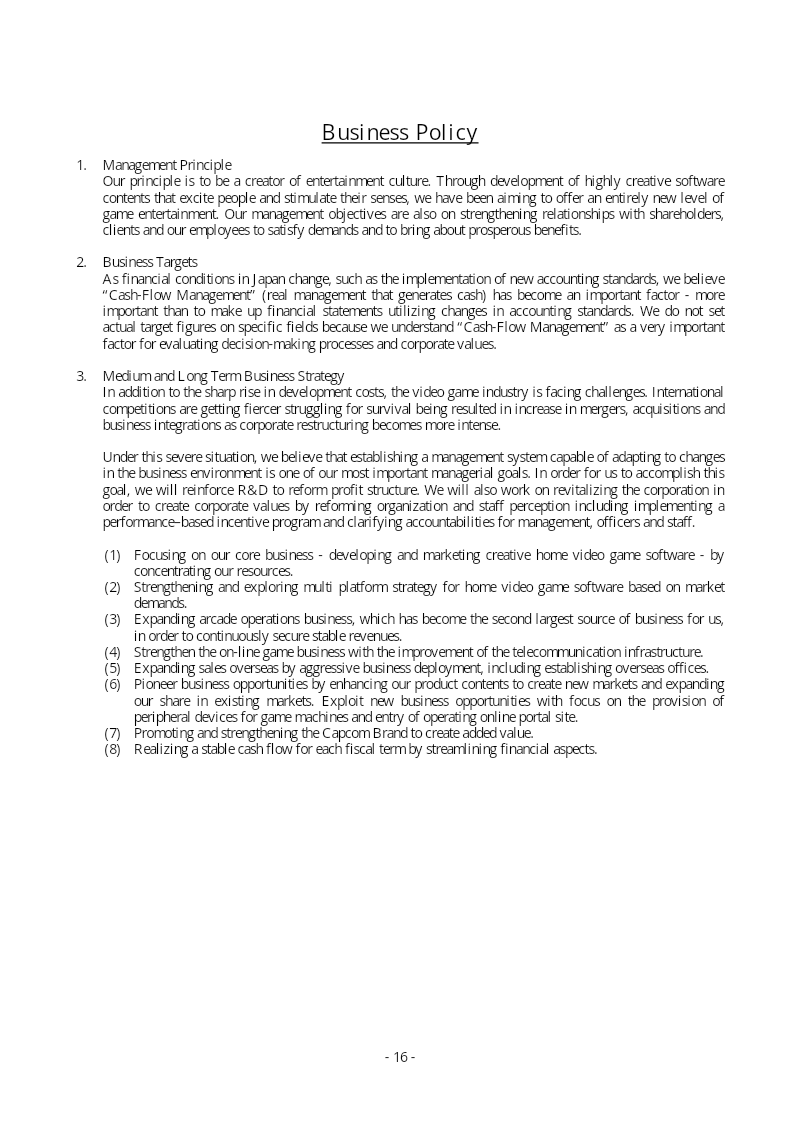
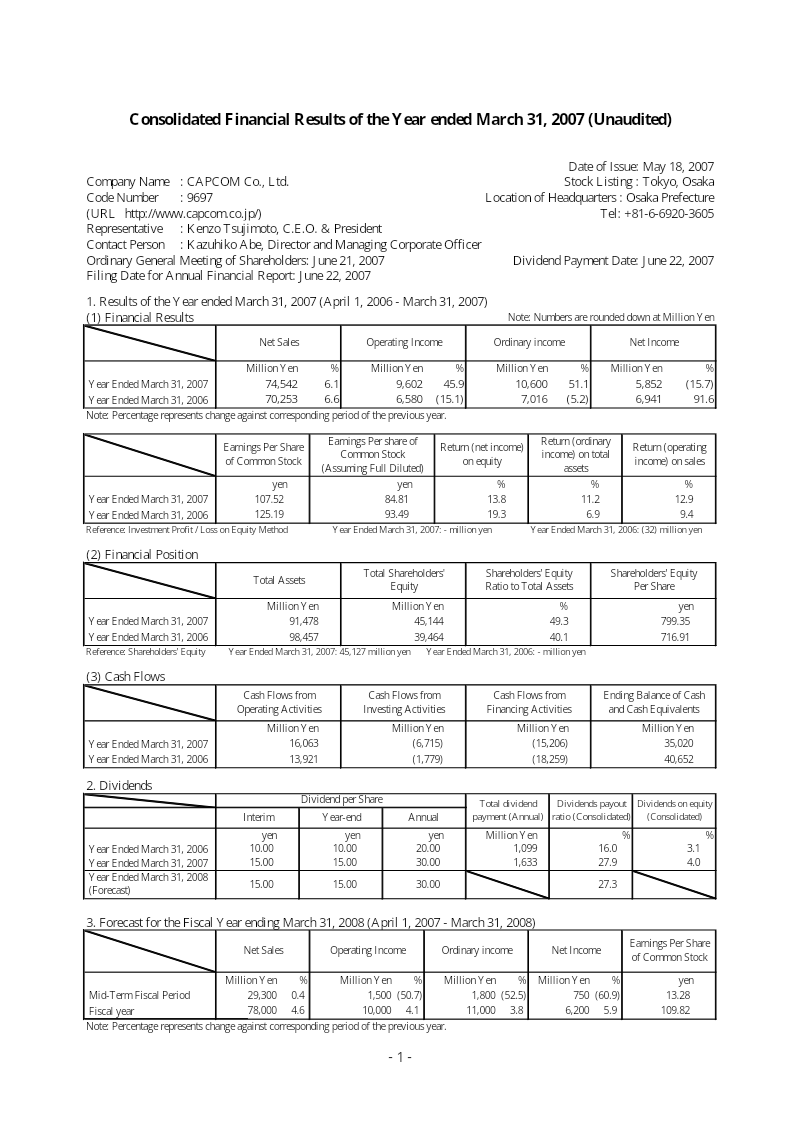
Capcom Consolidated Financial Results: Year Ended March 31, 2007
Capcom achieved notable financial growth during the fiscal year ending March 31, 2007, characterized by a 6.1 percent increase in net sales to 74,542 million yen and a substantial 45.9 percent rise in operating income to 9,602 million yen.
Capcom Financial Results: Fiscal Year Ended March 31, 2006
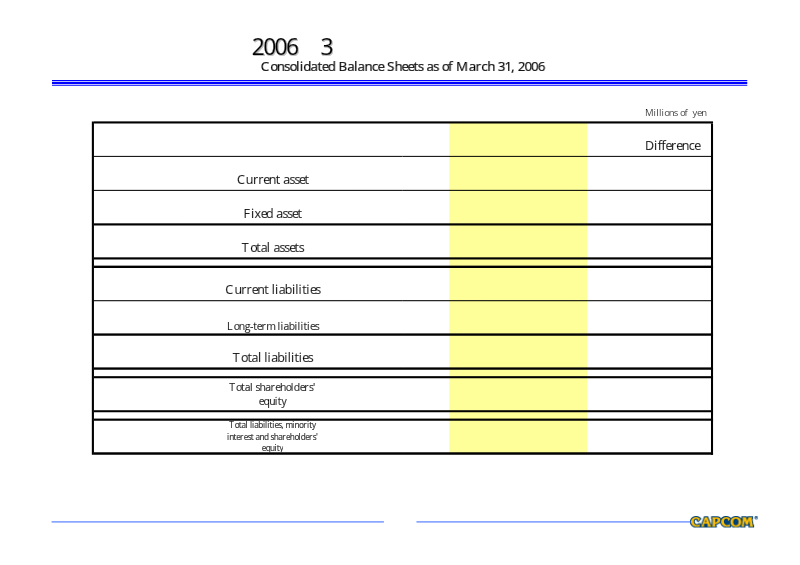
Capcom achieved consolidated net sales of 70.2 billion yen and a net income of 6.9 billion yen for the fiscal year ending March 31, 2006.
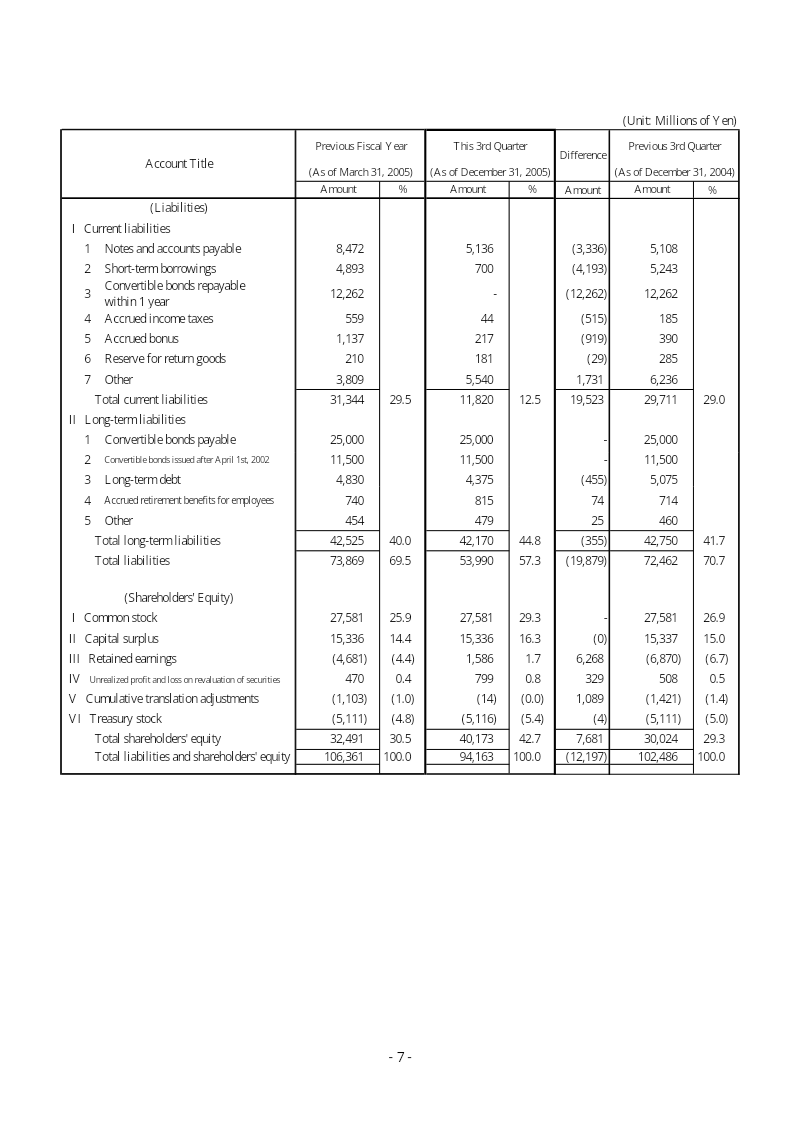
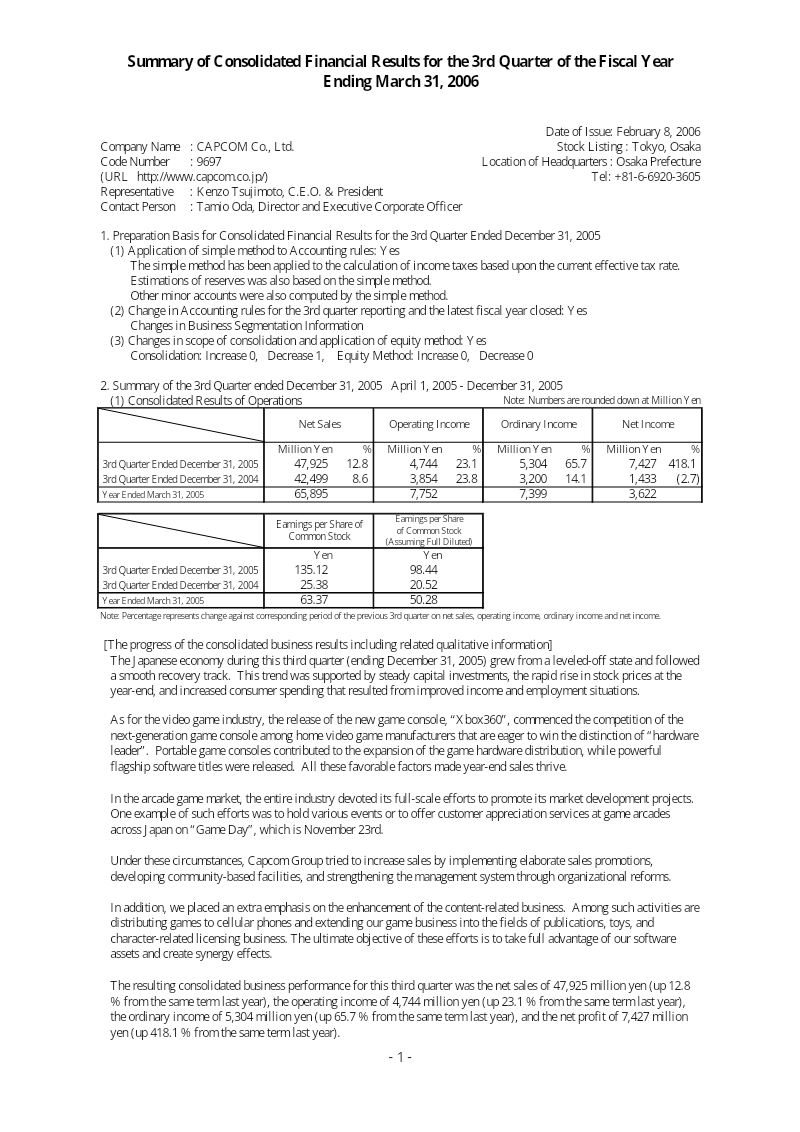
Capcom Summary of Consolidated Financial Results for the 3rd Quarter: Fiscal Year Ending March 31, 2006
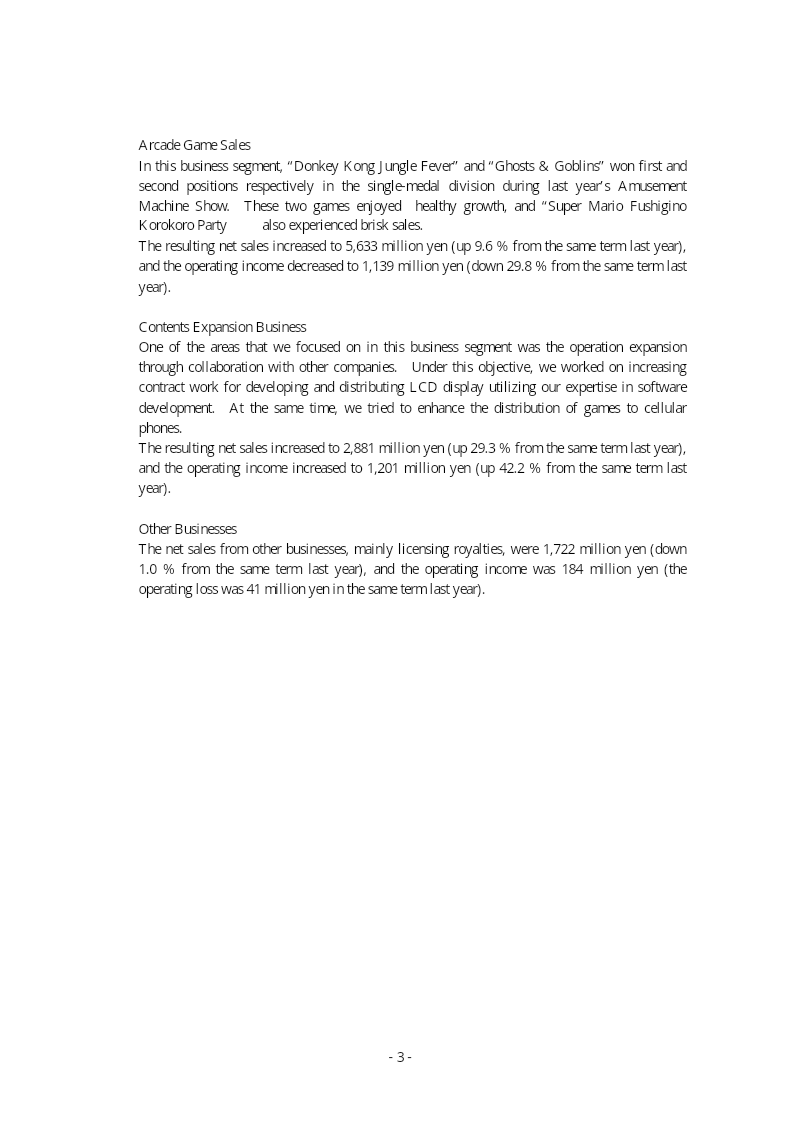
The consolidated financial results for Capcom for the third quarter ending December 31, 2005, demonstrate significant growth across key performance indicators compared to the same period in the previous fiscal year.
- Capcom achieved a 418.1% surge in net profit to 7,427 million yen for the third quarter ending December 31, 2005, alongside a 12.8% increase in net sales to 47,925 million yen.
- Operating income grew by 23.1% to 4,744 million yen, primarily driven by strong sales of home video game titles including Resident Evil 4 and Monster Hunter Portable.
- The company expanded its business segmentation from four to five categories to prioritize growth in mobile game distribution and LCD display development.
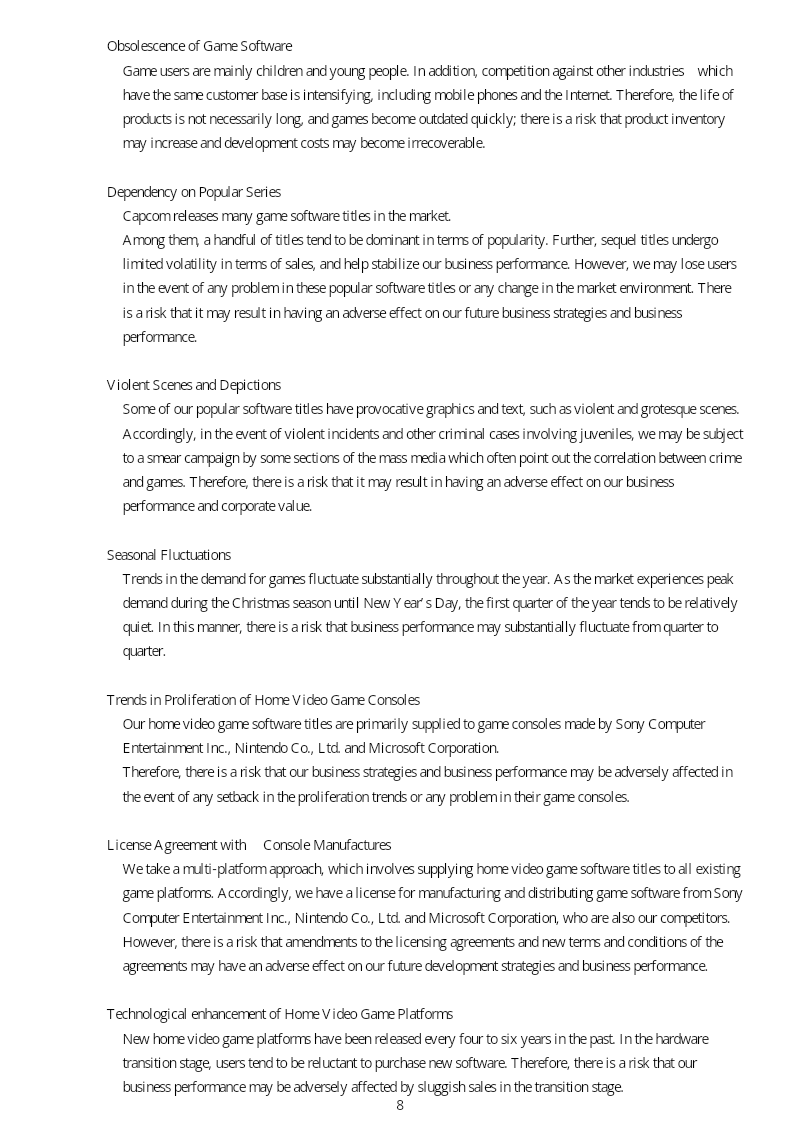
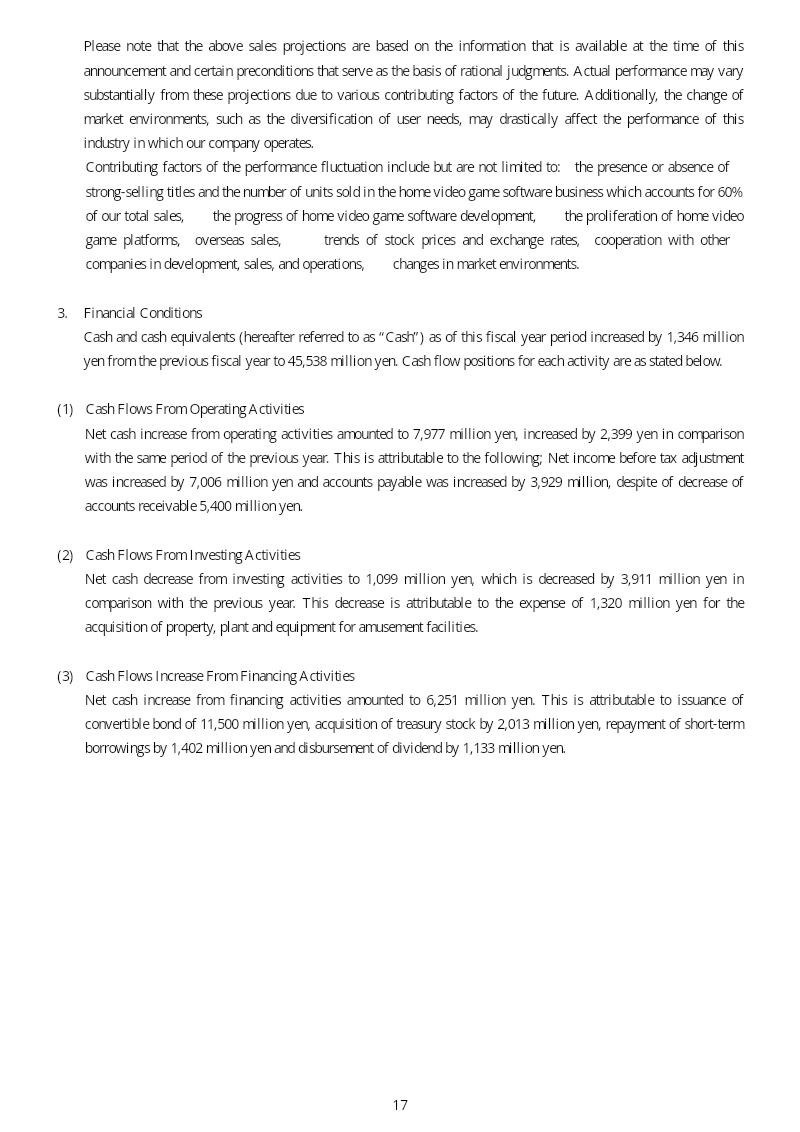
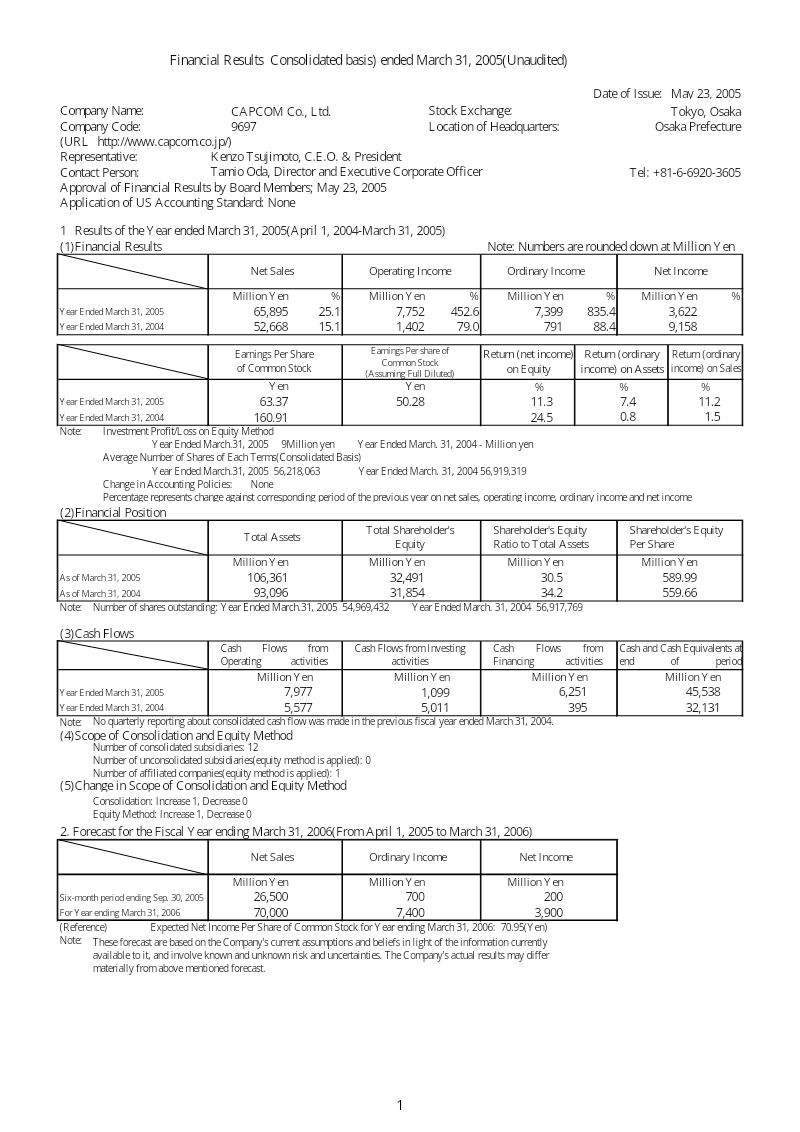
Capcom Financial Results: Consolidated Basis Ended March 31, 2005
Capcom achieved a significant financial turnaround during the fiscal year ending March 31, 2005, transitioning from a substantial net loss in the previous period to a net profit of 3,622 million yen.
- Capcom achieved a financial turnaround for the fiscal year ending March 31, 2005, reporting a net profit of 3,622 million yen compared to a net loss in the previous period.
- Net sales increased by 25.1 percent to 65,895 million yen, with operating income reaching 7,752 million yen.
- The home video game segment drove the recovery by shifting to an operating profit of 3,907 million yen, largely due to the success of Resident Evil 4 and Monster Hunter G.

Capcom Annual Report 2014
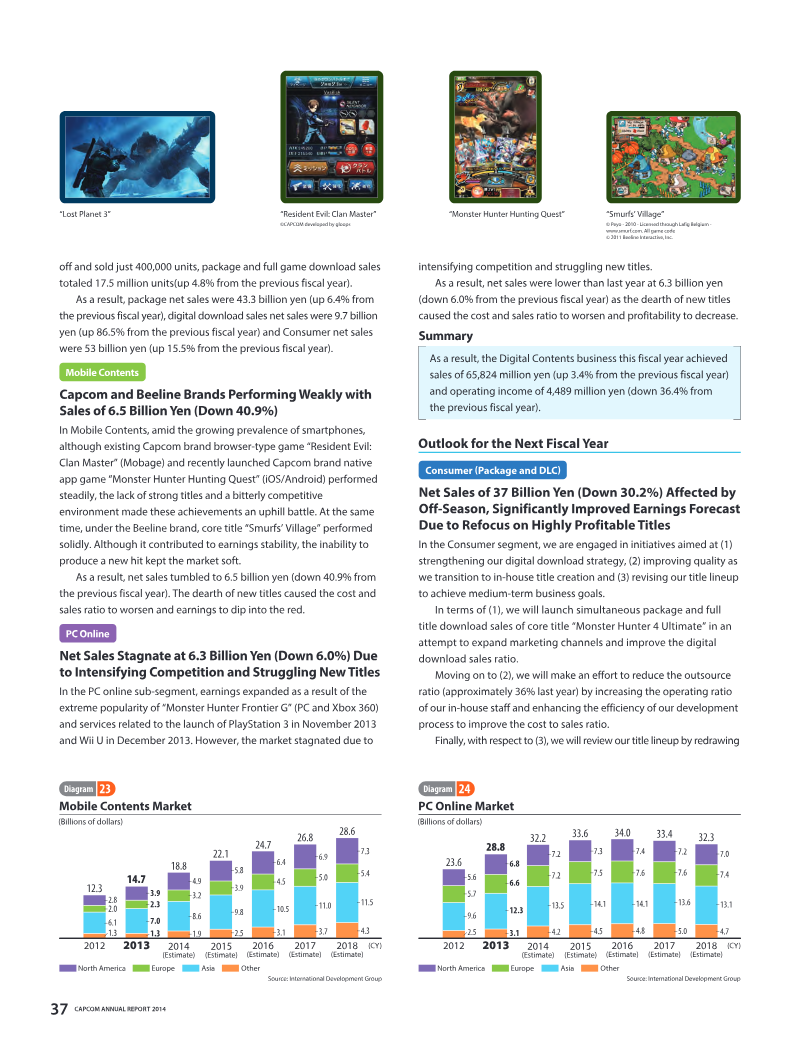
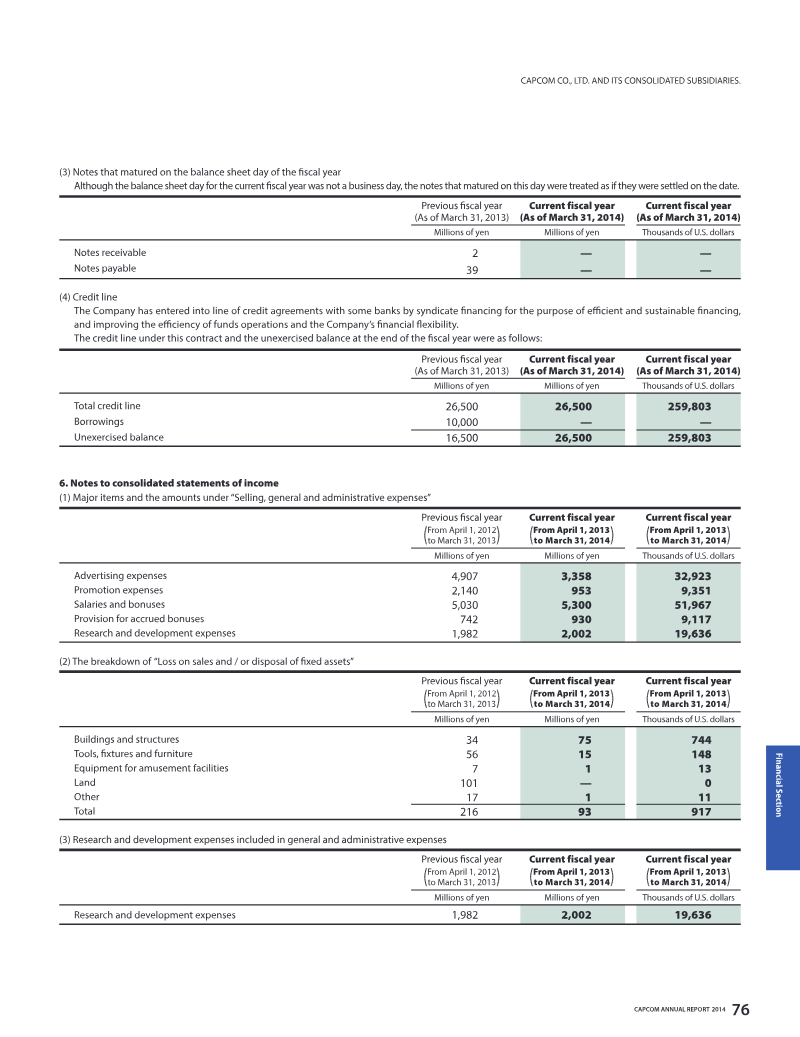
The 2014 Capcom Annual Report outlines a strategic pivot toward internal development and organizational restructuring to address earnings volatility and improve long-term profitability.
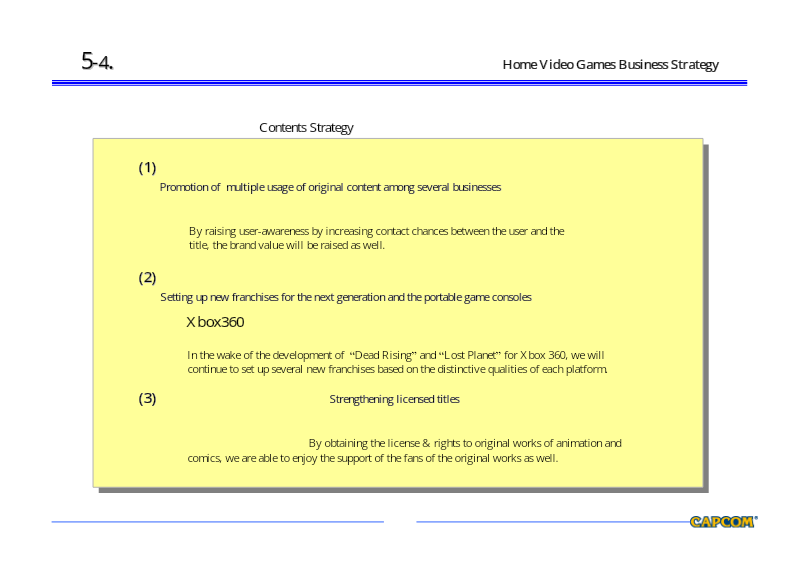
- Capcom is executing a 'Single Content Multiple Usage' strategy to maximize the value of core IPs like Monster Hunter across consumer games, mobile, arcades, and merchandise.
- The company is transitioning from an outsourced model to an in-house studio system to improve product quality and reduce costs, targeting a 20% operating margin by fiscal 2018.
- Fiscal year 2014 net sales reached ¥102.2 billion, marking the first time the company surpassed the ¥100 billion threshold.

Capcom Annual Report 2013
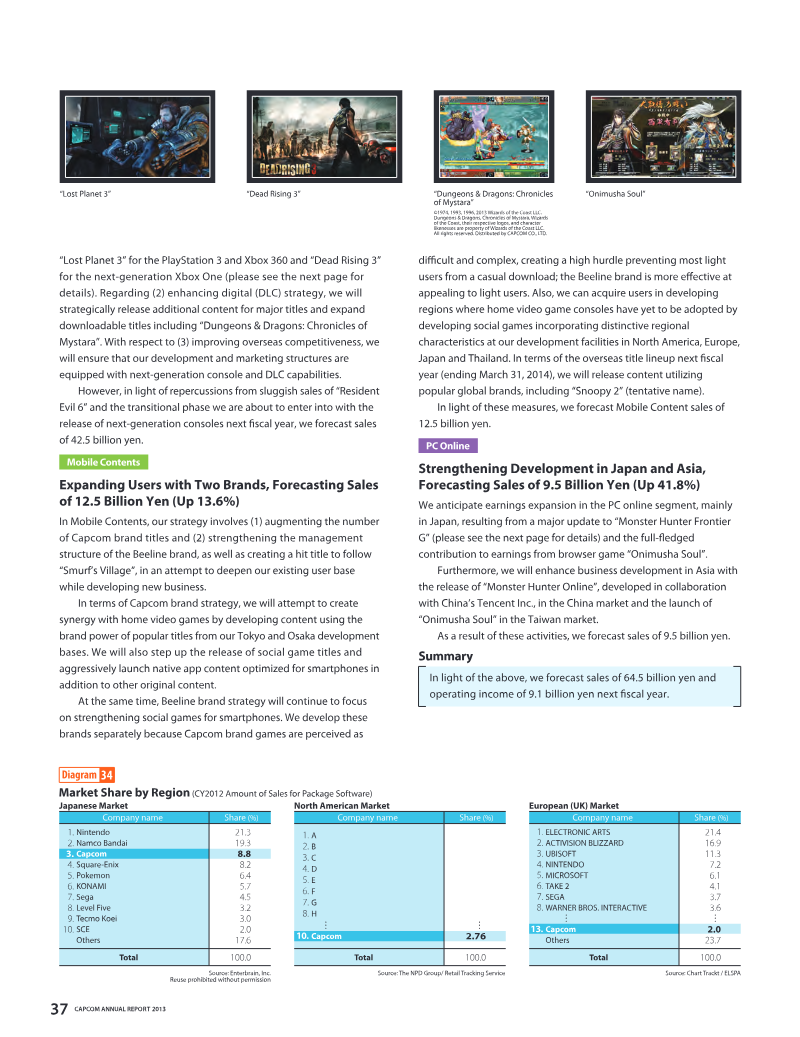
The 2013 Capcom Annual Report outlines a strategic pivot toward a digital-first business model, marking a transition from traditional package-based software sales to a service-oriented framework.
- Capcom is executing a 'Single Content Multiple Usage' strategy to pivot from traditional package-based sales toward a digital-first, service-oriented model leveraging core franchises like Resident Evil and Monster Hunter.
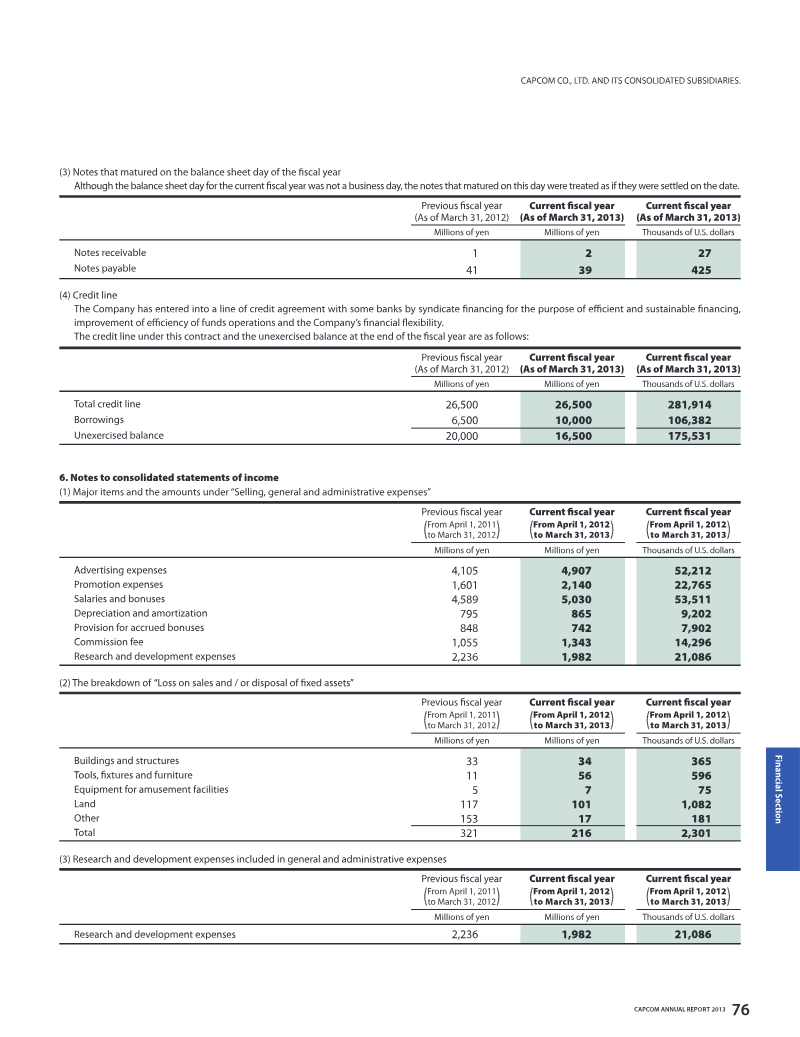
- Fiscal year 2013 net sales grew 14.6% to ¥94.075 billion, though operating and net income declined due to restructuring costs, rising development expenses, and underperforming titles.
- Management has set a medium-term target to achieve a 20% operating margin by 2018 through increased in-house development and the use of the proprietary 'Panta Rhei' game engine.

Capcom Annual Report 2012
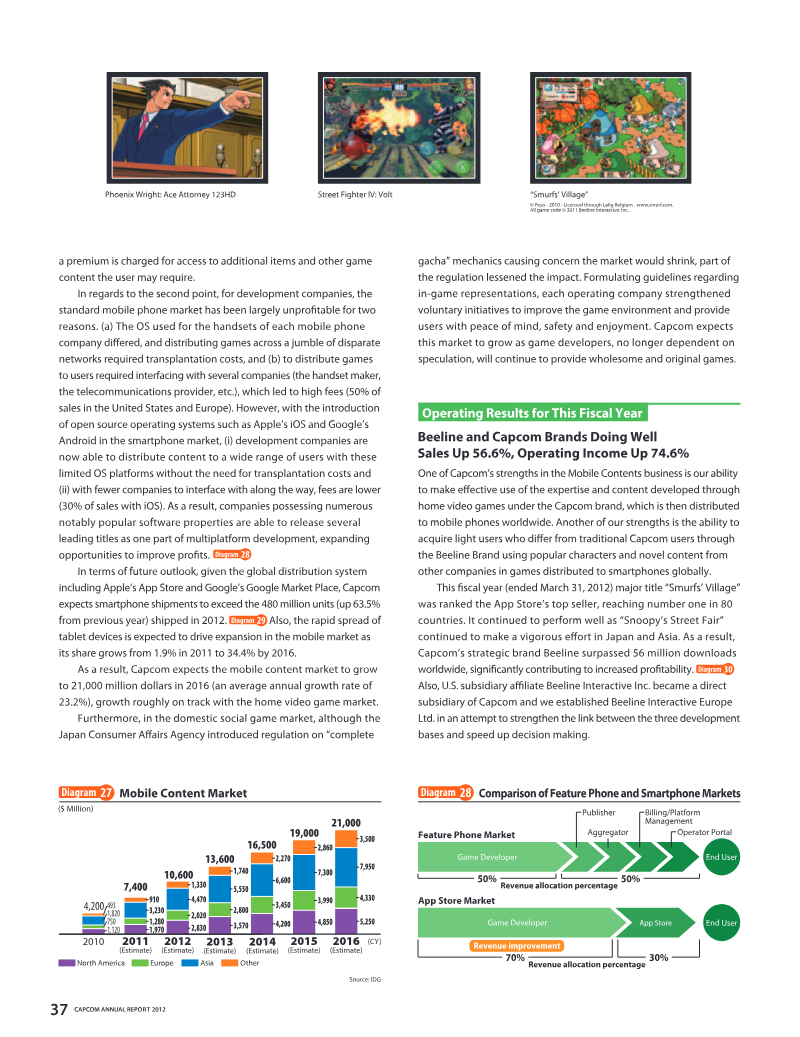
The 2012 Capcom Annual Report details a transitional fiscal year characterized by a strategic pivot toward digital and mobile expansion amidst a contraction in traditional console software sales.
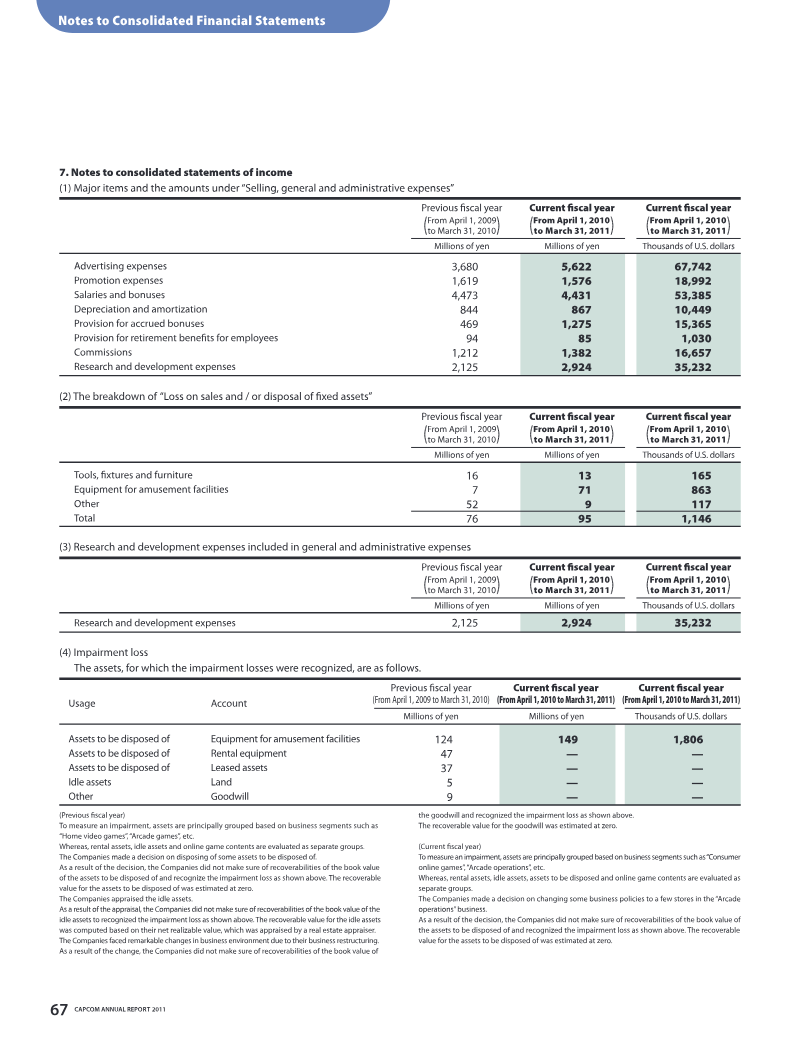

Capcom Annual Report 2011
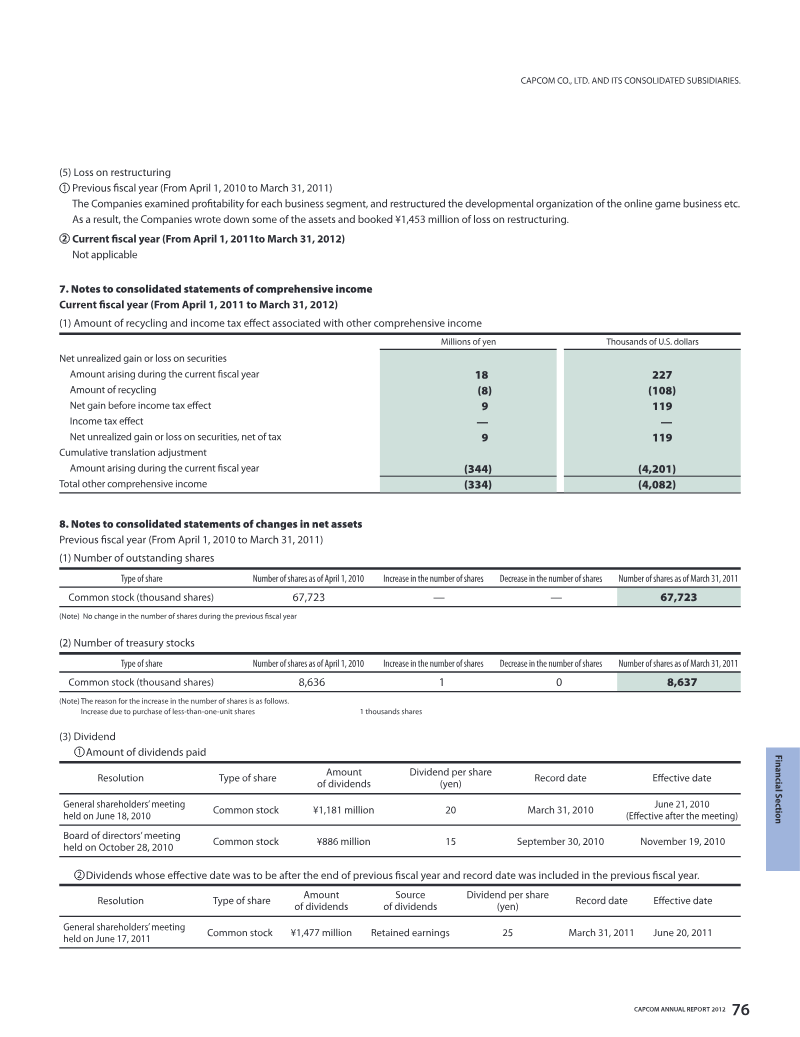
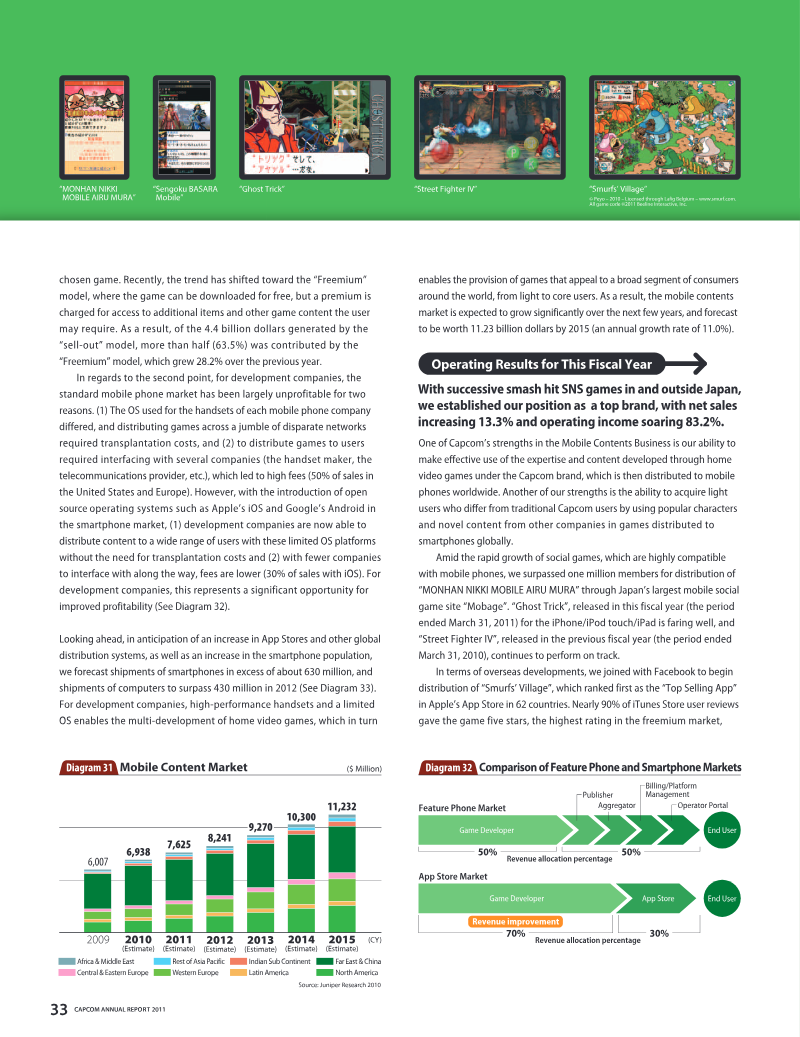
Capcom’s 2011 annual report details a period of record-breaking financial performance, characterized by a successful pivot toward digital expansion and organizational efficiency.
- Capcom achieved record financial performance for the fiscal year ending March 31, 2011, reporting 97.7 billion yen in net sales and a 257.6% increase in net income.
- Growth was driven by the release of five million-selling titles, led by Monster Hunter Freedom 3, and the successful implementation of the proprietary MT Framework technology.
- The company is executing a 'Single Content Multiple Usage' strategy to leverage intellectual property across consumer, mobile, and amusement segments.
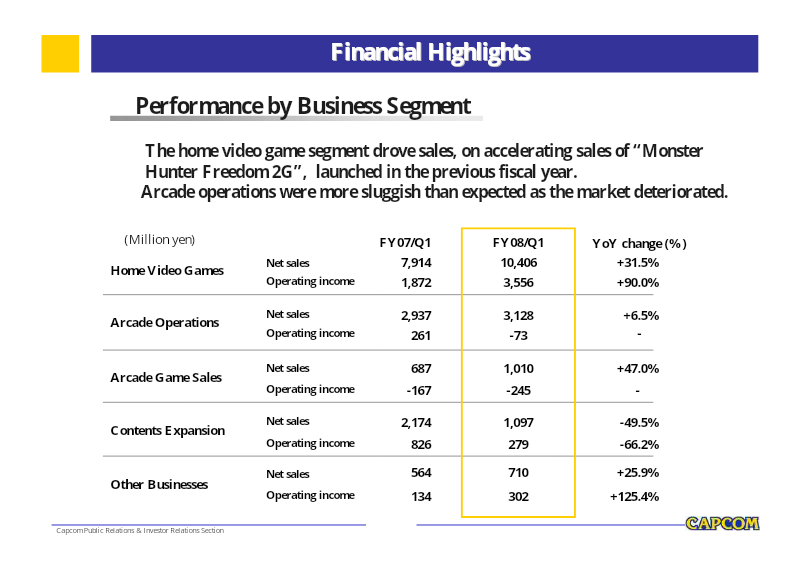
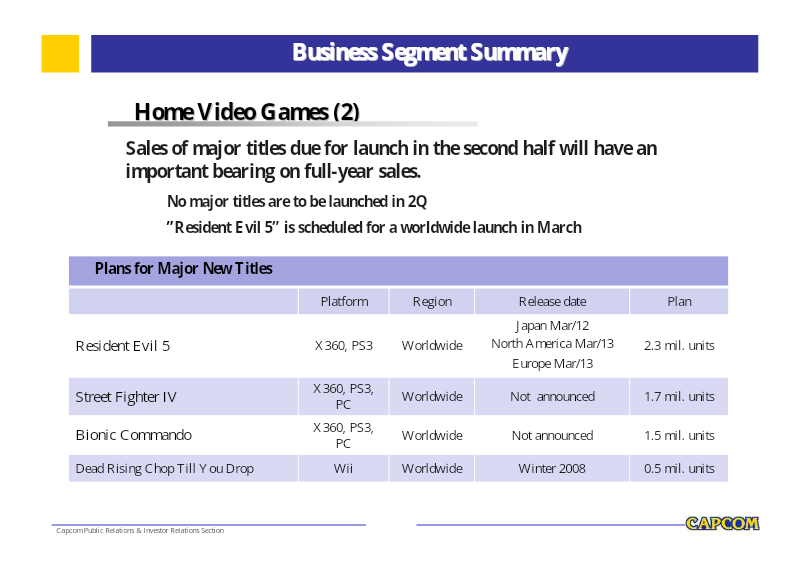

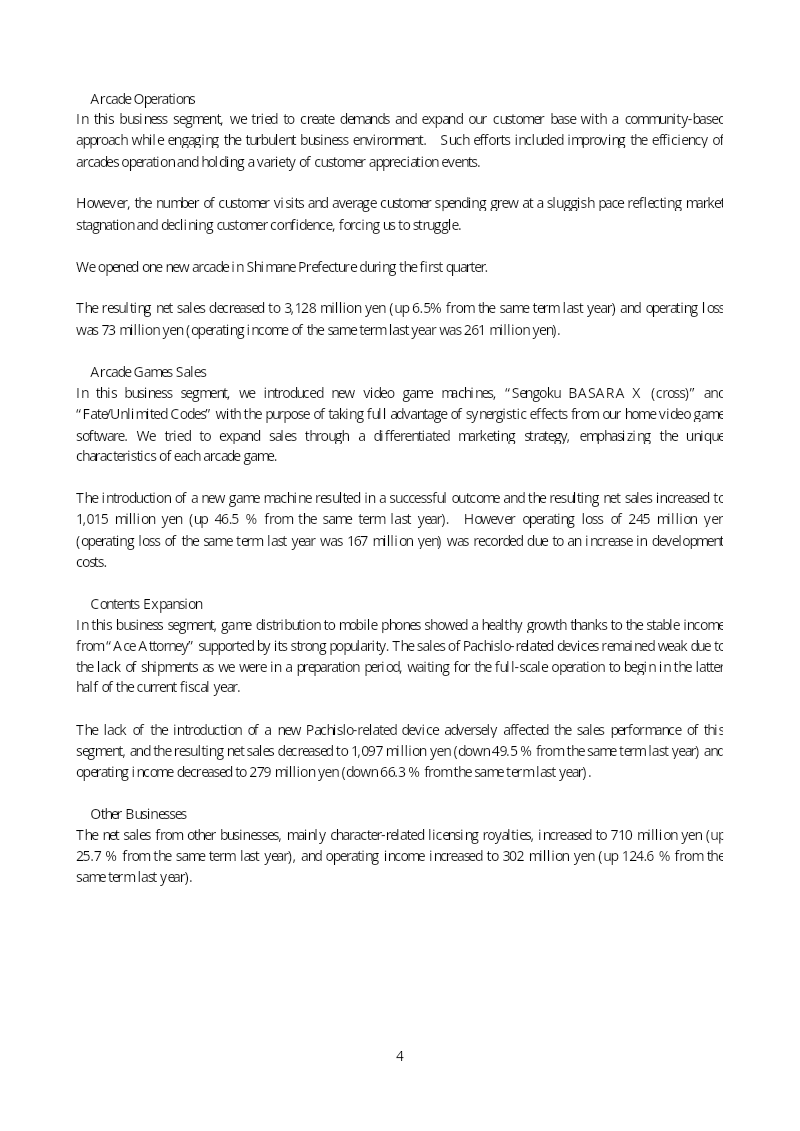
Capcom 1st Quarter Report: Fiscal Year Ending March 31, 2009
The Capcom first-quarter report for the fiscal year ending March 31, 2009, details a period of strong financial growth driven primarily by the home video game segment.
- Capcom achieved consolidated net sales of 16.35 billion yen, a 14.5% year-over-year increase, and a 110.8% surge in net income to 2.38 billion yen.
- The home video game division drove growth with 10.4 billion yen in sales, a 31.5% increase primarily fueled by the success of Monster Hunter Freedom 2G, which reached 2.48 million units shipped by July 2008.
- Financial performance was bolstered by an 840 million yen foreign exchange gain and the continued commercial success of existing titles.
Companies behind it


As the documents state it.