1 free read left. Create a free account for unlimited reading + AI research.
Create free accountFinancial report Capcom
1 free read left. Create a free account for unlimited reading + AI research.
Create free accountFinancial reportCapcom
The 2013 Capcom Annual Report outlines a strategic pivot toward a digital-first business model, marking a transition from traditional package-based software sales to a service-oriented framework. Faced with the volatility of the AAA console market and the rapid growth of mobile and online gaming, the company’s primary thesis centers on the "Single Content Multiple Usage" strategy. This approach aims to maximize the value of intellectual property by leveraging core franchises—such as Resident Evil and Monster Hunter—across diverse media, including mobile social games, PC online titles, film, and merchandise, to ensure stable, long-term earnings.
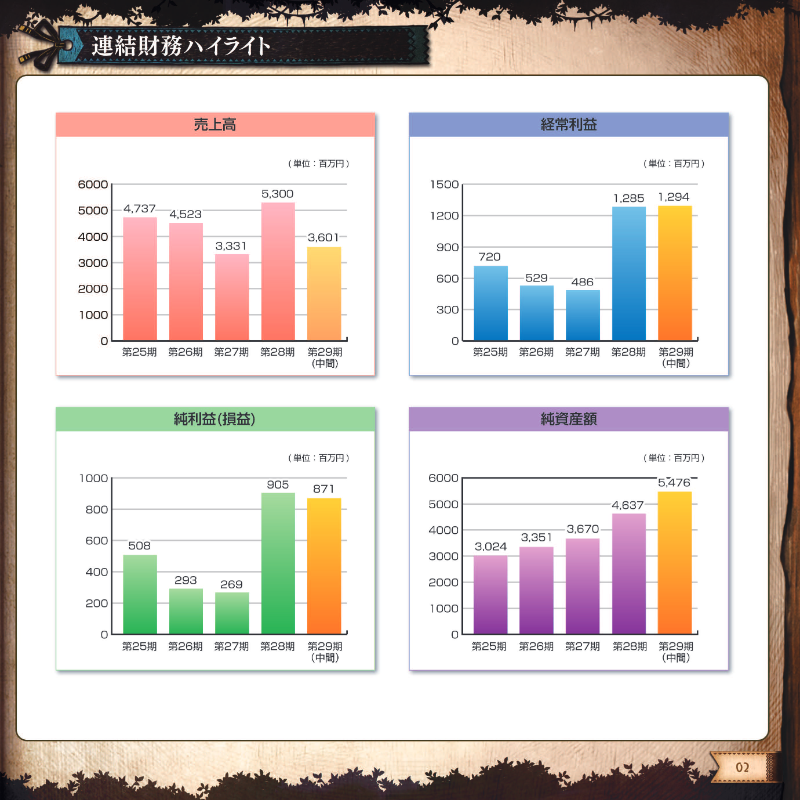
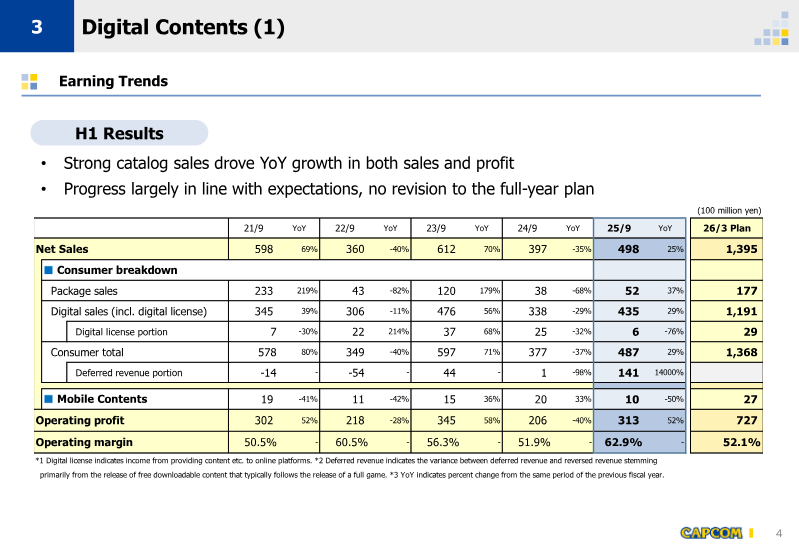
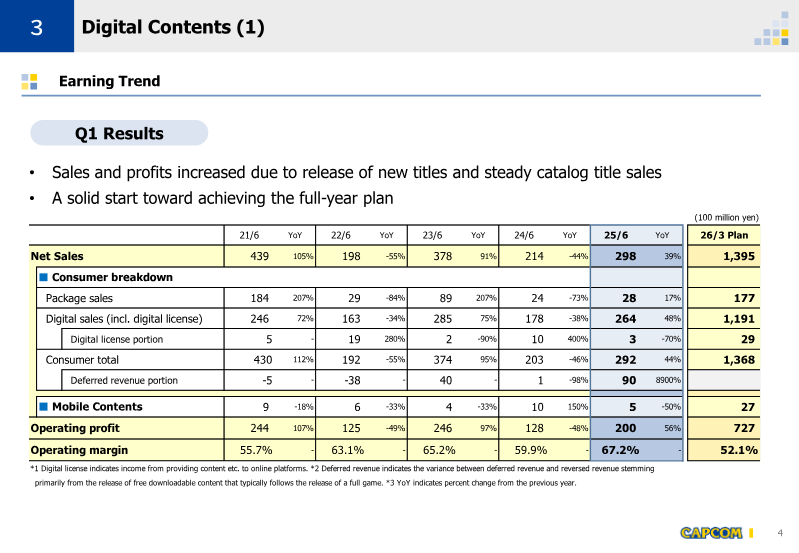
Financially, the fiscal year ending March 2013 presented a complex landscape. While net sales increased by 14.6% to ¥94.075 billion, driven largely by robust performance in the Amusement Equipments segment and the success of Pachinko and Pachislo machines, operating and net income declined significantly. This contraction was attributed to restructuring expenses, the underperformance of certain major titles, and rising development costs. To address these challenges, management has established a medium-term goal of achieving a 20% operating margin by 2018. This objective is supported by a commitment to in-house development, the integration of downloadable content (DLC) to extend product lifecycles, and the implementation of advanced proprietary technology like the "Panta Rhei" game engine.
The scope of the report covers Capcom’s global operations, with a primary focus on the Japanese market while emphasizing international expansion through localized mobile and PC online content. Beyond financial performance, the document highlights a rigorous commitment to corporate governance, risk management, and social responsibility. By prioritizing transparent investor relations, internal compliance frameworks, and educational outreach, the company seeks to mitigate operational risks and maintain brand loyalty. Ultimately, the report positions Capcom as a resilient entity focused on balancing its 30-year legacy of high-quality content creation with the agility required to navigate the evolving digital and mobile gaming landscape.
Capcom · 2026
Capcom · 2026


Capcom · 2026
Capcom · 2026
Capcom · 2026
Capcom · 2025
Capcom · 2025
Capcom · 2025
Capcom · 2025
Capcom · 2025
Capcom · 2025
Capcom · 2025
The Game Business · 2026