
League of Legends
GameBy Riot Games · Released Oct 27, 2009
Documents about League of Legends
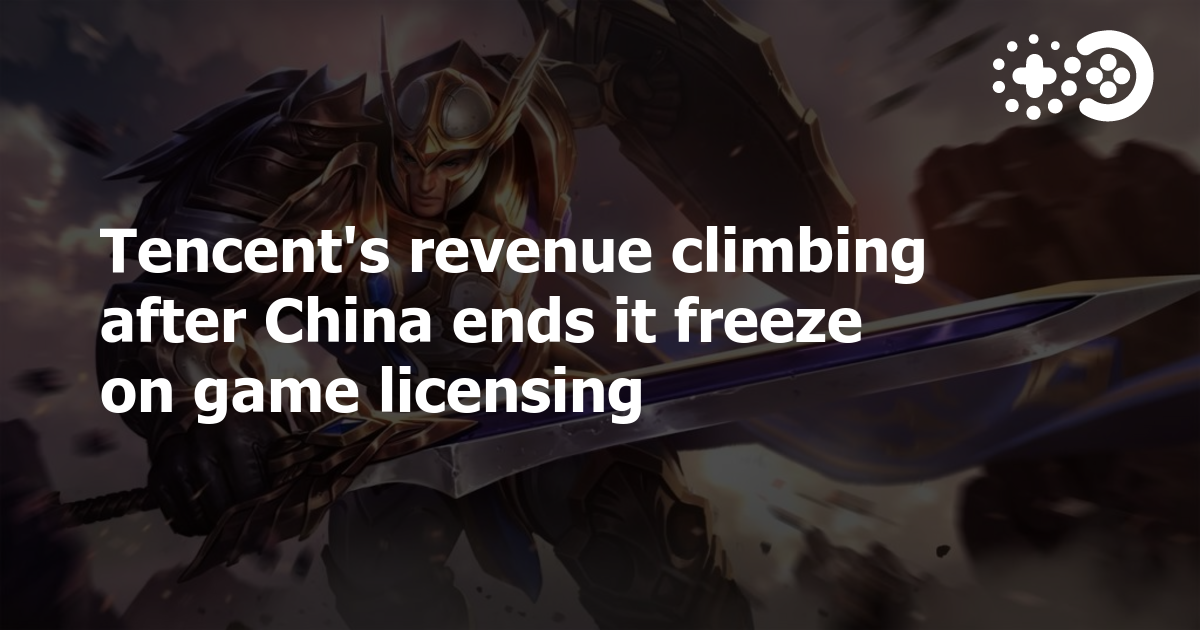
Tencent’s Revenue Climbing After China Ends Its Freeze on Game Licensing
Tencent experienced a significant financial recovery during the second quarter of 2019, driven primarily by the Chinese government’s decision to lift a prolonged freeze on game licensing.
- Tencent’s total Q2 2019 revenue reached $12.7 billion, representing a 21% increase compared to the same period in 2018.
- Following the end of the Chinese government's game licensing freeze, Tencent released 10 mobile games in Q2 2019, compared to only one release during the same period in 2018.
- Tencent’s overall gaming revenue grew 8% year-on-year to $3.9 billion in Q2 2019, driven by strong performances from titles like Honor of Kings and Game for Peace.

Forget About Fortnite: Netflix Down, Ubisoft Up, Guerrilla Out
This analysis of the mid-2018 gaming and technology landscape examines the shifting dynamics of market share, specifically focusing on the disruptive impact of Fortnite.
- Fortnite is cannibalizing the gaming market rather than expanding it, as evidenced by a 6% decline in total digital console sales when Fortnite revenue is excluded from the 49% year-over-year growth figure.
- The rise of Fortnite has negatively impacted viewership for established esports titles, causing declines of 19% for League of Legends, 16% for Overwatch, and 51% for CS:GO in Q2 2018.
- Ubisoft reported strong Q2 2018 financial performance with $663 million in revenue, largely driven by the success of Far Cry 5.
One Fourth of All German Internet Users Play Multiplayer Games
Multiplayer gaming serves as a significant social and cultural pillar within the German digital landscape, engaging a substantial portion of the population.
- Approximately 18 million German internet users aged 16 and older, representing 27% of that demographic, engage in multiplayer gaming.
- About 21% of German internet users, totaling 14 million people, dedicate up to 50% of their total gaming time to multiplayer experiences.
- Multiplayer gaming preferences are split between online play (8.4 million users), local/same-room competition (4.7 million users), and a mix of both (4.9 million users).
Revisiting the Strategy Genre Map: Age, Audience Homogeneity, and the Lasso Effect
This analysis updates the strategy genre map by integrating demographic and motivational data from over 220,000 global gamers.
- Games with high strategic complexity attract more homogenous audiences with similar motivation profiles, whereas high-excitement games do not exhibit this restrictive 'lasso' effect.
- There is a clear correlation between gameplay pace and player age: fast-paced competitive titles like League of Legends, DotA, and Counter-Strike attract the youngest audiences, while turn-based or pause-able games like Civilization and SimCity attract the oldest.
- World of Tanks is a significant outlier in the strategy genre, demonstrating the broadest age appeal among all analyzed titles with a standard deviation of 10.3.
Most Popular Games by Gaming Motivations
The primary objective of this analysis is to categorize popular video games based on specific player motivations, providing a framework to understand what drives engagement across different gaming experiences.
- Quantic Foundry analyzed data from over 100,000 gamers to map specific game titles to 12 distinct psychological motivations, normalizing results to account for the base-rate popularity of major franchises.
- Games associated with the 'Power' motivation include World of Warcraft, Diablo, and League of Legends, while 'Completion' is driven by titles like Final Fantasy, Assassin’s Creed, and Animal Crossing.
- The 'Excitement' and 'Destruction' categories are dominated by high-intensity franchises such as Call of Duty, Battlefield, Destiny, and Counter-Strike.

The +1 Mobile Game Design Strategy
The +1 mobile game design strategy posits that the most effective approach to game development involves taking an established set of core mechanics and introducing at least one significant advancement or improvement.
- The '+1' strategy—improving an existing core game mechanic with one significant innovation—is the most effective approach for mobile game success, as it balances the risk of radical innovation with the limitations of simple cloning.
- Horizontal design, which relies on copying existing successful games, has become less viable due to the high cost of user acquisition and the difficulty of competing with established titles that have already built significant user bases.
- Vertical design, which involves creating entirely new mechanics from scratch, carries a high failure rate and often requires a subsequent '+1' iteration to achieve market dominance and commercial viability.
LFL 2026 Summer Results
The LFL 2026 Summer season represents a critical inflection point for the French League of Legends ecosystem, characterized by a sustained contraction in audience engagement.
- LFL 2026 Summer viewership reached its lowest point in years, marking seven consecutive seasons of decline for the French League of Legends competition.
- Compared to the spring split, the tournament experienced a 4.9% drop in average viewers and a 9.7% decrease in peak viewers, totaling 1.19 million hours watched.
- The tournament's most-watched match was a Week 3 group-stage game between Joblife and ZYB, which reached a peak of 47,000 viewers, largely driven by community-casting support.
MLBB and League of Legends Drove Esports Viewership in July 2026
Mobile Legends: Bang Bang and League of Legends served as the primary catalysts for global esports viewership throughout July 2026.
- The MLBB Mid Season Cup 2026 achieved the highest peak viewership of any esports event in July 2026.
- Mobile gaming titles dominated the global viewership charts, securing three of the top five spots, including the MLBB Mid Season Cup, the Free Fire Esports World Cup 2026, and the Arena of Valor Premier League 2026.
- League of Legends was the only title to place two events in the global top five for July, with its Mid-Season Invitational ranking second and its Esports World Cup tournament ranking third.
Top Esports Games and Tournaments by Live Viewership in H1 2026
The global esports landscape in the first half of 2026 is defined by the continued ascendancy of mobile gaming and a shifting linguistic demographic.
- Mobile Legends: Bang Bang (MLBB) dominated H1 2026 viewership, led by the M7 World Championship which reached a peak of 5,680,511 concurrent viewers.
- The top five most-viewed tournaments in H1 2026 were the M7 World Championship (5.68M peak), MPL Indonesia Season 17 (2.95M peak), IEM Cologne Major 2026 (2.75M peak), LCK 2026 Road to MSI (2.27M peak), and MPL Philippines Season 17 (1.70M peak).
- League of Legends slipped to third place in overall game rankings for the second quarter, despite the LCK 2026 Road to MSI qualifier achieving a peak of 2.27 million viewers.
Where Community Casting Mattered Most in Esports During H1 2026
Community casting has evolved into a foundational pillar of the global esports ecosystem, accounting for 46.7% of total watch time during the first half of 2026.
- Community casting accounted for 46.7% of total watch time across major competitive esports titles during the first half of 2026.
- Mobile esports titles, including Mobile Legends: Bang Bang, Arena of Valor, and Battlegrounds Mobile India, maintained a strong reliance on official streams as the primary audience gathering point.
- Regional language preferences dictate co-casting adoption, with Russian, Spanish, Turkish, and German audiences favoring creator-led streams over official tournament feeds.
Which Games Benefit Most From the Esports World Cup?
The Esports World Cup functions as a critical, albeit uneven, catalyst for viewership across the competitive gaming landscape.
- Five major titles, including League of Legends and Mobile Legends: Bang Bang, drive 68.6% of the event's total hours watched, highlighting a heavy concentration of viewership around a few core games.
- Apex Legends experienced a 74% increase in peak viewership during the 2026 event, marking it as the game's most-watched tournament of the year.
- Established franchises like Valorant saw a 45.8% decline in peak concurrent viewership compared to historical benchmarks, suggesting the event format may not align with mature fanbases.
Esports Sponsorship Benchmark H1 2026: Media Value Delivery
The esports sponsorship landscape during the first half of 2026 demonstrates a clear concentration of commercial influence within established, mature PC-based ecosystems.
- The top ten esports events in H1 2026 generated a collective $203 million in media value.
- Sponsorship efficacy is currently driven by media value delivery rather than raw audience size.
- Counter-Strike and League of Legends remain the primary drivers of financial value for corporate partners.
Companies behind it
 Riot Gamesdeveloper, publisher, owner316
 Overwolfowner23
 Tencent Holdingspublisher695
- Riotowner319
- NAVERowner2
As the documents state it.