Command & Conquer
Game
Documents about Command & Conquer

EA's Laura Miele on Command & Conquer mistakes, resurrecting Skate and Dead Space, and Battlefield 6
Electronic Arts is currently prioritizing a fan-centric development strategy that focuses on reviving legacy intellectual properties and fostering deep social engagement.
- EA is prioritizing a fan-centric strategy that revives dormant intellectual properties like Skate, Dead Space, and EA College Football to meet demand from Gen Z and millennial demographics.
- Development for Battlefield 6 utilized 92 million hours of gameplay and 30 distinct builds through 'Battlefield Labs' to ensure iterative, community-driven refinement before launch.
- EA is shifting toward a platform-based model for major titles, integrating single-player, multiplayer, and free-to-play modes to accommodate diverse player motivations.

Summer Game Fest thoughts, Supercell kills US projects, Xbox chat, EA's mobile misstep, more
The mobile games industry currently faces a significant disconnect between its massive market dominance and its lack of visibility at major industry events.
- Supercell has effectively wound down its US-based game development operations, with the team behind a project in development for three and a half years disbanded and the remainder of the 2022-announced US team no longer with the company.
- Metacore, the developer of Merge Mansion, is cutting 159 jobs in Helsinki and closing its offices in Germany and Sweden as part of a major restructuring.
- Xbox Chief Strategy Officer Matthew Ball acknowledged that mobile is the largest and most valuable segment of the gaming industry, yet confirmed the company's primary focus remains on the console business, which he noted has the least growth potential.
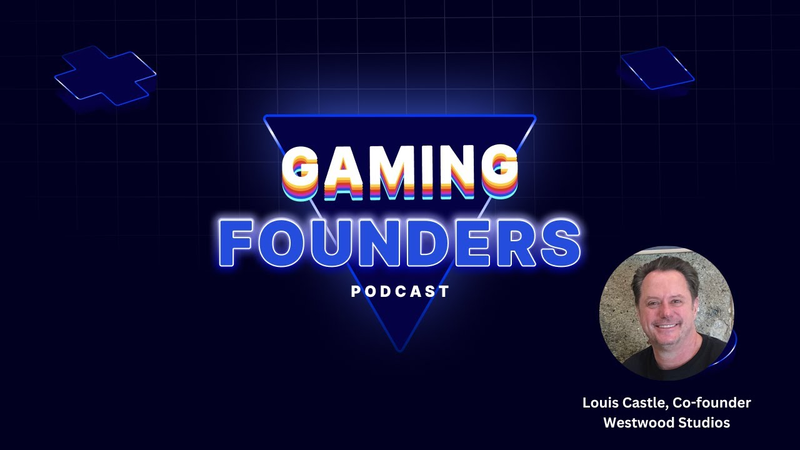
The Storied History of Gaming Veteran Louis Castle, Co-Founder of Westwood
The evolution of the real-time strategy genre and the professional trajectory of Louis Castle illustrate the transition of the gaming industry from a hobbyist pursuit to a sophisticated corporate enterprise.
- Westwood Studios scaled its operations by using contract porting work to self-fund original intellectual property, a pragmatic model that allowed for creative autonomy.
- The studio achieved peak growth between 1992 and 1998, reaching a workforce of 250 employees through the success of genre-defining titles like Command & Conquer and Blade Runner.
- Westwood maintained creative control during four major acquisitions by strictly dividing leadership responsibilities between design and operations.

TWIG #141 Reactions to XCOM mobile bleeds to debate on free-to-play games
The recent soft launch of the XCOM mobile title serves as a focal point for broader industry tensions regarding the adaptation of core gaming intellectual property (IP) for mobile platforms.
- Adapting core gaming IP for mobile creates a strategic dilemma where simplifying mechanics to reach mass-market audiences risks alienating the loyal, core fan base.
- Franchises with highly distinct, mechanics-driven identities—such as XCOM, Command & Conquer, and Civilization—face significantly higher resistance to gameplay changes than IP that can easily decouple from specific genre expectations.
- The soft launch of the XCOM mobile title demonstrates that high production values and strong narrative elements are insufficient to overcome fan backlash when core strategic gameplay is perceived as diluted.
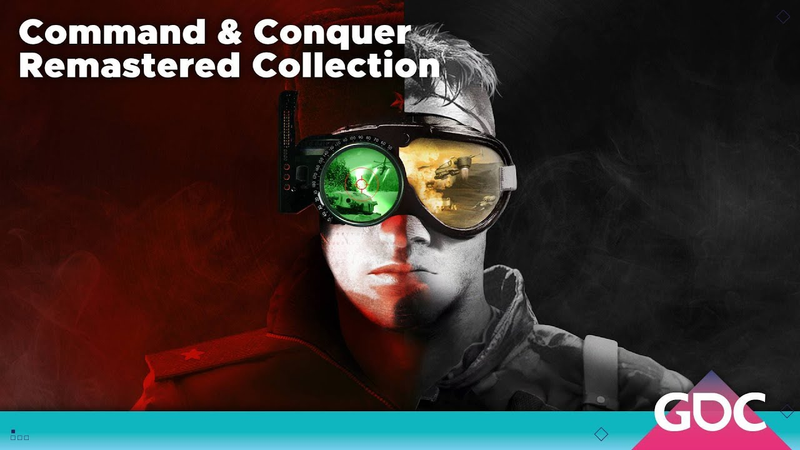
GDC Plays Command & Conquer Remastered Collection with Jim Vessella
The Command & Conquer Remastered Collection represents a strategic effort to revitalize a foundational real-time strategy franchise by balancing authentic 1990s gameplay with contemporary technical standards.
- EA partnered with Petroglyph Games and Lemon Sky Studios to develop the Command & Conquer Remastered Collection, leveraging the latter's prior experience in remastering legacy titles.
- Development began in November 2018 with a community-first approach, utilizing feedback from a community council to guide creative decisions before pre-production even started.
- Lemon Sky Studios re-conceptualized every game asset by referencing original hand-drawn sketches, manuals, and cinematics to create high-definition 3D models that were then exported as 2D sprites to maintain the original aesthetic.
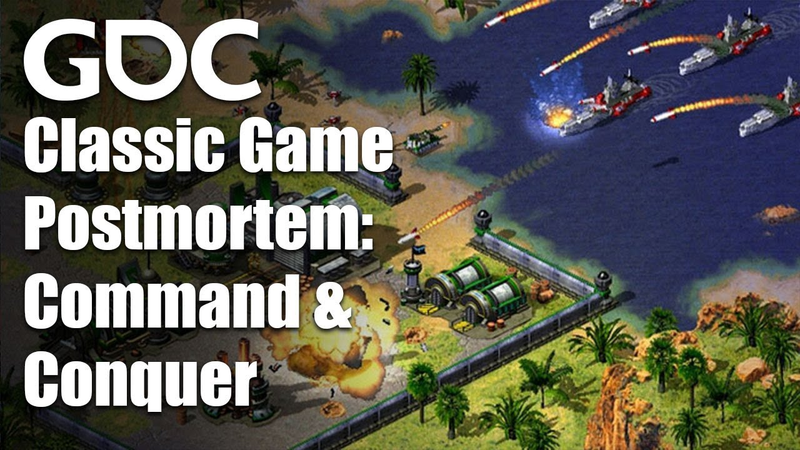
Classic Game Postmortem: Command & Conquer
The development of Command & Conquer at Westwood Studios during the mid-1990s represents a pivotal moment in the evolution of the real-time strategy genre.
- Command & Conquer was a pioneer in transitioning game audio from MIDI-based sound chip playback to streaming audio, allowing for the integration of synthesizers and live guitar.
- To overcome severe rendering bottlenecks for in-game cinematics, the team implemented a 'VQ slave mode' policy that utilized idle employee workstations overnight, effectively doubling their render farm capacity from 50 to 100 machines.
- The game's multiplayer functionality was designed to support local area networks via IPX, as well as modem and null-modem connections, though internet play was ultimately deferred to the sequel, Red Alert, due to technical constraints.
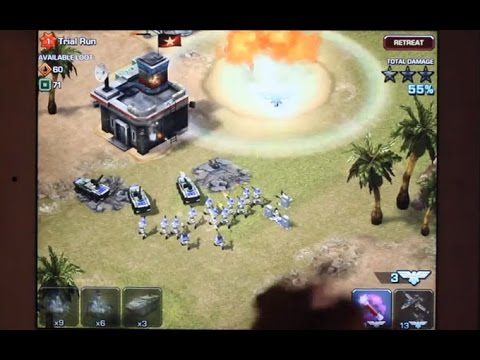
Monetizer: Empires & Allies
Empires & Allies, a mobile strategy title developed by Zynga, represents a strategic evolution of the established Clash of Clans template.
- Zynga’s Empires & Allies differentiates itself from the Clash of Clans template by incorporating tactical elements from PC real-time strategy games, such as stealth units, reinforcement drops, and active battlefield power-ups.
- The game utilizes a monetization bottleneck by restricting players to a single engineer, which forces spending on hard currency to accelerate construction times.
- The hard currency, gold, is sold in five price tiers ranging from $5 to $100, with a 1.4x discount ratio applied to the highest $100 purchase.
Companies behind it

As the documents state it.