VideoThe Game Business
EA's Laura Miele on Command & Conquer mistakes, resurrecting Skate and Dead Space, and Battlefield 6
23 Jun 202635 min video
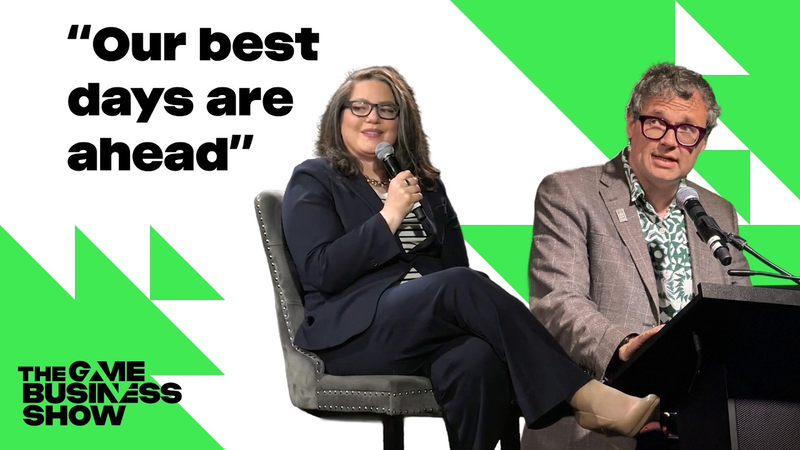
Our industry's changed a lot over the years and there's always been, you know, just chaos and innovation and change. And the more that we can just stay focused on showing up for players, making our games, um things work out well. This guy kind of uh was sitting in a corner and he kind of like raised his hand and just said, "You know, I don't understand why you don't make games that your fans are asking for." And I just kind of looked at him and said, "We've been asking for Skate, we've been asking for college, we've been asking for Dead Space." And I just it just resonated with me so much.
[music]
I love the idea of the notion of the whole Ted Lasso be a goldfish. Like, be a goldfish and just, you know, you can look to the past to learn and move forward, but don't be paralyzed by it.
[music]
Hello and welcome back to the Game Business Show with me, Christopher Dring. Now, earlier this month we were in Los Angeles and we did an event called the Game Business Live. During that event, we recorded three versions of the Game Business Show. The first one you've already seen, it is with Xbox Chief Strategy Officer Matthew Ball. Now, our next one is with Laura Miele, one of the most senior leaders at
Electronic Arts, who has held various roles at the publisher, including most recently President of EA Entertainment. But she's also been previously COO, she's been in charge of mobile, she's held all sorts of different roles at the company. Now, of course, EA is going through an acquisition at the moment. It's been bought by a group of companies led by the Saudi Arabia Public Investment Fund. That does limit a little bit what we're able to talk about, but we still managed to have a nice chat with some I think some interesting stories. So, here it is, my conversation with Laura Miele.
[applause]
Good to HAVE YOU HERE. HI EVERYONE. SO GREAT TO BE HERE. I SEE A LOT OF really great friends in the audience. So, it's always fun when we can gather as an industry. Yes, it is.
Well, welcome to the show.
Thank you.
Now, I'm going to ask a question I don't I know I don't think you can answer, but I'm going to ask you anyway.
Well, sure. First one off, I can't answer it.
There's a big thing happening at EA.
Is that right? Tell me more.
You well, you're being I don't know if you heard about this. You're being bought by the uh Saudi Arabia Public
Investment Fund alongside some private equity groups. This obviously hasn't happened yet, but is it having a much of an impact on EA already?
Well, you know, I I and I can't comment much on it. It's a very large transaction. The process is plugging along well. And our teams, you know, our teams are pretty heads down focused. We announced the deal last September. Um, so it's been it's been a minute and as we all know, making games is pretty challenging and complicated on a good day. And so our teams um, have remained really focused on the games they're creating. We've had some big launches in the last year and we have some pretty um, incredible games coming. So teams are really focused on showing up for our players, live services, new launches coming um, in there. And we're And we're excited. We're excited about the future and what it what it will all mean.
Okay. It sounds positive. I mean, I I've been through a few acquisitions myself and sometimes you get you get the ones where they're they're really hands-on and then they get the ones that are sort of like, you know, you do your thing. Um, I often find the latter is more successful than the former. But um,
[laughter]
so it can be an anxious time for employees and I imagine for fans as well, but you're you seem positive.
Yeah. I am. I'm I'm looking forward to getting it closed for sure and I again having our teams just stay focused on creating games for our players. The all things I have known. I mean, our our industry's changed a lot over the years and there's always been you know, just chaos and innovation and change. And the more that we can just stay focused on showing up for players, making our games, um, things work out well.
Let's talk the video game industry. Now, we're speaking during this exciting Summer Game Fest week. Um, lots of game reveals, uh, some new Star Wars game from you from you folks. Um, but there's been this sort of it's you know, it's taking place with this background noise of closures and project cancellations and layoffs. You've been through a few rounds yourself in recent times. But I know that despite all this, you're feeling optimistic about where things are headed. Tell us why.
Well, yeah. I mean, yeah. I mean, you and known each other a long time, Chris, and even when I reflect back on when we first started talking to each other when you were at MCV what the size of the industry was, and we all get so heads
down and focused on making the games and solving the challenges in front of us, and when you stop for a moment, pick your head up, and realize that there are close to 4 billion gamers in the world. It's just it's staggering. It's it's incredible. But, the thing that makes me most optimistic isn't necessarily the scale of the opportunity. I just think that behavior and player engagement has changed and evolved so drastically in our medium, which I just find so interesting and exciting. I mean, players go so far beyond the bounds of playing a game. They create in the game. They socialize and share in games. They compete. They collaborate, socialize, and they also discover culture. So, we talk a lot about we or we have talked a lot about where people have said, "Hey, gaming is part of culture." Well, I would say that gaming actually creates culture, and culture can be discovered in games. So, I saw a really interesting statistic last week about um
something like 40% of Gen Z and 30% of millennials discover music in the games they play. And a quarter of them discover TV shows that they're going to watch. And so, I just think we're in this incredibly interesting time that, you know, again, it goes beyond the modality of just playing a game anymore. It is this existential experience about creating culture, people meeting who they are. They compete. They identify themselves in games. They see other people in games. And so, I just think we have such a special medium. So, though there may be close to 4 billion gamers, um and then when we're looking at this behavioral foundation that exists in our industry, I'm really optimistic about what it means in that gaming will be at the center of entertainment in in in culture and and society um as we head forward.
Some of the some of the bands that I like the most I discovered from Gran Turismo and GTA 3 and Vice City and
Yeah, FC, EA Sports FC breaks a lot of, you know, new bands. Yeah, I I I we hear
it all the time.
I mean, you've talked you talk about it there. Um you talk about how a lot of where things are heading is around social connection and creating ecosystems and personalization. I can see how that relates to some of the sports games that you do and Sims, Skate, Apex, all those sort of games. But how do your single-player projects fit into that? And I'm thinking like Mass Effect and Star Wars Jedi and Iron Man, games where that I guess social community element isn't necessarily so obvious.
I yeah, maybe not um directly obvious, but it's still there's a lot of culture and social connection that's created around art and entertainment and shared experiences. Um I think that you can go online and share fan art, share speculate about the story, the characters, the depth. I just think that there's so much substance in what it means to play an interactive game and experience. I started, you know, in the industry 30 years ago at Westwood Studios. And um and before I started Westwood
Studios, I was working in architecture and design. So I had nothing to do with video games. It was a It was a Who knew, right? That um I would end up in video games. But one of my first roles and responsibilities was to run Westwood online. And it was such a gift to start my career being responsible for we had close to, wait for it, a million players. And we thought we were hot stuff cuz we had a million players in our community. And we were. In the industry, it was it was a pretty sizable um group of of players. And the reason why it was so valuable and so important is because I quickly and often early and often learned um that players really have the perception that they're that the games we create the brands we build are as much theirs and they have ownership over it as much as a developer or a publisher. And so when you understand that and you can create a sense of community around many experiences, whether it's a multiplayer competitive experience or beautiful stories and characters and lands that
people can share what their experience was in an RPG or an action game. I just I I think that you have to you have to fundamentally understand the dynamics of community and how people come together and socialize. It's something we really we prioritize and value deeply.
Oh, I see. Your decision to make Skate a live service game, your changes you're making with The Sims with the marketplace and stuff like that. I can see how that fits into the sort of what the next generation of interested in. I can see how it ties into the Roblox generation. And I think about my generation that grew up with skating, grew up with The Sims. Um how do you push forward with bringing in those new players, those next generation of players, but not leaving behind those regional fans?
Yeah, it's a it's a great It's a great question. It's something we ask ourselves a lot. Um Skate is an interesting story. Um back in 2018, I took over the responsibility of running studios for EA. It was a pretty big gig and I was very excited um and
indefinitely um humbled by the responsibility of thousands of game developers. And here at this very spot as we sit in LA Live um going into E3 that year, I had asked for our PR team to help me gather some creators and influencers um around gaming to so I could talk to them. Cuz I always felt like if for as big as the role was, I kept thinking, well, if we can just stay connected to our our players and our fans, they'll be our north and we won't stray too far from where we need to go. And so we had gathered together about 15 people and I just remember it so vividly sitting in the conference room. I remember what I was wearing. It was it was it was such a wild moment. And I said, "Okay, I'm the new head of studios for Electronic Arts. What do I need to know? What do you want me to hear?" And people are going around the room talking about their favorite franchises and games and things on The Sims and things on Battlefield. And this guy kind of was sitting in a corner and he kind of like raised his hand and just said, "You know, I just don't understand why you don't make games that your fans are asking for." And I just kind of looked at him and said, "We've been asking for Skate. We've been asking for college. We've
been asking for Dead Space." And I just It just resonated with me so much. And the particular leadership team that was running studios at the time with us, we immediately greenlit some, you know, college and Skate and and and Dead Space. And as we were thinking about Skate and how we would bring that to life, I wanted I just wanted it to be more than a remaster of the existing experience that we had. Um cuz what we saw was that where people were still playing Skate years and years and years. I mean, just as recent as 6 months before we launched uh the the live service, people were still playing in the old Skate games. And they were recording moves and tricks and socializing around that. And so, we just knew that we wanted to create a sense of place. Um but we could not upset the core. We couldn't upset people like you, Chris. We had to make sure we delivered the core Skate mechanic and the cool tricks and the authenticity of being on the board. And that culture is so important that we couldn't stray from it. We wouldn't have permission to do something perhaps more expansive or broader beyond what's happen what
happens on the on the board. So, we decided that we had to nail that. And then we were we were allowed and would have permission um in in partnership with our players to expand beyond that. We also ran um a large community partnership with our players. So, we had the game in market for close to 2 years before we went out for early access last year. And so, that way we were able to get a lot of feedback, a lot of interaction about it. But we just wanted to create a great hang and um a great place for players to gather and play. and it's kind of interesting. You know, it could be a bench, um a ramp, a rooftop and players are super creative about how they use it. Some players um sit in buildings and have yoga classes together um and socialize around that. And so, the most unexpected things happen in worlds that you create where you can offer tools and and and a great environment for people to um socialize with each other.
I remember and it was an E3 long, long time ago. I used to run the UK charts. It used to be a big thing. I used to run
the UK charts.
I remember.
And um and Skate ended up in the top I think top 15 or something. It'd been out for ages. It'd been, you know, it I thought and um and I ran into someone from Game, the retailer, and I said, "What's with Skate being in the" I knew it came from Game. And uh he said, "Well, we had loads of people come into the shop asking for copies of this game." So, he asked EA to reprint it. And that's how they ended up in the thing. And then I found out a little while later it was because PewDiePie had been doing videos of Skate. And I just thought that's the community. I guess it makes sense when you think about that's kind of what reignited interest in that franchise in many ways that that's the community um that creating that live service with the
It is and sharing and socializing around it. And and the original game wasn't built for that. And so, there's a lot of friction in that pipeline for players to do that. So, we really wanted to bring it together and and create more of a sense of place than a literal um skate uh board experience. So, that that's there, too, but
Didn't you tell me that um you learned from the Command & Conquer mobile game about
[laughter]
about fans and making sure that you do
stuff for them?
Yeah, no, that's a good one. Um yeah, I mentioned I was at Westwood and we had our Command & Conquer series, which is just so near and dear to my heart, for sure. And um and I come across so many fans of people that like, "Oh gosh, this is one of my favorite games. I played it all through college." And so, one of the things that I really value in leading studios, working, partnering with our game developers is that I love when a team has a spark of a passion to do something and there was a team at EA that wanted to create this really cool competitive Command & Conquer game for mobile. And I thought, "Oh my gosh, this is so It was called Rival Command & Conquer Rivals." I thought, "Oh gosh, what a great way to bring Command & Conquer to even more people given the reach and penetration of this platform. This this is going to be really great." And so, I was pretty excited about it. However,
[snorts]
our our long-term core fans were not. And they thought, "Oh my gosh, you're taking Command & Conquer and you're putting it to mobile and you're not remastering or taking care of something
ourselves." And so, it was just such a valuable moment for me that I didn't we didn't really have permission necessarily to stray too far from what that core PC experience was. So, we immediately and quickly gathered together some of my friends that had left you know, Westwood wasn't around but they had gathered together as a studio and I asked them to work on a remaster for us. And so, we remastered and brought it back to life in a more contemporary way. And even since then, we've released open-source code for players to engage in and um yeah, you're welcome. And there was a few yeah, few conversations about that but it was a it was it was awesome that you know, that EA and that we're all that wanted to do that for our fans. And then and then we had then we put the mobile game out. So, it was like oh oh again, what I go back to oh right, you have ownership over this. You we coexist together. We coexist in these experiences and players who walk through our worlds and live our stories and they become our characters. It's just it's so personal and no other
medium on the planet has that and can compare to what to what we do.
Yeah, I did notice with Battlefield 6 for instance, you started with the very core Battlefield experience before you went beyond that as well.
I think I met the person who might have been responsible for that Command & Conquer story the other day actually but that's a story for another time.
[laughter]
I'm going to ask this question as simply as I can because there's there's so many elements to it and I know there's only so much you can tell me. But nine months in, how are you feeling about Battlefield 6?
Oh, yeah. I'm I am super proud of Battlefield 6 and what the team accomplished. Um I mean, I always try and take a step back and understand where we are, what we've learned, how we go forward, um while also celebrating what um the the team accomplished. I think there's kind of three meta themes for me about Battlefield 6. Um The The first really was about Again, it always comes back to leaders and teams
for us and um and I'm I'm just couldn't be a bigger fan and champion and advocate for our game developers. They're really at the are at the heart of Electronic Arts um for um our our company. And developing a team, creating a team, and and having a really powerful pot of leaders that can come in and spark a team and spark the people that existed within the company was incredibly important. We had Byron Beaty who was um you know, previously general manager on Call of Duty. We of course had the incredible and prolific Vince Zampella. Um and then we had studios all over the world in DICE, Criterion, Motive, Ripple Effect. And so having that team dynamic come together and have a leadership that can take the hill. And the second part about that leadership team is a set unblinking ambition. Unblinking ambition about what was possible. And I I love the idea of the notion of the whole Ted Lasso be a goldfish. Like
be a goldfish and just, you know, don't you can look to the past to learn and move forward, but don't be paralyzed by it. And and think how expansively and openly you can about what is possible with these people and this team and then and and and and and what you can do to go forward. And the most foundational part and the most important part about that project was our players. And so that team with huge ambition knew that we had to connect back to players and they created something called Battlefield Labs. And I'll tell you over the course of development of that game, we put about 30 different builds and versions of the games of of that game through Battlefield Labs out into the market. We had over 92 million hours of gameplay in that game as we headed to market. So there was a lot of this community echo that we've been talking about this feedback um about the game which was what what which was incredibly powerful. Uh kind of a fun story um about and it's it's kind of this visual
image I have of the game and of the effort of the team. I mean the the this is a team of elites um and they are just best in class in the world of creating, you know, a a big shooter game like this. And we all had we were all um heading out to Stockholm a couple years ago. We headed to Stockholm and we're going to go through the production and check on the execution, [clears throat] game design, player feedback. We're just going to have a big meeting. And so we go out there and um we're in the office in at DICE in Stockholm and it was a full day. And we were just going through schedules and and amazing like looking at the graphics. Everybody was getting really excited. And we're supposed to go to dinner that night, but we ended up canceling it and we had food brought in so everybody could play builds of the game cuz it was just like, "Oh gosh, this is just we were pretty giddy." And that game is so vast. It's such a significant platform, a shooter platform with so many different modes. And so we brought dinner in and the people were playing and I thought I was thinking it it was like, you know, a little after 10:00. I was going to go back to the hotel. I was like, "Man, that was a good day. That was a really good day." And I go up to the conference
room to grab my bag and then Sam Pella was asleep on the conference room table. And when I think about the visual image of the passion, how hard people worked and how excited they were to bring something to life, I just think of Vince being there cuz we were just there all day playing games you know we're checking on the teams, spending time with the teams and then he was taking a nap on the conference room table cuz
[laughter]
he was he spent it.
[snorts]
I imagine there's going to be a book written about Battlefield 6 one day.
We talk a lot about community.
Mhm, yeah. And I can't seem to escape that almost every time a game gets announced or released these days you get these bad actors trying to politicize every creative decision, often trying to divide fan bases. I know that you've had some first-hand experience of this. When community is such a massive part of your focus, how much of a challenge is that? How do you manage that?
It is. I mean it's um and as Matt Ball earlier on the stage was talking about, it's a privilege. I mean you have fans that just have such
a sense of ownership and commitment and are so passionate about what you're creating. I think one of the things I'm most optimistic about about what we're doing with massive online communities is that we create modalities and gameplay patterns for as many cohorts as we can. So no longer do we think about a game as a game with a narrow mode or a narrow play style to it. We actually have to think about platforms you could you know we're saying ecosystems that will meet certain player motivations and needs for many different people. It's a very it's a very different structure and construct than perhaps when we started you know a long time ago. And so I and and by the way I [clears throat] I'm not naive. I know we can't please all the people all of the time but gosh our teams sure show up and and really and try and and deeply understand
what meets a player motivation or needs. So when you think about Battlefield we we knew we had to get multiplayer really right. And and that that was the core part and Dice does that. I just think better than than than than than most um studios in the world. So, we knew that, but then we also have Portal, which is a creative creativity kind of dimension where players have agencies and create can create mods. And then we have the single-player dimension of story and characters and world. And then of course we have the free-to-play um version in in Red Sec. And so, we're creating multiple modes that are actually um it's a it's a platform that serves multiple different co- cohorts and different types of people expecting different things in the community. And I think that, you know, there are a few companies in the world that can do that. Um and and we're we're we're fortunate that we have the incredible brands and the teams and the resources to really go after a broad platform like that.
So, what when it comes to those sorts of
people that may not even be in the community, they might be outside of it trying to sort of put a wedge in there and trying to cause trouble or cause issues. Is it just a case of you ignore them or how do you sort of marshal that?
Oh, I I don't mean we don't ignore players. I think we're we always have our finger on the pulse of a of a sentiment and understanding um is this a small handful of people to your point that may not even be playing the game. Sometimes there's there's that. There's also players that may have opinions about the games um of through mods that aren't part of our ecosystem or our games. We try to deeply understand um the entire picture. And we have many people from our PR and marketing teams to our game developers that stay close to that. Um and and community and community management is more important than it's ever been. But we do we try and weigh and understand um where [clears throat] players are coming from, what the real issue is, and is it addressable. Um and so, it's a it's a balance. It really is.
Okay, back to talking about the future of this industry. There've been reports of a bidding war over Battlefield. Have you seen this this news? Um
A report of what?
A bidding war over the Battle a Battlefield movie. Um
Oh, I have. Oh, wouldn't that wouldn't that be fun?
Yeah.
I've heard those rumors, too. Amazing.
There's obviously The Sims movie coming. We know about that one. You can talk about that
Yes, that one has been announced.
Yeah. Um When you look at the future of video games, how does Hollywood and linear entertainment sort of fit into that?
[snorts]
Gosh, that's something we've been talking about a long time, isn't it? I mean, it's And I think that we are entering into a phase. I'm hopeful, at least. We're entering into a phase where it goes beyond the bounds of a well-license goes applies to a TV series or a movie and we just kind of exchange stories and characters. I I I would love to see us co-create content together. I would love to see us have moments and events where it's more it's a vertical release of a movie and a game experience and a live service matches to surprise and delight players.
And I think that there are all, you know, in in things like e-sports and um and in in in theme parks. Like there's there's just so much that you can bring these experiences to life for players who live in these worlds and are so passionate about them. And so, we I I think that today is um all roads have led to today. And I And I do believe that we can create content together um to have players interact perhaps in some lightly in linear plus have it show up in their online experience plus they can go see competition around it or go experience it, you know, in a theme park, right? I think we're in this place where those things can come together more simultaneously. It has felt a little disconnected or disjointed in some cases where, you know, a game license is used and a movie or TV series come out, but there's nothing really similar going on in the game. And I just We're in a We're in a new place. I So, I think our best days are ahead of the ex expansion and
connection of the entertainment medium using you know, amazing game brands.
I think what you're doing with The Sims is quite interesting cuz I I sort of alluded earlier about the fact that there's a lot of different generations of Sims fans because you've got a film coming and you've got multiple games and you sort of still supporting the old game as well. It It's I don't really have a question here but I guess that there's an element [clears throat] of that allows you to speak to different proportions of what is meant
Yes. difficult fan base where you everyone wants different things and there's asking for different stuff.
No, for sure and that's the I mean the the gift and beauty of The Sims is what it It's a It's just a creator ecosystem. And you know, we talked we were talking about communities, right? And Sims has a a very powerful community of people who socially connect around the creations they make but it's a it's actually it's a single-player game and and the that core simulation of playing with life and seeing how things play out is just a an a very durable mode for our game. It's It's been in the mix for 25 years. It's really complicated to create that kind
of depth and complexity of a simulation. I mean, there are multiple multiple multiple systems that exist in The Sims and coexist in The Sims to create these experiences for players and so um what's ahead for us, certainly the movie coming, certainly our ability to move faster with pop culture and you know, and we we also believe and we would love to see um more curated social connection experiences, you know, in a in a Sims environment.
I watched an interview with Andrew Wilson um it's a couple of years ago and he says he thinks there's only going to be around 10 [clears throat] to a dozen maybe massive online communities in the next 5 years. What does that mean when it comes to the sort of things you invest in and you choose to do more of? Cuz you seem to be so focused around those communities and those sort of experiences.
Yeah, I um it's a fair question. I think that, you know, the as we talked about at the top of the uh conversation, the market keeps expanding as well. And I think what we define as being an
entertainment or game experience on these massive platforms can also grow and evolve. So, I'm not sure if there's a specific number um that can exist. I think that our players have expectations. They have an emotional relationship with the brands and IP that we have. And so, I think that whatever the the expression for them and for that IP is going to be really important. So, whether that is a single-player campaign sort of story experience, whether it is a massive online where people can create and share their creations, where they can collaborate together, or get on a platform and just all out compete, um you know, and be at war with each other. I just I I I I believe that there are a lot of extensions of the combination of those things that, like in the case of The Sims, creation will be probably take pole position of that play mode, whereas Battlefield that might be different. And so, um so, I I again, I you know, Andrew could is probably Andrew's so smart. I'm
sure he's probably in the right neighborhood um potentially. But, I also think that all the modalities and the extensibility of that, even as talking about linear entertainment and I think streaming platforms, big streaming platforms that have linear entertainment will need games for engagement and retention and keeping consumers in their ecosystem. And that's that's why I get pretty excited about the future of games because I think games will be at the center of entertainment.
Well, I've just got my final question there cuz I was going to ask, where do you see video games 5 years from now?
5 years is a long time for two predict in these worlds. Okay, now I'm in a couple years. I just I just think that um games are a place and an experience to have emotional connection to create creative self-expression that they I just think they become an extend existential part of society and who people are. And and I just think that that that's happening more and more. And
there and it's evolving in the experiences that game developers are creating for players. And just pure addressable market and growth is so significant. I mean, there's over a hundred million new gamers born every year. That's pretty amazing. And so and then the geographic reach I think is fascinating for growth. And then you know, as Matt said earlier, there's just more people playing on more platforms and more places than ever before. And not that we're just getting started, but we're not done. I mean, that our best days and best years of gaming are ahead of us still. And I think it's because of this social emotional human creative expression, competition, connection that exists in our in our medium.
Laura, thank you so much for your time. It's been wonderful.
[applause]
That's it for today's episode of the Game Business Show. Thank you to Laura for joining us on stage. We do still have one more recording from the Game Business Live to come. And it's our epic interview and sort of mini documentary on the career of Naughty Dog co-founder
Jason Rubin. So make sure you don't miss that one or any of our interviews, head to the gamebusiness.com, put in your email, and you'll get an alert the moment an episode goes live. But that's all from us today. Until next time, thank you for tuning in. If you could lead one other entertainment business other than EA, what would it be?
[laughter]
Are there any other entertainment businesses? I've been so privileged to have a career in gaming. I've loved every minute of it, and I've had so many different roles from marketing and commercial, technology, studios. And they all share a unique trait in that um, I took on the challenges and and created new roles and addressed new challenges that perhaps didn't exist before. So, I would say that my future role could be something that doesn't even exist right now, um, that I'm could be really excited about. That sounds like a pass.
Uh, it's a speed round, let's keep going. Yeah, what
[laughter]
Uh, what book would you recommend leaders in the video game industry read?
Oh, books, books, books, books. I love books. I I'm a big podcaster now. I guess if I were to go back, um, the seminal, and I know that everyone's read it, so I don't want an eye roll from anyone, but Creativity, Inc. has a special meaning for us at EA. Ed Catmull came and spoke to our studios all in the Bay Area, and he came out February 2020. He came to speak to us, so right before the shutdown. And he sat on our stage, and he and I spoke just like this, and he just left so many incredible words of wisdom and insights, um, for our teams. And so, he will always have a special place in our heart, and I think the idea about putting creatives and creativity at the center of any company is super critical, and you have to fight for that. I think the idea about creatives helping each other and collaborating with each other and truly partnering with each other is super powerful and important.
And I think that, you know, the idea that creative is messy, and leaders need to be comfortable being in the messy middle on creativity.
[music]
And in the world where development is changing so much, I just think that honoring creativity is more important now than it's ever been. So, maybe it's a good one for us to revisit.
Okay. I'll ask you hopefully a slightly more simple question. You've worked on Star Wars, so the big important question, what is the greatest Star Wars movie or TV show?
Probably Empire Strikes, but I mean, just the original trilogy.
[applause and cheering]
And I want
Well, thank you. That's good. Thank you for validating my answer.
Sneaking in an AI question, will the rise of AI tools lead to shorter development cycles?
Um perhaps in some parts they will. I think I I really believe in what I've seen that I'm pretty excited about. I mean I've always have wanted to be to help our [music] studio developers remove friction and I always have kind of wanted to be a hero to them and help them create creative finding experiences and I think that AI, what I've seen, how AI has enabled
removing friction from our pipelines and our tools and our workflows has been pretty exciting. It's removed some tedium out of their jobs and I've seen
[music]
faster prototyping. I've seen faster creativity and shorter faster conversations around creativity and coming to alignment. So we're seeing it and I I think that there's a a real rise of creativity that comes from removing some of the tedious tasks out of development.
Okay, final question. What video game has influenced you the most?
Well that that's pretty easy for me. World of Warcraft was pretty defining for me. My husband and I had twins. We created a guild with my sister-in-law, brother-in-law, nephews and niece and clearly it's a great game. It's beautifully designed but the most meaningful part to me was just having those shared experiences and having those emotional connections with people. We would gear up at night to go on our raids and instances and it was just so much fun and I really it was really a moment [music] where I realized how unique our
medium was. Like we went for years and didn't watch TV. This was our life and entertainment and I really understood then how special games are and I've always have valued enabling as many shared experiences and social connections as as we can in our games.
Auto-generated captions from YouTube — names and numbers may be misheard.
Electronic Arts is currently prioritizing a fan-centric development strategy that focuses on reviving legacy intellectual properties and fostering deep social engagement. By listening to community demand, the company has successfully resurrected dormant franchises such as Skate, Dead Space, and EA College Football. This approach acknowledges that gaming has evolved into a primary cultural medium, particularly for Gen Z and millennial demographics who increasingly utilize virtual environments for music discovery and social interaction. To maintain this momentum, the organization emphasizes a philosophy of learning from past missteps, such as the misaligned launch of Command & Conquer: Rivals, by balancing creative innovation with the core expectations of long-term fanbases.
Operational strategy for major titles like Battlefield 6 now centers on extensive iterative testing and community-driven development. Through the implementation of Battlefield Labs, the company utilized 92 million hours of gameplay and 30 distinct builds to refine the experience prior to release. This shift toward a platform-based model allows for the integration of diverse modes, including single-player, multiplayer, and free-to-play options, designed to cater to varied player motivations. Furthermore, the company is actively pursuing a cross-media strategy, aiming to bridge the gap between gaming and linear entertainment like film and television to create more cohesive, long-term engagement ecosystems.
The broader gaming industry remains on a trajectory of significant growth, supported by a vast addressable market and increasing geographic reach. To sustain this expansion, leadership advocates for a culture that prioritizes creative integrity, drawing inspiration from management principles that emphasize removing friction in the development process. The integration of artificial intelligence is playing a critical role in this, specifically by accelerating prototyping and streamlining technical workflows. Ultimately, the industry’s future is defined by the ability to cultivate shared, meaningful experiences that resonate emotionally with global audiences.

The Game Business · 2026

The Game Business · 2026

The Game Business · 2026

The Game Business · 2026

The Game Business · 2026

The Game Business · 2026

The Game Business · 2026

The Game Business · 2026

The Game Business · 2026

The Game Business · 2026

The Game Business · 2026

The Game Business · 2026

Deconstructor of Fun · 2026

Deconstructor of Fun · 2025
Deconstructor of Fun · 2025
Deconstructor of Fun · 2024
Embracer Group

GungHo Online Entertainment
Bandai Namco

Deconstructor of Fun · 2026

Deconstructor of Fun · 2026

Deconstructor of Fun · 2026

Deconstructor of Fun · 2026

The Game Business · 2026
Comments