Angry Birds
Game
Documents about Angry Birds
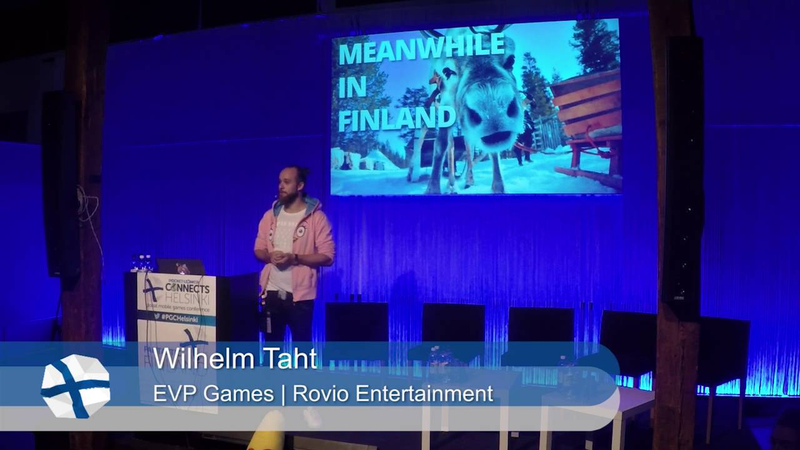
The bird's eye view of mobile games in 2016
The mobile gaming industry reached a significant milestone in 2016, becoming the largest segment of the global entertainment market.
- In 2016, the mobile gaming industry became the largest segment of the global entertainment market, reaching a total global revenue of $91 billion.
- The global market is highly concentrated, with China, Japan, and South Korea accounting for over 60% of the industry's total revenue.
- In North America, Google Play leads in total download volume, while iOS maintains a higher revenue generation per user.

How Rovio spent five years making The Angry Birds Movie
The Angry Birds Movie represents a significant milestone in Rovio’s strategy to expand its intellectual property beyond mobile gaming.
- Rovio successfully transitioned its business model from premium games to a free-to-play, service-oriented approach between 2014 and 2015.
- The Angry Birds Movie, developed over five years with expertise from Marvel Studios veterans, opened at number one in 52 countries and became the third-highest-grossing imported animated film in China at the time.
- The company now utilizes a data-driven strategy for live operations, prioritizing key performance indicators and rigorous soft-launch processes to refine gameplay before global releases.
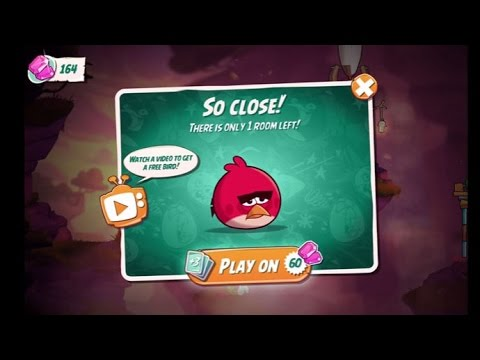
Rewarded video ads in Angry Birds 2
Rewarded video advertising serves as a critical monetization strategy in free-to-play mobile gaming, specifically within titles like Angry Birds 2.
- Rewarded video ads monetize the 95% to 97% of players who do not engage in direct in-app purchases.
- The model functions by offering players a choice between spending hard currency or watching a promotional video to bypass level failure.
- Developers maintain game economy integrity by implementing scarcity, limiting the number of times a player can use video rewards before requiring hard currency or accepting failure.
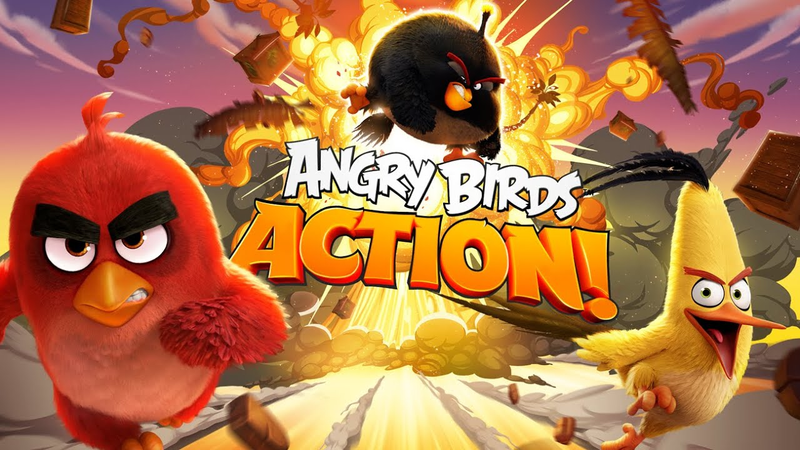
FTUE: Angry Birds Action!
Angry Birds Action!, developed by Tag Games and published by Rovio, serves as a prime example of a streamlined first-time user experience (FTUE) designed for the mass market.
- Angry Birds Action!, developed by Tag Games and published by Rovio, prioritizes rapid entry by bypassing intrusive prompts and notifications to place users directly into the core gameplay loop.
- The game evolves the traditional Angry Birds trajectory mechanic into a pinball-inspired system that uses intuitive drag-to-launch controls for immediate visual gratification.
- To maintain player morale and retention, the progression system provides consistent rewards like gold, gems, and power-ups even when performance on specific levels is suboptimal.
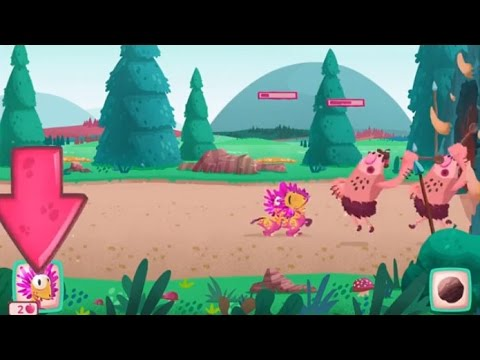
FTUE: Dino Bash
Dino Bash, a 2D side-scrolling base battler developed by Pokoko Studio and published by Tilting Point, represents a contemporary attempt to revitalize the castle defense genre.
- Dino Bash, a 2D side-scrolling base battler by Pokoko Studio and Tilting Point, attempts to modernize the castle defense genre by blending tactical combat with a layered metagame.
- The game’s first-time user experience integrates progression systems—including experience points, currency, and unit upgrades—within the first ten minutes of gameplay.
- Core mechanics center on resource management, specifically apple production for unit summoning, complemented by active defensive measures like volcano bombs and stone throwing.

Why a Donald Duck CCG might be a big hit in Scandinavia
The Duckforce Rises represents a strategic expansion of the long-standing partnership between Sanoma Media Finland and Disney, transitioning a legacy print franchise into the mobile gaming sector.
- Sanoma Media Finland and Disney are leveraging a print franchise history dating back to 1952 to launch 'The Duckforce Rises,' a mobile card-battling game.
- The project targets a specific regional market where Donald Duck holds deep cultural significance, particularly in Scandinavia, Germany, and Italy, with a Finnish print readership reaching one million people.
- The game is positioned as a mid-core free-to-play title with RPG elements, intentionally moving away from the casual puzzle genre typically associated with Disney mobile games.

Rovio on balancing luck and skill in Nibblers
The development of the mobile match-3 title Nibblers represents a strategic shift for Rovio, prioritizing the creation of a new intellectual property over leveraging the established Angry Birds brand.
- Rovio developed Nibblers as a strategic move to establish a new intellectual property outside of the Angry Birds franchise, targeting a female demographic aged 25 and older.
- The core design challenge involved integrating characters as active board participants rather than static UI elements, a process that required the creation of over 20 distinct prototypes.
- The development team prioritized a calibrated balance between luck and skill to ensure the gameplay loop remained fair and engaging for a casual audience.

Biz Daily: Why is Rovio cutting up to 260 jobs?
Rovio, the developer behind the Angry Birds franchise, is undergoing a significant corporate restructuring involving the redundancy of up to 260 employees, representing approximately 50 percent of its total workforce.
- Rovio is laying off up to 260 employees, representing approximately 50 percent of its total workforce, to pivot away from an unsustainable merchandising infrastructure.
- The company is refocusing on its core gaming operations after a period of rapid expansion that saw staff numbers grow to roughly 800 between 2009 and 2013.
- While total turnover declined by 9 percent in 2014, gaming revenue grew by 16 percent, eventually accounting for 70 percent of the company's total turnover.

Biz Daily: Angry Birds hits 20 million downloads
Angry Birds 2 has achieved significant market penetration, reaching 20 million downloads within its first week of release.
- Angry Birds 2 reached 20 million downloads in its first week, a milestone that took the original title nine months to achieve.
- The game has secured the number 1 download spot in over 100 countries across the Americas, Europe, and China.
- Rovio is prioritizing the Chinese market through a strategic partnership with Kunlun to capture new player demographics.

Biz Daily: Does Angry Birds 2 have a F2P problem?
The launch of Angry Birds 2 marks a significant evolution for the franchise, transitioning from the monetization models of 2009 to the contemporary free-to-play standards of 2015.
- Rovio transitioned Angry Birds 2 to a modern free-to-play model featuring an energy mechanic that limits progression, a shift intended to address the company's nine percent revenue decline from the previous year.
- Internal data from the game's soft launch phase indicated that the new monetization mechanics were well-received, leading Rovio to conclude that current user backlash represents a vocal minority.
- Rovio reports that 90 percent of players historically never spent money on the original Angry Birds, prompting a strategy shift to better balance accessibility with revenue generation.

Biz Daily: The significance of Angry Birds 2
The announcement of Angry Birds 2 marks a pivotal strategic shift for Rovio, signaling the developer's transition toward a modern, free-to-play model for its flagship franchise.
- Rovio is transitioning its flagship Angry Birds franchise from a premium, paid model to a modern, free-to-play games-as-a-service structure with the launch of Angry Birds 2 on July 30.
- This strategic pivot addresses Rovio’s historical lag in adopting aggressive free-to-play monetization mechanics compared to industry competitors like Supercell.
- To support this business model shift, Rovio has spent the last six months recruiting specialized industry talent with deep expertise in free-to-play game design.

Oh dear, Jon's gone all VR again
The gaming industry is currently navigating a pivotal transition period characterized by the emergence of virtual reality (VR) hardware and the strategic evolution of established mobile intellectual properties.
- As of mid-2015, the VR sector remains in an experimental, non-standardized phase where high-end hardware is cost-prohibitive and low-cost solutions like Google Cardboard are limited to entry-level experiences.
- Major mobile franchises are shifting from standalone releases to a 'games-as-a-service' model, prioritizing long-term brand expansion over singular event-based launches.
- Rovio is evolving the Angry Birds franchise into a multi-faceted entertainment brand spanning diverse game spin-offs, feature films, and physical merchandise like LEGO sets.
Companies behind it

As the documents state it.