Second Dinner
CompanyUnited States · Founded 2018
Documents about Second Dinner
two & a half gamers session #37 - Marvel Snap global launch case study UA, GD, Admon view
Marvel Snap represents a significant case study in the tension between high-quality game design and inefficient mobile marketing execution.
- Marvel Snap's decision to exclude rewarded ads likely cost the developers approximately $250,000 in additional revenue during the initial launch period, representing a 14% loss compared to their actual in-app purchase (IAP) revenue.
- The game's marketing team appears under-resourced for mobile UA, with a heavy AAA/console focus that neglects critical mobile-first operations such as custom ad placements and vertical video formats for social platforms.
- The UA strategy suffers from poor network optimization; because the game features cards, ad algorithms (such as Unity and IronSource) are incorrectly categorizing it as a classic card game, leading to inefficient traffic targeting.
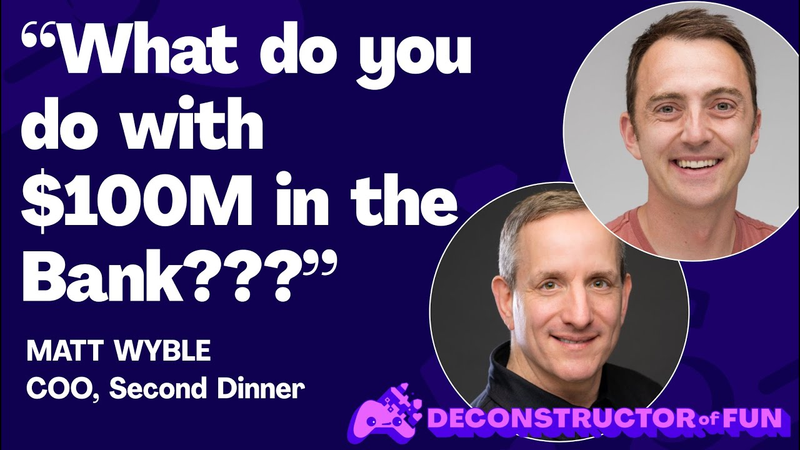
Kress's Corner with Second Dinner's Matt Wyble, the creators of Marvel Snap
The success of Marvel Snap stems from an inside-out development philosophy that prioritizes polished, moment-to-moment gameplay before integrating meta-progression and monetization.
- Second Dinner is scaling operations following a $100 million funding round to support the long-term growth of Marvel Snap, including expansion into the Chinese market and enhanced PC support.
- The studio is shifting its development strategy from a core-gameplay-first approach to a more robust, proactive live-service model to avoid post-release operational strain.
- Artificial intelligence is being deployed as a productivity multiplier for tasks like code review, balance testing, and data analysis rather than as a cost-cutting tool.
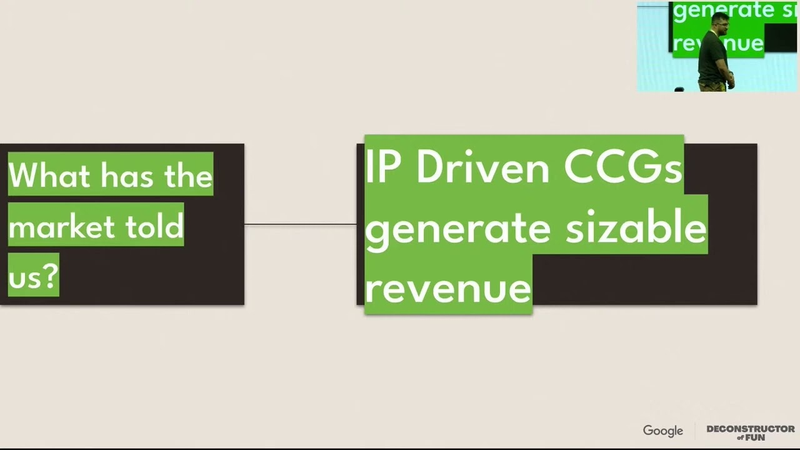
Crafting an Unbeatable Game Thesis with Phillip Black
A game thesis serves as a strategic, logical argument for a game’s existence, moving beyond personal preference to provide a persuasive case for investors, publishers, and internal development teams.
- A game thesis functions as a strategic business proposition that justifies a project's existence to stakeholders by proving market viability and resource alignment.
- The framework requires answering five core questions: market size, specific opportunity, balance of innovation versus standards, content retention pipelines, and monetization hooks.
- Developers should hedge risk by adopting proven mechanics from successful industry titles while innovating in areas where competitors are limited by legacy constraints.


Gaming Industry Report: Q1 2024
Gaming industry activity in Q1 2024 pointed to a stabilizing market and a healthier private funding environment, according to this Konvoy quarterly review.
- The global gaming market is projected to reach $189.3 billion in 2024, marking a 2.9% year-over-year growth.
- Venture capital funding for gaming reached $594 million across 124 rounds in Q1 2024, a 94% increase in volume and 28% rise in deal count compared to the previous quarter.
- Major gaming and tech companies hold approximately $302 billion in combined cash reserves, signaling a strong environment for future industry consolidation.

Monthly Games Industry Report: January 2024
The Monthly Games Industry Report for January 2024 is a roundup of game industry news organized into sections on games and apps, acquisitions, mergers and investments, market research, articles and interviews, and collaborations.
- Second Dinner, the developer behind Marvel Snap, acquired a $100 million Series B investment led by Griffin Gaming Partners.
- The report states that RPG and strategy games are remarkably good at maintaining mobile game loyalty, which it describes as challenging to obtain and maintain.
- Citing the SuperScale white paper, the report states that 83% of mobile games die within 3 years and 43% are killed in development.
2023 Game Development Report: Griffin Gaming Partners
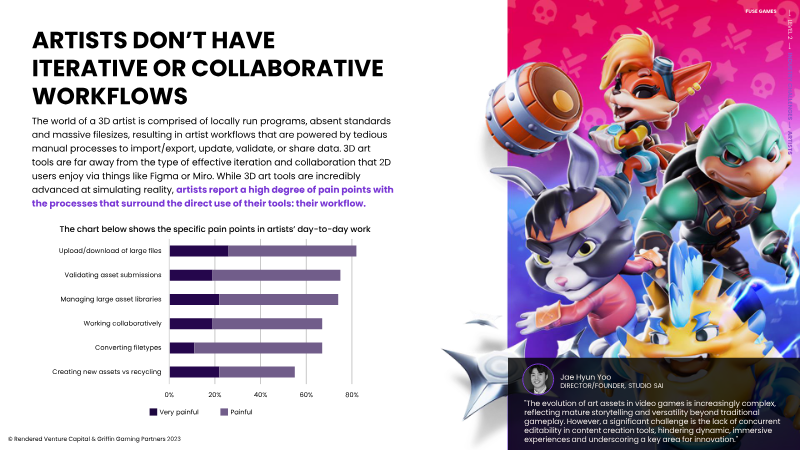
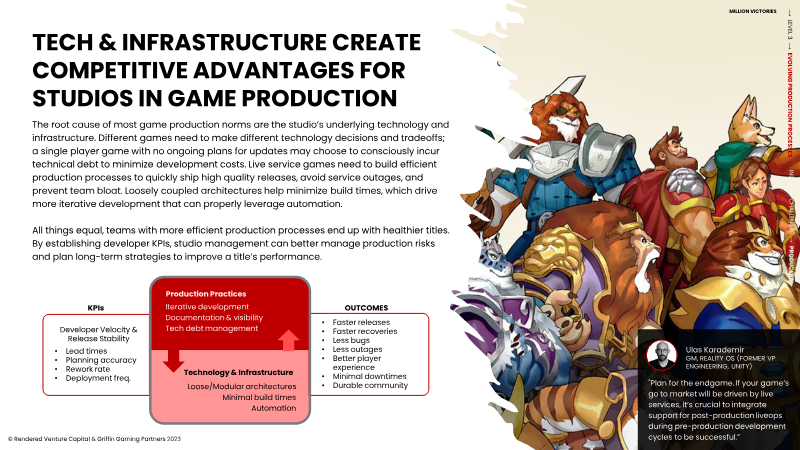
Griffin Gaming Partners' 2023 Game Development Report examines the technology and practices behind game development.
- Studios report rising development costs, with 77% saying the cost of game development is continuing to rise.
- 95% of studios are either working on or intend to release a live services title.
- 65% of all studios now prefer to buy rather than build their game technology.
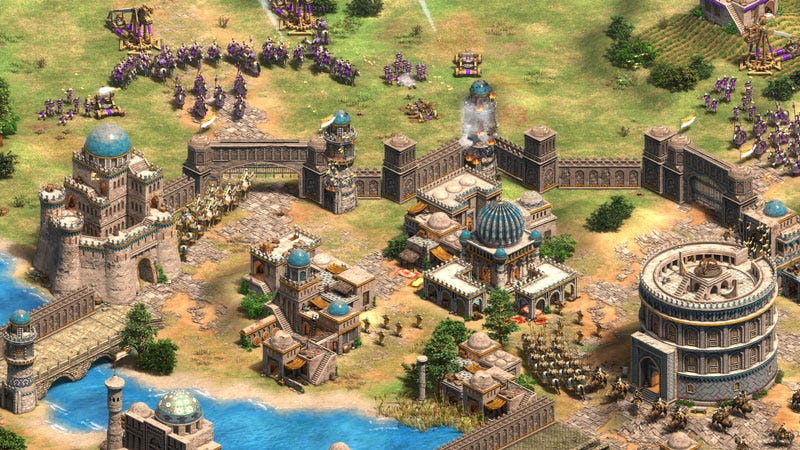
After 25 Years, Age of Empires II Still Rules
This article examines the enduring popularity and competitive scene of Age of Empires II (AoE2), 25 years after its initial release.
- Age of Empires II has maintained a growing competitive scene, with participation and engagement increasing by 10% to 20% over the past year despite broader industry declines.
- Microsoft’s strategy of integrating community-developed improvements and hiring community talent has resulted in five expansion packs since 2019 and consistent growth in active player counts.
- The Nili’s Apartment Cup V tournament demonstrated the game's commercial viability by drawing over 30,000 concurrent Twitch viewers and offering a prize pool exceeding $60,000.
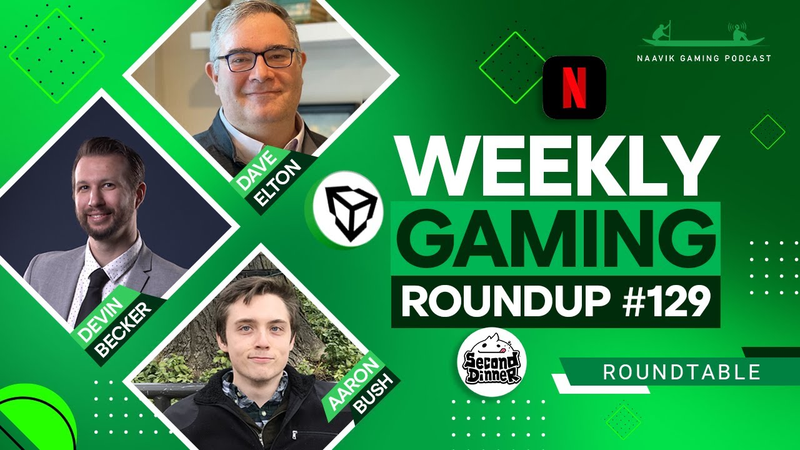
CES Takeaways / Subscription Strategy Changes / Second Dinner's $100M Raise
The gaming industry is currently navigating a period of significant structural transition, characterized by a shift away from aggressive subscriber growth toward diversified revenue models and operational efficiency.
- The gaming industry is shifting from aggressive subscriber growth to diversified revenue models, with companies like Xbox adopting platform-agnostic distribution and windowing strategies to maximize reach beyond proprietary hardware.
- Following a period of rapid expansion, the industry underwent a significant correction in 2023, resulting in over 10,000 job cuts and an 80% decline in venture capital funding.
- Second Dinner’s $100 million Series B raise signals that capital remains accessible for high-performing studios capable of maintaining long-term, high-engagement titles despite a cautious investment climate.

Is 2024 the Year Microsoft Finally Makes Its Move in Mobile?
The article explores the potential for Microsoft to significantly enter the mobile gaming market in 2024, challenging the existing duopoly of Apple and Google.
- Microsoft is positioned to challenge the Apple and Google mobile app store duopoly in 2024, bolstered by its acquisition of Activision, Blizzard, and King.
- While Microsoft has publicly expressed intent to launch its own mobile game store, internal concerns persist regarding the difficulty of breaking the current market dominance of Apple and Google.
- Legislative and judicial shifts, such as the EU's Digital Markets Act and Epic Games' legal victory against Google, are expected to facilitate the entry of alternative app stores and payment methods.
ByteDance May Sell Some of Its Games to Tencent
ByteDance is reportedly exploring the sale of its video game assets, with Tencent identified as a potential buyer.
- ByteDance is negotiating the sale of its gaming division, Nuverse, to potential buyers including Tencent as part of a major corporate restructuring.
- Despite investing approximately 30 billion yuan ($4.2 billion) in gaming M&A between 2019 and 2022, the division contributed less than 1% of ByteDance's $54 billion revenue in the first half of 2023.
- ByteDance is considering the divestment of major assets including the titles Crystal of Atlan and Earth: Revival, as well as Moonton Technology, which was acquired for $4 billion in 2021.
Gaming Report: VC Trends and Emerging Opportunities
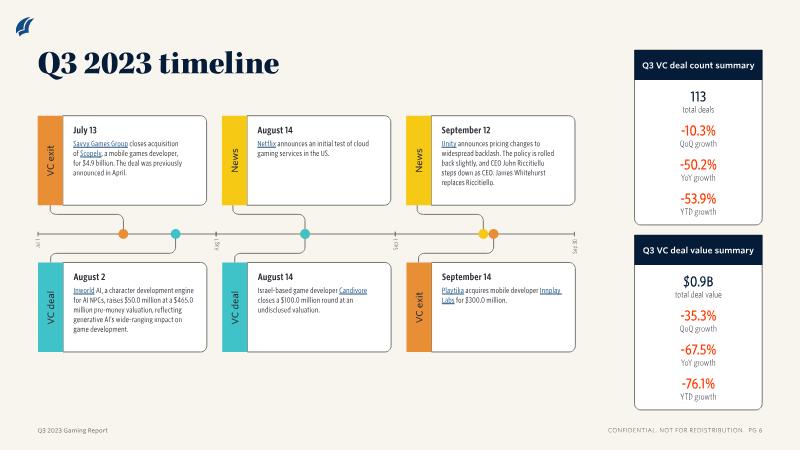
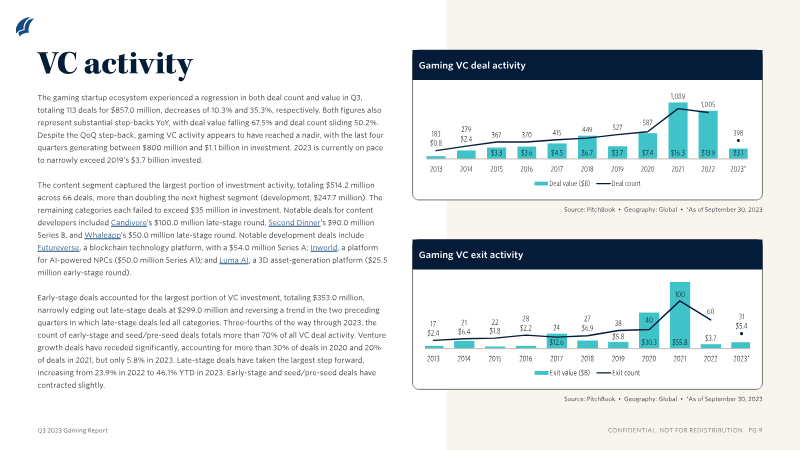
Gaming venture capital activity contracted again in Q3 2023, with 113 deals totaling roughly $857 million.
- Gaming venture capital investment fell to $857 million across 113 deals in Q3 2023, marking a 35.3% quarterly decline in value and a 67.5% drop year-over-year.
- Despite recent volatility, the market is stabilizing at a new baseline, with total quarterly investment consistently ranging between $800 million and $1.1 billion over the last year.
- Content-focused gaming companies remain the primary investment drivers, securing $514.2 million in Q3 2023, more than double the funding allocated to the development segment.
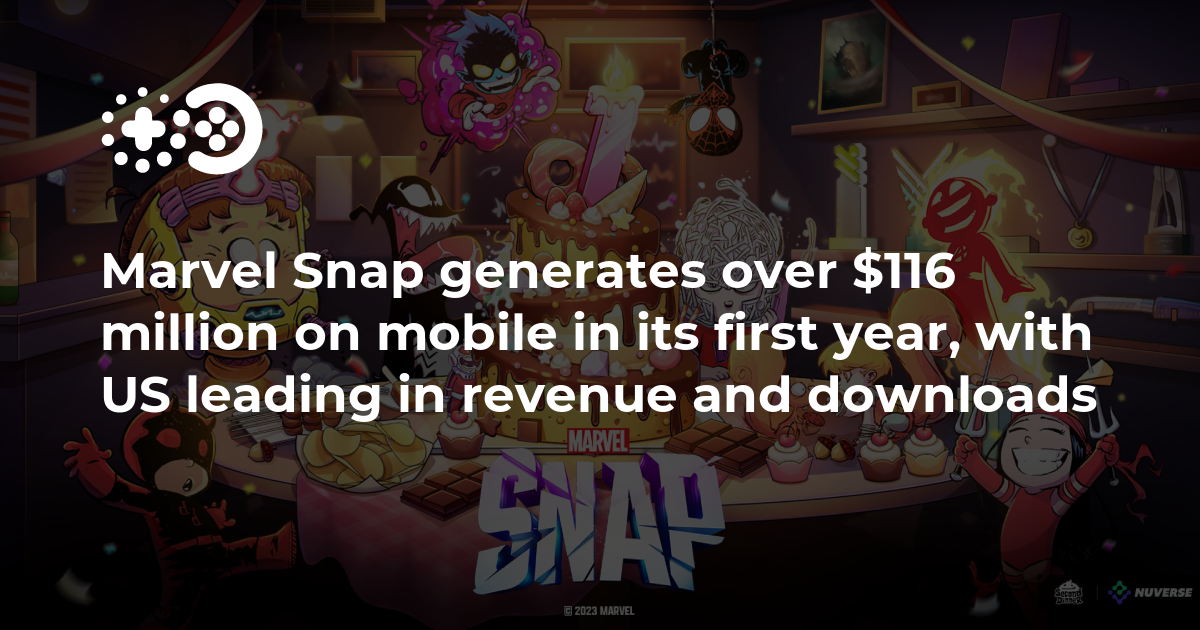
Marvel Snap Generates Over $116 Million on Mobile in Its First Year: US Leading in Revenue and Downloads
Marvel Snap generated over $116.7 million in mobile in-app purchase revenue during its first year, from October 18, 2022, to October 18, 2023.
- Marvel Snap generated $116.7 million in global in-app purchase revenue during its first year, making it the highest-grossing mobile collectible card game of 2023.
- The United States is the primary market for the title, contributing 60.8% of total revenue and 23.4% of its 23.7 million lifetime downloads.
- Revenue distribution favors iOS at 57% of earnings, while Android dominates user acquisition with 69% of total downloads.
