Philip
CompanyUnited States
7 documents in the library are about Philip, from writers such as Game Dev Unchained, GameDiscoverCo and Mobile Dev Memo. Each has a summary and key insights with the page they come from.
Connections
The documents about Philip on the inner ring, the other games and companies they name on the outer one. Select a cover to see it up close and open it in a new tab; drag to move, pinch or Ctrl + scroll to zoom.
On Steam
Steam estimates as of 9 Oct 2026. Revenue is premium revenue on Steam only: game sales, without DLC.
- Revenue as publisher
- $0
- 1 games
- Revenue as developer
- $62.1M
- 2 games
- Units sold
- 10.7M
- as publisher or developer
- Headquarters
- United States
Philip’s best-selling games on Steam
| Game | Released | Share of the best seller | Revenue | Units |
|---|---|---|---|---|
| Content WarningDeveloper | 2024 | $62.1M | 10.7M | |
| SPEAR AND ARMORDeveloper and Publisher | 2024 | — | — |
Documents about Philip
How Undead Labs Saved Itself and State of Decay from Oblivion
Undead Labs, the developer behind the State of Decay franchise, recently transitioned from an Xbox-owned studio to an independent entity following a management-led buyout.
- Undead Labs transitioned to an independent studio through a management-led buyout from Microsoft, facilitated by the creation of an acquisition vehicle called Full Measure.
- Following the acquisition, the studio implemented significant staff layoffs to establish a durable cost structure necessary for independent operations.
- State of Decay 3 remains in development and is scheduled for release in 2027, with the studio maintaining its commitment to launch the title day-one on Xbox Game Pass.

S07, E15: The modern mobile gaming economy (with Phil Black)
The mobile gaming industry is undergoing a structural transformation characterized by market consolidation and a pivot away from the unsustainable hyper-casual model.
- Direct-to-consumer (DDC) web shops are becoming a standard strategy for midcore games, particularly in the 4X genre, to bypass platform fees and increase LTV, with some third-party providers now offering fees as low as 5%.
- The competitive advantage in user acquisition (UA) has shifted away from creative output—which is easily cloned—toward sophisticated predictive infrastructure, such as cohort-level modeling and signal engineering.
- The mobile gaming market is experiencing a consolidation of revenue into puzzle and 4X genres, with hyper-casual games serving as a 'minor league' farm for testing mechanics that are later integrated into more complex, high-revenue core loops.

Allied Gaming & Entertainment Secures $6.6M Investment
Allied Gaming & Entertainment (NASDAQ: AGAE), an operator of esports facilities including the HyperX Arena Las Vegas, has secured a $6.6 million strategic investment from the Hong Kong-based private equity firm Yellow River Global Capital.
- Allied Gaming & Entertainment (NASDAQ: AGAE) has secured a $6.6 million strategic investment from the Hong Kong-based private equity firm Yellow River Global Capital.
- The deal involves Yellow River subscribing to 6 million shares of AGAE common stock, with an additional warrant to purchase up to 6 million more shares over five years at an exercise price of $1.80 per share.
- As part of the agreement, Yellow River has gained the right to appoint one Class A director to the AGAE board, selecting Zongmin (Philip) Ding for the position.
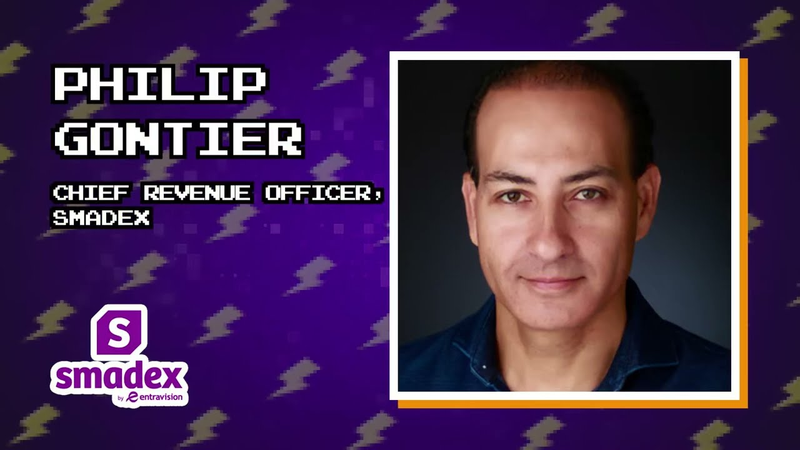
Smadex’s Philip Gontier On Scaling With SKAN 4.0 And The Benefits Of Privacy-Centric Platforms
The mobile advertising industry is currently undergoing a significant transition as privacy regulations and the deprecation of probabilistic matching force marketers to adopt new attribution and targeting strategies.
- The mobile advertising industry is transitioning away from device-level identifiers and probabilistic matching toward privacy-centric frameworks that prioritize contextual signals, first-party data, and creative optimization.
- SKAdNetwork 4.0 is the essential successor to legacy attribution methods, with significant traffic scaling expected by Q3 and Q4 as publisher adoption increases.
- Advertisers are currently collaborating with mobile measurement partners to integrate new postback structures and build optimization models in preparation for the eventual sunsetting of fingerprinting.
How to Become a Video Game Superforecaster
This analysis explores the cognitive frameworks and data-driven habits required to accurately predict success in the modern video game industry.
- Accurate industry forecasting relies on applying statistical literacy and psychological flexibility rather than relying on static expertise or creative intuition.
- Practitioners must establish realistic benchmarks by utilizing base rates, such as median conversion rates for Steam wishlists.
- Effective market analysis requires frequent projection updates to account for shifting conditions, such as identifying platform oversaturation on the Nintendo Switch.

The Future of Axie Infinity with Philip La, Game Lead at Sky Mavis - The Metacast by Naavik
The future of Axie Infinity centers on a strategic pivot from speculative, earnings-driven mechanics toward a sustainable, fun-first gaming experience.
- Axie Infinity is pivoting from speculative, earnings-driven mechanics to a fun-first model that prioritizes high-quality gameplay, improved graphics, and intuitive progression.
- The platform has adopted a freemium model to lower barriers to entry, allowing players to access the 3v3 battle loop and PvE content without an initial financial investment.
- Economic stability is being managed through a balanced system of token sinks and sources designed to discourage pure extraction and promote long-term sustainability.

Breaking the Sound Barrier with Elias Software Featuring Kristopher Eng and Philip Bennefall | 235
Adaptive audio technology is transforming game development by shifting creative control from programmers to composers and sound designers.
- Adaptive audio technology shifts creative control from programmers to sound designers by using visual scripting interfaces to decouple audio logic from core game code.
- Implementing real-time, iterative audio environments early in the production cycle reduces technical bottlenecks and minimizes late-stage development crunch.
- Modern, code-free audio tools allow for immediate adjustments without requiring a restart of the game engine, facilitating more agile development workflows.