Peak Games
Documents about Peak Games
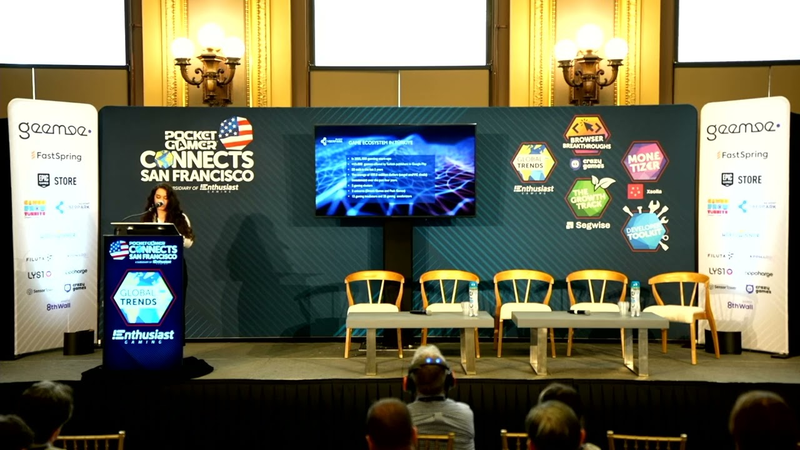
Session: Türkiye’s Game Development Boom – A New Hub For Innovation & Investment - Irmak Tamgac.
The Turkish gaming ecosystem has evolved into a globally competitive hub for innovation and investment, characterized by a self-sustaining cycle of talent development and high-value exits.
- Türkiye’s gaming ecosystem has matured into a global hub, currently hosting over 815 gaming startups and producing more than 13,000 games on Google Play.
- The sector has seen significant high-value exits, most notably Zynga’s acquisition of Peak Games for $1.8 billion in 2020 and subsequent acquisitions of Rollic Games, cementing Türkiye's status as a major player with two gaming unicorns.
- The industry is diversifying beyond its traditional mobile and hyper-casual roots, evidenced by the breakout success of PC titles like 'Liar's Bar' and 'Supermarket Simulator' on Steam.


Five Years of the Rising Gaming Empire: Turkiye
Turkiye has emerged as a significant global hub for game development, characterized by a rapid surge in entrepreneurship and capital investment over the last five years.
- Turkiye’s gaming sector generated $2.9 billion in cumulative M&A exit value between 2020 and 2025, driven by major acquisitions like Peak Games ($2.1 billion) and Gram Games ($250 million).
- The ecosystem secured $935 million in private investment across 132 rounds from 2020 to early 2025, representing 5.8% of global gaming venture capital and corporate deal volume.
- Investment activity peaked in 2022 with $441 million raised, establishing a trend of high-value fundraising for mobile-focused studios such as Dream Games.


Mobile Gaming M&A Playbook: How to Identify and Target High‑Growth Gaming Companies
The playbook outlines a systematic approach for mobile gaming publishers and investors to identify, evaluate, and acquire high-growth developers.
- The mobile gaming market is projected to reach $138 billion by 2025, driving significant M&A activity as publishers seek to diversify portfolios and acquire new talent and intellectual property.
- High-profile acquisitions demonstrate the scale of industry consolidation, including Zynga’s $2 billion purchase of Peak Games and EA’s $2.1 billion acquisition of Glu Mobile.
- Effective target identification requires a data-driven approach using platforms like Sensor Tower to track specific genre trends, revenue trajectories, and regional market share.
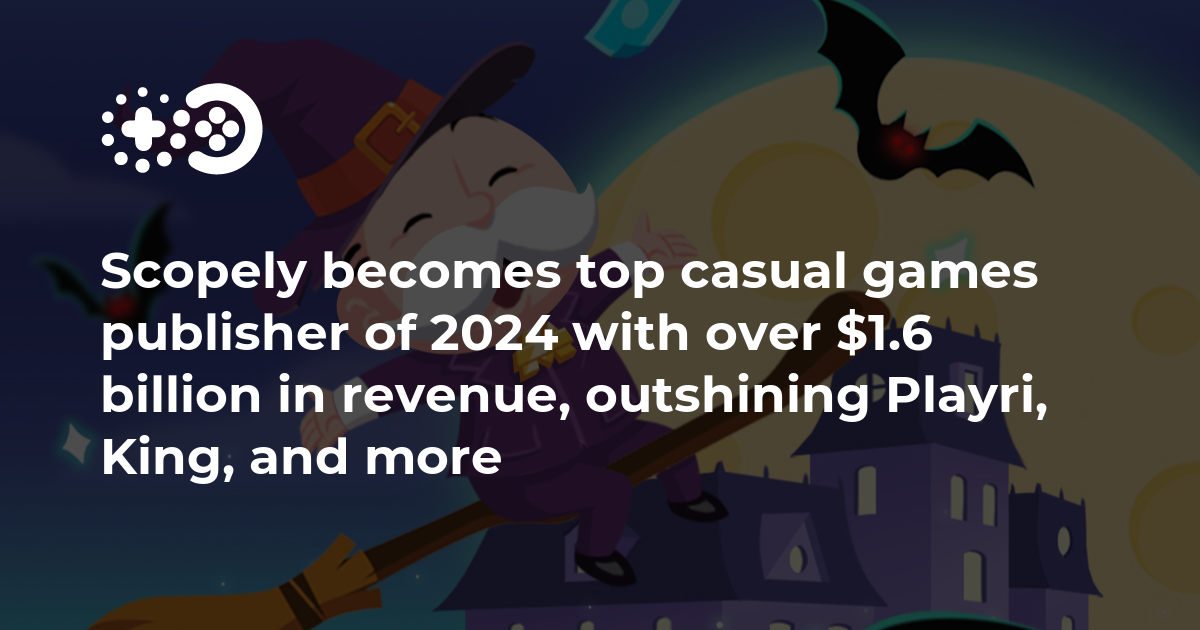
Top Casual Games Publishers of 2024
The mobile gaming landscape in 2024 remains dominated by the casual games segment, with Scopely emerging as the leading publisher by net in-app purchase revenue.
- Scopely emerged as the top casual games publisher by net in-app purchase revenue in 2024, generating $1.63 billion between January and November.
- Playrix ($1.53 billion), King ($1.28 billion), and Dream Games ($1.25 billion) followed Scopely to round out the top four highest-earning casual publishers.
- The success of 'Monopoly Go!' was the primary driver for Scopely's top ranking, with the title having grossed over $3 billion globally to date.

Match Factory! A Major hit with positive advertising by Peak games
Match Factory! has established itself as a premier title within the pair-matching puzzle genre, currently generating approximately $13.7 million in monthly in-app purchase revenue.
- Match Factory! is generating approximately $13.7 million in monthly in-app purchase revenue, positioning it for an annual run rate of $165 million.
- The game’s rapid growth, which accelerated in late 2023, highlights the increasing global market dominance of Turkish developers like Peak Games.
- Peak Games successfully targets an older demographic by utilizing high-fidelity, 'Pixar-quality' 3D visuals and avoiding misleading advertising tropes.

Turkish Gaming Phenomenon Uncovered: A Conversation with Rina Onur
The Turkish mobile gaming sector has emerged as a global powerhouse, characterized by a unique ecosystem that balances high-level technical execution with intense, localized work cultures.
- The 2020 acquisition of Peak Games by Zynga served as a primary industry catalyst, directly triggering the formation of over 65 new gaming enterprises in Turkey.
- Turkish studios achieve global competitiveness by prioritizing in-house development, agile team structures, and rigorous, data-driven testing cycles.
- Successful market scaling is exemplified by companies like Spyke Games, which utilized modular development and cross-genre mechanics to grow titles such as Tile Busters.

ISTANBUL CONFIDENTlAL with RINA ONUR , CEO @ Spyke Games / co-Founder of Peak Games
The Turkish mobile gaming sector has evolved into a high-velocity, disciplined ecosystem, largely catalyzed by the success of foundational companies like Peak Games.
- Spyke Games maintains a competitive advantage by utilizing a centralized, on-site workforce in Istanbul, which avoids the inefficiencies of decentralized development while leveraging high compensation to attract top-tier talent.
- The studio’s success with 'Tile Busters' demonstrates a shift toward high-velocity iteration and the refinement of existing genres rather than relying on radical, unproven innovation.
- Spyke Games employs a modular, data-driven platform that enables rapid prototyping and seamless genre pivots, a strategy that allowed the team to successfully transition from social casino experiments to puzzle-mechanic games.
Merger Magic: How M&A Is Shaking Up Category Leaders in Mobile Games
The mobile gaming industry is undergoing a significant transformation driven by aggressive merger and acquisition activity.
- M&A activity is the primary driver for market leadership, with companies like Zynga and Scopely using acquisitions to enter or dominate key genres where they previously lacked a significant footprint.
- Zynga’s acquisition of Peak Games was transformative, pushing the publisher to the No. 3 spot in the U.S. puzzle genre with $512 million in player spending during the first nine months of 2020.
- Scopely’s acquisition of FoxNext Games was critical to its market position, as its flagship title Marvel Strike Force generated $165 million in U.S. revenue, without which the publisher would not have ranked in the top 10 for the RPG genre.
DDM Games Investment Review: Q3 2024
The third quarter of 2020 marked a record-setting period for the global video game industry, characterized by unprecedented levels of investment, merger and acquisition activity, and public market entries.
- The gaming industry reached a record $9.9 billion in total investments through the first three quarters of 2020, with Q3 alone accounting for $5.2 billion across 110+ deals.
- Q3 M&A activity reached over $3.5 billion in disclosed value, more than double the $1.6 billion recorded in Q2, with Zynga’s $1.85 billion acquisition of Peak Games serving as the quarter's largest deal.
- Epic Games’ $1.8 billion funding round in Q3 accounted for 34% of the quarter's total investment value, exceeding the combined total of all other disclosed investments excluding IPOs and post-IPO equity raises.

PocketGamer.biz Podcast Episode #6: Zynga buys Peak, Sonic the Hedgehog movie sequel, and more!
Zynga’s acquisition of Peak Games for $1.8 billion marks a pivotal expansion of its forever franchises portfolio, specifically targeting the sustained engagement of titles like Toon Blast and Toy Blast.
- Zynga acquired Peak Games for $1.8 billion to bolster its 'forever franchises' portfolio, specifically targeting the long-term revenue potential of Toon Blast and Toy Blast.
- Epic Games is actively challenging mobile app store ecosystems by advocating for an independent iOS storefront, though industry skepticism persists regarding the technical feasibility of such a platform.
- Casual gaming giants like Rovio and Playrix are pivoting toward mid-core development by acquiring studios such as Dark Fire Games and Cateia Games to integrate RPG mechanics and narrative depth.


Investment Activity Report Q1–Q3 2020
The report documents investment activity in the global gaming industry from January to September 2020, covering mobile, PC & console, multiplatform, VR/AR, cloud-native and esports segments.
- The global gaming industry saw $27.5 billion in total deal value across 1,000 transactions during the first nine months of 2020, with gaming-specific deals accounting for $15.3 billion.
- M&A activity was defined by large-scale consolidation, led by Microsoft’s $7.5 billion acquisition of ZeniMax and Zynga’s $2 billion purchase of Peak Games, with Tencent, Zynga, and Microsoft collectively exceeding $11 billion in deal value.
- Public offerings were the primary driver of capital, generating $9.2 billion from 51 IPOs and PIPEs, while private venture investments contributed $4.7 billion across 254 rounds.
Peak Games Exceeds $1 Billion in Lifetime Player Spending
Peak Games has achieved a significant financial milestone, surpassing $1.1 billion in cumulative gross player spending.
- Peak Games has surpassed $1.1 billion in lifetime gross player spending as of Q2 2019.
- The publisher's revenue is heavily concentrated in two titles: Toy Blast, which generated $602 million (51%), and Toon Blast, which generated $556 million (47%).
- In Q2 2019, Peak Games generated $192 million in revenue, marking an 11% year-over-year increase from the $173 million earned in Q2 2018.