Turkey

8 documents·4 publishers

Documents

Page 1
Report54 pages

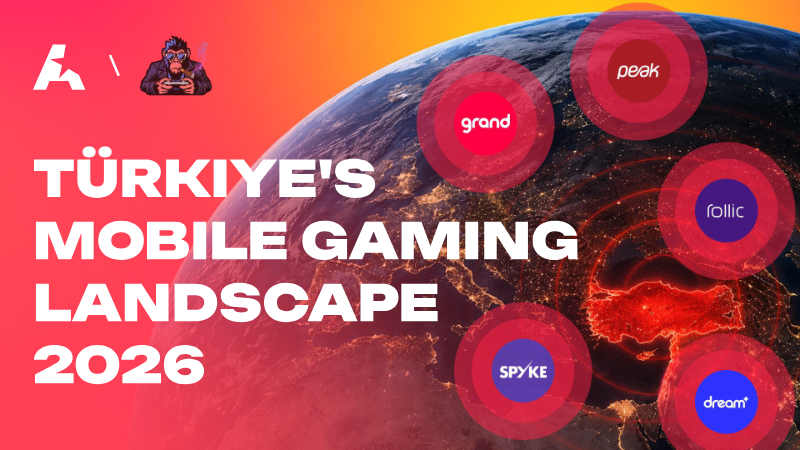
Türkiye's Mobile Gaming Landscape 2026

Türkiye has emerged as a preeminent global force in the mobile gaming sector, characterized by a resilient ecosystem that achieved 6% year-over-year revenue growth despite broader international market stagnation. This expansion is underpinned by a maturing domestic industry where local developers have increased their collective revenue by 450% since 2020, now commanding a 5% share of the global market. The sector’s success is heavily concentrated in the puzzle genre, which accounts for nearly 97% of local earnings, while a strategic pivot toward hybrid-casual titles and sophisticated LiveOps strategies continues to influence international development trends.

The rapid professionalization of the Turkish gaming landscape is driven by a self-sustaining flywheel effect, where successful exits and high-profile valuations for studios like Dream Games and Loom Games attract consistent capital and elite technical talent. Since 2020, the number of local developers has tripled, supported by a robust network of venture capital firms and over 700 active gaming startups. This growth is further accelerated by proactive government intervention, including substantial tax incentives and user-acquisition subsidies, which provide a competitive advantage in an increasingly saturated global environment.

Looking toward 2026, the industry is transitioning from rapid iteration models toward AI-native development and deeper engagement mechanics to maintain its competitive edge. With over $3.6 billion in total investment fueling the rise of category-defining companies, the region has solidified its status as a global hub for mobile gaming innovation. By leveraging a data-driven creative playbook and a highly replicable development framework, the Turkish market is well-positioned for sustained dominance, effectively balancing rapid scaling with the long-term technical maturity required to navigate the evolving demands of the global mobile gaming audience.

  • Türkiye’s mobile gaming sector has achieved a 6% year-over-year revenue growth, with local developers increasing their collective revenue by 450% since 2020 to capture a 5% global market share.
  • The industry is heavily concentrated in the puzzle genre, which generates nearly 97% of local earnings, while studios increasingly pivot toward hybrid-casual titles and sophisticated LiveOps strategies.
  • The ecosystem is supported by over 700 active gaming startups and $3.6 billion in total investment, which has helped triple the number of local developers since 2020.
  • High-profile exits and valuations for studios like Dream Games and Loom Games have created a self-sustaining flywheel that attracts elite technical talent and venture capital.
  • Proactive government intervention, including tax incentives and user-acquisition subsidies, provides a competitive advantage that helps local developers scale in a saturated global market.
+2
AppMagicJun 2026
Page 1
Report22 pages

Mobile App Trends: Türkiye 2025

The mobile app economy in Türkiye is experiencing a high-growth phase, characterized by a young, tech-savvy population and robust digital infrastructure. With 80.7 million active mobile connections and internet penetration reaching 87%, the market is maturing into a global competitor. The sector is supported by government incentives and a thriving startup ecosystem, with total revenue projected to reach $1.65 billion by 2029. This analysis, covering the period from January 2023 through July 2025, utilizes data from a mix of 5,000 top-performing apps and the broader dataset tracked by Adjust to benchmark performance across gaming, finance, and e-commerce verticals.

The gaming sector remains a primary driver of growth, with Türkiye’s studios achieving significant international success. In the first half of 2025, gaming installs in Türkiye grew 4% year-over-year, while sessions increased by 12%, significantly outpacing global and regional benchmarks. Average session lengths reached 32.8 minutes, reflecting high user engagement. While day-1 retention in Türkiye stands at 19%, the market shows shorter user lifecycles compared to global averages, suggesting a need for refined engagement strategies.

Finance and e-commerce apps are also evolving rapidly. Finance app installs surged 30% in the first half of 2025 compared to the same period in 2024, despite a slight decline in session lengths, which may indicate improved efficiency in user transaction flows. E-commerce apps demonstrated resilience, with a 4% increase in sessions during the first half of 2025, outperforming both global and MENAT regional trends. Retention rates in both sectors remain competitive, with Türkiye consistently exceeding regional and global medians.

A notable trend is the rapid expansion of AI-powered applications, which saw a 142.5% year-over-year increase in downloads in 2024. This growth is fueled by a shift of talent from hypercasual gaming to AI-first development and the creation of proprietary Turkish-language large language models. As the market matures, the integration of AI-driven personalization and streamlined, friction-free user experiences remains critical for developers aiming to capture and retain high-value audiences in this increasingly competitive landscape.

  • The Turkish mobile app market is projected to reach $1.65 billion in revenue by 2029, supported by 80.7 million active mobile connections and 87% internet penetration.
  • AI-powered applications experienced a 142.5% year-over-year increase in downloads in 2024, driven by a talent shift from hypercasual gaming to AI-first development.
  • Finance app installs surged by 30% in the first half of 2025 compared to the same period in 2024, despite a slight decline in session lengths indicating more efficient transaction flows.
  • Gaming sessions in Türkiye increased by 12% in the first half of 2025 with average session lengths of 32.8 minutes, significantly outpacing global and regional benchmarks.
  • While gaming session engagement is high, day-1 retention stands at 19% with shorter user lifecycles than global averages, highlighting a need for improved engagement strategies.
+3
AdjustJan 2025
Page 1
Report22 pages

Mobile App Trends Spotlight Edition: Türkiye 2025

The mobile application economy in Türkiye is entering a high-growth, maturing phase, with total revenue projected to reach $1.65 billion by 2029. Ranking eighth globally for both total downloads and time spent in-app, the market is driven by a young, tech-oriented population and an 87% internet penetration rate. Analysis of data from January 2023 through July 2025 reveals that while the market is scaling globally, it maintains unique local characteristics across the gaming, finance, and e-commerce verticals.

The gaming sector remains a primary driver, with installs growing 12% year-over-year in 2024. Hyper-casual games dominate install shares at 28.6%, yet music and action genres command the highest session engagement. Notably, Turkish users spend an average of 32.8 minutes per gaming session, surpassing both regional and global averages. However, retention rates in Türkiye tend to be lower than global benchmarks, with only 19% of users returning the day after installation compared to 26% globally.

The finance and e-commerce sectors show similar trends of high engagement and rapid adoption of new technologies. Finance app installs surged 30% in the first half of 2025, supported by a high mobile banking adoption rate of 85%. In e-commerce, local developers maintain a strong foothold, creating 80% of the top shopping apps. While session lengths in these categories are gradually declining—potentially indicating more efficient user paths to purchase—retention rates for finance and shopping apps in Türkiye consistently outperform global medians.

A significant emerging trend is the rapid rise of generative AI applications, which saw a 142.5% increase in downloads between 2023 and 2024. This growth is fueled by a strategic pivot of local hyper-casual game studios toward AI-first apps and the development of proprietary Turkish-language models. These findings suggest that Türkiye is transitioning from a regional player to a global powerhouse, characterized by a highly engaged user base and a robust ecosystem of domestic developers.

  • The Turkish mobile app market is projected to reach $1.65 billion in revenue by 2029, supported by an 87% internet penetration rate and a global top-ten ranking for downloads and time spent in-app.
  • Generative AI applications experienced a 142.5% surge in downloads between 2023 and 2024, driven by local hyper-casual studios pivoting to AI-first development and proprietary Turkish-language models.
  • Finance app installs grew by 30% in the first half of 2025, bolstered by an 85% mobile banking adoption rate and retention rates that consistently outperform global medians.
  • Gaming remains a primary market driver with 12% year-over-year install growth in 2024, though day-one retention at 19% lags significantly behind the 26% global benchmark.
  • Turkish gamers exhibit high engagement, averaging 32.8 minutes per session—surpassing global averages—with hyper-casual titles capturing 28.6% of total install share.
+2
AdjustJan 2025
Page 1
Report351 pages

Turkey Game Market 2023 Report

The Turkish gaming market demonstrated significant resilience and maturation throughout 2023, maintaining its status as a premier hub within the Europe and MENA regions despite economic volatility and regional challenges. Generating $580 million in revenue from a robust base of 47 million gamers, the industry is characterized by a dominant mobile sector that mirrors global trends. While total revenue in USD saw a slight decline due to currency fluctuations and platform policy changes, the market grew in local currency terms, fueled by high internet penetration and a population that views gaming as a primary social ritual.

Mobile gaming remains the cornerstone of the ecosystem, with Turkish developers achieving international acclaim. Notably, Dream Games’ Royal Match became the world’s highest-grossing mobile title in late 2023, underscoring the global competitiveness of domestic studios. Beyond entertainment, the industry is expanding into "serious games" and gamification, with major brands in finance, aviation, and retail integrating game mechanics to drive customer loyalty. This diversification extends to the defense and health sectors, where simulation technologies are increasingly utilized.

The investment landscape transitioned into a maturation phase in 2023, with $33.27 million across 35 deals. While this represents a decrease from pandemic-era peaks, the infrastructure continues to strengthen through the rise of digital entrepreneurship centers and structured esports regulations. The esports sector is professionalizing rapidly, supported by 188 licensed teams and significant international victories in titles like Valorant. However, a critical talent gap remains; while academic programs in game design are proliferating, there is an urgent need for better synchronization between university curricula and practical industry requirements to sustain long-term growth.

Looking toward 2024, the market is poised for further expansion driven by AI-driven content, AR/VR advancements, and a shift toward direct-to-consumer business models. Success for international and local players alike depends on deep localization and cultural sensitivity, ensuring engagement with a diverse demographic that increasingly prioritizes price-performance ratios and local payment solutions.

  • The Turkish gaming market generated $580 million in 2023 from a base of 47 million gamers, maintaining its status as a key regional hub despite currency-related revenue fluctuations.
  • Mobile gaming remains the industry cornerstone, highlighted by the domestic studio Dream Games, whose title 'Royal Match' became the highest-grossing mobile game globally in late 2023.
  • The investment landscape matured in 2023 with $33.27 million deployed across 35 deals, reflecting a shift toward sustainable growth following pandemic-era peaks.
  • Turkish industries are increasingly adopting gamification and simulation technologies, integrating game mechanics into sectors such as finance, aviation, retail, defense, and health.
  • The esports ecosystem is professionalizing rapidly, currently supported by 188 licensed teams and bolstered by international competitive success in titles like 'Valorant'.
Gaming in TurkeyMar 2024
Page 1
Report372 pages

Türkiye Game Market Report: 2024

The Turkish gaming market has emerged as a global powerhouse, reaching a valuation of approximately $810 million in 2024 with a trajectory toward $1 billion by 2029. This growth is supported by a massive domestic audience of over 48 million players and a population characterized by high digital engagement, with 76 million internet users spending nearly seven hours online daily. While mobile gaming remains the dominant segment—accounting for $490 million in revenue—the industry is currently undergoing a strategic pivot. Developers are shifting focus from hyper-casual mobile titles toward more complex PC and console projects, exemplified by the global success of titles like Supermarket Simulator and Liars Bar.

The ecosystem is bolstered by a sophisticated infrastructure of over 1,400 active studios, 26 incubation centers, and a robust financial network of 60 regulated payment institutions. Despite economic headwinds, such as high interest rates affecting hardware sales and the removal of local pricing on major platforms, investment remains resilient. In the first half of 2024, the sector saw over $120 million in deal flow across 20+ transactions. Furthermore, Türkiye has solidified its status as an esports leader, ranking second globally at the World Esports Championship and maintaining a licensed athlete base of nearly 100,000.

However, the market faces significant regulatory and technical challenges. New legal frameworks mandate that foreign platforms appoint local representatives, while recent bans on platforms like Discord and Instagram have disrupted community engagement. Additionally, with Türkiye ranking 65th globally in English proficiency, professional localization—including Turkish characters and voiceovers—is identified as a critical factor for market penetration. Moving toward 2025, the industry is expected to integrate AI-driven development tools and 5G technology more deeply, leveraging its position as a top European gaming hub to attract further international investment and expand its influence across the MENA region.

  • The Turkish gaming market is valued at $810 million in 2024, with a projected growth to $1 billion by 2029 supported by a domestic player base of over 48 million.
  • Mobile gaming currently leads the market with $490 million in revenue, though developers are strategically pivoting toward more complex PC and console titles like Supermarket Simulator and Liars Bar.
  • Investment remains resilient despite economic headwinds, recording over $120 million in deal flow across more than 20 transactions in the first half of 2024.
  • The industry ecosystem is supported by over 1,400 active studios, 26 incubation centers, and a network of 60 regulated payment institutions.
  • Türkiye maintains a strong position in esports, ranking second globally at the World Esports Championship with a licensed athlete base of nearly 100,000.
+1
Gaming in TurkeyJan 2024
Page 1
Report230 pages

Turkey Game Market 2022 Report

The Turkish gaming market in 2022 serves as a critical case study of a high-growth production hub navigating significant domestic economic volatility. While the player base expanded to over 44 million users—with 81% of adults engaging in mobile gaming—total market revenue saw a sharp correction, falling from $1.2 billion in 2021 to approximately $625 million. This decline was primarily driven by the depreciation of the Turkish Lira and weakened consumer purchasing power, which has accelerated a shift toward free-to-play titles, subscription services, and a demand for high-quality localization to reach a population with generally low English proficiency.

Despite these fiscal challenges, Türkiye has solidified its position as a global leader in gaming investment and development. Istanbul ranks second in Europe and fifth globally for gaming transactions, securing over $424 million in investments across dozens of deals. The domestic ecosystem is maturing beyond its historical focus on hyper-casual mobile titles, with over 2,943 publishers on Google Play and a strategic pivot toward indie, PC, console, and hybrid-casual development. This evolution is supported by a robust infrastructure of 25 entrepreneurship centers and 19 university programs, though a deficit in qualified instructional talent remains a hurdle for long-term sustainability.

The region has also emerged as a premier esports destination, evidenced by hosting the VALORANT Champions Tour and the formal legal recognition of the Turkish Esports Federation, which oversees more than 15,000 licensed players. While traditional segments like internet cafes have declined due to rising operational costs, the integration of gamification into e-commerce and corporate sectors is expanding. Moving forward, the industry is expected to maintain a compound annual growth rate of 24.1% through 2026, driven by blockchain integration, AI technologies, and a transition toward more complex, mid-core gaming experiences.

  • The Turkish gaming market experienced a significant revenue contraction in 2022, falling to $625 million from $1.2 billion in 2021 due to currency depreciation and reduced consumer purchasing power.
  • Despite the revenue decline, Istanbul remains a global investment hub, ranking second in Europe and fifth globally with over $424 million secured across gaming transactions in 2022.
  • The industry is projected to maintain a 24.1% compound annual growth rate through 2026, driven by a strategic shift toward mid-core, PC, and console development alongside AI and blockchain integration.
  • The domestic player base reached 44 million users in 2022, with 81% of adults participating in mobile gaming and a strong market preference for free-to-play models and localized content.
  • The Turkish gaming ecosystem is maturing beyond hyper-casual titles, supported by 2,943 Google Play publishers and a specialized infrastructure of 25 entrepreneurship centers and 19 university programs.
+1
Gaming in TurkeyApr 2023
Page 1
Report230 pages

Türkiye Game Market 2022 Report

The 2022 Turkish gaming market represents a landscape of significant resilience and structural transition. Despite facing substantial economic headwinds, including currency depreciation and a contraction in total revenue to $625 million, the industry solidified its position as a major global hub for mobile development and esports. The primary thesis of the market’s evolution is a strategic pivot away from the rapid, volume-based "gold rush" of hyper-casual gaming toward sustainable, high-quality production, intellectual property creation, and diversification into PC, console, and hybrid-casual projects.

The sector’s maturity is evidenced by record-breaking investment activity, with over $424 million raised across 23 deals, positioning Istanbul as a top-tier global city for gaming capital. This financial influx supports a robust ecosystem of nearly 6,000 publishers and a growing network of entrepreneurship centers and academic programs. While the number of new startups declined by 48% compared to the previous year, the remaining entities are increasingly focused on long-term viability through technological integration, including AI and gamification, as well as a professionalized esports infrastructure that saw the Turkish Esports Federation gain official status.

Geographically and demographically, the market remains highly engaged, with 44 million players and a notable shift toward high-income consumer segments. While traditional physical venues like internet cafes have contracted due to rising operational costs, the digital infrastructure remains strong, supported by widespread social media penetration and a sophisticated network of payment institutions. Moving forward, the industry’s trajectory is defined by a need for better alignment between academic curricula and commercial requirements, alongside a continued focus on global expansion and the development of specialized talent to maintain Türkiye’s competitive edge in the international gaming arena.

  • The Turkish gaming market generated $625 million in 2022, reflecting a structural pivot from hyper-casual volume toward sustainable, high-quality PC, console, and hybrid-casual intellectual property.
  • Investment activity reached a record $424 million across 23 deals, establishing Istanbul as a premier global hub for gaming capital.
  • While the number of new gaming startups fell by 48% year-over-year, the remaining 6,000 publishers are increasingly prioritizing long-term viability through AI integration and professionalized operations.
  • The Turkish gaming ecosystem serves a highly engaged base of 44 million players, characterized by a growing shift toward high-income consumer segments.
  • The Turkish Esports Federation achieved official status in 2022, signaling the professionalization of the country's esports infrastructure despite the decline of traditional physical venues like internet cafes.
+2
Riot GamesJan 2022
Page 1
Report222 pages

Turkey Game Market 2021 Report

The Turkish gaming market experienced a transformative period of growth and institutionalization in 2021, reaching a total market volume of $1.2 billion. Despite global challenges such as hardware shortages and pandemic-related delays in AAA titles, the local ecosystem expanded to include over 42 million active players. This growth was primarily catalyzed by the mobile segment, which generated $620 million in revenue and solidified Turkey’s position as a global leader in the hyper-casual genre. The year was further defined by record-breaking financial activity, with $266 million invested across 54 startups and the emergence of Dream Games as a new industry "unicorn."

Strategically, the market is shifting toward a "gaming-focused entertainment" model, characterized by the rapid adoption of Web3 technologies, including blockchain, NFTs, and Play-to-Earn (P2E) frameworks. While mobile gaming remains the dominant force, there is a burgeoning esports ecosystem supported by approximately 6 million followers and a national federation overseeing 165 licensed clubs. Turkey’s selection as the host for the Global Esports Games 2022 underscores its rising international profile. However, industry experts note a strategic need to diversify beyond mobile platforms into PC and console development to ensure long-term sustainability.

The regional landscape reveals Turkey as the primary gaming powerhouse in the Middle East, outperforming neighboring markets in both revenue and player engagement. Success for international entrants remains contingent on high-quality localization and cultural adaptation, given the country's low English proficiency and unique consumer preferences for competitive genres and specific musical influences. As the sector transitions into 2022, the focus remains on bridging the talent gap through specialized academic programs and leveraging the return of large-scale physical exhibitions to maintain momentum in the evolving Metaverse and digital advertising spaces.

  • The Turkish gaming market reached a total volume of $1.2 billion in 2021, supported by a player base of 42 million active users.
  • Mobile gaming generated $620 million in revenue, cementing Turkey's status as a global leader in the hyper-casual genre.
  • Financial activity hit record levels in 2021 with $266 million invested across 54 startups, highlighted by the emergence of Dream Games as a unicorn.
  • The esports ecosystem is growing rapidly, featuring 6 million followers and 165 licensed clubs overseen by a national federation.
  • Turkey is the primary gaming powerhouse in the Middle East, though experts advise diversifying into PC and console development for long-term sustainability.
+2
Gaming in TurkeyJan 2021

Publishers

Related Topics