Nokia
Company
Documents about Nokia

The Man Behind Most Gaming Deals | Affan Butt, Aream & Co.
Successful gaming mergers and acquisitions are fundamentally driven by long-term relationship building rather than transactional, high-pressure sales tactics.
- Successful gaming M&A is driven by long-term relationship building rather than transactional tactics, as evidenced by a track record of over 110 deals totaling $40 billion in value.
- Founders should prioritize meticulous data hygiene and financial validation to ensure deal certainty within a typical six-month timeline, as aggressive, unsuccessful outreach can permanently damage a studio’s reputation.
- Advisors often recommend delaying sales if internal metrics or market conditions are suboptimal, prioritizing the studio's long-term health over immediate transaction fees.

In the Hot Seat: Stefan Lampinen on how Chinese publishers are outpacing the West
Stefan Lampinen, founder of Game Advisor Ltd and a veteran of the global gaming industry, provides a strategic analysis of the evolving dynamics between Western and Chinese game markets.
- European markets should not be treated as a single entity; successful expansion requires a granular approach that accounts for distinct legal, cultural, and regional differences, such as the specific nuances between cities like Berlin, Munich, and Cologne.
- Chinese publishers like Tencent and NetEase are demonstrating high levels of sophistication by conducting deep-dive research into specific European micro-markets, including identifying individual studios in cities with populations over 100,000.
- Entering the European market requires rigorous preparation and strategic planning rather than rushed execution, as historical data shows that many large companies have failed due to a lack of localized positioning and messaging.
History of Mobile Gaming Quiz PG Connects Digital #2
The mobile gaming industry has experienced rapid evolution since its inception, a trajectory highlighted through a ten-question historical quiz presented at the Pocket Gamer Connects Digital #2 event in June 2020.
- The mobile gaming industry has evolved from the 1997 debut of Snake on the Nokia 6110 to a multi-billion dollar global economic force.
- Modern mobile gaming scale is exemplified by titles like Candy Crush, which contains over 7,100 levels, and the 2019 Fortnite World Cup, which awarded a $3 million first-place prize.
- The industry demonstrates massive financial impact, such as the 2016 launch of Pokémon Go increasing Nintendo’s market value by $7 billion in one day and Monster Strike generating over $8 billion for Mixi.
Finland – From feature phone to smart device
The evolution of the mobile gaming industry from the early feature phone era to the modern smart device market is defined by a transition from hardware-constrained experimentation to sophisticated, data-driven service models.
- The shift to free-to-play models has transformed mobile game development into a service-based industry that requires managing complex player economies, behavioral psychology, and long-term retention.
- Modern mobile gaming success is defined by the ability to balance high paid user acquisition costs against the lifetime value of players in a saturated market.
- The primary risk in the current mobile landscape has migrated from initial product development to the challenges of app discovery and user acquisition.
The Finnish and Nordic games industry from an investor’s perspective
The Finnish games industry stands as a dominant force within the Nordic region, underpinned by a mobile-first strategy that leverages a unique cultural heritage of collaborative development.
- The Finnish games industry generates over €2.6 billion in annual revenue and commands approximately 3% of the $90 billion global mobile gaming market.
- Industry revenue is projected to grow significantly, reaching between $4 billion and $6 billion within the next five years.
- The ecosystem is driven by a mobile-first strategy and a cycle of entrepreneurship where alumni from established companies like Rovio frequently launch new ventures.
The bird's eye view of mobile games in 2016
The mobile gaming industry reached a significant milestone in 2016, becoming the largest segment of the global entertainment market.
- In 2016, the mobile gaming industry became the largest segment of the global entertainment market, reaching a total global revenue of $91 billion.
- The global market is highly concentrated, with China, Japan, and South Korea accounting for over 60% of the industry's total revenue.
- In North America, Google Play leads in total download volume, while iOS maintains a higher revenue generation per user.
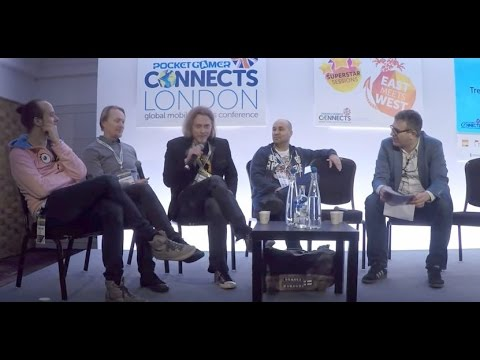
Why is Finland so successful when it comes to mobile games?
Finland maintains a position as the most successful region globally for mobile game production on a per capita basis.
- Finland leads the world in mobile game production on a per capita basis due to a unique convergence of historical industrial influence and a robust educational system.
- The decline of Nokia acted as a primary catalyst for the industry, releasing a large pool of skilled technical talent and established business networks into the mobile gaming sector.
- Finland’s mobile gaming expertise is rooted in a long-standing technological foundation that dates back to the 1980s, including early mobile innovations like Snake.

Andras Velvart talks SongArc
SongArc emerged from a desire to bridge the gap between passive music listening and active, expressive performance on mobile devices.
- SongArc achieved 1.3 million downloads within its first year on the Windows Phone platform, peaking as the sixth best-rated game in the store.
- The game’s development was supported by the Microsoft Imagine Cup and the AppCampus program, a partnership between Microsoft, Nokia, and Aalto University.
- The development team is currently executing a multi-platform expansion to iOS, Android, and Windows tablets, with a target rollout for the holiday season.
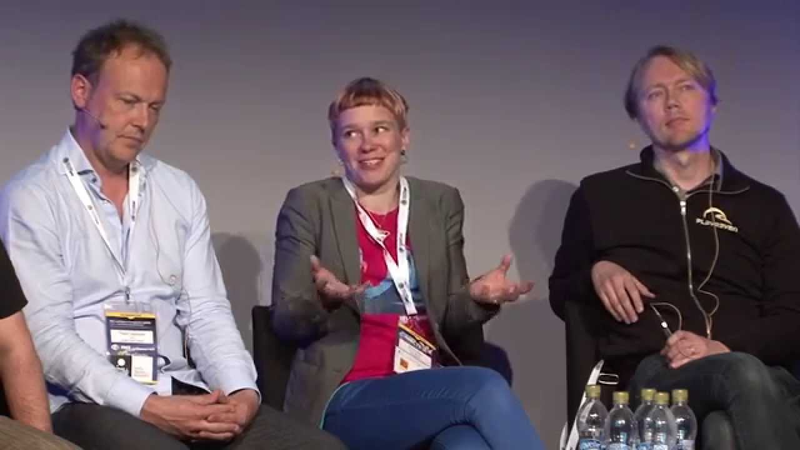
Finnish mobile games history: part 3
The Finnish mobile gaming industry has established itself as a global leader, characterized by a highly collaborative ecosystem that prioritizes knowledge sharing over cutthroat competition.
- The Finnish mobile gaming industry thrives on a collaborative ecosystem where developers prioritize knowledge sharing over competition, a culture necessitated by the lack of a significant domestic market.
- The sector has matured from a technical, coding-focused foundation into a sophisticated hub that integrates creative design with advanced business strategies, user acquisition, and brand development.
- Industry success is shifting away from distribution-based power toward a model driven by content quality, speed of execution, and the ability to cultivate direct relationships with fans.
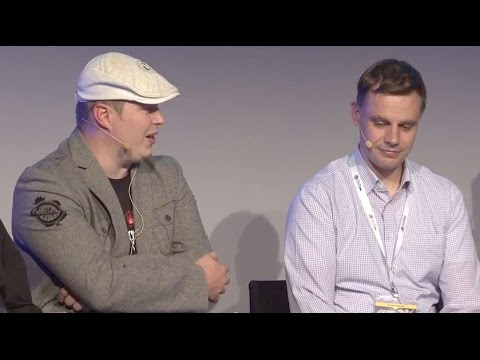
Finnish mobile games history: part 1
The Finnish mobile gaming industry represents a unique case study in regional economic development, evolving from a niche technical community into a dominant global force.
- The Finnish mobile gaming industry emerged from a unique convergence of a collaborative software demo scene and a cultural preference for indoor technical pursuits.
- Nokia served as a critical catalyst for the industry by providing essential funding, professional infrastructure, and training grounds for developers during the sector's early stages.
- Although the N-Gage platform was a commercial failure, it forced local studios to master technical constraints and team-based workflows that became foundational for later successes like Rovio and Supercell.

How 200 Finnish game developers generated $1.2 billion in 2013
The Finnish game industry experienced a period of rapid expansion between 2011 and 2014, characterized by high efficiency and significant financial growth.
- In 2013, the Finnish game industry generated €900 million in direct game sales, representing a 260 percent year-over-year increase.
- The total economic impact of the sector, including merchandising and M&A activity, reached €2.2 billion in 2013.
- Between 2011 and 2014, the industry secured $1.8 billion in total investment, fueling growth for both startups and established studios.

How Finland change the direction of the mobile games industry
The Finnish mobile gaming industry owes its foundational success to the strategic influence and patronage of Nokia.
- Nokia served as the foundational corporate patron for the Finnish mobile gaming industry, providing the essential investment, technical infrastructure, and distribution channels that enabled studios like Rovio, RedLynx, and Bugbear to scale.
- The Finnish 'demo scene'—a culture of programmers dedicated to maximizing hardware performance—provided the core talent pool that Nokia leveraged to pioneer early mobile gaming concepts.
- Nokia’s N-Gage hardware, despite its commercial failure, acted as a critical bridge to the modern era by introducing early mobile connectivity standards and concepts that prefigured modern ecosystems like Game Center and mobile MMOs.