VideoPocketGamer.biz
In the Hot Seat: Stefan Lampinen on how Chinese publishers are outpacing the West
16 Jul 202623 min video
Transcript
Hello everyone and welcome to In the Hot Seat with PGC Biz, the series where we sit down with the speakers behind Pocket Gamer Events. And I'm so delighted today because I'm kicking things off with someone who is called the founding figure of Sweden's games industry to some, Stefan Lampernin, managing director and founder at Game Advisor. It's so fantastic to talk to you, Stefan. Thank you for joining me.
Thank you, Mariam, for having me. Uh
before we kick things off, I've got many questions for you today. You're obviously going to be joining us at PGC Shanghai. Can you give us a little bit of an introduction to our audience? What are you all about? How do you find yourself where you are today?
Well, as I said, founding figures. I was very very early with video games. So I launched Mega Drive in the Nordic together with almost the Richard Branson's team from from UK and then over to set up electronic arch moved
around in Europe for EA then I was with Nokia. So I would say to for fast for I've been having seale um roles for the for the for 20 years. So I was also of course heading up a bit of Nokia's global gaming but was part of the launch team for Xbox 360 in Europe which was I mean everything is long time ago since you're an old guy now but that was 2005 then I had my own business and then um I did Warner Brothers so I touch on the movie industry but what I do today is basically giving the bigger p pictures to industry leaders or investors more or less like Stefan what do you think things Right. Um, so kicking that's really interesting. So kicking things off, you mentioned this and that kind of leads me nicely into my first questions. You founded EA Nordic and have since sat at the sea level seats at Microsoft, Nokia, Warner Brothers across more than 20 countries. That's a rare vantage point. Stefan, um, when you watch a
company try to crack Europe today, what's a mistake that you see them making sort of over and over again that you wish you could just be like, "Hold on, guys. I have the information that you need and I see that you're making this mistake.
I I think they're they're a blend of few things. One is basically the positioning and the messaging because if you look into even Microsoft when they entered the game, they had the the Microsoft language. Nokia had the mobile Nokia language. And if you look to some of the virtual real VR companies that trying try to launch in Europe 2017 18 they lack people with game gaming experience. So I think it's a it's more about doing the homework the business intelligence about how should we enter and how should our team look like. You can't just force your way into the market with money. That doesn't work right. So I think it's it's it's a nice blend of of like three four key ingredients.
And when you see when you see these
companies out of curiosity, do you see the classic era of treating Europe as a sort of single market? Is that something that you come across? Um because obviously these are very distinct countries. They're very different laws and regulations. Um what are your thoughts on that? No, that that's a very I I could go on for minutes, but I mean if you look in today's word, the way Tencent and Netis look into the markets, it's incredibly impressive how they have taken deep dive into Sweden for example, they know all the studios in cities over 100,000 units. I was advising a Japanese company about where should they put the head office in Europe in Germany. So even Germany you you have to choose between Munich, Berlin, Dudorf, Cologne. So there are there are many factors and what you used to say FIGS the dub countries. I mean now you have you have Poland and Turkey. So so many changes has happened the last 10 years,
right? You have like micro markets
within those markets. I didn't even think about that. Like it differs from city to city even.
Yeah, exactly. So your talk at PGC Shanghai, Stefan, which we're so excited for, will be based on how to sell into Europe, and you're delivering it in Shanghai to a room full of Chinese and Asian companies? Now, this kind of links back to my previous question, but is Europe seen as one market to them? Is it even one market or is that the first myth that you have to break? What are your thoughts on that? It's been interesting because since you reached out to me well in advance I've been actually talking some with some publisher they are so interested in Europe I mean the publishers under the 10 cent and at the of course and I I think there are many aspects because if you look into Europe also even countries like Spain they're more connected to Latin America versus US and as I said the the recent success with Turkey mobile that is driving before Finland you have Poland. So you you can't look
it into one market, but you also have to see which are the key markets that you're targeting because obviously the size matter.
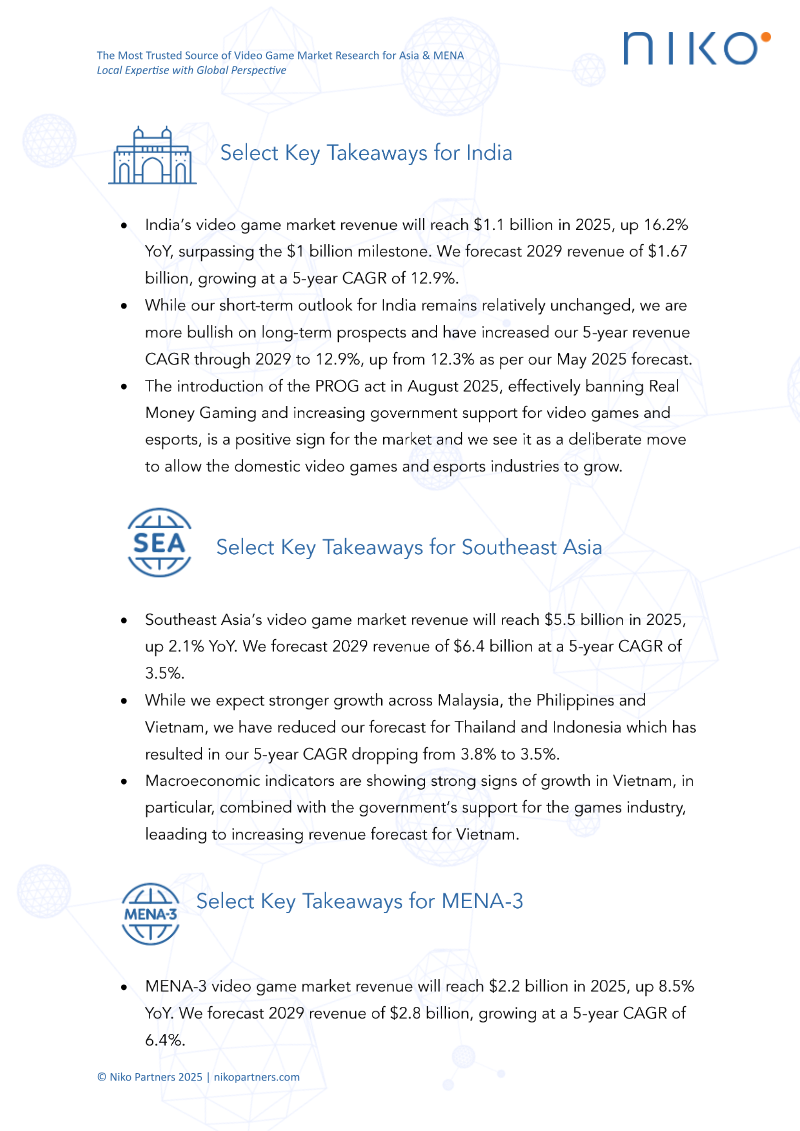
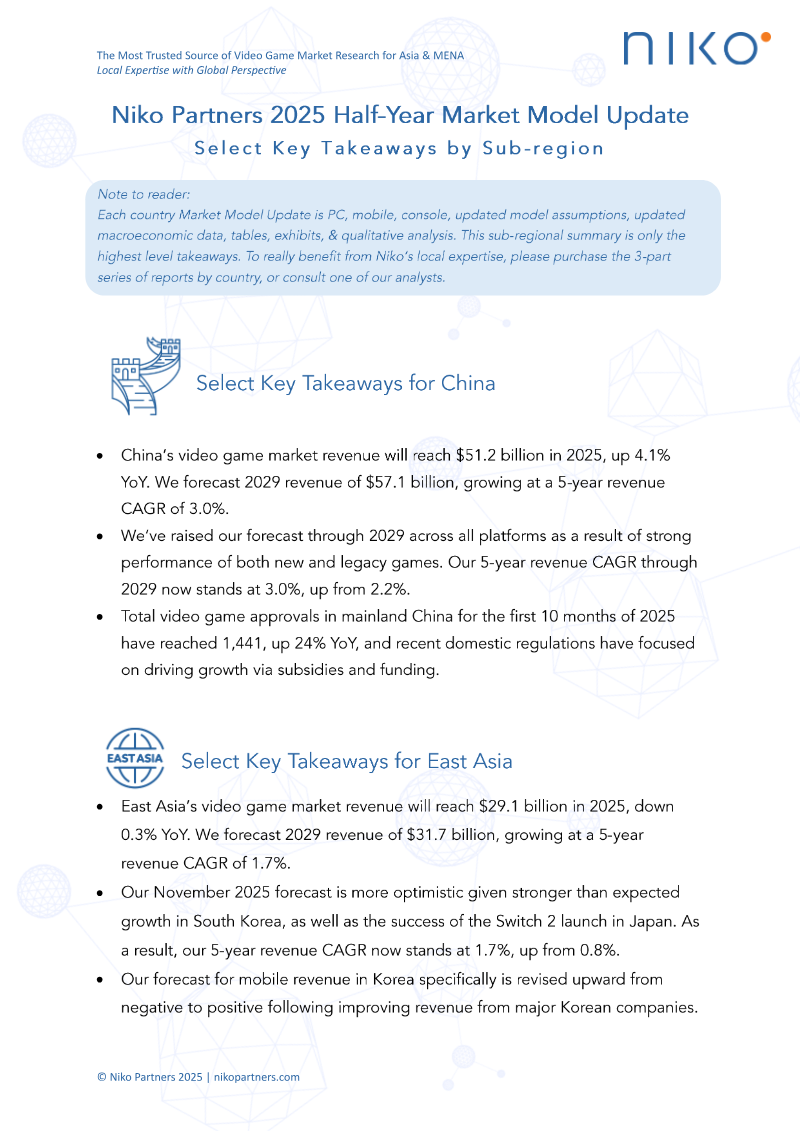
Definitely. And what about the inverse of that? In our conversations, we we talked a little bit about that from the conversations that you're having. Why is it a hot topic? What are your thoughts on European studios entering China? And now in preparation for our talk, I did a little bit of research and this time last year um I mean game approvals in 2026 are up 19% year to date versus the same period last year according to Nikico Partners and we all know that China accounts for a huge percentage of global players. I think it's 20%. So
western interest is clearly spiking after a period of sort of near freeze. What are your thoughts on that one?
[snorts]
I I think it's a huge opportunity because if I jump over the over the pond to Japan, if you look into Sweden that have many independent studios, they basically deliberately targeting Japan. You have small in companies like with
the game like Sulfur, you have a game called Coreke Keeper, of course, you have Hell Divers, but they really looked into how do we approach Japan. I think with China you obviously have a very competitive mobile games business but look at the the number of Steam players is amazing and and earlier today I had a call with a mini game specialist called Playout for example and they growing like crazy. So I think there are even if the games industry had a lot of cold winds there there is always opportunity in this evolution. So I'm I'm so excited to to go to China uh with this one. So obviously it's about partnership and and if you look at historical successes from western companies to China the key thing has been partnership clearly partnership you saw that even with PUBG and and other big comp games of course
yeah there's a lot of uh talk about co-development is something that I've been seeing a lot as well like you guys have been struggling to crack into this
market and now all these companies are coming up that say let us help you do that because then you get to bypass all the difficulties of because it's not an easy market to break into, right? I think that's what's kept it stagnated for so long.
Abs. Yeah, absolutely right. And I do probably 30% of my time is business intelligence. Like Stephan, what do you think? And obviously you had lot of question around AI. I had lot of question about the trends with with all the industry layoffs. I was asked what's going to happen with code that will it increase or or decline? And clearly it will increase. What's going to happen with work for hire? And I think that collaboration and if you look into the the movie sector which I luckily have some experience from also there always been a curiosity from from China into Hollywood movies where they both look domestic movies and then Hollywood and there is an increased curiosity around the PC games from Europe of of course and and of course Canada and North America but I mean the market is so huge
the number of PC players and they are very affordable uh middle class Chinese family can easily buy a good PC. I'm actually reading a book about Shanghai now and and the spending power they have. So I I think there are so many opportunities if you also don't rush in like you have said earlier in my question. You can't just go in and say, "Oh, let's do this." You you have to plan it because there have been so many not good releases from big companies historically in the game sector. I can go on for minutes on that if you want.
Yeah. So Stefan, you're known obviously for a straight talking council, so let's be blunt here. What's the unsexy, unglamorous thing an Asian studio has to get right in Europe before they ever even worry about the supplementary fun stuff like market and launch? I mean, is that the legal and tax setup? Obviously, that's a massive facet, but I wanted to get your thoughts on that. I I think they most of them I mean
they're well traveled and now I'm talking obviously level under the big big Chinese companies because they obviously going to be lot of companies approaching I think it's a mix they have to understand the corporate governance the GDPR that kind of online say there's been a lot of regulation around online safety in Europe currency is less localization is is some but obviously as I said earlier you probably prior prioritize Turkey and Poland even before Italy nowadays. That that wasn't the case 10 years ago.
But I think it's about having some local people on the ground and that's everything from from influencers to leaders that can guide them about where to prioritize. But I mean it's it's not rocket science because I mean there are obviously difference in in the way you what kind of games you play in Germany and UK but if you go into UK, Germany, France and and you have people on the ground then then that's basically the the thing understanding as I said
earlier the positioning and messaging which surprisingly many companies don't get right in the first couple of month or year. I actually read a really interesting oped recently and it talks about breaking into the Chinese games market and there's so many cultural differences like one of them is when you are dealing with one studio or publisher word gets round really quickly and therefore things like you know deliver on what you say is always important doesn't matter where you are in the world but it really matters in China like your word is really bond and I thought that was so interesting those like small cultural nuances that we might not, you know, oh, maybe we'll go for like the best paying deal or whatever it might be. Those kind of small nuances really, really matter in China. I thought that was so interesting and something to consider.
Yes. No, absolutely. And I actually one example I was thinking about from your earlier question when I was I was in the global launch team for Xbox 360 and and
I was so impressed with Microsoft how they looked into the launch of Xbox 360 because we actually did localized Poland. We did localized version in Russia where they even have the operating system. So they went really into saying if we're going to break now for the second time we do a console in Microsoft we have to go really local and I think with um same with Japan as I said earlier I've been there I was so many times there in the early 90s I was there early 2000 with electronic art it's about the relation and as I said so I think if you're the first time visiting PGC in Shanghai
obviously they they're probably going to study everything the the how prepared bad you are, which I think is always the case. You have to do your homework. The body language and also how you because I I think the pace I I hear that all the time. The pace in China, the way they do business is of course faster. They work much longer hours than for example Sweden and France. So there are there
are many many difference. You also have three languages as I understand. Many people think it's just one. So and then you have you have let's say official platforms and you have some regulations for for launches but on the other side you have lot of regulation if you're a foreign company coming into us today. So the geopolitical situation play an impact that it doesn't used to do like 10 years ago.
Yeah it's really interesting. So Stefan before we hit record you held up a book and I want to talk about that a little bit with my next question. The book that you Yeah. I want to see it again. But um your experience is phenomenal. I mean it spans that's it. Yeah. So it's it spans mobile, PC, console, board games which is as we discussed very very unusual. Again you sit at a very unique vantage point. So has working across these physical and digital products changed how you think about selling into a what selling into a market really means?
You've have you know such distinct experience. I was trained by Nokia to never say that's a good question to a journalist and that's a brilliant question. I I mean in the book when I launched Mega Drive Sega was coming in we had 3% three mark 3% in market share and I visit more or less every single store in Sweden took six months because I wanted to see how the consumer react and and I I think the the learning from board games has been incredibly important. I mean, if you go forward now, you have Hasper with Monopoly Go. You have Star Wars. I I was lucky to be in charge of Lucas Art and Lucas Film with the Electronic Arch. And look at Star Wars, the super old mega IP. They doing a card game, Star Wars Unlimited. And then I met the people from Fantasy Flight when they're out demoing the card game. I mean, they go all in because then you meet the consumers. So in the digital world is
CPI, customer acquisition, influencers and in the board game there is so much about the real time consumer facing. I mean the biggest one of the biggest gaming show in the world excluding China is Spiel and which is board game and that's fully fully fully booked all the time. So I love this blend with the with the physical as well.
Yeah. And what are what are your thoughts and this is something something I had a question that came to my mind as you were talking. What are the differences in sort of launching those those two, you know, like a board game or something digital? Because obviously you commit capital to a print run. You ship different printed boxes and rule books. You can't you can't fix a broken rule after it's on the shelf. So, you know, it's a it forces you to treat the market like almost like a deliberate bet and not an experiment. I thought that kind of that's so interesting and you have that experience there.
Yeah. Yeah, know to give you an example, Big Potato Games is is a very successful
UK board game company and they approached me also even before the the M&A process. They said how should we go into digital? When should we go into digital and I said take it slow and because they have a fantastic community so they started to build more like a flywheel CRM etc. And I think that's a very clever things. Smart co-founders coming in, they're very successful in board game, but they're not rushing into digital. Instead, they're asking what are the steps that we're going to do and is it mobile, is it PC, etc. And and I think if you look into many games today, I mean you have the classical Stardw Valley, Terraria, all of them are on board game. But I think it's also because they want to learn from the community. Is it the same type of players? Because I mean
if you put it very easy if you look into a a sector which I'm not involved in like gambling and betting it's not the same players like the gamers
or if you have crypto and and I think but with board games there are a lot of them are the same players and I think with this digital cognitive overload that you have to some degree board game is continue to grow the the growth is probably 10% yearbyear now on the board game
and what did you explore out of curiosity in your book. What was it that you wrote about? I think a lot of our audience probably don't even know that you wrote a book. So, that'd be interesting.
Yeah. Know, first I wanted to do in Swedish because I it started a bit little bit with when I was young because I I was betting on starting a board game really up in the north in Sweden and people were driving by car from Finland. And I so my book is about my perspective. I mean, I met of course I mean the top guys. I mean, Bill Gates, Notch, whoever.
I can imagine. Yeah.
Yeah. And I So, I'm writing the P I'm trying to almost like a Forest Gump where I'm in I'm not talking about how good I am or something. I'm talking more
about how I saw the industry that sector even coming to Warner Bros. because the movie industry was very run by by Windows. So, it's about my perspective. Every five year I stop in the book and explain what I think was the biggest happening in board game and and digital game. And then I'm talking about my leadership because I was constantly headunted and I so it's more like leadership without too much simplicity. But I'm also I'm also recognized where I was a bit too tough because I was brought in as an agent of change in in tough conditions.
Oh, really? I didn't know that.
No, but both.
So you you didn't have the fun job at times.
Yeah. Sometimes I had to say to the people that it's going to be changes. It's going to be big changes and they're going to come fast but it's also going to be fun. So for example with Warner Bros I was brought in to help them to set a digital strategy where the DVD was completely nosiving and Sweden had the
highest piracy in the world at the same time. So that was one thing. In Germany I was brought in when there was an acquisition that didn't work and the culture. So it's also how do you do as a leader when you have a lot of changes that you have to do. So it's a blend. So people ask me is it is it a be is it a fact? And I said well it's a quite I did it as you see very big font and and a lot of I think the 150 photos in it. So
so far I've been giving good having good reviews on that. So thank you for bringing it up Marian. I wasn't planning for that. I didn't even know you wrote a book. That's fantastic. Yeah. Um, so Stefan, last question for you here as we close out. Um, what are you most looking forward to at PGC Shanghai? You mentioned that you you've been to Japan multiple times. What was it, 30 times or something? Um, you've never been to China. So, what are you most looking forward to at PGC Shanghai? Perhaps you can talk a little bit about what you're
sort of excited to share with our audience. Well, first the biggest Sega store in the world is in Shanghai where they have lotto memorial from the '9s. No, but I mean again how I prepared I'm reading book about China. I'm reading book about Shanghai. I already reaching out because I have an amazing network which I'm really grateful. So already before this interview I had probably five calls with with different companies from China. So I'm going to go in there very prepared but I'm I'm looking forward to see how more Chinese company can come into MA I would say and also in this case probably more in the studios uh from Europe maybe with the focus from UK and Scandinavia how to enter the Chinese market but also of course if you look into uh the robotics AI how AI is integrated into game development because the perception
the perception of AI is bit different in in US, Europe and China. So it's everything from AI, robotics, business culture, opportunities mostly in PC, opportunities in in mini games. I'm also a co-owner of three board game companies. I'm going to have a full day with Longpack Games, which is an amazing board game manufacturer. So I'm going to look into the sustainability factor of some board games as well in in that trip. So, I already decided to come back and I'm I'm so grateful that that I also can be at Pocket Gamer Connect in in the the event on the 29th, which I look forward to big time.
I'm we're so excited to have you, Stefan. I mean, what a fantastic journey you've had. What about what about some sort of teasers that you can share with us about what you're going to talk about, what people can look forward to during your your keynote? I I mean I'm talking now with the woman who who I'm really interesting to. She said that yeah this looks and she
probably going to be on the stage there. There are three companies I'm talking to obviously coordinating this with with your team as well but they are seeing they want to talk about PC games in this because they are they have a full portfolio on mobile and they also have let's say objectives from their management in China to go out of China and to propel their business into EMA. So I think the fireside chat will be a little bit of this cross border between let's say Europe and and and China because obviously US is not on the on on the spot now when it comes to to China. So and this focus is Europe and China and that's going to be the fireside chat. So I can promise you it's going to be an interesting conversation.
Oh we can't wait. Now Stefan, before I let you go, do you have any sort of closing words for our video interview today? Perhaps there's an exciting update at Game Advisor. Can you leave us with anything here today?
I would say go outside your comfort
zone. If you don't like networking, try to network. Um because it's so important with relation. Even in a digital world and and you had the pandemic five, six years ago, I think meeting people, traveling, it's so important that that's where I used to say take care of your relations.
Fantastic stuff, Stephan. We can't wait to have you join us at Pocket Gamer Connect Shanghai soon enough. It was fantastic to speak to you today. Thank you so much.
Thank you, Miam. I really enjoyed it.
Auto-generated captions from YouTube — names and numbers may be misheard.
Key insights
7 takeaways · ~3 min read- 01European markets should not be treated as a single entity; successful expansion requires a granular approach that accounts for distinct legal, cultural, and regional differences, such as the specific nuances between cities like Berlin, Munich, and Cologne.
- 02Chinese publishers like Tencent and NetEase are demonstrating high levels of sophistication by conducting deep-dive research into specific European micro-markets, including identifying individual studios in cities with populations over 100,000.
- 03Entering the European market requires rigorous preparation and strategic planning rather than rushed execution, as historical data shows that many large companies have failed due to a lack of localized positioning and messaging.
- 04Building long-term partnerships is the most critical factor for Western companies looking to enter the Chinese market, a strategy proven successful by major titles like PUBG.
- 05The PC gaming sector in China presents a significant opportunity due to a large, growing middle class with high spending power and affordable access to hardware.
- 06Effective business expansion in China relies heavily on cultural alignment, where maintaining professional integrity and delivering on promises is essential, as word of a company's reputation travels quickly within the industry.
- 07Companies should prioritize building a community-led 'flywheel' CRM approach before transitioning from physical board games to digital platforms, as seen in the cautious, community-focused digital strategies of successful board game firms.
Ask AI about this video
Cite this video
Citation
Generating citation…




















Comments