
Kabam
Company
Documents about Kabam

Direct-to-consumer banks $17 billion and Google rolls out fee changes | Week in Mobile Games podcast
Direct-to-consumer (DTC) platforms have emerged as a critical pillar of the mobile gaming economy, currently generating $17 billion in annual revenue and capturing 15% of the global market.
- Direct-to-consumer (DTC) platforms now generate $17 billion annually, accounting for 15% of the global mobile gaming market.
- While 92% of publishers expect DTC growth, only 25% of organizations currently possess the mature infrastructure required to scale these operations.
- The mobile gaming industry is experiencing a period of significant contraction, marked by recent layoffs at Electronic Arts, operational consolidation at Kabam, and anticipated restructuring at Xbox.

🚨📢 BREAKING NEWS: New Hoyoverse game, D2C stuff, layoffs and a WhatsApp game
The current state of the mobile gaming industry is defined by a significant shift toward direct-to-consumer (D2C) monetization, ongoing corporate restructuring, and the integration of artificial intelligence in operations.
- Mobile game direct-to-consumer (D2C) revenues are projected to reach $17 billion this year, driven by 53% of publishers planning to port titles to browser platforms to bypass traditional app store billing.
- AppsFlyer secured over $1 billion in funding at a $2.7 billion valuation, signaling continued investor confidence in mobile infrastructure despite broader industry volatility.
- Corporate restructuring persists as Electronic Arts continues workforce reductions during a $55 billion acquisition process, alongside notable layoffs at Netmarble subsidiary Kabam.
Google Play store fees, Kingshot's World Cup ads, AppsFlyer gets $1bn, Kabam layoffs, more
The mobile games industry is currently navigating significant shifts in platform policy, investment trends, and studio operations. A primary development is Google’s adjustment of Play Store fees, effective June 30.
- Starting June 30, Google Play is lowering store fees for most developers in Western markets, effectively reducing the standard 30% fee to approximately 25% for in-app purchases.
- AppsFlyer secured a $1 billion investment from Google, Meta, Unity, and Moloco, a move analysts suggest is intended to bolster the company's independence and measurement capabilities against AppLovin's market dominance.
- Queen Digital Entertainment, a startup founded by former King executives that raised up to $50 million in VC funding, has ceased operations after failing to scale its casual puzzle game portfolio.

Scaling Journeys: Pitfalls and Cheat Codes
The panel discussion, titled Scaling Journeys: Pitfalls and Cheat Codes, explores the operational and cultural challenges inherent in growing game studios and digital media companies.
- Founders must maintain direct involvement in hiring for the first 50 to 100 employees to ensure cultural fit and preserve the company's core vision.
- Transitioning from a startup to a global enterprise requires shifting from informal communication to formalized systems, such as biannual happiness surveys and structured recognition programs.
- Incentive systems should be designed to reward behaviors that align with core values, creating a cultural 'mythos' that guides decision-making in the absence of direct leadership.

Games Industry M&A: Keys to Success with Chris Petrovic (Zynga, Kabam)
The gaming industry’s approach to mergers and acquisitions has shifted toward a model prioritizing long-term sustainability and the cultivation of forever franchises.
- Successful M&A in the gaming industry has shifted from volume-based acquisition to a disciplined framework focused on long-term sustainability and the cultivation of 'forever franchises.'
- The 'city-state' model is the preferred operational structure, balancing corporate-level infrastructure and user acquisition efficiencies with the preservation of studio creative autonomy.
- Strategic integration now relies on long-term relationship building, often spanning years, to ensure cultural alignment and strategic fit before a transaction is finalized.

Monetizer: Star Wars: Uprising
Star Wars: Uprising, a mobile RPG developed by Kabam, utilizes a complex monetization strategy centered on character progression and gear acquisition.
- Star Wars: Uprising utilizes a dual-currency model featuring soft currency earned through gameplay and hard currency, known as chromium, available for purchase.
- The game employs a tiered in-app purchase structure that restricts access to higher-value spending options until after initial transactions are completed to prioritize player retention.
- The primary monetization driver is the Premium Crane, a gacha-style mechanic where players spend hard currency to acquire high-rarity gear and crafting materials.
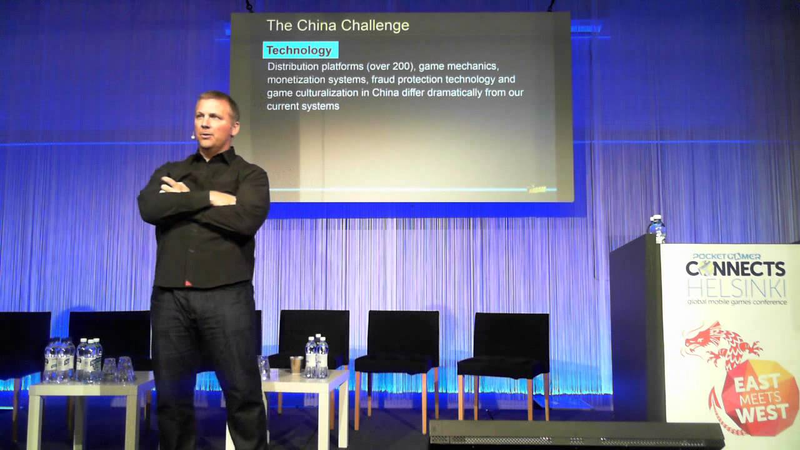
How Kabam is looking to crack China
Kabam’s strategy for navigating the global mobile gaming market centers on the necessity of "culturalization"—the deep adaptation of game systems to fit local preferences—rather than simple localization.
- Asian markets including China, Japan, and Korea now account for over 50% of global mobile gaming revenue, yet remain dominated by local developers due to high barriers to entry.
- Kabam’s strategy for market penetration relies on 'culturalization'—deeply adapting game systems like VIP features to local preferences—rather than simple translation.
- To succeed in China, Kabam leverages local partnerships for distribution and regulatory compliance while utilizing its Beijing studio to maintain internal control over code and IP.

Biz Daily: Why Undead Labs shut down Moonrise before it launched
The cancellation of the creature-based RPG Moonrise by Seattle-based developer Undead Labs highlights the challenges of the modern mobile games-as-a-service model.
- Undead Labs cancelled the creature-based RPG Moonrise because it failed to meet essential 1-day, 7-day, and 30-day player retention benchmarks during its eight-month soft launch.
- The project was deemed commercially unsustainable because the developer could not achieve the monetization levels required to offset the high ongoing infrastructure and operational costs of a live-service model.
- Publisher Kabam shifted its strategic focus away from original intellectual property, prioritizing high-revenue branded content like Marvel-themed titles instead.

Why Kabam is toning down its F2P monetisation
The mobile gaming industry is currently navigating a shift toward long-term player retention and sustainable monetization strategies, as evidenced by the financial performance and strategic pivots of major players like Electronic Arts and Kabam.
- Kabam shifted its strategy from aggressive, short-term monetization to a 'less is more' approach after missing its 2014 revenue target of $550–600 million, reporting only $400 million.
- To improve long-term lifetime value, Kabam is reducing its game release frequency and easing monetization mechanics, such as gifting players small amounts of hard currency to foster better sentiment.
- Mobile game developers are increasingly utilizing 'extreme user acquisition,' evidenced by companies like Supercell and uCool investing millions in high-profile traditional media, including Super Bowl advertising.

TrailPlay on engaging fresh audiences
The primary thesis of this analysis is that developers can overcome the saturation and high user acquisition costs of the mobile market by adopting a cross-platform strategy that includes desktop and web-based platforms like Facebook, Steam, and Kongregate.
- Adopting a cross-platform strategy across desktop and web channels serves as a low-cost user acquisition alternative to the saturated and expensive mobile market.
- King reported a 50% increase in average play time and a 100% increase in user engagement after porting their titles to additional platforms.
- PopCap successfully utilized Facebook Connect to enable cross-platform play, resulting in 20% of their monthly active users engaging with these connectivity features.

Monetizer: Dark District
Dark District, a mobile strategy title developed by Kabam, serves as a case study in the evolution of the city-building genre popularized by Clash of Clans.
- Kabam’s Dark District, released in late 2013, monetizes base development by restricting players to a single construction unit, creating artificial scarcity that incentivizes the use of hard currency to accelerate progress.
- The game utilizes a science-fiction aesthetic to differentiate itself from the fantasy-themed city-building titles that dominated the mobile market during the 2013–2014 period.
- The monetization model features a tiered structure for in-app purchases, ranging from approximately four dollars at the entry level to mid-range options around fifty dollars.

The future of F2P mobile gaming with Kabam's Andrew Sheppard
Kabam is strategically pivoting from its historical focus on strategy-based mobile games toward higher-fidelity, immersive, and interactive experiences to meet evolving consumer demands.
- Kabam is shifting its development focus from strategy-based games to high-fidelity, 3D, and AAA-quality experiences to align with evolving consumer demands.
- The company is diversifying its portfolio beyond traditional strategy titles into genres like tower defense and synchronous multiplayer action, as seen in upcoming releases Dark District and Blast Zone.
- Leveraging intellectual property through partnerships with major studios like Warner Bros. and NBC Universal has proven successful, with the Fast & Furious 6 tie-in achieving 33 million installs.