indie
CompanyUnited States
Documents about indie
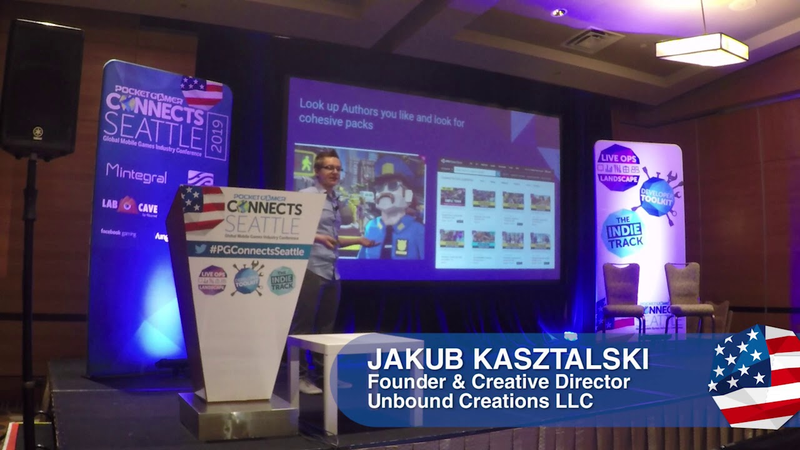
How to mix third-party assets without your game looking cheap
Jakub Kasztalski, founder of Unbound Creations, provides a strategic framework for independent developers to utilize third-party assets without compromising visual cohesion or quality.
- The perception of 'cheap' third-party assets is primarily caused by a lack of artistic direction and visual inconsistency rather than the quality of the assets themselves.
- Developers should establish a clear visual vision during pre-production by creating mood boards, conducting competitor research, and developing a style guide to filter asset selection.
- Disparate assets can be harmonized using post-processing techniques such as adjusting hue, saturation, lighting, and shaders to ensure they align with the game's unified aesthetic.
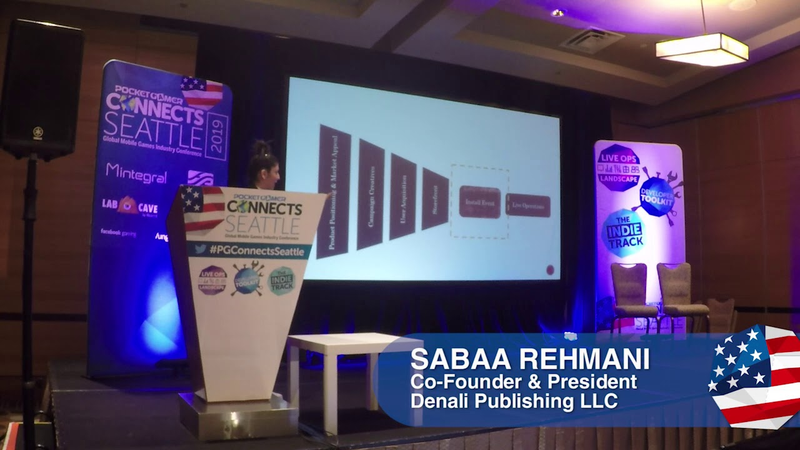
Publishing 101: A crash course in navigating today’s mobile marketplace
The mobile game publishing landscape is characterized by extreme saturation and high competition, requiring developers to adopt a systematic, data-driven approach to achieve scalability.
- Achieving scalability requires maintaining a positive delta where the lifetime value (LTV) of a user consistently exceeds the cost to acquire (CAC) that user.
- Developers must prioritize product stability and retention metrics before scaling acquisition, as poor user experience renders marketing spend ineffective by creating a 'leaky bucket' scenario.
- Success in a saturated market depends on a data-driven, iterative cycle that uses attribution partners and analytics SDKs to distinguish between organic and paid traffic performance.
Microsoft E3 Press Conference | Games ReCAP Episode 002
Microsoft’s E3 2019 presentation signaled a strategic pivot toward long-term ecosystem building, characterized by aggressive studio acquisitions and a focus on service-based growth.
- Microsoft is aggressively acquiring studios, including Obsidian, Ninja Theory, and Double Fine, to build an exclusive content library for the upcoming Scarlett console launch.
- The industry is shifting toward double-A development as a sustainable financial alternative to the high-risk, blockbuster-scale projects that currently dominate the market.
- Microsoft’s E3 2019 presentation prioritized service-based growth through the Game Pass model, though it faced criticism for lacking the surprise announcements needed to drive momentum for Gears 5 and Halo Infinite.
I PLAYED YOUR GAMES! | Let's Talk Game Design.
This analysis examines a series of design critiques provided for various indie game projects submitted by a community of developers.
- Prioritize gameplay-critical visual elements over decorative particles in top-down shooters to minimize visual clutter and improve player clarity.
- Design puzzle game levels with compact playing fields to ensure players can immediately grasp the full scope of a challenge.
- Combat mechanics in action titles should incorporate environmental hazards and varied enemy behaviors to prevent repetitive, close-range spamming and encourage strategic depth.
Game Dev: 8 Tips on Vision Keeping! - (and Game Update)
Maintaining a coherent development vision is essential for creating a distinct, marketable, and successful indie game. A lack of clear direction often leads to fragmented design and development inefficiencies.
- Establish a core vision early in development using visual and gameplay prototypes to align team expectations and prevent fragmented design.
- Evaluate every design decision, including difficulty and character aesthetics, against the central identity of the game to ensure all features serve the primary vision.
- Identify and prioritize the specific unique mechanics or narrative hooks that define the game's marketability, relegating or removing features that do not support these core elements.
Art Direction Bootcamp: Pantalones! Things I Wished I knew Prior to Becoming an Art Director
This presentation outlines essential lessons for transitioning from an artist to an art director within the video game industry, drawing on the speaker’s experience scaling a studio from a small indie team to a 120-person AAA organization.
- Successful art direction requires shifting focus from maintaining absolute creative control to fostering team motivation, delegating authority, and managing interpersonal dynamics.
- Art directors must avoid micromanagement by hiring specialists and granting them genuine ownership over their work, which improves both output quality and employee engagement.
- To effectively lead, art directors should provide clear, goal-oriented direction rather than prescriptive solutions, allowing artists the creative freedom to solve problems within established parameters.
Game Discoverability Day: NOTICE ME: The Grind Behind the $272K Funding Success of Boyfriend Dungeon
The successful crowdfunding of the indie title Boyfriend Dungeon, which raised $272,000 against a $65,000 goal, serves as a case study for effective game discoverability and community-driven marketing.
- Boyfriend Dungeon achieved 418% of its funding goal, raising $272,000 against a $65,000 target by prioritizing community-driven engagement over paid advertising.
- Twitter served as a critical conversion engine, driving 17% of total pledges—a rate significantly higher than the industry average of less than 1%.
- A high-conversion hook must be immediately understandable, utilizing a clear 'one-sentence' pitch that combines distinct genres, such as the game's 'dating sim meets dungeon crawler' premise.
Feeding the Maw: Managing a Live Narrative Game in Fallen London
Fallen London, a decade-old free-to-play browser game, serves as a critical financial and creative anchor for the London-based indie studio Failbetter Games.
- Failbetter Games uses the decade-old browser game Fallen London as a financial anchor, providing stable revenue that de-risks the development of standalone premium titles like Sunless Sea and Sunless Skies.
- The studio’s monetization strategy relies on the 'Exceptional Friendship' monthly subscription model, supplemented by 'Fate,' a premium currency used for one-off narrative purchases.
- To maintain subscriber retention, the studio produces approximately 100,000 words of exclusive narrative content annually, which is later sold individually to ensure long-term revenue.
Let's Dev | Episode 002: Once Upon a Coma (Highlights)
This technical walkthrough details the digital art production process for Once Upon a Coma, an indie game developed in the Unity engine.
- Environmental storytelling relies on visual composition techniques like using silhouettes for scale reference and framing elements such as trees and mist to direct player focus.
- Atmospheric depth is achieved in Unity-based projects by applying Gaussian and motion blur techniques to background layers within Adobe Photoshop.
- Character design for antagonists like 'Doctor Smile' prioritizes unsettling, elongated features inspired by horror literature while avoiding excessive detail until the primary silhouette is finalized.
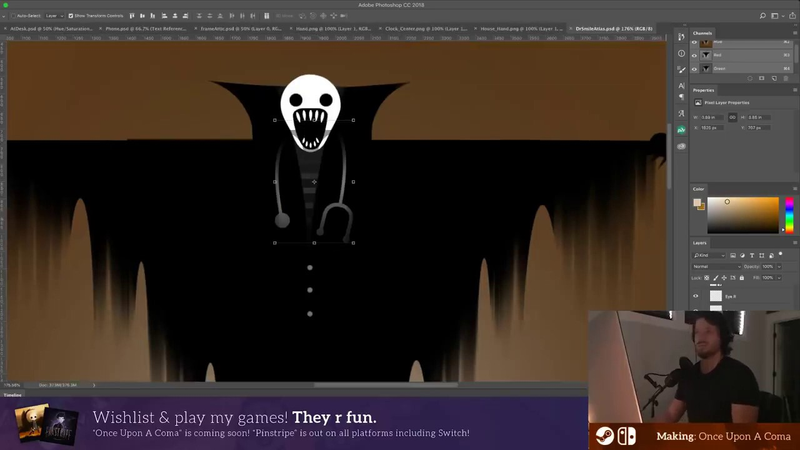
Let's Dev | Episode 001: Once Upon a Coma (Highlights)
This account details the final stages of production for the indie game Once Upon a Coma, developed in Unity.
- The development of Once Upon a Coma utilizes environmental storytelling and visual cues in Unity to convey narrative depth without relying on explicit dialogue.
- The production process employs iterative asset design, incorporating real-time community feedback to refine aesthetic quality and world-building.
- Transitioning from alpha testing to final launch is a high-stress phase that requires managing both the logistical burden of fixing thousands of bugs and the emotional toll of critical feedback.
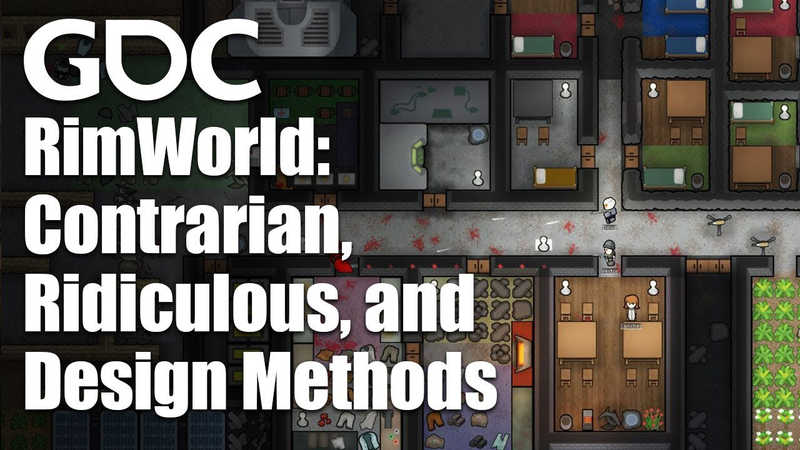
RimWorld: Contrarian, Ridiculous, and Impossible Game Design Methods
RimWorld succeeds by fundamentally rejecting the traditional game design framework that prioritizes skill-based progression and competitive balance.
- Shift the design focus from traditional 'game' mechanics—which prioritize competition and player victory—to a 'story generator' frame that allows for comical misfortune and emotional narrative development.
- Leverage the human tendency toward apophenia, where players naturally anthropomorphize and find deep social meaning in simple, abstracted symbols and events.
- Prioritize the 'coolness-to-cost' ratio when evaluating features rather than simply asking if an idea is cool, as many cool ideas are not worth the development effort.
When to call it quits... (Indie Game Dev Q&A)
This analysis addresses the challenges of transitioning to full-time indie game development, focusing on narrative design, business sustainability, and the psychological aspects of creative entrepreneurship.
- Long-term indie success requires balancing artistic vision with a rigorous business strategy, treating financial sustainability as the necessary infrastructure for creative longevity.
- Financial viability is not an accidental byproduct of game quality but the result of intentional marketing and strategic revenue planning.
- Developers should adopt a hybrid revenue model, combining irregular capital injections like game sales and publisher advances with stable, recurring income from platforms like Patreon and YouTube.