1 free read left. Create a free account for unlimited reading + AI research.
Create free accountGame Dev: 8 Tips on Vision Keeping! - (and Game Update)
Key insights
6 takeaways- 01Establish a core vision early in development using visual and gameplay prototypes to align team expectations and prevent fragmented design.
- 02Utilize early playtesting to gather immediate user feedback, allowing for an iterative refinement process that keeps the final product laser-focused on its core identity.
- 03Maintain a clear understanding of the target audience and their specific motivations to ensure the game remains focused on the needs of its intended players.
- 04Evaluate every design decision, including difficulty and character aesthetics, against the central identity of the game to ensure all features serve the primary vision.
- 05Identify and prioritize the specific unique mechanics or narrative hooks that define the game's marketability, relegating or removing features that do not support these core elements.
- 06Address project identity crises by prioritizing rapid completion and external validation rather than adding unnecessary content.
Ask AI about this video
Transcript
vision keeping and game development is super important because with a more coherent vision you can also make a more coherent game it will be a lot easier to stand out from the rest and you will also hopefully sell a lot more copies that's why in my opinion every game developer should try to become really good at vision keeping and this is where I have to admit that I completely failed at that in my current indie game project we'll use nail if you want to see how I failed why I failed what went wrong then check out the video made a couple of weeks ago this is basically a follow-up video to that thanks so much for loved useful advice you gave me in this video I basically want to share my main takeaways there took from you my top eight takeaways for how you can maneuver yourself out of a situation like this or you can do better vision keeping for your game and how you can hopefully make a way better game as a result of it and I'll be demonstrating all of that on my own game will you snail let's dive into it tip number one is try to get clarity about what your game is yes early as
possible or in other words try to find a vision for your game as early as possible pretty much did that for will you snail will you snail was supposed to be a funky rage game where you fight on AI everything done correctly here nice tip number two is something I've learned from making islanders and that is that having visual prototypes as well as gameplay prototypes really helps to define a vision for your game and also to keep a vision for your game some point in the development of Islanders freedom and made a really cool visual prototype that basically helped the entire team to understand what we are about to make it helped to eliminate all misunderstandings because I was basically showing how the finished game is going to look like you even could even place a couple of buildings the game wasn't really working yet but it was just a little visual mock-up and that was absolutely fantastic for vision keeping for real you snail I did not do that I skipped out on pre-production entirely which is something you should not do diving right into the development of my games without really thinking
about what my game is is one of my most common mistakes that I keep repeating for some reason and I regret it every single time so make some visual prototypes make some gameplay prototypes to you it will help you to get a lot better feeling for what you are creating tip number three is clearly where I messed up four will you snail you need to notice when your focus shifts into different directions yes it is very normal for the focus to shift during development some aspects of your game are a lot more fun than you initially thought they were so maybe you want to shift the focus to that you just need to be careful that you don't shift the focus into too many directions and most importantly you need to take conscious decisions about that or you will end up with a completely wishy-washy game that is everything but really nothing it is okay for your vision to change during development but you still need a clearly defined vision and I clearly didn't have that for will use now I'm happy that at the very least I realized now in the worst case scenario I wouldn't have realized till
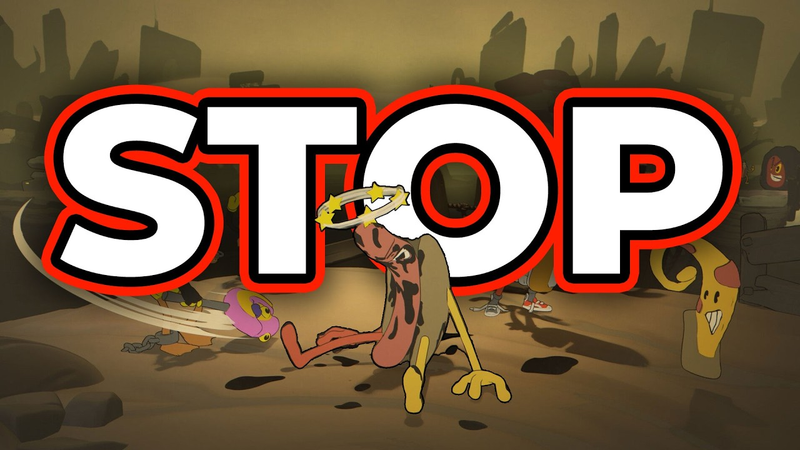
the game was out and then it would have been too late so yeah I mean at very least I'm noticing now but in the best case scenario whenever you shift your focus during development you should take very conscious decisions about that and readjust your vision for the game accordingly so now you might wonder how do you know you still have a clearly defined vision for the game tip number four always know what makes your game special and stand out from the rest this way you know you're still on track and you guys made me realize that what's special about will you snail is not the difficulty it's not the rage game platformer aspect what really makes will you snail special and stand out is the AI the interactions with the AI that it places traps in real-time and that back and forth between AI and players so from now on that's what will define the vision for the game that's what will make the game stand out the AI fold stop [Music] tip number five always know who your game is for and that is something you
can do every now and then during development just ask yourself what is your target audience who are you making this game for and as long as you can still answer that question you're still on track where you snail will be first and foremost for people who are interested in interesting AI antagonists for people who liked GLaDOS and portal for example and it will also be for people who like fast paced action platformers obviously we have to consider the gameplay as well that's another thing you helped me to realize by the way will you snail is not necessary about the difficulty it will be about fast-paced action platforming that's where the game really shines that's where it's the most fun and that's what we'll be focusing on tip number six always know why people will be eager to play your game because if people aren't eager to play your game they probably won't buy it right for will your snail I think after answering the first two questions I can say the main appeal will be beating the AI beating the cocky AI that teases you all the time you can't beat me and then of
course the other reason is to have fun with the fast-paced action along the way and the third reason is hopefully that it will just keep players curiosity quite a bit in terms of lore for example what is the background of the AI what does it want why is it there I hope that I can keep players interest a little bit with with that but we can definitely see the two main things that are crystallizing out of all of these questions are the fast-paced action and the AI so those two things will define the identity of will your snail moving forward tip number seven is evaluate every single design decision you make for the game in the context of the vision you have for the game everything should serve your vision there are no design decisions that stand on their own for example in will your snail I've been thinking about should there be difficulty settings if yes how should those difficulty settings look like how should they be named I can have a something that I think serves the vision for the game really well and that is giving vai full control over the difficulty settings which means yes
there will be difficulty settings but the player will not be in control of the difficulty settings yeah I will adjust the difficulty partially depending on your performance and also partially just to troll you make it really hard or way too easy so I think that could be really fun it will allow everybody to make it through the game and that is basically the thought process you have to take for every single design decision in your game for example the title of the game will use snail served the vision of our rage game kind of well yeah now that the game is focused on the AI and on fast-paced action platforming that title really doesn't serve a purpose anymore and I think we'll have to change the title to something else like beat the AI or another title idea I have is try me noob then another thing for example the puzzle sections of the game they feel kind of out of place now because the game is about fast-paced action platforming I didn't delete the puzzles but I put them at the end of each chapter and I will make them a voluntary heart of the game basically
they will probably give you a little bit of extra lore what I really like about that is if you decide to play the game multiple times then you can just skip the lore and the puzzles both of those are things that you basically just want to do once and then for example another thing that I could reevaluate is the player character does it really need to be a snail is there maybe a better character that serves the purpose of the game a little better somebody suggested that you play a back and you have to infiltrate the AI as a back I will try to introduce more interactions with the AI maybe even introduce buttons that allow you to interact with the III even more once you know what your vision is you should really try to make sure that everything is absolutely laser focused on achieving that mission and then tip number eight is something a lot of you've wrote under my last video about this topic as well and I totally agree as well if you ever get into an identity crisis like this where you don't really know what your game is who this for what makes your game stand out and all that sort of stuff then it is more more
important than ever that you finish your game quickly game developers myself included have a very high tendency to fix problems in their games by adding more stuff to their games if you're not careful can make your identity crisis problem even worse and another thing is that you should let players play the game as soon as possible get some actual player reactions if the game works if the vision for the game works so what I will do for will you snails I will upload the game this month to steam that does not mean that it comes out this month you got no M it will still take quite a while to come out I assume I just want to get started uploading actually finished and playable versions to steam and want to start play testing if you're interested in play testing will you snail hit me up on disk or the link is in the description below I need some dedicated play testers I want you to hold me accountable I will upload the first playable version two-seam this month and then my process will be updating the game making a better piece by piece so that in the worst case scenario I can release the
game at any time [Music]
Summary
Maintaining a coherent development vision is essential for creating a distinct, marketable, and successful indie game. A lack of clear direction often leads to fragmented design and development inefficiencies. To avoid these pitfalls, developers should establish a core vision as early as possible, utilizing visual and gameplay prototypes to align team expectations and eliminate misunderstandings before full-scale production begins.
Key strategies for vision maintenance include identifying the specific elements that make a game stand out, such as unique mechanics or narrative hooks, and ensuring these features remain the primary focus throughout development. Developers must consciously evaluate every design decision—from difficulty settings to character design—against this core vision. If a feature does not serve the central identity of the game, it should be reconsidered, moved to a secondary role, or removed entirely. Furthermore, developers should maintain a clear understanding of their target audience and the specific motivations that will drive players to engage with the title.
When a project suffers from an identity crisis, the most effective remedy is to prioritize rapid completion and external validation. Rather than adding more content to compensate for a lack of focus, developers should seek immediate feedback through early playtesting. By putting playable builds into the hands of users, creators can verify if their vision resonates with the intended audience. This iterative approach allows for continuous refinement, ensuring that the final product remains laser-focused on its core identity while providing a cohesive experience for the player.







Comments