indie
CompanyUnited States
Documents about indie

Let's Review Your Games — Ep. 011
Success in the modern indie game market depends on the ability to communicate a distinct, compelling hook within seconds.
- Marketing assets must communicate a game's genre, setting, and unique mechanics within seconds to overcome high saturation on the Steam storefront.
- Trailers should prioritize high-action sequences, rhythmic musical drops, and professional sound design to guide viewer emotional response, even if the game build is incomplete.
- Developers should replace bloat-heavy tutorials with contextual prompts integrated directly into gameplay to facilitate immediate player engagement.
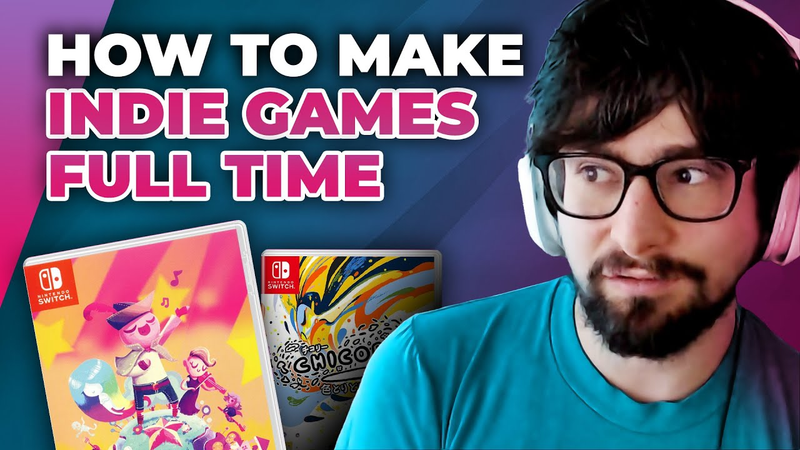
How To Make Indie Games Full Time (Greg Lobanov) — Full Time Game Dev Podcast Ep. 037
Achieving a sustainable, full-time career in independent game development relies on building a consistent portfolio of commercial projects rather than chasing singular viral successes.
- Indie developers do not need viral hits to sustain a full-time career; consistent income can be generated through a portfolio of smaller, non-explosive titles like Coin Crypt, Wandersong, Chicory, and Beastieball.
- When working with limited resources, developers should refine their core game loop and gimmick as a solo developer before hiring a team to scale production.
- Working with publishers can be a strategic choice for experienced developers to offload non-creative tasks, but creators should avoid large, high-stakes deals and prioritize clear, concise milestones to mitigate risk.

How to Score Treasure as An Indie Game Studio
The mobile gaming industry presents significant challenges for small independent studios, particularly regarding user acquisition and monetization strategy.
- NineZyme OÜ, a four-person indie studio, successfully modernized the classic tile-sliding puzzle genre by integrating character-driven narratives and vibrant animations in their debut title, Tiles Tales: Pirates.
- Indie studios must remain agile by prioritizing direct experimentation and data-driven testing of monetization models over following generic industry-standard advice.
- Transitioning from a premium to a freemium model proved necessary for NineZyme OÜ to broaden audience reach and better align with player behavior.
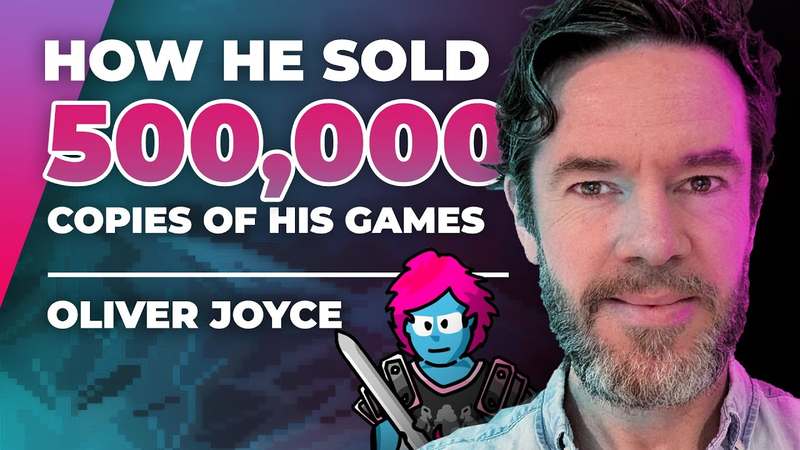
How He Sold 500,000+ Copies Of His Games (Oliver Joyce) — Full Time Game Dev Podcast Ep. 036
Achieving commercial success in the independent game industry requires a strategic shift away from chasing fleeting market trends toward cultivating authentic, niche-driven development.
- Diversify income streams—such as YouTube channels, asset sales, or consulting—to mitigate the financial risk of game development and avoid the 'quit your job' trap for early-stage projects.
- Validate market interest early by building a demo or trailer before committing years of development; for example, a poor reception to a trailer with 25,000 views can signal a need to pivot or cancel a project to save time.
- Prioritize core game loops that respect the player's time, as games that offer incremental rewards and avoid tedious mechanics often perform better for time-poor audiences.

Finding Success with AI Agents and Content Creators
The integration of user-generated content and artificial intelligence represents a fundamental shift in how developers approach player engagement and studio sustainability.
- Gaining player attention is the primary challenge in modern game development, as the ease of creating games with tools like Unity, Unreal, and AI has led to tens of thousands of annual releases.
- Successful viral games often require a 'content-first' approach where developers prioritize core gameplay and fun before layering in complex systems like User Generated Content (UGC).
- For most traditional game studios, attempting to build a platform-style UGC model is financially risky, as it requires massive technical investment and long payback periods that many companies cannot sustain.
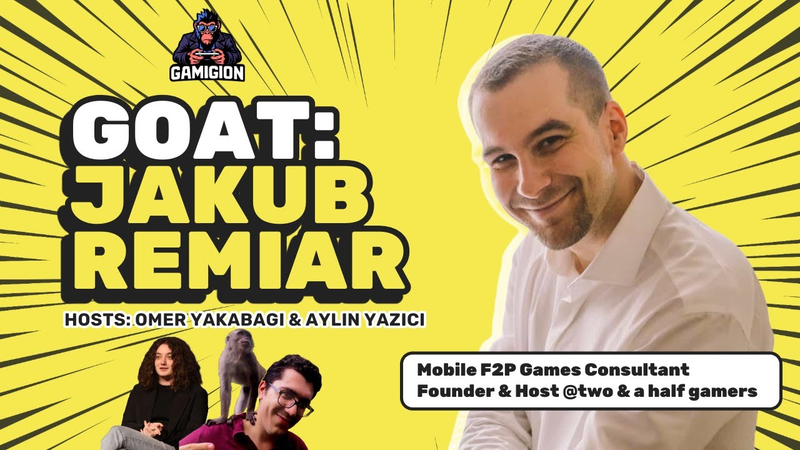
GOAT: Jakub Remiar on Mobile Gaming, Gacha Mechanics, and Trends | Full Interview
Jakub Remiar, a mobile gaming strategist and co-host of the Two & a Half Gamers podcast, provides an analytical overview of the mobile gaming industry, focusing on the intersection of behavioral psychology, monetization mechanics, and market trends.
- Gacha mechanics function as complex engines requiring sophisticated progression design, with successful implementation often involving a balance between binary drop outcomes and strategic utility, such as the 'rock-paper-scissors' element seen in character collection games.
- Supercell's design approach in Clash Royale represents a major breakthrough in gacha mechanics, moving away from pure randomness toward more structured progression systems.
- The mobile game Whiteout Survival demonstrates high-level innovation in both 4X strategy mechanics and user acquisition (UA) strategies, making it a benchmark for current industry performance.
Will AI Destroy Indie Game Dev?
The integration of artificial intelligence into the game development industry presents a complex challenge, primarily centered on the distinction between data processing and the act of human creation.
- Current AI models can analyze and replicate existing creative works, but they lack the ability to comprehend the underlying human creative process or the intent of the original creator.
- While AI is effective at generating static assets like still images, it struggles with maintaining long-term continuity and creative coherence in complex projects.
- The creative spark in writing often manifests as a subconscious process that current AI technology cannot replicate because it lacks the lived experiences and biological variables that define human personality.

Tencent is a Military Company? | Roundtable News | 359
The global gaming industry is currently navigating a period of profound structural contraction, defined by widespread layoffs, studio closures, and a notable lack of innovation within the traditional AAA production model.
- The global gaming industry has undergone a significant contraction over the past two years, resulting in approximately 20,000 job losses due to the unsustainable costs of the traditional AAA production model.
- Major publishers are increasingly relying on risk-averse strategies, such as remaking established intellectual properties and integrating AI, to offset financial pressures and operational inefficiencies.
- Creative innovation is shifting away from large-scale corporate projects toward the indie sector, which utilizes more efficient development cycles to foster growth.

Let's Review Your Games — Ep. 009
The primary objective of indie game development success lies in the alignment between a project’s core gameplay loop and its public-facing marketing assets.
- Marketability is a critical factor for game success; even a well-designed game will struggle to sell if the Steam page fails to clearly communicate the core hook or gameplay loop to potential players.
- Visual clarity is essential for immediate player understanding; for example, a game about delivering beer should visually represent that theme rather than relying on ambiguous sci-fi aesthetics that confuse the user.
- Effective Steam page copy should be concise and focus on the primary gameplay hooks, such as specific mechanics like hacking, evolving, or procedural generation, rather than using overly long or vague descriptions.

Let's Review Your Games — Ep. 008
Successful indie game development hinges on the ability to communicate a clear, compelling hook to potential players through both marketing materials and core gameplay design.
- A successful indie game requires a clear, compelling hook that is immediately communicated through both marketing materials and core gameplay design.
- Steam pages must categorize the game experience using concise, descriptive language to ensure players immediately understand the title's identity.
- Trailers must prioritize high-energy gameplay within the first five seconds to effectively capture potential player attention.
How To Start Making Games (The RIGHT Way)
Successful independent game development relies on the implementation of artificial constraints and a clear understanding of personal objectives rather than chasing industry trends or open-ended development cycles.
- Prevent project bloat and ensure financial viability by implementing strict, self-imposed constraints on budget, time, and development scope.
- Define a clear 'finish line' early in the development cycle to maintain creative momentum and avoid the multi-year cycles that frequently lead to commercial failure.
- Prioritize the developer’s specific creative strengths, such as narrative-driven storytelling, rather than chasing market trends or implementing complex, popular features like procedural generation.

Let's Review Your Games — Ep. 007
The primary objective of game development and marketing is the establishment of a clear, high-concept hook that differentiates a title within the crowded Steam marketplace.
- Steam store page success relies heavily on a compelling, high-concept hook in the description and thumbnail, such as framing a character as an 'emo robot' to create immediate emotional intrigue.
- Game UI and menus must match the game's overall visual identity; inconsistent design choices make a product appear cheap and diminish its perceived value.
- Overuse of post-processing effects can negatively impact the player experience by causing visual discomfort, particularly when viewed in full-screen mode.