Indie Games
Company
Documents about Indie Games
BRILLIANT Advice If You Want To Start Making Indie Games
Transitioning to a full-time career in independent game development requires a strategic approach to production, tool development, and risk management.
- Prioritize the early development of robust, proprietary internal tools like map editors and dialogue systems to automate repetitive tasks and accelerate long-term production.
- Treat every game project as a high-stakes investment by building modular technology that can be salvaged, reskinned, or repurposed if the initial concept fails to gain market traction.
- Focus on the game's 'hook' and aesthetic presentation, as these elements are often more critical to commercial success than the underlying mechanics.
How To Make Indie Games In 2025 w/ Edmund McMillen — Full Time Game Dev Podcast Ep. 029
The independent game development landscape in 2025 demands a departure from trend-chasing in favor of radical creative autonomy and the cultivation of a distinct, uncompromising artistic voice.
- Success in the 2025 market requires prioritizing a distinct, uncompromising artistic voice over trend-chasing to differentiate projects in a saturated industry.
- Developers should adopt an organic, discovery-based development process that favors iterative idea-volleying over rigid design documents or speculative high-budget models.
- Financial constraints should be leveraged as catalysts for innovation rather than viewed as hindrances, as the industry shifts away from bloated, speculative investment models.

Marketing For Indie Games | Land a Hit Game!
Success in the indie game market on Steam is primarily determined by genre selection and product design rather than traditional advertising.
- The Steam algorithm functions as a competitive system that prioritizes games showing early traction; if a game fails to generate sufficient interest during its initial 20,000 impressions, Valve will reduce its visibility in favor of better-performing titles.
- Marketing acts as a 'fuse' to ignite the Steam algorithm, which serves as the primary engine for long-term sales through passive discovery and recommendations.
- Genre selection is a critical factor for success, with data showing that horror games consistently outperform other genres on Steam, while linear platformers often face significant market resistance.
How To Make Indie Games In 2025 w/ Jonathan Blow — Full Time Game Dev Podcast Ep. 024
The contemporary game development landscape faces its most precarious period since the 1980s, defined by a saturated, "red ocean" marketplace where high-quality titles struggle for visibility amidst a deluge of low-effort releases.
- The current game market is a 'red ocean' characterized by extreme saturation, where high-quality titles are frequently obscured by a high volume of low-effort releases.
- Modern game engines like Unity and Unreal have lowered barriers to entry but introduced significant technical overhead, including software bloat and performance inconsistencies.
- Developers should consider building custom engines to regain technical control and efficiency, despite the increased labor and operational demands this approach requires.
Why You Should Make Tiny Indie Games In 2025
The debate between developing small-scale versus large-scale indie games in 2025 centers on financial viability, return on investment, and audience retention.
- The 'bunch of balloons' business model minimizes financial risk by releasing multiple high-quality, small-scale titles rather than committing years to a single large-scale project.
- Small-scale games offer a more efficient return on labor and align with current market demand for bite-sized content compared to large projects that suffer from diminishing returns.
- Developers should launch minimalistic titles and only 'inflate' those that gain market traction through subsequent updates, Early Access content, or expansions.
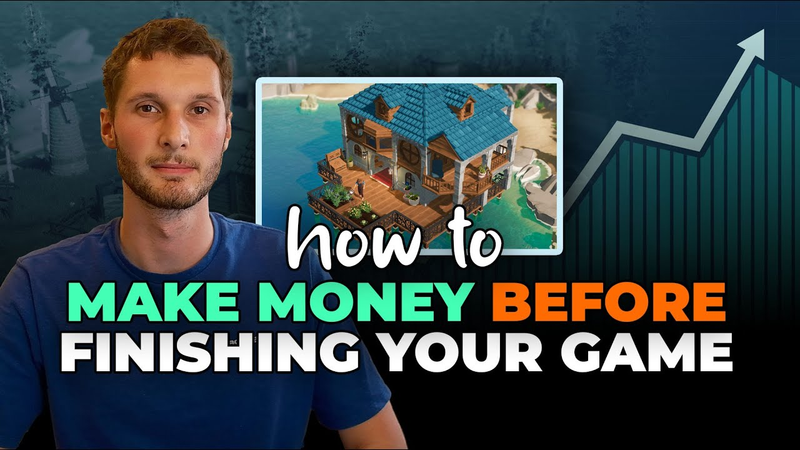
How To Make Indie Games Full Time (Before Finishing Your Game)
Transitioning to a full-time career in independent game development requires a strategic, multi-stage approach to funding that often necessitates personal financial sacrifice and diversified income streams.
- Julian Ball funded the development of Lens Island through a combination of personal savings, a pre-existing YouTube channel, and a $60,000 Kickstarter campaign.
- Lens Island has achieved significant commercial success, selling approximately 200,000 copies and generating roughly $3 million in gross revenue over three to four years.
- The studio's financial requirements scaled significantly over time, moving from a lean operation supported by personal savings to a peak burn rate of $100,000 per month.
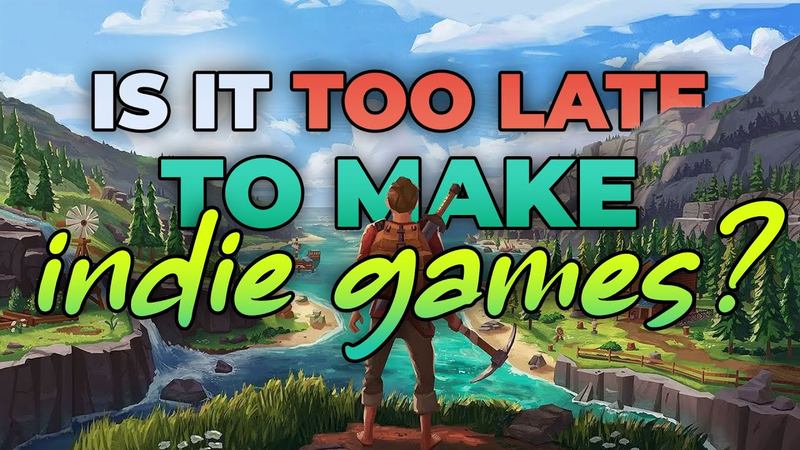
Is It Too Late To Make Indie Games?
The indie game industry is not in a state of decline, but rather experiencing a shift in how success is defined and achieved.
- The indie game market is not struggling; rather, the industry's challenges are concentrated within AAA studios and publishers that prioritize risk-averse, uninspired 'solid' games over unique, innovative experiences.
- Indie developers possess a competitive advantage because they are not constrained by corporate structures or shareholder demands, allowing them to take the creative risks necessary to build games with strong, unique hooks.
- Large-scale publishers often impose corporate oversight that can water down an indie developer's original vision, potentially making the final product less competitive in a crowded market of 30,000 annual Steam releases.
4 CRITICAL LESSONS I've Learned (After 10 Years Of Making Indie Games)
Drawing from over a decade of experience in the indie game industry, this analysis outlines four essential strategies for developers aiming to achieve professional success and financial sustainability.
- Prioritize the validation of the first 15 minutes of gameplay to ensure a high-quality experience that elicits a positive emotional response before committing further development resources.
- Scale game development exclusively by expanding upon the validated core segment rather than building out unproven concepts, which prevents the dilution of overall quality.
- Focus narrative and linear game development on the 'bookends' by front-loading rewards to hook players and ensuring a high-value, satisfying conclusion to maintain engagement through potential mid-game grinds.
XBOX & Sony & Indie Games Future Plans | 350
The global gaming industry is currently navigating a period of profound instability, characterized by a severe wave of layoffs that saw 10,000 positions eliminated in the first half of 2024 alone.
- The gaming industry is experiencing a period of aggressive workforce overcorrection, with significant layoffs occurring across traditional AAA studios following a period of post-COVID over-hiring.
- Subscription-based models like Xbox Game Pass face long-term sustainability questions as companies struggle to balance the high cost of content production with the need to grow user bases through low-cost access.
- Industry data indicates that 79% of the online population engages with games, with nearly 50% of players operating across multiple platforms and 57% having spent money on games within the last six months.
Should You Quit Your Job To Make Indie Games?
The decision to transition into full-time independent game development is characterized as a high-risk endeavor, particularly given the current volatility of the gaming industry.
- Full-time indie development is a high-risk career move due to current market volatility, widespread industry layoffs, and the disruptive impact of generative AI.
- The primary driver for transitioning to full-time development is the need for dedicated time to complete long-term projects that are otherwise stalled by the constraints of traditional employment.
- Solo developers must possess a multidisciplinary skill set, including coding, 3D modeling, shader authorship, level design, and the management of external contractors.
Why 96% Of Indie Games Make NO MONEY
The indie game development landscape is currently defined by extreme market saturation and low financial returns, with the average lifetime earnings for an indie title hovering around $11,000.
- The indie game market is becoming increasingly saturated, with Steam releases growing from 9,000 in 2020 to 14,000 in 2023, leading to an average lifetime earning of only $11,000 for most developers.
- To survive, developers must adopt a 'super indie' model by keeping teams small, utilizing existing assets from platforms like the Unity Asset Store, and leveraging AI tools to drastically reduce production costs.
- Developers should implement a 'Trinity Hook' strategy, which requires defining a specific story, mechanical, and visual hook for every project to ensure the game stands out in a crowded market.

No-Budget DIY Marketing for Indie Games
Indie game marketing is most effective when developers adopt a sustainable, low-cost framework that prioritizes authentic community building over expensive advertising campaigns.
- Steam wishlists are a critical metric, as they typically convert to sales at a rate of 10% to 30% within the first year of release.
- Developers should implement a consistent 'one hour a day' marketing schedule: Mondays for social media, Tuesdays for press lists, Wednesdays for networking and festivals, Thursdays for devlogs and Steam page updates, and Fridays for content creation.
- Game descriptions should prioritize the core player experience and unique setting rather than relying on comparisons to existing titles, which can clutter messaging and confuse potential players.