HoYoverse
Company
Documents about HoYoverse
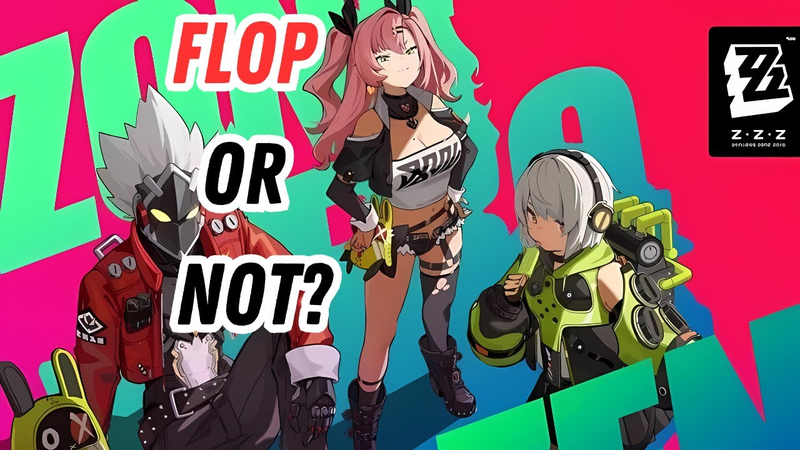
Is Zenless Zone Zero FLOP or NOT?
Zenless Zone Zero represents a significant shift in the trajectory of HoYoverse titles, failing to replicate the explosive financial success and player engagement levels established by predecessors like Genshin Impact and Honkai: Star Rail.
- Zenless Zone Zero is underperforming commercially compared to HoYoverse predecessors Genshin Impact and Honkai: Star Rail, failing to achieve similar levels of financial success and player engagement.
- The game suffers from a core gameplay loop that feels derivative in a saturated market, leading to diminishing returns despite high production values and fluid combat.
- Player retention is negatively impacted by tedious, mandatory puzzle-based mini-games that frequently interrupt the primary combat experience.

TWiG #291 Valve Salaries, Leaked MiHoYo Strategy, and Failing Disney IPs!
The global video game industry is currently navigating a period of significant structural transition, characterized by shifting demographic preferences and the struggle to balance traditional monetization with emerging subscription models.
- The global video game industry is projected to grow from $200 billion in 2022 to $307 billion by 2027, driven primarily by Gen Alpha and Gen Z preferences.
- Valve’s 2021 operational data highlights extreme profitability, with a lean staff of 336 employees earning an average annual compensation of $1.32 million, though this model limits the company's ability to scale.
- Subscription-based models like Microsoft's Game Pass have yet to achieve the mass-market adoption necessary to replace traditional hardware-centric revenue strategies.

3 life changing UA tips from 2023, how to revert ad apocalypse? Review Radar vol 3 (#95)
The mobile gaming industry is currently navigating a period of significant structural adjustment, characterized by a shift toward rapid creative iteration and the optimization of monetization stacks in response to declining ad performance.
- Regulatory and platform changes in 2023 caused eCPM drops between 15% and 45%, necessitating a shift toward more aggressive monetization and creative optimization.
- Integrating hyper-casual mini-games directly into core products helps align creative assets with gameplay, effectively reducing user churn.
- Publishers can increase total ad impressions by up to 20% by embedding placements within live-ops events that offer progression speed-ups rather than resource-based rewards.
Zenless Zone Zero: First look! Everything we know from Closed Beta (#88)
HoYoverse continues to solidify its dominance in the global gaming market by applying a highly refined, high-production-value gacha model to its latest title, Zenless Zone Zero.
- HoYoverse employs a standardized, highly profitable template for its gacha-based titles, allowing the company to develop new games in roughly half the time required by Western studios.
- Zenless Zone Zero utilizes a gacha monetization model identical to Honkai: Star Rail, featuring a 1% base pull rate for top-tier characters and a pity system that guarantees an S-rank character after 50 pulls.
- The game features a complex progression system with six equipment slots and randomized stats, requiring players to repeatedly farm artifacts to achieve optimal character builds.

The Rise of China: Dominant western game developers may fall to Asian competitors like HoYoverse
The global gaming landscape is undergoing a structural shift as established Western incumbents face increasing pressure from highly efficient, capital-intensive competitors based in China.
- Western gaming incumbents face a structural threat over the next 5–10 years from Chinese competitors like HoYoverse, Lilith, and Game Science that utilize superior operational efficiency and aggressive capital deployment.
- Chinese firms are successfully challenging traditional powerhouses like Blizzard and Rockstar by applying their mastery of mobile-centric live-service operations to high-definition console and PC gaming.
- The industry is shifting away from an era of excess and zero-interest-rate policies, favoring companies that can maintain high-revenue titles like Genshin Impact and Honkai: Star Rail through massive annual development budgets.