Engine
Company
Documents about Engine
Best of 2020 | Game Dev Unchained Episode 248
The game industry in 2020 experienced a period of profound transformation, characterized by rapid technological advancement, shifting labor dynamics, and the normalization of remote work.
- The industry is experiencing a fundamental shift in business models, evidenced by Epic Games' legal challenges against platform holders over commission structures and ecosystem control.
- Technological advancements like Unreal Engine 5’s Nanite and Lumen systems are setting new benchmarks for real-time rendering, though they currently require significant optimization for practical production use.
- Systemic labor issues, including 'crunch' culture and the treatment of independent contractors and QA staff, remain critical challenges often stemming from poor management and unrealistic project scoping.
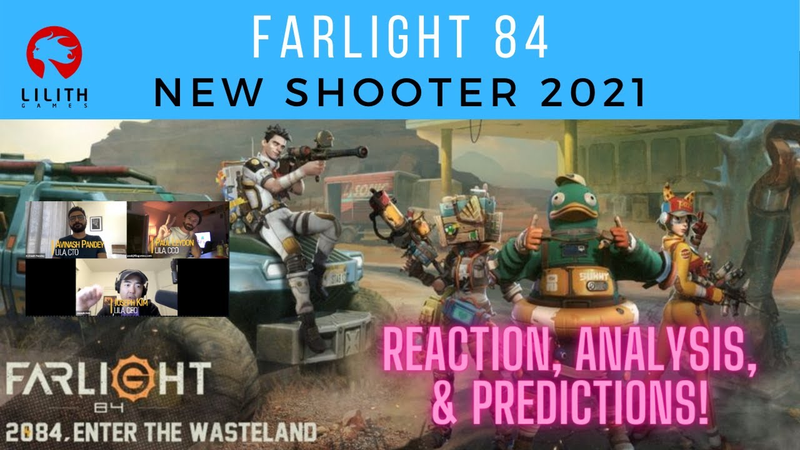
Farlight 84 - New FPS Shooter in 2021 | Reaction & Analysis
Farlight 84 represents a strategic entry into the competitive battle royale market, aiming to capture the mobile and cross-platform audience through a blend of high-fidelity aesthetics and fast-paced, class-based combat.
- Farlight 84 targets the mobile and cross-platform battle royale market by combining class-based combat with unique movement mechanics like jetpacks and legged vehicles.
- The game utilizes Unreal Engine to support a 40-player map structure, specifically optimized for mobile hardware performance.
- The core gameplay loop integrates squad-based tactical objectives with a persistent social hub model similar to Fortnite to drive player engagement.
Procedural World Generation of Far Cry 5
The development of Far Cry 5 relied on a sophisticated procedural pipeline designed to manage the immense scale of the game world while maintaining artistic control and environmental consistency.
- Ubisoft developed a procedural pipeline for Far Cry 5 that automated complex world-building tasks, including freshwater network generation, biome distribution, cliff geometry creation, and fog density mapping.
- The procedural system operates on a sector-based granularity of 64 by 64 meters, allowing developers to bake data locally under the camera, across specific map sections, or within the camera's frustum to optimize performance.
- Cliff generation is driven by terrain slope thresholds, which are then remeshed to remove stretched quads and processed with flow simulations to create realistic geological stratification and erosion effects.
Superstar Session: Azure PlayFab Party Showcase
Azure PlayFab Party serves as a comprehensive networking and communication solution designed to enhance multiplayer gaming experiences by fostering social connectivity, inclusivity, and cross-platform interaction.
- Azure PlayFab Party provides a cross-platform networking and communication solution for Windows, Xbox, PlayStation, Nintendo Switch, iOS, Android, and Google Stadia.
- The service secures multiplayer traffic against DDoS attacks by routing data through geo-distributed cloud relays instead of peer-to-peer connections.
- Integration includes built-in accessibility and communication features such as real-time voice-to-text and translation across more than 70 languages via Azure Cognitive Services.

IL Gigante: Michelangelo's David in VR
This presentation details the technical development of a virtual reality experience featuring Michelangelo’s David, utilizing a high-fidelity, billion-polygon laser scan dataset originally captured by Stanford University in 1998.
- The project successfully converted a 1998 Stanford University billion-polygon laser scan of Michelangelo’s David into a real-time, interactive VR experience within Unreal Engine 4.
- Engineers achieved quarter-millimeter resolution, allowing users to inspect fine historical details like chisel marks and structural repairs from a virtual scaffold.
- The development team overcame the lack of UV mapping and non-aligned scans in the raw dataset by using a multi-stage workflow involving ZBrush, Instant Meshes, and Wrap3 for non-rigid mesh alignment.


Quarterly Report of 11 Bit Studios S.A. for Nine Months Ended September 30th 2020
11 bit studios S.A. achieved record-breaking financial performance during the first nine months of 2020, characterized by a 37.89% year-on-year revenue increase to PLN 68.16 million and a net profit surge of 277.49% to PLN 32.12 million.
- 11 bit studios S.A. reported record financial results for the first nine months of 2020, with revenue increasing 37.89% year-on-year to PLN 68.16 million and net profit surging 277.49% to PLN 32.12 million.
- Operating margins reached 51.5%, driven by a 12% reduction in operating expenses following the end of a previous employee incentive scheme and the application of a 5% preferential corporate tax rate via IP Box relief.
- The Frostpunk portfolio, supported by expansions like The Last Autumn and On The Edge, remained the primary revenue driver, while Children of Morta and Moonlighter contributed approximately 28% to 30% of total revenue.
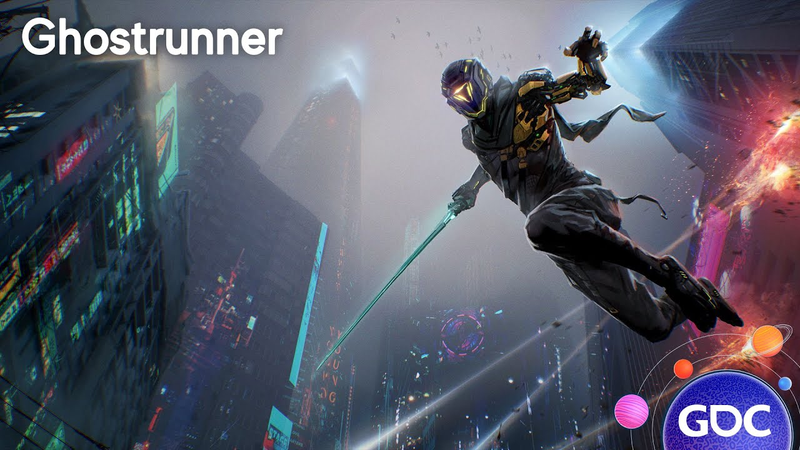
GDC Plays Ghostrunner with One More Level
The development of Ghostrunner represents a strategic shift toward high-fidelity, first-person action, moving away from the studio’s previous top-down design roots.
- Ghostrunner centers on a 'one-hit, one-kill' mechanic, which the developers adapted into a first-person perspective to differentiate the title from traditional action games.
- To maintain gameplay momentum, the developers designed levels to be 'waterproofed'—ensuring fluid movement and navigation while allowing for multiple player-chosen routes without stopping the action.
- Narrative exposition is delivered primarily through in-game dialogue rather than face-to-face interactions, utilizing quieter, non-combat platforming sections to ensure players can absorb the story without interrupting the game's pace.

Workshop : How to Implement Video Chat into Unreal Engine
Integrating real-time video communication into Unreal Engine projects requires a structured technical workflow centered on the Agora SDK.
- Integrating real-time video into Unreal Engine projects is primarily achieved by utilizing the Agora SDK, which provides the framework for managing communication channels.
- The implementation requires initializing the Agora engine with a unique App ID and creating custom actor blueprints and UI widgets to render local and remote video feeds.
- Developers must configure specific callback events to manage connection states and bind video streams to dedicated video holder blueprints within the game environment.

State of the Industry 2020 & Beyond with Brad Hart and Johan Karlsson | Episode 234
The global game development industry underwent a fundamental transformation in 2020, characterized by a permanent shift toward remote and distributed work models.
- Investment success is increasingly tied to leadership quality and business execution plans rather than product concepts, as 41 percent of studios currently struggle to secure capital.
- The industry has permanently shifted toward remote and distributed work models, proving that high-fidelity development is sustainable outside of centralized offices.
- Technological advancements in 5G, cloud streaming, and mobile hardware are positioning mobile platforms as primary destinations for AAA-quality gaming.

Unity: Analysing the First Game Engine IPO
Unity occupies a dominant position in the global software market, commanding a 50 percent share of the game engine industry through a vertically integrated business model.
- Unity’s revenue is split between 'Create Solutions' (subscription-based) and 'Operate Solutions' (usage/revenue-share based), with the latter now accounting for approximately 60% of total revenue as of Q2 2020.
- High-value customers contributing over $100,000 in trailing 12-month revenue saw their average revenue per customer grow nearly 50% over the 2.5 years leading up to September 2020, reaching $191,000.
- Despite holding a dominant market share, Unity reported consistent annual losses, including -$120M in 2018 and -$95M in 2019, though these losses are shrinking as a percentage of total revenue.
Tencent's Imminent Spending Spree: Possible Contenders for Acquisition
This analysis explores the strategic implications of Tencent’s move to secure a $6 billion loan, suggesting the Chinese conglomerate is preparing for a transformative acquisition valued between $20 billion and $30 billion.
- Tencent is positioning itself for a $20 billion to $30 billion acquisition by securing a $6 billion loan to supplement its existing cash reserves.
- Potential acquisition targets include Ubisoft ($13B EV) and CD Projekt Red ($7.1B EV), which are viewed as strategically attractive due to their European headquarters and lower regulatory hurdles compared to North American firms.
- Epic Games is a primary candidate for a high-value infrastructure play, with a valuation of $17.3 billion centered on the Unreal Engine.

Epic Games Lawsuit vs. Apple Court Hearing | Lawyers Explain! (Fortnite Mobile Killed)
The legal challenge initiated by Epic Games against Apple and Google represents a fundamental assault on the prevailing 30% commission structure and restrictive payment policies governing mobile app ecosystems.
- The Epic Games litigation challenges the industry-standard 30% commission structure and restrictive payment policies enforced by Apple and Google on mobile app ecosystems.
- Epic Games aims to dismantle the closed-loop nature of mobile platforms by legally classifying app stores as essential facilities, though this remains a high-burden antitrust argument.
- A judicial intervention prevented Apple from terminating Epic’s developer accounts and restricting access to the Unreal Engine, citing disproportionate harm to third-party developers.