Engine
Company
Documents about Engine

Why legendary developers are jumping onto Unreal Editor for Fortnite (UEFN)!
Unreal Editor for Fortnite (UEFN) is emerging as a transformative platform for game development, attracting industry veterans by bridging the gap between professional-grade Unreal Engine capabilities and the massive, pre-existing audience of the Fortnite ecosystem.
- UEFN enables small teams of approximately five people to develop and ship high-fidelity game experiences within six-week cycles.
- The platform provides a competitive advantage by combining professional-grade Unreal Engine tools with access to Fortnite’s massive, pre-existing player base.
- UEFN is positioned as a higher-quality alternative to platforms like Roblox, prioritizing technical fidelity and customization over short-term content trends.

Fireside Chat: Virtual Production: A Peek Behind the Curtain for Game Devs & 3D Artists
Virtual production represents a significant technological convergence between the gaming industry and traditional filmmaking.
- Virtual production leverages real-time game engines like Unreal Engine and Unity to display 3D environments on LED volumes, enabling in-camera visual effects (ICVFX) that replace traditional green screens.
- The Virtual Art Department (VAD) serves as the essential bridge between traditional art departments and technical teams, focusing on optimizing 3D assets for real-time performance on LED walls.
- Industry organizations such as SMPTE are currently working to establish necessary standardization protocols for metadata, color science, and interoperability between game development tools and film production requirements.
UEFN & HaZ Dulull- A New Dawn for Creators | 326
The convergence of film and video game production is fundamentally reshaping the creative landscape, driven by the widespread adoption of real-time technologies like Unreal Engine.
- Real-time technologies like Unreal Engine have equalized the quality threshold between animated cinema and game cinematics, allowing small, remote teams to produce high-end 4K content without massive studio infrastructure.
- Unreal Editor for Fortnite (UEFN) provides a direct pipeline for creators to distribute interactive experiences to massive, global audiences on major gaming consoles.
- The 400MB memory limit within UEFN acts as a constraint that forces optimized development and encourages creative experimentation for branded experiences.
Panel: Mastering the Craft: Tools & Processes for Successful Game Development.
Effective game development requires a strategic alignment of technical infrastructure, project management methodologies, and data-driven decision-making.
- Success in global markets requires moving beyond simple currency conversion to implement region-specific pricing models and payment methods, such as mobile carrier billing in emerging economies.
- Engine selection should be based on project requirements: Unity is the primary solution for mobile ecosystems, while Unreal Engine is the industry standard for high-fidelity, performance-intensive 3D projects.
- Operational efficiency is maintained by pairing project management tools like Jira and Trello with a collaborative, remote-first culture to ensure transparent and agile development cycles.

On Chain Player Quests Optimizing Monetization - Christina Macedo, COO, Ready Games Network
Ready Games Network provides a comprehensive technology stack designed to integrate Web3 functionality into games across PC, mobile, and console platforms.
- Integrating on-chain mechanics into mobile games resulted in a 42% conversion rate from free to paid players and a 74% increase in average revenue per daily active user (ARPDAU).
- Ready Games Network provides a chain-agnostic technology stack for Unity and Unreal Engine that enables on-chain quests and NFT management while remaining compliant with Apple and Google app store policies.
- The platform achieved a strong LTV-to-CPI ratio of 1.29 to 0.15, demonstrating the effectiveness of blockchain-integrated monetization in hyper-casual gaming segments.

The Metaverse Reimagined - Fernando Pereira, CEO, XTEND3D
The metaverse is currently transitioning from a period of inflated hype to a phase of sustainable development, where the focus has shifted from speculative financial gain to long-term infrastructure building.
- The virtual economy is projected to reach $400 billion by 2025, driven by the persistent, cross-platform frameworks established by gaming platforms like Fortnite, Roblox, and Minecraft.
- The metaverse is transitioning from speculative hype to a phase of sustainable infrastructure development, with a projected maturation period occurring between 2024 and 2027.
- Future industry growth will be fueled by the integration of 3D mapping, artificial intelligence, and 5G connectivity, expanding applications beyond gaming into virtual tourism, education, and e-commerce.
What If? Game Company M&A Scenarios | Pixels & Profits #5
The current landscape of game industry mergers and acquisitions is defined by a cautious evaluation of high-profile targets and the lingering influence of regulatory scrutiny following the Microsoft-Activision deal.
- Large-cap technology firms remain the primary viable suitors for major publishers, as media conglomerates have proven unable to effectively manage the complexities of game development.
- Take-Two Interactive is considered a highly attractive, cash-generative acquisition target due to its high-value intellectual property and the anticipated commercial impact of the next Grand Theft Auto release.
- Ubisoft’s potential for acquisition is severely hampered by bureaucratic inefficiencies, poor revenue-per-employee metrics, and a restrictive ownership structure involving the Guillemot family and Tencent.

Reality, Upgraded: Navigating VR/AR Gaming with Alex Silkin | 323
The virtual and augmented reality landscape is currently undergoing a pivotal transition, shifting from a niche gaming segment toward a broader, more integrated computing platform.
- The VR/AR industry is transitioning from a niche gaming segment into a broader spatial computing platform, driven by competition between Meta’s standalone ecosystem, Sony’s high-fidelity hardware, and Apple’s Vision Pro.
- Corporate-led 'metaverse' strategies focused on productivity have largely failed to gain consumer traction, as users prioritize entertainment and social engagement over top-down virtual environments.
- Platforms like Roblox and Fortnite demonstrate that successful virtual interaction is built on gameplay-first design and organic, user-generated content rather than speculative corporate branding.
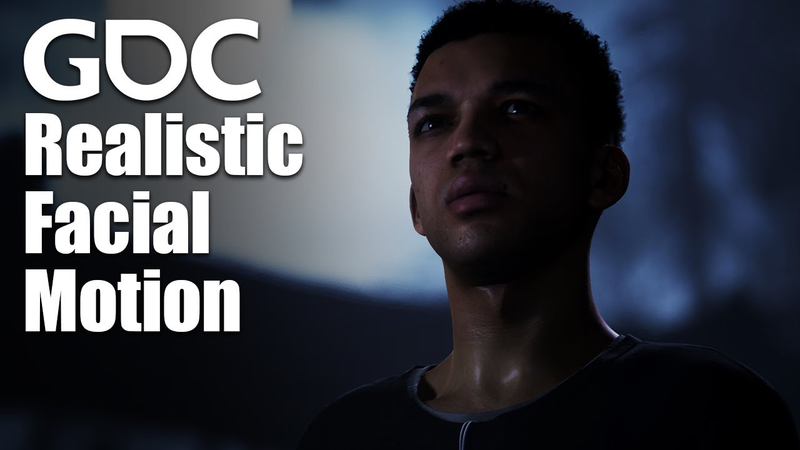
Case Study: Creating Realistic Facial Motion for 'The Quarry'
The production of The Quarry represents a significant advancement in high-fidelity facial animation, demonstrating that cinematic-quality performance capture can be achieved at scale through machine learning and automated pipelines.
- Digital Domain processed 32 hours of facial performance capture for 15 characters in 'The Quarry,' resulting in 8,700 final shots from 4,500 initial takes.
- The pipeline achieved high automation, with only 26 out of 4,500 takes requiring manual intervention by animators.
- The team utilized 'Bullseye' software for markerless tracking, which uses a greedy-based algorithm to automatically produce 90% to 95% of tracking data per day.

How Hollywood Cinematography Is Employed to Support Games' Cinematic Visualization
The integration of Hollywood visualization techniques into game development serves as a critical bridge between narrative ambition and technical execution.
- The primary goal of pre-visualization (previz) is to create a one-to-one match between early drafts and final cinematic assets, which streamlines production and significantly reduces costs by resolving creative and technical issues early.
- Previz serves as a direct communication bridge between visualization supervisors and key stakeholders, including directors, producers, and cinematographers, allowing for rapid iteration of complex sequences.
- Effective previz acts as a foundational blueprint for final animation, preventing the need for costly, last-minute adjustments during the final rendering phase.

Unity vs Unreal (I'm Seriously Considering Switching To Unreal)
The choice between Unity and Unreal Engine represents a significant strategic decision for independent game developers, particularly as they transition from 2D projects to complex 3D environments.
- Unity holds a 43% market share compared to Unreal Engine’s 13%, making it the dominant choice for independent developers.
- Unreal Engine 5’s advanced features like Nanite and Lumen are optimized for high-end hardware, which can create significant performance overhead for mobile and Nintendo Switch development.
- The decision to switch engines is often hindered by the high cost of migrating established workflows and the potential loss of cross-platform versatility.
Shader Sauce: How to Use Shaders to Create Stylized VFX
Stylized visual effects represent a distinct design space defined by abstraction rather than a simple progression toward realism.
- Stylized VFX and realistic effects share the same foundational shader concepts, meaning the same technical principles apply regardless of where an asset falls on the realism spectrum.
- Alpha erosion creates non-uniform fading by subtracting a noise map from a texture and using a saturate node to clamp the result between 0 and 1, providing a more organic transition than traditional alpha fading.
- Vertex offset manipulation allows for dynamic mesh deformation by using vertex normals to move, scale, or rotate geometry in world space based on shader inputs.