Engine
Company
Documents about Engine
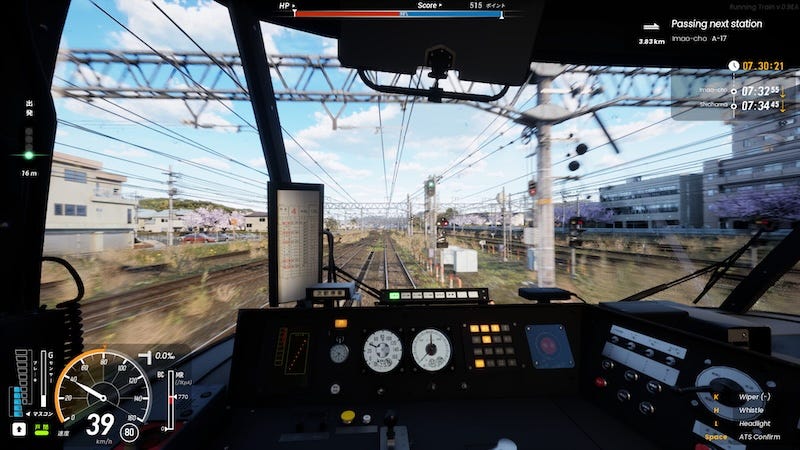
Why Hobbyists Are a Bigger Discovery Disruptor for Games Than AI
The primary thesis posits that hobbyist and semi-professional game developers represent a more significant disruptive force in the modern PC gaming market than artificial intelligence.
- Hobbyist and semi-professional game creators, not AI, are the primary disruptors in the PC game market, exemplified by titles like "Running Train" and "Dinkum" ($23 million LTD Steam gross revenue).
- The rise of hobbyist developers is fueled by accessible, inexpensive engine technology (e.g., Unreal, Unity), readily available asset stores (e.g., Fab.com), and global distribution platforms like Steam that offer equal reach.
- "Dinkum," a solo-developed game, achieved $23 million in lifetime Steam gross revenue and secured a publishing deal with Krafton, demonstrating the commercial viability of hobbyist projects.
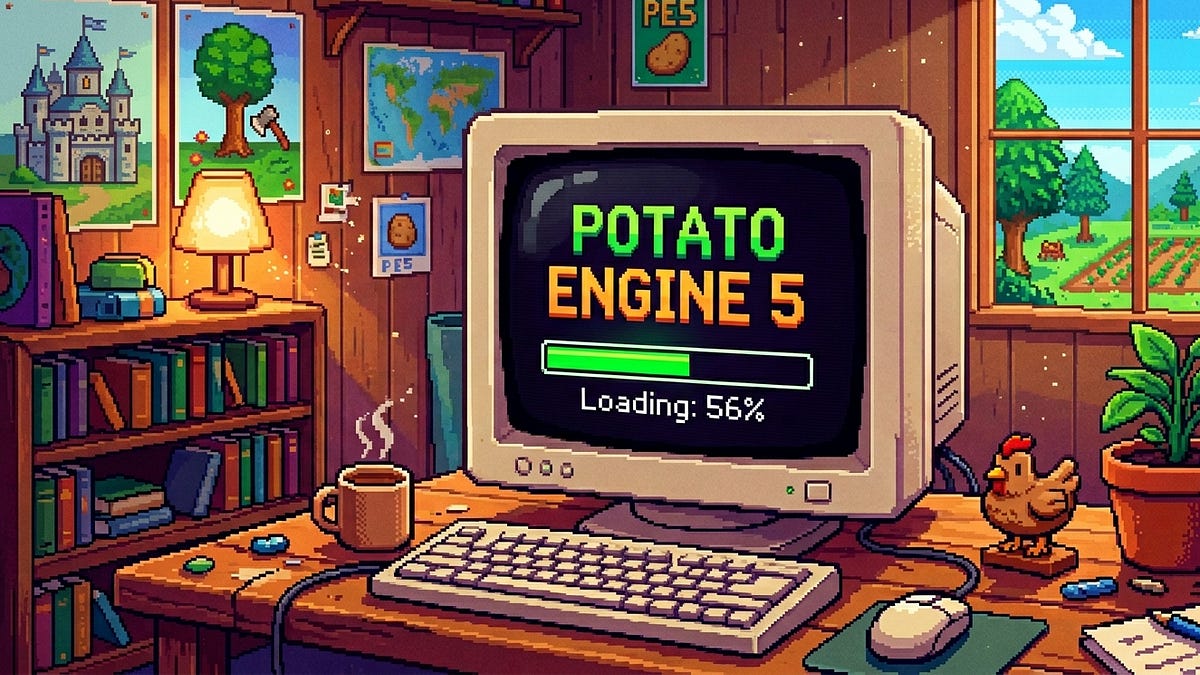
Poor Performance Is Not a Game Engine Problem
The prevailing industry narrative that game engines are responsible for poor performance in modern titles is a fundamental misdiagnosis.
- Poor game performance, particularly frame rate issues, is primarily a result of development process shortcomings rather than the game engine itself.
- Common development mistakes leading to performance problems include over-reliance on visual features, inadequate use of profilers, poor GPU/CPU budgeting, lack of ongoing optimization, unoptimized assets, insufficient testing on dev kits, and aggressive minimum specifications.
- Several high-profile games, including The Callisto Protocol (Dec 2022), Lords of the Fallen (Oct 2023), Immortals of Aveum (Aug 2023), Remnant II (Jul 2023), STALKER 2 (Nov 2024), The Oblivion Remaster (Apr 2025), Borderlands 4 (Sep 2025), and MindsEye (Jun 2025), launched with significant performance issues, often attributed incorrectly to Unreal Engine.

How Playrix Turned Township into a $45M/Month Engine
The mobile game Township has achieved a significant financial milestone, generating $45 million in monthly revenue seventeen years after its initial release.
- Playrix has successfully scaled Township to generate $45 million in monthly revenue, despite the title being 17 years old.
- The game’s long-term success is driven by a hybrid design that integrates a tycoon-style front end with a match-3 gameplay layer.
- Playrix has continuously evolved its user acquisition strategy, shifting from hyper-casual-inspired creative concepts to more sophisticated iterations over time.

Esports Awards Parent Elevates Producer to Senior Leadership
The Mobile, Esports and Gaming Alliance (MEGA), the parent company of the Esports Awards, has promoted Morgan Tremaine to the position of Executive Producer.
- The Mobile, Esports and Gaming Alliance (MEGA), parent company of the Esports Awards, has promoted long-time producer Morgan Tremaine to the role of Executive Producer.
- In his new senior leadership position, Tremaine will manage publisher, commercial, and strategic partner relations for MEGA’s events while supporting the company's agency operations.
- Tremaine has served as a producer for the Esports Awards since 2023 and previously held roles at Esports Engine, Sinclair Broadcast Group, and TMZ.

Podcast: Deploying AI Personalization at Scale
The evolution of digital commerce is currently defined by a fundamental shift from static, cohort-based marketing models toward real-time, agentic personalization.
- Digital commerce is shifting from static, cohort-based marketing to real-time, agentic personalization driven by generative AI that adapts to individual user intent.
- Answer Engine Optimization is rapidly replacing traditional search engine optimization as platforms prioritize proprietary algorithms and internal monetization.
- Data quality is the primary bottleneck for scaling AI-driven experiences, as inaccurate data sets directly compromise the precision of AI-generated predictions.

How's PC Game Engine Usage Changing?
This analysis examines shifting trends in PC game engine adoption by leveraging file structure scanning across more than 33,000 Steam titles.
- Unity maintains a 50% market share of released PC games, holding its position as the industry's most widely used engine.
- Unreal Engine has grown its market share from 15% in 2020 to 20% in 2025, with its top 50 titles generating $1.8 billion compared to $930 million for Unity's top 50.
- Godot has emerged as a significant challenger, increasing its market share from 0.9% in 2017 to 7.1% by 2025.
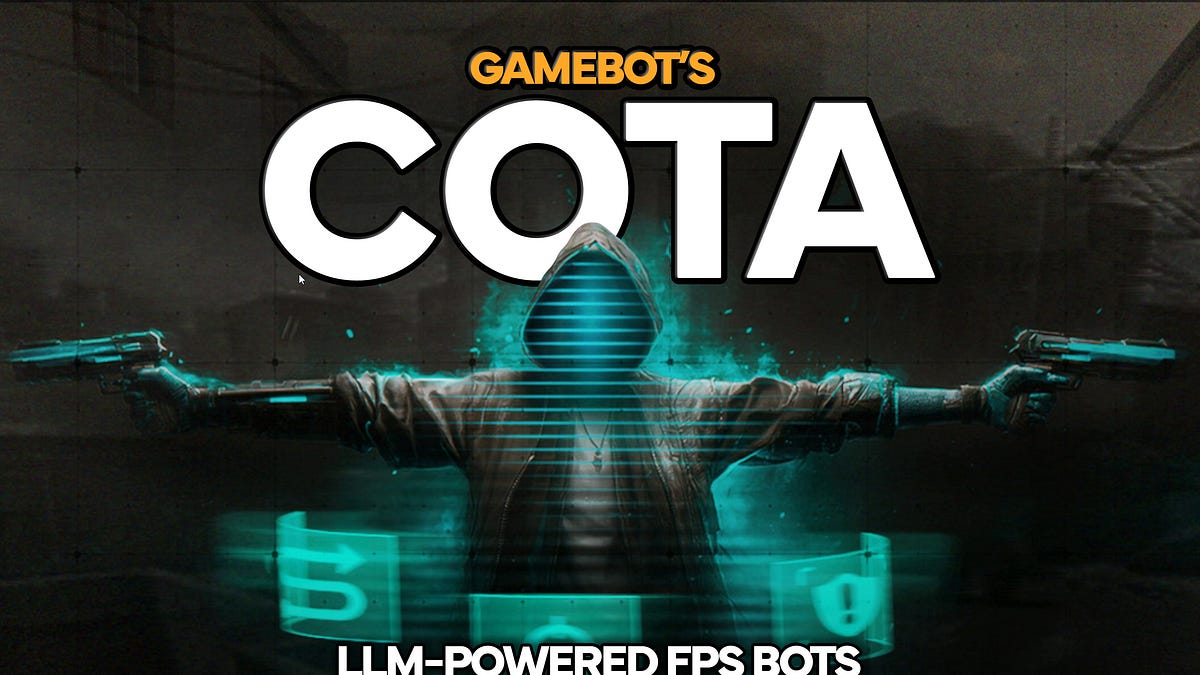
GameBot's COTA Demo Showcases FPS Bots Powered by LLMs
The COTA technical demo, released in February 2026 by GameBot, serves as a proof-of-concept for an artificial intelligence architecture driven by large language models (LLMs) within a first-person shooter environment.
- GameBot released COTA, an LLM-driven AI architecture for FPS games that enables real-time team coordination and strategic decision-making with a response time of less than 100ms.
- The COTA architecture utilizes an 8 billion parameter model (16.5GB) that functions via a two-tiered system: a 'commander' layer for macro-level strategy and an 'operator' layer for individual tactical execution.
- Unlike previous projects that relied on professional player data, COTA uses a synthetic data pipeline for supervised fine-tuning, followed by GRPO-based reinforcement learning and human feedback alignment.

Weekly Gaming Reports Recap: February 16 - February 20 (2026)
The global gaming industry in early 2026 is defined by a period of profound structural instability and technological transition.
- Over 50% of gaming industry professionals report layoffs at their organizations as of February 2026, marking widespread structural instability.
- Development efforts are primarily concentrated on PC, with Unreal Engine remaining the dominant tool for large-scale projects.
- Developer interest is increasingly shifting toward portable hardware, specifically the Steam Deck and the anticipated Nintendo Switch 2.

The Gaming Industry Isn't in a Downturn: It's Losing Its Moat
The gaming industry is currently undergoing a fundamental structural transformation rather than a temporary cyclical downturn.
- The gaming industry's traditional 'moats' (capital, talent, technology) are collapsing, indicating a fundamental restructuring rather than a temporary downturn.
- Funding for game development has shifted dramatically: 35% of developers now self-fund, while traditional sources like publishers, VCs, and platform deals collectively account for less than half of funding.
- The 'people moat' is eroding as layoffs increase (19% in the past year, with 48% still unemployed), and the need for large teams diminishes due to technological advancements.
Your Next Customer Is Asking ChatGPT: Are You the Answer?
Generative Engine Optimization (GEO) has emerged as a critical marketing paradigm shift, necessitating a departure from traditional search engine optimization (SEO) strategies.
- AI-driven traffic generates 32% more revenue per visit than traditional search, with platforms like Microsoft Copilot, Perplexity, and Gemini delivering conversion rates 3 to 17 times higher.
- Generative Engine Optimization (GEO) requires a shift from keyword-based tactics to a problem-solving content structure, which can improve AI visibility by up to 40%.
- AI search engines frequently prioritize content that ranks poorly in traditional search, with nearly 90% of cited sources appearing on page 21 or beyond in conventional Google results.
Engine Failure
The recent release of Google’s Project Genie, an AI-driven tool capable of generating interactive 3D environments, has triggered a significant market correction for major game industry players.
- The 2026 announcement of Google’s Project Genie triggered significant market volatility, causing share price declines of 24% for Unity, 17% for AppLovin, 14% for Roblox, and 8% for Take-Two Interactive.
- Investors are concerned that AI-driven 3D environment generation will commoditize content creation and disrupt established development workflows.
- AI-generated assets currently lack the performance, depth, and immersive quality required for high-end gaming, making them unsuitable for replacing professional development pipelines.
GDC State of the Industry Survey 2026
The 2026 Game Developers Conference (GDC) State of the Industry survey provides a comprehensive analysis of current trends, labor conditions, and technological adoption within the global gaming sector.
- Developer sentiment toward generative AI has turned increasingly negative, with 52% now viewing it as harmful to the industry, up from 30% a year ago and 18% two years ago.
- Despite growing skepticism, 36% of developers report that their companies currently use generative AI, with ChatGPT (74%) and Google Gemini (37%) being the most widely adopted tools.
- The industry has faced significant labor instability, with 28% of developers reporting job losses over the past two years and game designers experiencing the highest layoff rate (20%) in the last 12 months.