Discovery
CompanyJapan
Documents about Discovery
Should User-Generated Content Be a Key Game Discovery Focus?
User-generated content (UGC) has evolved from a niche hobby into a primary driver of game discovery and long-term player engagement.
- User-generated content (UGC) has transitioned from a niche modding hobby to a primary driver of long-term player engagement and game discovery.
- Premium titles like PUBG and Fall Guys have demonstrated that transitioning to free-to-play models is a proven strategy for achieving massive year-over-year revenue growth.
- Console discovery is increasingly driven by curated 'mod drops' that function as weekly engagement events, while monetization models are evolving from community patronage toward integrated, full-scale marketplaces.

Hidden Discovery Insight: Analyzing Player Review Word Length
Analysis of Steam player behavior suggests a strong correlation between review word length and player "casualness."
- Review word length serves as a reliable metric for player persona, as casual games generate a higher frequency of one-word reviews compared to complex, niche titles.
- Long-form reviews are strongly correlated with 'core' player behavior, characterized by larger Steam library sizes and higher average in-game playtimes.
- Tencent’s global gaming investment strategy reached a massive scale of $32.4 billion in 2021.
Venture Capital and Game Discovery
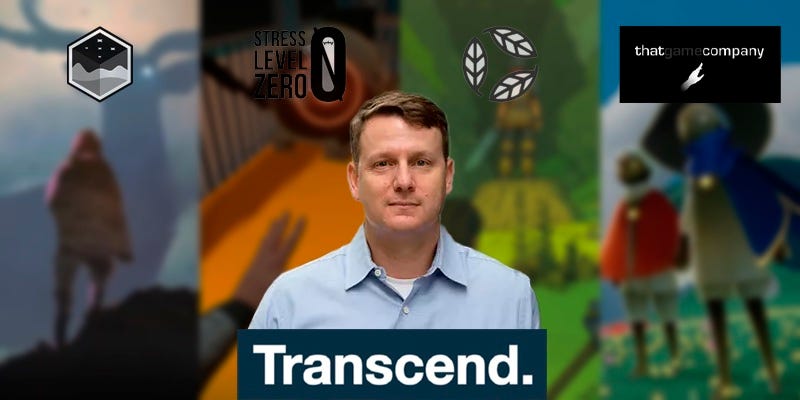
This analysis explores the intersection of venture capital and game discovery, primarily through an interview with Transcend Fund regarding their investment criteria for PC, console, and VR studios.
- Venture capital investment in gaming is currently driven by an 'audience-first' strategy, prioritizing studios that demonstrate aggressive scalability and social connectivity over traditional niche development.
- Steam market saturation remains extreme, with 57% of developers earning less than $1,000 in gross revenue, while only 1,600 developers have surpassed the $1 million threshold.
- The Meta Quest VR store shows a median gross revenue of $1.02 million per title and median sales of 59,900 units, supported by a 108x ratings-to-sales multiplier.

Today Streaming Is Crucial for Game Discovery, Understanding Gamers and How That Can Translate Into Sales
Streaming platforms have become the primary engine for game discovery, fundamentally shifting how publishers reach consumers in an increasingly saturated market.
- Streaming is now the primary driver of game discovery, with over 50% of UK adults aged 18–54 reporting that viewing a game significantly impacts their purchasing decision.
- The correlation between streaming and sales is high, as evidenced by the game Among Us, which saw its Twitch viewership explode to nearly 600,000 views after being featured by top streamers, directly resulting in a surge of sales on Steam and PlayStation.
- Influencer marketing via streaming significantly outperforms traditional digital advertising, which suffers from a 99.53% failure rate in inspiring consumers to click and take action.

Warner Bros. Discovery Annual Report: Form 10-K FY2021
SEC 10-K filing for Warner Bros. Discovery, filed 2022-02-24.
- Warner Bros. Discovery (WBD) is heavily investing in content acquisition, particularly for its streaming service discovery+, and has increased its content investment significantly.
- WBD is pursuing a major strategic combination with WarnerMedia, which is expected to yield synergies and benefits, but also carries risks related to integration difficulties and potential failure to realize anticipated benefits.
- The company is actively managing its debt, having redeemed $168 million of 3.300% Senior Notes due May 2022 and $62 million of 3.500% Senior Notes due June 2022 in July 2021, and $335 million of 4.375% Senior Notes due June 2021 in March 2021, with an additional $339 million in senior notes due in March 2022.
When Should You Announce Your Game for Max Discovery?
Strategic timing for video game announcements requires balancing the need for long-term visibility with the necessity of a high-quality first impression.
- Delay the launch of a Steam page until the game reaches a 'shippable' level of polish, as unpolished assets trigger poor discovery algorithm performance and permanent negative first-impression bias.
- Prioritize high-quality key art and a vertical slice for initial marketing materials to maximize wishlist conversion rates from the traffic generated by Steam’s discovery tools.
- Market competition on Steam is intensifying, with 11,700 titles released in 2021 and only 8% of those releases achieving sales of over 10,000 units.
Steam Deck: What You Should Know About Discovery
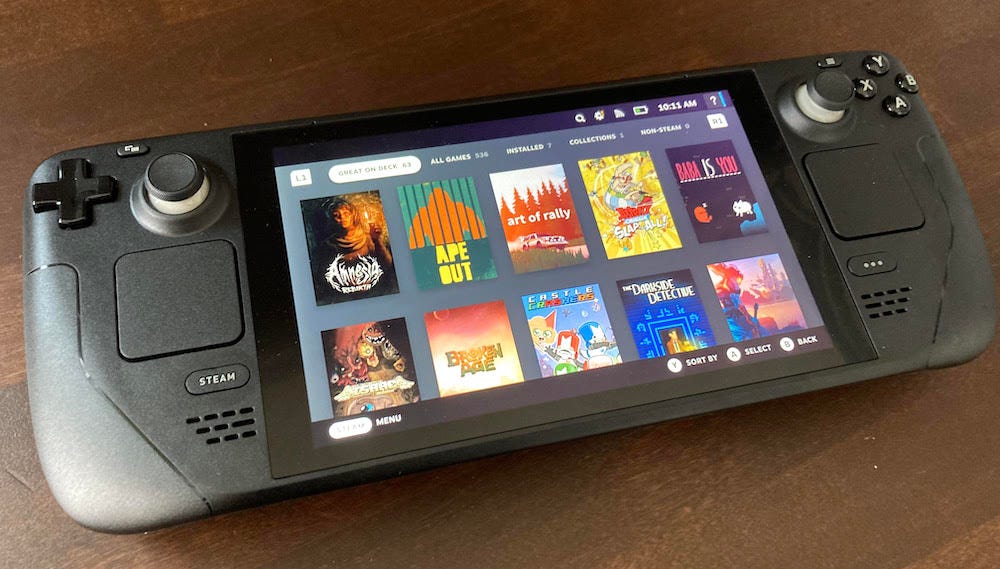
The launch of Valve’s Steam Deck introduces a unique discovery environment for PC developers, characterized by a transition from traditional storefronts to a portable ecosystem integrated with existing user libraries.
- Achieving 'Verified' or 'Great on Deck' status is the primary driver of discovery and incremental sales on the Steam Deck, as these titles receive prioritized placement in the device's library and store.
- The Steam Deck functions as an extension of the existing Steam ecosystem rather than a separate market, meaning developers should prioritize technical compatibility to maintain visibility as the install base grows.
- The current verification system faces scalability challenges, as the rapid evolution of Proton software often renders 'Unsupported' ratings obsolete before they can be updated for the more than 1,000 new titles released on Steam monthly.
Why Your First 10 Reviews Are the Most Important
The primary objective of this analysis is to explain the critical role of the first ten user reviews in determining a game’s visibility on the Steam platform.
- Steam restricts visibility for new games by placing them in a 'closet' until they receive at least 10 reviews from verified purchasers.
- Only reviews from customers who purchased the game with real money count toward the 10-review threshold; reviews from free keys do not contribute to this metric.
- Once the 10-review milestone is reached, Steam begins promoting the game through the Discovery Queue, which provides significant and high-quality traffic.
Modern Mobile Consumer 2022: App Discovery Report
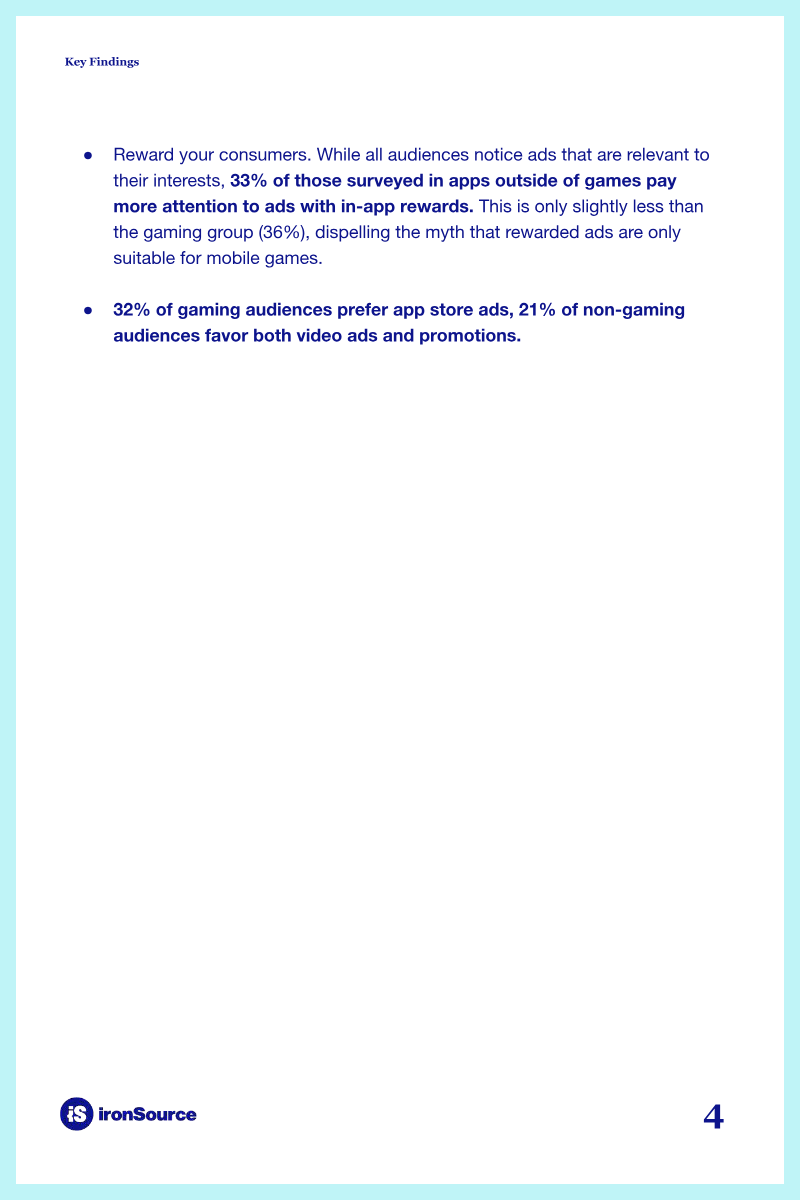
The Modern Mobile Consumer 2022: App Discovery Report examines the evolving journey of mobile users from initial app discovery to daily usage and long-term engagement.
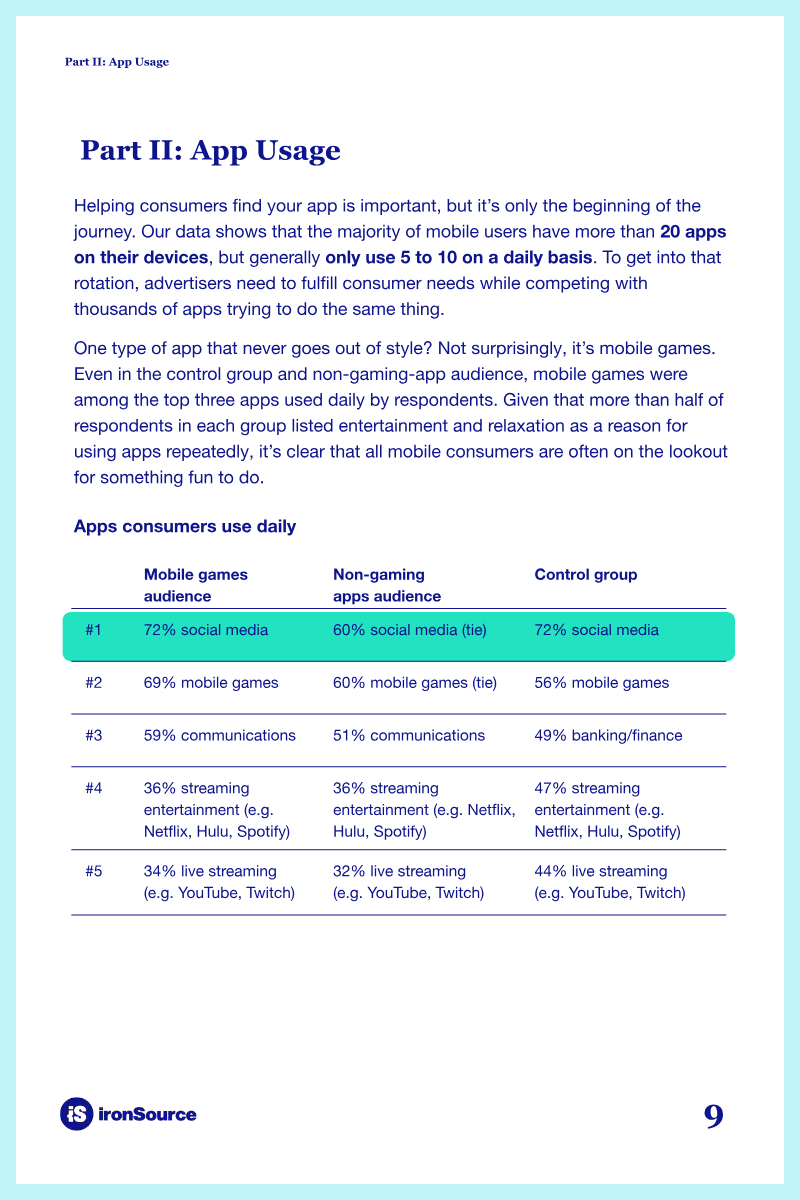
- Mobile gaming has become a universal behavior, with 60% of non-gaming app users playing mobile games daily, matching social media as the top usage category.
- In-app advertising is a primary driver for app discovery, leading to downloads for 70% of gaming audiences and 78% of non-gaming control group users.
- While users typically maintain over 20 apps on their devices, the majority limit their daily engagement to only five to ten apps.
Lost in the Shuffle: Launching a Game With No Marketing in 2021
This analysis examines the evolution of organic discovery on Steam by comparing two "zero marketing" game launches conducted by Patrick Seibert in 2018 and 2021.
- Reaching the tenth user review threshold in 2021 triggered a significantly larger visibility spike via the 'New on Steam' section compared to 2018, serving as a critical catalyst for algorithmic discovery.
- Steam's discovery architecture shifted heavily between 2018 and 2021, with the Discovery Queue's contribution to pre-release traffic dropping from 63% to just 8%.
- Browse search results by tags replaced the Discovery Queue as the primary driver of organic traffic in 2021, highlighting the necessity of precise tagging for platform visibility.
Nature or Nurture: The Biggest Game Discovery Question
The core thesis of this analysis is that a video game’s "nature"—its genre, aesthetic, and core mechanics—is the primary determinant of its commercial success, while "nurture"—the marketing and discovery process—serves as a critical amplifier.
- A game's inherent 'nature'—its genre, mechanics, and aesthetic—is the primary driver of commercial success, while marketing and influencer outreach act as essential amplifiers.
- Targeted marketing and influencer engagement can significantly boost launch-day performance, as evidenced by the indie title Dinkum, which saw wishlists grow from 35,000 to 80,000 through these efforts.
- Nintendo-published titles dominate the Switch platform, accounting for nearly 80% of total software sales revenue and creating a high barrier to visibility for third-party developers.
Which New Switch Games Are Winning the Discovery War?
This analysis examines the competitive landscape of game discovery on the Nintendo Switch and Steam platforms during the latter half of 2021 and early 2022.
- The Nintendo Switch marketplace is highly saturated, with approximately 40 new games released weekly and only 5% of the nearly 1,000 digital titles launched in H2 2021 achieving five-figure unit sales before discounting.
- Success on the Switch is heavily dependent on platform-specific factors, specifically securing official Nintendo featuring or appearances in Nintendo Direct showcases to maintain chart longevity.
- Effective March 2022, Steam reduced the discount cooldown period from six weeks to 28 days while tightening regulations to ensure most seasonal and custom sales are subject to this mandatory waiting period.