
Digital Eclipse
CompanyUnited States · Founded 1992
Digital Eclipse was a game development studio based in Emeryville, USA. It was established by Andrew Ayre in 1992. In the beginning they were working on emulating older Williams arcade games on an Apple Macintosh (Defender, Stargate and Joust) and showed Williams the results.
Connections
Each row is a game or company named alongside Digital Eclipse, each column a document, oldest first. A mark means that document names it. Select a row to see those documents.
About the company
- Founded
- 1992
- Country
- United States
Company data from IGDB.com
Documents about Digital Eclipse

Why Barbie Is Daring to Launch Near GTA VI
This Game File article by Stephen Totilo, published November 10, 2026, is a paid post built around a conversation with Atari CEO Wade Rosen about why Atari is releasing Barbie: Rewind close to the launch of Grand Theft Auto VI.
- Barbie: Rewind's compilation is slated for the Thursday one week before Grand Theft Auto VI. That places Atari's release just ahead of Rockstar's November 19 launch.
- The article states that Barbie's slot near GTA VI was a deliberate decision rather than a result of Atari's crowded release queue.
- Atari CEO Wade Rosen said the company was pretty confident few games would release in the Barbie launch window. He made the remark to the author the previous month.

Supercell, King and Sybo slam EU plan, Atari buys Hipster Whale, Zynga's Mark Pincus, more
The mobile games industry is currently navigating significant regulatory, corporate, and strategic shifts.
- Industry leaders from Supercell, King, and Sybo are lobbying against EU legislative proposals, arguing that new regulations on free-to-play mechanics could render mobile games unplayable and threaten a sector that generated 7.5 billion euros in revenue and supported 63,000 jobs in 2025.
- Atari has acquired Hipster Whale, the developer behind Crossy Road, as part of a strategy to expand its retro-adjacent mobile portfolio through projects involving Amazon, Netflix, and Air Console.
- Zynga founder Mark Pincus, in his upcoming book 'Life at the Speed of Play,' advocates for a 'proven, better, new' design methodology, citing Supercell's Hay Day and Clash of Clans as examples of games that successfully adopted this iterative approach.

12 Photos Taken by Video Game Developers
Game File's Stephen Totilo recounts a backstage experiment at the 2026 DICE Awards in Las Vegas, where he asked winners entering the press green room to take his phone and shoot the most interesting photo they could imagine in an unremarkable space.
- At the 2026 DICE Awards in Las Vegas, developers from studios including Supergiant Games, Sandfall Interactive, and Naughty Dog participated in a project to capture photographs within a mundane green room environment.
- The exercise challenged industry leaders—including directors, writers, and animators—to demonstrate how they interpret space, scale, and narrative outside of their typical professional development roles.
- Participant photographs ranged from abstract architectural details and still-life studies of snack tables to candid portraits of the reporter-filled environment.

Can Atari make its retro games strategy profitable?
Atari is currently navigating a strategic pivot toward becoming a leader in the retro gaming sector, focusing on high-quality remasters, remakes, and sequels to classic intellectual properties.
- Atari is executing a strategic pivot to focus on high-quality remasters and remakes of classic intellectual properties, supported by the acquisitions of specialized studios Digital Eclipse and Night Dive Studios.
- To compete with unauthorized emulation, Atari’s business model centers on providing a 'better than free' user experience that justifies premium pricing through technical excellence and authenticity.
- The company maintains a release cadence of approximately four titles per year, balancing high-profile commercial projects with niche, passion-driven releases to mitigate financial risk.
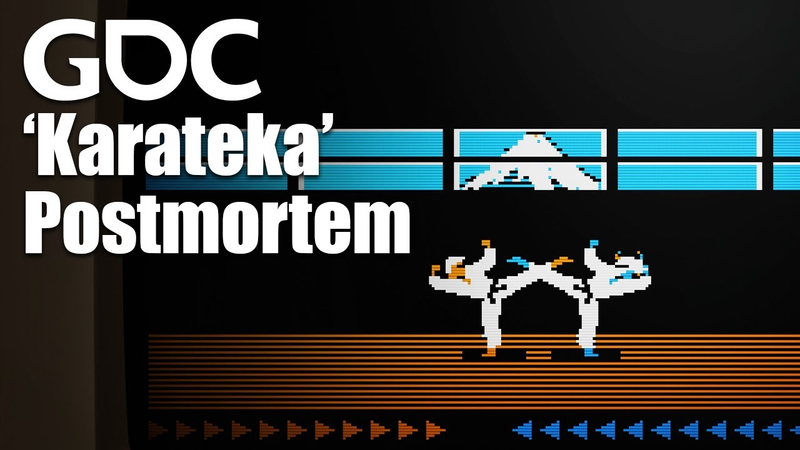
Classic Game Postmortem: 'Karateka'
The development of the 1984 title Karateka represents a pivotal moment in early home computer gaming, marking a transition from rudimentary arcade-style action to cinematic, narrative-driven experiences.
- Jordan Mechner developed the 1984 hit Karateka by combining the large sprite design of the game Swashbuckler with the smooth, fast animation style of Choplifter.
- To achieve fluid character movement on the Apple II, Mechner used a VersaWriter graphics tablet to rotoscope live-action film frames, tracing them manually into the computer.
- Mechner implemented a cinematic 'leitmotif' musical approach, where his father composed distinct themes for the hero and villain to help tell the story through limited audio channels.
Four High-Profile Developers Left Tempo Storm in the Last Six Months
Tempo Storm, an esports organization, experienced significant developer turnover between August 2022 and January 2023, with four high-profile game developers departing from its game development project, "The Bazaar."
- Tempo Storm experienced a significant turnover of senior development talent between August and October 2022, losing three of the four high-profile industry veterans hired in 2021 to lead the development of their game, The Bazaar.
- Design Director Eric Flannum, Senior Game Designer Gregory Marques, and Senior Game Designer Stephen Dewhurst all departed the company in late 2022, leaving only COO Erin Krell from the original group of four key hires.
- Veteran game developer Troy Sheets, who joined Tempo Storm in December 2022, was laid off in January 2023 after only one month of employment.

Game Dev Archeology: Unearthing and Preserving Japanese Game History
Preserving the history of Japanese video games requires a rigorous, archaeological approach that transcends simple emulation.
- Preserving Japanese game history requires an archaeological approach that combines developer interviews, archival scans, and the recovery of lost source code rather than relying solely on emulation.
- Success in this field depends on persistent, on-site relationship-building within the Japanese industry to navigate corporate sensitivities and gain access to internal archives.
- Field research has yielded concrete results, such as the recovery of the unreleased title 'Samurai Shodown 5 Perfect' from a forgotten hard drive and the clarification of technical specifications for early SNK hardware.
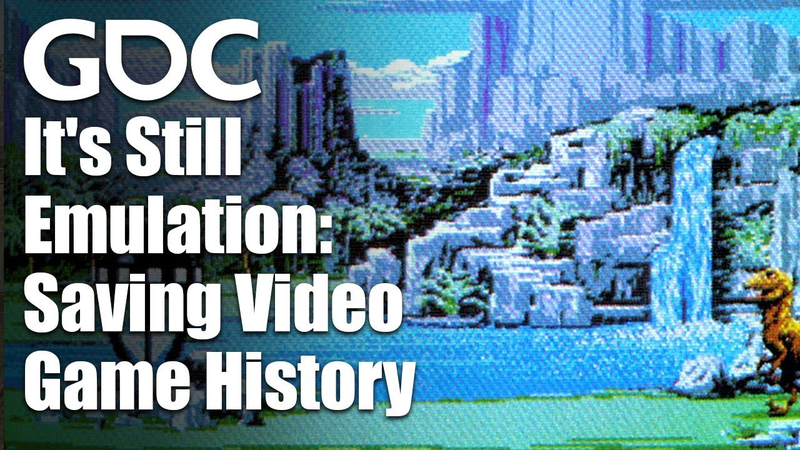
It's Still Emulation: Saving Video Game History Before It's Too Late
The video game industry faces a critical juncture regarding the preservation of its cultural heritage, as the loss of source code, original assets, and technical documentation threatens to erase decades of creative history.
- The video game industry must shift from treating legacy software as protected trade secrets to viewing it as an essential educational resource to prevent the permanent loss of source code and original assets.
- Emulation is the most viable and cost-effective preservation tool, functioning as a digital equivalent to film codecs for maintaining access to historical software.
- Companies should move beyond low-effort re-releases by creating 'playable documentaries' that incorporate developer insights, historical context, and quality-of-life improvements.
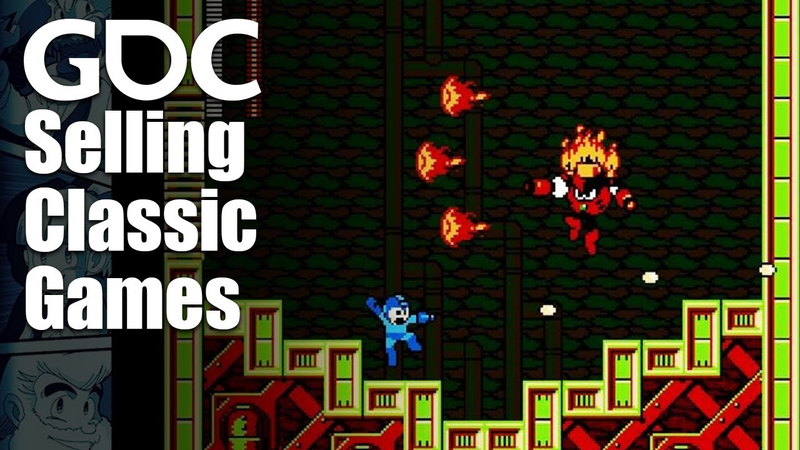
"It's Just Emulation!": The Challenge of Selling Old Games
Video game preservation remains a critical yet neglected necessity, with a significant portion of early interactive software history at risk of permanent loss.
- The gaming industry’s conflation of emulation with piracy acts as a primary barrier to preserving software, preventing companies from using it as a cost-effective, standardized tool for republishing back catalogs.
- Reframing emulation as a functional codec rather than a threat allows developers to bypass the high costs and technical risks associated with traditional porting.
- The industry is currently failing to monetize its heritage by trapping titles in legal limbo or replacing them with derivative remakes, despite proven consumer demand for authentic vintage experiences.