Dragon's Lair
Game
3 documents in the library are about Dragon's Lair, from writers such as DiGRA. Each has a summary and key insights with the page they come from.
Connections
Each row is a game or company named alongside Dragon's Lair, each column a document, oldest first. A mark means that document names it. Select a row to see those documents.
Documents about Dragon's Lair
How Accessible QTE Inputs Reshape Suspense Trajectories in Survival Horror Games
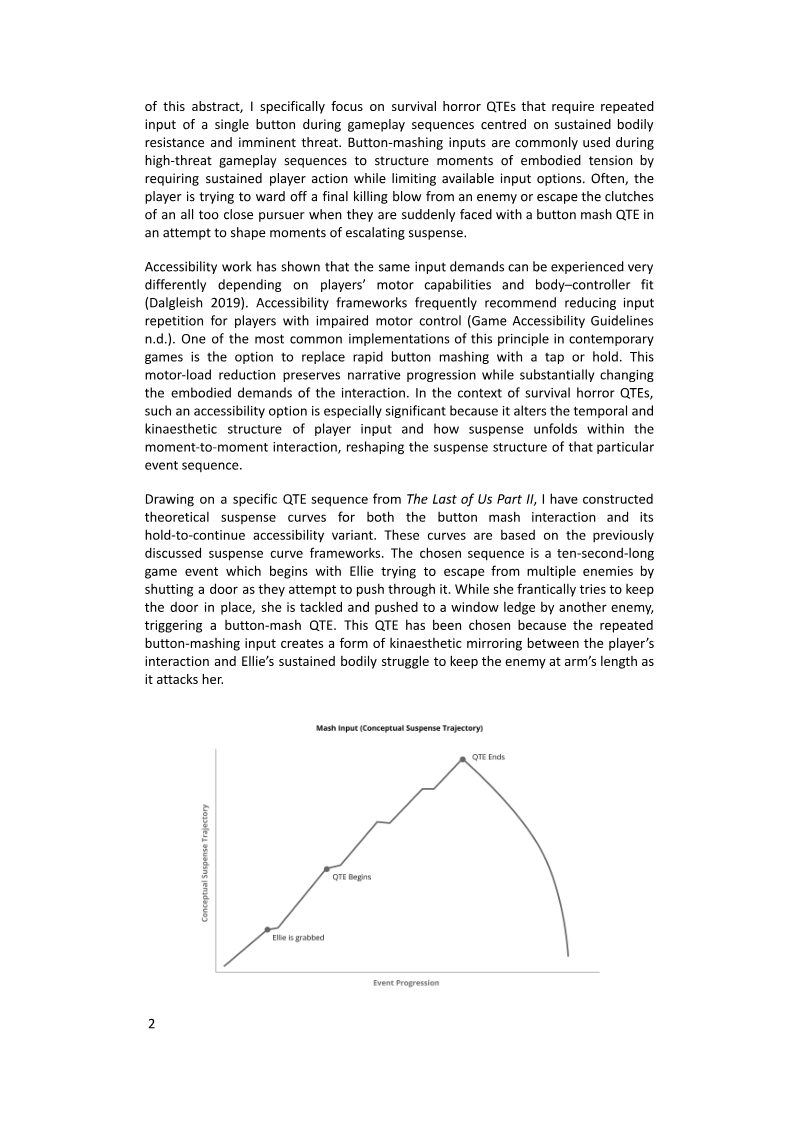
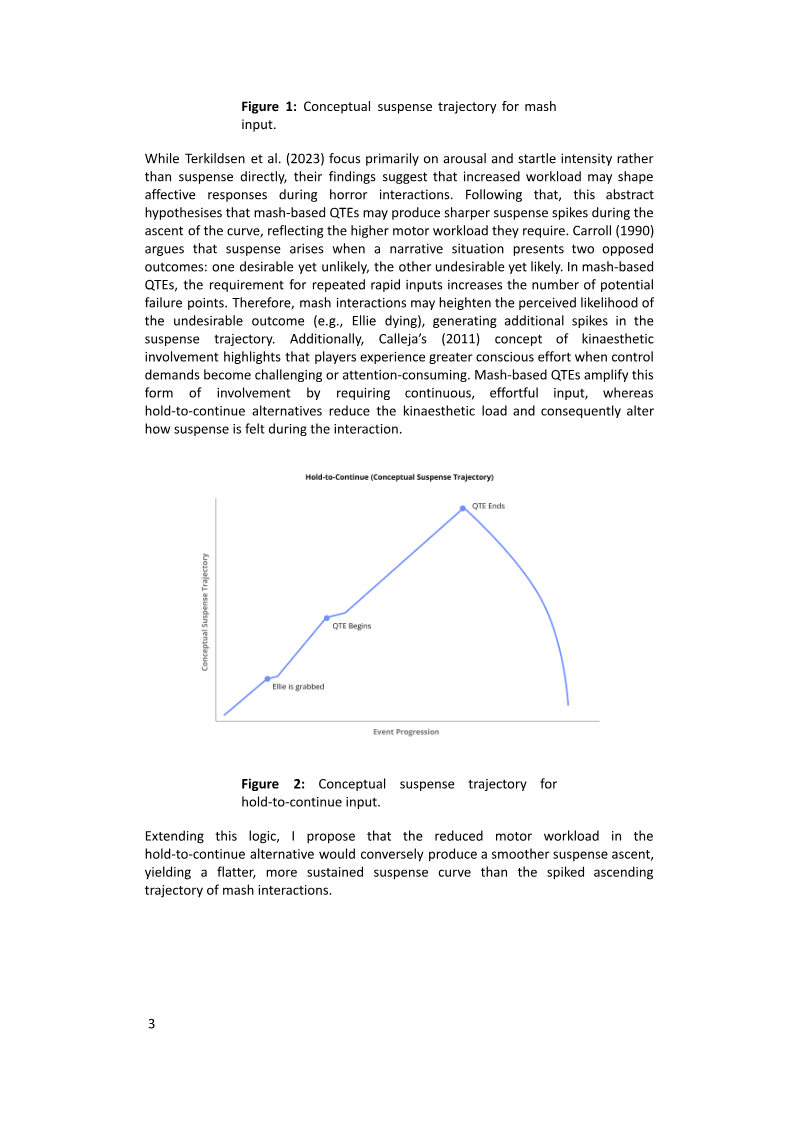
This extended abstract proposes that the input mode of a survival horror quick-time event, specifically a rapid button-mash versus a hold-to-continue accessibility alternative, can reshape the suspense trajectory of the same in-game event.
- The paper argues that accessible input modes for a survival horror QTE, such as hold-to-continue versus rapid button-mashing, can reshape the suspense trajectory of the same in-game event rather than being neutral barrier removals.
- Using a single illustrative case from The Last of Us Part II (a ten-second QTE where Ellie is pinned to a window ledge), the author constructs two conceptual suspense curves to model the differences.
- Button-mashing is hypothesised to produce sharper suspense spikes during the ascent because repeated inputs multiply potential failure points and raise perceived likelihood of an undesirable outcome.
Choose Your Path Quickly: The Many Crossroads of the Interactive Movie
Interactive movies, a subset of 1980s and early 1990s full-motion video (FMV) games, occupy a neglected corner of game history, and this analysis argues that they merit serious scholarly attention.
- Interactive movies were a subset of 1980s and early 1990s full-motion video (FMV) games that intercut FMV cutscenes with quick-time event (QTE) gameplay, and they have been largely neglected by game studies scholarship.
- Dragon's Lair is described as arguably the only prestige title among period FMV games, thanks to its cinematic spectacle and prominent arcade placement, and it pioneered interactive cutscenes well before later games popularized the mechanic.
- Later entries added new affordances: branching and signal cues in Space Ace, spatial gameplay in the light-gun shooter Mad Dog McCree that anticipates first-person shooters, and time-and-space surveillance mechanics in Night Trap.
Port or Conversion? An Ontological Framework for Classifying Game Versions
"Port or Conversion?" argues that the term "game port" is conceptually vague and historically inconsistent, yet indispensable for game analysis and preservation.
- The paper argues that 'game port' is a conceptually vague and historically inconsistent term, yet indispensable for game analysis and preservation, and that existing definitions based on names, platforms, marketing, legality, or literal code transfer fail to yield a stable academic category.
- To fix this, it proposes a Carnapian explication built on a three-layer ontology (physical, structural, and presentation layers) paired with a graded scale of sameness, similarity, resemblance, and difference for classifying game versions by fidelity.
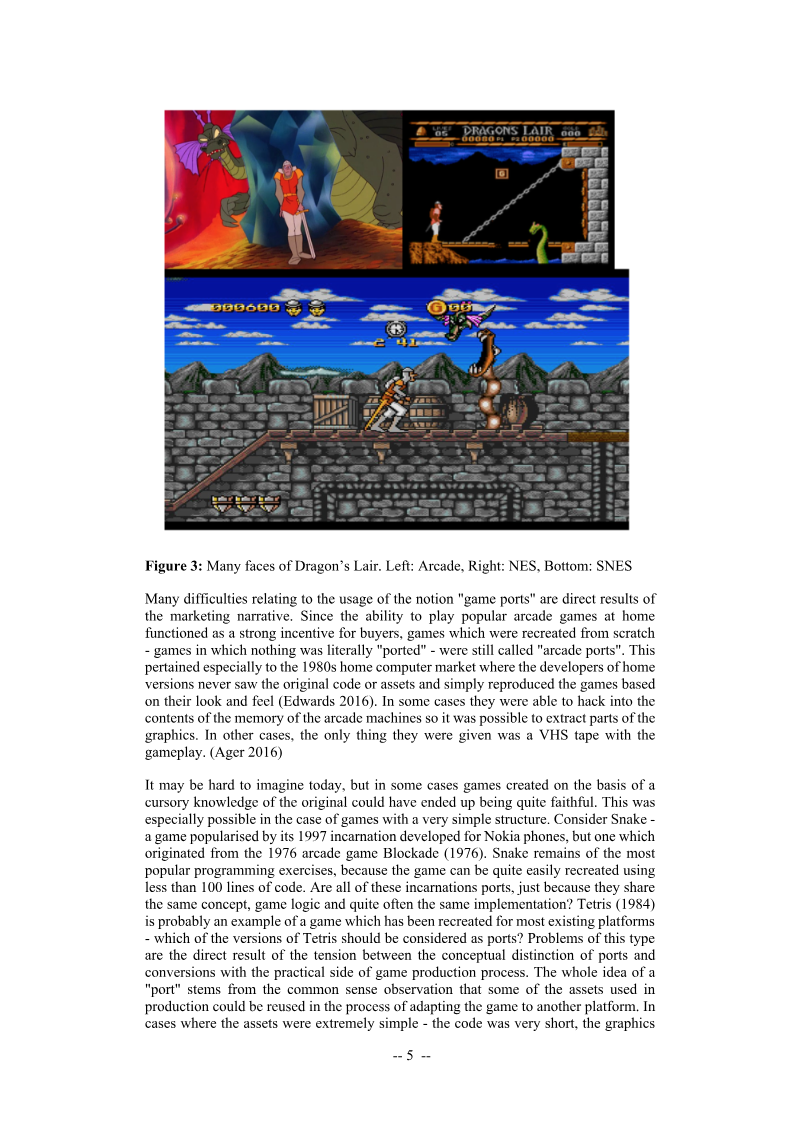
- Case studies such as multiple Pac-Man versions, Thunder Blade's Atari ST and Amiga releases, and Marvel vs. Capcom on PlayStation 1 show the same title can differ dramatically across platforms, with fidelity expectations focused far more on mechanics than on audiovisual presentation.