August
Company
Documents about August

E-sports Are Becoming a Mass Sport: Germany
E-sports have evolved into a significant mass-market phenomenon in Germany, with participation rates indicating widespread adoption among the gaming population.
- More than 4 million gamers in Germany have participated in e-sports tournaments or leagues, representing nearly one in ten gamers.
- Approximately 3 million German gamers participate in e-sports competitions on a regular or occasional basis.
- There is significant growth potential, with 9 million gamers (21%) expressing interest in future competition and 23% open to joining an e-sports club.

Millions of Germans Watch Let’s Plays
Let’s Plays have established themselves as a significant, independent entertainment format in Germany, mirroring the consumption patterns of traditional streaming services for film and music.
- Approximately 16 million Germans watch Let’s Play videos, representing a 7% year-on-year increase in viewership.
- More than 8.5 million German gamers (19%) express interest in creating and publicly sharing their own gaming streams in the future.
- Approximately 10% of Let’s Play viewers have financially supported their favorite streamers through donations, with over 3 million more open to doing so.

Limited Time Events in Japanese Mobile Games: From Sakura to Matsuris
Japanese mobile game developers utilize a sophisticated calendar of limited-time events to drive engagement and monetization throughout the second and third quarters of the year.
- Japanese mobile game developers leverage cultural milestones and seasonal shifts in Q2 and Q3 to drive engagement through themed UI designs, limited-time items, and specialized gacha character variants.
- Golden Week (April 29th to May 5th) serves as a primary monetization window, where developers capitalize on increased player free time during the national holiday by launching aggressive limited-time IAP offers and campaigns.
- The start of the Japanese school year in April is a major recurring event theme, featuring school-related levels and character skins that resonate with the cultural significance of the academic calendar.
Paid or Freemium: The Case of Super Mario Run
The mobile gaming landscape is undergoing a significant structural transition, characterized by a cooling of venture capital investment and a strategic pivot toward consumer-facing applications.
- The Istanbul mobile gaming ecosystem, while a global powerhouse, faces structural challenges where intense local rivalry hinders knowledge sharing, drains talent, and causes successful founders to exit the region.
- Grand Games achieved rapid scaling by growing from $0 to $500 million in revenue within a two-year period.
- The puzzle game market is undergoing significant shifts, characterized by the rise of Merge-2 mechanics, which have in some cases outperformed traditional Match-3 titles in monetization.

Flip Diving: A Case Study in Mobile Ad Monetization
Flip Diving, a ragdoll physics simulation game developed by MobileVolt Games and published by Miniclip, serves as a primary example of sophisticated rewarded video ad integration within the mobile gaming industry.
- Flip Diving maximizes ad revenue by incentivizing many short gameplay sessions per day, as first-impression ad slots command higher CPM bids than subsequent impressions.
- The game utilizes a complex, multi-layered rewarded video ad strategy that allows players to watch ads to continue failed rounds, double coin rewards, or speed up gacha timers.
- The core progression loop is anchored by a 'spin machine' gacha mechanic, which serves as the primary gateway for unlocking avatars, tricks, and additional content.

Gardenscapes: A Case Study in Incremental Growth
Gardenscapes demonstrates that mobile games can achieve significant commercial success through incremental growth and high retention rather than relying solely on massive marketing spend and top-tier download rankings.
- Playrix’s Gardenscapes achieved a Top 50 Grossing position on the US iPhone charts without relying on high-volume user acquisition or a top-tier download ranking.
- The game demonstrated that strong retention metrics can drive significant revenue growth, allowing for success without competing directly with larger, better-funded rivals on marketing spend.
- Data from September 2015 to August 2016 shows that only 21% of the 175 apps that reached a Top 50 Grossing position also spent time in the Top 50 Downloaded chart, highlighting that high download volume is not a prerequisite for sustained financial performance.
Pokémon GO Has Passed $200 Million in Worldwide Revenue
Pokémon GO established a new benchmark for mobile gaming success by generating over $200 million in worldwide net revenue during its first 30 days of availability.
- Pokémon GO generated over $200 million in worldwide net revenue across the App Store and Google Play during its first 30 days of availability.
- The game significantly outperformed other major mobile launches, earning more than seven times the first-month revenue of King’s 2014 hit, Candy Crush Soda Saga.
- Pokémon GO surpassed the first-month revenue performance of Supercell’s Clash Royale, which was previously considered a top-tier mobile revenue generator.

GungHo's Stock Price Rollercoaster and Hit-Driven Valuations
GungHo Online Entertainment’s financial performance in mid-2013 highlights the inherent volatility of mobile gaming companies heavily reliant on a single hit title.
- GungHo’s stock price dropped nearly 40% between July 29 and August 9, 2013, despite reporting massive year-over-year growth in net income and sales.
- Approximately 85% of GungHo’s total sales are generated by a single title, Puzzle & Dragons, highlighting a critical dependency on one hit product.
- The poor performance of GungHo’s new title, Freak Tower, which ranked #490 in downloads and #424 in grossing in Japan shortly after release, led investors to doubt the company's ability to replicate its success.
The Slow, Unignorable Rise of the DTC Owner in Mobile Games
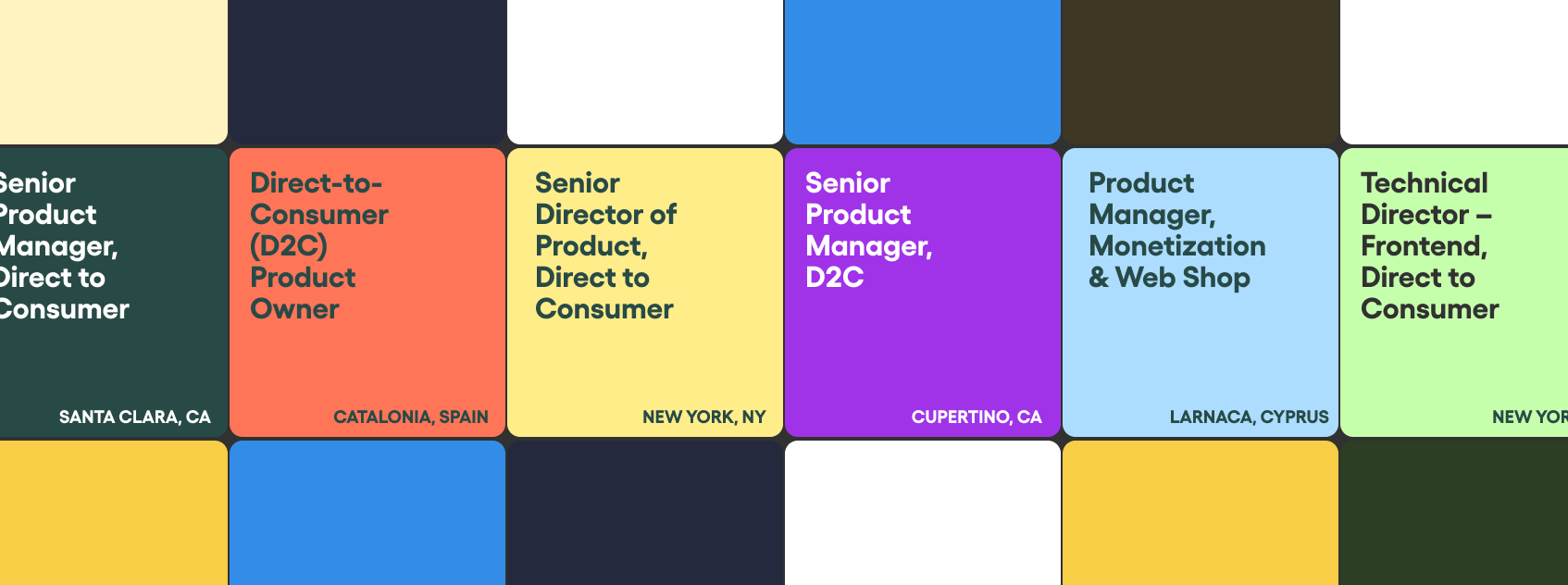
The mobile gaming industry is undergoing a structural shift as top-tier publishers move away from fragmented, multi-departmental management of direct-to-consumer (DTC) channels toward centralized, dedicated leadership.
- Top-grossing mobile game publishers are increasingly centralizing Direct-to-Consumer (DTC) operations, with the number of dedicated DTC roles tracked at these firms rising from 7 in April 2025 to 22 by August 2026.
- Industry-wide adoption of DTC remains in the early stages, as 54% of studios currently have zero dedicated DTC employees and only 25% describe their strategy as scaling or mature.
- A significant gap exists in organizational maturity, with 62% of industry professionals reporting that their studio is behind the industry in DTC capabilities, while only 14% consider themselves ahead.
Making Sense of Google's Payment Programs: ECL, Billing Choice, Level Up, and the Global Model
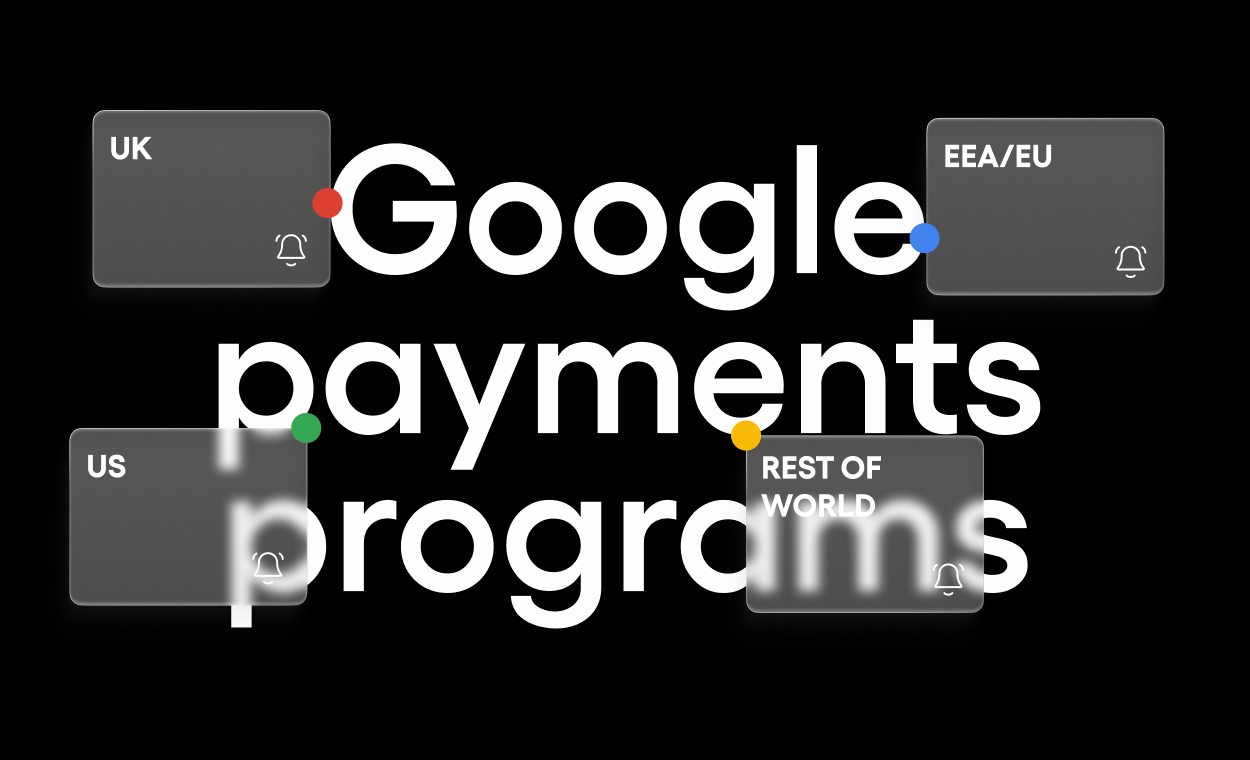
The mobile gaming industry is currently navigating a complex and fragmented landscape of Google Play payment policies, driven by a combination of court orders, regional regulations, and internal corporate initiatives.
- As of August 5, 2026, external payment links in the US remain at a 0% fee, though Google has announced plans to implement a 20% fee on standard purchases and 10% on subscriptions starting October 1, 2026.
- The Billing Choice Program, active in the UK and EEA, mandates a side-by-side billing requirement where developers must offer Google Play Billing alongside any alternative payment method.
- Under the Billing Choice Program in the UK and EEA, Google charges a 20% fee on most purchases and 10% on subscriptions, with a reduced 10% fee applied to the first $1 million in annual earnings.

Google Opening the Gates: External Payment Links Are Coming to Android in the U.S.
A landmark legal development is set to transform the mobile app economy in the United States, as Android developers gain the right to implement external payment links within their applications.
- Following the Ninth Circuit Court of Appeals' decision upholding Epic Games' antitrust victory, Android developers in the U.S. are expected to be permitted to include external payment links in their apps starting August 15, 2025.
- The ruling mandates that Google allow developers to use alternative billing systems, enable third-party app store distribution, and access Play Store APIs for discovery and ratings without penalty.
- Moving 100% of in-app purchases for the top 10 grossing U.S. mobile game publishers from Google Play Billing to an external system with a 5% fee could unlock an estimated $796 million in annual profit.
External Payments Arrive on Android in Europe
In August 2025, Google introduced the External Offers Program (EOP) for the European Economic Area in response to the Digital Markets Act.
- As of August 19, 2025, Google permits app publishers in the European Economic Area to guide users to external websites for purchases via the External Offers Program (EOP) to comply with the Digital Markets Act.
- Publishers enrolled in the EOP are prohibited from using Google Play Billing or User Choice Billing within the same app.
- All external links must route through a mandatory Google-controlled disclosure screen, which introduces user friction and potential conversion rate risks.