Atari
CompanyUnited States
Documents about Atari



Annual Report and Consolidated Financial Statements for the Year Ended 31 December 2023
The 2023 fiscal year represented a strategic "reset" for tinyBuild, characterized by a transition from aggressive acquisition-led growth to a leaner, internal-production model.
- TinyBuild reported a 29% revenue decline to $44.7 million in 2023, resulting in a $62.8 million comprehensive loss driven by $48.1 million in asset impairments and studio closures.
- To address a year-end cash low of $2.5 million, the company secured $12.3 million in early 2024 funding, which included an investment from Atari and increased CEO Alex Nichiporchik’s ownership to 57.9%.
- The company is shifting from an acquisition-led strategy to a leaner internal-production model, focusing on 'games as a service' and high-potential emergent gameplay titles.
Shareholder Circular
TinyBuild, Inc. is undertaking a critical fundraising initiative to raise approximately $14.16 million (£10.3 million) to address a severe liquidity crisis.
- TinyBuild faces a critical liquidity crisis and potential Chapter 11 insolvency if it fails to secure $14.16 million (£10.3 million) in new capital by January 2024.
- The fundraising strategy includes a share issuance priced at 5 pence, a $2 million private placement from Atari, and an open offer for existing stockholders.
- CEO Alex Nichiporchik is underwriting up to $10 million of the raise, a move that could increase his ownership stake from 37.8% to 59.1% and requires a regulatory 'whitewash' waiver.



Global Gaming Report Q1 2024
The first quarter of 2024 marked a pronounced revival in the gaming industry’s investment climate, underscoring a dual narrative of heightened deal activity and divergent financial performance across sub-segments.
- Investment activity rebounded in Q1 2024 with $2.4 billion in M&A across 47 deals and an additional $2.4 billion in private equity financing across 188 transactions.
- Capital is shifting toward technology-enabled and blockchain-centric ventures, with blockchain-focused early-stage deals accounting for 40% of total deal volume.
- Market valuation is diverging, as hardware and ad-tech firms like NVIDIA (EV/EBITDA ≈36×) and Applovin (EV/EBITDA ≈7.8×) command premium multiples compared to struggling traditional publishers.
Sir Clive Sinclair: The Trailblazer Who Invented the British Video Game Industry
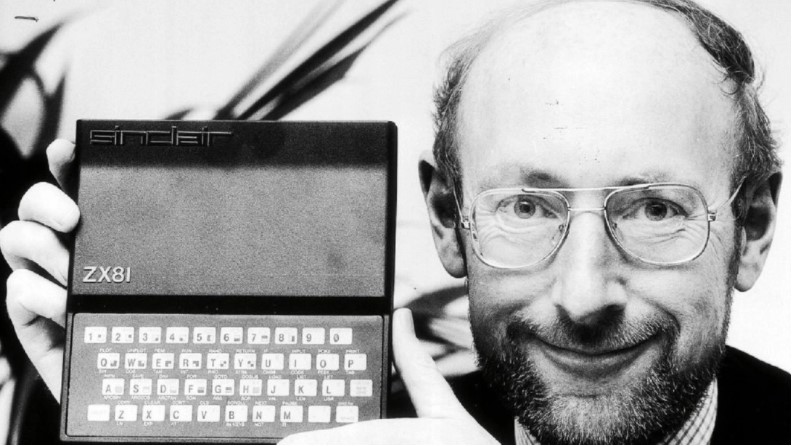
The primary purpose of this analysis is to examine the foundational role of Sir Clive Sinclair and the ZX Spectrum in the development of the British video game industry.
- Sir Clive Sinclair’s ZX Spectrum, launched in 1982, is credited with founding the British video game industry by fostering a massive ecosystem of bedroom coders and entrepreneurial game companies.
- Despite Sinclair’s original intent for the ZX Spectrum to be used for programming and office applications, the 16k and 48k models sold over 5 million units globally primarily due to consumer demand for gaming.
- The rise of microcomputers like the ZX Spectrum, Commodore 64, and BBC Acorn in the early 1980s directly cannibalized the market for traditional video game arcades and the Atari 2600.
House of Crypto: The FTX Collapse and Impact on Web3 Gaming
The collapse of the cryptocurrency exchange FTX in late 2022 represents a significant setback for the burgeoning Web3 gaming sector.
- The collapse of FTX has jeopardized 148 active gaming projects on the Solana blockchain, which previously served as the preferred platform for 37 percent of crypto-gaming investors.
- FTX’s failure resulted in a valuation drop of over 50 percent for the SOL token, undermining the financial stability of the ecosystem it heavily supported.
- FTX’s aggressive gaming strategy included a $2 billion dedicated investment fund, the acquisition of Good Luck Games, and a record-breaking $210 million esports sponsorship deal with TSM.

News Mash-Up: Week 22 & 23 (June 2021)
This industry update provides a comprehensive overview of major developments within the global gaming sector during the first two weeks of June 2021.
- Microsoft is expanding its Xbox cloud gaming strategy by developing a streaming dongle and smart TV app to enable GamePass access via browsers, mirroring the Stadia model.
- Take-Two Interactive acquired mobile developer Nordeus, creator of Top Eleven, for $378 million to expand its mobile gaming footprint.
- GameStop reported a 25% year-over-year revenue increase to $1.3 billion for Q1 2021, though the company still posted a net loss of $41 million.

The Art of FAITH: Horror at 192x160 Pixels
The development of the horror game FAITH serves as a case study in how strict aesthetic constraints and low-fidelity visuals can effectively generate dread and compete with high-budget, next-generation horror titles.
- The horror game FAITH achieves atmospheric dread by imposing strict technical constraints, including a 192x160 resolution, a limited color palette, and a 15 frames-per-second cap.
- The developer utilized rotoscoped animations—comprising 75 to 120 hand-traced drawings per sequence—to create an uncanny, lifelike contrast against the low-fidelity pixel environment.
- By leveraging the high level of abstraction inherent in early pixel art, the design successfully exploits the 'fear of the unknown' to compete with high-budget, next-generation horror titles.

Abundance and Joy: How Is This Wave of Over-investment in Games Going to End?
The global gaming industry is currently experiencing a period of significant over-investment and market "froth," driven by cheap capital, high-profile public listings, and the entry of non-endemic tech giants.
- The gaming industry is currently experiencing a period of market 'froth' driven by cheap capital, exemplified by high-profile valuations such as Epic Games at $28.7 billion and AppLovin’s $28.6 billion IPO in early 2021.
- Historical market cycles, including the 1980s Atari collapse, the 2000s MMO purge, and the 2010s social gaming decline, indicate that prioritizing financial engineering over audience needs consistently leads to industry-wide corrections.
- The current influx of capital risks shifting industry focus from creative entertainment to corporate acquisition strategies, potentially leading to brand dilution.
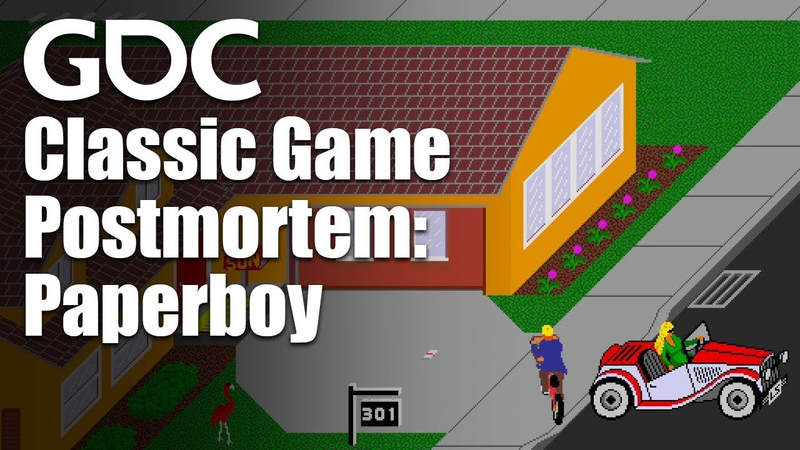
Classic Game Postmortem: Paperboy
The development of the 1985 arcade title Paperboy represents a pivotal shift in Atari’s design philosophy, moving away from traditional vector-based graphics toward a sophisticated, isometric raster-based experience.
- The NES home console port of Paperboy achieved significant commercial success with 2 million copies sold, far outpacing the 3,500 units sold for the original 1985 arcade version.
- Development of the arcade title utilized Atari’s System 2 hardware, featuring a 16-bit processor programmed in BLISS and a custom medium-resolution monitor to surpass the fidelity of 8-bit competitors.
- Gameplay was engineered around tight 30-to-90-second loops to maximize arcade player turnover, a strategy refined after initial focus group failures led to a shift toward a parallel horizontal layout.

Primal Rage II from Heartbreak to Resurrection: The Journey After Cancellation
Primal Rage II represents a significant, albeit ill-fated, attempt by Atari Games to evolve the fighting game genre during the mid-1990s.
- Primal Rage II was a $2.3 million arcade project initiated on March 1, 1995, featuring a team of 20 developers and specialized stop-motion animation that ultimately led to its cancellation on December 5, 1996.
- The game's development was hindered by the high cost and time-intensive nature of stop-motion animation, which made character pre-visualization impossible and prevented the creation of a polished vertical slice.
- The project was effectively lost for nearly two decades due to the use of custom hardware and unorthodox graphics delivery methods that made standard emulation impossible until the game was discovered and leaked by fans.
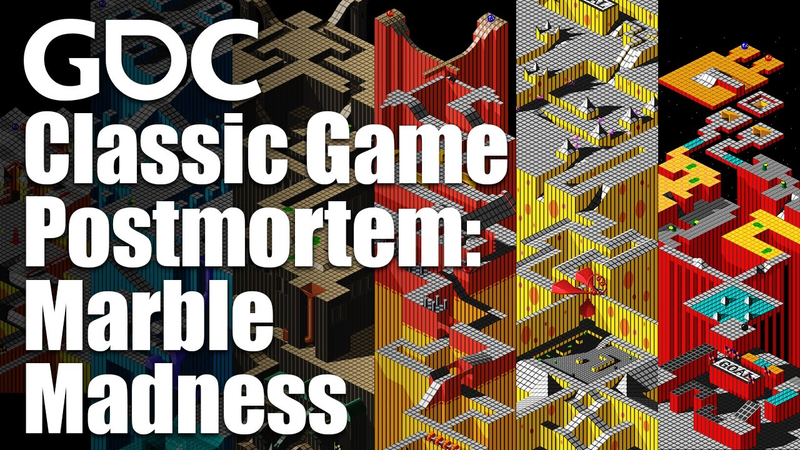
Classic Game Postmortem - Marble Madness
The development of Marble Madness during the mid-1980s arcade industry contraction serves as a case study in balancing technical innovation with the unforgiving economic realities of coin-operated gaming.
- During the 1982-1984 arcade industry crash, sales plummeted by 90%, forcing developers to pivot from custom hardware for every game to a 'system hardware' model where operators bought a base board and swapped out cartridges.
- Atari's development process for Marble Madness involved a high-stakes 'coin drop' testing phase where games were built to 80% completion and placed in arcades; historically, two out of every three games were canceled based on these results.
- Marble Madness achieved commercial success by selling 4,000 units in a depressed market, making it one of the top-selling games of 1984 despite the industry's decline from the 100,000-unit sales peaks of the Pac-Man era.
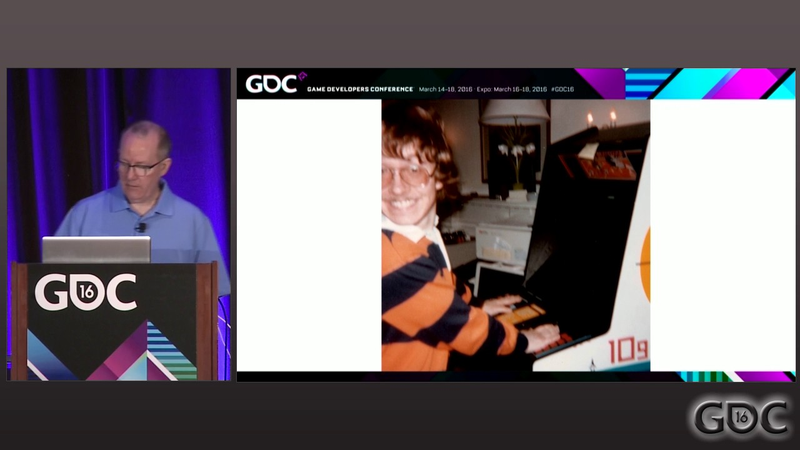
Classic Game Postmortem: Ms. Pac-Man
General Computer Corporation (GCC) emerged in 1981 as a pioneering force in the arcade industry, initially focusing on enhancement kits designed to extend the commercial lifespan of popular titles.
- Ms. Pac-Man was developed by General Computer Corporation (GCC) as a modification kit for the original Pac-Man, utilizing a custom auxiliary circuit board with 10K of ROM to patch the original game code.
- To reverse engineer Pac-Man, the GCC team used a Tektronix 85/50 Z80 emulator to disassemble the original code, allowing them to isolate and modify monster AI behaviors and maze layouts.
- The team implemented anti-copying hardware and a 'bit-swizzle' encryption method on their auxiliary board, which successfully prevented the cloning of Ms. Pac-Man for approximately six months.