Transcript
Welcome to the Navit Gaming Podcast, where it is our mission to explore the business and future of video games. We bring together the industry's brightest builders, investors, and thinkers to keep a pulse on current events, dissect emerging trends and games, share lessons learned, and have a great time. This podcast is also part of Navik's growing ecosystem which ranges from free and premium research to consulting and advisory services. For more information, visit www.navic.co. This episode is brought to you by metal.tv. Built by gamers for gamers and used by over 15 million gamers per month. Metal is the fastest way to clip, save, and share gameplay on PC. Millions of clips get shared every week, turning your game's moments into word of mouth at internet scale. With Discovery being one of the biggest challenges in the games
industry today, Metal is building a platform where publishers, studios, marketers, or anyone looking to reach gamers can find the right players across multiple genres and geographies. For more information, head to metal.tv or check out the link in the show notes. Now, let's jump into the episode.
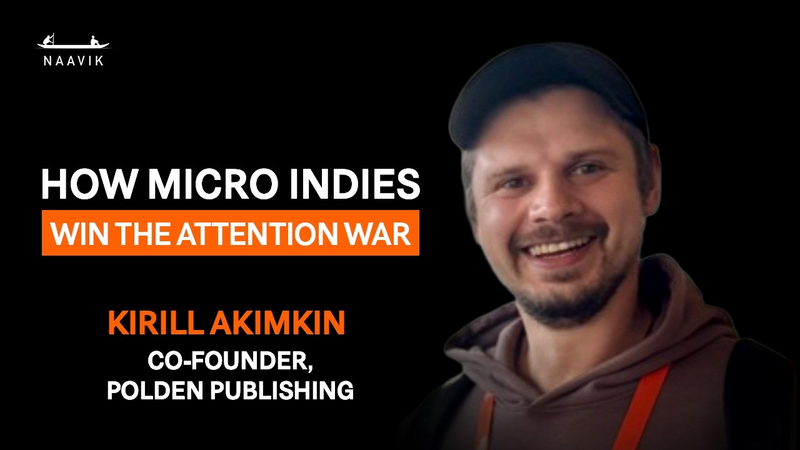
What's up, everyone? and welcome to the Noviet Gaming Podcast. I'm your host, Alex, and this is the interview and insight segment. Today, we're diving into the world of a new breed of publisher trying to solve discovery and the world of microindies, where microindy, indie, and AA and double A and AAA. They It's not really a real line, but for the sake of today's discussion, we're chatting about games that are probably sub 200k in development costs, but that can garner hundreds of Ks of wish lists. There are a few publishers in this space and they're are focusing on smaller budget games with a rapid release strategy. And this is important because while the cost of development might be cheaper, these studios and teams have access to the same distribution systems and consumers
as everyone else. In a way, you might say that these publishers invest in games like a stock manager builds their investment portfolio, strict KPI requirements, wide genre exposure, aka diversification, and quickly divest and abandon losers if early signals or launches go south. But the cool thing about this breed of publisher is it's capitalizing on a trend of fun by bite-sized systemsbased design, chooses games with marketing and community in mind from the very beginning, and maybe think less about the longevity of the game over years and years, but more about weeks of viral momentum enough to return the development cost before moving on to the next title. My guest today um to help me discuss this new space on air is Carol Akimkin, founder at PD Publishing. PDN started as an agency but evolved from an agency into the microindy publisher it is today. As Carol says, they are more researchers than experts and his two other co-founders and him grew the team from 3 to 35 in 4 months. Carol is based in Spain, but many of the team is based in Cypress. Welcome to the show.
Yeah. Hello. Hello.
Awesome. Um, so I'm really excited to dive into the meat of the show. Um, Caroline, I want to know, especially given you've been playing around in really small budget arena for games for a while now, like how you feel personally as a gamer playing a title like Cozy Football Story, um, versus a big budget game and what makes you passionate about this particular space of games.
So, uh, yeah, for me, I think there was no big difference lifetime in the games. So, you can play AAA and with the same passion and maybe even more you can play the indie games. So for me there is no big difference. Maybe there is only one problem that you there are not that many games indie games on consoles. So you can do this on a sofa but in general I think it's for me it's the same no difference.
And even in the case of the story and game design I think indie games of course yeah it's the the much more better than the more of AAA studios because
yeah definitely
this freedom and this indie soul.
Yeah it's funny. I was watching a um like a Tik Tok reel the other day of a guy that was like it was like the compare contrast like playing playing a million a billion dollar game made by 800 devs by your AAA guy. He like takes the headphones off like tosses the controller away and then it's like playing a game for 4 hours that was $9 made by three random dudes in a basement and it was like changed my life, made me ask questions about my human existence. Um and I think that that's actually quite powerful. I think that definitely some AAA games have made me do that. But I have found that like a lot of the indie world like a game like Greece really like
I don't know made me question things and think more thoughtfully about like the world. But um not to say that AAA games can't do that. I'm I'm a big fan of other games that do that. But I was just curious if you had a particular passion for this space that was unique.
No. But yeah. No. And I'm happy with it. Yeah.
I'm happy with it. All right. much more interesting to you is not the game side but maybe the the the publishing strategy and and the fund roll up etc.
So we'll kind of maybe start there um in the publishing strategy which is kind of like from sourcing to shipping. Um, and so I want to begin with where you started, you know, after the agency switched to being a publisher. Um, I think in 2025 you mentioned that you got 800K for eight games, which is basically about 100K per game. And you shipped all of those eight games in one year. And the original investor um, reinvested another 800K the next year in 2026. And now this year, you're planning to build 20 games. I know you're also planning to fund raise near the end of this year. But first tell me like where does the pipeline for all of these games come from?
Uh basically I think we just invented pipeline for ourself. So there was no nothing shared with us from the gut that say that you need to do this this and this. So basically all what we doing it was the the part of the experiment and our research. So basic pipeline is the not the scouting let's say because we get all the games organically from the
our social media account. So there were no scouting part and afterward they just went through the production chain from the close play test open play test demo some festival and some intermediate marketing bits and of course the release. So the basic pipeline is something like this.
That's fascinating. So I mean but but in a way you have really built up a really big social media presence so that people know to apply for your pipeline.
Yeah. So um there is some uh power of let's say of the region of the language because my co-founders we obviously speak Russian a lot because we're originally from Russia and they have let's say two biggest telegram channel uh in Russian language about how we built the publishing and it's actually started in telegram before we raise anybody so we have nothing on our hands and we started this reality show. So now we dream at least we dream about the publishing and after it became a
reality and we started reality show with this let's say transparent approach and uh as you mentioned before we are not expert we are researchers so everything we found working we just share and say this is the numbers this is the loss it works or it doesn't work so we
still keep on this track
yeah I think the thing to comment though that I at least I find to be interesting about at least you having sat in the seat of being an investor in games content before like finding the highquality team was hard. Whereas it sounds like for you guys finding the high quality team like you basically sit back and people come to you guys to ask for things which is I think the ideal situation. Um but you may have established through this really niche of basically specific language um I guess concentration plus telegram which is sort of how it began for you and now obviously you've established a brand and you've been rolling over time but I was more just curious because you know I think it's challenging sometimes to find
highquality teams that are going to make great products and I assume that you still want to make fun games um without kind of with just sitting back and and not lifting a finger.
Yeah, of course. for for the first year it was just enough to get these let's say organic uh games or studios we have but it's more about the brand yeah as we have the big presence in the Russian telegram network so everyone see that probably they are good guys
and they have money so why not to try and course yeah
excellent I mean it's very end of the day like
yeah we are lucky because they put uh trust on us because we have zero games in our portfolio and they say okay we trust and you and of course we are happy with this and I as I think um almost all games paid off so there should be no problem for the developers so they put trust we come back with the revenue so it's a win-win situation and for the next year of course yeah we won't be able to keep this uh speed on the
organic uh alri organic project so we need to expand this funnel and there will be more different regions like the southeast maybe some Europe teams will came up. So yeah, let's see. So anyway, we will do this brand marketing for the English in English language and we will try to expand because right now it was just the beginning. We use the power of the native language and we get some decent teams. It's it's very good guys all of them and now we need to expand and I think there will be the huge new page with the ping in the content presence on YouTube etc. Excellent. Um, for these developers, do you ever face challenges with speed and quality when trying to push so many games out the gate?
Uh, actually no. Because when we did the agreement, we discussed the milestones and we say, "Guys, so no pressure. We have this amount of money, you have this
amount of time, so let's try to collaborate. If we need to cut off something, let's prioritize. Let's discuss." So for us we we are not the AAA publisher. We can't dictate what to do. We can only negotiate and copyright with them. So it's mostly very friendly relationship with the developers.
So there was a problem during the development obviously almost which with every game but when we when you have the result of the play test when you have this questionaries players feedback you can prioritize it properly. And I think nobody argue with us that oh no we should not do this. When you see the scores when you see the player feedback you decide what to do what to not and we can only highlight where the problem is. But basically if it's within the budget within the timeline we are okay with it.
Um and we'll talk a little bit about like the economics and sort of like what you're doing for the studios in the partnership in a moment. But still focusing on kind of like the funnel side. um you guys like where does the
idea the game idea get its legs? Are you the publisher like hiring a team to build forklift simulator or do the teams come to you with the ideas already? I mean I guess and this is a question because I think for most publishers you know they're facing a bunch of different inbound from different genres of different kinds of games on different platforms. Um and you guys have this really like broad kind of shotgun approach. Are you like looking for games that you're like we have to have one sim, we have to have one shooter. we have to have one and then you kind of go out and assign that or is it like if the team is good you'd be happy to build four you'd be happy to build all eight simulator games.
Yeah, great question. So uh basically for the first batch for the first games we just uh sort what we have from the inbox. So there was different games. There was an RTS game like Majesty inspired game. It's a very hard genre but we need to try it. There was a simulator which is which uh I think it's a very great genre in Steam because we
have this supermarket uh this kind of simulator kebab supermarket or whatever and it feels great on Steam. So maybe there is a lot of money there.
We have this cozy football story. We have the cooking simulator. It's like the overcooked with the rats mix. So we take everything and see how it goes. The only fail we have is with the puzzle games and it's really very challenging because uh the puzzle games right now if it's not with a stunning visual or idea I don't know this 3D puzzle with the photo or what you can see in the Tik Tok I think it very hard to promote. So for our train valley game it it was the fail but also we just took this risk we discuss with developers so we put the money we didn't get them back so no problem. So it's a portfolio. We have a lot of games. Some will fail. So nothing personal. We did what we what we could did. Yeah.
Okay.
For this game.
So you are acting in a very traditional publisher manner where someone comes to
you the game studios come to you with the idea usually.
Yeah. Yeah. The idea comes from the studio. But there was uh to be honest in this bunch for the 2026 there was let's say some sort of the game gem in telegram again when we say that we're looking for the friends slope games or games which looks like final sentence. So when you have the single scene and you do something with the physique, with the cards, with the something like Balatra, Clover Pete, final sentence and we just uh did this. There was like 100 of the prototypes. Uh I think we played like 30 or 40 games and I think we take only one from them cuz there was too early to roll. But uh sometimes we give some direction and say guys if you can do something interesting with this mechanic, we are in. So just uh do it for us. No problem.
Okay. I see.
But it's not in-house development. We just said that there was an idea
and if you want we can fund it and we will go 50/50 after. So we will not hire you as an employee and just
doesn't share royalty with you.
Mhm. Mhm. Okay. That makes a lot of sense. Um and maybe that brings us to before I want to talk about two things before we kind of talk about discovery and the performance of your portfolio. And those two things are definitely basically the testing pipeline and also um how it kind of works between at the micro in the microinding publishing scene like what does the publishing deal look like for game devs? Um and so for the studio you kind of mentioned just now 50/50 how does the economics usually work out for them and what do you guys do for the studio um to support the the launch or the development? Yeah, for studio first of all we doing funding uh if the project needs funding because sometimes there is project that don't need money they need only marketing in this case we go 70 30 but uh in the traditional case it's 50/50 and we do the producing so we have the ourself as a producer or right now we have some uh new guys who can do this we do the community management we do the
localization stuff uh we do the quality assurance and right now everything is inside the ping because in first year we need to outsource it. There is a lot that a lot of micromanagement stuff and you need to find the proper partners. So it's very tricky. So we decided to go fully inhouse and so since this year we have all this community content production. So if you need Tik Tok reals trailer all this stuff if you need localization we will do it in house. Of course, localiza uh localization manager will be from poding but the partners will be from the outsourcing studio because we can't hold 10 different uh native speakers in our publishing. But yeah, in general we do everything from idea to release and of course we do the post-release support. We support the community for some time depends on the revenue of the game and it's community alive or not. We do the all the discount stuff, uh, bundles, uh, everything we can do on Steam and of course daily deal, free weekend, all this stuff.
Okay, got it. So, in a way, you're a very traditional publisher. Um, you are just operating at a really tiny scale and so you just everything costs all just go down. Maybe the only difference we have is the approach for the to play test and the testing in general because we strongly believe that the good game should have I don't know at least 40 minute of median play time across the 2,000 players for example and it should has uh great scores like 90% of uh scores should be four and five in the surveys and we do this uh each play test. So for the each build we create the questionary on type form whatever or Google form and we do this uh stuff with it. How do you feel about the game mechanics number one number two what's your overall score? What you thinking about the visual style? Where did you come from? Sometimes it's help us to understand the source of the traffic for
example if it's Tik Tok or the friends. So it it depends and we trying to increment each play test the scores. If we see that there is a lot of three scores, of course, we need to iterate one more and usually it takes one close play test and one open play test to get to the demo with a decent median and the decent reviews from the players. But uh it's let's say uh let's name it datadriven approach when you look at the game like a product and you do this all customer development stuff and you need to build a shape for it here.
Yeah, that makes sense. Okay. Um and I'd love to ask a couple questions kind of about this um KPI focused and driven play testing um I guess methodology that you guys have. Um the game's dev cycles are are fairly short as you've mentioned. You're saying for a lot of them, right? They're not, you know, multiple years of development. When in the development pipeline on average, do you get them into hands for testing? Like how many months?
You mean how many months uh till the playable build?
Yes, exactly. So like how fast if it's a six-month development cycle or an eight-month development cycle, when is the when is the date that you start testing?
I think two three months is enough. Yeah, usually. But uh earlier anyway we received the game design document and we can pass it to the QA so they can build let's say the preview document preview of the test plan. So yeah anyway the work start a bit uh earlier but in general yeah so if it's a one year pipeline I think in three months we will get internal testing and four months it will be on open test because as soon as uh we try to do the community play testing or player or I don't know how steam play test as much earlier as we can. Yeah, because we need the feedback from the not biased.
Got it.
So, you're putting this pressure on on these teams to say, "Hey, like you're at a place where you can test now, we're going to test now. Um, don't wait." And kind of Yeah,
each game has the same problem. Developers over complicate the things.
They think it's too easy. We need to do it much more harder and much more hardcore. And we see in the surveys that please do it a bit lighter
and and so we need to do this reality check uh earlier for the because our we don't we can say that we're an experts and we say you not to do this thing we pre prefer to provide the players feedback maybe it's 100 maybe it's 1,000 of the responses and say guys I think this is the right choice because we are not relevant we are not this fan of the genre we're not the expert in game design so we can only rely on the count
and the responses.
Okay. Um how do you ensure when you play test that the test is indicative of live performance? Um and I asked this because on the studio side um as also has been my experience, many people who want to play in those play tests are already biased towards liking the project. So the score is biased towards at least in my experience favorable. Um, what are
you guys doing to ensure that like these testers are like going to be really critical and give honest feedback versus I found the game through Steam. I've been following the game for a while. I'm a big fan of these this type of thing in the first place. Therefore, here's my positive feedback.
Yeah. To be honest, I'm not sure that we have this type of audience on Steam because most of them are will be very aggressive.
Yeah. So, over there, they're like, "This game is crap." Like,
Yeah. Yeah. Maybe in a cozy genre there will be more positive people. Yeah, in the average even in simulator niche there is no polite people. They say that piece of crap. You need to redo everything from scratch. But I will go with a four score. So not that bad.
Yeah. Yeah.
Yeah. In general uh as I think it's the critical uh point. So once we release the steam page when it's go live and receive this URL, we always uh enable a request access button on Steam. It's it allows you to get play testers as soon
as possible and it and the play testers came from the steam itself. So it's not biased audience. And once you have this button, I think till the if you do some you can buy some traffic on Reddit and say that we're trying to play test the game, please sign up. if you don't have enough play tester. But usually if you do this uh announce for the game and the request button was in place, I think there will be five 7,000 of play testers waiting for the access and you can do this limited play test with the 1,000 now 2,000 later. So and you will get this. So we don't know who is playing the game. We just see the numbers of the Steam and we don't know who they are at all. And of course this year I think we will be expanding to the external platform because there are some new platforms on the market who allows to play test to do this additional analytics sign NDA all the stuff. But
right now and I think for the most of the indies and maybe for the most of the publisher the steam play test feature is more than enough to get at least two iteration and get this decent median play time.
Yeah that's fascinating actually. um as uh you know we I've had um the founder of First Look on the show before um and they've done a ton of stuff with play testing um and uh at the studio before we were definitely using First Look and not using Steam's play testing because and so our volume and our people came from signing up directly with us versus through Steam. Um but I see the benefit actually of having that Steam because because then you have the audience on Steam which probably translates to a wish list audience which we'll talk about in a second. Um which is really interesting. But before we move on to game performance and discovery and sort of like your strategy for driving discovery outside of Steam, um what do you hope to see in your future pipeline? Do you need to see the quality of developer or ideas go up for the next 20 games in 2026 or are you really happy and satisfied with sort of how the portfolio is going right now?
Uh I can say that we are happy because we have what we have. We're not that critical. But of course there is a space for grow always and our internal goal it's not mentioned anywhere and we're not doing anything right now but we want to have this kind of the art director guy in the studio and maybe some game designer inside the poding who can overlook the whole portfolio because sometimes the ind studio is really small it's like three four people or even two people and they don't have game designer they don't have the guys who is in charge for art and even I don't know two hour session they set the right direction for the whole game because uh I'm not sure even that the UI and UX designer exist in the gaming especially in the indie. So maybe if we will have this in ping we can share the expertise between the project and the overall quality will be much more higher. So there is a dream of it but yeah right now we need some cash before and we can
hire this guy who can overlook the whole portfolio. Yeah, because
makes sense.
The visual is the king of course and we need to try to improve it in every sense the in the teams or inside the ping.
Makes sense. Yeah. Okay. Like a shared internal UI resource or UX resource. All right. Um okay. So now that we have a really strong understanding of sort of like where your pipeline comes from, how you evaluate them, how you get them into testing, you very strict KPI performance targets, etc. scores four and five or above. Um, I want to talk about discovery and your strategy outside of Steam and then for wish lists on Steam because some of your titles have gotten mega wish list counts in a day, weeks, etc. Um, so tell me a little bit about what your current recipe is for driving discovery outside of Steam. I know that you don't spend any money on influencers, so tell me about what that looks like.
Yeah, so the answer is simple as usual.
We don't have money so we can spend them because the actual marketing budget doesn't allow us to buy any huge streamers and to be honest they will be not so beneficial for us if we buy I don't know guy with the 20k viewers it will provide zero sales probably so we can't risk but yeah in general uh our marketing focusing on the influence and the short form content and now it's it works previous in 2025 and I think it will work uh even better in 2026 because there are some new services that allows you to buy creators. It's like the creator marketplace. There were before but now we find the working one and I think it will increase the spending on the influencers directly. So we will pay but uh we are very picky in this year because we can't afford YouTube or Twitch campaign because it's the it's too much money even more than we spend on the game. And in case of the
influence influencer outreach uh we do it like in a startups there is a email marketing and we do basically the same but we don't try to cover the all influencers on the Twitch. We always try to find the perfect 500 or 1000 creators who we want and we automate only the sending and delivery part. So it's the basic email chain when you have this text. We divide it into the smaller group to make it personalized. So if you played our game, you will receive one message. If you didn't play any our game, you receive the first message. If you played uh this demo of the of the game, of course, there will be another message. So, try to do this very, let's say, cozy and warm. And we only automate the delivery part because it's it's a hell when you need to send 1,000 emails
and technology helps. Yeah. But we don't
want to do like 10,000 creators per beat. No, no, no. It's a very small batch and we try to target our, let's say, audience. And in case of the short videos, yeah, it's a king. Right now we do all the announces with the short videos. Of course the different games respond differently but the airport case there is the last announce from the polling got extremely viral. I think today it's 200,000 wish lists.
Oh wow. Okay. My like my my my my data from point from last week is inaccurate now.
Yeah. Yeah. It's 200 in two week less than two weeks. So it's the it's a very good number for us. And the previous one was that hikers which is 101 months. So it's a very good but yeah and generally yeah the short video I think is a king because uh when you have this algorithmic feed
you can go far above your audience. So in that Twitch for example you have only subscribers and viewers and there is no logarithmic feed and you will never pop up on the random people page and Tik Tok
reals even Facebook shorts I don't know how do they call them in Facebook we got one two two million views on the Facebook recently for that hikers I don't know where it comes from but somebody
somebody's watching
yeah yeah and yeah it works perfectly so our strategy is to expand this and also building this partnership program in polling. I think for this year maybe we'll complete it. So we will try to pay for the post for the mentioning etc. So we want to build close relationship with all the creators who do the short form content and I think it's the only working thing for us right now because the roy from it it's is high.
Okay. All right. Bunch of questions. Um it sounds like social media and short videos are extremely important to you. um which I think is true and endemic across the whole gaming industry. Um you manually send a bunch of emails to some curated audience that you've specified, right? These aren't paid influencers,
but you're motivating them in some sort of way. So, can you share a little bit about how you find the right influencers, right? You just said like you're not emailing 10,000 of them, but you're emailing the 500, 10,000 that you think are very unique to the game. How do you determine who those people are? And then sort of what um you mentioned some sites that you're working with that um can motivate influencers and creators. What sites are those if they're not Twitch, if they're not YouTube, if they're not Tik Tok?
Yeah. Yeah. About the creators and uh uh how do we find them? So there is some tool from the guys from Germany. It called contact tools. It's not public. So you can find it but in case somebody need it they can drop me a message in the link in so I will answer. So it's some close tool which pars Twitch YouTube and we try to find so always we have uh let's say the first list is the one who played our demo if we get the
coverage from the demo from the influencer he is always in our list. Uh the second list is the influencer who play the game which uh looks like our game. For example, for the bus flipper simulator, we will cover the most of the influence from the house flipper from another simulator game. So it's the game games references. And the third uh list of the creators, it could be the very generic guys who do this stuff like cheap game alert, like new game announce etc. So it's the guys who always need the new content. They always looking for the new games, new announcement and we just send email to them. So if you have the upcoming videos and you just receive all the press kit, all the B- rolls prepared for the vertical video, feel free to use it. We we're not against it. we do it for for you. Yeah. So basically uh this is how we work with the creators and of course after we filter in uh on
the average viewers, average play time, average subscribers. So just to avoid because there are too much scam on the YouTube and Twitch market. When somebody buy the accounts with the millions of subscribers start uploading some videos they start scamming for keys through the key miller through the all the platforms which is which exist even through the email. So we try to avoid them and try to manage. So who are watching the streamer is it alive or is a scam channel. But in general, yeah, we have like maybe 20,000 creators in our, let's say, internal CRM who we work with.
Got it. Okay. Well, then so then you're also hosting an internal CRM as well. So
right now it's a very creepy Google doc. Maybe it will be air table. I I get it. I know what I know what it looks like. Um it looks like Microsoft Excel um with some labels. Um okay. with the Microsoft
Excel. Yeah, whatever.
Um,
but I think that's really useful and helpful because I think that um, you know, from my perspective, this like level of manual labor is just it's very difficult to scale and it's really hard to find the people who are the right audience for your game. And so you're doing it by three different things. You like you showed organic interest. There's a game proxy here. If you liked Forklift Simulator, you may like Supermarket Simulator. And then um the final one is like um sorry what was the final one again that you mentioned?
It's the g general guys who do this type of analys
the general people that are looking for new games at all
like the entertainment guys or the news channels or something like this.
Right. Right. Okay. Yeah. And I think that that's a really good strategy to break down because for a lot of studios that are thinking about how they build discovery um this is kind of a way to way to tackle it. Um okay so I talked about discovery outside of steam which is through content creators. Now, I want to talk about the the wish list thing on Steam. Um, last week you told me that
Totally Secure Airport got 75K wish list in one day, except that we're no longer at 75K. You just mentioned you're like a north of 200, which is crazy. Um, what is your current recipe for driving wish lists on Steam? And is it any different from the recipe for driving discovery that we just talked about?
I think it's uh it's close to the discovery outside the Steam. So once you give the traffic to steam from the external the external traffic to steam the steam will give you some organic traffic. So for us we need to focus on the announcement. So there should be a lot of videos a lot of views a lot of traffic to the steam page which is uh just announced and you need to bring the wish list to the god of steam. And as we can see on the dead hikers and uh totally secure airport game once you have maybe 8 to 10k of wish list per day this team start bringing some discovery Q traffic to your page for that hikers I
think right now u something like 35% of the wish list came from the discovery queue from steam
wow okay
decent amount it's like the third of the wish list for the airport I think For now it's like 25% of the wish lists. It's also the 50k. It's too much. But uh I think there will be a long tail for maybe next two weeks and it will be the same 30 35%. So the steam is very responsive and if your game catch the interest yet he start putting it in a random placement. So I do love steam for this. So no paid placement. You can everything based on the interest in your personal page. So you will get this even discovery queue or some pop-up banner or more like this section. So there will be a placement for a game if it's really good. But sometimes yeah our games didn't get this much of attention. So we did the same recipe, the same announcement, the same services we are using, the same short form content. But the amount of wish list is like 10k or
20k. So not that much. And of course there is no traffic from steam in this case. At least we can see it. We can distinguish it from the any external traffic. But here I think the most uh working thing for us is the demo because when you do the play test and you slowly going to the demo, you will have this opportunity to send a notification to the guys who wishlisted your game. So if the play test went good, you can also do a marketing with the play test. Sometimes we just share the keys with the creators and say that we have a secret play test and you have the key. you can stream it exclusively. So sometimes they stream it and it's generate wish list as well. But of course the main push is on the demo when you have this polished version you publish the demo page and you push the send wish list notification button on Steam. And here we're waiting for the magic. So if you will beat 500 800 and 800 concurrent players on Steam, you
will pop up on the training free section. You will be on the demo carousel on the top of page. So they will be organic from Steam and of course there will be a wish list for our let's say casino simulator. It's the game from the 2026. It's not the real cazina, no gambling at all. It's just the simulator of the cazina. So we had only 7,000 of wish list. So amount very small. And after the play test, there was no wish list at all. And on the demo when we push the button and did this let's say uh Tik Tok warm up we got like right now I think it's 20 or 22k of wish list. So we got a decent amount of wish list from the demo and of course we pop out on the all the free demo trending free sections. So
all right but you mentioned a couple components about steam here that I think are important to like crystallize and the first is maximizing
you're all basically this is a steam algo optimization game for you guys. Um, and so the first thing is that you're like thinking about wish list velocity,
which is the number of wish lists that happen for the game per day to spike in the discovery feed, which for one of your games, you know, you said that it was 35% of the wish list had come from that discovery feed. Therefore, I mean, it's ago 1/3 is a pretty significant amount. So, that was really important. So, how do you get the wish list per day? The second thing that you're talking about is with the demo itself. Um, if you have good demo scores and people playing the demo, you said it's something over like 800 concurrence, etc., then you will also show up in the Steam free demo trending section, which is another section on Steam that you're trying to make use of, and then that will increase discovery for the game as well. Um, and so I say these things mostly because um, a lot of this is about the Steam ALGO optimization. And so I'm wondering whether or not your strategy would start to fail if Steam changes its algorithm. Maybe we need just to adapt to it because we're not trying to hack the algorithm. We just use what Steam says to use. So he say make great games.
We're doing the play testing. We try to increase the median play time and when you see this CCU graph on the steam delay, you can see that the people playing the game actually.
So it's not dropping after the half an hour after you release, they keep playing. So we do what Steam ask. So no problem for us. We're not trying to hack. We're not trying to
No, it totally makes sense. Yeah. Yeah. I'm just I think what I'm distinguishing here is that like it is if Steam were to change how you were to show up in the discovery feed and it wasn't driven by wish list velocity, it was driven by something else, right? Then you'd have to potentially change your strategy.
Yeah. Yeah. I think easily we ready for any changes here.
Okay. Um and that leads actually to my next question, which is what do you think you'd fix about Steam if you could fix anything to make the discovery better? Ah, it's very tricky question because I'm not even sure that the guys from the Steam exists. I saw them on the Gamescom. Yeah, I have
this t-shirt from Steam. I say, "You are real. Probably you're real." Yeah. But yeah, I think the philosophy of this team is just to make great games great. They try not not try they not doing any paid placement. So there is no option at steam that you will go to the front page without the decent amount of wish list of or interest to your game. There is no paid advertisement. There is nothing on steam which is not organically. So I think as long as this is a strategy of the evolve I think it's fully okay and you don't need to adapt to something. You just need to use what you have right now.
Okay. But
for you, for you, no notes. Steam is perfect.
Uh in case of discovery queue, I think yeah. So maybe last year I was not that happy because we didn't get any let's say big hit with the wish lists. But to be honest, the game was not that great.
So maybe this is the problem. You need to be more
Yeah. Yeah.
You need reality check always. If you see the game that is great and it's got decent amount of wish list, you think it's okay. If the game is bad or the visual is bad or you know any other aspect of the game is not that great so I think
yeah but I think one thing to note here is that yes absolutely without a doubt the product has to stand on its own legs but you guys have done a pretty demonstrable amount to get that good product discovered. Um, and I think like that's a critical thing here is that like if you if you market a bad product, well, obviously nobody's going to play it. But if you even if you if you make a good product, but you don't market it and you don't win the same algorithm, then your product's not going to get played. Um, and so I think that that's something that I just want to call out here. Um,
yeah.
Yeah. There might be also one note about this team because right now I think the most let's say useless part of this team unfortunately is the next fest. It's the main festival for the demo for the indie. It was the main uh event and right now it's pretty useless because
last year we were on the next best with the restaurantats which has like 100k of wish list and we got almost nothing from the next fest and we got like four or five games on the next fest and they have pretty the same amount. So there is no much hope for the next fest and of course there is no much hope for the popular upcoming section right now because even one year ago or two year ago there was a huge amount of wish list in the last hours or days before the release when you pop up on the main steam page with in the popular upcoming session. Right now I think there are 20 30 release per day on Thursday maybe more and there is no chance to get any traffic before the release. So this next fest and even other steam fest even thematic are quite useless right now because of the amount of the games and I think people just not focusing on them. So there should be some changes but steam mentioned at gamescom that they will do more personal fits for it. Maybe
even the popular upcoming session will be redesigned to them in a more personal way. So yeah I think they're already working on it or at least we hope for it cuz right now it's just useless. So we don't rely on the next test at all. Okay, that makes sense. Yeah, I there's so much to unpack there, but we're I'm I'll keep us moving along um to talking a little bit about the Pulden portfolio. Um so I want to talk about a few of the games that you guys have launched and the specific learnings from them. But before we go there and talk about some of your games specifically, you know, you you mentioned that you've kind of aggregated tons of wish lists for some of these titles, uh is there any specific regionality trends that you see with capturing these games? And if so, why do you think that? about the regions I think it's quite regular. So we have the tier one countries. It's of course always US is the number one in sales at least for Indies. Second position may be Germany, UK or even China and the third is the some
Western Europe maybe Japan depends on the genre. So the tier one regions still do I think the US
yeah dominate like half of the sales is from the US. So you always need to do the proper marketing for the US. The Latam region I think is very bad in case of the conversion from wish list to the sales actually because of the price even even the Russian region I think Russian is the third language in steam and the sales is not that good because the price is regional it's way more lower and even for our games which is let's say have some success in Russian speaking countries there is not that much sales US is always the first.
Fascinating. Yeah. And I was asked that question mostly because some of your developers are from the Cypress.
No, no region boost yet at all.
No region boost. No inhouse region boost for your own geography, which is
interesting. Um, okay. So, you've shipped about seven to eight games on Steam so far. I could have that number wrong, but it's in that range. I think Fish Hunters,
Restaurant Rats or Restaurant Rats or something like that. Lasaria, Static Dread, Bus Flipper, which we mentioned, Train Valley Oranges, something about cleaning a garage. Um, and all these games are under 25 bucks. You've announced a few demos for The House Always Wins, and I think Meow Meow Gick. Is that right?
Meow. GK is like Yap Yap.
Yeah, exactly. It's like Yap Yap. Um, and you mentioned in some of your posts that, you know, like X or Yame is like Lethal Company or it's like Yap Yap as you just mentioned. Um, given that you are researchers, right? Um, tell me what informed making some of those games specifically and is it and does it go any deeper than Yapy was popular so we making something similar to Yapy Yap? Is there any more nuance than that?
Yeah, in case of the Meowic I think it's still not announced but maybe for the when the podcast will be recorded it will be announced properly. We just didn't announce because of the Yap Yap
release and we say we have the same game. Let's try to get some traffic on this and we got I don't know 7,000 of wish lists. So not that much but it's better than zero. Yeah. But the originally the team came to us and say that we saw the Yap Yap success and we want to do the more let's say cozy version because the Yap Yap was like a horror and they say we want to target more let's say not the horror audience but more let's say girls cozy or play with the kids. And we say that of course why not? The budget was not that high. It was like uh 60k. So we say why not? It's a good experiment. So they have this positioning different from the Yap Yap. It's like the cats magic and some platforming. So it's not a hardcore game. It's not scary game. So we decided we need to at least we need to try because again we looking at our portfolio like in a venture capital when you have risks and it may be the risk, it may not. So
it may pay off, it may may not. So no problem for us. If there will be fails, it's okay. It's totally okay. We're researcher. Yeah. But the game, yeah, it was cheap. Quite cheap. It's It should be not that hard in the marketing. And I think at least it will pay off or maybe get some cash. If not, no problem at all.
Okay.
But the strategy was easier. It's it's the same because the genre is a bit warmed up before us and maybe some people will try to look to the less scary game to play with girlfriend or with mom or with brother. So, we will try to target them. And for the little company like you mentioned it's the project doors. It's also a unbelievable project to be honest. It's it's too it's too good to be true and of course it's uh now it's the whole genre of little company like and we got the enthusiast who played a lot of in Little Company and they want to build this like maybe you see the concept in the Roblox when they have the different
doors leading to different dimension with this uh mysteries and some strange artifact and they wanted to build this chaos and we decide again why So the game going pretty great. We had a great median play time. It's like 90 minutes. It's a very good median for the game. And there was a play test version also went very good. So I think it will also it will not be a fail at least right now. I can see that we are not looking for the let's say high amount of money this because we can see that the wish list not grow rapidly like a totally secure airport. So it will be the average project no problem. We will get some money we will pay to developers and we will start something new because they already have a huge expertise and maybe the next game from them will be the heat. Who knows? Yeah. So our strategy I think need to mention that
uh we are looking for heat. We did the first year no heat but we received the
we get the final sentence probably the mediumsiz heat. So it will give some money for us to outlive the second year. In this year we got the totally secure airport and it may be the heat but if not I think the third year may be the last for us because the publisher leaves until you find the heat. You need to find your game which will compensate the next 10 years of the existing of the publishing
and for us the more we iterate the more tries we have the more chances that we get this.
Absolutely. Yeah makes sense. Okay. Um, so I mean, but that it is that it's so it's like you're like you said, you said there's a genre that's already been warmed up for us and then we're looking to do something but like slightly with a twist. So like Yep. Yep. but less scary for this other person. Um, and those are the hypothesis that you're testing. Um, before we kind of go to our conclusion and closing questions, I want to talk about two specific games um because I thought they were interesting and worth mentioning. Um, the the first is Fish Hunters and the second is Final Sentence. Um, so fish hunters you said had a really high number of wish lists
about 70k and a pretty high conversion rate around like 30k. Um, but you said also a 20% refund rate and so like what kind of went wrong there with that launch and sort of like in that game and how are you learning from it?
Yeah, for fish hunters I think there was less wish list. It's like 30k or 35k. So not that much. Yeah, but the conversion rate was great. It's above the median. So it's already paid off to be honest. But the the funding was not that uh big as you may expect. Yeah. But the conversion rate was great. I think because of the co-op, because of the funny visual and maybe because of the some key art and we did of course the short form media support that was on the release and there was a lot of streamers because it's funny when you have this fishing game in a funny style but with the guns with some funny music. generated unfortunately but we did a disclosure but everyone hate us anyway.
Yeah.
Is that the source of the refund rate then you think? No, I think the source
of the refund rate is the bucks and the bucks uh kill the organic traffic from Steam because once you get the mixed reviews, you
get out the new new and trending section from Steam and start uh getting less traffic from Steam. But yeah, the problem of this game I think it's the bucks of course, but it's uh expected result for us because the game originally was about the fishing and hunting and when we did the play test exactly what we mentioned before at the play test we see that the median play time was like 14 minutes. It's like too low. And we start iterating and we didn't find the core game play because on the second play test it was like 19 minutes. So it's still below the benchmark. And developer decide to do a pivot and he started doing this uh more
like a sandbox experience with some building blocks etc. And it was again not funny. And after we end up with some idler mechanic when you need to fish, you get the fish, you get the money, you buy the automatons for it, some gnomes, some two rails who shooting the fish for you. And this one works. But of course, when you change the whole core of the game in the middle of the development, it will pro provide some bugs and some caveats for you. And when we were releasing, we know that there is some bugs. There were some not obvious bugs like the people cannot connect to the lobby without the mic. I don't know where it came from but yeah but yeah we just take a decision that we need to release it even with the bugs because developer is very tired of it. We're also tired because the product should be released one year ago.
Oh okay. Yeah.
It's like
you're like put it out boys. Doesn't matter bugs or bugs. It's going out.
It will be mixed. Okay. We're okay with
it. It will uh paid off. Great. Not okay, we just closed the capture. So the the the main uh let's say lesson was just how to make it to the release.
Yeah. How to
I think there's even another lesson that's buried in there which is you're comfortable as PDN if publishing a game that has mixed reviews, right? You're like there's no there's not going to be this catastrophic brand reckoning impact for us, right? And I think that that's actually something that in the microindy scene that I think a lot of publishers are super afraid of doing anything that's kind of not perfect. And for you guys, you were like, "Look, we know it's bad. We're going to get it out. It's not going to be our best work, but this is why. And it's going to be all okay."
Yeah, we see the So, you can always refund. First of all, if you see that the game is buggy, you can play. Feel free to refund. If you want to write a negative review, uh we will try to reply on it. So I think our community guys always reply to the negative reviews and we're trying to fix it in the first week, first month. So games always will be fixed. So you'll get the experience
you want. But yeah, anyway, the negative negative or mixed review is the part of the process. You can build the perfect game for everyone. Of course, it's better when you have 90 like other our games, but it's not a catastrophe for us at all.
Yeah. Yeah. All right. Um, and then lastly, let's talk about Final Sentence, which you guys did something a little bit different, almost the opposite of this, uh, Fish Hunters. Fish Hunters, you know, you released it,
some bugs, mix review, Final Sentence, I think to date, which is probably wrong now because of your amazing strategy. Uh, but to date, when I last talked to you, it had about 300k wish list due to a very viral video.
Um, but you've delayed the game. So, why did you do that? So yeah, maybe it's the first time we mentioned it about the final sentence in the public, but uh when we releasing the demo, we were releasing the demo uh which went extremely viral, we were thinking let's release it for the three bucks and just let it go
and last week like we decided let's try to go to the next fest with the demo. Maybe there will be some result because the concept we originally very believe in it. We have high hopes for this concept but the development process was hard and the team also burn out. So we say maybe we need just to release it as it is and last in last minute we decided to go to the next fest release the demo and it went extremely viral. So it was the right choice. Yeah. But the development process was also hard because of the team. Not not because the relation between team and the publisher team itself is burned out. They were crunching. They were trying to do their best and they just say we're tired. And of course when they see the response from the market because to be honest we first time we shared the actual game play because on the announce we did the cinematic uh trailer it was very great but it get almost nothing for us. is like seven or take 10k of wish lists and when we first shared the game play video it went
viral and get what you get right now. Yeah. And the first video was from the close play test to be honest. It's again when we send the keys or we open it in the steam and he suddenly were in this cohort. So there was a streamer who just doing the stream in let's say black and white camera in in a very strange angle and he was just typing in a final sentence and his videos like get 1 million view in one day.
Yeah.
Okay. This is very viral and of course we're starting to do this white demo and start sharing. So guys please take this video. It went very viral on Tik Tok. So you need to post it and of course it works. So when you see this the algorithm works well with it you can start uh let's say
put more speed in it.
Yeah. I think I remember seeing it. It's a little bit like Death Notey like Yagami kind of vibe. Yeah. Um which is you know but it also plays into kind of a cultural anime trope that has a large established audience. People kind of get
it. They're like oh imagine if like like Yagami but like etc etc. Um, but I mean I think the the point here that I think is interesting is like that you're like, okay, we may not be able to live up to this hype based on the current game right now. So, we're going to pull back and we're going to give it a little bit more time so that it will perform. Um, I think that's like a interesting strategy because basically what you're doing with each of the products in your portfolio is you're choosing to do something different per product like which is I think really important like you're like hey like fish hunters was like this and so we're going to release it bugs included. this game not ready but we're not and because of the virality we're not going to release it which I think are like almost two opposing strategies. Yeah, there was also some let's say maybe the origin of the delay is uh when we released the demo, it almost the full game. So, we don't have anything to release for money. They already played free and if we do the same for the money,
everyone loves the game cuz it was already fully free in the whole thing. Yeah. Like, oh god.
There is no additional content. So, the demo is almost the full game and we say,
"Okay, so and if it's viral, of course, yeah, we can get another round of funding." We do some additional funding for the team and we decided now we need to expand. We need to put more content. We do all this stuff for the ranket matchmaking etc. because we see how how they play for it. Yeah. So yeah because again because of the demo we can't release the same version for the premium model and we need to do something. If the demo failed without the wish list probably we will just put it release for the three packs and see how it goes. Yeah.
Okay. All right.
Okay. the product. Yeah, the approach is different per product because we're still small team and we in the let's talk each other each product almost every day. So it's not a corporation in the publisher we know everyone everyone knows us. So yeah there is nothing strictly to the uh pipeline so we can do whatever we want.
Right. Okay. Very nice. Um, all right.
So, now we're about to wrap up on the top of our episode and I want to ask some sort of like conclusion and closing questions that are are kind of at more at the macro. Um, you're obviously this this strategy allows you to kind of pipe rapid learnings from shipping so many games into informing the next step that you do. And so, I'm sure with every single one of these games, you're getting repeated hits at bat and you're taking those learnings and you're using it for the next games. Um, I have a few questions that are more about like the space in general. Um, and you know the the kind of like the zeitgeist questions around games and discovery and AI. Um, you know, you mentioned in one of your games you made AI generated content and do the players of this game care and is that informing how you build and if that's true should it? Oh, it's a tricky question because yeah, developer decide that he needs really funny country styled music about the fishing and hunting and we say why not?
But the and we also put the disclosure message on Steam that the audio in this game is AI generated to avoid negative reviews. And of course, most of the negative reviews except the bug was about the AI music. And it's very hard to tell to players that it's sometimes it's hard for the indie developers to harden to hire an orchestra and record a session about the fishing and hunting in the woods. So we just gave up and say no problem at all. So maybe we will if somebody decide to put AI music we will try not ask them not to do it but if it needs for the vibe okay no problem. We will get some negative reviews but it He'll handle it. Yeah.
Yeah. It's in disclosure, right? In the disclosure that we can hire the orchestra or I don't know five metal bands to
write a perfect track for us. Yeah.
Yeah. I I think that that's actually I don't know. This is my personal perspective, but I think that eventually people are going to kind of get over it.
Um it's going to take some time, but I think it will eventually be something that is becomes kind of like a laid foundation for how to build certain kinds of games. Um, and I think that that's I think games always really struggles with that with that with that artifact, which is gamers have extremely high expectations, have no perspective of how hard it is to build these things or how much it costs and then expect the world and also they want it for free. Um, which is the hardest kind of customer to deal with. But um, I think it's an interesting story there because you're like, hey, like we're going to release it and if there's mixed reviews, that's fine and we're comfortable with that. Like
and we have the opposite case with the Lisaria. As I say, it's let's say the majesty like game and the majesty the legendary game with the legendary narrator and we hire exactly the same guy the George Leu who is narrator of the original majesty to do the voice over for the our game Lisaria and his voice was in the trailer and with his let's say legendary phrase like welcome your majesty and everyone go to the
comment section say you steal the voice it's an AI I say why
oh that's like this time it's actually not AI We also put him in the menu that it's the original voice. We say that it's him. We paid him for it. It's not that much. We pay do the voice over for the most of the character say you steal his voice. You steal the voice guys from the you say you steal every voice. We say why? Okay. So yeah, there is some let's say witch hunting process in the comment section. So I don't know. I think we need just to leave another year or two and see where it's it
see where it lands. Yeah. Okay. Um you mentioned that um a big part of PDON um is you know there's obviously a big cost advantage you have highly technical developers um with a 1% tax in Georgia being like a modicum right do you think that this advantage in the long run evaporates as the geo matures and in which case like the cost of development for your games would then obviously go up
I think no because uh there are a lot of countries with a low tax regime and it depends on the let's say community and the India developers where to go. So right now we have some guys in Poland and Poland is it's a Europe but it's not that high in the tax and I think we have the all this Georgia, Armenia, all this East Asia even Dubai. So there's zero taxes at all. So I think there is always some countries where you can do the stuff cheaper.
Okay.
So I'm not sure. And we also trying to expand. So maybe we'll try to work with India guys. maybe with the Brazilian teams. So yeah, there are too many people, too many developers and we need just to find the proper way to communicate with them. But it's really great when you can do game five times cheaper or two times cheaper. It's better to do this than
Yeah, absolutely. Um and then uh a second question that's somewhat related to that is there's this like phrase that like some publishers they won't get out
of bed for games under a million, right, for indies. Um, and why do you think indie publishers usually won't touch games under a million dollars in development budget
the more traditional ones? I mean,
I don't know, maybe it's just not the money for them. So, yeah, they they can hold, I don't know, 10 of millions for two, three years and just wait for the Roy. So, for us, it doesn't work. We don't have this amount of money. We need to iterate. So our goal right now is to do 100 tries maybe in the next year and maybe in a year or two we will do 1,000 tries. So we will try to test as much prototypes as we can find the viral one which get response on the market and do and provide them the full support to go from idea or from this prototype. Let's say visual prototype when we have the build when we have the game we have the visual style but the trailer maybe a bit not fake but it's a bit I don't know staged trailer. So it's a
maybe it's an mobile publishing uh approach but for us it's crucial to find the heat and we want to find more
right
and yeah this thousand of tries I think will be done in next years.
Okay. Um, what does what you are seeing from your vantage point tell you about the tastes of the modern gamer today and how has that evolved or is it not evolved in the past decade? I mean, you mentioned that many of the gamers are they're traditional tier one countries, right? They're not like you found this secret pocket of LAM gamers that are all playing totally secure airports. So, I'd be curious like what your take is on the tastes of the gamer in 2026. To be honest, I don't know the state like 10 years ago because I didn't get any research about it. So when we were in agency year ago, we did a lot of uh customer research for money for the game studio and we researched the simulator
players and the coy players and we saw that there is uh almost everyone in this games. So we saw the guy who played Dark Souls and Battlefield and after he switched to this cozy cooking game. So, I think they play almost everything. Of course, you have this uh maybe free-to-play gamers who play only on console or only on the free-to-play games, but for Steam, for indie, I think, yeah, it depends on the genre, but in general, I I'm not sure I can find any outstanding point. So, for the US, it will be the I'm not I can't even say if it male or female, it depends genre. In a cozy genre, there are more females in a shooters narrative for more males. So, nothing outstanding, I think. So, it's the regular gaming portrait which we see on the Steam.
Yeah. But I think like the thing that's interesting here is that you know there's a AAA player like of someone who
plays Battlefield 6 or a hardcore competitive PvP player who plays Apex or Overwatch or CS GO and those people now also want to play Catch a Fish or whatever fish hunters. Um and I think that that's definitely I think a different thesis than perhaps what it has been like. Um, you know, for myself, like having started my career at Blizzard and, you know, seeing the different tastes of gamers evolve into like, hey, like this kind of player will play this high-end AAA game, but also play this like kind of short chaptered fun co-op slop game with a friend for two weekends in a row and do that as well. And I think there's a malleability that I think I'm observing for a lot of players where people are really going to be open to a lot more genres than they potentially used to be. So maybe that's at least something to draw
when it comes to the price under 10 bucks, everyone is open for the new experience. So the P repo open the the genre for the
That's a great more gamers. Yeah.
Yeah.
So if your games are cheap and you can spend two evenings with the friends, I
think 10 bucks is more than enough. So this friend slop genre I think will be evolving in the next year. Very very good in a very good point here.
Yeah. Okay. And last question is um where do you think games discovery really occurs right now? Um you know I think I had a philosophy and through reading a lot of blogs about marketing games etc that people don't always go to steam to discover games. They by the time they hit the store and you've already mentioned like only 35% of your of the of the wish list from that one game came from the discovery feed which is still a third. It's a lot but it's not the two/3s. It's not the majority.
People don't go to Steam to discover games. So where do they discover them in your opinion?
Maybe it depends on our let's say marketing strategy. But we can see that everything is from the short form content. In our surveys when we say where did you hear about our game? It was like half of the Tik Tok, Instagram and YouTube shorts and another half is
from friends. But from friends means that somebody shared the video with them in the Tik Tok and we see this like and the share ratio. Sometimes it's like three times bigger. So they don't push like button, they just push the share button and that's it. So for us the short form is a king and we think in the next year it will there may be a revolution here but let's see how the platform will handle it.
Excellent.
But right now yeah it's it's it's a cheat code if you get the attention in the short form content. I think it's great. You need just to provide this amount of game to the algorithms. Yeah,
if it's one game per five year, there is no chances. If you miss the one game and you have only five year to the next one, maybe it's not the good strategy. You need to find this festival, rated genres, all the standard marketing. If you have like 20 games per year like we of course short form, yeah, it's the king. All right. Um, look, Carol, it was such a pleasure. Um, this is the top of
our episode. There's clearly so much cool stuff going on at PD. I loved exploring the space of microindies with you and it's amazing that you came to our show today to share your journey and and what you guys are working on. Um, how can someone get in touch with you if they if they wanted to?
I think LinkedIn is the best because yeah, I always responding to the messages. So, we are linking or email. We can leave it somewhere. So, no problem. Yeah.
Perfect. Um, all right. As always, friends, uh, if you've got feedback or ideas, hit me up at alexandra.co. I am always open. And with that, we're out. Um, see you next time. If you enjoyed today's episode, whether on YouTube or your favorite podcast app, make sure to like, subscribe, comment, or give a five-star review. And if you want to reach out, or provide feedback, shoot us a note at podcast.co or find us on Twitter and LinkedIn. Plus, if you want to learn more about what Navic has to offer, make sure to check out our website, www.navic.co.
There you can sign up for the number one games industry newsletter, Navic Digest, or contact us to learn about our wide-ranging consulting and advisory services. Again, that is www.navic.co. Thanks for listening and we'll catch you in the next episode.
Auto-generated captions from YouTube — names and numbers may be misheard.

















Comments