
GameMakers
F2P product management, game design, and monetization strategy by Joseph Kim.
Documents

Relationships Are the Last Moat in Gaming: GDC 2026
The gaming industry is currently navigating an AI supercycle characterized by the rapid proliferation of low-cost, automated content.
- In an AI supercycle, curated human relationships within high-trust communities are becoming the most durable competitive advantage in gaming, as AI cannot replace this value.
- The Product LiveOps and Growth Symposium, now in its third year at GDC 2026, demonstrates the resilience of community-driven events, surviving sponsor changes, GDC attendance drops, and new competitors due to its established brand and perceived value.
- The Symposium's success stems from a 'don't sell' discipline, prioritizing genuine operator value and content over promotional messaging, which builds trust and long-term business relationships in industries with long buying cycles like game tech.

Solomon Started a GDC Event: From 0 to 400 Attendees!
The Product LiveOps & Growth Symposium has evolved from an intimate dinner into a significant 400-person gathering at the Game Developers Conference, driven by a strategic focus on addressing a critical content gap in product and live-ops leadership.
- The Product LiveOps & Growth Symposium scaled from a small dinner to a 400-person, two-day GDC event by identifying a 10% content gap in existing GDC programming regarding product management and live operations.
- Curated community events are becoming a critical competitive moat in the gaming industry, as AI-generated content increases noise and decreases the value of generic information.
- Sponsorships from major infrastructure providers like AWS were secured by aligning the event with their mandate to move beyond technical infrastructure and engage directly with line-of-business decision-makers.

The Gaming Industry Isn't in a Downturn: It's Losing Its Moat
The gaming industry is currently undergoing a fundamental structural transformation rather than a temporary cyclical downturn.
- The gaming industry's traditional 'moats' (capital, talent, technology) are collapsing, indicating a fundamental restructuring rather than a temporary downturn.
- Funding for game development has shifted dramatically: 35% of developers now self-fund, while traditional sources like publishers, VCs, and platform deals collectively account for less than half of funding.
- The 'people moat' is eroding as layoffs increase (19% in the past year, with 48% still unemployed), and the need for large teams diminishes due to technological advancements.

Trends That Will Define Gaming in 2026: And 1 Nobody Wants to Talk About
The gaming industry is currently navigating a period of profound structural change, characterized by an increasingly saturated market and shifting player expectations.
- The gaming industry faces a 'noise problem' exacerbated by AI, with new iOS app releases surging 60% year-over-year in December, making it harder for games to stand out.
- Player impatience is increasing, requiring games to deliver immediate value within the first 15 seconds (for mobile) to retain attention, otherwise players will quickly move on to other options.
- Successful Western games, particularly on Steam and PC, are often developed by small teams (1-20 people) who engage obsessively with their communities as a development methodology and iterate rapidly.

Who Killed Ubisoft?: Efficiency, Politics, and Strategy
Ubisoft has experienced a catastrophic decline in market value, plummeting from $16.5 billion to under $1 billion over the past five years.
- Ubisoft's market value collapsed by over 90% from $16.5 billion to under $1 billion in five years, despite only a 20% drop in revenue, indicating a loss of confidence in leadership rather than just a business downturn.
- Ubisoft's revenue per employee is approximately $123,000, significantly lower than competitors like EA ($500,000+) and Take-Two ($400,000+), highlighting a major efficiency gap.
- Ubisoft cut 3,000 employees and €205 million in fixed expenses between March 2023 and March 2025, with plans for another €100 million in cuts by March 2027, yet still projects only break-even operating profit.

Ubisoft: How to Destroy $15 Billion in Shareholder Value | Pixels & Profits
Ubisoft is currently undergoing a catastrophic collapse in market capitalization, plummeting from a 2018 peak of $16.5 billion to less than $1 billion.
- Ubisoft’s market capitalization has collapsed from a 2018 peak of $16.5 billion to less than $1 billion, despite annual revenue declining by only approximately 20%.
- The company’s revenue-per-employee metric is currently one-fourth that of industry peers like Electronic Arts, highlighting severe operational inefficiencies and a bloated corporate structure.
- Management has consistently diverted resources from core franchises like Assassin’s Creed and Rainbow Six Siege toward underperforming, trend-chasing projects such as Skull and Bones and Star Wars Outlaws.
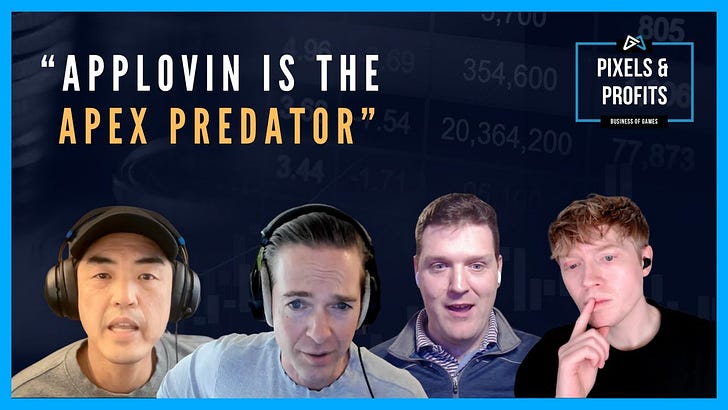
AppLovin Paradox: 82% Margins, Nervous Publishers, and What Breaks Next
AppLovin has emerged as a dominant force in the mobile gaming and ad-tech sectors, characterized by an exceptional 82% EBITDA margin and a market capitalization exceeding $250 billion as of late 2025.
- AppLovin achieved an 82% EBITDA margin last quarter and its stock is up 127% year-to-date, reaching a $250 billion market cap, indicating significant financial success.
- AppLovin maintains dominance by charging competing ad networks a 5% fee to bid on inventory while exempting itself, and by requiring publishers to use MAX to access its effective demand-side platform, Axon, which provides roughly half their user acquisition.
- AppLovin's revenue growth stems from increasing its 'take rate' (the value extracted from auctions) rather than winning more auctions, particularly as e-commerce advertisers flood in and pay premium prices without a proportional increase in publisher payouts.
AppLovin at $250B: What Operators Know That Investors Don't | Pixels & Profits
AppLovin has emerged as a dominant force in the mobile advertising landscape, characterized by a transition into a high-growth, software-as-a-service model that has driven a 127% year-to-date stock increase and EBITDA margins of 82%.
- AppLovin has achieved significant market dominance, with EBITDA margins reaching 82% and the stock rising 127% year-to-date to reach a $250 billion market cap.
- AppLovin has successfully expanded into e-commerce, recently surpassing Google Ads on Android in e-commerce ad performance during Black Friday.
- The company’s Axon 2 engine provides a significant competitive moat, as no other competitor currently possesses the infrastructure to scale at a comparable level.
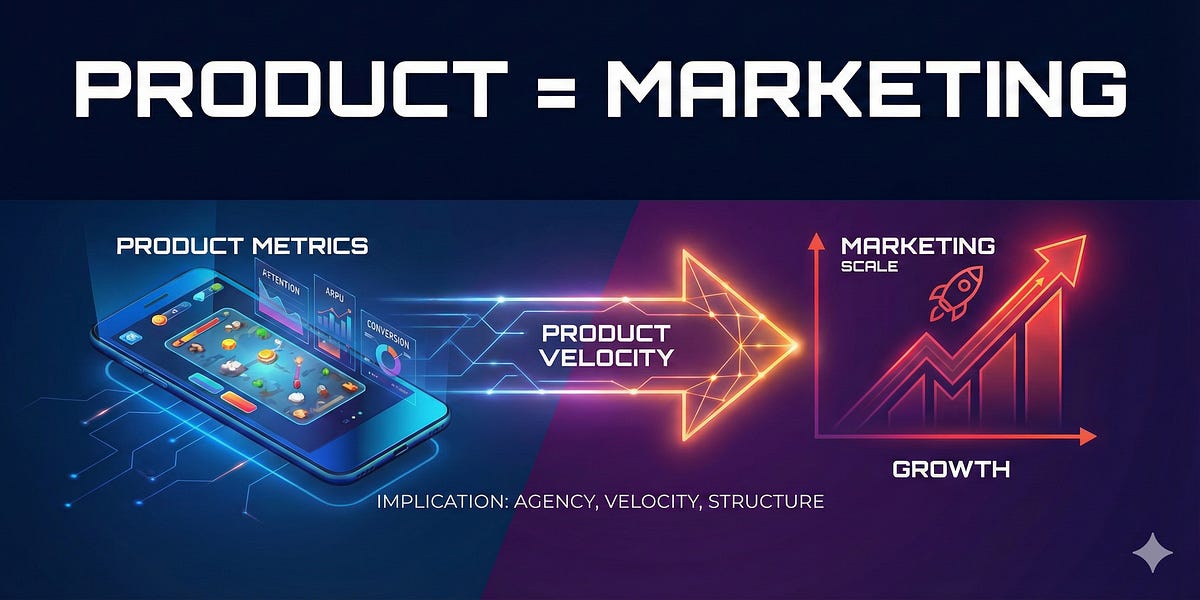
Product IS Marketing: The Brutal Truth of F2P Scale
In the free-to-play (F2P) mobile gaming sector, the traditional separation between product development and marketing is a strategic error.
- In free-to-play (F2P) mobile gaming, product metrics like retention, conversion, and Average Revenue Per User (ARPU) directly determine marketing budget and capability, unlike retail or premium games where marketing precedes product experience.
- Superior product metrics, specifically a higher Lifetime Value (LTV), enable greater marketing spend and scaling; for example, Game of War's LTV of $12-15 allowed it to outspend competitors like Kingdoms of Camelot (LTV $8-10).
- Product velocity is critical for F2P success, as rapid iteration and improvement of product metrics directly impact the speed at which marketing can scale; slow velocity, such as taking 42 days for product analytics, can lead to failure.

Your Validation Passed. Your Players Hated It. Here’s Why: MAG #10
The primary thesis of this analysis is that game development validation is an art rather than a science, requiring a strategic balance between creative intuition and data-driven feedback.
- Successful game validation is an art, not a science, requiring judgment to know when to trust a designer's taste versus player feedback.
- Many games fail despite positive player tests (focus groups, surveys, playtests) because studios optimize for existing ideas rather than discovering new ones.
- The 'Validation Pyramid' suggests that early in development (pre-production), vision should come from a single 'tastemaker' (designer/creative director), while later stages incorporate more player data for optimization.
India's $2B Gaming Reset: Where Banned RMG Money Flows Next
The Indian gaming market is undergoing a structural transformation following the August 2025 national ban on real money gaming (RMG), which previously accounted for 98% of the country's gaming revenue.
- India's August 2025 ban on Real Money Gaming (RMG) redirected an estimated $2 billion in annual gaming spend, with 140 million paying gamers shifting from skill-based gambling to free-to-play (F2P) entertainment.
- The digital gaming market in India (excluding RMG) is projected to grow from $1.9 billion in FY25 to $4.3 billion by FY30, representing an 18% CAGR, while the total Gaming and Interactive Media market is expected to reach $7.8 billion by FY30 at a 26% CAGR.
- India's gaming market benefits from strong macro tailwinds including a median age of 29, 835 million internet users (projected to reach 1.12 billion by FY30), the lowest mobile data costs globally ($0.15 per GB), and high smartphone usage averaging 5 hours per day.
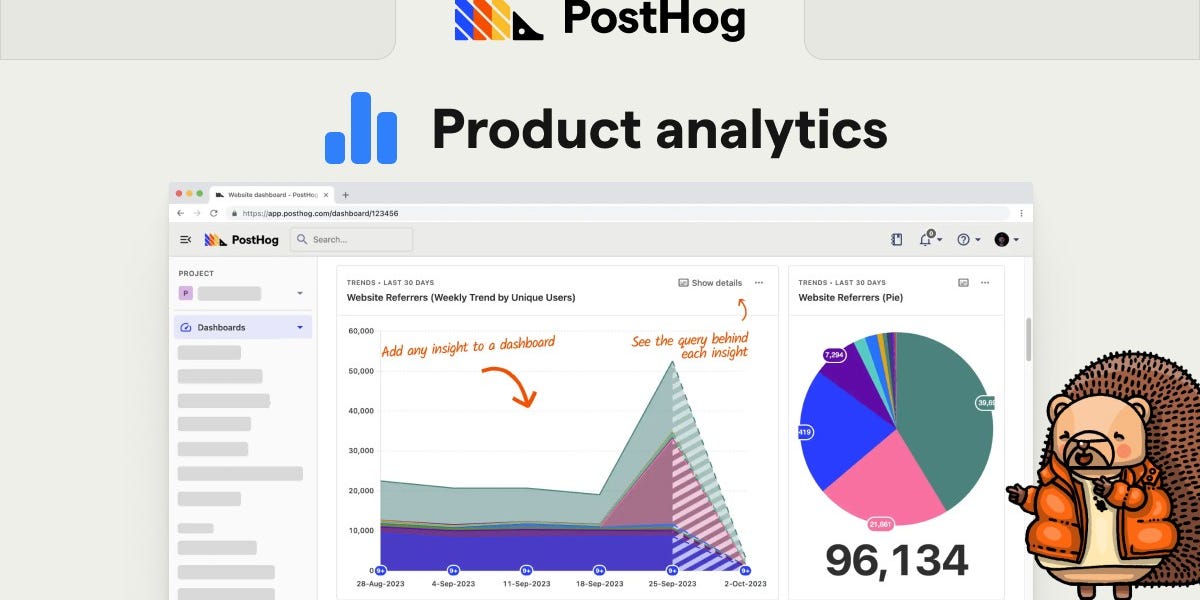
The New Meta for Product Analytics
The game analytics landscape is undergoing a fundamental transition as studios move away from rigid, vendor-locked software development kits toward warehouse-native architectures.
- The traditional tiered approach to game analytics (free for indies, SDK vendors for medium studios, custom for large studios) is now obsolete due to new warehouse-native technologies.
- PostHog is presented as a 'new meta' solution, offering an all-in-one platform for analytics, A/B testing, feature flags, and session replay, with true pay-as-you-go pricing (typically $100-700/month) that avoids contracts and sales calls.
- Traditional SDK analytics vendors like Amplitude, Mixpanel, CleverTap, and Braze typically cost $1,000-3,000+/month for growth-stage studios, often require annual contracts based on traffic estimates, and can incur significant overage charges.