
GameMakers
F2P product management, game design, and monetization strategy by Joseph Kim.
Documents

Why Your Game Studio's Organizational Structure Is the Real Problem: Not Your Talent
Organizational structure, rather than a lack of individual talent, is the primary driver of inefficiency and failure in modern game studios.
- Traditional game studio structures, organized by craft silos (e.g., separate design, engineering, art departments), create significant friction, leading to endless iteration, communication breakdowns, and features that miss their mark.
- The core problem in many game studios is organizational structure, not a lack of talent; optimizing for craft silos instead of outcomes leads to inefficiencies where handoffs lose fidelity and original intent.
- An 'outcome team' framework, consisting of small (5-9 people), cross-functional units with clear missions, success metrics, and authority, significantly outperforms traditional specialized departments, reducing iteration timelines from 6-12 months to 2-4 months.
Game Dev Teams Are Broken. Here's the Structure That Actually Works.
Modern game development frequently suffers from structural friction, where traditional craft-based silos impede progress and dilute creative intent.
- Studios should reorganize into autonomous, cross-functional teams of five to fifteen members to reduce communication overhead and accelerate iteration.
- Teams should be structured around specific product outcomes, such as combat mechanics or meta-systems, rather than traditional craft-based silos or task lists.
- Guilds must be established to facilitate cross-team knowledge sharing and maintain quality control while individual units operate with autonomy.

UCLA's Miracle & Battlefield's 7M Sales: The Leadership Alpha No One Talks About
The primary thesis of this analysis is that effective leadership and organizational structure serve as the most critical, high-leverage variables in game development, capable of reversing project failures and driving commercial success.
- Battlefield 6 sold over 7 million units in its first 3 days, achieving 747K peak concurrent users on Steam (4x the previous franchise record) and demonstrating a successful redemption story for Western AAA games.
- Effective leadership is identified as the most powerful variable in game development, capable of transforming failing teams into high-performance units and turning disasters into record-breaking launches.
- The turnaround of UCLA Football from a 0-4 record to 3-0 after a mid-season coaching change illustrates that leadership and strategy, not just personnel, can dramatically alter team performance.
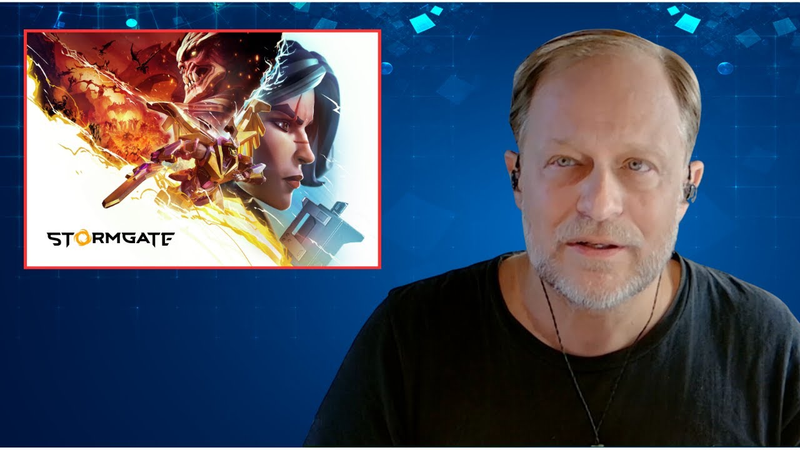
Is RTS Really Dead? How It Comes Back (Tim Morten StarCraft 2, StormGate)
The real-time strategy (RTS) genre maintains a dedicated and stable core audience, though it has been eclipsed in total market share by genres such as multiplayer online battle arenas (MOBAs) and battle royales.
- The core audience for the real-time strategy (RTS) genre remains passionate and has not diminished, but the genre has been eclipsed in total player count by massive genres like MOBA and Battle Royale.
- Achieving growth for the RTS genre beyond its current niche requires significant innovation, with social play identified as a primary, yet difficult-to-execute, growth strategy.
- Frost Giant’s development of Stormgate faced scope challenges that forced the team to prioritize core gameplay modes over the intended social and co-op experiences.

Exposing the EA-Saudi Deal: Why the $55B LBO Breaks Every Private Equity Rule
The acquisition of Electronic Arts (EA) by Saudi Arabia’s Public Investment Fund (PIF) for $55 billion represents a fundamental departure from traditional private equity leveraged buyout (LBO) models.
- Saudi Arabia's Public Investment Fund (PIF) acquired EA for $55 billion, marking the gaming industry's largest-ever LBO, with the deal valued at 17-18x forward EBITDA, a discount to Activision's 20x multiple during its acquisition by Microsoft.
- EA's operational efficiency has been misjudged due to its conservative accounting practice of expensing all game development costs, unlike companies like Take-Two and Activision which capitalize some, making direct free cash flow per employee comparisons misleading.
- The deal is not a typical LBO focused on short-term cost-cutting; instead, it's driven by 'patient capital' from PIF, with Silver Lake and Affinity Partners holding minority equity stakes (20-30% of equity, ~10% of total enterprise value) primarily for optics and expertise.

Why Did EA Really Sell for $55B? The Truth Wall Street Missed (ft. Zynga's Former M&A Chief)
The acquisition of Electronic Arts by Saudi Arabia’s Public Investment Fund for $55 billion represents a strategic shift toward private ownership, designed to insulate the publisher from the volatility and short-term performance pressures of public markets.
- Saudi Arabia’s Public Investment Fund (PIF) acquired Electronic Arts for $55 billion to transition the company into a private entity, insulating it from the short-term performance pressures of public markets.
- The acquisition is a long-term strategic investment rather than a leveraged buyout, prioritizing transmedia expansion of EA’s sports intellectual property and growth in Asian markets over immediate operational restructuring.
- The deal aims to provide the capital stability necessary for long-term innovation and riskier development cycles that are typically stifled by quarterly earnings expectations.

STOP Making These 4 Ad Monetization Mistakes | A Guide to Higher CPMs
Game studios frequently experience stagnant revenue despite traffic growth due to inefficient ad stacks and hidden technical fees that erode net margins.
- Prioritize the net dollar amount received from ad networks over negotiated revenue-share percentages, as contracted splits often do not reflect actual payouts.
- Adopt in-app header bidding as the primary monetization strategy to reduce operational overhead, as it requires significantly less manual maintenance than traditional waterfall setups.
- Optimize ad frequency and placement based on the specific game genre and player journey rather than industry averages, as casual games can support higher ad loads than creative or lifestyle-focused titles.

Your Ad Revenue Is Leaking
The primary objective of this analysis is to provide game developers with a strategic framework for identifying and mitigating revenue loss within their ad monetization stacks.
- Hidden "tech fees" and other costs mean game developers often take home less than 50% of ad spend, even on 70/30 deals, indicating that net dollar amount, not just percentages, should be the focus.
- Effective ad monetization requires focusing on player experience metrics like Ad Engagement, Ad Session Length, and Impression Depth, rather than solely on ARPDAU and CPM.
- For new games, ad monetization strategy, including defining in-game ad formats and their impact on the game economy, must be established before selecting ad networks or mediation platforms.

The Economics of the EA Acquisition: Lessons in M&A for Game Executives
The acquisition of Electronic Arts by a Saudi Arabia-led consortium for $55 billion represents a landmark shift in the global gaming industry, marking the largest leveraged buyout in the sector's history.
- Electronic Arts was acquired for $55 billion by a consortium including Saudi Arabia’s Public Investment Fund, Silver Lake, and Affinity Partners, in the largest leveraged buyout ever, taking EA private with $20 billion in debt financing.
- The acquisition was driven by the buyer's interest in EA's IP, its potential for live services growth (especially in Asia where EA generates less than 15% of its revenue), and opportunities in transmedia and AI.
- EA's board sold due to stalled growth (-1% top-line in fiscal '25, 1% live services growth), franchise fatigue (e.g., Dragon Age: The Veilguard missing sales targets), and concentration risk, with over 50% of revenue from four franchises, including Ultimate Team's reliance on loot box mechanics facing regulatory risk.

The Localization Secret 90% of Game Devs Get Wrong
Expanding into global markets is a fundamental growth strategy for game developers, as English speakers represent only 18 percent of the global population.
- Only 18% of the global population speaks English, meaning English-only games ignore 80% of the potential player base.
- Localization requires more than just translation; it necessitates regional marketing, customer support, and community management to be effective in new markets.
- Technical preparation is critical, specifically ensuring that game fonts support non-Latin character sets like Japanese or Chinese hieroglyphs to avoid broken text rendering.

Delta Force's $6.5M Day: How They Crushed PUBG by 75% | MAG #5
The mobile gaming landscape recently witnessed a significant shift as the title Delta Force achieved a historic revenue milestone, outperforming the long-standing industry leader PUBG Mobile by 75% on September 20, 2025.
- Delta Force Mobile generated $6.48 million on September 20, outperforming PUBG Mobile by 75% ($3.68 million) on that day, marking the first time a mobile shooter significantly challenged PUBG's dominance.
- Delta Force's revenue spike to $6.5 million (a 6x increase from its average $1.1 million daily revenue) was driven by its first esports world championship, the Delta Force Invitational, which featured a $500k prize pool and sophisticated LiveOps.
- Despite having significantly fewer downloads and daily active users at launch compared to PUBG Mobile, Delta Force Mobile achieved higher initial revenue, indicating superior per-user monetization likely due to design and LiveOps.

Finding Alpha: How to Find Your Company's Secret Advantage!
In an era of increasing market uncertainty and intense competition, companies must move beyond mere tactical execution to identify and leverage "alpha"—the specific, company-level excess returns that differentiate a business from its industry peers.
- Companies must transition from micro-level operational tasks to macro-level strategic adaptation to generate 'alpha,' defined as company-level excess returns that differentiate a business from its peers.
- Success in the current mobile gaming market requires aligning internal structures and product philosophies with macro shifts, including the end of zero-interest-rate-fueled excess and the rise of the attention economy.
- Generating competitive advantage requires identifying and fully committing to high-leverage opportunities rather than hedging or pursuing half-measures.