1 free read left. Create a free account for unlimited reading + AI research.
Create free accountArticle GameMakers
1 free read left. Create a free account for unlimited reading + AI research.
Create free accountArticleGameMakers
The ban on real money gaming redirected approximately $2 billion in annual consumer spending toward free-to-play entertainment. 140 million paying gamers shifted from skill-based gambling to F2P entertainment.
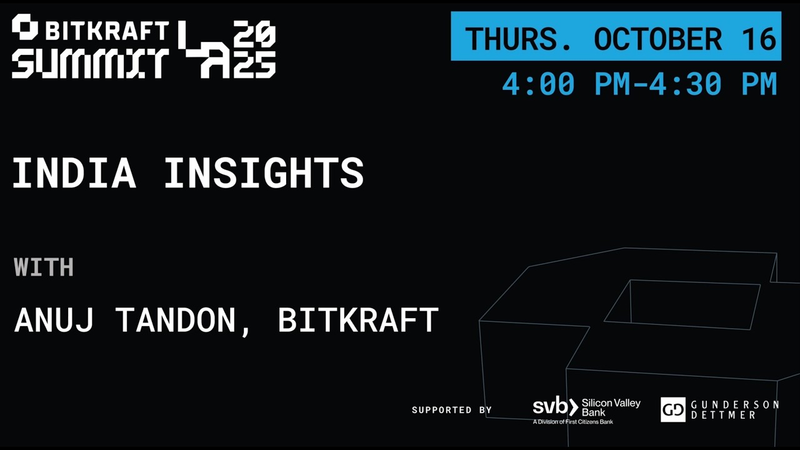
The Indian gaming market is undergoing a structural transformation following the August 2025 national ban on real money gaming (RMG), which previously accounted for 98% of the country's gaming revenue. Rather than signaling a decline, this regulatory shift is redirecting approximately $2 billion in annual consumer spending toward the free-to-play (F2P) sector. The market is projected to grow from $1.9 billion in fiscal year 2025 to $4.3 billion by 2030, representing an 18% compound annual growth rate.
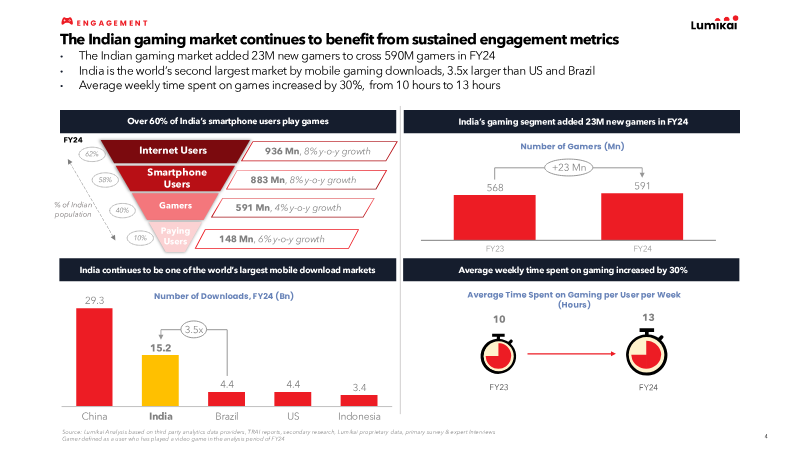
This transition is supported by strong macroeconomic tailwinds, including a young population with a median age of 29, 835 million internet users, and some of the lowest mobile data costs globally. Discretionary spending is rising, with household consumption now accounting for 61% of India’s GDP. Furthermore, the number of paying gamers has surged from 80 million in 2021 to 140 million in 2025, with projections reaching 230 million by 2030. These users possess established digital payment habits and daily gaming routines, facilitating a seamless migration from RMG to F2P entertainment.
While the current market remains heavily concentrated in Battle Royale titles, which capture 47% of revenue, this dominance indicates significant untapped potential for genre diversification. As average revenue per paying user (ARPPU) continues to climb—having increased ninefold since 2020—the industry is shifting toward mid-core and core gaming experiences. Both global and local developers are now positioned to capture this audience by prioritizing cultural relevance and localized content. With 80% of revenue for Indian studios already originating from overseas, the domestic talent pool is increasingly pivoting toward high-retention, progression-based titles, setting the stage for India to emerge as a significant global game development hub.

GameMakers · 2026

GameMakers · 2026

GameMakers · 2026

GameMakers · 2026

GameMakers · 2026

GameMakers · 2026
GameMakers · 2026
GameMakers · 2026

GameMakers · 2026

GameMakers · 2026
GameMakers · 2026

GameMakers · 2026

The Game Business · 2026