
GAMEHEARTS
EU Horizon Europe research project on the European videogame industry ecosystem and its links with other cultural and creative industries; BUas is a partner. It publishes its reports, policy briefs and guides openly on Zenodo under CC BY 4.0.
Documents



Qualitative Analysis of Games and Gamers
A two-year University of Salford study, part of the Horizon Europe-funded GAMEHEARTS project, examines how video games foster empathy through a bottom-up, qualitative approach combining surveys (a pilot of 20 and a main sample of 91), roughly 16 follow-up interviews, and case studies of titles including Disco Elysium, the…
- Empathy in games is not an inherent property of any game or genre; it emerges from the interplay between genre conventions, player expectations, and individual disposition, making it a situated and relational experience.
- Players often use empathetic play as a mode of self-reflection: on a first playthrough many aim for the 'best' or 'good' ending because it signals personal integrity, so empathy functions as a way of understanding oneself as well as others.
- Games explicitly designed to foster connection, such as Gone Home, do not guarantee empathic engagement; one participant liked the game but did not connect with it at the level the designers intended.



Games, Heritage, Arts, & Sport: Key Research Findings and Strategic Recommendations from the GAMEHEARTS Project
The GAMEHEARTS project, funded under the European Union's Horizon Europe programme, examines the economic, social, and cultural value of the European video game industry ecosystem (EVGIE) and its relationships with the cultural and creative industries (CCI).
- The GAMEHEARTS project, funded under Horizon Europe, combined a literature review, a survey of 127 European video game developers, 27 in-depth interviews, focus groups, and design thinking marathons involving 72 participants across 12 working teams over an 18-month research period.
- Survey respondents rated collaboration among game developers within the European video game industry ecosystem as low, and collaboration with cultural and creative industry sectors as very low.
- Developers rated their own innovativeness as generally modest, with behavioural innovativeness scoring highest and shown to strongly influence success, while co-innovation relationships correlate positively with innovativeness.
A Guide for Parents of Young Gamers
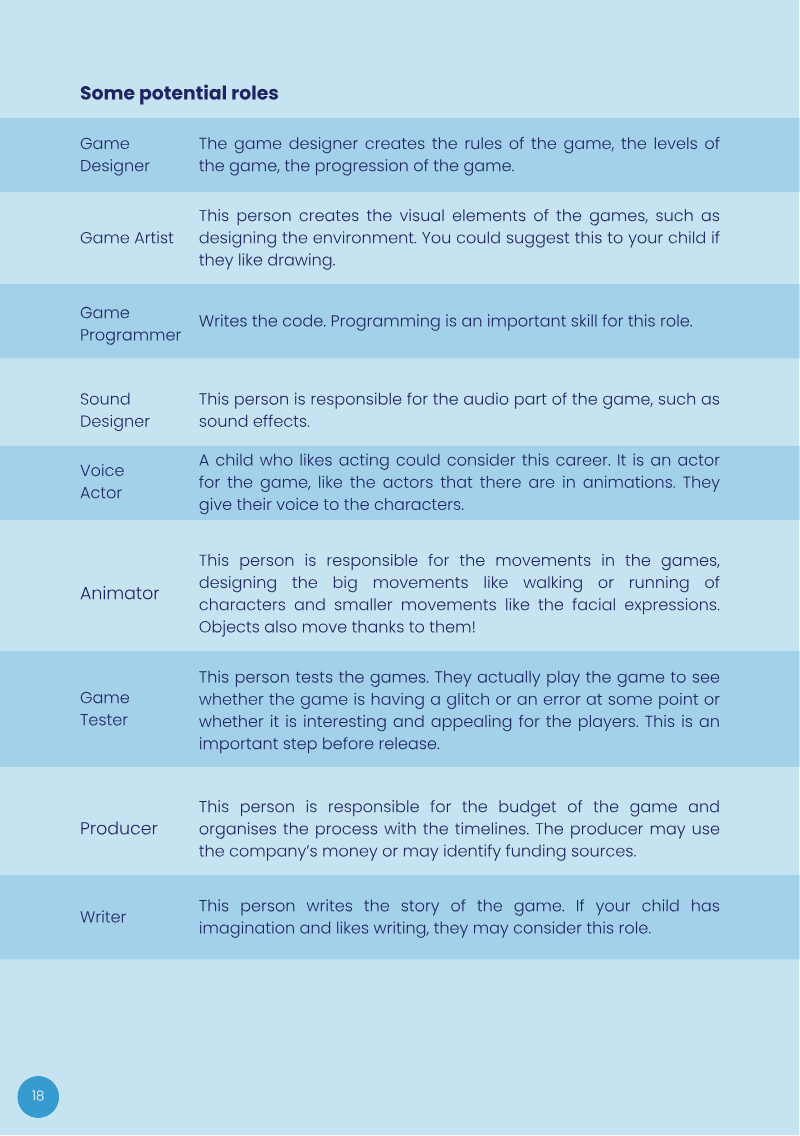
Produced by the GAMEHEARTS project at the University of Vienna in June 2026, this guide aims to help parents of young gamers weigh the benefits and risks of videogames while prioritising child safety, and it deliberately refrains from endorsing or opposing gaming.
- Most young Europeans play videogames: 69% of 6–10-year-olds, 85% of 11–14-year-olds, and 83% of 15–24-year-olds, according to Video Games Europe (2025) data cited in the guide.
- The guide treats gaming as neither wholly good nor bad, citing research linking play to cognitive, wellbeing, creativity, and collaboration benefits while flagging cyberbullying, hate speech, inappropriate content, and monetisation tactics such as loot boxes as risks.
- Core parental safeguards include checking PEGI ratings and content descriptors, co-playing with children, configuring parental controls, disabling in-app purchases, and protecting personal data through pseudonyms and caution about online contacts.
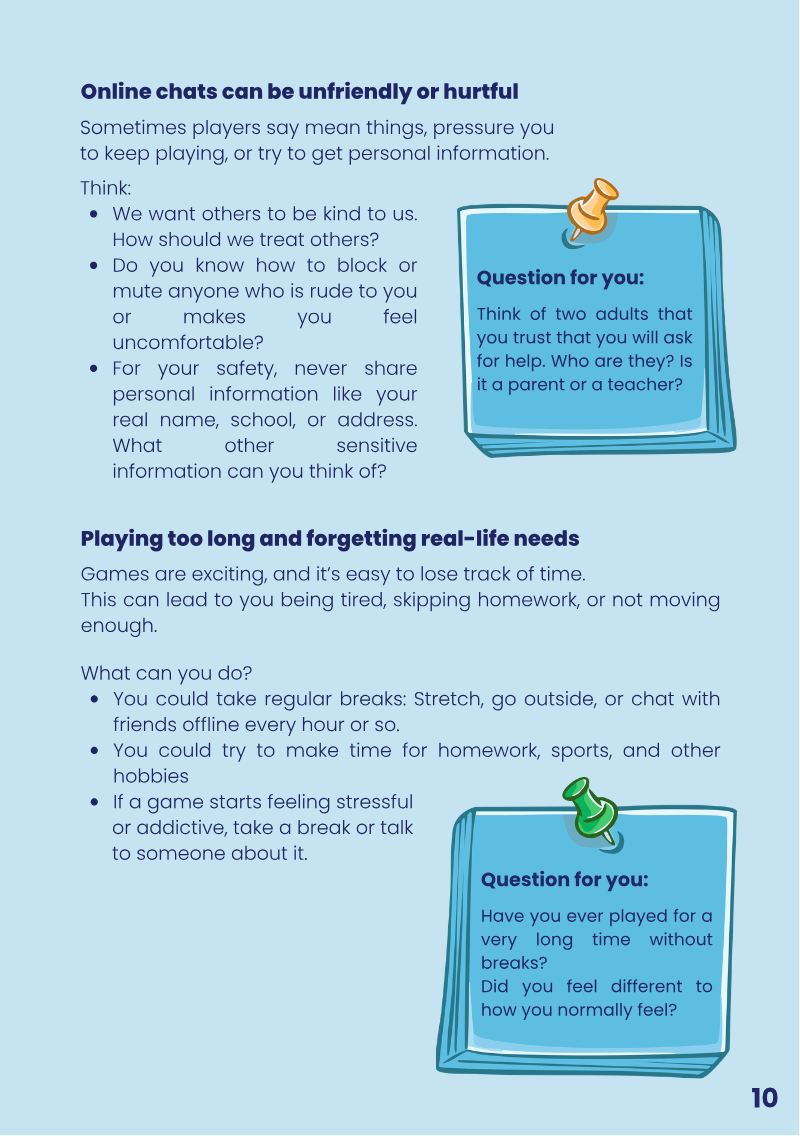

A Guide for Kids Who Love Video Games
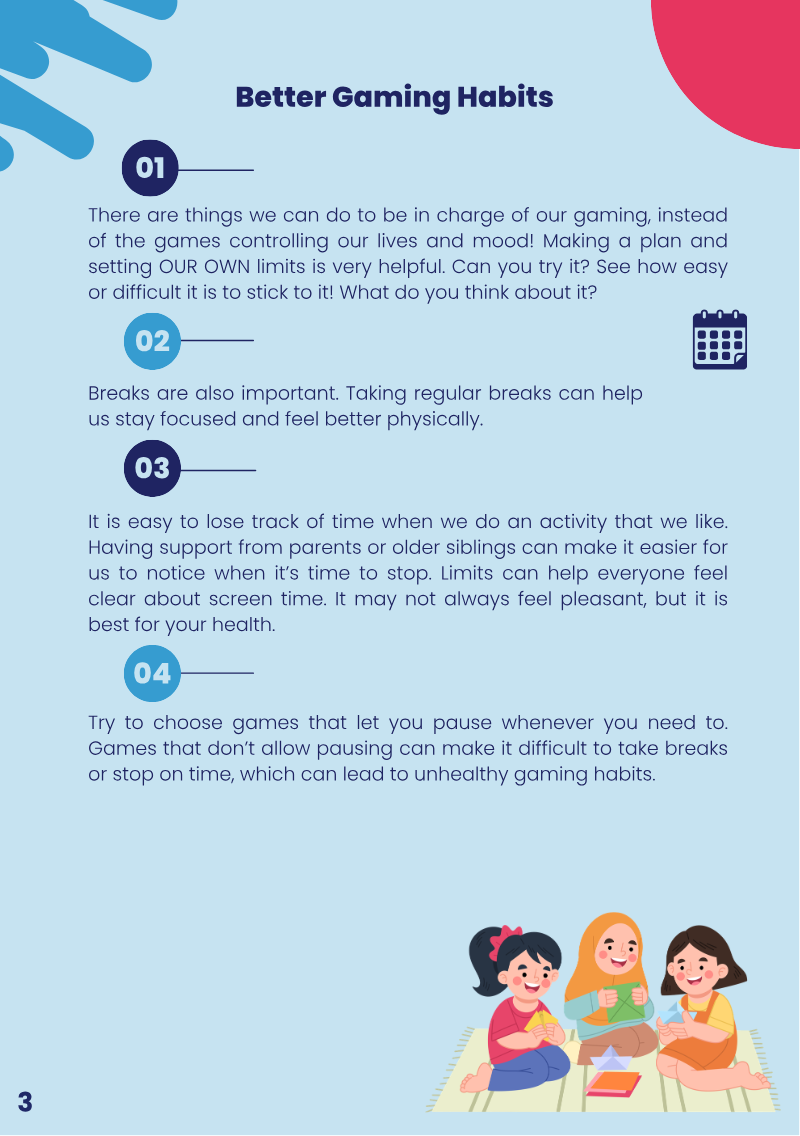
"A Guide for Kids Who Love Video Games" is an educational resource for young children who play video games, produced by the Media Governance Lab at the University of Vienna as part of the EU-funded GAMEHEARTS project under Horizon Europe.
- The guide, produced by the University of Vienna's Media Governance Lab under the EU-funded GAMEHEARTS project (Horizon Europe), aims to get children to reflect on their gaming habits in a curious, non-judgmental way rather than imposing rules.
- It covers practical safety and wellbeing topics: self-chosen time limits and regular breaks, games with pause functions and appropriate PEGI age ratings, protecting personal information, distinguishing online acquaintances from real friends, and recognizing signs of unsafe contact.
- It warns about monetization risks, especially loot boxes, which it likens to slot machines, and advises children to consult a trusted adult before making in-game purchases.
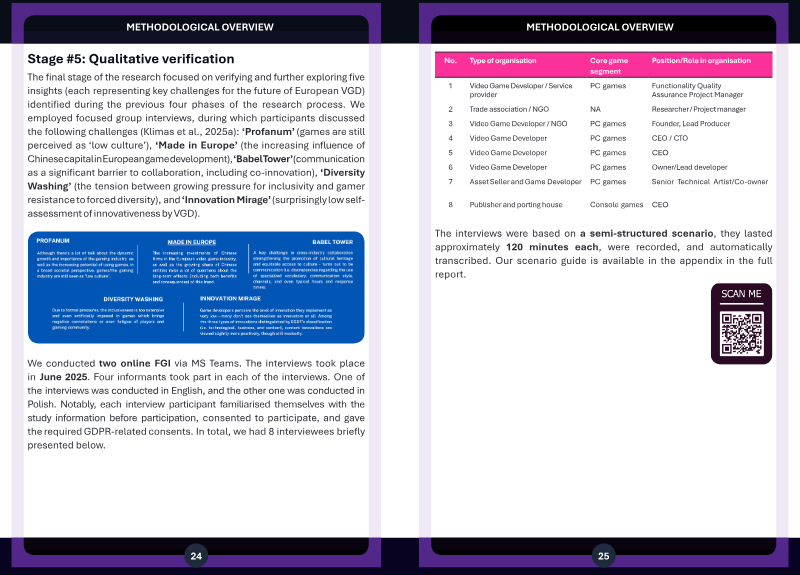
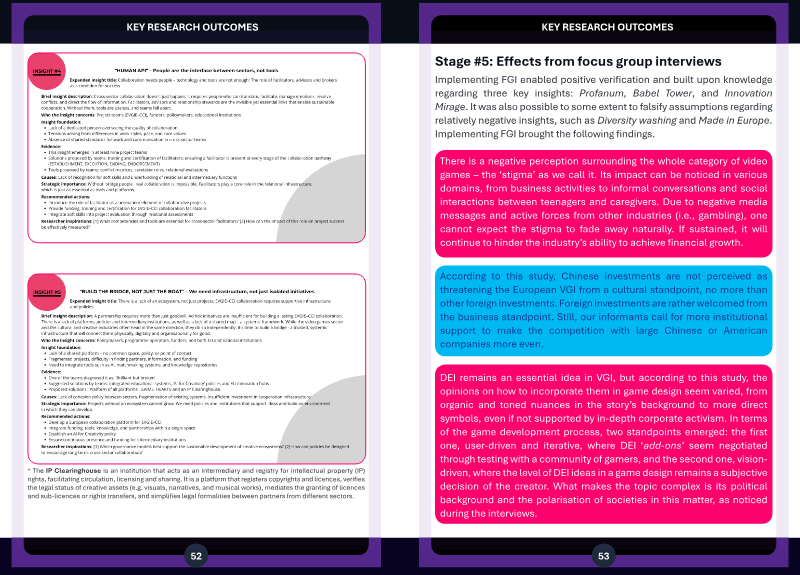
Connecting Creative Sectors to Unlock Europe's Gaming Potential: Strategic Recommendations for Europe's Creative Economy
The GAMEHEARTS study, an EU-funded project running from 2024 to 2026, examines how cooperation within Europe's video game industry ecosystem and with other cultural and creative industries can unlock economic and cultural value.
- Cross-industry collaboration between games and other CCIs is hampered by six structural tensions: pace and rhythm of work, motivations, communication style, decision-making structure, visibility of outcomes, and definitions of success (e.g., agile, scalable, market-driven games versus stable, planned, culturally motivated museums and heritage bodies).
- Twelve key success factors for sustainable cross-industry partnerships were identified, including a shared vision and common language, cross-sector translators and facilitators, transparent collaboration frameworks, equal trust-based partnerships, and long-term relationship building.
- The regulatory environment for video games is fragmented and lags behind industry dynamics, with conflicting national and international rules and unclear IP licensing pathways, leading the authors to call for swift, transparent, EU-harmonised legislation and coherent EU-wide tax reliefs.
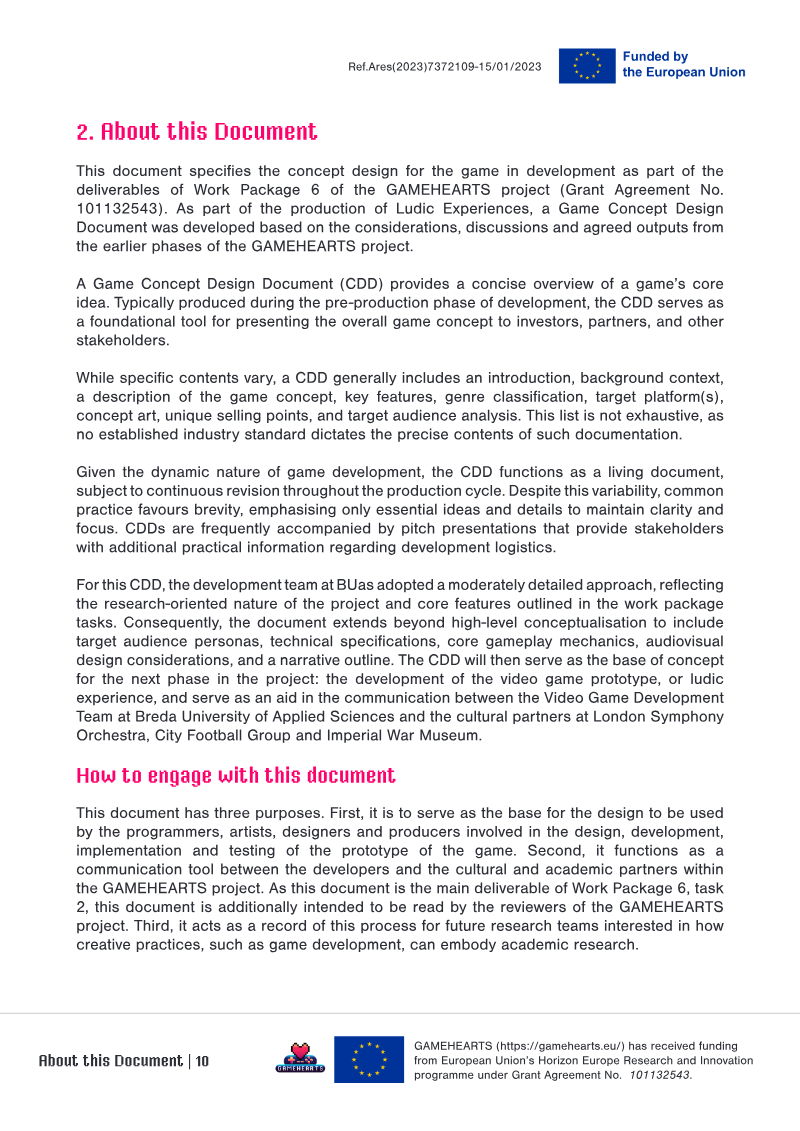
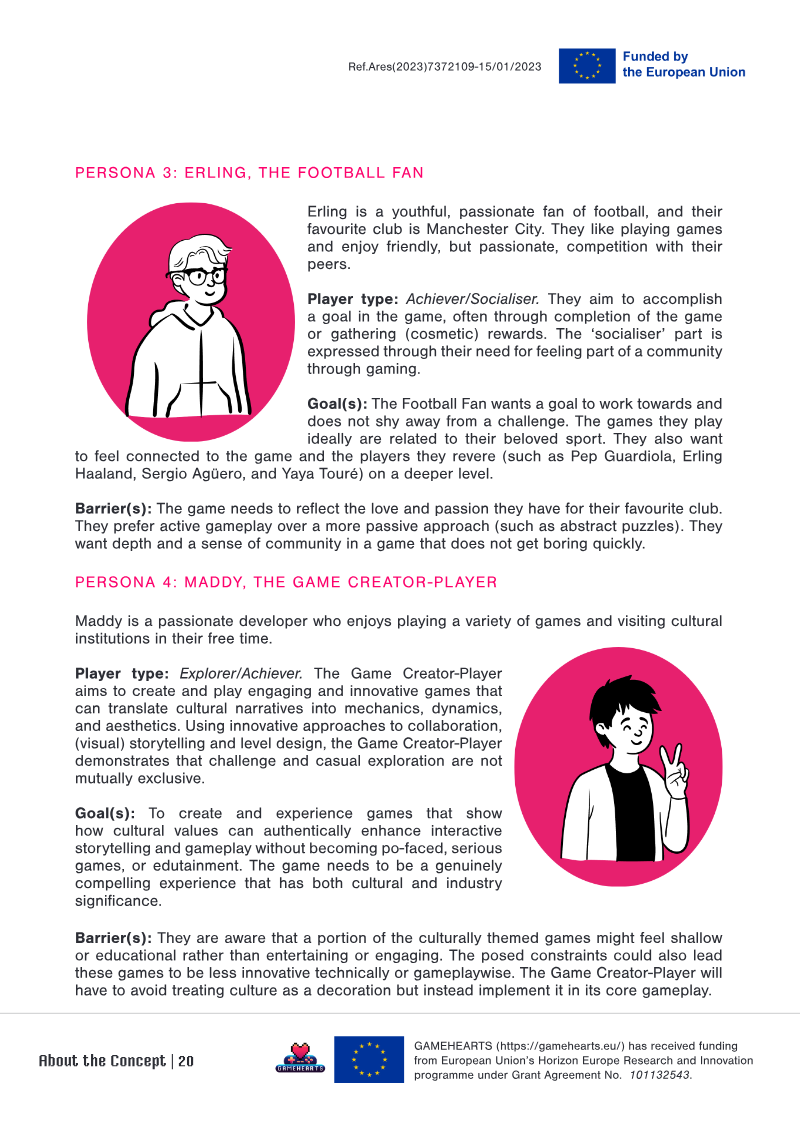
GAMEHEARTS Concept Design Document
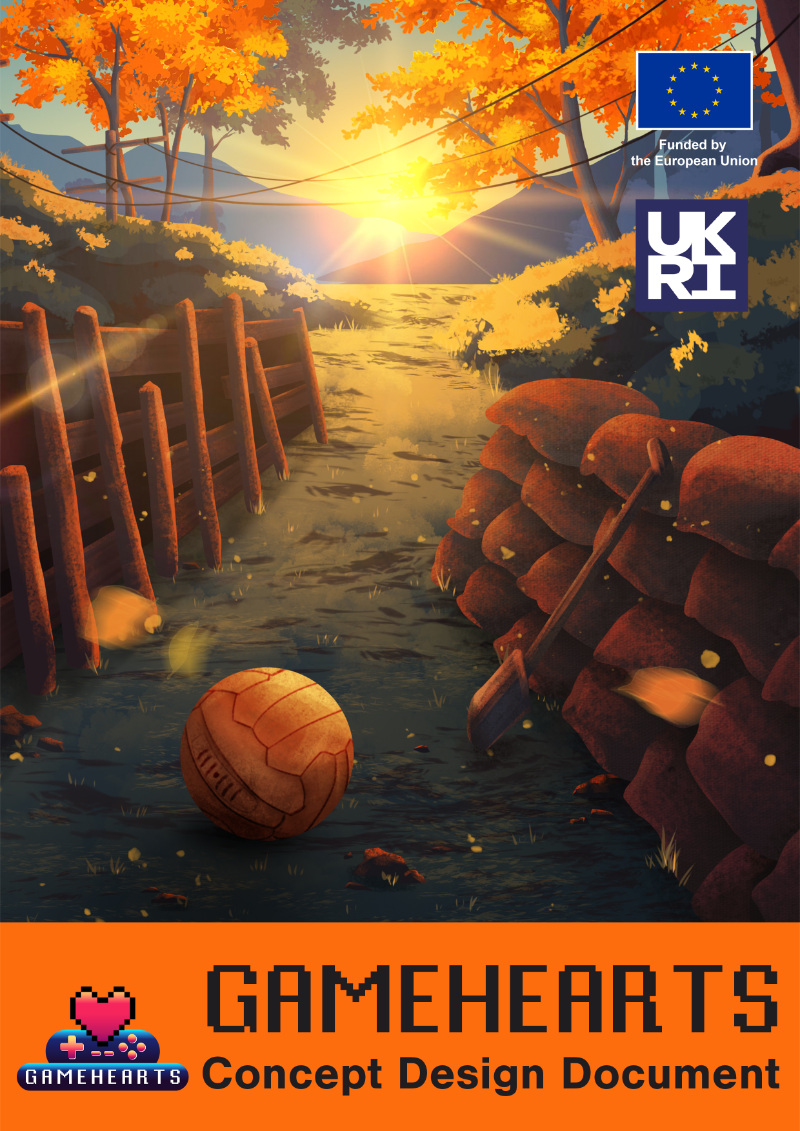
The GAMEHEARTS Concept Design Document, a deliverable of Work Package 6 under Horizon Europe project 101132543, sets out an agreed concept for a wordless rolling-ball environmental adventure developed through collaboration among five universities, Ubisoft, and three cultural partners: the Imperial War Museum, the London…
- GAMEHEARTS is a Horizon Europe project (101132543) Work Package 6 deliverable defining a concept for a wordless, single-player PC rolling-ball environmental adventure built in Unreal Engine 5 with a hybrid 2D/3D art style and orchestral audio.
- The concept was developed by five universities, Ubisoft, and three cultural partners: the Imperial War Museum, the London Symphony Orchestra, and City Football Group.
- The game is set in semi-realistic wartime Europe, following a football seeking reunion with its family through a three-act narrative, with core mechanics of movement, inflation and deflation, chiming, and rhythm and puzzle systems.
From Research to Action: 18 Months of Research on the Video Games Industry Ecosystem & Strategic Recommendations for Practitioners
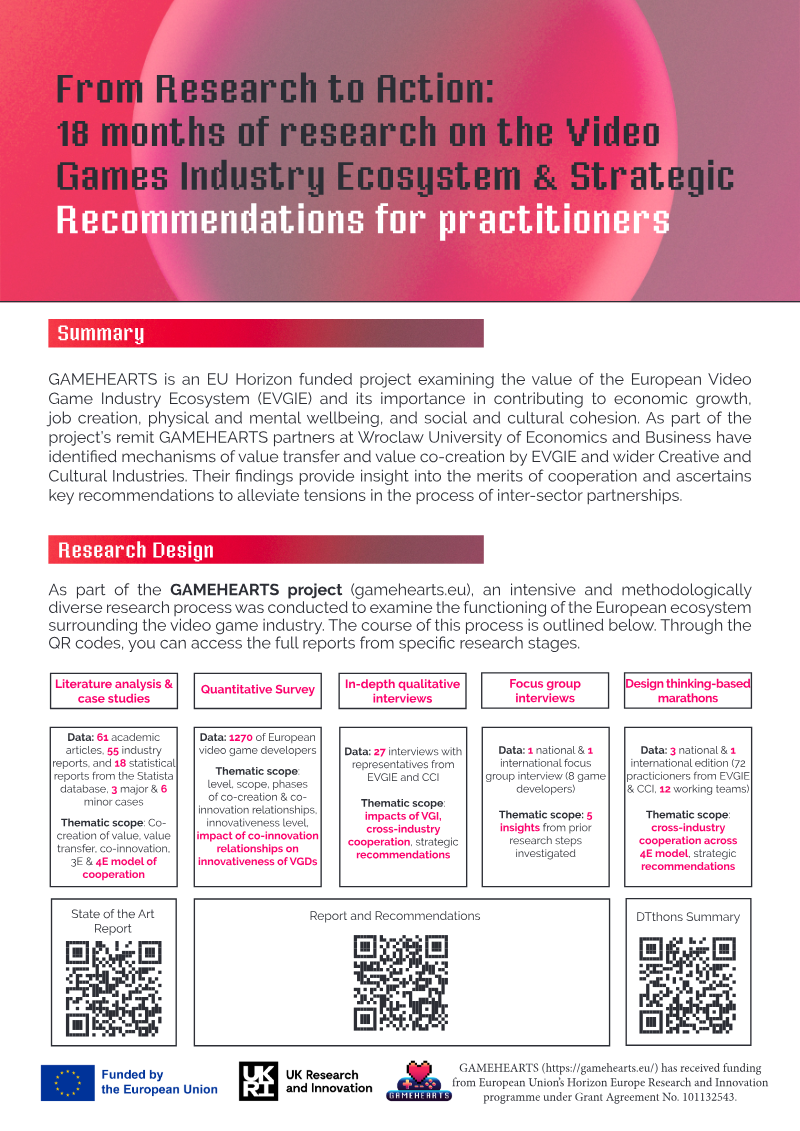
The GAMEHEARTS project, an EU Horizon-funded initiative, examines the value of the European Video Game Industry Ecosystem (EVGIE) and its contributions to economic growth, job creation, physical and mental wellbeing, and social and cultural cohesion.
- The GAMEHEARTS project, an EU Horizon-funded initiative led in part by Wroclaw University of Economics and Business, examines how the European Video Game Industry Ecosystem (EVGIE) contributes to economic growth, job creation, wellbeing, and social and cultural cohesion, and how value transfers and co-creates with the wider Creative and Cultural Industries (CCI).
- The research combined a literature analysis of 61 academic articles, 18 statistical reports, and Statista data with a quantitative survey of 1,270 EVGIE and CCI respondents, 27 in-depth interviews, focus groups with 55 developers, and design-thinking case studies over roughly eighteen months.
- The headline recommendation is strategic cooperation at intra-industry, cross-industry, and intra-ecosystem levels, backed by a proactive, open-minded approach that counters silo thinking and accounts for differing business goals and organisational cultures.

Videogame for EDI
"Uncommon Ground" is a browser-based, cooperative strategy game developed under the GAMEHEARTS project, a Horizon Europe initiative (Grant Agreement No. 101132543) examining the economic, social, and cultural value of Europe's video game ecosystem.
- "Uncommon Ground" is a browser-based, cooperative strategy game built under the Horizon Europe GAMEHEARTS project (Grant Agreement No. 101132543), aimed at building social, cognitive, and emotional competencies in young people through face-to-face play.
- The game's design is grounded in the Positive Youth Development "5 Cs" framework (competence, confidence, connection, character, and caring), with mechanics mapped to these dimensions as intended design logic rather than empirically validated outcomes.
- Five players control stranded alien characters who must share resources, complete task cards, and reach unanimous group decisions across three phases: Survive, Rebuild, and Escape.

GAMEHEARTS D3.3 Report & Recommendations for VGD
The GAMEHEARTS D3.3 report examines how European video game developers can strengthen value co-creation and co-innovation, both within the European video game industry ecosystem (EVGIE) and with other cultural and creative industries (CCI).
- The GAMEHEARTS D3.3 report synthesises a desk review of 61 academic papers, 55 industry reports, 18 statistical reports and 9 case studies, plus a European survey of 1,270 video game developers and 27 in-depth interviews, to assess cooperation between the video game industry ecosystem (EVGIE) and the cultural and creative industries (CCI).
- The survey found that co-creative innovation relationships between video game industry entities and entertainment entities have a positive and significant effect on the innovativeness of video game developers, verifying earlier findings from the Polish sector.
- Co-innovation collaboration is used very little or even marginally in three of the four innovation-related phases of the 4E model, indicating that cross-sector partnerships remain shallow across most of the innovation process.
D6.1 State-of-the-Art Report 3
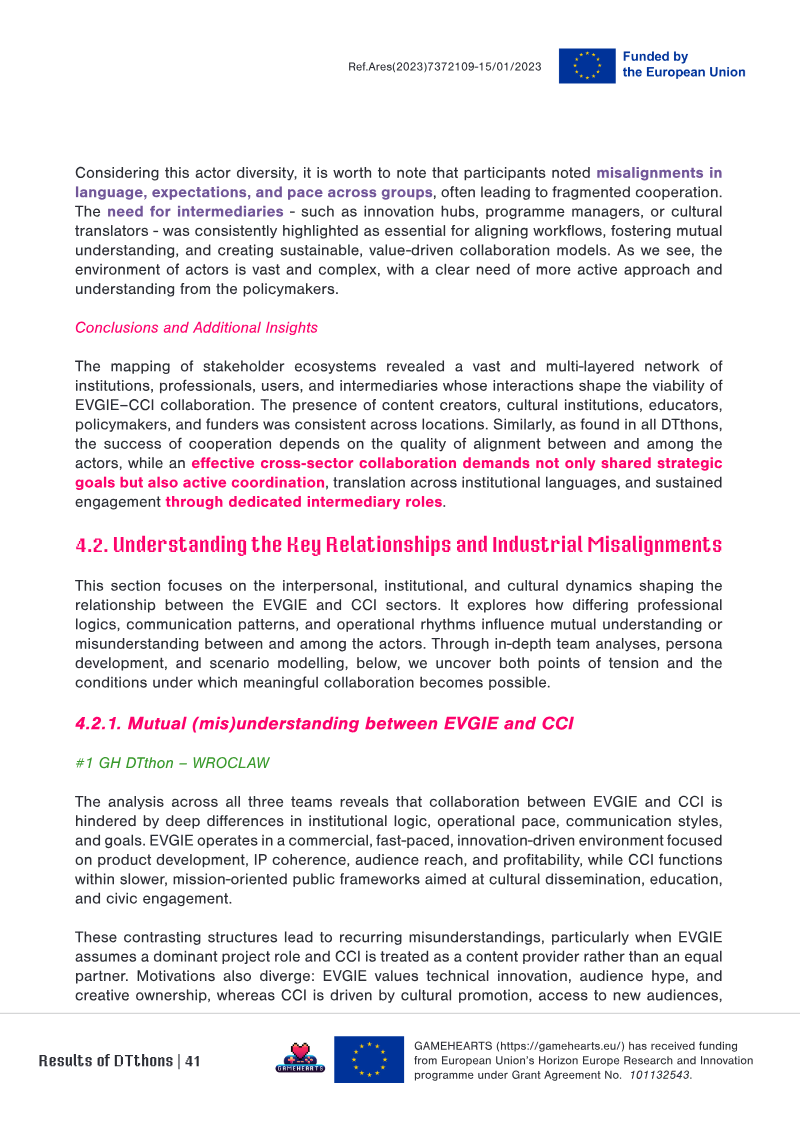
GAMEHEARTS State-of-the-Art Report 3 examines how video games, gamification, and immersive digital technologies are reshaping engagement across three cultural sectors: museums, classical music, and football.
- The COVID-19 pandemic accelerated digital adoption across museums, classical music, and football, and many of these strategies have persisted into long-term practice, creating both opportunities and unresolved challenges for attracting younger audiences.
- Gamified and interactive museum experiences, such as the V&A's Videogames: Design/Play/Disrupt exhibition and the Imperial War Museum's Enigma display, can boost engagement, informal learning, and collaboration, but results are uneven: some game exhibitions underperformed attendance expectations, and some digital tools proved unreliable or inauthentic.
- Persistent issues of accessibility, device dependence, and maintenance cost temper enthusiasm for museum digital tools, and the authors conclude that interactivity must be balanced against credibility and educational integrity.
DTthons Summary
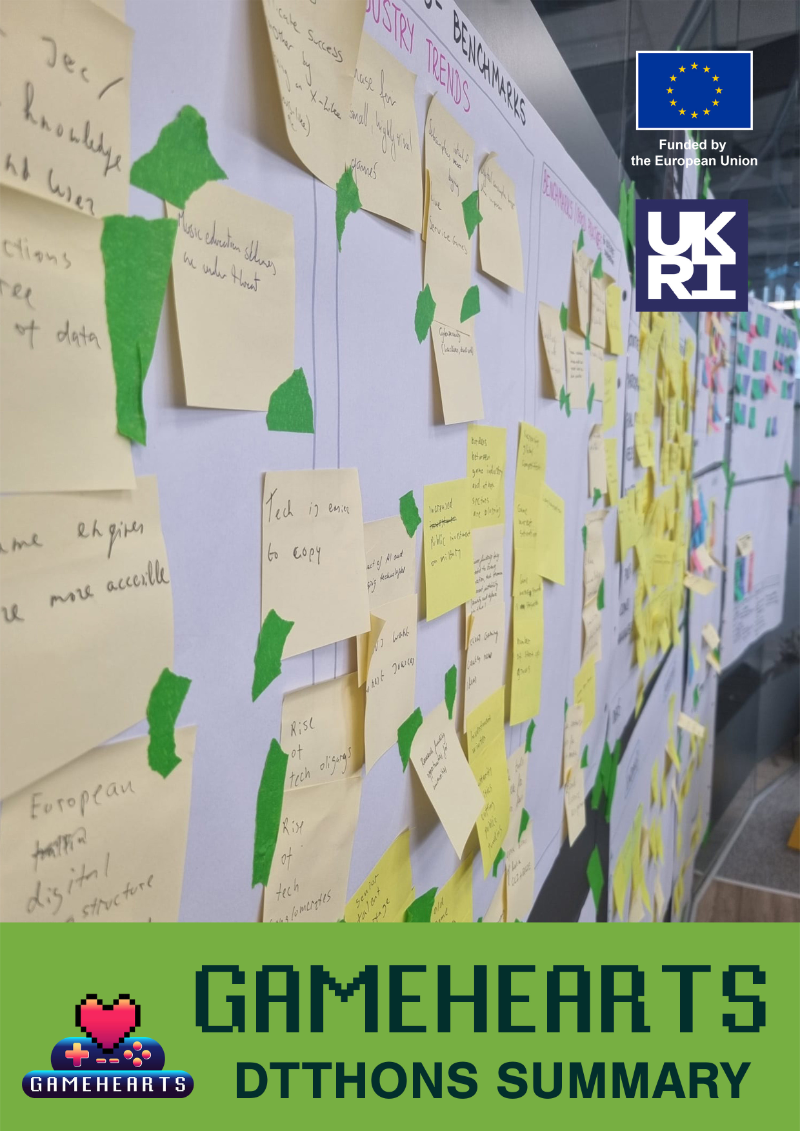
The GAMEHEARTS D3.2 "DTthons Summary" reports on four three-day Design Thinking Marathons (DTthons) held between February and April 2025 in Wrocław, Warsaw, Katowice, and an international edition in Wrocław, bringing together 72 practitioners from the European video game industry ecosystem (EVGIE) and the wider cultural and…
- The report's central finding is that cross-industry cooperation between the European video game industry ecosystem (EVGIE) and the wider cultural and creative industries (CCI) is "fragmented but fertile": creatively promising but largely conducted in parallel and structurally fragile.
- The Ending and especially the Endorsement phases of projects are almost entirely neglected, so pilots often close without evaluation, follow-up, promotion, or institutional learning and risk dissolving.
- Participants across teams identified recurring barriers including rigid public procurement, mismatched workflows and timelines, sector stereotypes, unclear intellectual property terms, and weak funding and onboarding mechanisms.


GAMEHEARTS D5.2 State-of-the-Art Report 2
This report synthesizes a systematic literature review, conducted under the PRISMA 2020 protocol, examining how gamification intersects with equity, diversity, and inclusion (EDI).
- A PRISMA 2020 systematic review screened 1,101 records and included 20 studies on gamification and equity, diversity, and inclusion (EDI), with education as the dominant setting and health second.
- Gender-specific tailoring is the most common equity focus, with five studies addressing binary gender differences, while groups such as ethnic and socioeconomic minorities remain under-researched.
- Achievement mechanics such as points, leaderboards, and badges appear in all 20 studies and are the most frequently used design approach, whereas social and immersive mechanics receive comparatively little attention.