1 free read left. Create a free account for unlimited reading + AI research.
Create free accountReport GAMEHEARTS
1 free read left. Create a free account for unlimited reading + AI research.
Create free accountReportGAMEHEARTS
The study reviewed academic papers, industry and statistical reports and case studies.
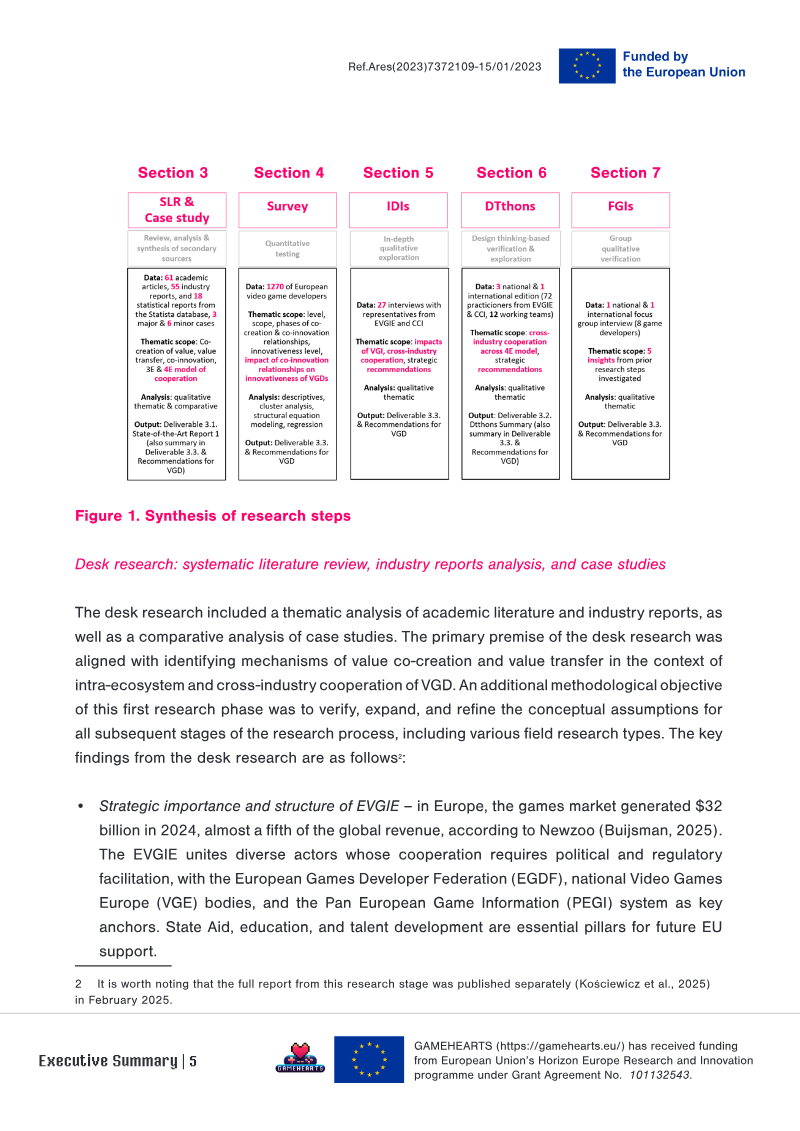
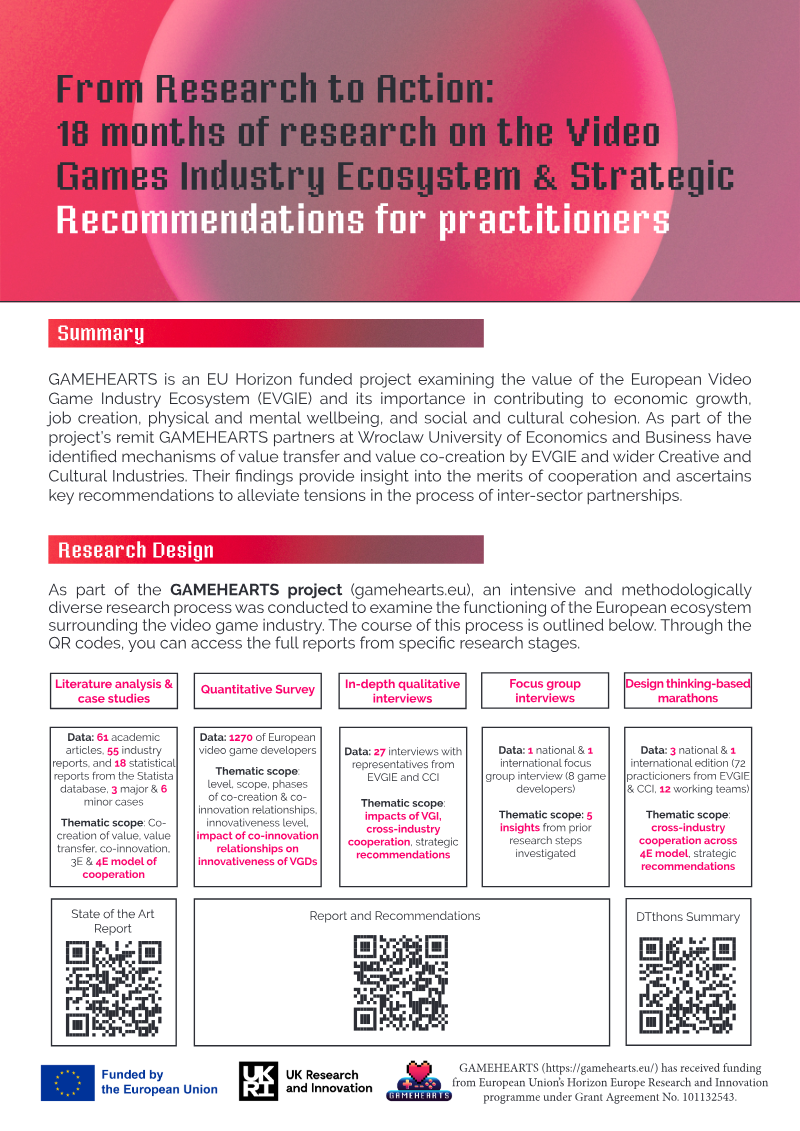
The GAMEHEARTS D3.3 report examines how European video game developers can strengthen value co-creation and co-innovation, both within the European video game industry ecosystem (EVGIE) and with other cultural and creative industries (CCI). Its central thesis is that such cooperation positively affects developers' organisational innovativeness, yet that cooperation remains limited, fragmented, and largely one-directional in practice. The research combined a literature and industry-report review, case studies, a survey of 1,270 developers across 29 countries, 27 in-depth interviews, four design-thinking marathons with 72 practitioners, and two focus groups, and it closes with strategic recommendations aimed at developers, policymakers, and cultural partners.
The quantitative findings show that co-creation and co-innovation relationships are generally modest, with cooperation with cross-industry partners averaging below the scale midpoint. Developers engage most with core industry actors and players, while institutional and cultural partners receive low ratings. Structural modelling indicates a strong positive path from co-innovation to organisational innovativeness, though the explanatory power of the model is low and fit is only acceptable. Developers rate their own behavioural innovativeness highest and product innovativeness lowest, a result the authors partly attribute to a difficult market context.
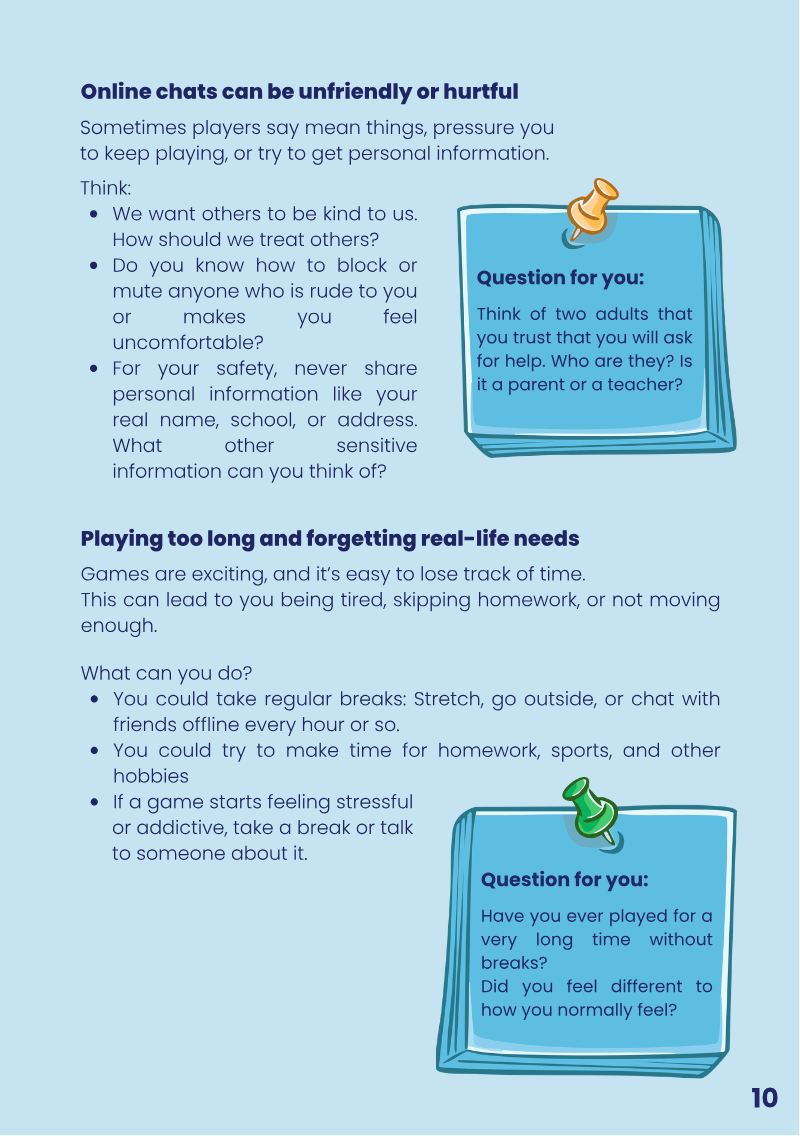
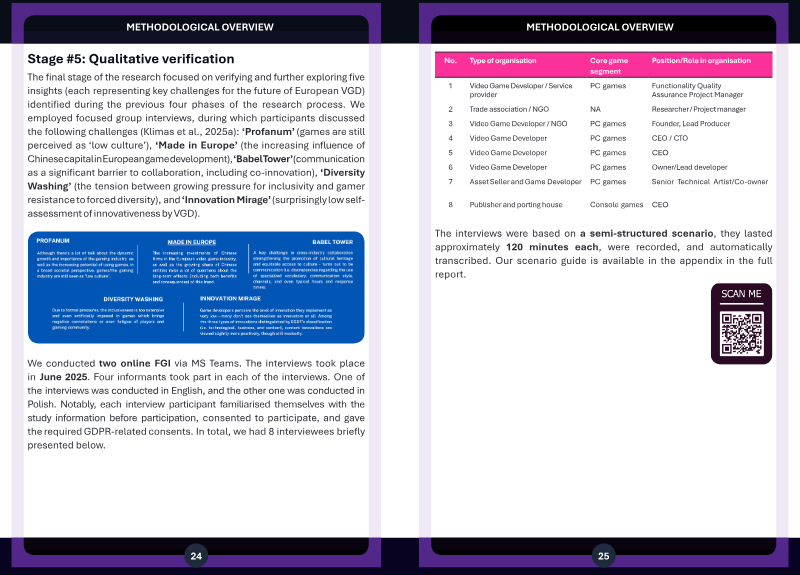
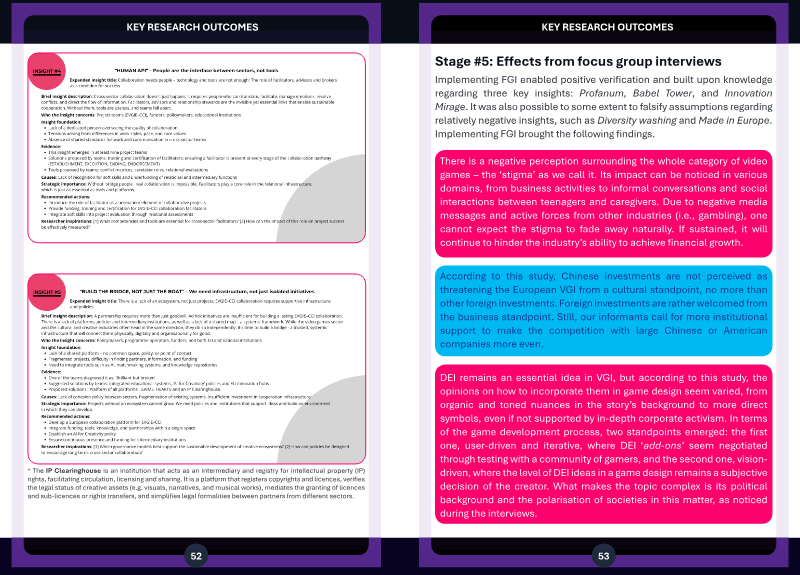
The qualitative work identifies recurring barriers: the perception of games as "low culture," a lack of shared language and matchmaking between sectors, fragmented funding, unclear and sometimes conflicting regulation, and a failure to sustain partnerships after project funding ends. The authors also highlight risks to Europe's position, including foreign ownership by Chinese investors and dependence on non-European AI infrastructure, alongside concerns about "diversity washing" and game addiction. They propose a four-phase cooperation model (Establishment, Execution, Ending, Endorsement), with the Endorsement phase, facilitation, and aftercare treated as core strategic infrastructure, and they call for systemic funding, dedicated intermediaries, heritage preservation, and sovereign AI capacity.



GAMEHEARTS · 2026



GAMEHEARTS · 2026

GAMEHEARTS · 2026

GAMEHEARTS · 2026
GAMEHEARTS · 2026
GAMEHEARTS · 2026
GAMEHEARTS · 2025

GAMEHEARTS · 2025
GAMEHEARTS · 2025
GAMEHEARTS · 2025


GAMEHEARTS · 2025
GAMEHEARTS · 2025

The Game Business · 2026