1 free read left. Create a free account for unlimited reading + AI research.
Create free accountReport GAMEHEARTS
1 free read left. Create a free account for unlimited reading + AI research.
Create free accountReportGAMEHEARTS
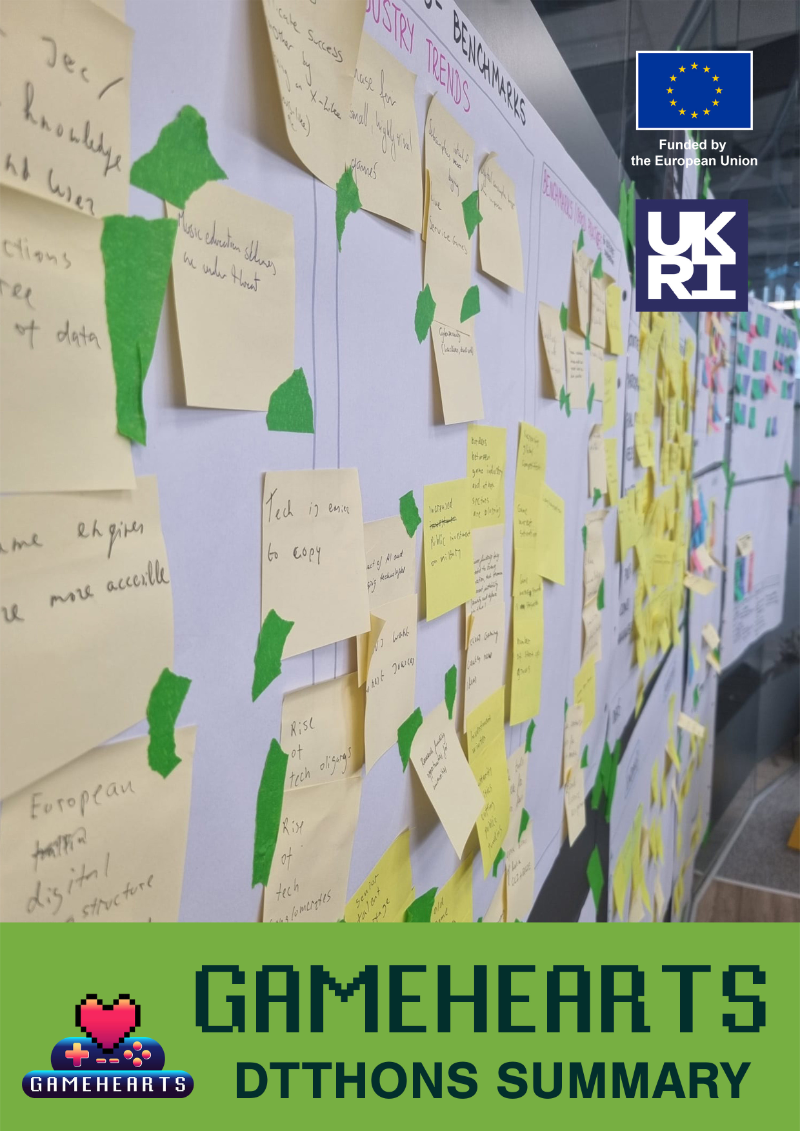
The GAMEHEARTS study, running from 2024 to 2026, looks at how games cooperate with other cultural and creative industries. It aims to deliver strategic recommendations for policymakers, developers, and other creative sectors.
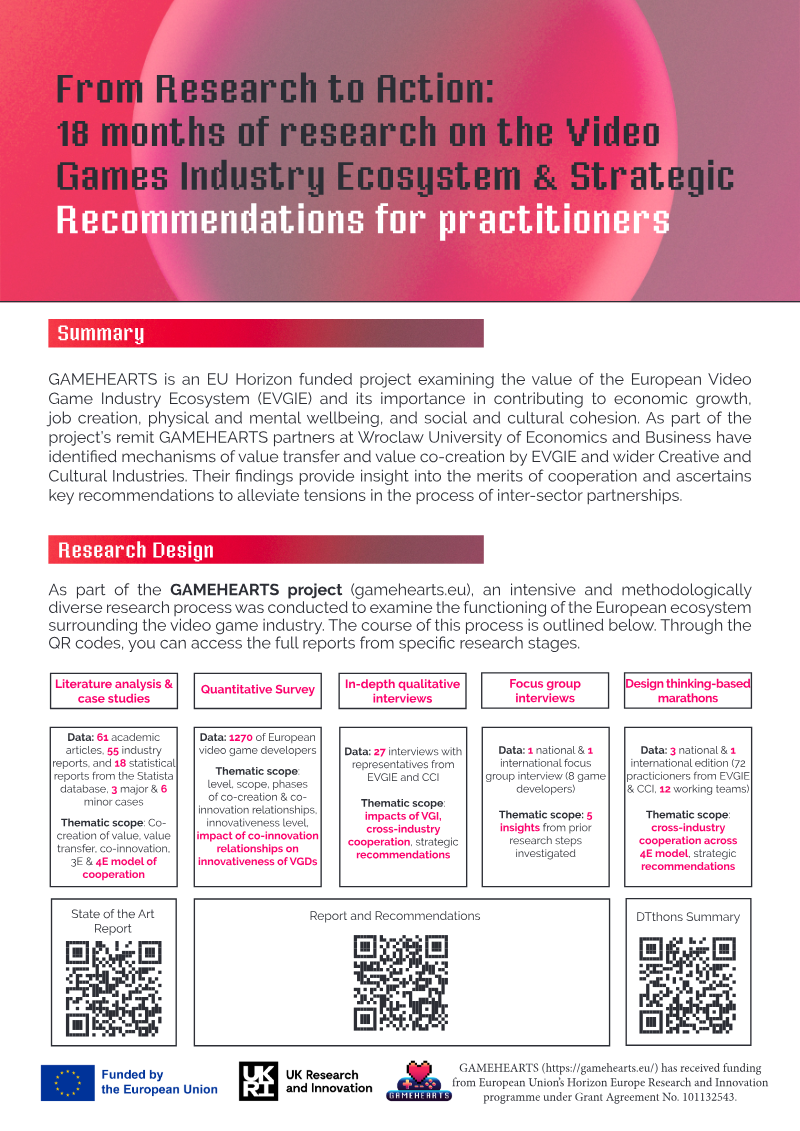
The GAMEHEARTS study, an EU-funded project running from 2024 to 2026, examines how cooperation within Europe's video game industry ecosystem and with other cultural and creative industries can unlock economic and cultural value. Drawing on a systematic literature review, a survey of 1,270 game developers across 29 European countries, interviews, design thinking workshops, and focus groups, the research covers roughly half of the estimated 2,500 or more European game studios, making it the largest study of its kind. Its central aim is to deliver strategic recommendations for policymakers, developers, and other creative sectors.
The findings point to cooperation that is generally weak. Co-creation and co-innovation relationships score around 3 on a 7-point scale, below the midpoint, and collaboration with universities and public institutions is very low. Co-innovation shows a significant but moderate positive effect on organisational innovativeness, yet developers rate their own innovativeness modestly, with product innovation the weakest dimension and behavioural innovation the strongest. Process innovation is neglected despite its strong link to organisational performance, and current policy overwhelmingly favours product innovation. Five main challenges emerge: the perception of games as "low culture," influence of Chinese capital, communication barriers between industries, tensions around diversity, and low self-assessed innovativeness.
Case studies such as Kingdom Come: Deliverance, This War of Mine, Assassin's Creed Discovery Tour, and Hellblade illustrate how structured collaboration with historians, humanitarian experts, scientists, and cultural institutions enhances authenticity, educational value, and cultural reach. To explain how such partnerships succeed or fail, the authors propose a refined four-stage "4E" model (Establishment, Execution, Ending, Endorsement), noting that collaborations often falter at the closing stages, where insights are lost and empirical evidence remains limited. Barriers include mismatched working styles, poor matchmaking, fragmented regulation, and weak post-project follow-up.
The report concludes that durable cross-sector collaboration depends on systemic support, including matchmaking infrastructure, cross-sector facilitators, funded aftercare, and harmonised regulation. Its recommendations span governance, intellectual property clarity, funding reform, cultural heritage preservation, knowledge sharing, and AI governance. Though not formally prioritised, they aim to position Europe as a global
DEV – Asociacion Espanola de Empresas Productoras y Desarrolladoras de Videojuegos · 2026