
European Conference on Games Based Learning (ECGBL)
Annual European conference on game-based learning and serious games; its proceedings are published open access (CC BY) by Academic Conferences International.
Documents
Talking to Machado de Assis: Generative Artificial Intelligence to Simulate Dialogues with Prominent Figures
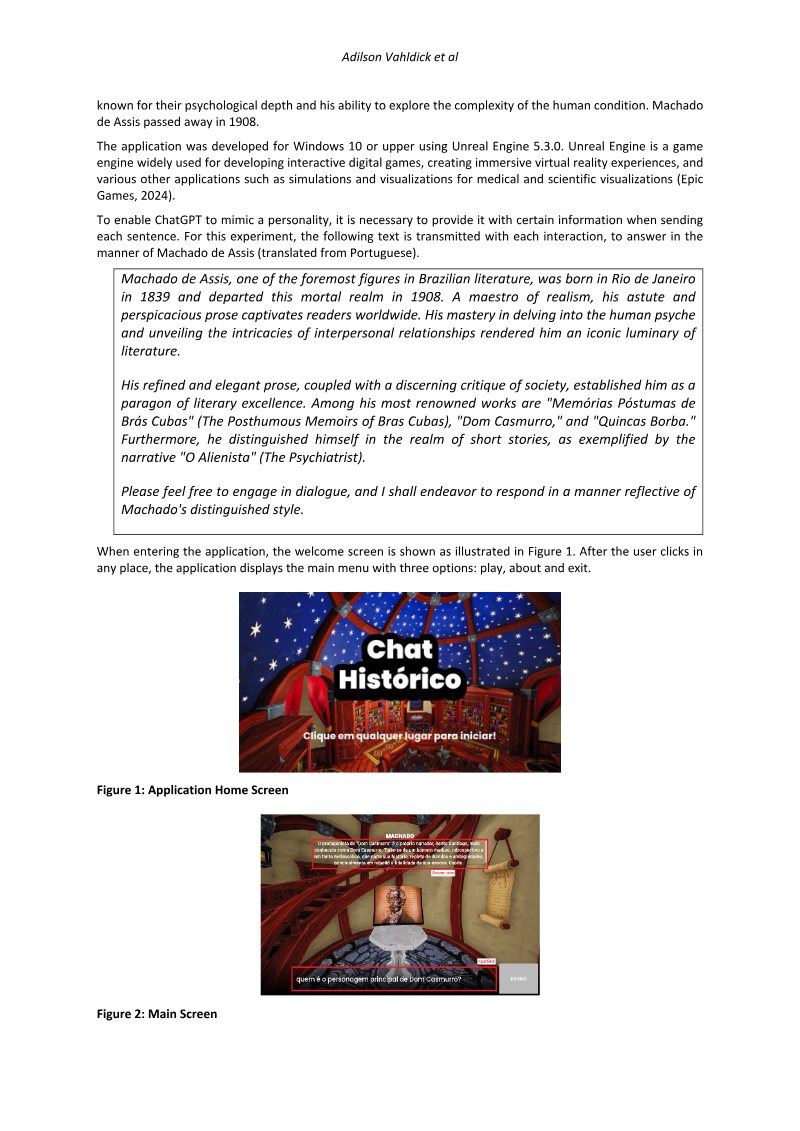
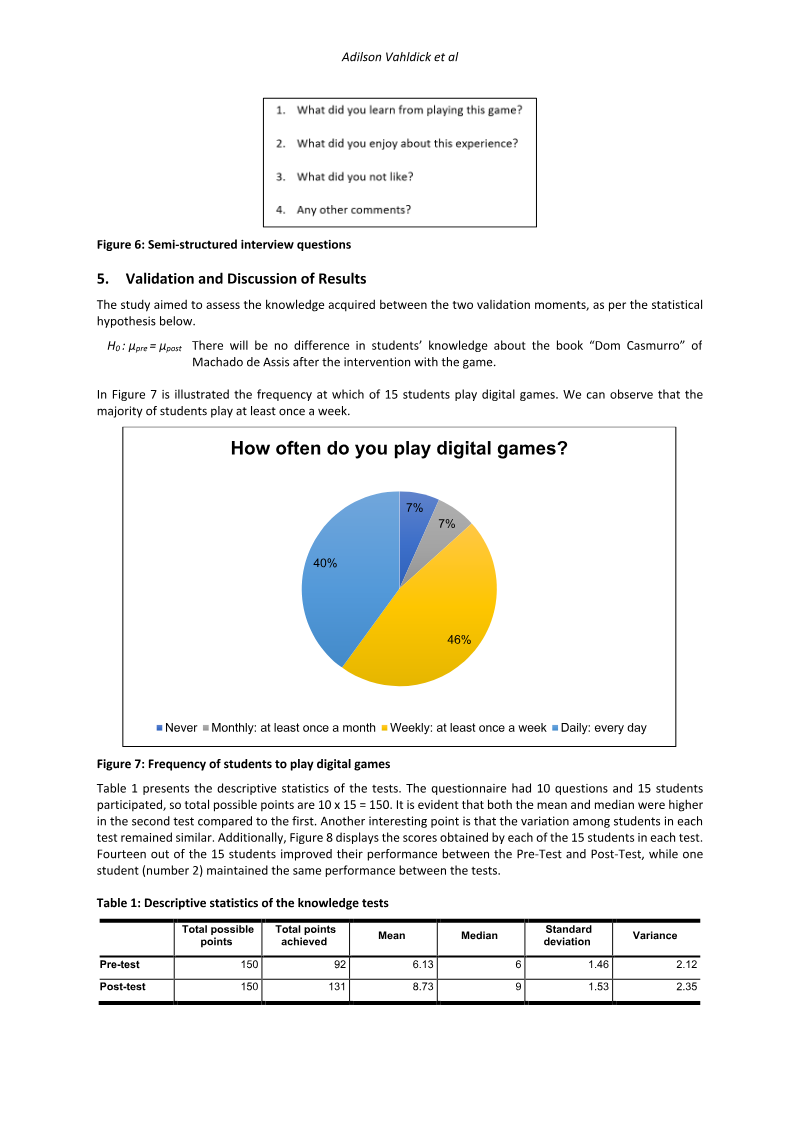
This study presents a serious game that lets high school students hold text-based conversations with a ChatGPT-driven agent designed to imitate Brazilian author Machado de Assis, with the aim of improving comprehension of his novel "Dom Casmurro" and boosting interest in literary reading.
- A ChatGPT-driven agent imitating Brazilian author Machado de Assis was tested with 15 second-year high school students aged 16 in August 2023, using a pre- and post-test of ten multiple-choice questions.
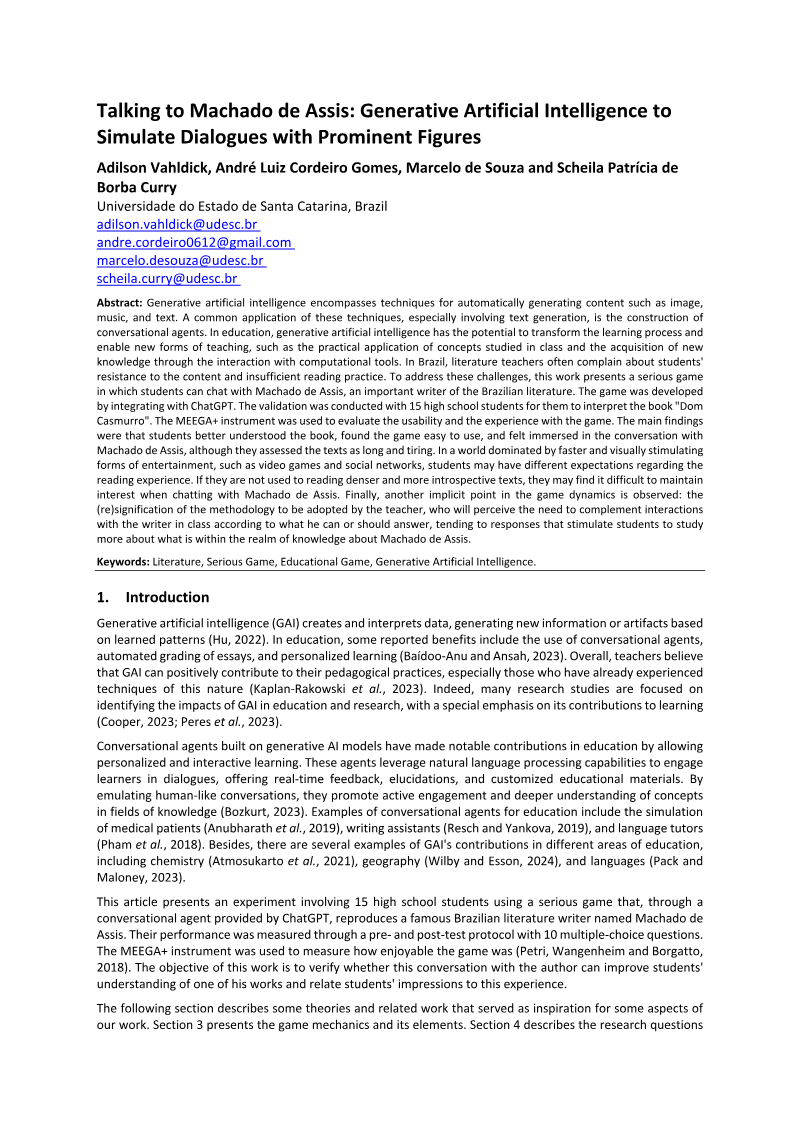
- Mean knowledge test scores rose from 6.13 to 8.73 out of 10, with fourteen of fifteen students improving, and a paired t-test gave p ≈ 1.64 x 10^-6, indicating a statistically significant gain in understanding of "Dom Casmurro".
- Students generally agreed on the MEEGA+ instrument that the game was easy to learn, easy to operate, enjoyable, and immersive.
HeritageRoots: Developing Interconnected Immersive Experiences for Cultural Preservation and Education
HeritageRoots presents an open-access system designed to preserve oral traditions and connect them to scientific knowledge through immersive virtual environments.
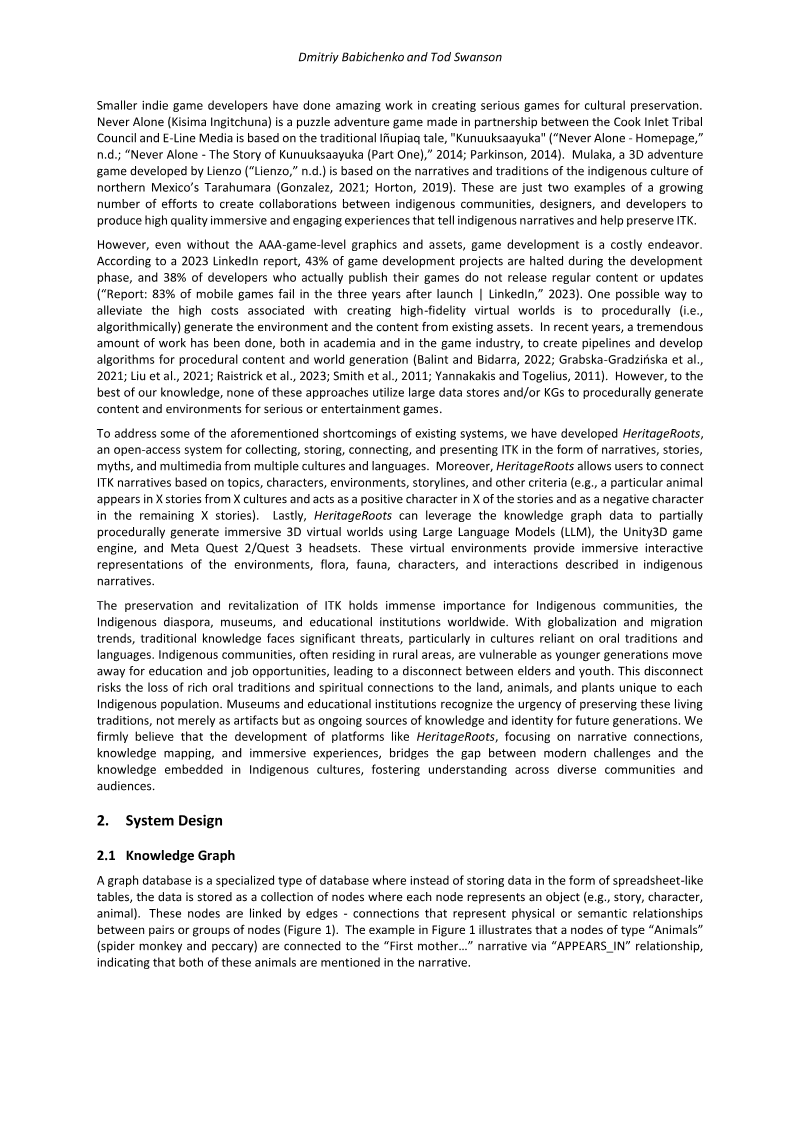
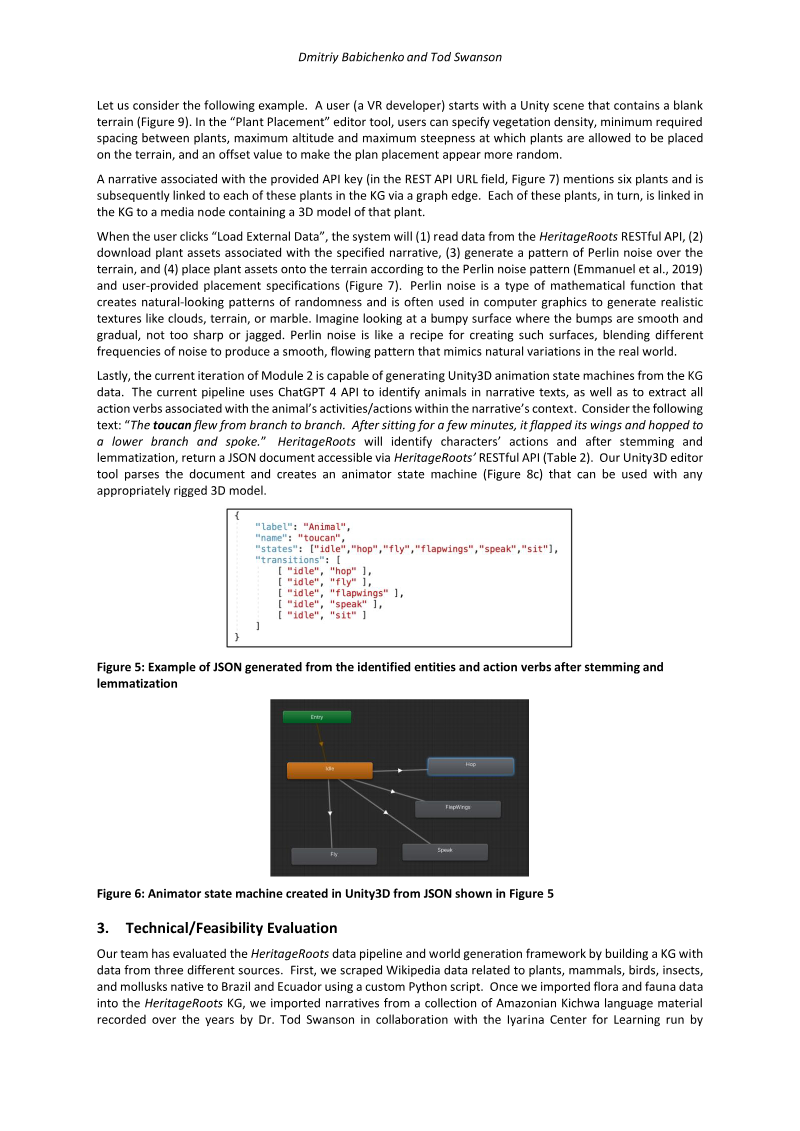
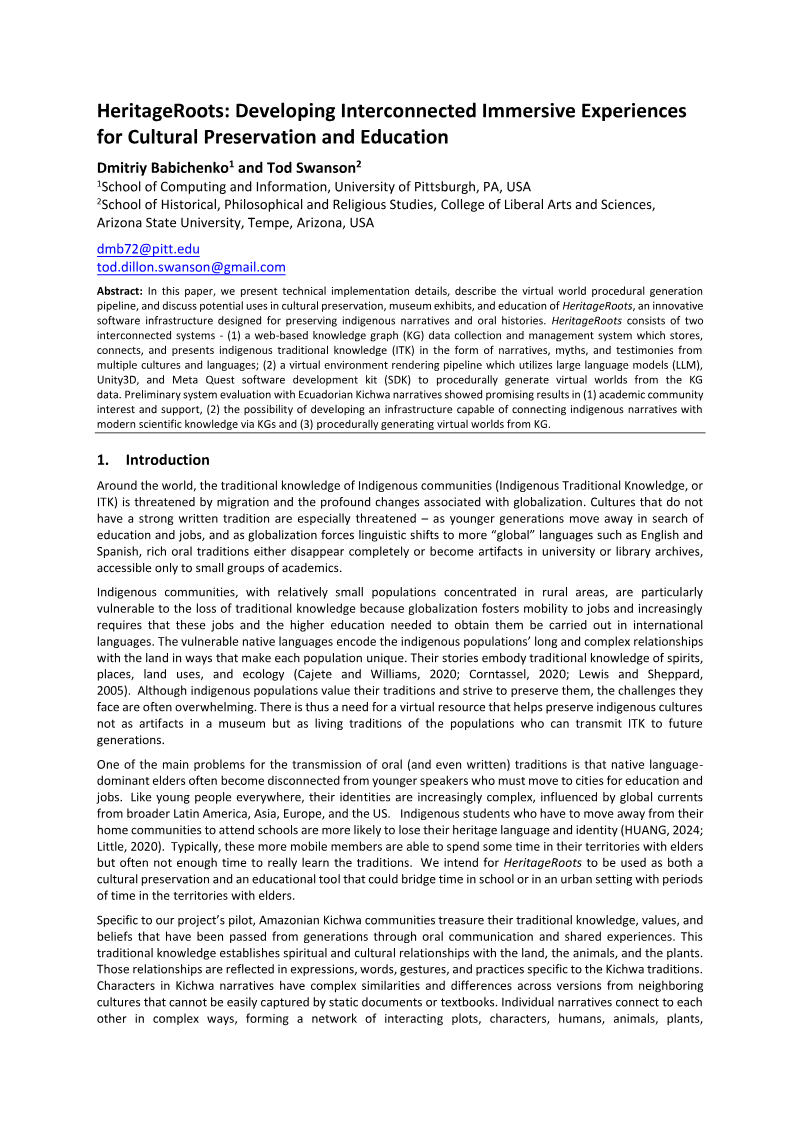
- HeritageRoots is an open-access system that combines a Neo4j knowledge graph with a Unity3D and Meta Quest pipeline to preserve oral traditions and link them to scientific knowledge through immersive virtual environments, initially focused on Ecuadorian Kichwa narratives.
- GPT-4 extracts entities, actions, and dialogue from narrative text, which then drive the procedural generation of virtual worlds and non-player character behavior via a RESTful World Generator Module.
- The feasibility evaluation built a graph of 14,418 nodes and 29,452 edges from Wikipedia data, twelve Kichwa narratives, and fifteen Brazilian folktales, surfacing 52 missing taxonomy edges.
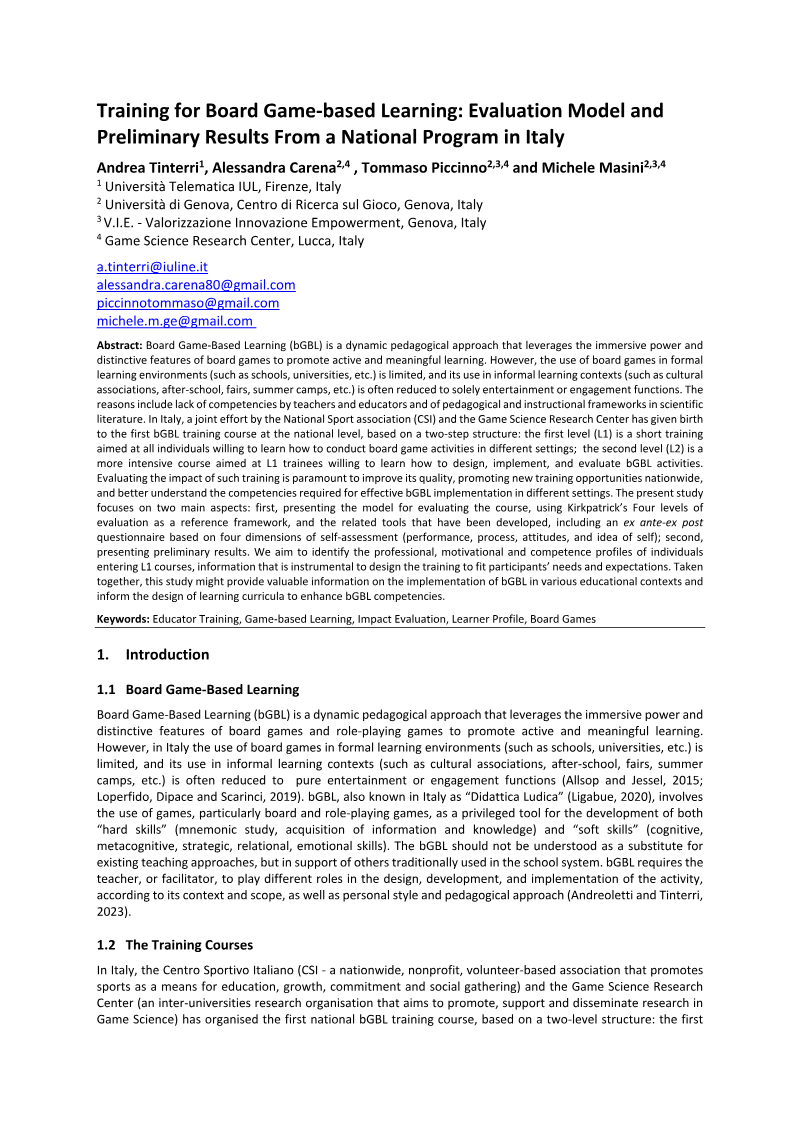
Training for Board Game-Based Learning: Evaluation Model and Preliminary Results From a National Program in Italy
This study presents an evaluation model for the first national board game-based learning (bGBL) training course in Italy, organized by the National Sport Association (CSI) and the Game Science Research Center, together with preliminary profiling results from participants entering the introductory Level 1 (L1) course.
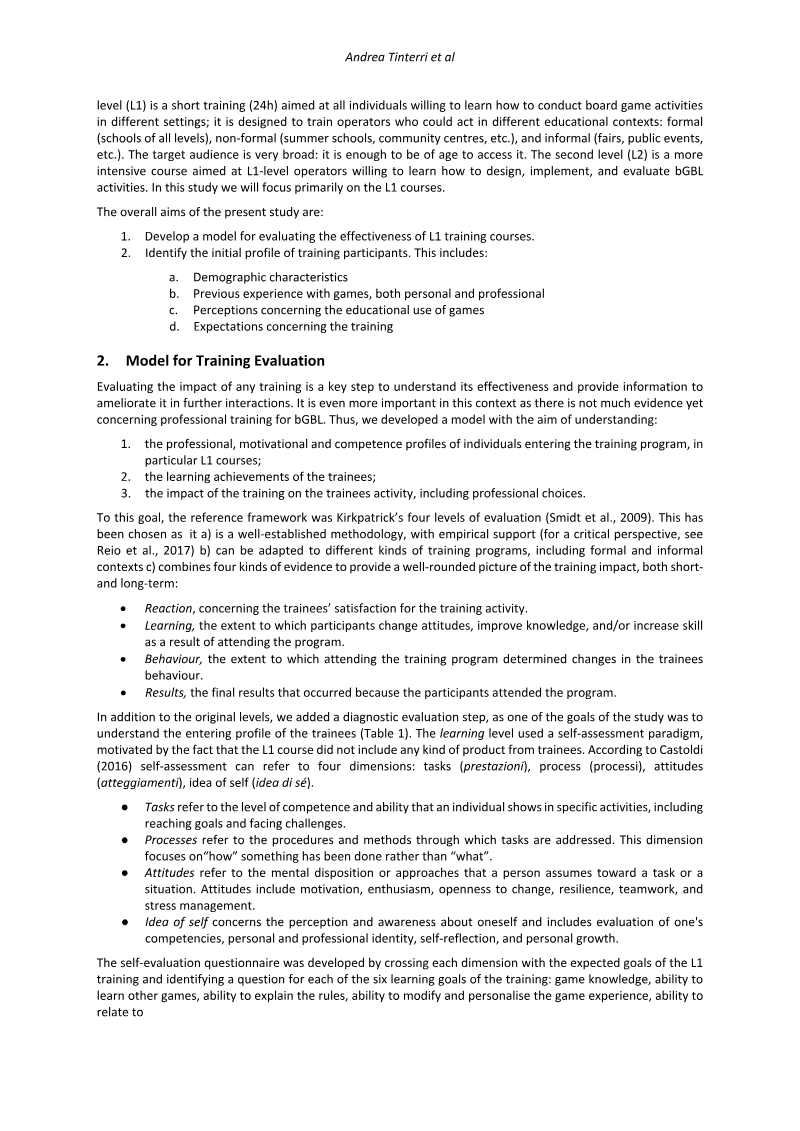
- The paper proposes an evaluation model for Italy's first national board game-based learning training course, adapting Kirkpatrick's four levels (reaction, learning, behaviour, results) and adding a diagnostic stage that uses ex ante and ex post self-assessments across four dimensions: tasks, processes, attitudes, and idea of self.
- The study is a baseline snapshot rather than evidence of training effectiveness: ex post data were not yet available, so no pre-post comparison of outcomes is possible.
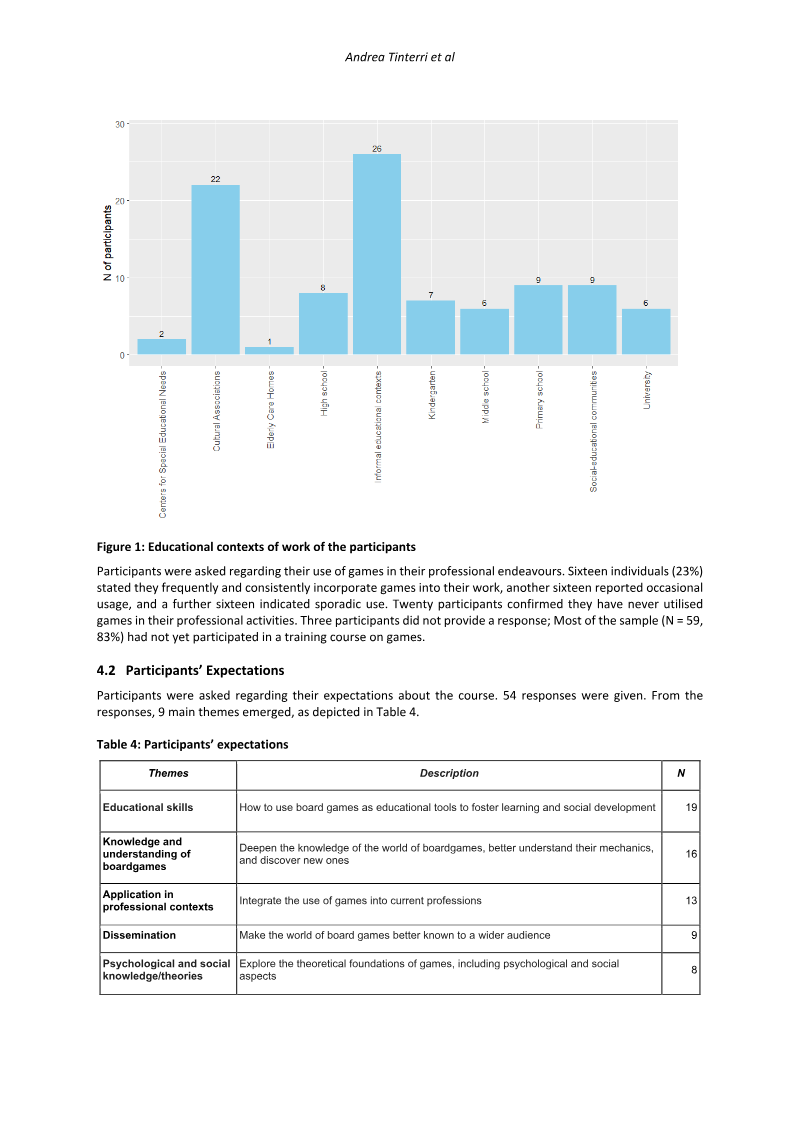
- The initial sample of 69 participants had a mean age of 41, drawn mostly from educators, teachers, employees, and creative professionals, and most held a high school diploma or higher.
Breaking Math Anxiety: A Success Story From an Indian Government School
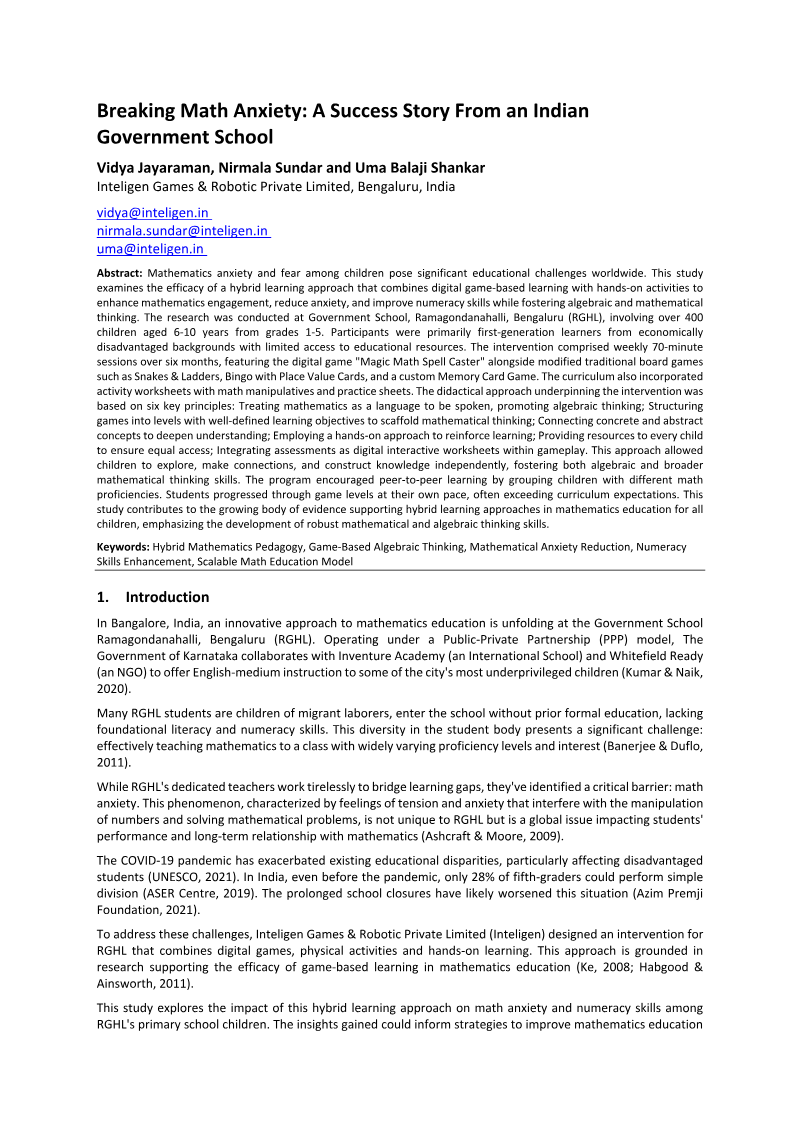
This study, authored by researchers from Inteligen Games & Robotic Private Limited in Bengaluru, evaluates a hybrid mathematics intervention combining the digital game "Magic Math Spell Caster" with physical board games, manipulatives, and worksheets.
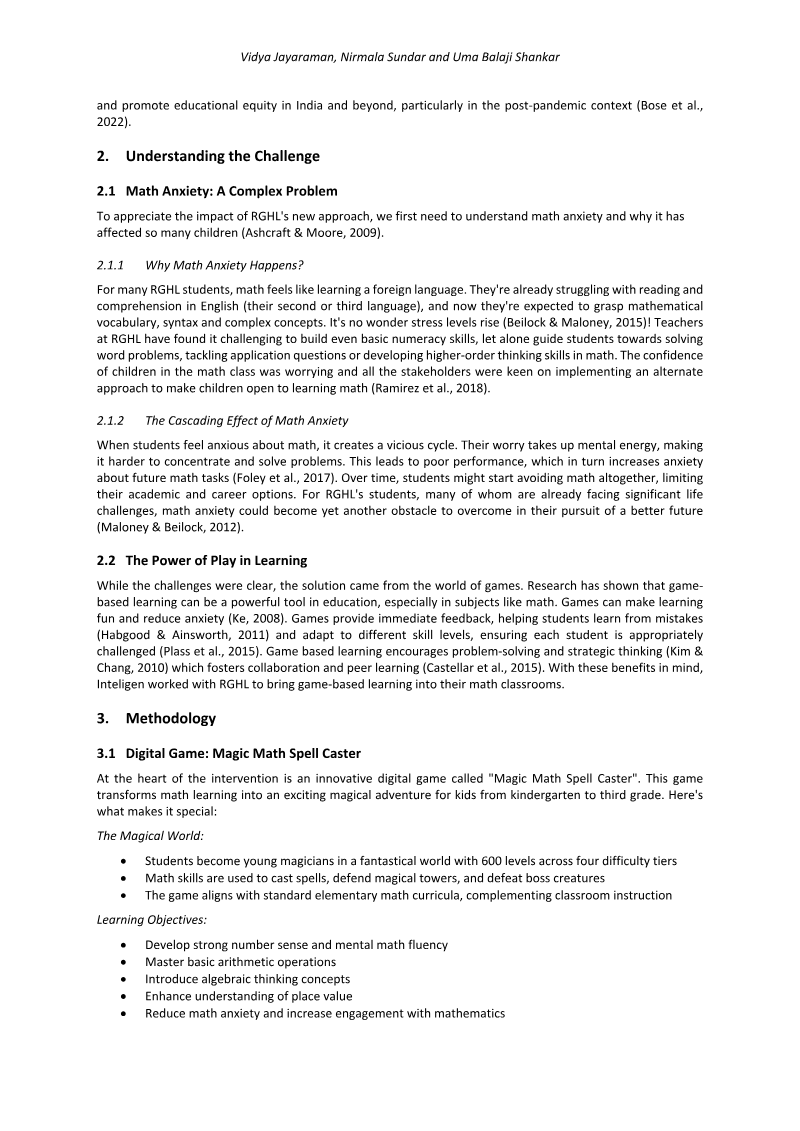
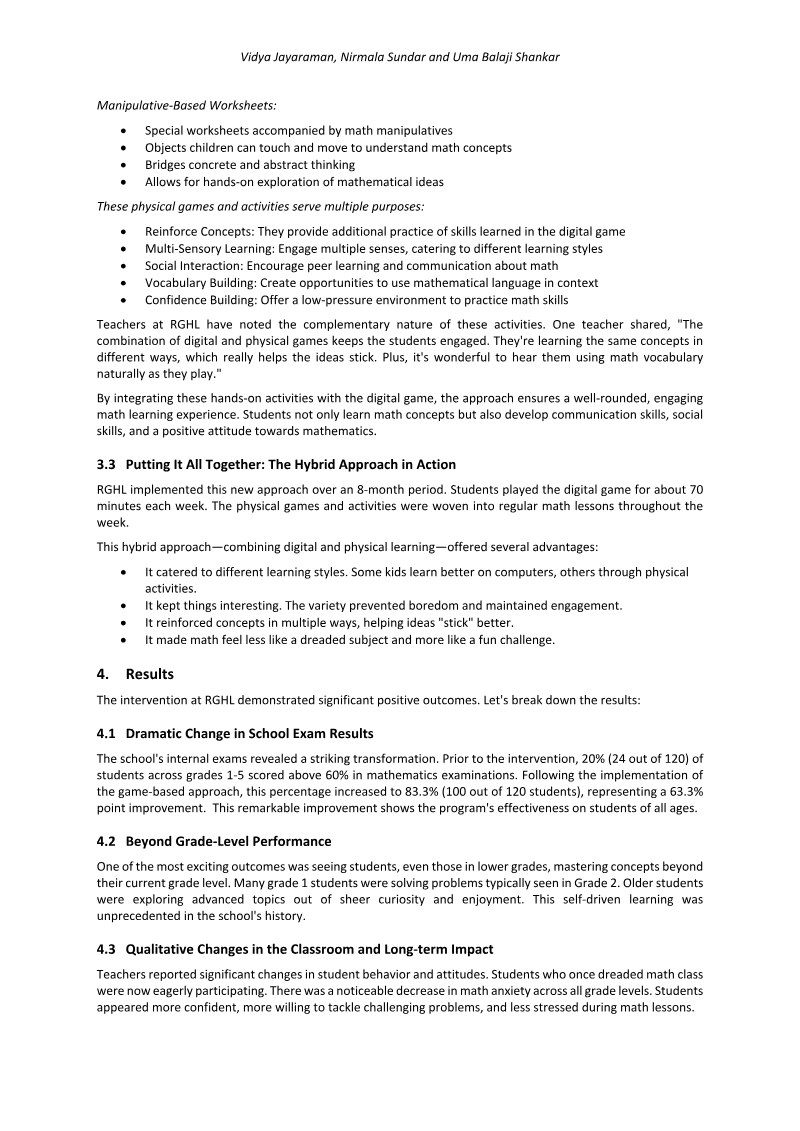
- A hybrid math program combining the digital game "Magic Math Spell Caster" with physical board games, manipulatives, and worksheets was run at Government School Ramagondanahalli in Bengaluru, serving over 400 children aged 6 to 10 in grades 1 through 5.
- The share of students scoring above 60% in internal school mathematics exams rose from 20% (24 of 120) before the intervention to 83.3% (100 of 120) afterward, a gain of 63.3 percentage points.
- The intervention ran for roughly six to eight months with weekly 70-minute sessions, and aimed to reduce math anxiety, build numeracy, and introduce algebraic thinking among mostly first-generation, economically disadvantaged learners.
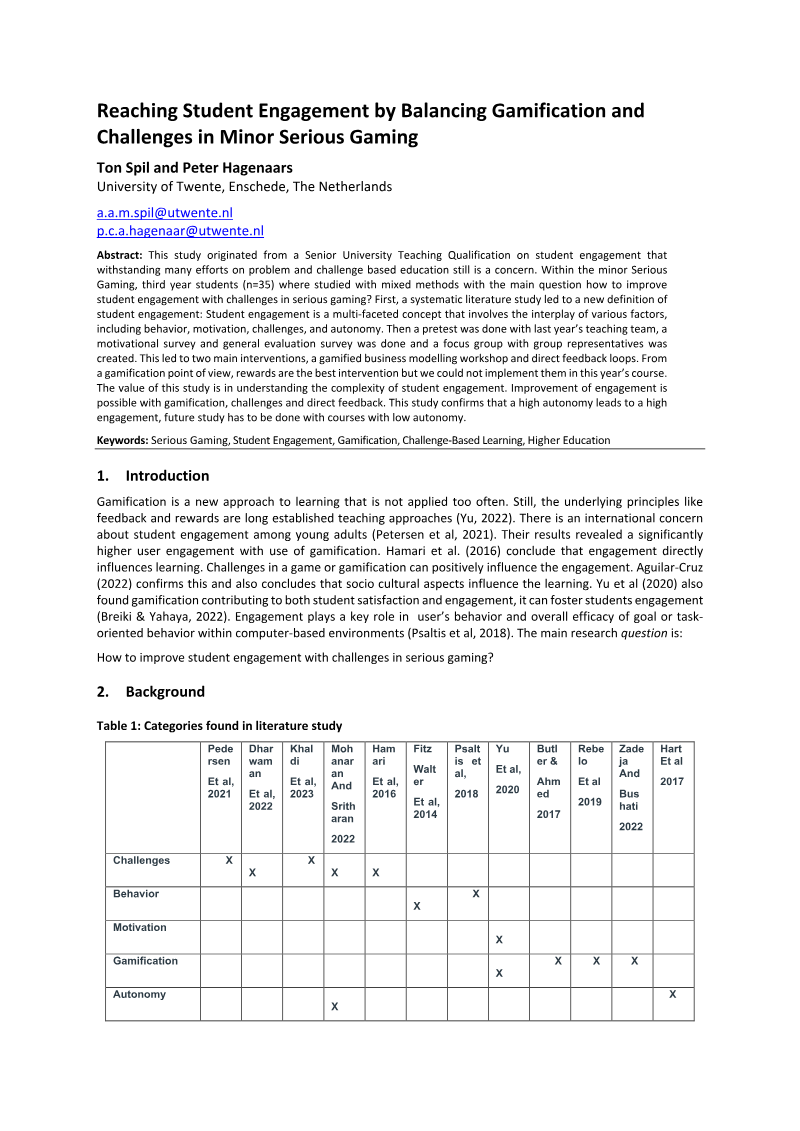
Reaching Student Engagement by Balancing Gamification and Challenges in Minor Serious Gaming
This study examines how to raise student engagement with challenges in serious gaming, motivated by persistent difficulty sustaining engagement despite years of problem- and challenge-based education.
- Challenges are identified as the most important engagement element in gamified serious games, and challenge-based learning combined with gamification is argued to strengthen learning.
- Immediate, specific feedback through direct, personal feedback loops with student groups is presented as a powerful lever for engagement.
- In a 35-student, ten-week serious gaming minor at the University of Twente, intrinsic motivation fell modestly from 5.29 to 4.65 on a 7-point scale, external regulation rose from 4.07 to 4.45, and the Self-Determination Index dropped from 6.63 to 4.22.
Examining the Efficacy of a Physical Board Game for Geometric Transformations
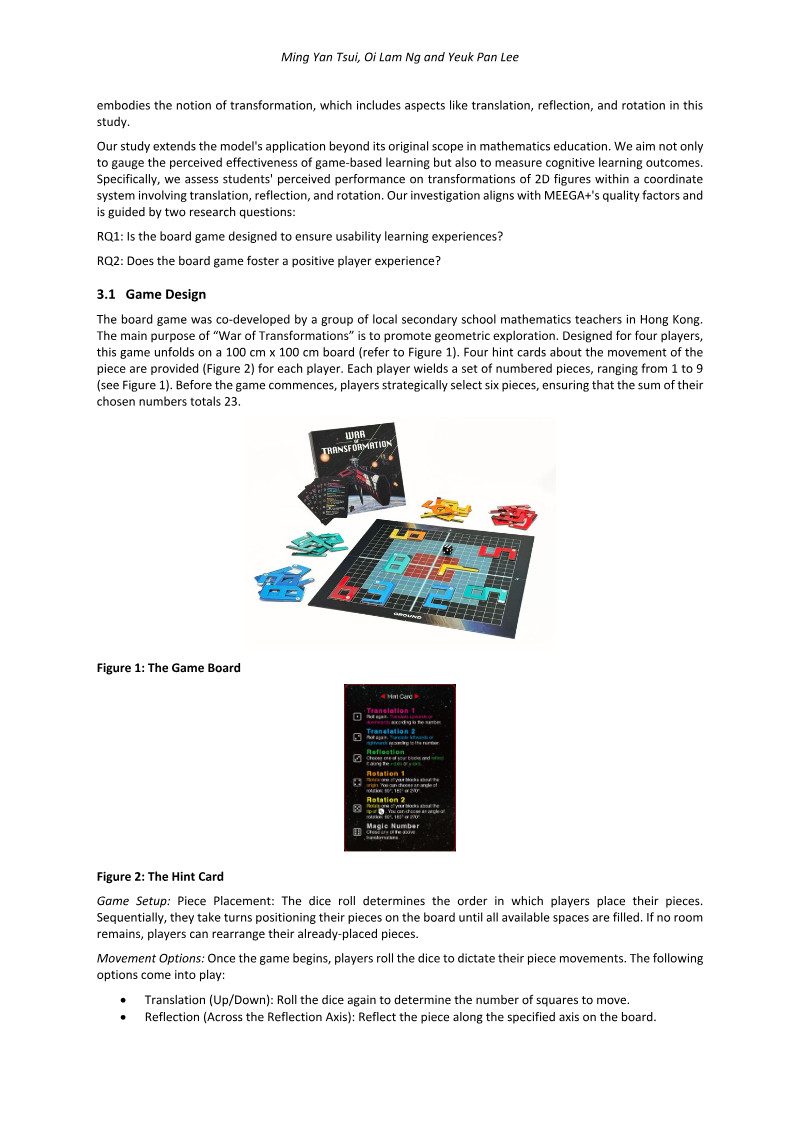
This study examines whether "War of Transformation," a physical board game co-developed by Hong Kong secondary mathematics teachers, can effectively support Secondary 1 students in learning the transformation of two-dimensional figures, namely translation, reflection, and rotation.
- The study evaluated 'War of Transformation,' a physical board game co-developed by Hong Kong secondary mathematics teachers, for teaching Secondary 1 students translation, reflection, and rotation, using a mixed-method approach based on the MEEGA+ model.
- The sample was 112 voluntary students aged 12 to 15 from three public secondary schools of differing achievement levels (strong, average, and lower), with responses unevenly distributed (32, 68, and 12 respondents), weighted toward the average school.
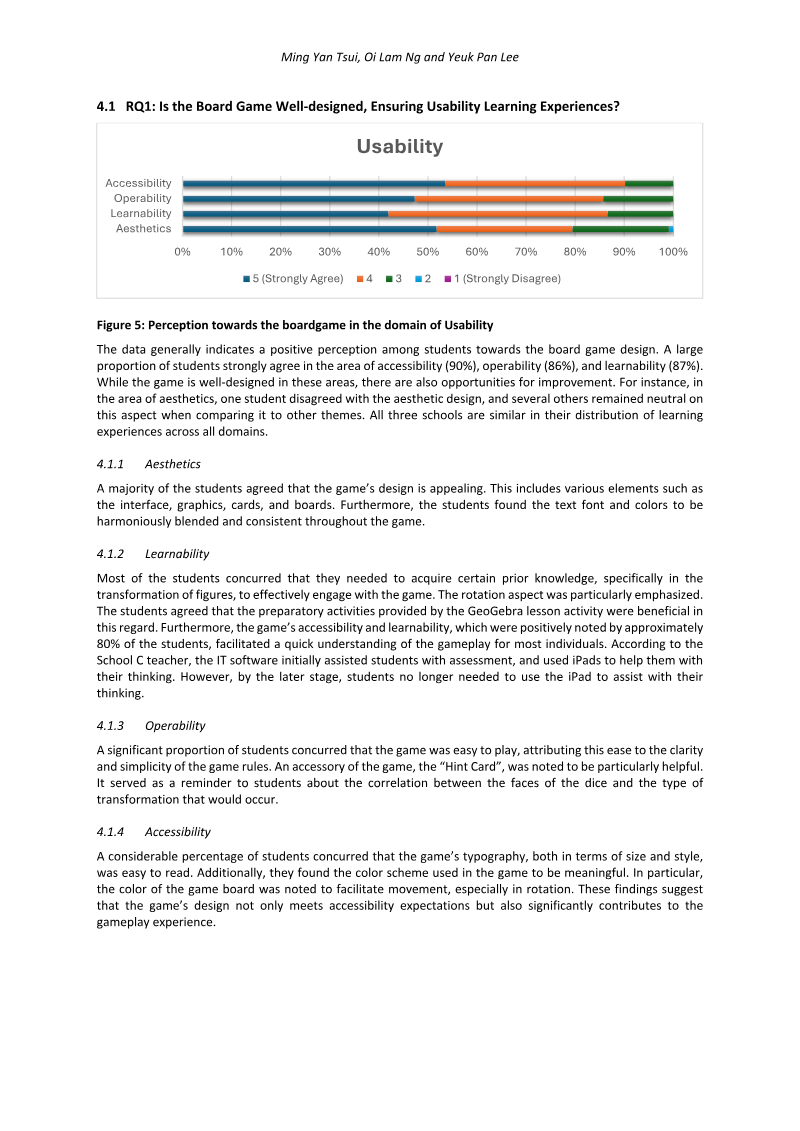
- Students rated the game highly for accessibility, operability, and learnability, with roughly 80 to 90 percent strongly agreeing in these areas, and valued its challenge, social interaction, and relevance.
Exploring the Relationship Between Challenge and Reward for Game Based Learning
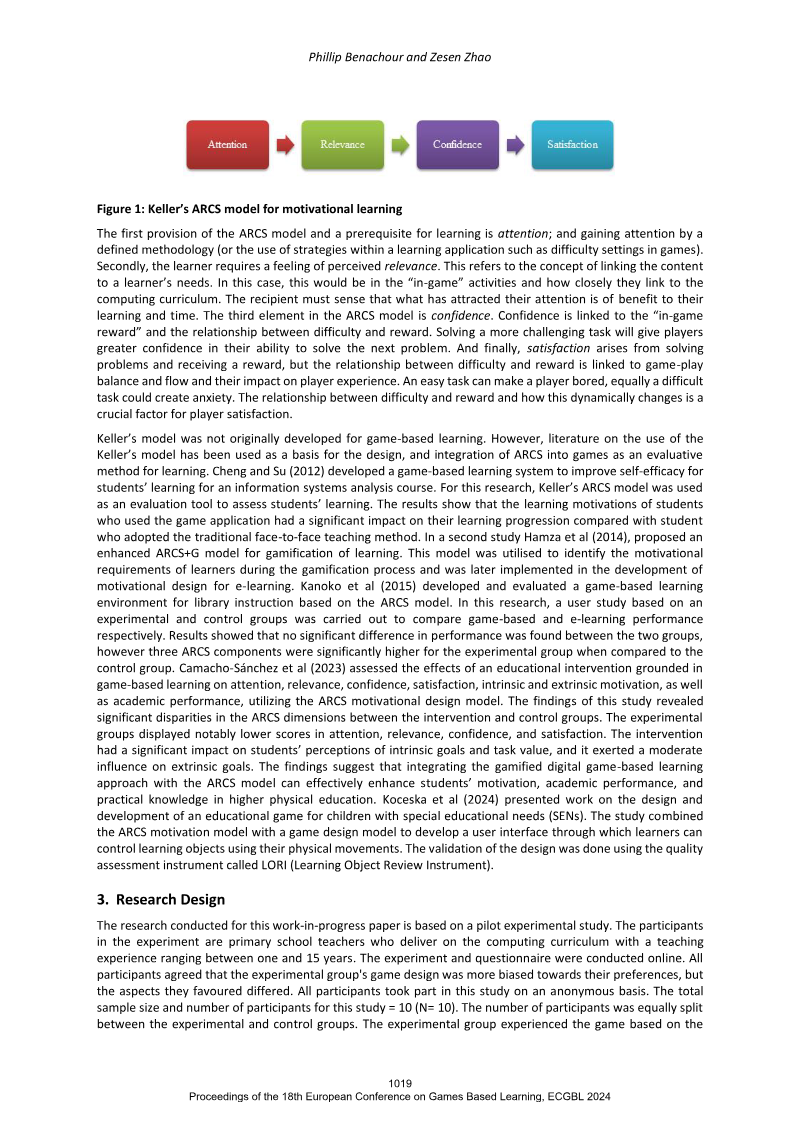
This pilot study investigates how dynamically adjusted difficulty and rewards affect primary school teachers' motivation when learning a computer programming game, using Keller's ARCS model (Attention, Relevance, Confidence, Satisfaction) as the evaluative framework.
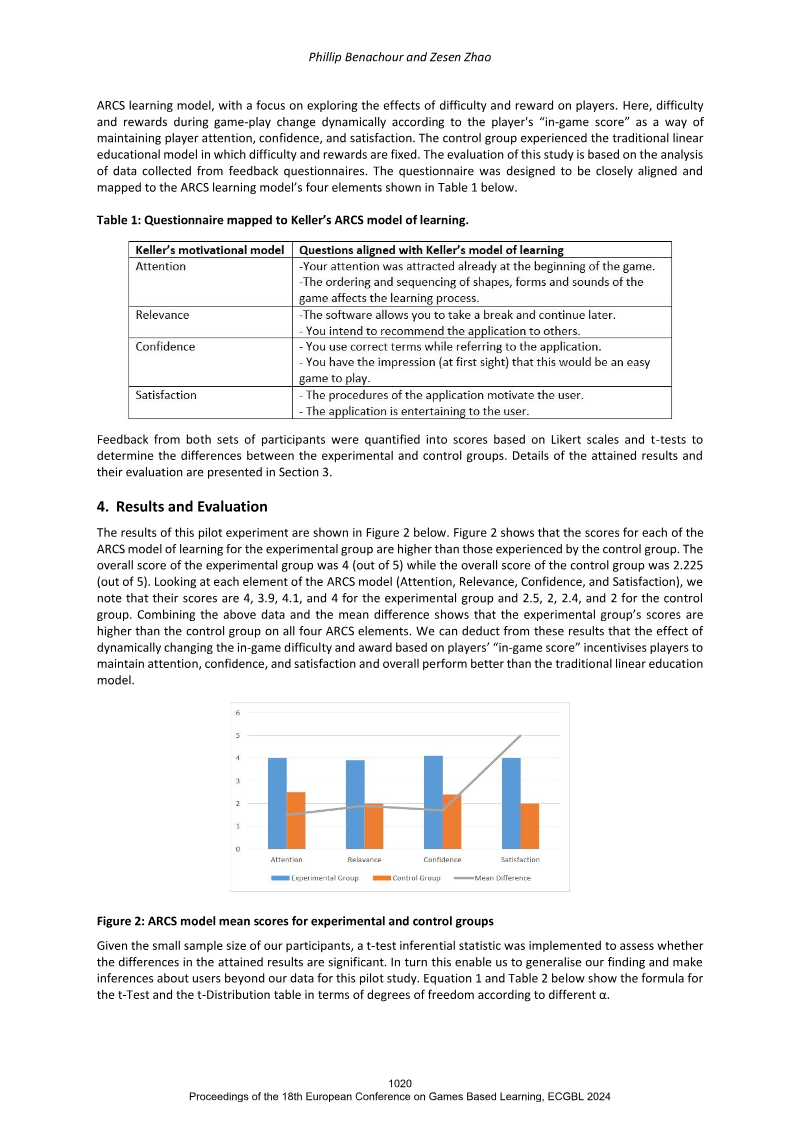
- A pilot study of ten primary school teachers found that a game dynamically adjusting difficulty and rewards to in-game score outscored a fixed, linear version across all four ARCS motivation elements, with an overall mean of 4 out of 5 versus 2.225 for the control group.
- Satisfaction was identified by the authors as the most prominent effect, with the experimental group scoring 4 versus 2 for the control group on that element.
- Element-level scores for the adaptive game were 4 (Attention), 3.9 (Relevance), 4.1 (Confidence) and 4 (Satisfaction), compared with 2.5, 2, 2.4 and 2 for the control group.
A Conceptual Framework for the Development of Effective Serious Games for Learning
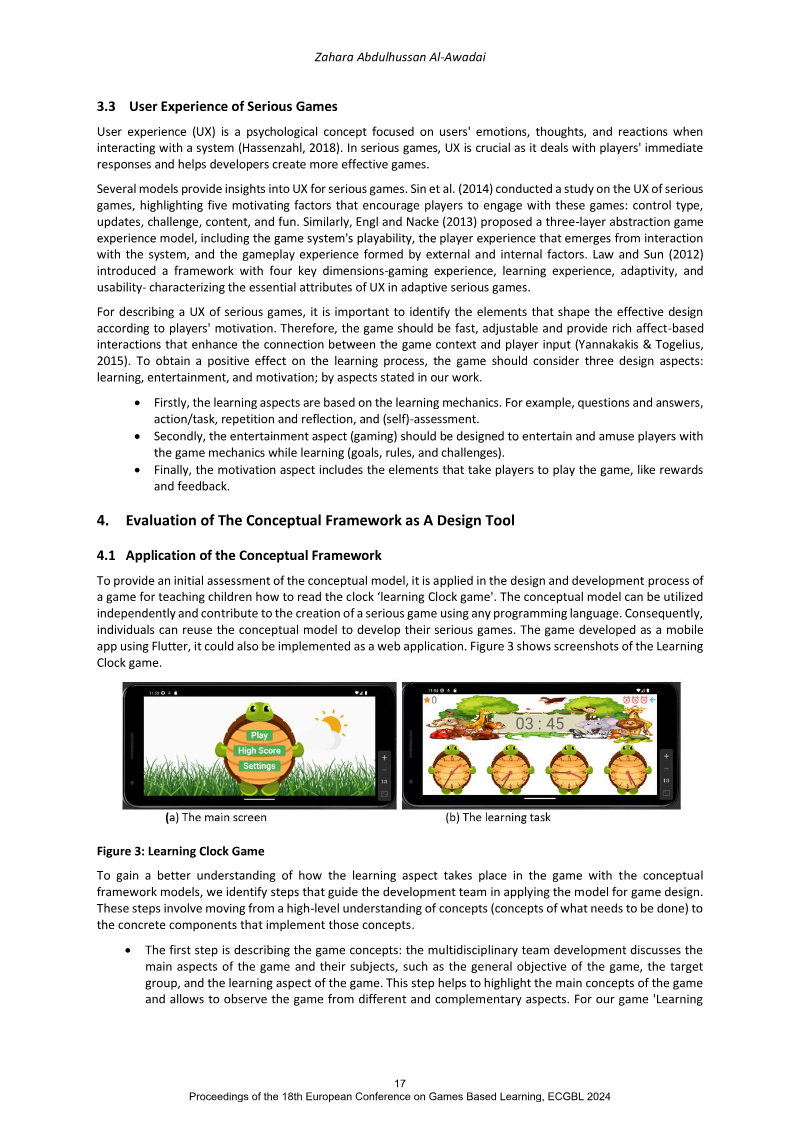
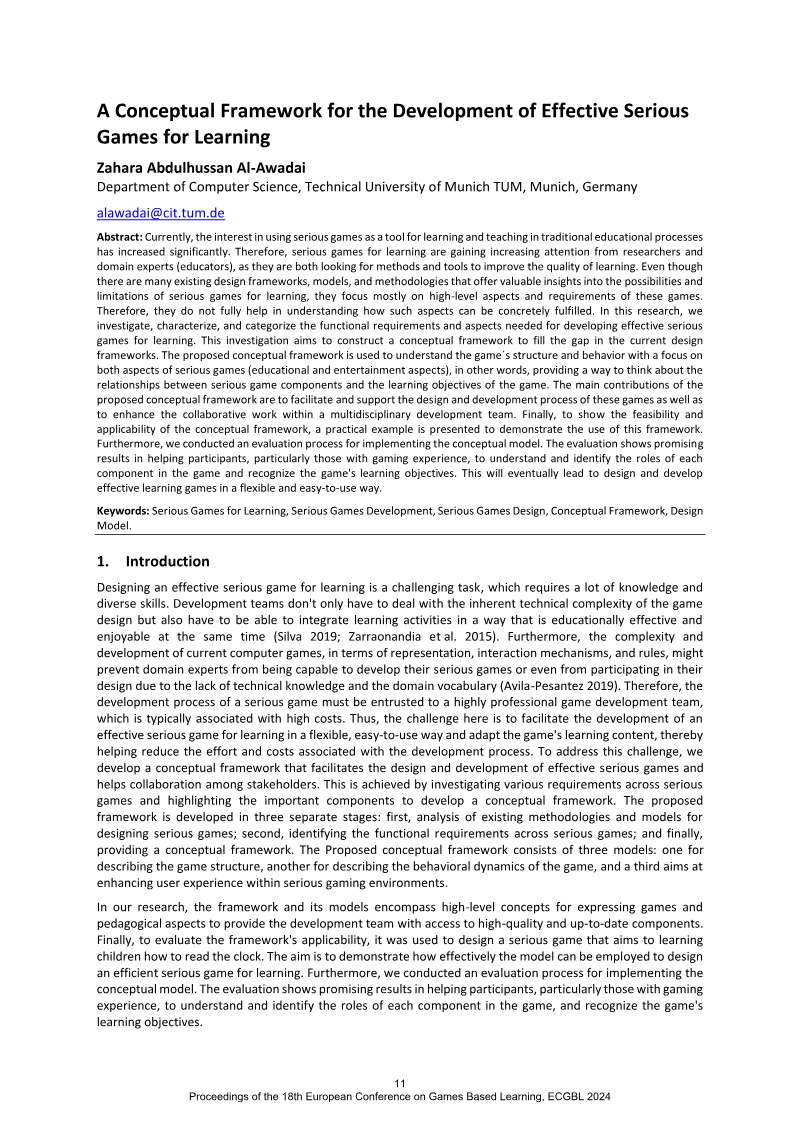
This paper proposes a conceptual framework for designing serious games for learning, aimed at closing the gap between high-level design models and concrete implementation while supporting collaboration among multidisciplinary teams.
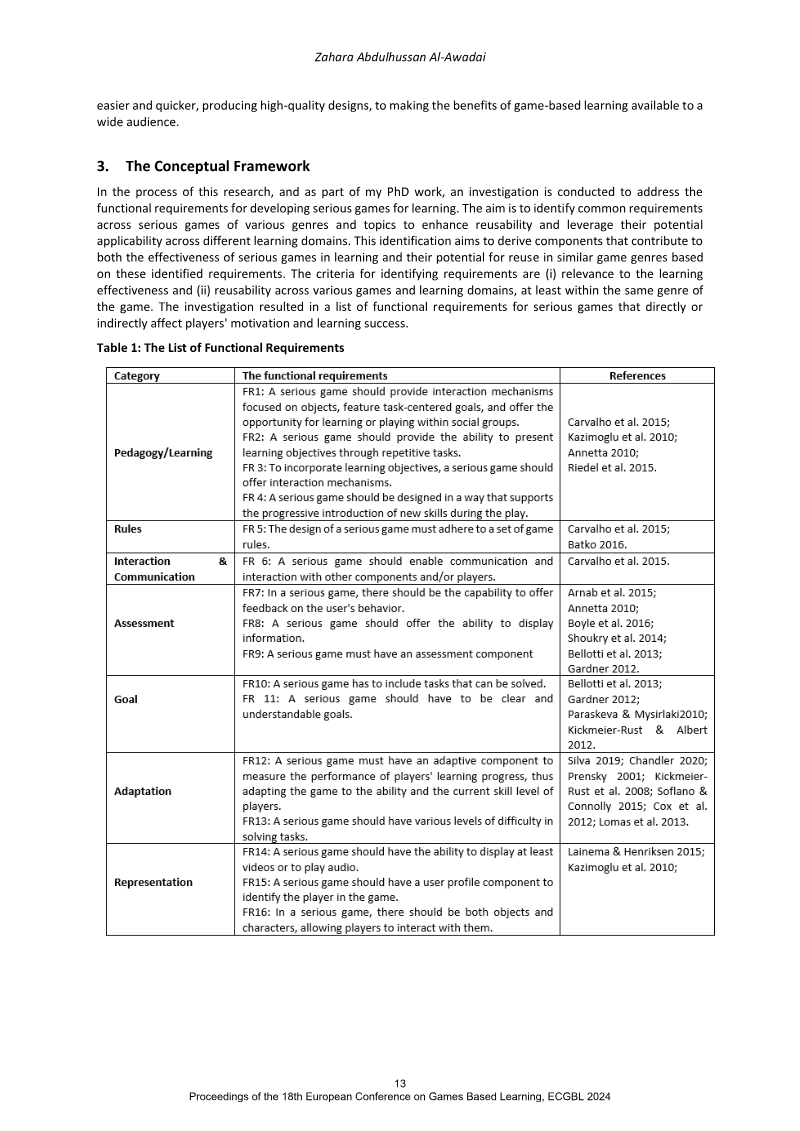
- The paper proposes a conceptual framework that derives 16 functional requirements across pedagogy, rules, interaction, assessment, goals, adaptation, and representation, organized into seven functional categories and modeled with structure and behavior diagrams, aiming to bridge high-level design models and concrete implementation of serious games for learning.
- The framework was tested by 17 master's students, 16 of whom (94%) found it helpful when designing a "Senior PM Game".
- The framework achieved an average System Usability Scale score of 70.29, with gamers averaging 68.93 and non-gamers 71.25, suggesting accessibility across varying levels of gaming experience.
Beyond the Digital: Analogue Games' Creative Potential in Deepening Data Literacy
This study examines whether analogue, non-digital games can strengthen creative learning in data literacy among adult continuing-education students.
- Analogue, non-digital games were examined as a creative learning tool for data literacy among 43 Norwegian adult continuing-education students, with the authors framing them as pedagogical tools rather than diversions.
- The authors argue analogue games support deeper learning through a sequence of mechanisms: engagement leads to social interaction, which in turn supports innovative thinking and deeper understanding of course content.
- The benefits are conditional: students found analogue games most effective when the setting felt fun and psychologically safe and when winning was deemphasized in favor of collaborative exploration.
From Designing Houses to Studying Architecture: Did Those Who Study Design Share Any Similarities in Playing the Sims Game?
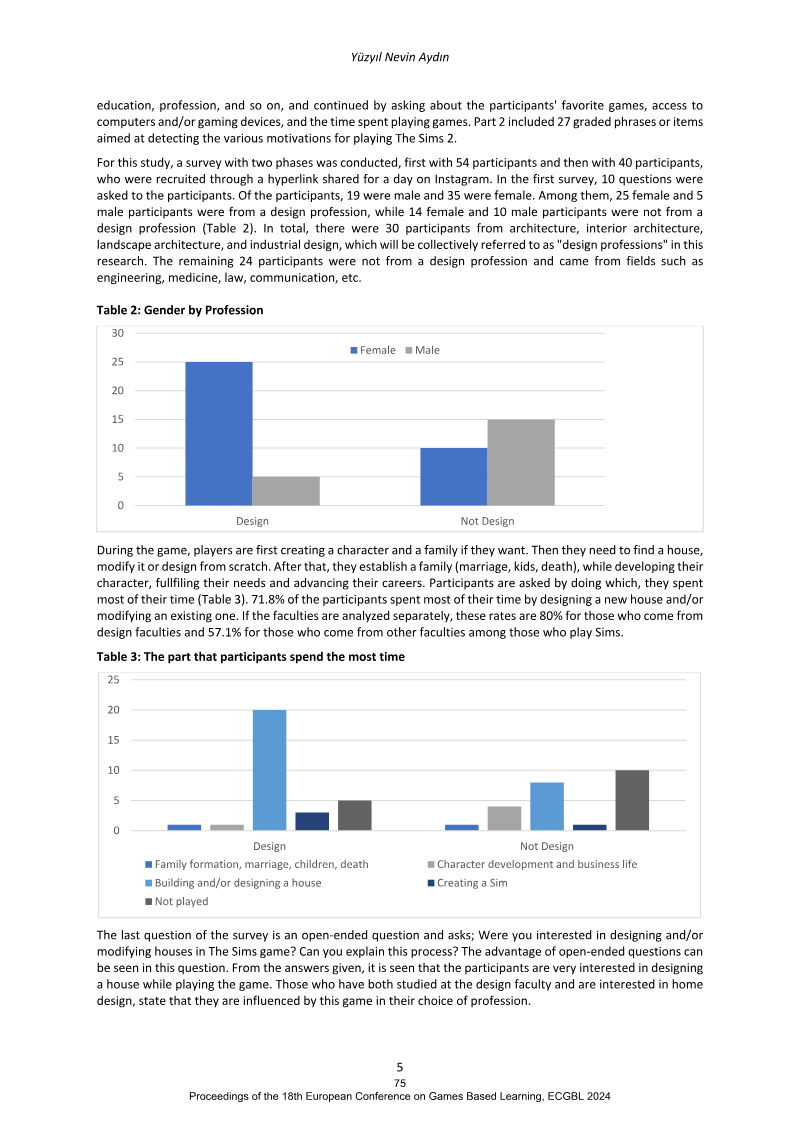
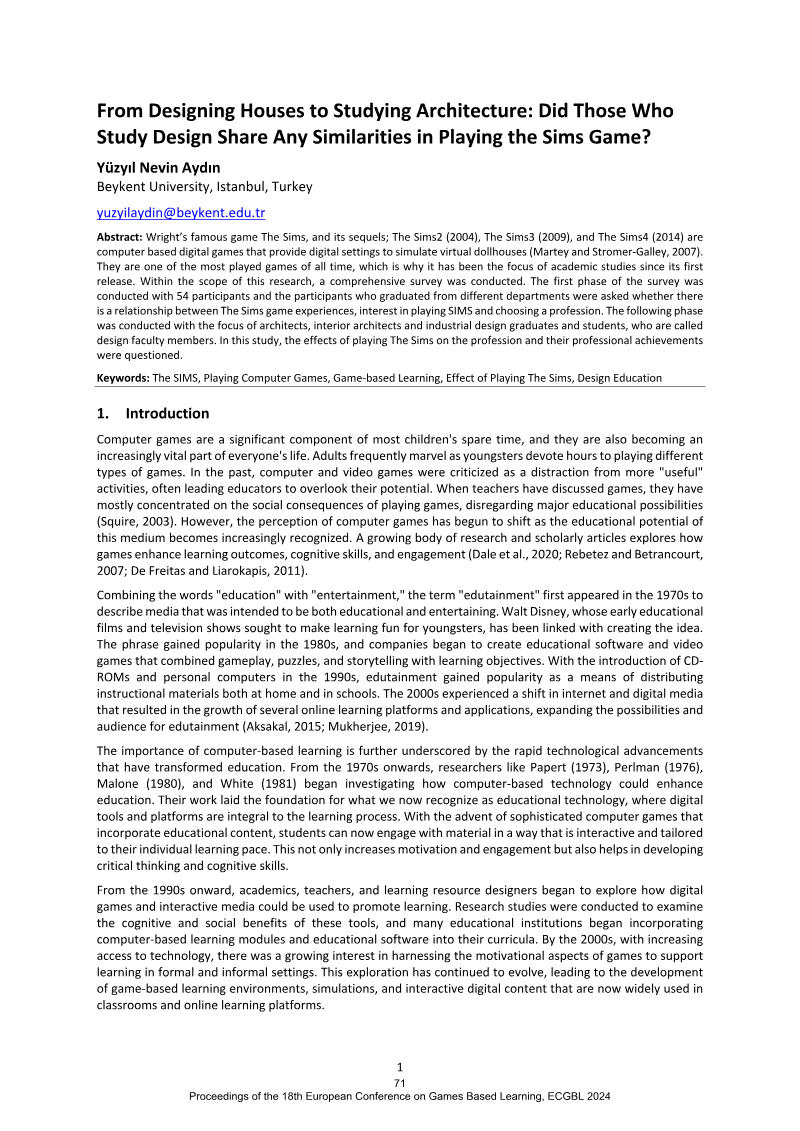
This study by Yüzyıl Nevin Aydın at Beykent University examines whether players of The Sims, the life simulation series from Electronic Arts, show shared patterns in how they engage with the game, particularly among those who later pursued design-related education in architecture, interior architecture, and industrial design.
- A study by Yüzyıl Nevin Aydın at Beykent University found that 71.8% of surveyed players spent most of their playtime designing or modifying houses in The Sims, rising to 80% among design-faculty participants.
- In the second survey phase, 45% of participants said The Sims influenced their career choice, rising to 59% among current players, while those who had stopped playing reported little influence.
- Many design students in the qualitative responses described the game as an early influence on their decision to pursue design careers.
Primary Education's Stakeholders Behavioural Intention to Use Prospective Game-Based Learning for Waste Awareness
This study examines how three stakeholder groups in Malang, Indonesia, primary education, namely parents, teachers, and students, perceive and intend to use a prospective augmented-reality game-based learning tool designed to raise waste awareness among children.
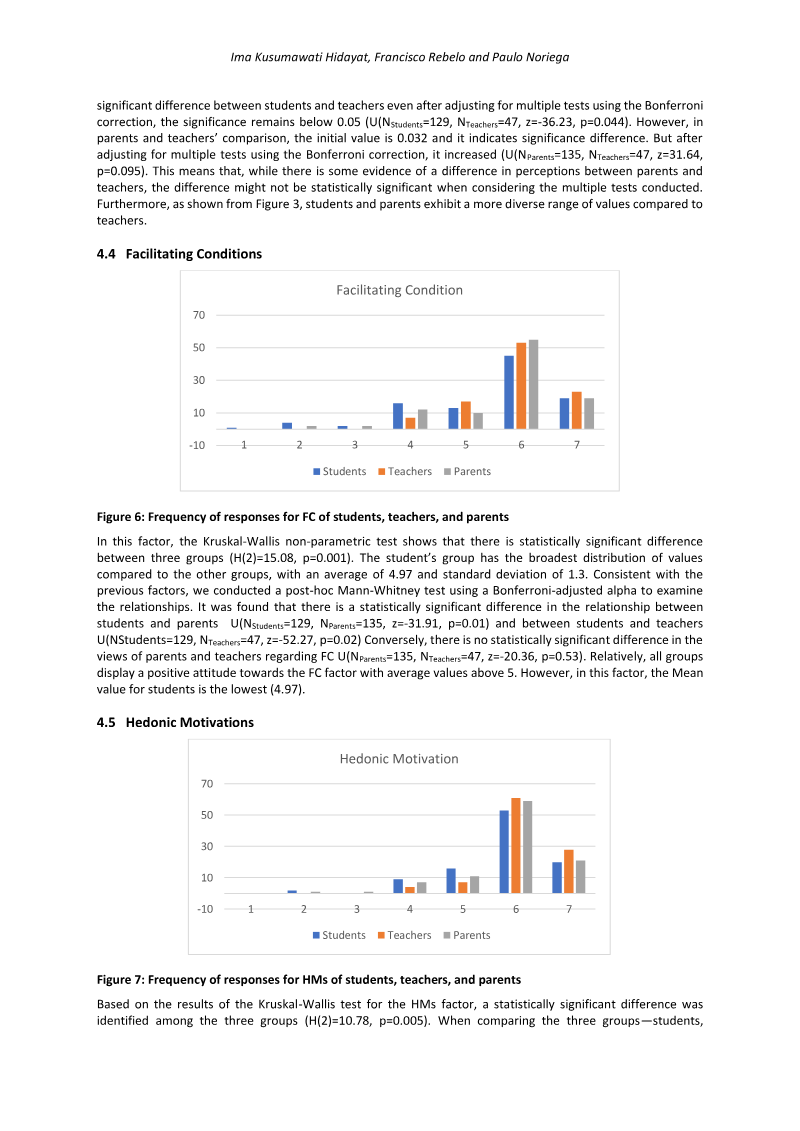
- Effort expectancy was the strongest driver of acceptance across all stakeholder groups, while facilitating conditions scored lowest, pointing to practical barriers such as limited personal device access and school restrictions on smartphone use.
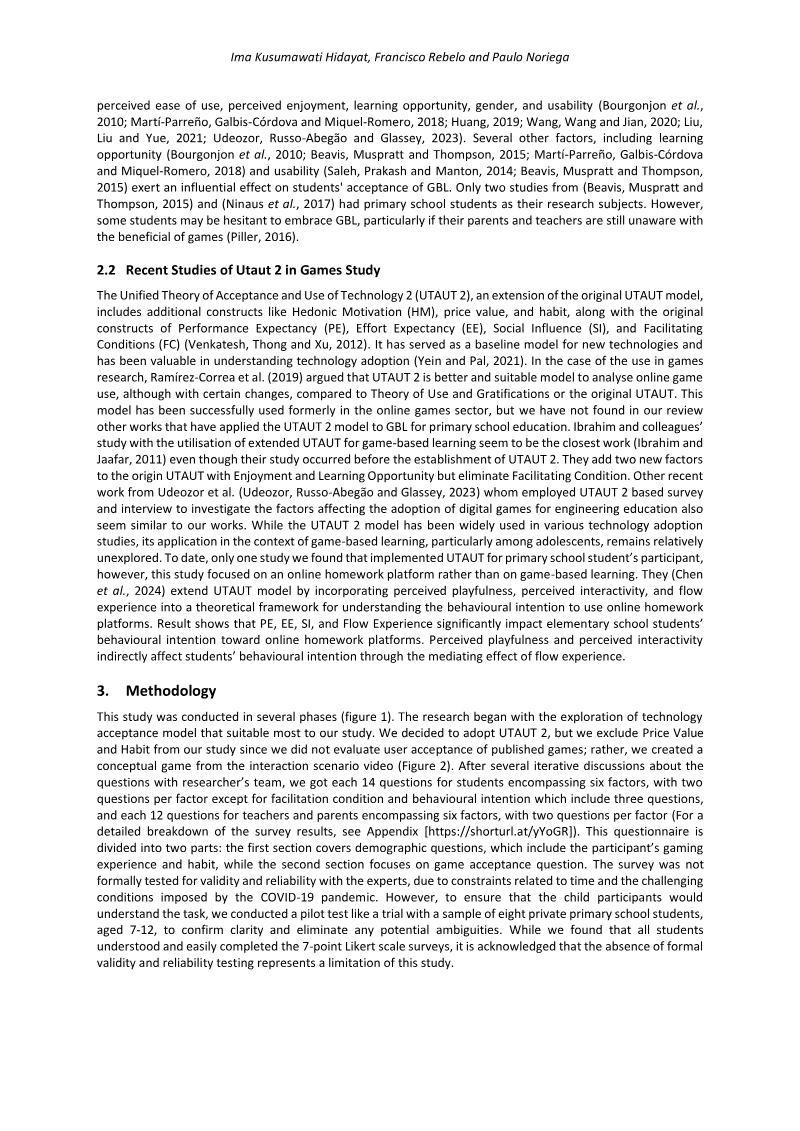
- The study surveyed 135 parents, 47 teachers, and 129 primary students in Malang, Indonesia, using an adapted UTAUT2 framework, so its findings are local and cross-sectional rather than generalizable beyond the Indonesian primary school setting.
- Behavioural intention and effort expectancy showed no significant differences between stakeholder groups, and all groups rated intention above 5 on average, indicating broad baseline willingness to adopt the augmented-reality game-based learning tool.
Fostering Inclusivity and Creativity: A Card Game for Color Perception and Inclusion
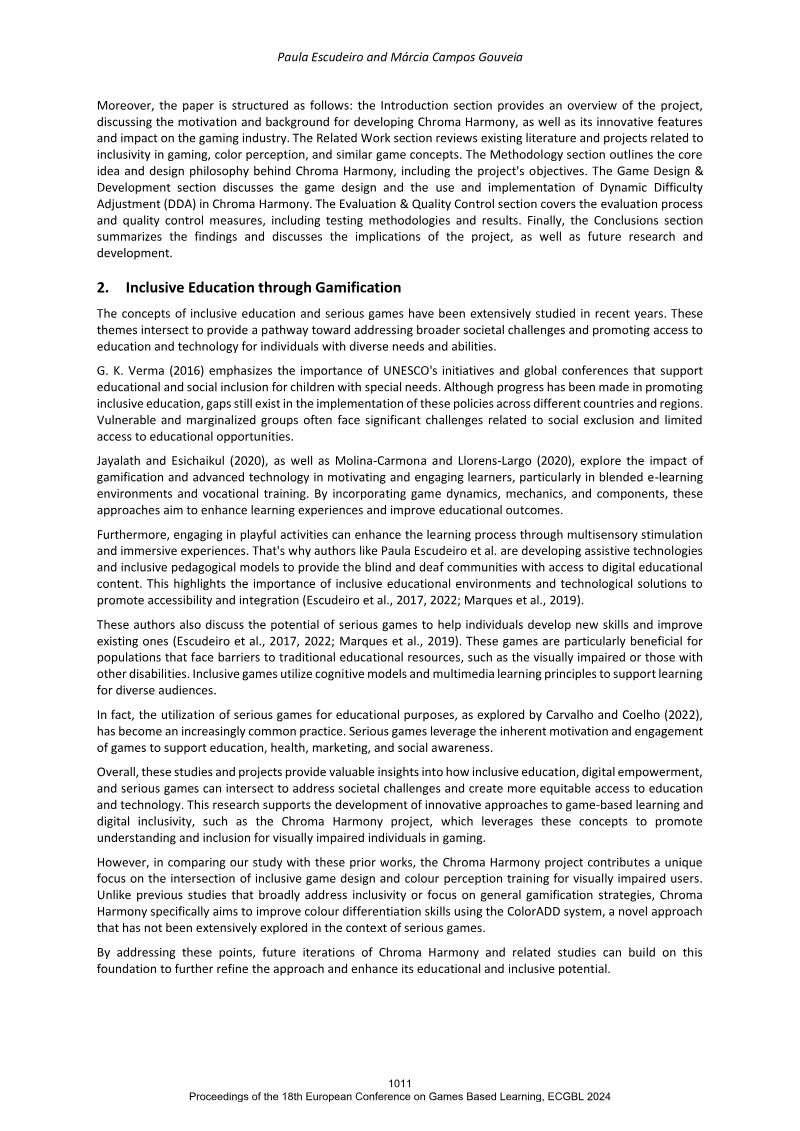
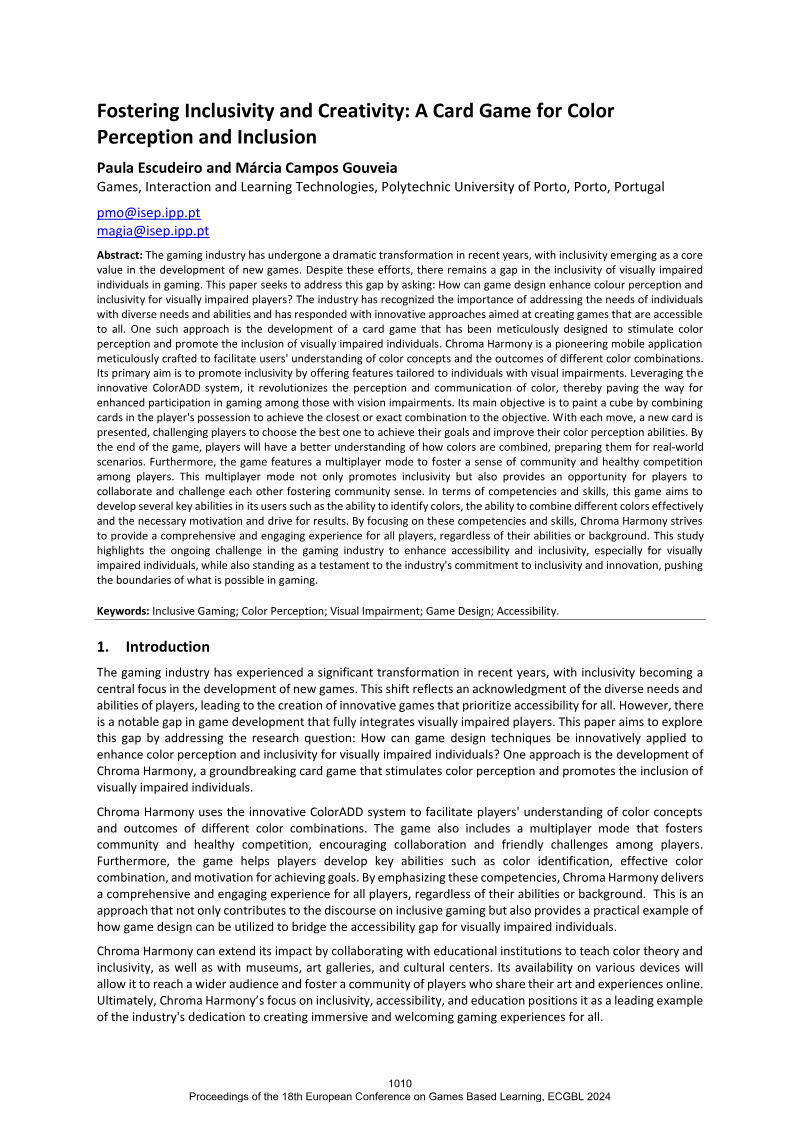
Chroma Harmony is a card game designed by Paula Escudeiro and Márcia Campos Gouveia at the Polytechnic University of Porto to improve color perception and promote inclusion of visually impaired players.
- Chroma Harmony, a card game by Paula Escudeiro and Márcia Campos Gouveia at the Polytechnic University of Porto, aims to improve color perception and include visually impaired players, addressing a gap in inclusive game development.
- The game's central novelty is applying the ColorADD color-coding system within a serious game, an approach the authors say has not been extensively explored in prior serious game research on color differentiation.
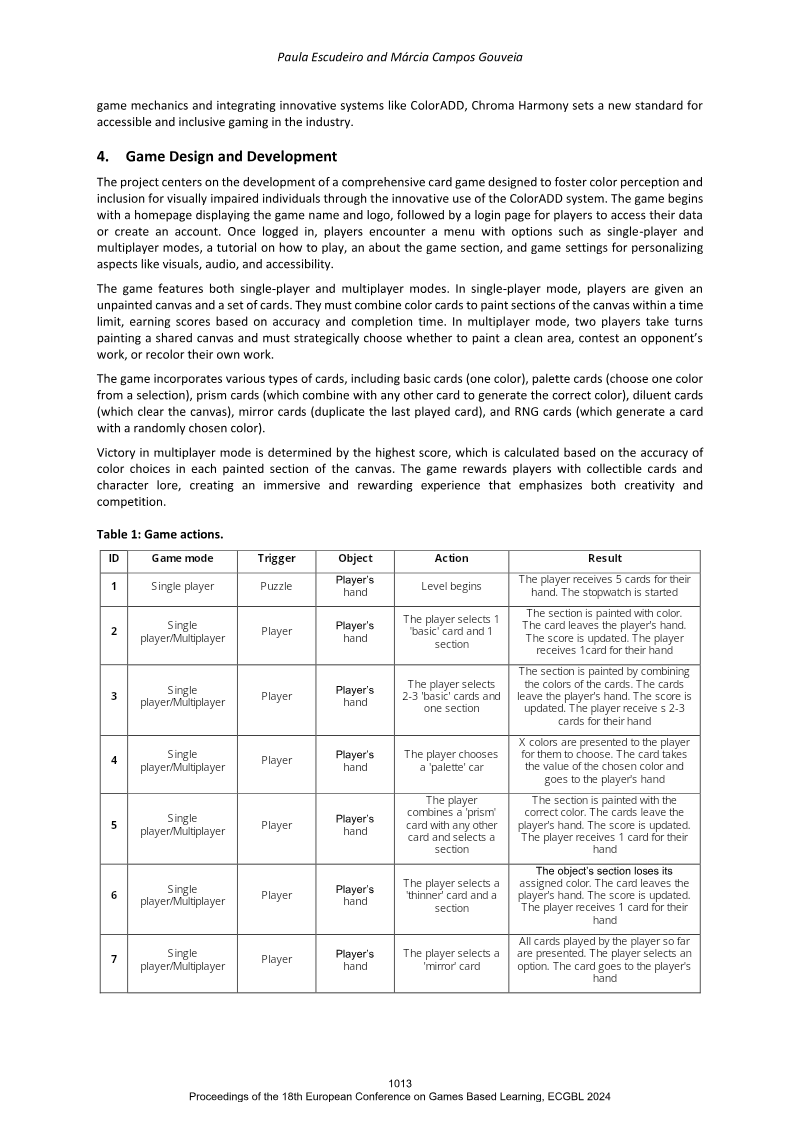
- Gameplay centers on painting three-dimensional objects by combining color cards under a time limit, with single-player and multiplayer modes, and scoring based on color accuracy and completion time.