1 free read left. Create a free account for unlimited reading + AI research.
Create free accountWhitepaper European Conference on Games Based Learning (ECGBL)
1 free read left. Create a free account for unlimited reading + AI research.
Create free accountWhitepaperEuropean Conference on Games Based Learning (ECGBL)
Phase one included 54 participants, 30 from design professions, and phase two included 40 participants recruited through Instagram.
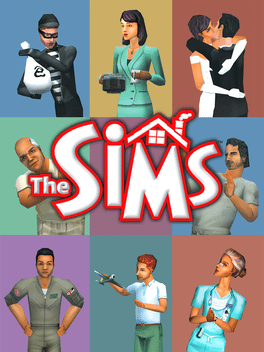
This study by Yüzyıl Nevin Aydın at Beykent University examines whether players of The Sims, the life simulation series from Electronic Arts, show shared patterns in how they engage with the game, particularly among those who later pursued design-related education in architecture, interior architecture, and industrial design. The research is framed against a broader background of edutainment and game-based learning, arguing that commercial games not designed for education can still cultivate transferable skills in planning, decoration, and spatial thinking. The Sims is presented as a case where open-ended house-building and customization may foster creativity and design interest.
The empirical basis consists of two survey phases. The first involved 54 participants from varied academic backgrounds, of whom 30 came from design professions, while the second drew on 40 participants recruited through Instagram. Responses showed that 71.8% of respondents spent most of their playtime designing or modifying houses, a share rising to 80% among design-faculty participants. Open-ended responses, analyzed thematically, indicated that many design students viewed the game as an early influence on their career choice. In the second phase, 45% of participants stated that the game affected their profession choice, a figure rising to 59% among current players, while those who had stopped playing reported little influence.
The author concludes that the strong association between sustained engagement and design career aspirations suggests simulation games can inspire design interest from a young age. The study acknowledges significant limitations, including its restriction to a single country, a small and limited sample, and a short timeframe, which constrain generalizability. The author calls for replication across cultural contexts and notes that the anticipated multiplayer features of The Sims 5 may alter the game's educational potential in future research.
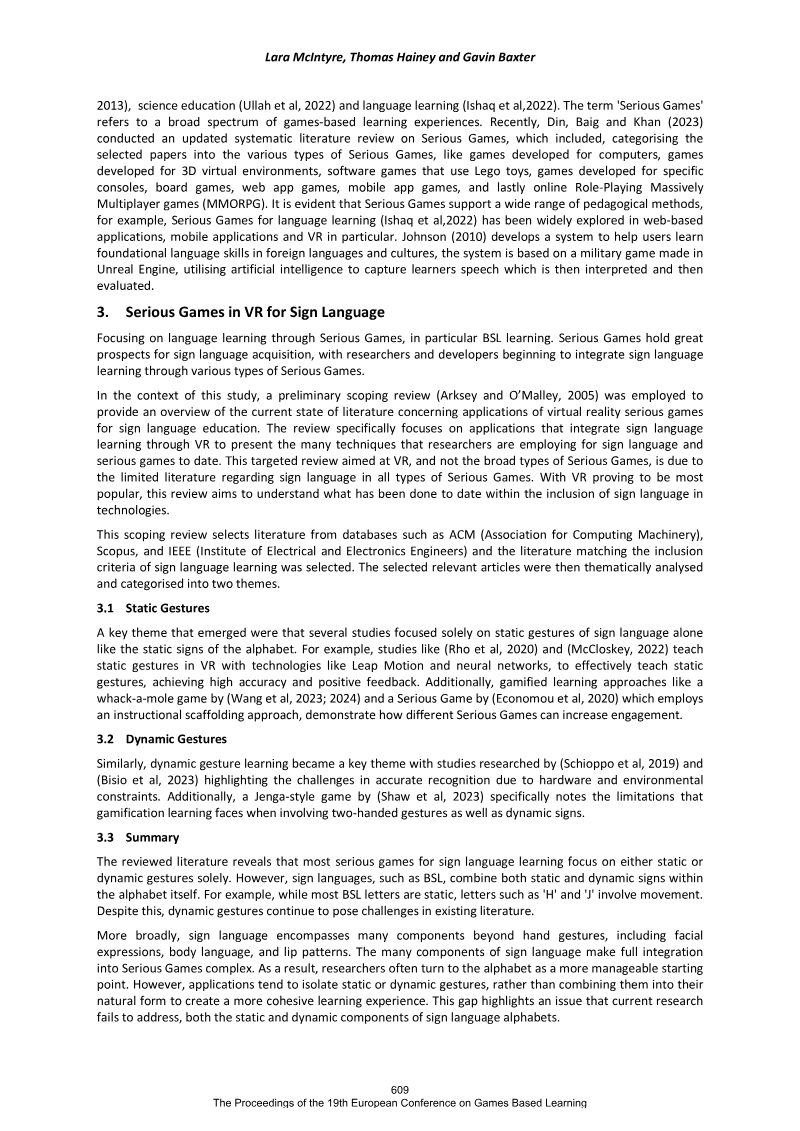
Each row is a game or company this document names, each column a document, oldest first. A mark means that document names it. Select a row to see those documents.
European Conference on Games Based Learning (ECGBL) · 2025
European Conference on Games Based Learning (ECGBL) · 2025
DiGRA · 2026
European Conference on Games Based Learning (ECGBL) · 2025
European Conference on Games Based Learning (ECGBL) · 2025
European Conference on Games Based Learning (ECGBL) · 2024