1 free read left. Create a free account for unlimited reading + AI research.
Create free accountWhitepaper European Conference on Games Based Learning (ECGBL)
1 free read left. Create a free account for unlimited reading + AI research.
Create free accountWhitepaperEuropean Conference on Games Based Learning (ECGBL)
The program combined the digital game Magic Math Spell Caster with physical board games, manipulatives, and worksheets. It served over 400 children aged 6 to 10 in grades 1 through 5.
This study, authored by researchers from Inteligen Games & Robotic Private Limited in Bengaluru, evaluates a hybrid mathematics intervention combining the digital game "Magic Math Spell Caster" with physical board games, manipulatives, and worksheets. The program was implemented at Government School Ramagondanahalli in Bengaluru, serving over 400 children aged 6 to 10 in grades 1 through 5, most of whom are first-generation learners from economically disadvantaged backgrounds. The intervention ran for roughly six to eight months, with weekly 70-minute sessions, and was designed to address math anxiety, build numeracy, and introduce algebraic thinking.
The central finding is that the share of students scoring above 60% in internal school mathematics examinations rose from 20% (24 of 120 students) before the intervention to 83.3% (100 of 120) afterward, a gain of 63.3 percentage points. Beyond scores, the authors report that many Grade 1 students tackled Grade 2 problems, older students explored advanced topics voluntarily, and teachers observed reduced anxiety, greater willingness to attempt difficult problems, and more peer-to-peer explanation during play. The authors attribute these outcomes to adaptive difficulty, low-stakes practice, immediate feedback, and the multi-sensory design of the hybrid approach.
The evidence base has clear limitations. The results rely on school-administered internal exams and qualitative teacher observations, with no control group, no standardized anxiety measure, and no statistical testing reported. The before-and-after comparison cannot separate the intervention's effect from other changes over the same period. The authors are also the developers of the product being evaluated, a conflict that warrants caution in interpreting the reported gains. The study is best read as a promising, descriptive case report rather than a rigorous efficacy trial.
European Conference on Games Based Learning (ECGBL) · 2024
European Conference on Games Based Learning (ECGBL) · 2024
European Conference on Games Based Learning (ECGBL) · 2024
European Conference on Games Based Learning (ECGBL) · 2024
European Conference on Games Based Learning (ECGBL) · 2024
European Conference on Games Based Learning (ECGBL) · 2024
European Conference on Games Based Learning (ECGBL) · 2024
European Conference on Games Based Learning (ECGBL) · 2024
European Conference on Games Based Learning (ECGBL) · 2024
European Conference on Games Based Learning (ECGBL) · 2024
European Conference on Games Based Learning (ECGBL) · 2024
European Conference on Games Based Learning (ECGBL) · 2024
DiGRA · 2024
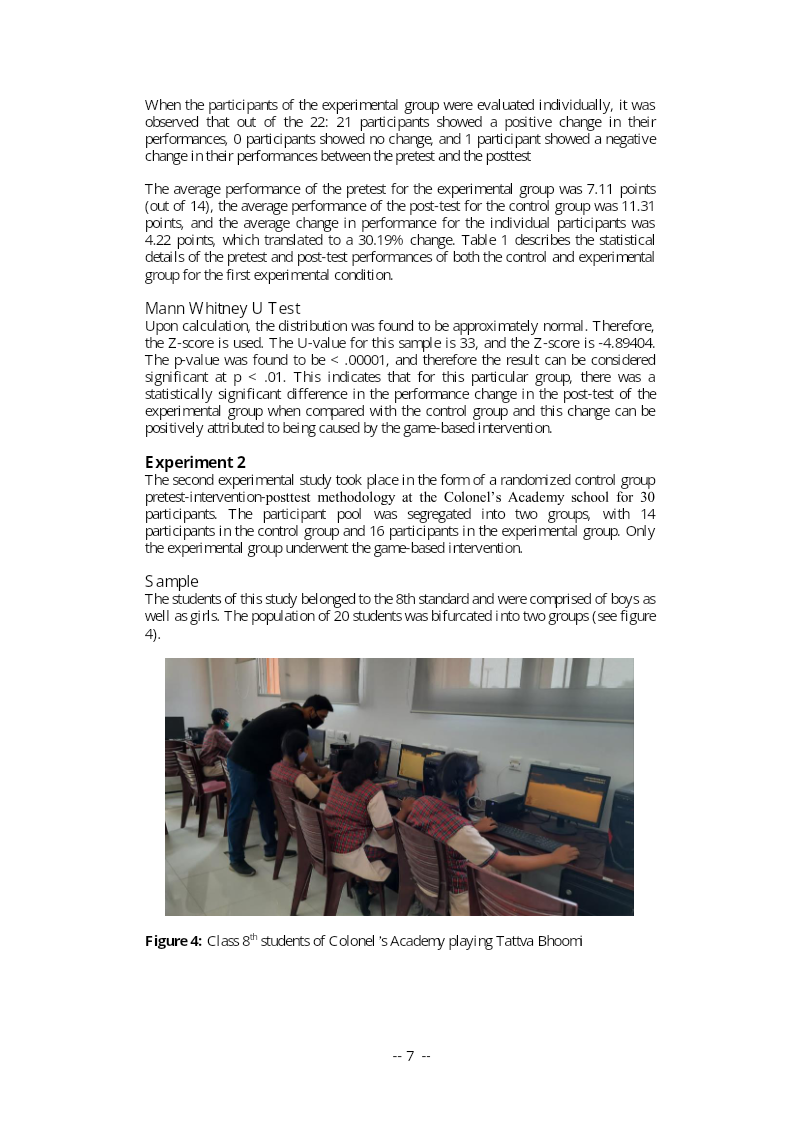
DiGRA · 2023
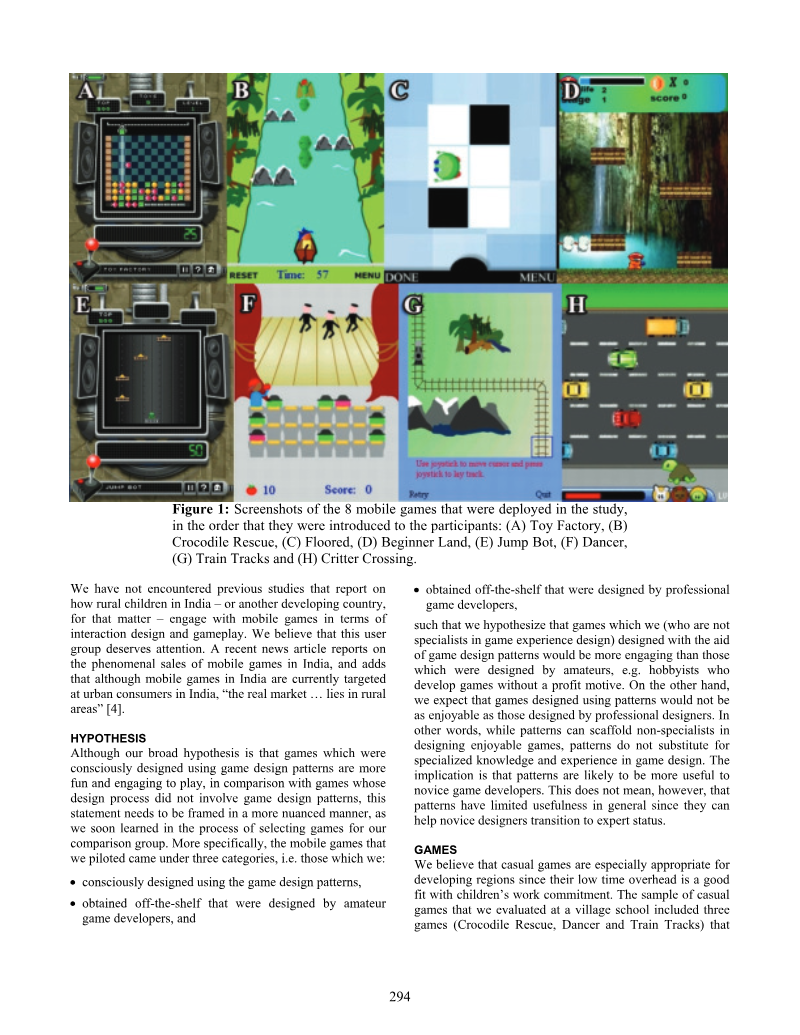
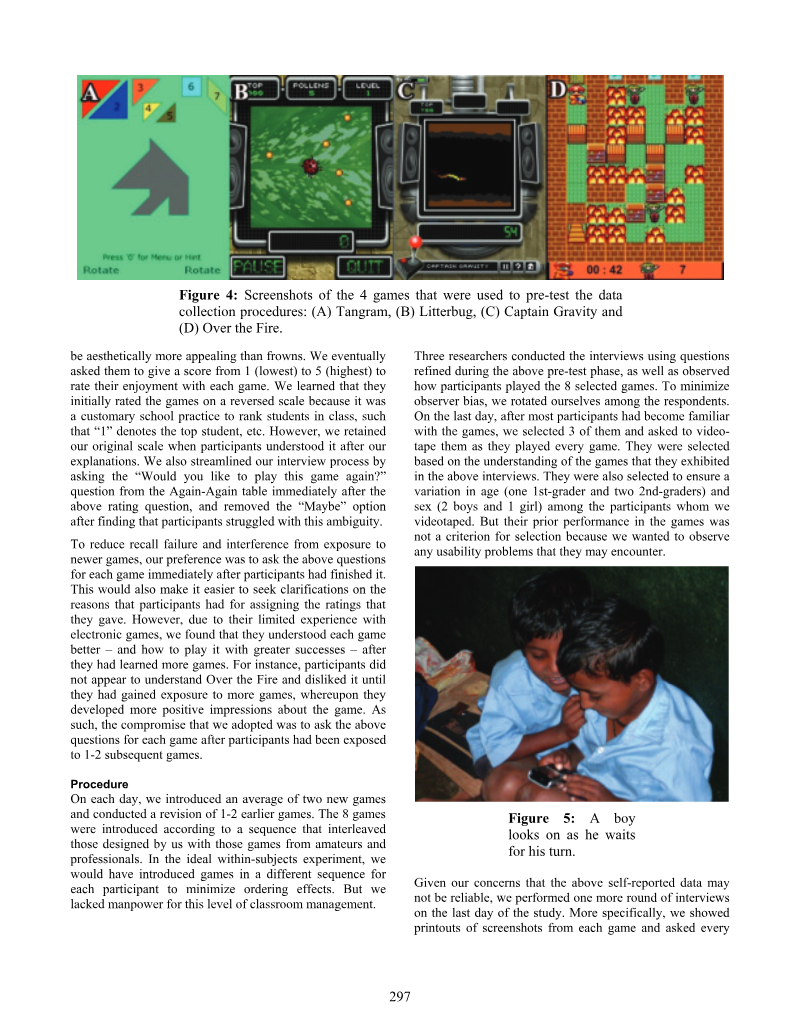
DiGRA · 2007