
European Conference on Games Based Learning (ECGBL)
Annual European conference on game-based learning and serious games; its proceedings are published open access (CC BY) by Academic Conferences International.
Documents
A Virtual 3D Chemistry Escape Room for Exam Preparations
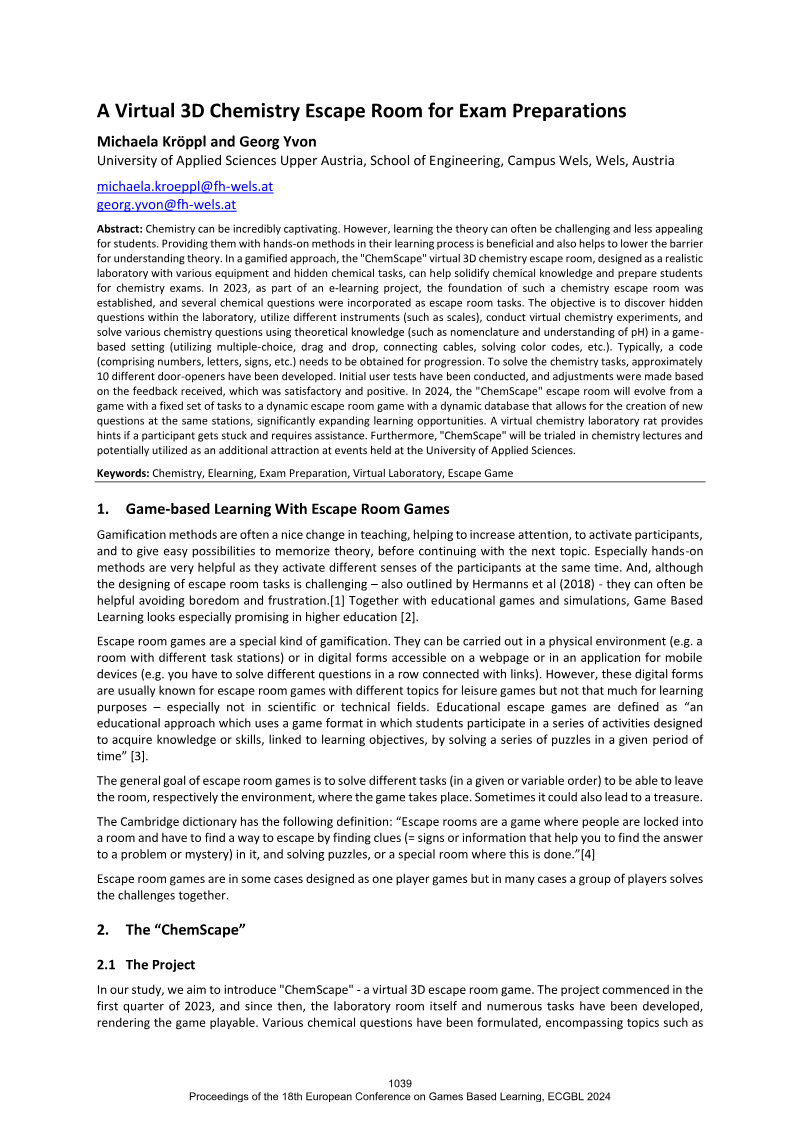
The paper introduces "ChemScape," a virtual 3D chemistry escape room designed to help students reinforce chemical theory and prepare for exams through a gamified, hands-on approach.
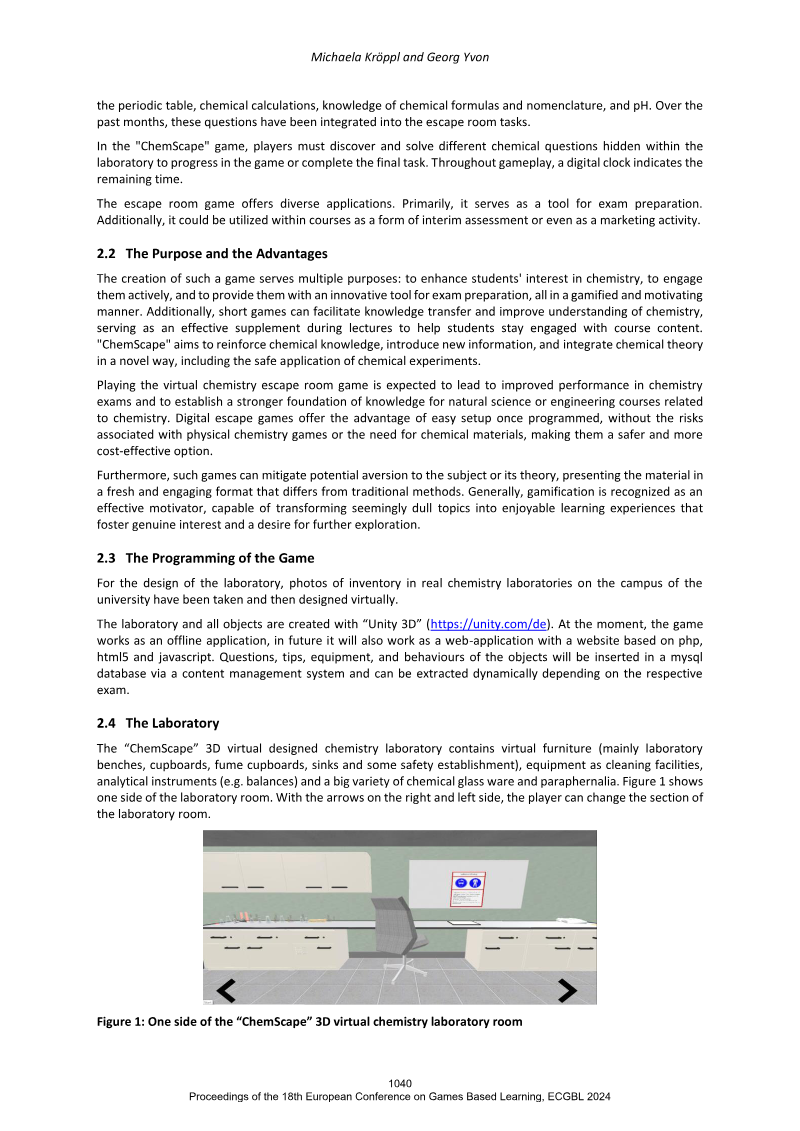
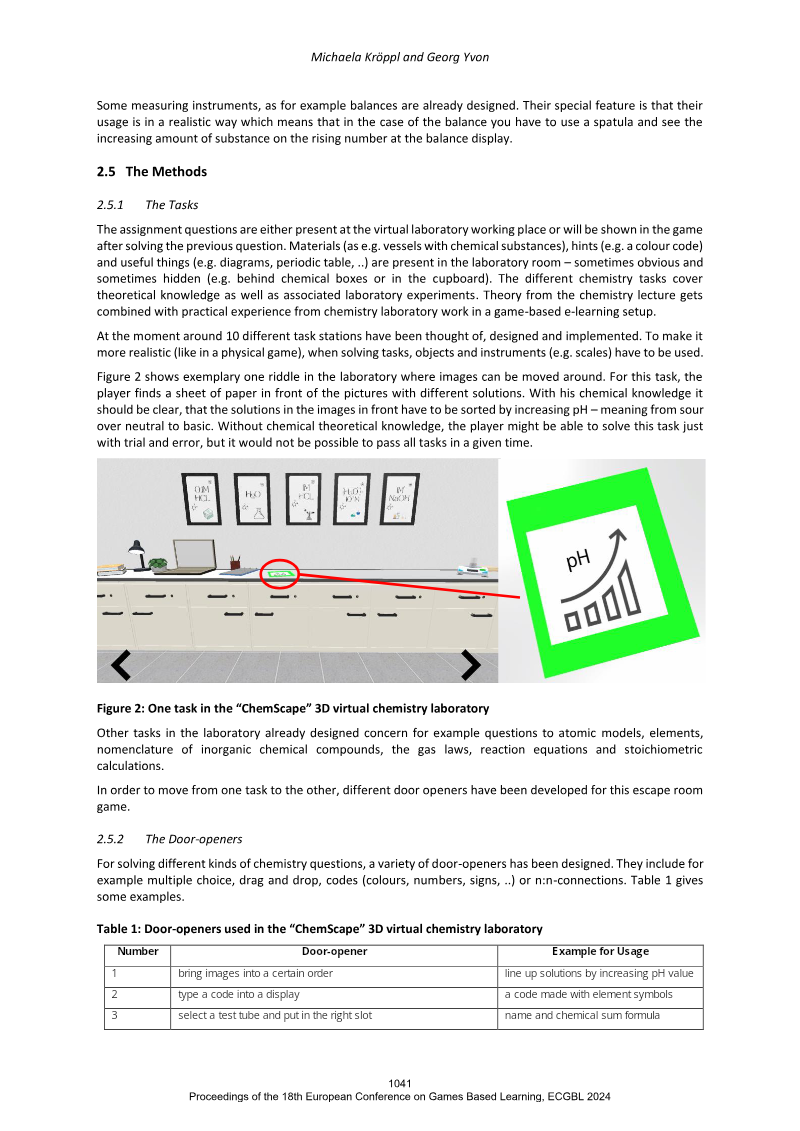
- ChemScape is a Unity 3D virtual chemistry escape room built from photographs of real university laboratory inventory, requiring players to find hidden chemistry questions, operate virtual instruments such as balances, run virtual experiments, and solve tasks under a time limit.
- Progression is gated by about ten "door-openers" (multiple-choice, drag-and-drop, cable connection, and color-code puzzles) covering the periodic table, pH, nomenclature, gas laws, and stoichiometry.
- The authors argue the format can boost engagement, make abstract theory easier to grasp, and offer a safer, lower-cost alternative to physical chemistry activities, though these benefits are not yet empirically verified.
Bending Rules, Telling Stories: Convivial Game Design Approaches for Engaging With Futures
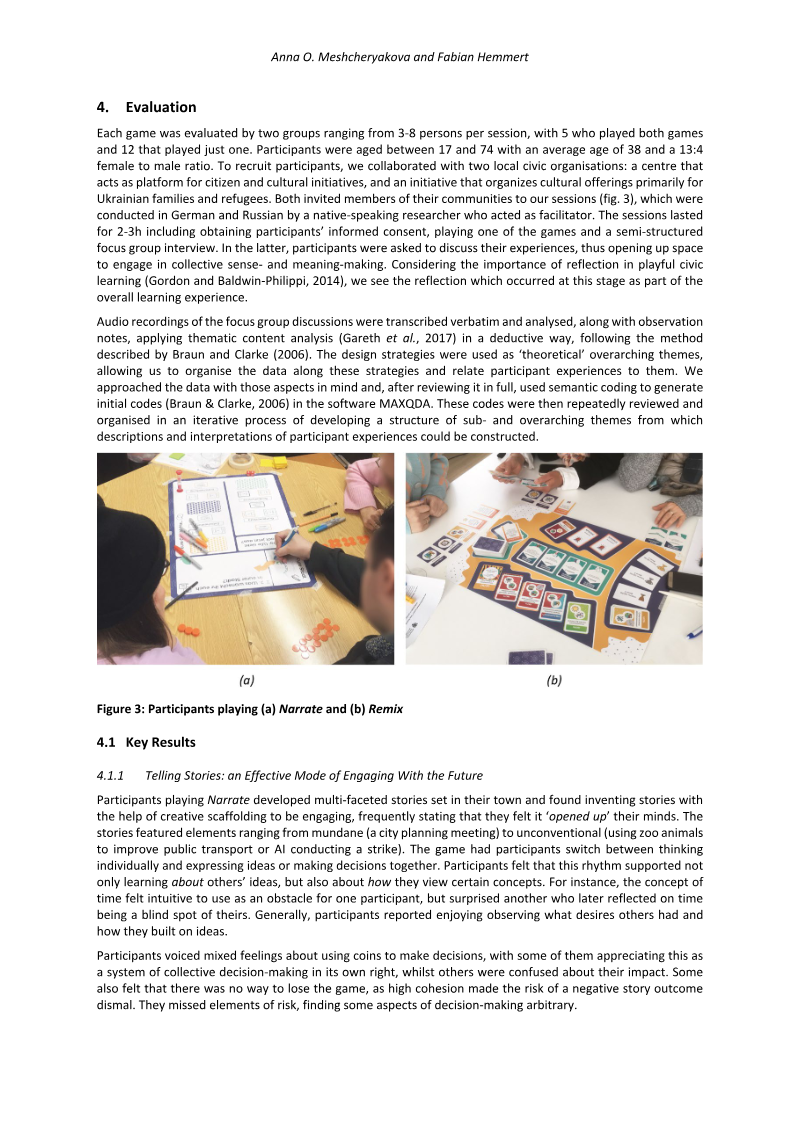
This paper by Meshcheryakova and Hemmert explores whether games can serve as "convivial" tools for civic learning and collaborative thinking about shared futures, drawing on Illich's concept of conviviality, which emphasizes collaboration, self-determination, and joyful interaction.
- Narrative-focused design outperformed mechanics-focused design: the storytelling game Narrate generated engaging discussion, meaningful exchange across age groups, and a strong personal connection to the imagined future, while the rule-manipulation game Remix did not.
- The authors frame the core problem as a tension between games' rigid rule systems and the player agency that 'convivial' tools require, drawing on Illich's concept of conviviality (collaboration, self-determination, joyful interaction).
- Study design: research-through-design with two analogue games, tested with 17 participants aged 17 to 74 in sessions of two to three hours, combining gameplay with semi-structured focus groups and deductive thematic analysis.
Fun and Functional: Using Non-Digital Games to Promote Maths Engagement in Pre-service Teachers
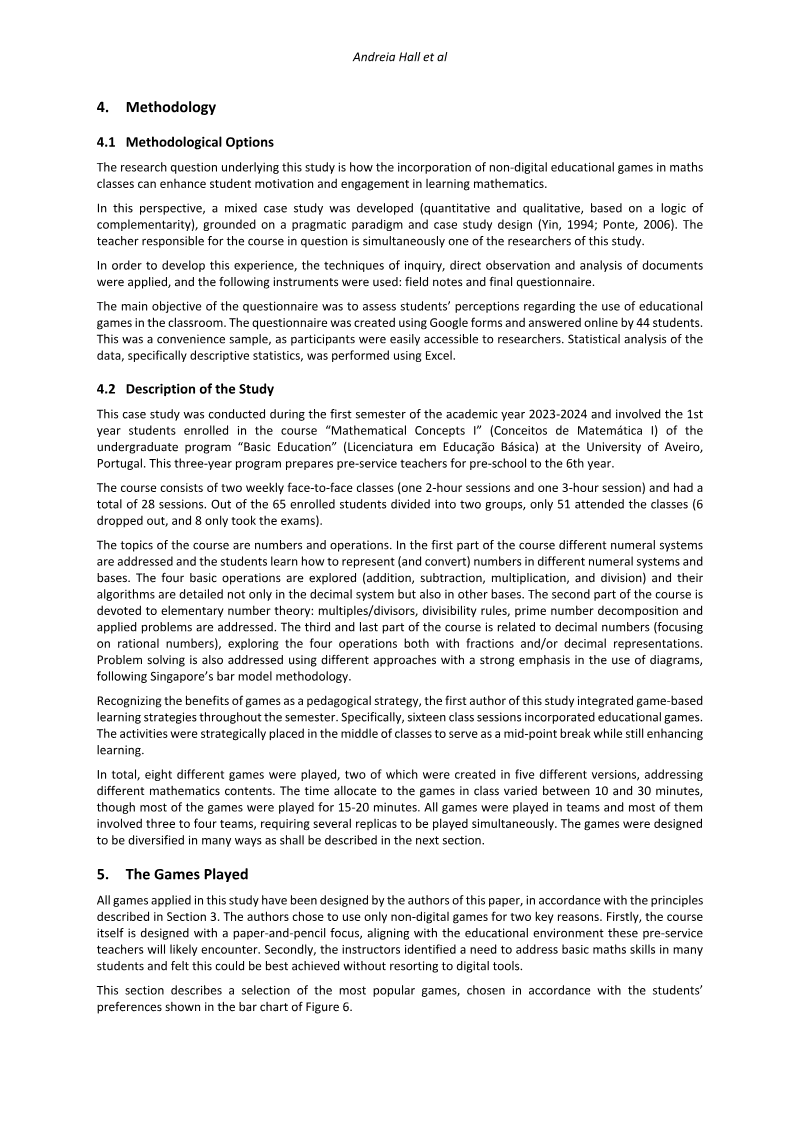
This study investigates whether non-digital educational games can enhance motivation and engagement in mathematics among first-year pre-service primary teachers at the University of Aveiro in Portugal.
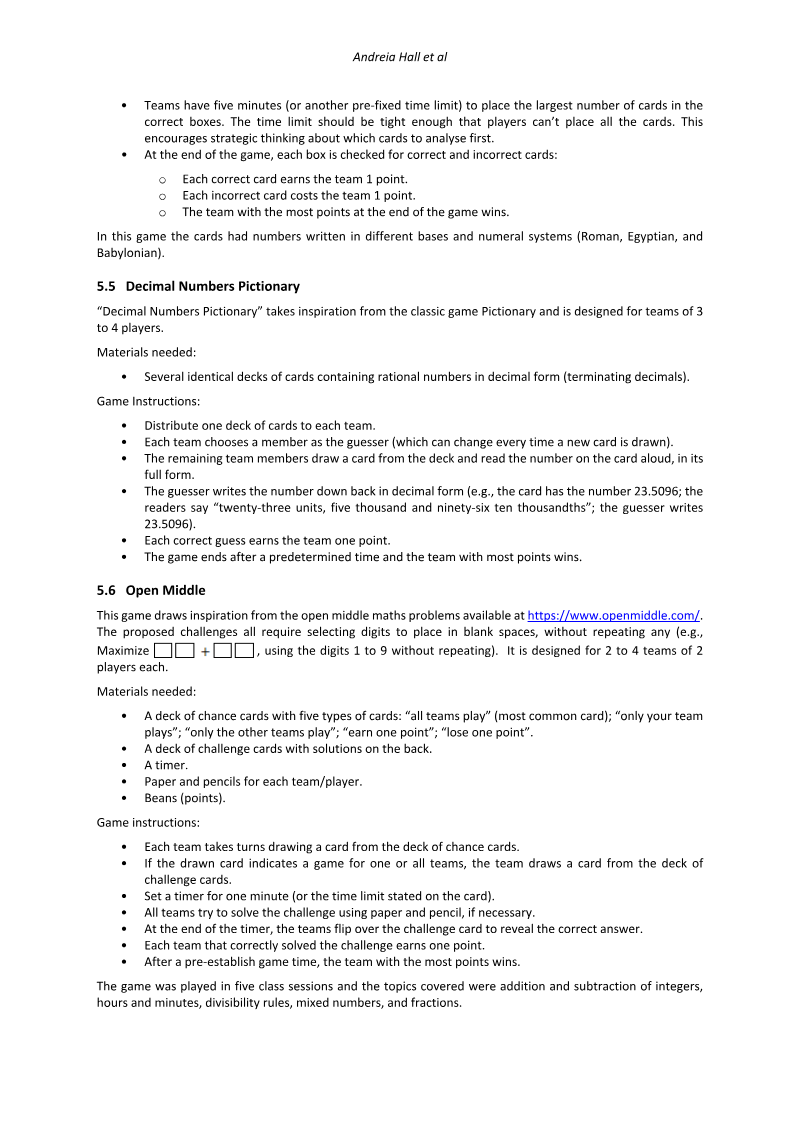
- Eight non-digital games, some in multiple versions, were trialled across sixteen class sessions with 44 first-year pre-service primary teachers at the University of Aveiro in Portugal, using a mixed case study design.
- Students responded very favourably: none disliked the games, 98 percent expressed some degree of liking, and mean agreement exceeded 4 on a 5-point scale that games made learning more interactive, engaging, and motivating.
- Garden Animals and Maths Monopoly were the most preferred activities among participants.
Empowering Neurodiverse Voices in Research Ethics through a Playful Card-Based Approach
A playful, card-based research ethics toolkit is presented here as a means of involving neurodivergent people, including those with intellectual disabilities, in discussions about research ethics.
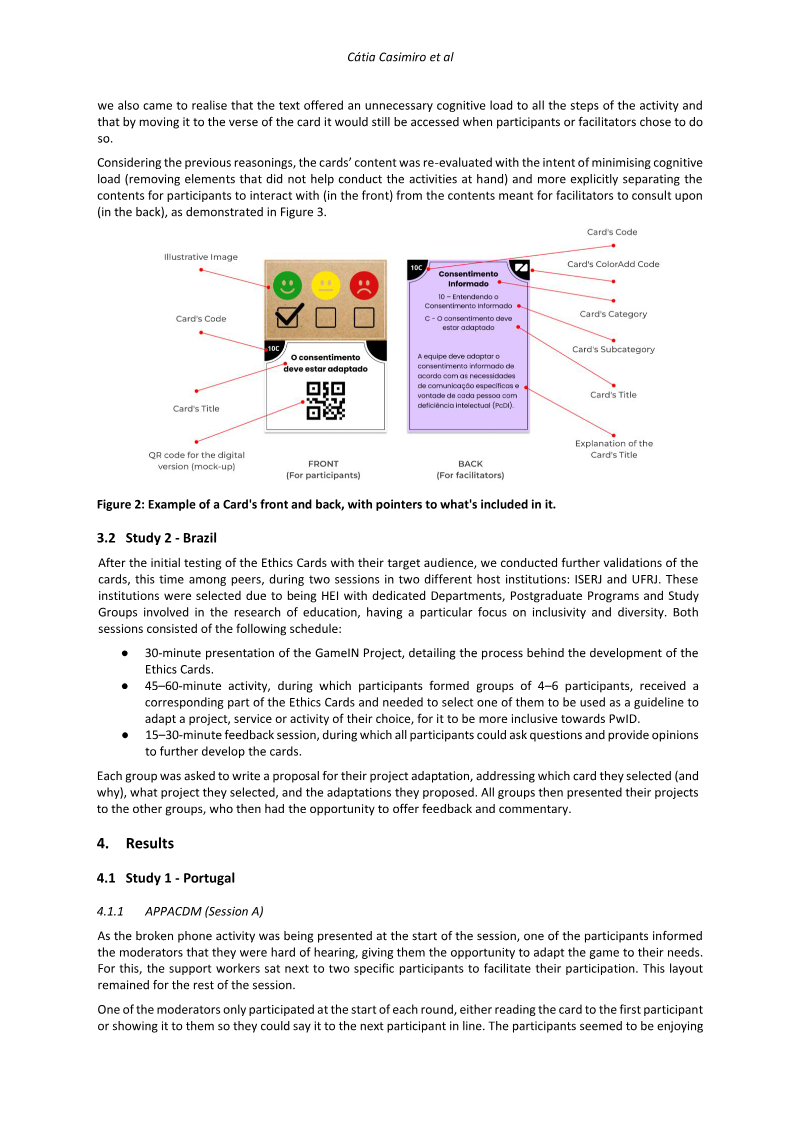
- The report presents a playful, card-based research ethics toolkit of 39 easy-to-read, illustrated cards, designed to involve neurodivergent people, including those with intellectual disabilities, in research ethics discussions.
- Validation involved 56 participants across Portugal and Brazil, mostly neurodivergent adults in Portugal and university students and researchers in Brazil, tested through "Broken Phone" games and card debates.
- In Brazil, 35 of 36 participants reported learning something new, and 28 of 36 judged the cards effective as facilitation tools.
What Is Learning in Serious Game Jams?: A Systematic Literature Review
Serious game jams, time-bound collaborative events in which participants create games addressing social, cultural, or scientific themes, have attracted growing interest as vehicles for learning, yet the research base remains thin and conceptually uneven.
- A PRISMA 2020 systematic review screened 1,455 sources, included 68, and found that only 10 explicitly addressed learning goals within serious game jams.
- Learning in these events is most often framed as collaborative and project-based learning, with only one of the ten sources explicitly grounded in constructionist theory.
- Learning measurement appeared in seven of the ten sources but was rarely analyzed in depth, with some studies counting games produced or reporting surveys without disclosing results.
Indie Games for Ethical and Socioemotional Development in Secondary Education
This work-in-progress study, conducted by researchers at the Universitat de les Illes Balears, proposes a three-year project to integrate independent video games into Spanish secondary education in order to strengthen teachers' video game literacy and students' ethical and socioemotional development, specifically European key…
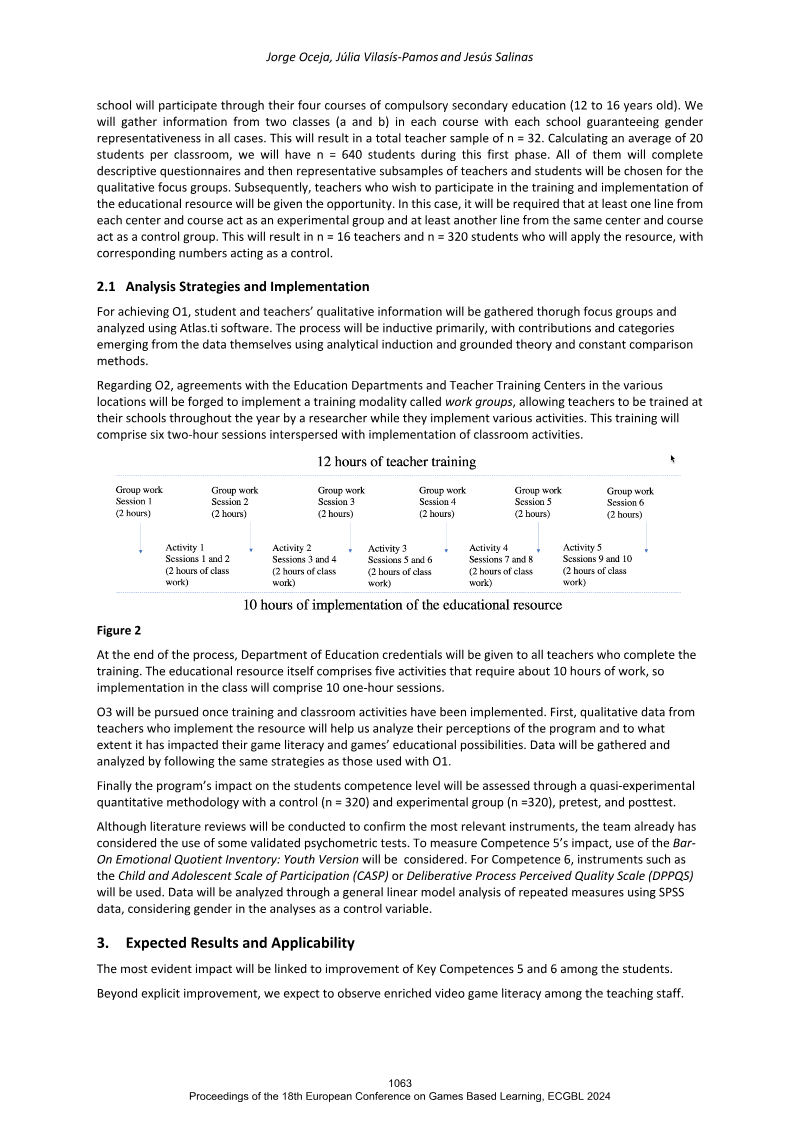
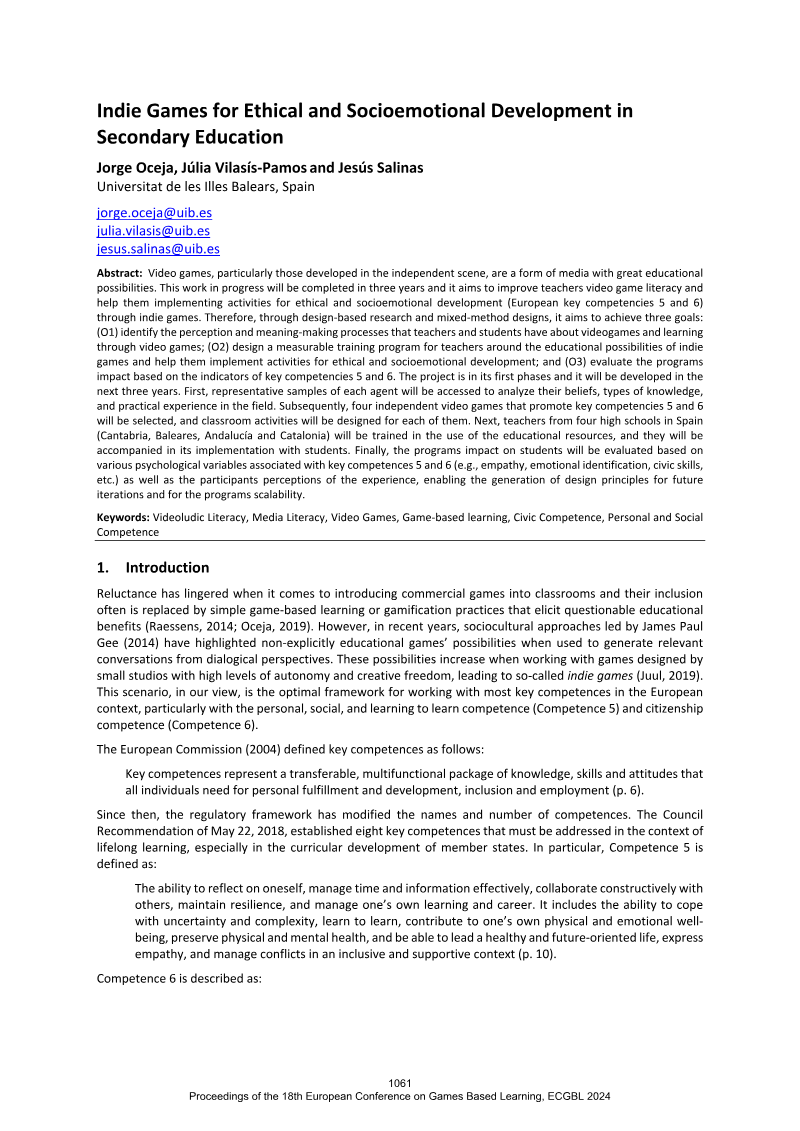
- The study proposes a three-year project integrating independent video games into Spanish secondary education to strengthen teachers' video game literacy and students' ethical and socioemotional development, targeting European key competences 5 (personal, social, and learning-to-learn) and 6 (citizenship).
- The authors argue that indie games, made by small studios with greater creative autonomy, offer richer possibilities for dialogical, sociocultural learning than commercial titles used in conventional game-based learning or gamification.
- The planned design combines design-based research with mixed methods and involves a proposed sample of 32 teachers and 640 students across four schools in Cantabria, the Balearic Islands, Andalusia, and Catalonia, with nonprobabilistic accidental sampling.
Game Lab Innovations in Education: Insights from a Board Game Design Project
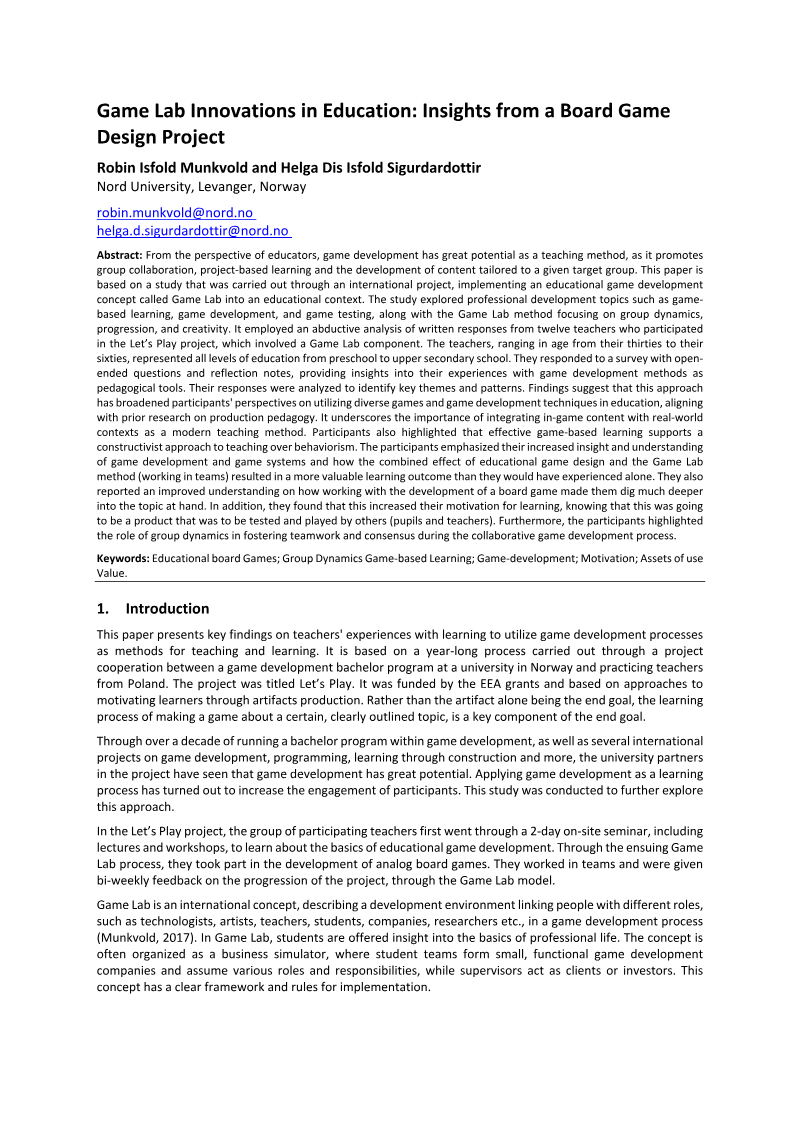
This paper examines how game development can serve as a pedagogical method for teachers, drawing on a year-long international project called Let's Play, which paired a Norwegian university game development program with practicing teachers from Poland.
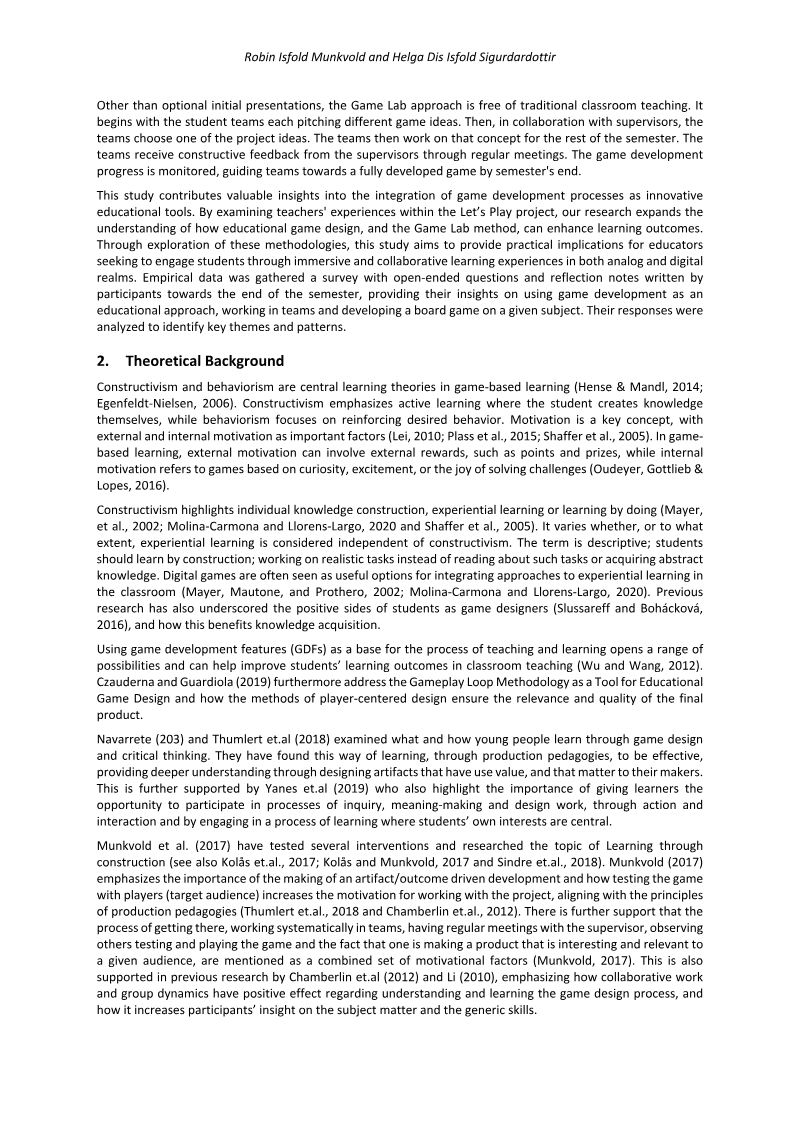
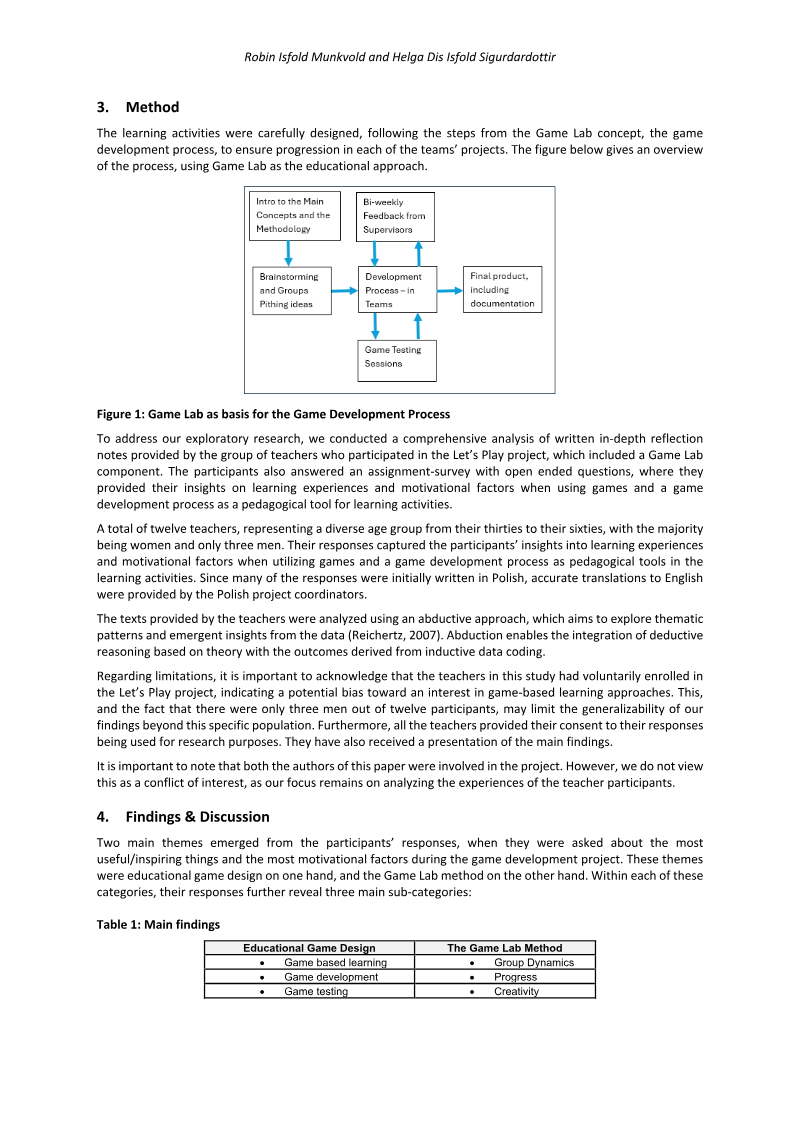
- A year-long international project called Let's Play paired a Norwegian university game development program with twelve practicing teachers from Poland, who completed a two-day seminar and then built analog board games in teams with bi-weekly feedback.
- The Game Lab model organizes development around student teams operating as small game companies, with supervisors acting as clients, and the study examined it as a way to support teacher professional development.
- Analysis of written reflections and open-ended surveys from the twelve teachers (ages roughly thirties to sixties, preschool through upper secondary) yielded two themes: educational game design (game-based learning, game development, game testing) and the Game Lab method (group dynamics, progress, creativity).
Gamification for Sustainable Management Education: Prosper Management Edition's Role in South Africa's Climate Policy Engagement
"Prosper Management Edition" is a gamified educational tool developed under the GREAT project at North-West University in South Africa, designed to strengthen sustainability literacy and strategic thinking among university students and young professionals.
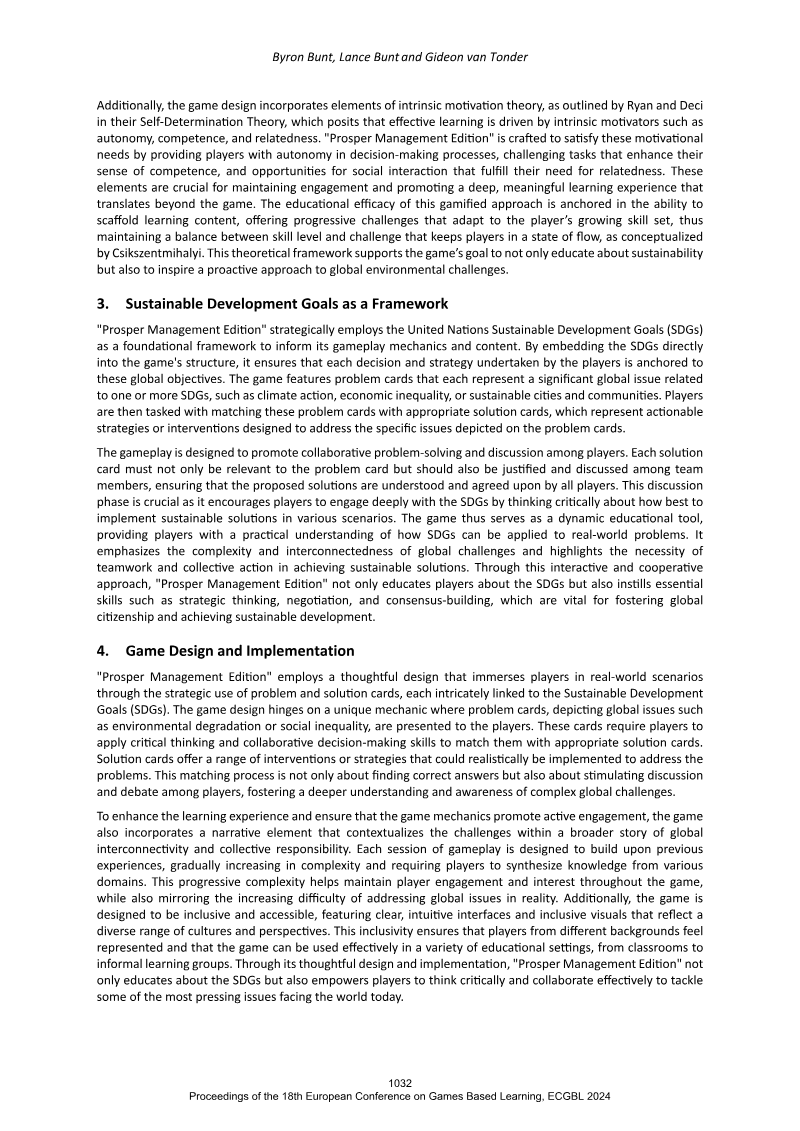
- Prosper Management Edition is a gamified sustainability-education tool developed under the GREAT project at North-West University in South Africa, aimed at university students and young professionals.
- The game's central argument is that active, game-based learning can deepen engagement with complex sustainability issues more effectively than traditional instruction.
- The game is built around problem cards representing SDG-linked global issues, which players match with solution cards through collaborative discussion and justification.
Unified Effort: Developing a Mixed Reality Serious Game for Collaborative Crisis Management Training
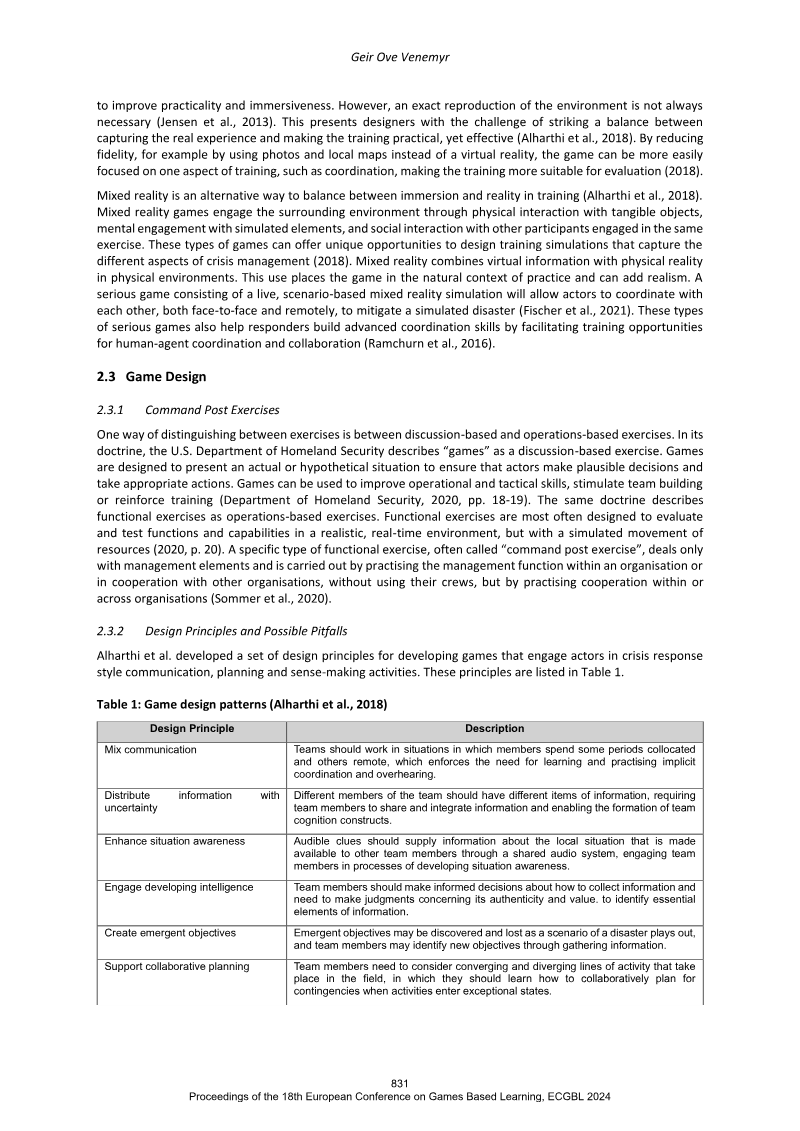
"Unified Effort" presents the design rationale and development process for a mixed reality serious game intended to train municipal and county crisis management staff in Norway.
- The game targets collaboration failures in crisis response, aiming to break down organizational silos through cross-organizational learning among Norwegian municipal and county crisis management staff.
- Design was grounded in expert interviews and an eight-participant workshop of emergency-service professionals with 11 to 20 years of experience, converging on an extreme-weather scenario and a Proactive Staff methodology with a standardized startup-meeting agenda.
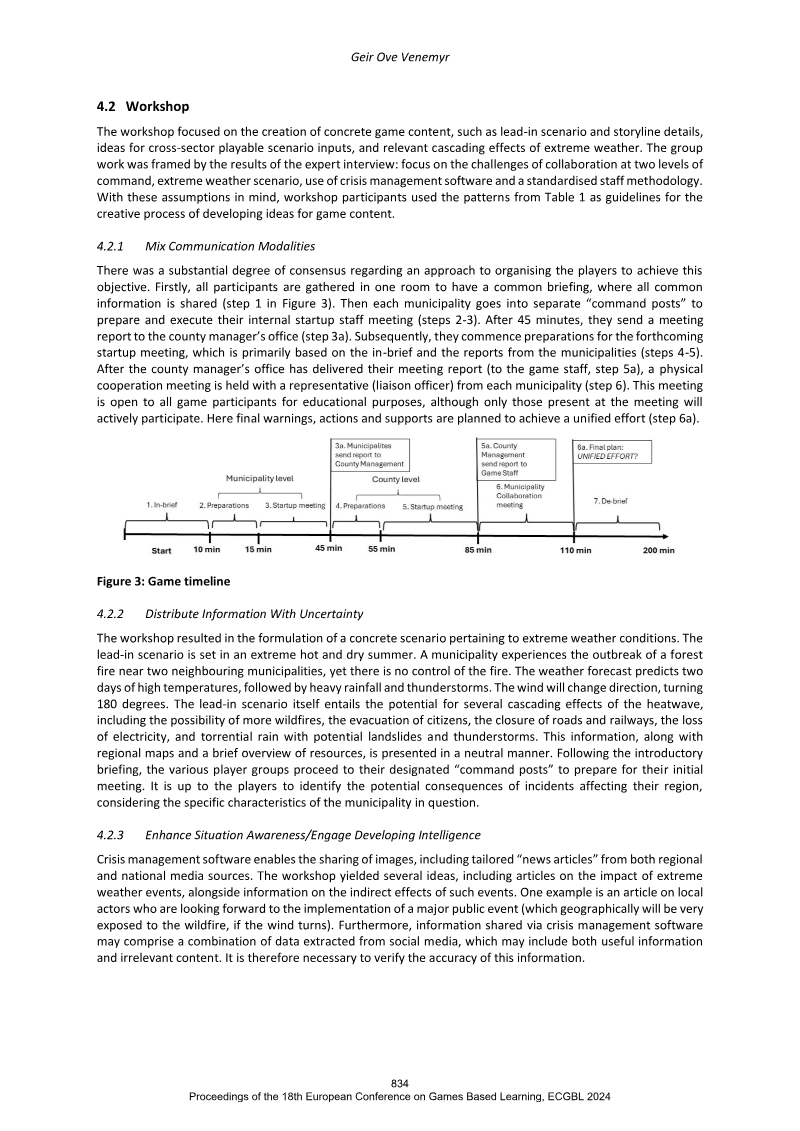
- The scenario timeline combines joint briefings, separate municipal command posts, and a cross-municipal coordination meeting to exercise two-level crisis coordination.
Sustainable Sip: Learning Concepts of Business Sustainability Through a Hybrid Game
"Sustainable Sip" presents the design and early validation of a hybrid analogue-digital multiplayer game intended to teach university students systems thinking and the economic, social, and ecological dimensions of business sustainability.
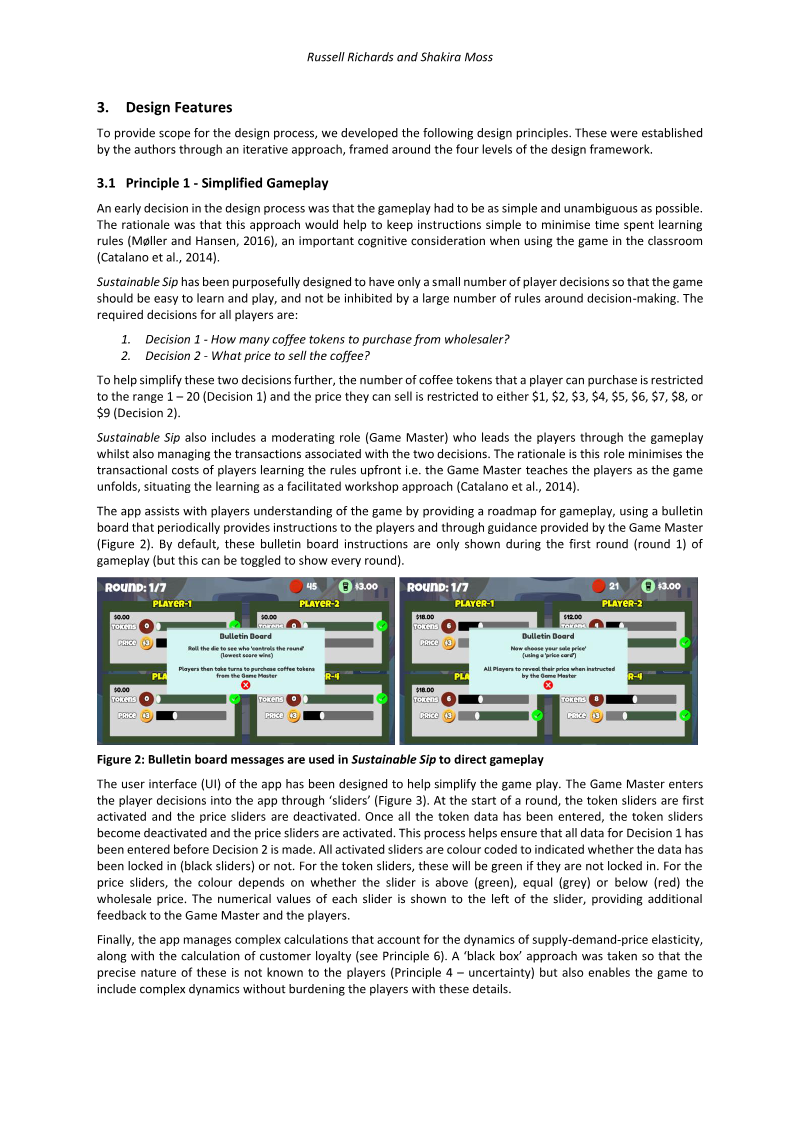
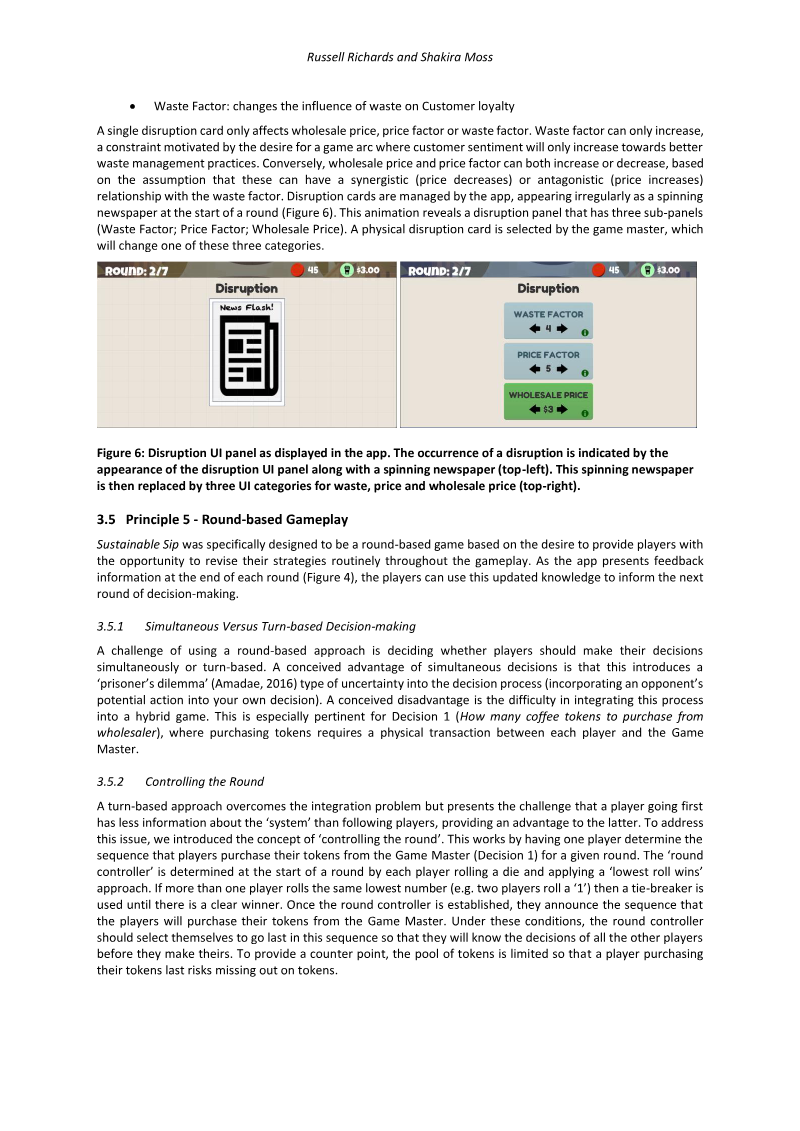
- "Sustainable Sip" is a hybrid analogue-digital multiplayer board game that teaches university students systems thinking and the economic, social, and ecological dimensions of business sustainability through a coffee shop simulation balancing profit, waste reduction, and customer loyalty.
- The work reports only design and beta testing; its impact on learning outcomes is explicitly deferred to a later stage, so claims of educational effectiveness remain untested.
- Beta testing with 77 students across eight tables (39 questionnaire responses) found the gameplay simple and intuitive, which led to removing physical money and reducing awards to a single cumulative "Sustainable Sipper" prize.
Board Games and Entrepreneurial Skills Acquisition: Efficacy of the EntreComp Framework in Higher Education
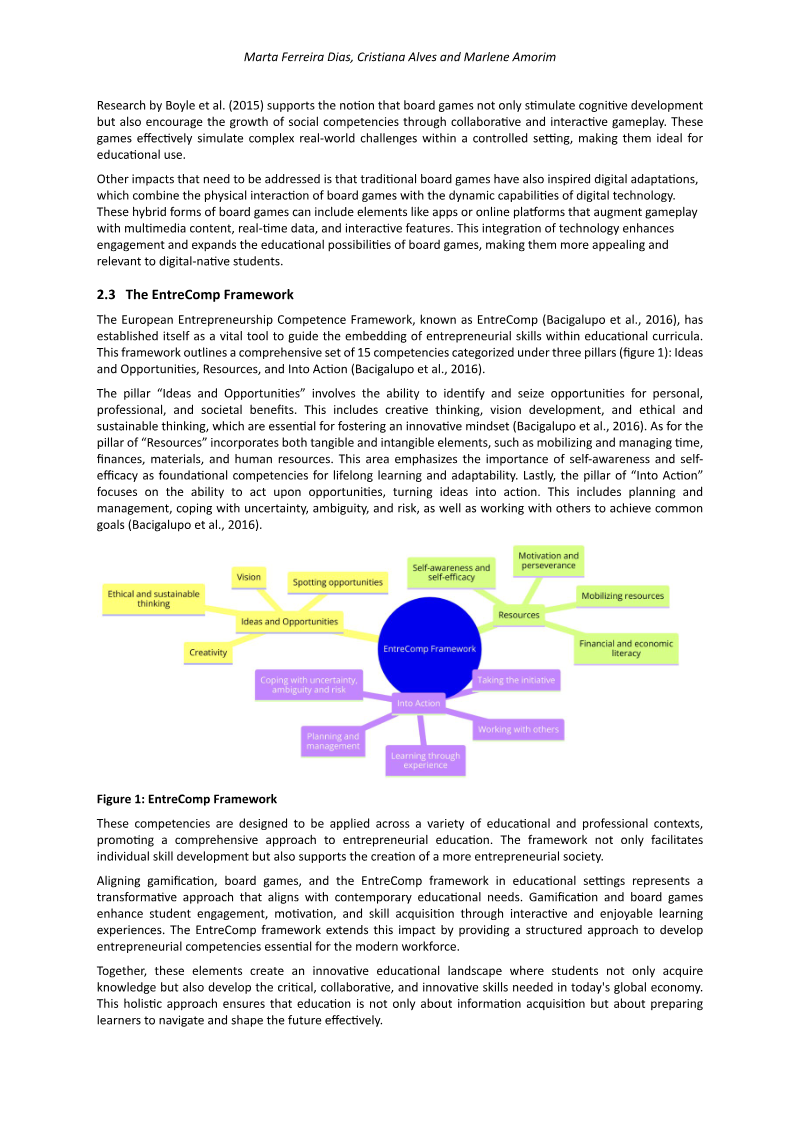
This study examines whether board games can serve as an effective vehicle for teaching entrepreneurial competencies in higher education, using the European Entrepreneurship Competence Framework (EntreComp) as its organizing structure.
- The study tests whether board games can teach entrepreneurial competencies in higher education, using the EntreComp framework as its organizing structure and the 'Game It Away!' project at the University of Aveiro as its basis.
- Two pilot studies were run in a university makerspace, with targets of 25 participants each, but the first drew a diverse mix of undergraduate, master's, and doctoral students while the second had only 11 Portuguese undergraduates.
- Both pilots followed a five-phase method (icebreaker, EntreComp and game-design theory, theme selection, prototype creation, pitch), with learning journals as the main source of reflective data.
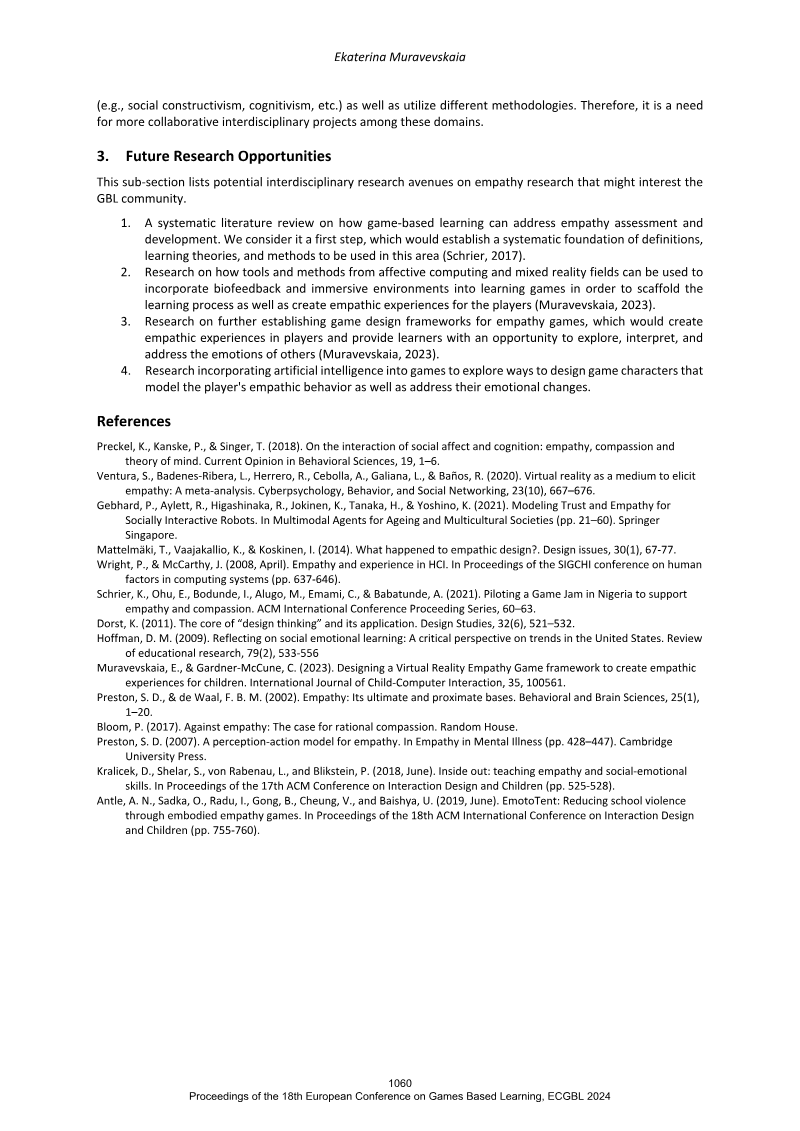
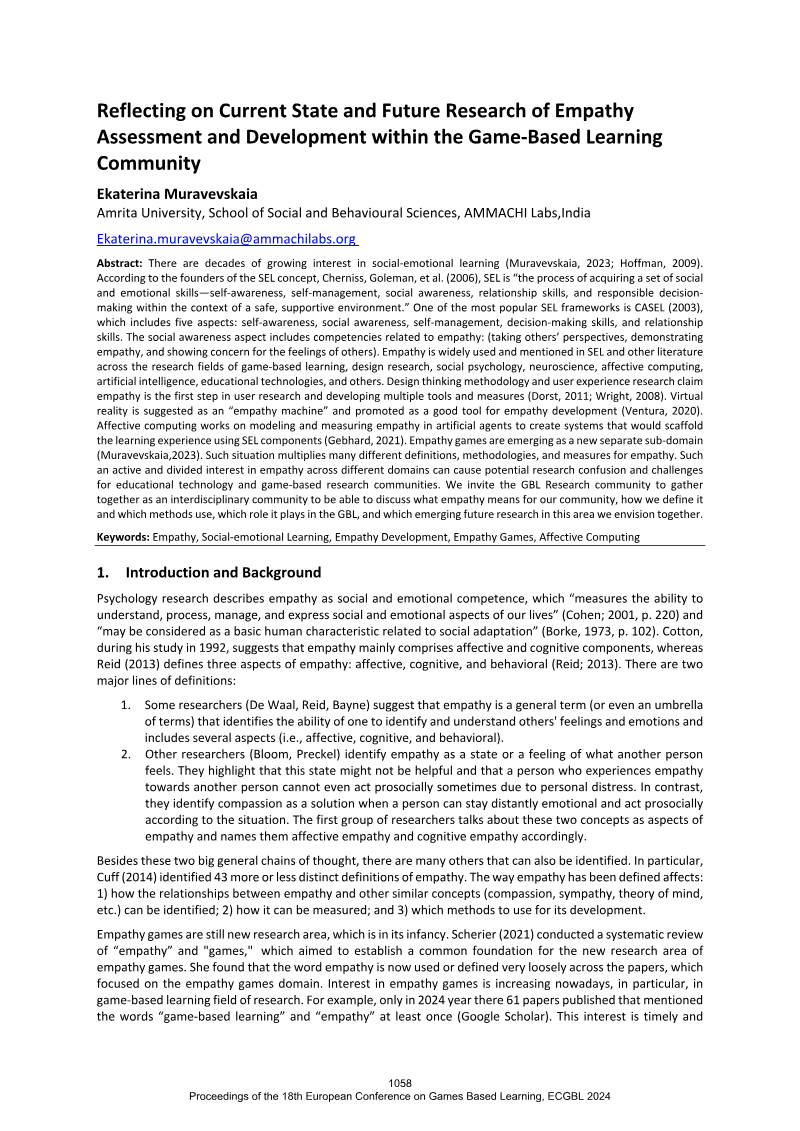
Reflecting on Current State and Future Research of Empathy Assessment and Development within the Game-Based Learning Community
This position paper argues that empathy research within the game-based learning (GBL) community has grown rapidly across many fields, but lacks a shared vocabulary, which risks confusion and weakens interdisciplinary collaboration.
- Empathy research across the game-based learning community has grown rapidly but lacks a shared vocabulary, risking confusion and weakening interdisciplinary collaboration; the author calls for joint clarification of how empathy should be defined, measured, and used in educational games.
- Definitions of empathy are fragmented: earlier work identified 43 distinct definitions, and a systematic review of empathy and games found 18 definitions in use, often applied loosely without grounding in psychology research.
- Psychology offers two main lines of definition: empathy as an umbrella construct with affective, cognitive, and behavioral components, and empathy as a feeling that may not always drive prosocial action, distinguished from compassion.