
European Conference on Games Based Learning (ECGBL)
Annual European conference on game-based learning and serious games; its proceedings are published open access (CC BY) by Academic Conferences International.
Documents
Playing for Privacy Awareness: Learning from a "Wow-Moment" with iBuddy
The paper presents iBuddy, a two-hour narrative simulation in which a fictional "synthetic buddy" app surprises students with their own extracted personal data, including contacts, photos, and app usage.
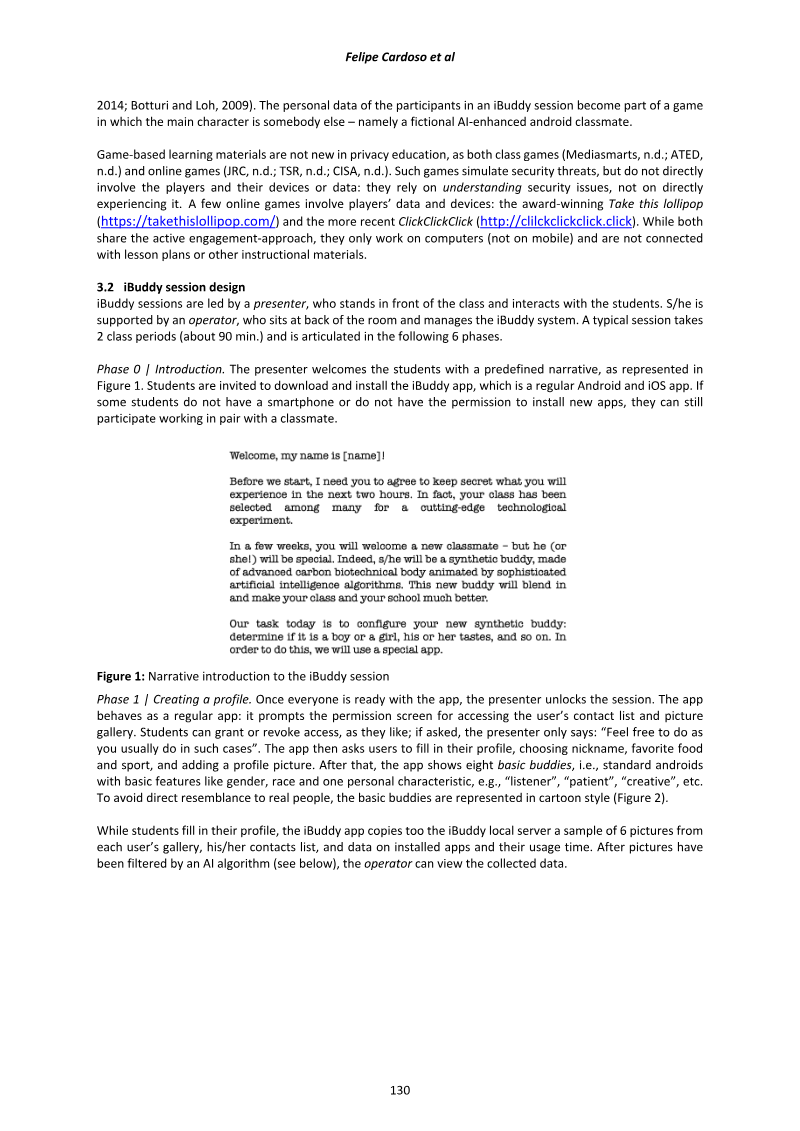
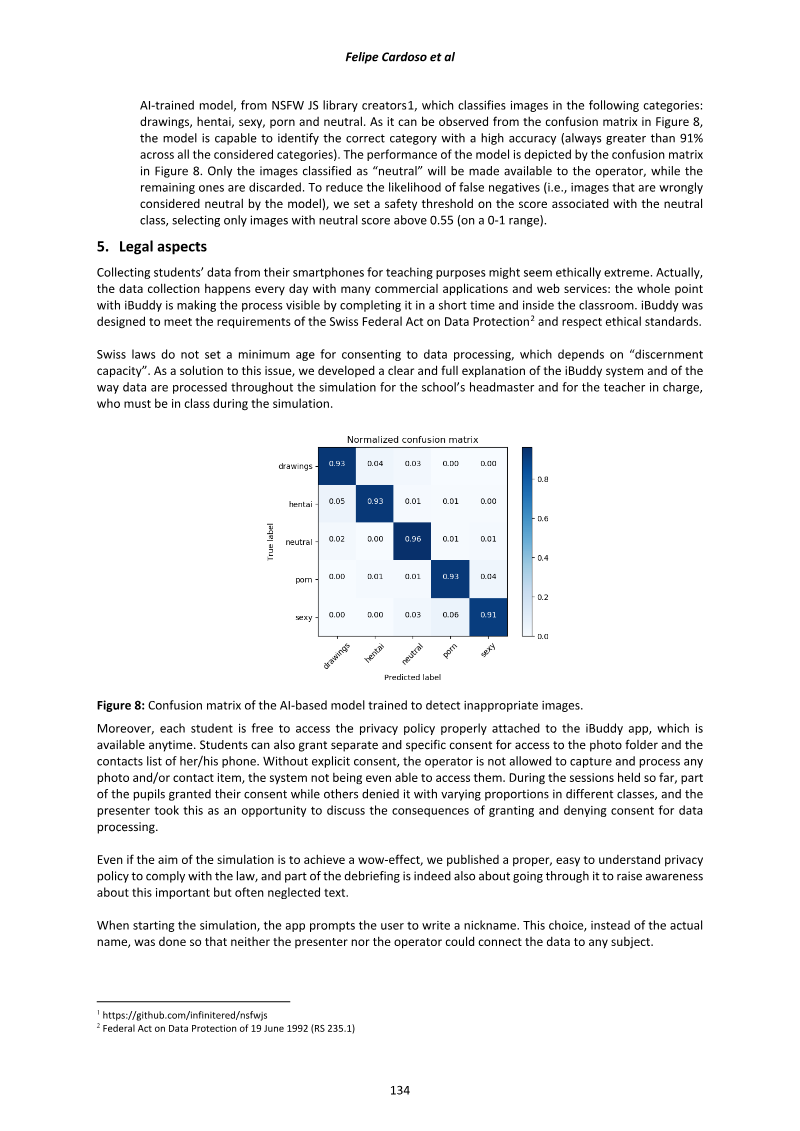
- iBuddy is a two-hour narrative simulation in which a fictional "synthetic buddy" app surprises students by revealing their own extracted personal data (contacts, photos, app usage), with the aim of creating an emotional "wow-moment" that anchors privacy-awareness discussions.
- Across 52 sessions with 978 students in 17 schools (March 2021 to March 2022), post-session surveys rated data privacy as highly important (mean 8.96/10), the activity as useful (mean 8.58/10), and enjoyment at 7.82/10, with involvement rising among older students.
- A two-month follow-up with 124 secondary students (22% response rate) found the largest self-reported change was in general privacy awareness, with smaller gains in specific behaviors such as reading terms of use and managing cookies.
Provocative Games to Encourage Critical Reflection
The paper presents "Provocative Games," or Small Provoking Games (SPGs), developed within the SECRIOUS project to encourage critical reflection among coders about cybersecurity.
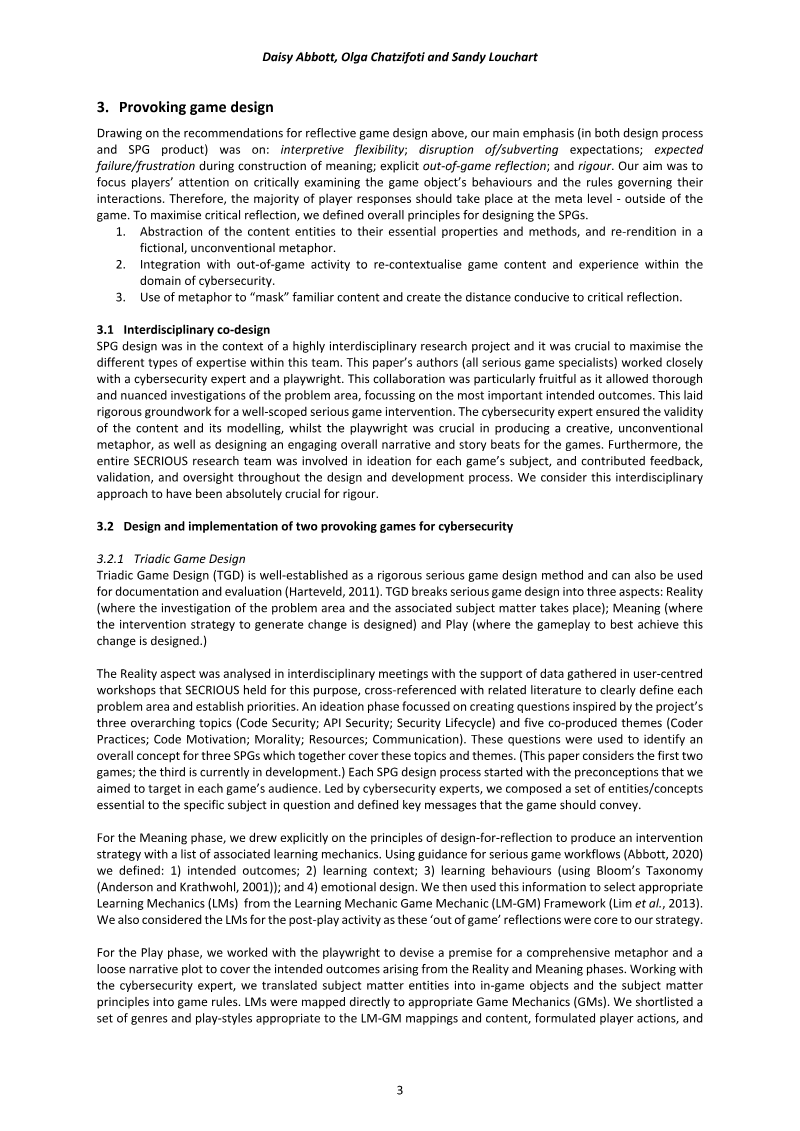
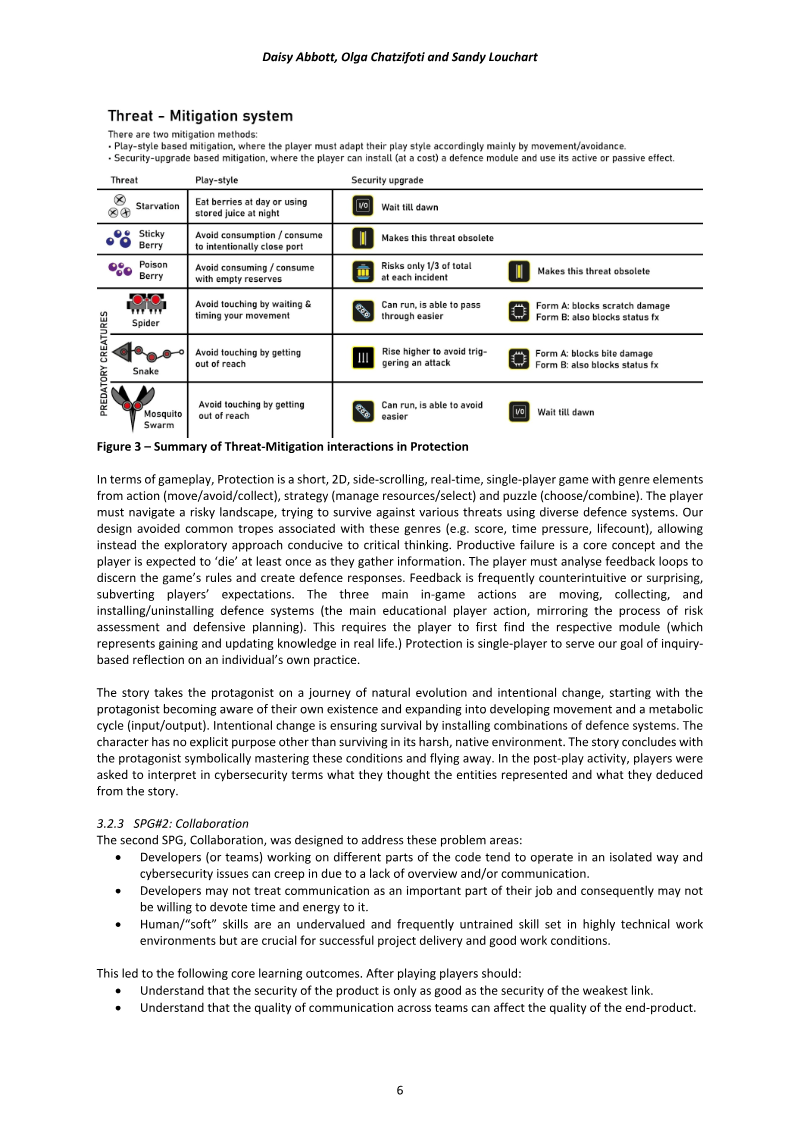
- The paper introduces Small Provoking Games (SPGs) from the SECRIOUS project, built on reflective design, metaphor, exploratory play, and expected failure to shift coders' attitudes toward cybersecurity.
- Success is framed as exo-transformation: lasting change in attitudes or practice that extends beyond the game itself.
- Two games are presented: Protection, which targets misconceptions such as cybersecurity being optional, binary, or that 'the more the better,' conveying that absolute security is unattainable; and Collaboration, which emphasizes team communication and infrastructure mechanics.
Learning Machine Learning With a Game
This paper by Christoph Lürig from the University of Applied Sciences Trier presents an explainable AI system for Connect-Four, built on an AlphaZero-style agent that combines a deep residual neural network with Monte Carlo Tree Search.
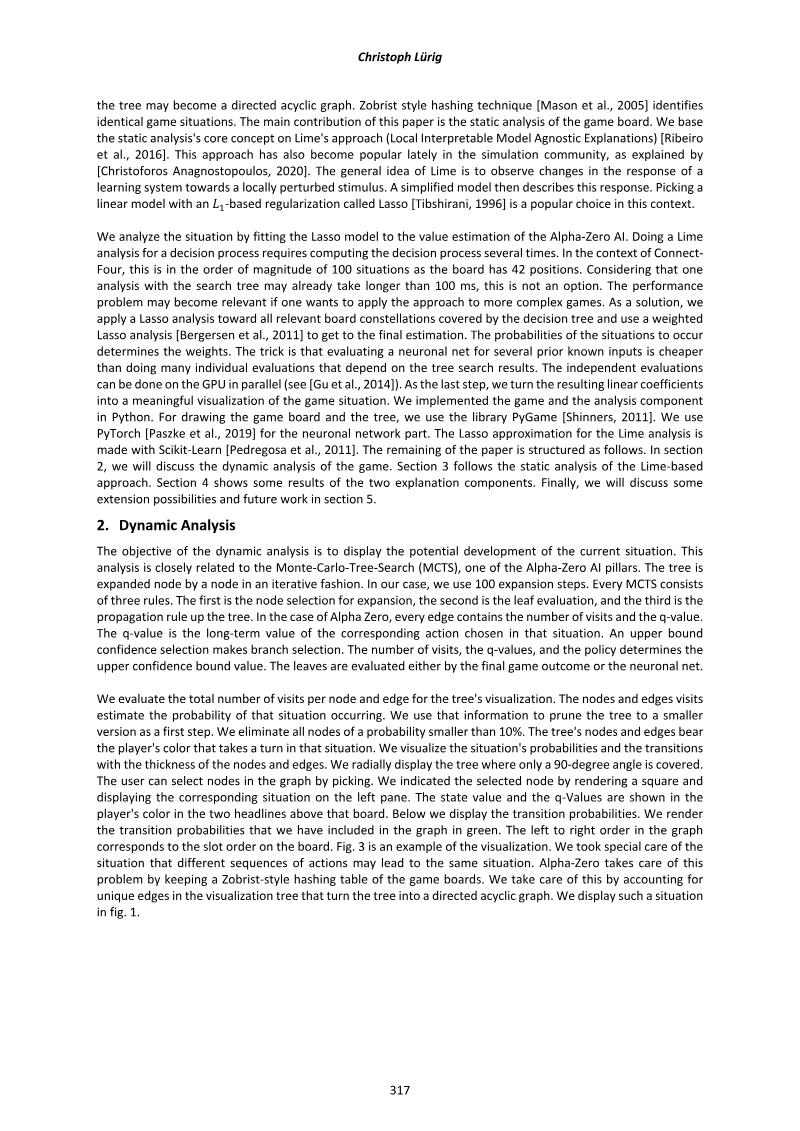
- The paper presents an explainable AI system for Connect-Four built on an AlphaZero-style agent combining a deep residual neural network with Monte Carlo Tree Search, aiming to make a reinforcement learning agent's decisions understandable to human players.
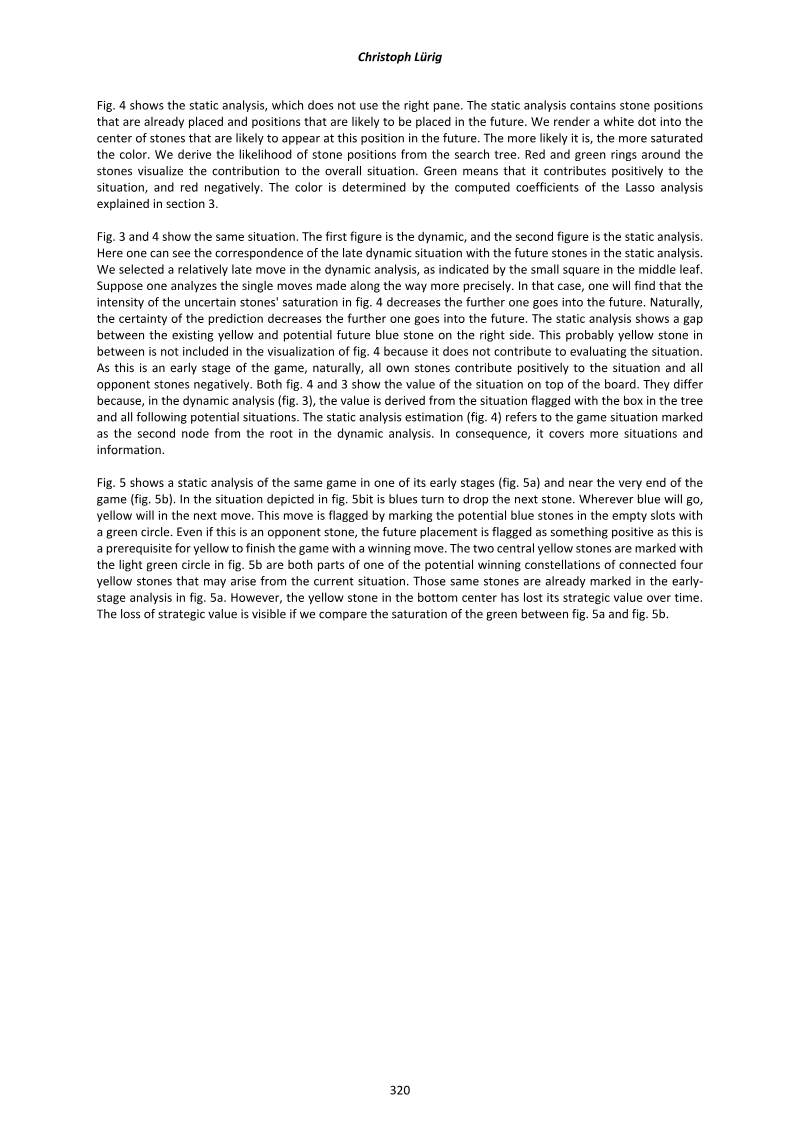
- Its main contribution is a static analysis that adapts LIME to AlphaZero by perturbing board positions, weighting them by occurrence probability, and fitting a weighted Lasso model, with coefficients visualized on the board as contributions favoring or disfavoring each player.
- The authors report that this adaptation avoids the more than 100 ms per-evaluation cost of naive LIME, and that GPU batch evaluation makes the approach practical for interactive use.
SynErGame: Gamified Knowledge Building on Synchronizing Energy Supply and Energy Demand
SynErGame is a serious game designed to build public knowledge about industrial demand-side flexibility, a form of demand response in which factories and other industrial consumers adjust their electricity use to help keep the power grid stable as renewable generation fluctuates.
- Industry accounts for roughly 45 percent of Germany's power consumption, giving industrial consumers substantial potential to support grid stability through demand-side flexibility.
- Industrial demand response, in which factories adjust electricity use to keep the grid stable as renewable generation fluctuates, remains largely confined to scientific and prototype settings rather than widespread deployment.
- SynErGame is a browser- and mobile-accessible serious game designed to build public knowledge about industrial demand-side flexibility, requiring no technical background to play.
NanoDoc: Designing an Adaptive Serious Game for Programming With Working Examples Support
This paper presents NanoDoc, a serious game for teaching the programming concepts of sequence and iteration to elementary school students, with a focus on an adaptive support mechanism built around editable and executable working examples.
- NanoDoc is a Unity first-person shooter serious game that teaches sequence and iteration to 10-to-12-year-olds through block-based programming puzzles that unlock protein keys while players navigate a maze.
- The core argument is that editable, executable worked examples (expert solutions to similar problems that students can study and modify) reduce cognitive load and improve learning more than hints, text, or video.
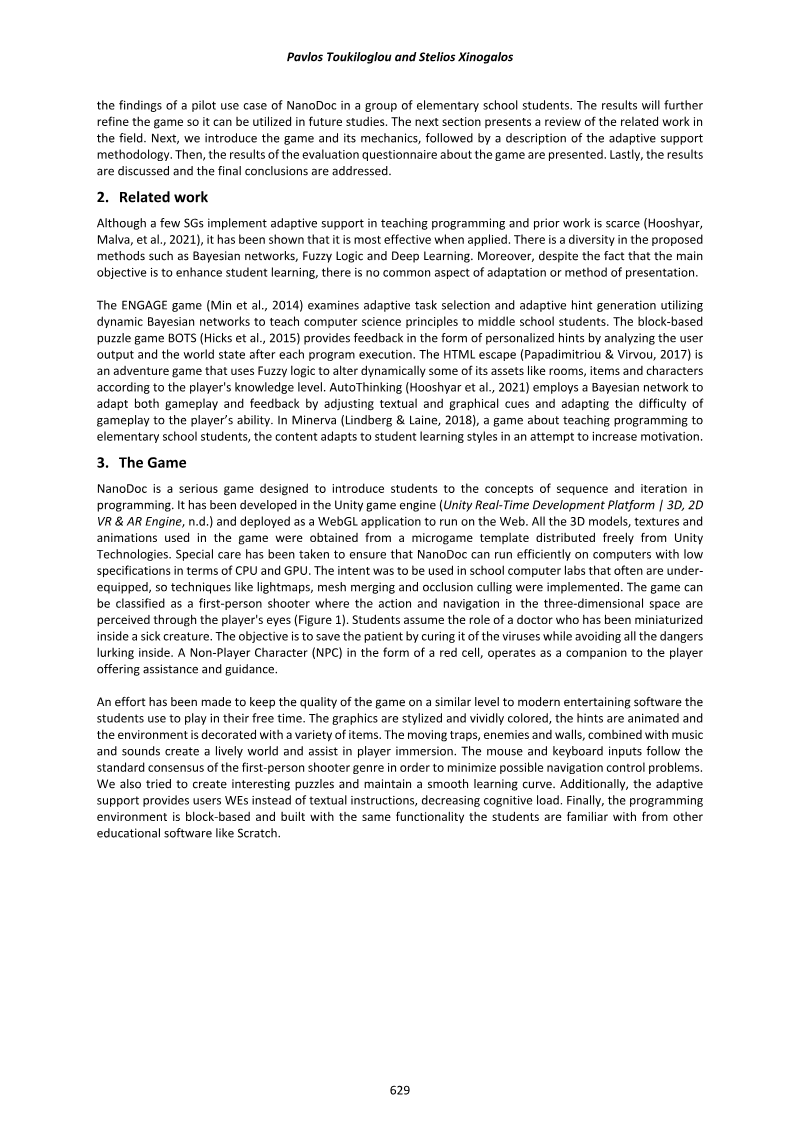
- An adaptive Fuzzy Logic system scores each submission's learning efficiency by comparing its block count with an optimal solution, maps the score onto four knowledge levels (Unknown, Unsatisfactorily Known, Known, Learned), and uses a maximum-membership defuzzification to decide when to offer worked examples.
Who Stole the Book of Kells? Description and Player Evaluation of a Cryptography Game for Primary School Students
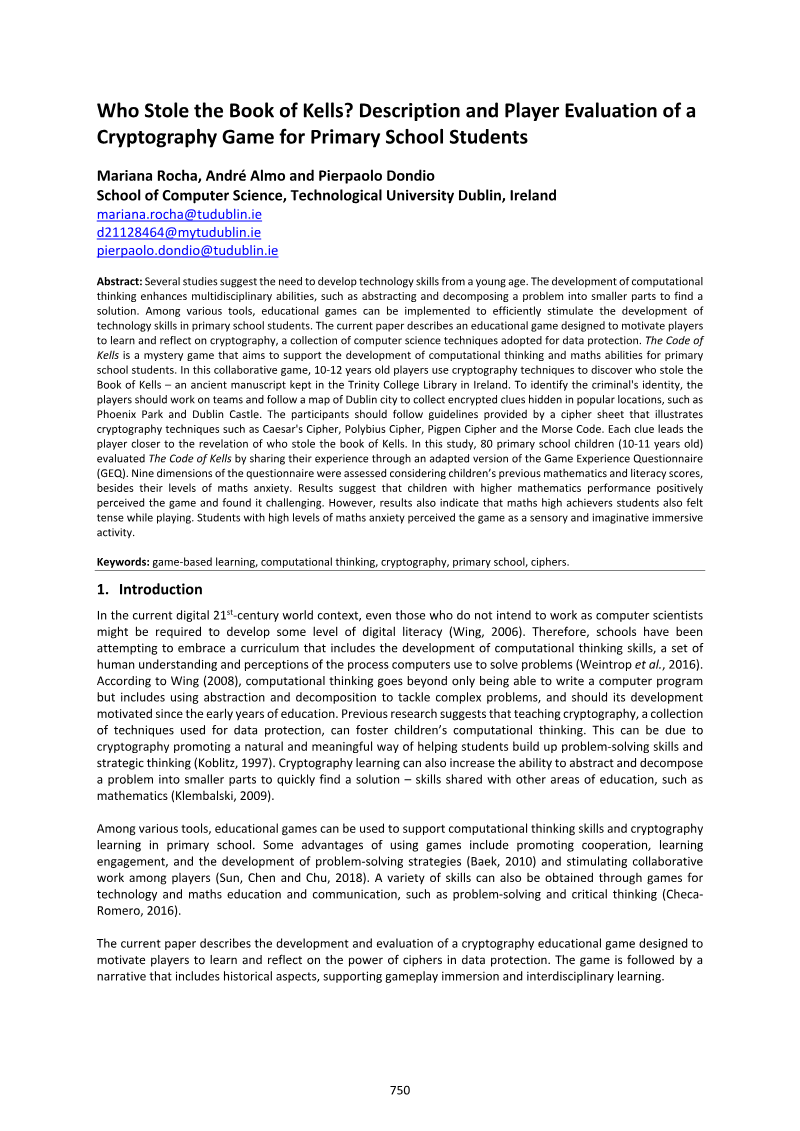
The Code of Kells is a team-based cryptography mystery game designed to build computational thinking and maths skills in primary school students, with players aged roughly 10 to 12 solving encrypted clues across Dublin to identify who stole the Book of Kells from Trinity College Library.
- The Code of Kells is a team-based cryptography mystery game for primary students aged roughly 10 to 12, in which players solve Caesar, Polybius, Pigpen and Morse cipher clues across Dublin to identify who stole the Book of Kells from Trinity College Library, paired with a short introductory workshop.
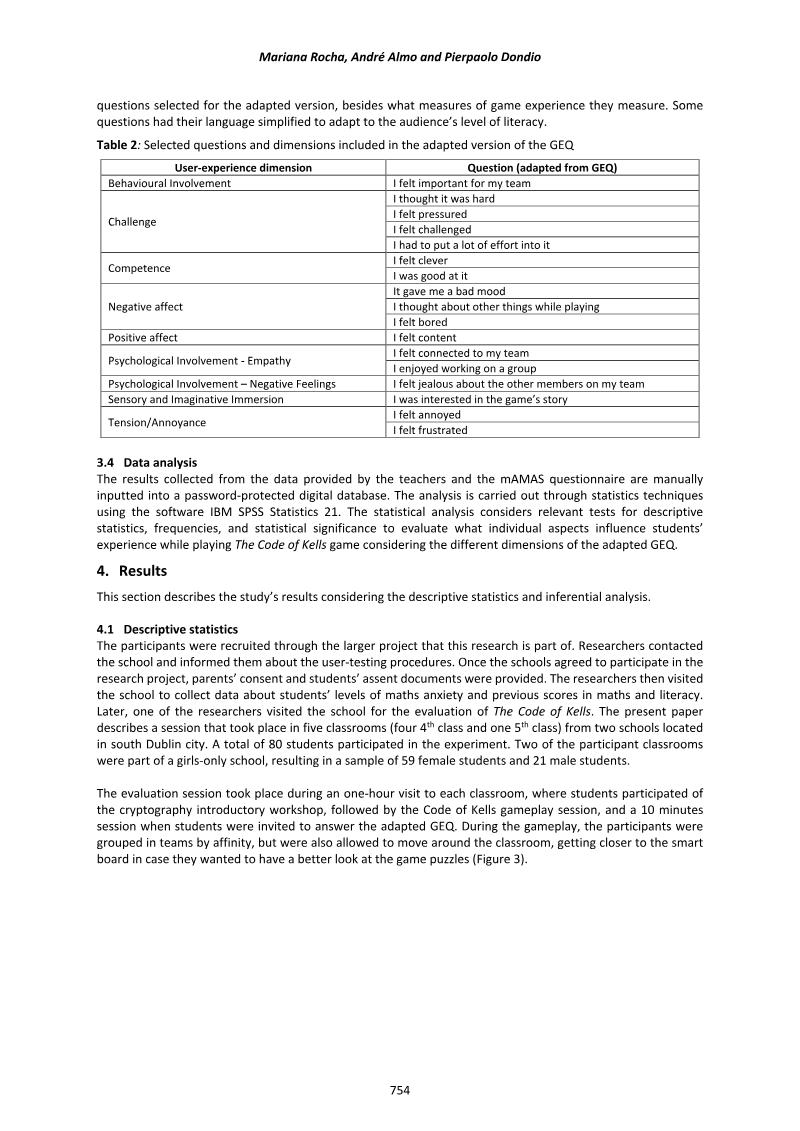
- Evaluation used an adapted Game Experience Questionnaire completed by 72 usable participants across five classrooms in two south Dublin schools, analysed with a multivariate analysis of variance against maths and literacy grades and maths anxiety measured by the Abbreviated Mathematics Anxiety Scale.
- Sensory and Imaginative Immersion (mean 3.65) and Positive Affect (3.31) were the highest-rated dimensions of player experience, while Negative Affect (1.30) and negative psychological involvement (1.49) were the lowest.
Game-Based Learning: A Tool That Enhances the Collaborative Work: A Case Study of Undergraduate Students
This study examines how game-based learning (GBL) can strengthen teamwork and collaborative learning among undergraduate students in creative disciplines.
- A survey of 99 undergraduate students in creative disciplines at a private university in Puebla, Mexico (collected December 2020 to January 2021) found strongly favorable views of game-based learning (GBL).
- 93 percent of respondents strongly agreed that GBL develops teamwork skills, the study's most decisive finding for collaborative learning.
- Roughly 70 percent agreed that GBL is a necessary tool for teaching, and around 85 percent viewed it as a driver of educational innovation.
Board Game: An Effective Way for Novice Trainees to Learn Incident Command System
This study, conducted at National Taiwan University Hospital, evaluates whether a board game can teach the incident command system (ICS) to novice disaster medical assistance team (DMAT) trainees as effectively as a traditional lecture.
- A turn-based board game teaching the incident command system to novice DMAT trainees at National Taiwan University Hospital produced score gains statistically comparable to a 90-minute lecture (board-game group 56 to 75, p = .001; lecture group 58 to 74, p = .002; ANOVA p = .6).
- The study used a non-randomized cohort design with non-random sampling (17 board-game participants in 2020 vs. 25 lecture participants in 2021), so selection bias cannot be ruled out and the groups differed in age, with more participants over 50 in the game group.
- Only immediate post-intervention knowledge was measured with a 20-question multiple-choice test; long-term retention and subjective engagement were not assessed.

Case Study on VR Empathy Game: Challenges with VR Games Development for Emotional Interactions with the VR Characters
This study examines the design challenges of building virtual reality games intended to foster empathy in young children aged six to nine.
- The core design problem is that children may pursue extrinsic game goals (finishing the quest) while missing the intrinsic learning goal (recognizing and responding to characters' feelings), so empathy games should make intrinsic goals central and structure extrinsic goals to lead children toward them.
- In a case study of 15 children aged six to nine, the focal case was a seven-year-old boy with a low empathy score who completed the roughly thirty-minute VR game yet showed little recognition of characters' emotions, treating them as clue sources rather than social partners.
- The authors attribute the low-empathy child's behavior to a misalignment between extrinsic and intrinsic goals rather than a usability problem, since navigation and controls caused no notable difficulty.
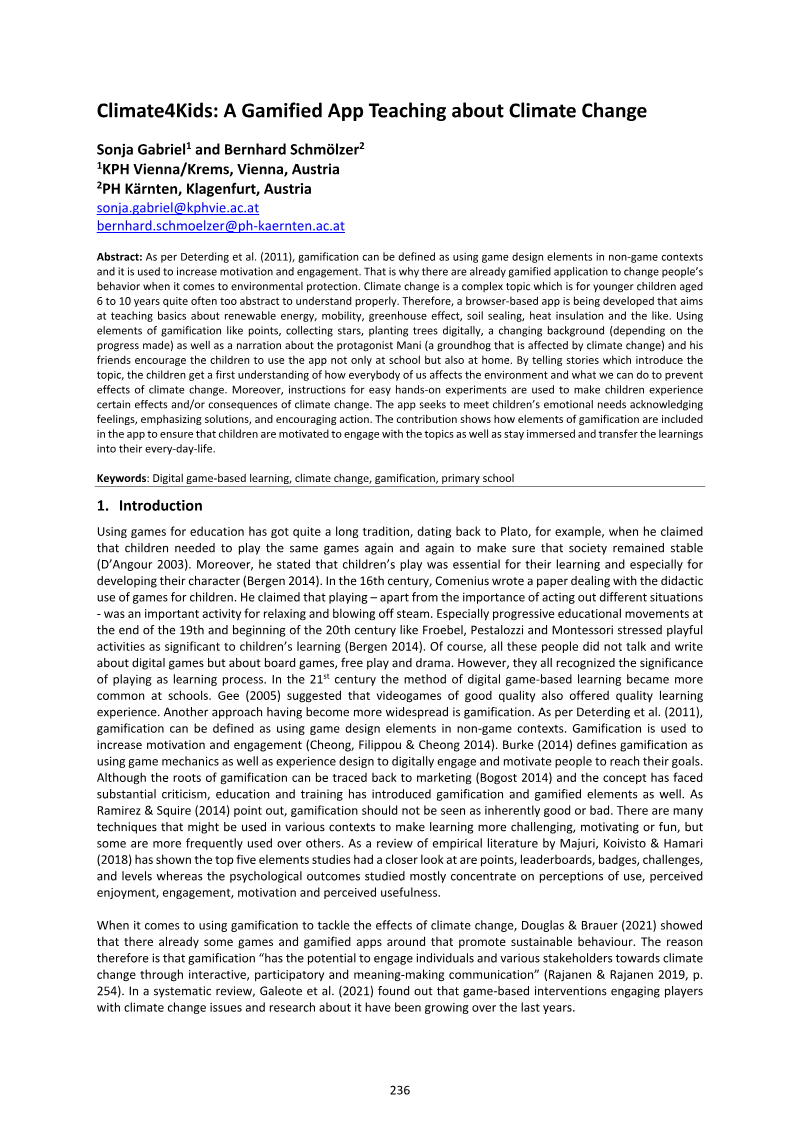
Climate4Kids: A Gamified App Teaching about Climate Change
The Climate4Kids paper presents a browser-based, multilingual gamified app designed to teach children aged 6 to 10 about climate change, covering topics such as renewable energy, mobility, the greenhouse effect, soil sealing, and heat insulation.
- Climate4Kids is a browser-based, multilingual gamified app for children aged 6 to 10 that teaches climate topics such as renewable energy, mobility, the greenhouse effect, soil sealing, and heat insulation.
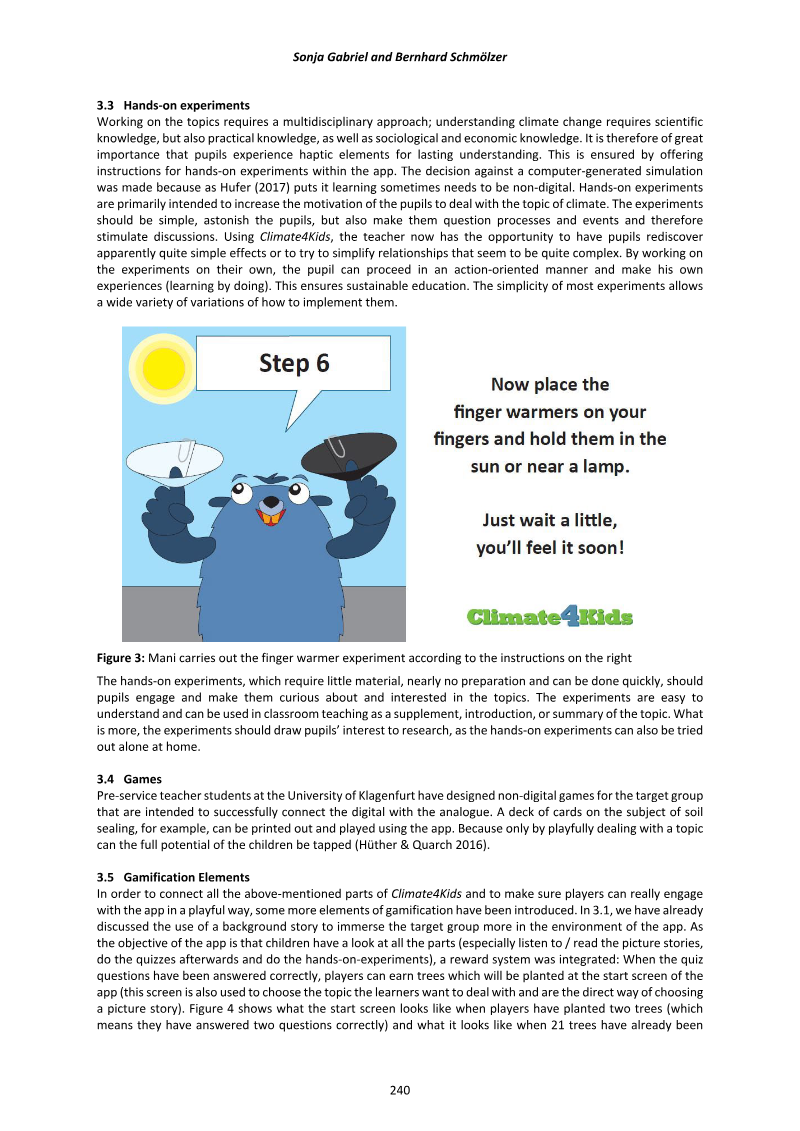
- Its core premise is that storytelling, hands-on at-home experiments requiring no special equipment, and game mechanics can make abstract climate concepts accessible to young learners and encourage them to apply what they learn at home.
- The app's design rests on picture stories, simple experiments, and non-digital card and cardboard games, with a marmot character named Mani guiding users whose habitat is threatened by rising temperatures.
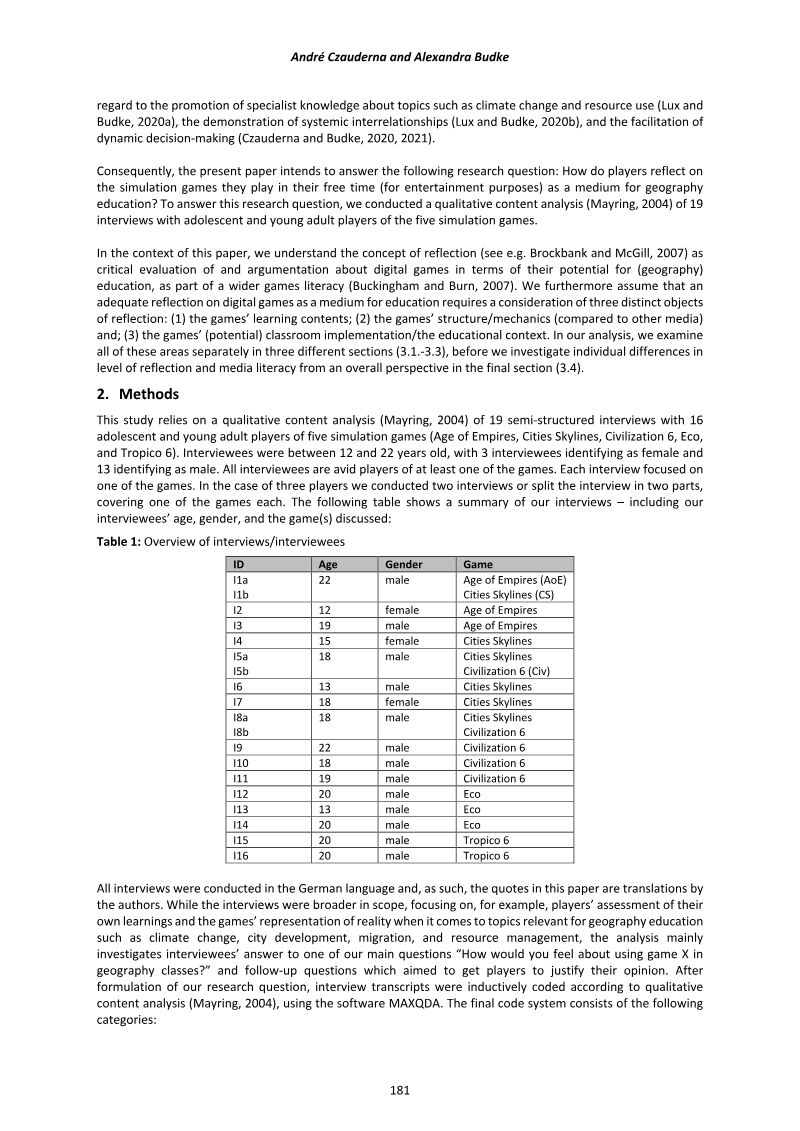
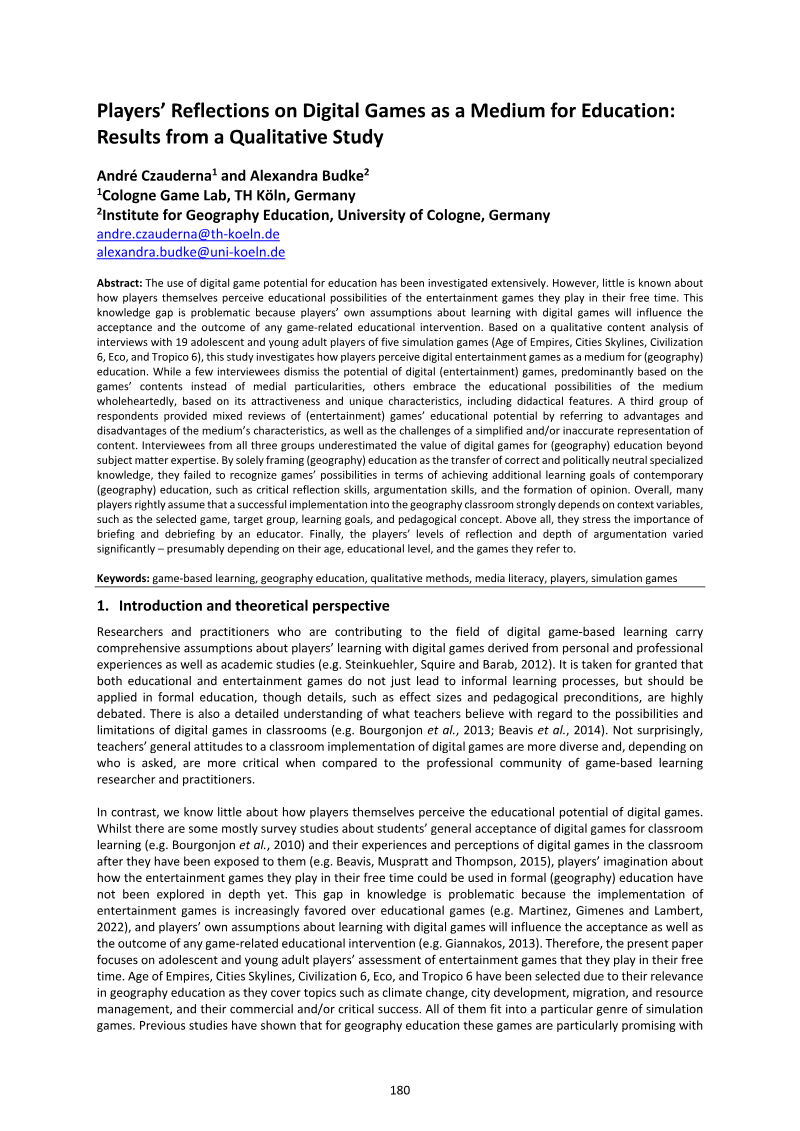
Players' Reflections on Digital Games as a Medium for Education: Results from a Qualitative Study
This qualitative study examines how adolescent and young adult players view digital simulation games as a medium for geography education.
- The study draws on 19 interviews with adolescent and young adult players of five digital simulation games, sorting their attitudes toward games as a geography education medium into dismissive, enthusiastic, and mixed groups.
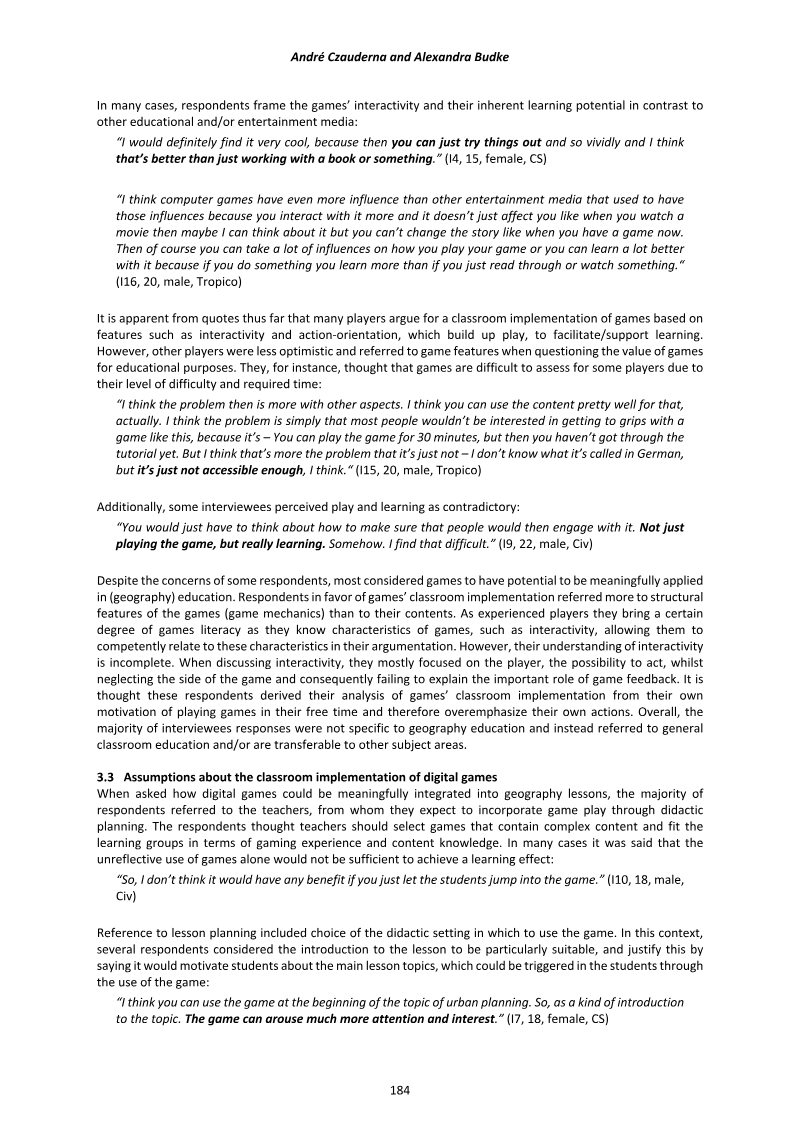
- Dismissal of games as educational tools typically rests on game content, while enthusiasm centers on engagement, interactivity, and the chance to explore systems, with players seeing games as more action-oriented than books or film.
- Players view games' educational value skeptically due to accessibility barriers, time demands, and a perceived tension between play and learning.