
DiGRA
The Digital Games Research Association: the international association of academics and professionals who study digital games. Its Digital Library holds the proceedings of the DiGRA conferences since 2002.
Documents
Out of Context: Understanding the Practicalities of Learning Games
Björn Berg Marklund's paper "Out of Context" argues that learning game research has concentrated heavily on the game itself while neglecting the practical conditions under which games are actually used in formal education.
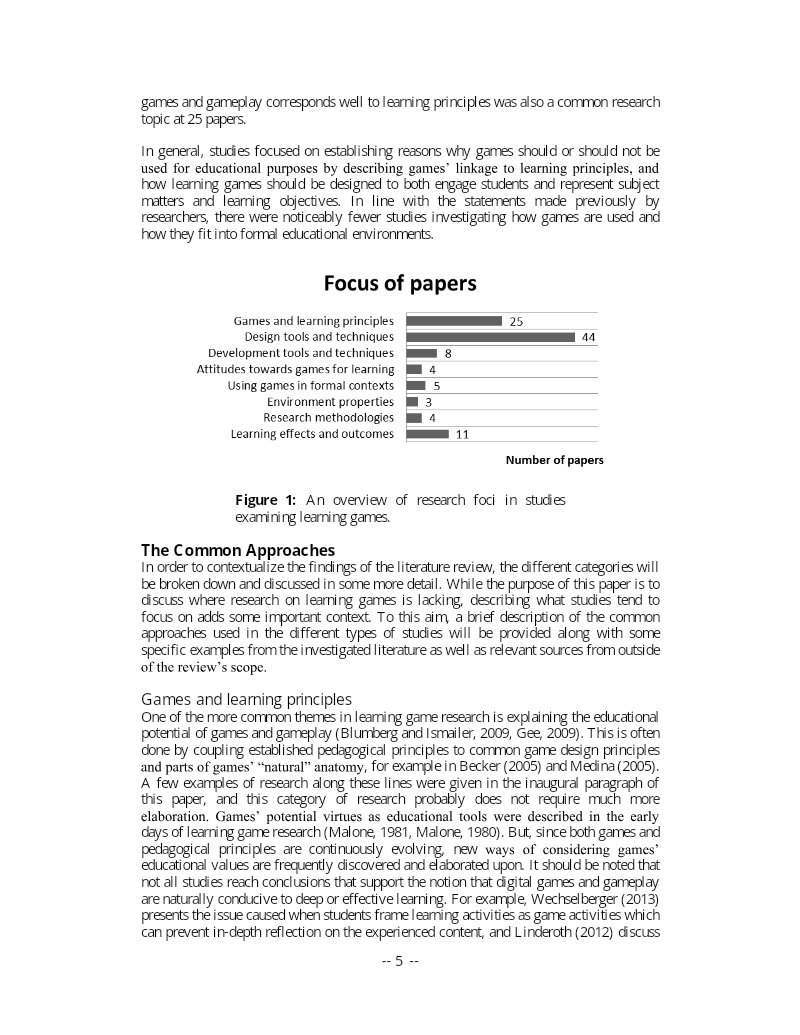
- Learning game research has concentrated on design quality and learning-principle links, with only about five of 104 papers (2003–2013, in DiGRA, FDG, and IJGBL) examining how games function in actual classrooms, a gap the author calls context-of-use neglect.
- Whether a learning game works at all depends on practical conditions such as hardware availability, technological infrastructure, teacher and student gaming literacy, and rigid class schedules, which design improvements alone cannot resolve.
- Teacher attitudes are not the main barrier: about 70 percent of more than 500 European teachers reported prior game experience, while US teachers hold more mixed views, so adoption obstacles are primarily practical rather than attitudinal.
What Makes Young Children Active Game Players: An Ethnographic Case Study
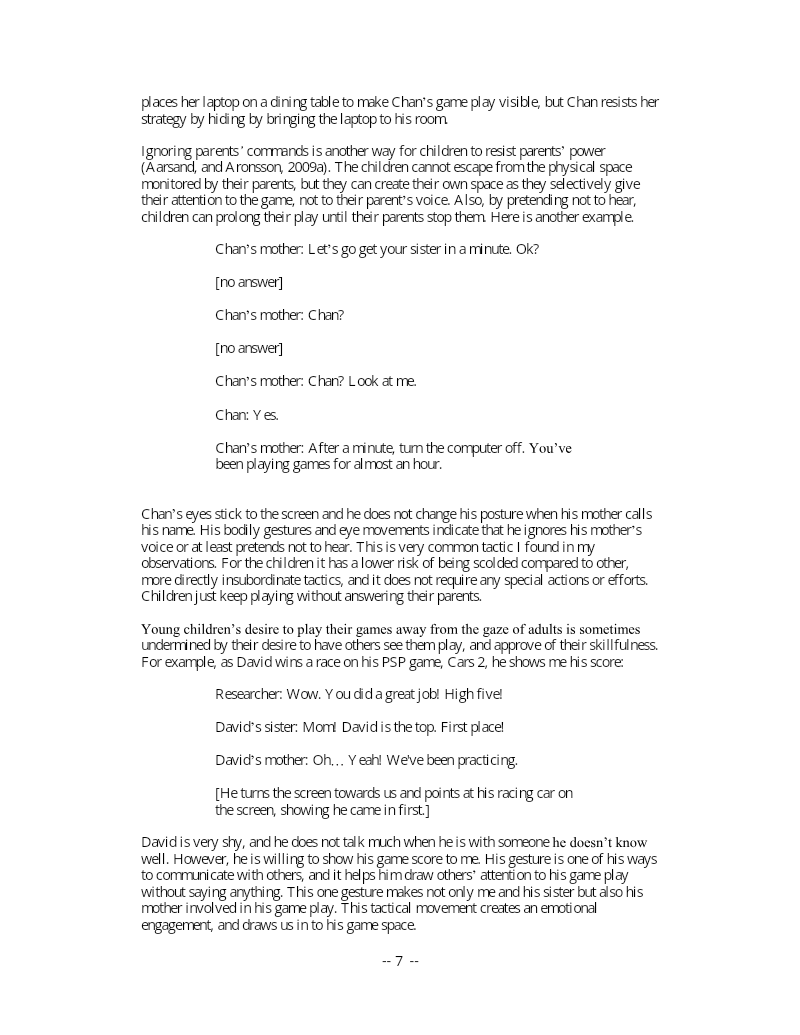
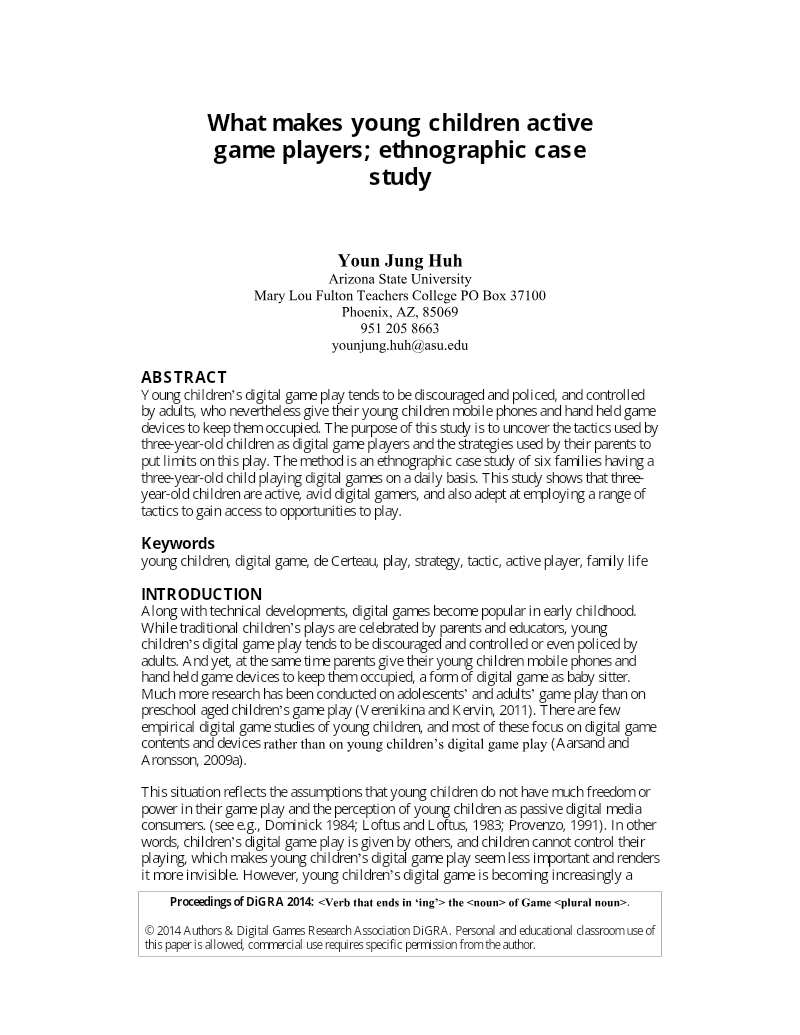
This ethnographic case study, authored by Youn Jung Huh at Arizona State University, investigates how three-year-old children engage with digital games and how their parents attempt to regulate that play.
- The study frames the parent-child relationship over digital games as an ongoing contest, drawing on Michel de Certeau's distinction between the strategies of the powerful and the tactics of the weak: very young children act as avid, active players who use tactics to secure play time and space, while parents respond with strategies of their own.
- Based on 156 hours of observation across six families, each with a three-year-old who plays digital games daily, with six home visits per family, using participant observation, interviews, and video-recorded, transcribed, and coded data.
- Observations extended beyond the home to everyday settings such as grocery stores, waiting rooms, and car rides, where mobile devices often served to keep children occupied.
Pressure at Play: Measuring Player Approach and Avoidance Behaviour through the Keyboard
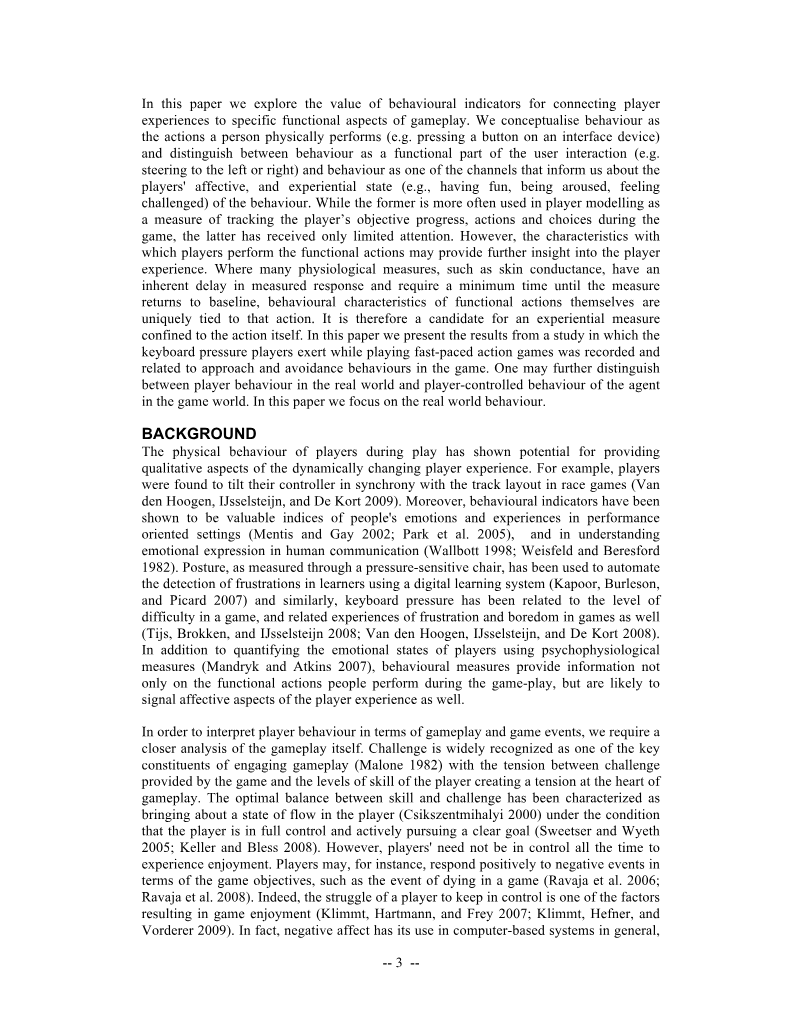
This study investigates whether the force with which players press keyboard keys can serve as a real-time, behavioural indicator of their experience during fast-paced action games.
- Keyboard pressure can serve as a low-cost, real-time behavioural signal of player experience during fast-paced games, complementing questionnaires and physiological sensors.
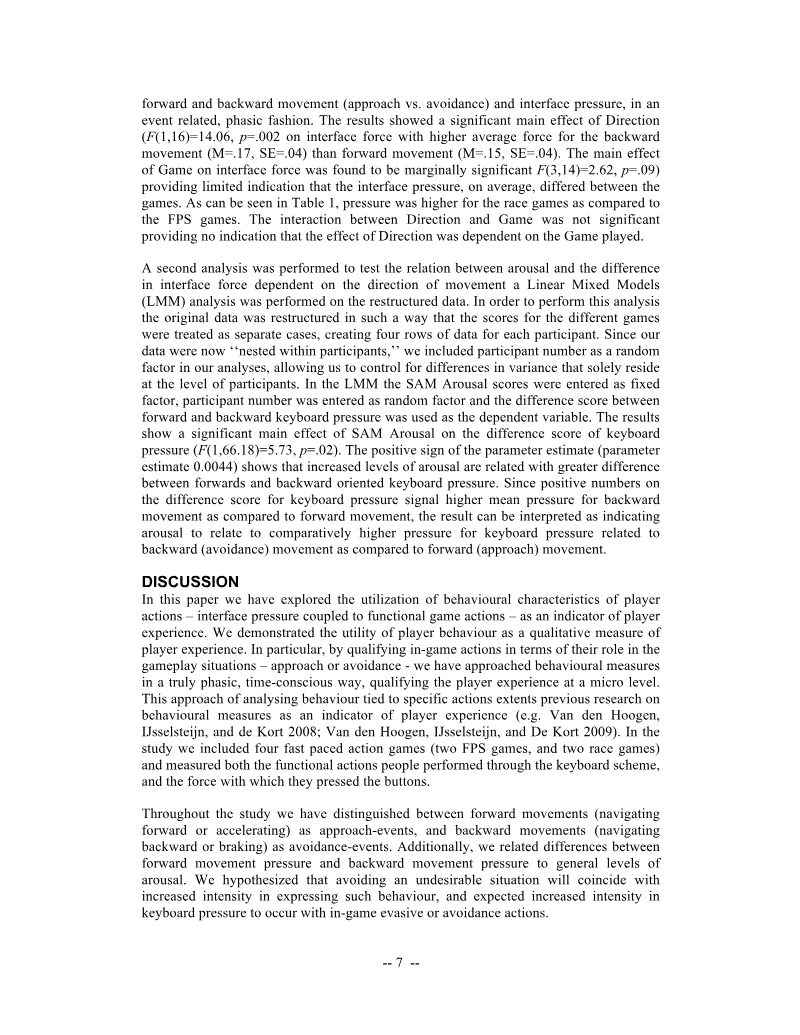
- In a study of 19 participants playing two first-person shooters and two racing games, backward (avoidance/braking) keystrokes were pressed significantly more forcefully than forward (approach) inputs, using range-corrected force sensors beneath the keyboard.
- The forward-backward pressure difference correlated positively with self-reported arousal, suggesting avoidance keystrokes may carry micro-level signals of heightened emotional intensity.
Designing Inside the Box: Pitching Practices in Industry and Education
Altizer and Zagal's "Designing Inside the Box: Pitching Practices in Industry and Education" examines how game professionals pitch ideas and how those practices can be taught.
- Interviews with eight industry practitioners challenge the myth that an unsolicited 'off the street' pitch can lead to a deal, with interviewees emphasizing that ideas are inexpensive and pitchers are expected to build prototypes themselves.
- Much pitching happens internally and informally within companies, and students often hold misconceptions about pitching, creating a gap between how games are ideated and how they are actually sold or championed.
- The paper distinguishes casual internal pitches from more formal and abstract external pitches to publishers, with crowdfunding emerging as a significant third audience.

Angry Birds, Uncommitted Players
Angry Birds, Uncommitted Players examines how players of the popular mobile game Angry Birds engage with it, and whether their habits can be explained by the traditional divide between hardcore and casual gamers or by gender.
- The study is a small qualitative project of 21 Angry Birds players, roughly balanced by gender and mostly in their twenties, with 16 of the 21 based in Portugal, so its findings are hard to generalize beyond those participants.
- Within this sample, players showed similar habits regardless of gender, age, or self-identified hardcore or casual status, and the author concludes these playing habits are "a-gendered."
- The author could not meaningfully identify distinct hardcore or casual player profiles among these participants, suggesting traditional segmentation models may be less useful for mobile audiences.

Mario's Legacy and Sonic's Heritage: Replays and Refunds of Console Gaming History
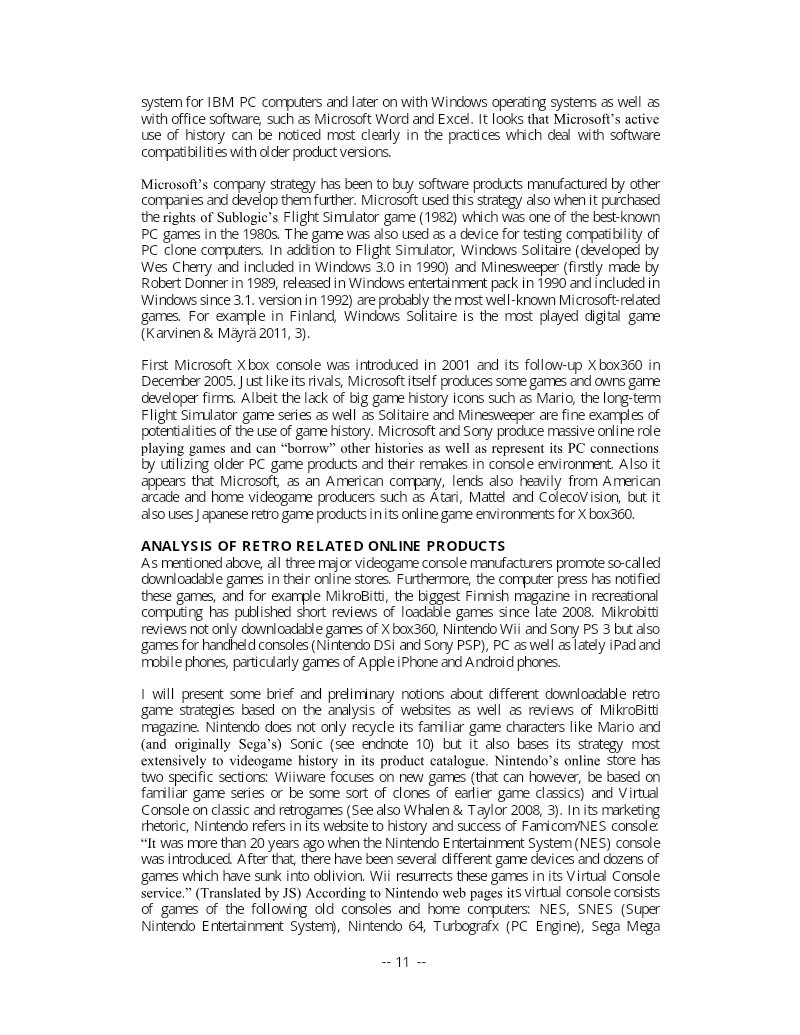
This study examines how major console manufacturers Nintendo, Sony, and Microsoft use, reuse, and manage their gaming histories, proposing a heuristic model that distinguishes awareness of historicity, the uses of history, and the management of history at both organizational and product levels.
- Nintendo is the most history-conscious of the three major console makers, leaning heavily on iconic characters like Mario and its Virtual Console, which offered 379 classic games in the Finnish store by late 2011.
- Nintendo's historical awareness appears to have sharpened after a 2003–2004 Famicom anniversary exhibition, which suggested retro products could serve as a long-tail revenue source.
- Sony and Microsoft draw more on third-party and PC-era software, such as Windows Solitaire and Flight Simulator, and their downloadable offerings may gradually shift toward new games as third-party developers mature.
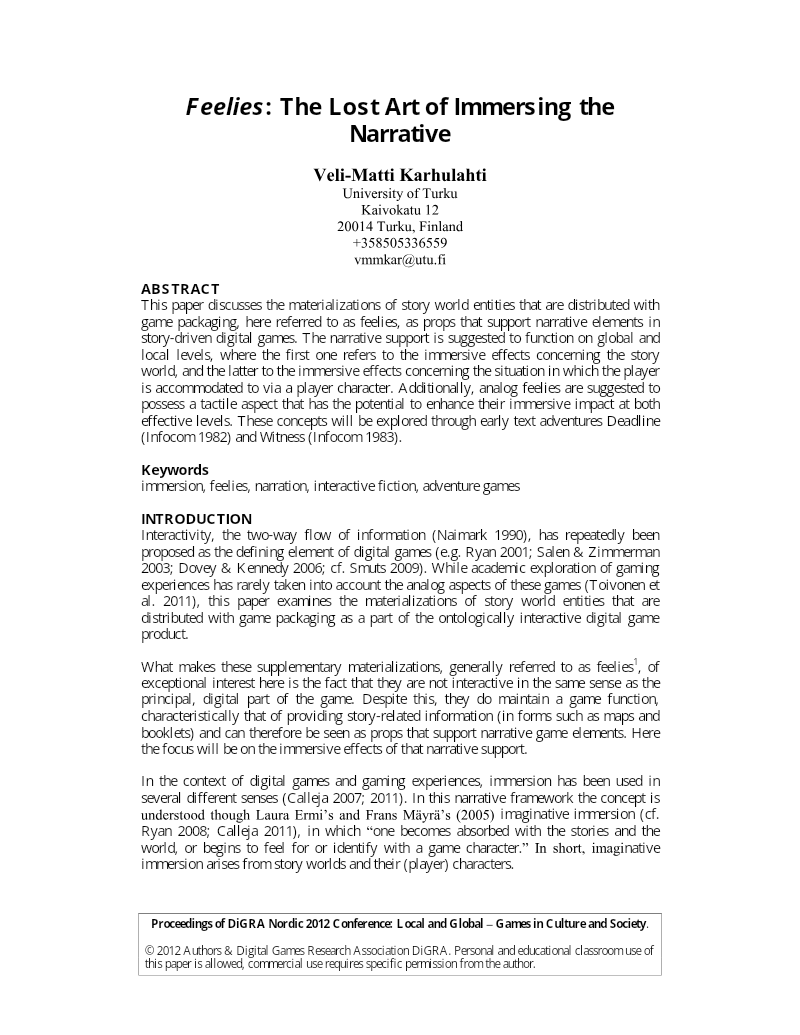
Feelies: The Lost Art of Immersing the Narrative
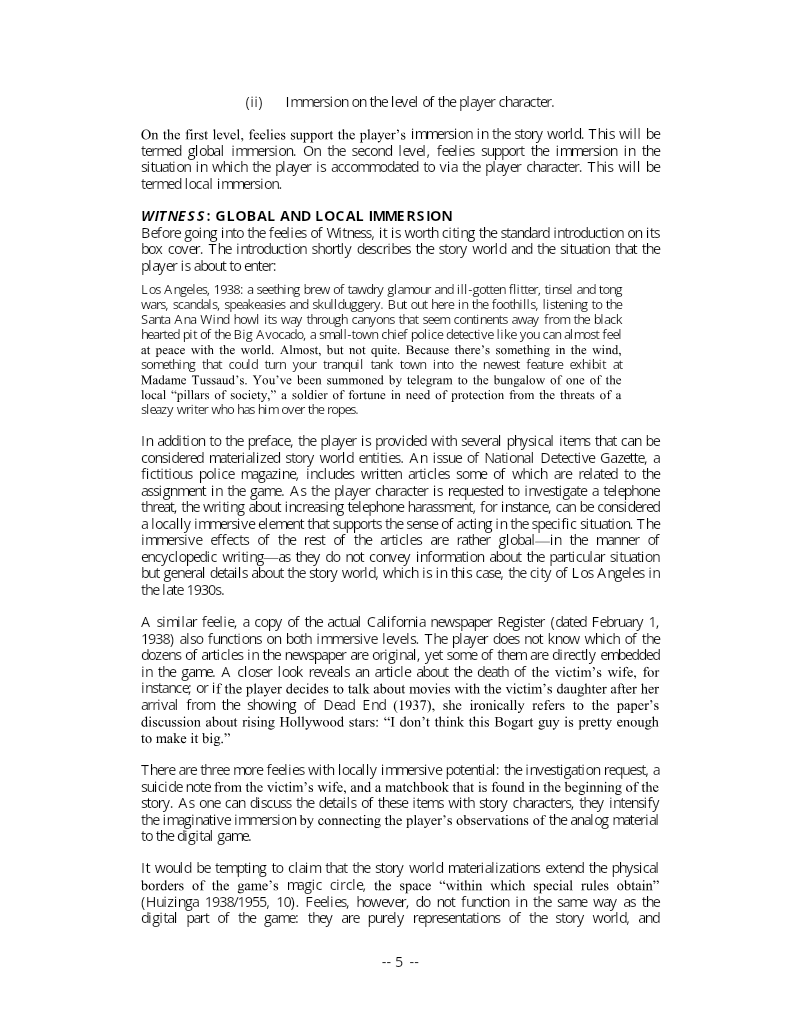
Veli-Matti Karhulahti's paper examines "feelies," the physical story-related materials, such as maps, documents, and novelty items, distributed with early digital games, and argues that these objects act as narrative props that deepen players' imaginative immersion.
- Feelies are physical story-related materials (maps, documents, novelty items) packaged with early digital games, which the paper argues act as narrative props that deepen players' imaginative immersion.
- The paper frames feelies as a counterweight to the tension between interactivity and authorial control: as games grant players more agency, they weaken the author's grip on the story and can fragment player identification with a character or world.
- Feelies are said to work on two levels: a global one that enriches the sense of the story world, and a local one that anchors the player within a specific situation and player character.
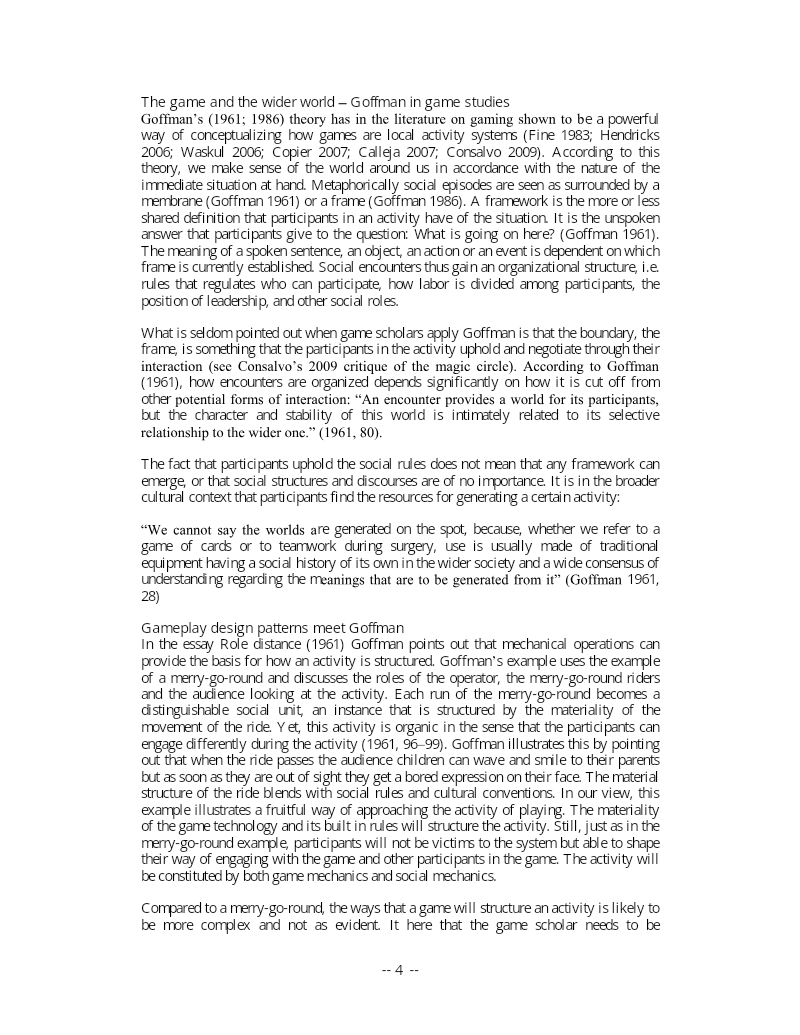
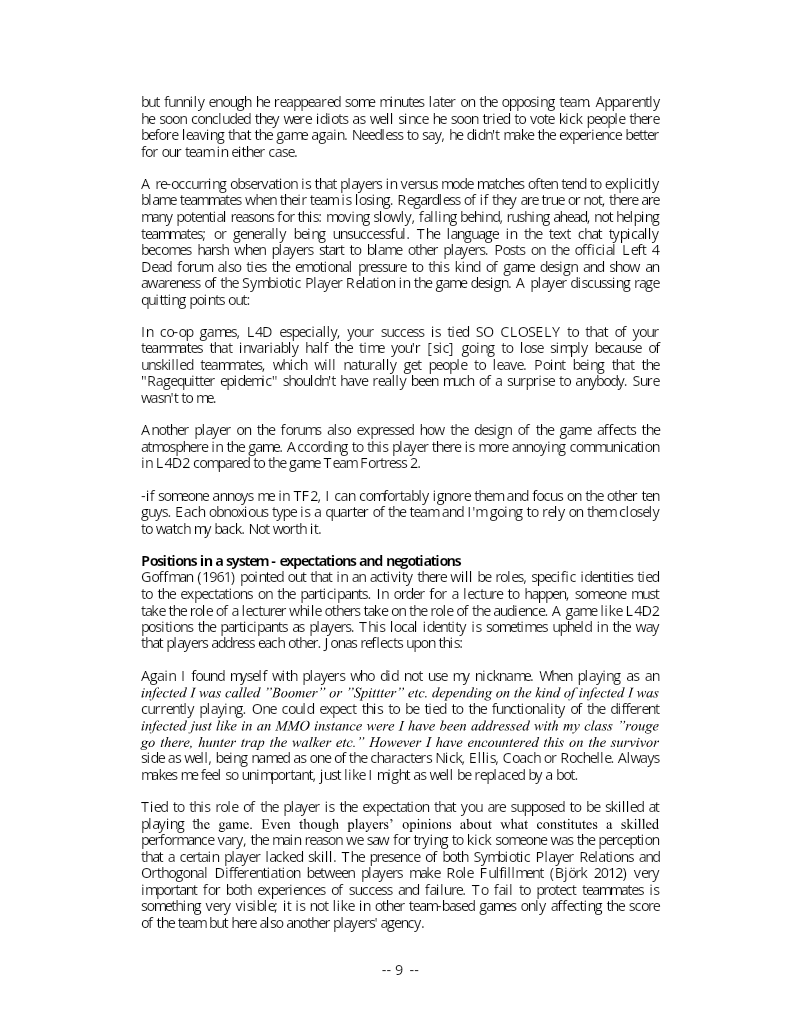
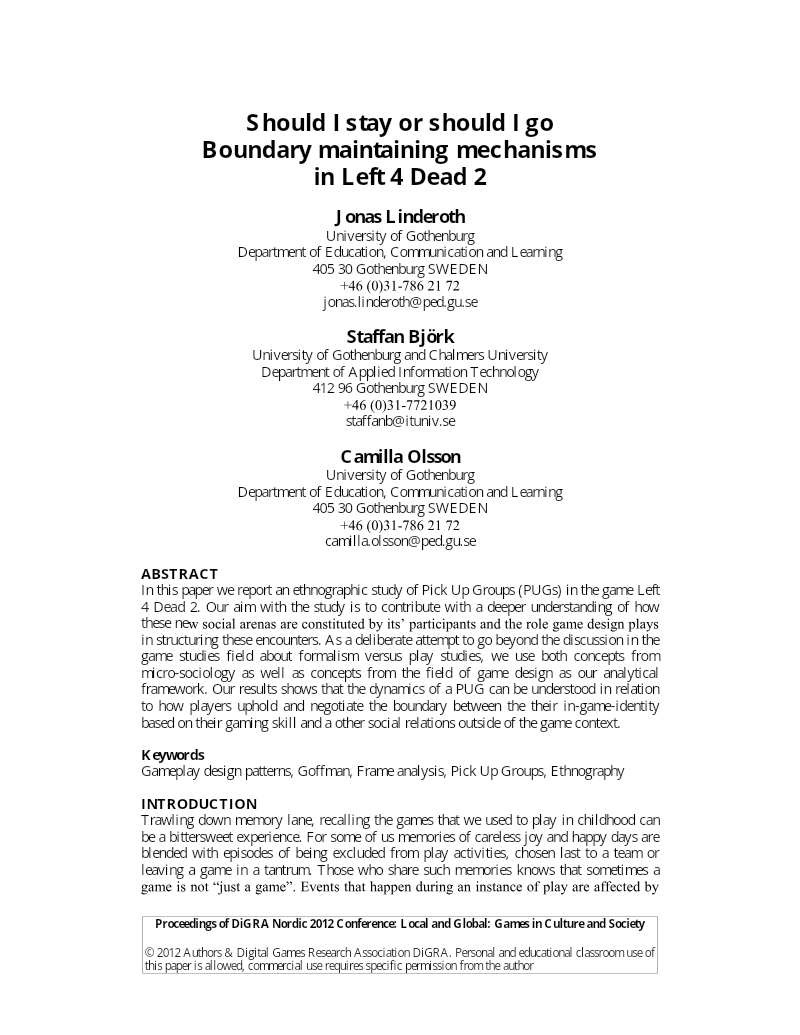
Should I Stay or Should I Go: Boundary Maintaining Mechanisms in Left 4 Dead 2
Linderoth, Björk, and Olsson's study examines how players of Left 4 Dead 2 manage the boundary between their in-game identities, defined by gaming skill, and their social identities outside the game.
- The study is autoethnographic, based on roughly 200 hours of observed public, anonymous, short-session pick-up matches in Left 4 Dead 2, with the researchers participating as observers.
- Players continually negotiate the game's frame through informal soft rules, such as waiting for teams to fill and improvised tactics like "go before they all drop," to manage the risk of collapse from dropouts and bot substitution.
- Design patterns Symbiotic Player Relations and Helplessness generate emotional pressure that drives rage-quitting and blame, while players use face-saving excuses such as citing "lag" or calling others "noob" to avoid the loser role, consistent with Goffman's frame analysis.
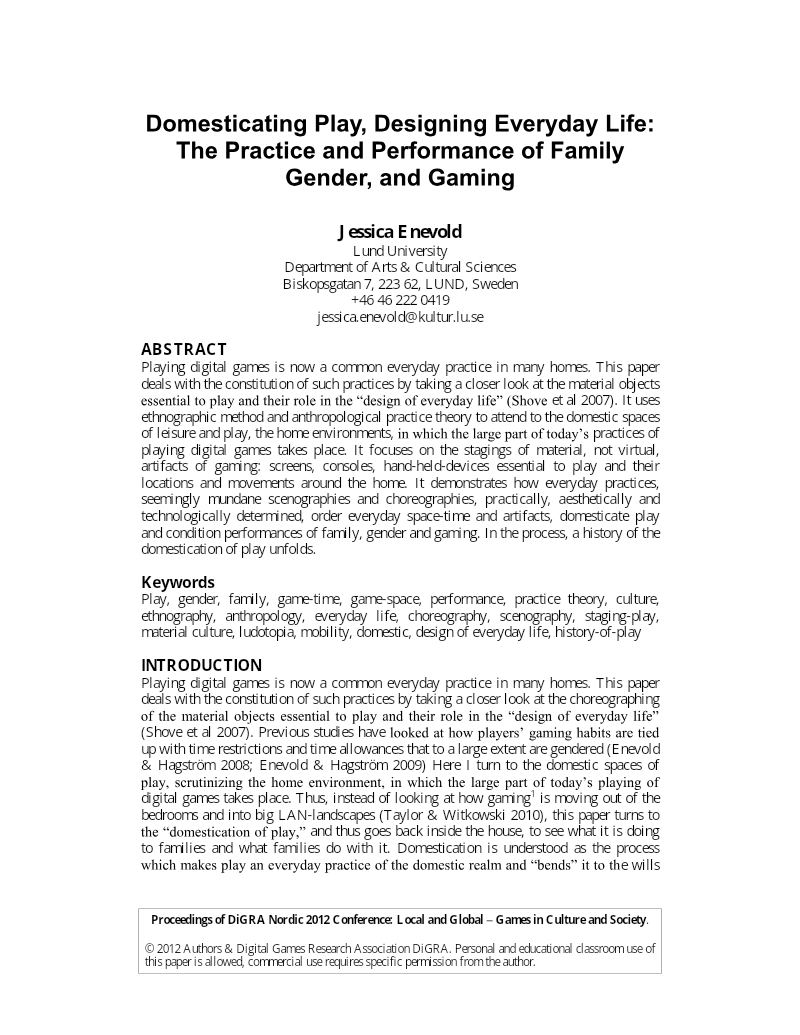
Domesticating Play, Designing Everyday Life: The Practice and Performance of Family, Gender, and Gaming
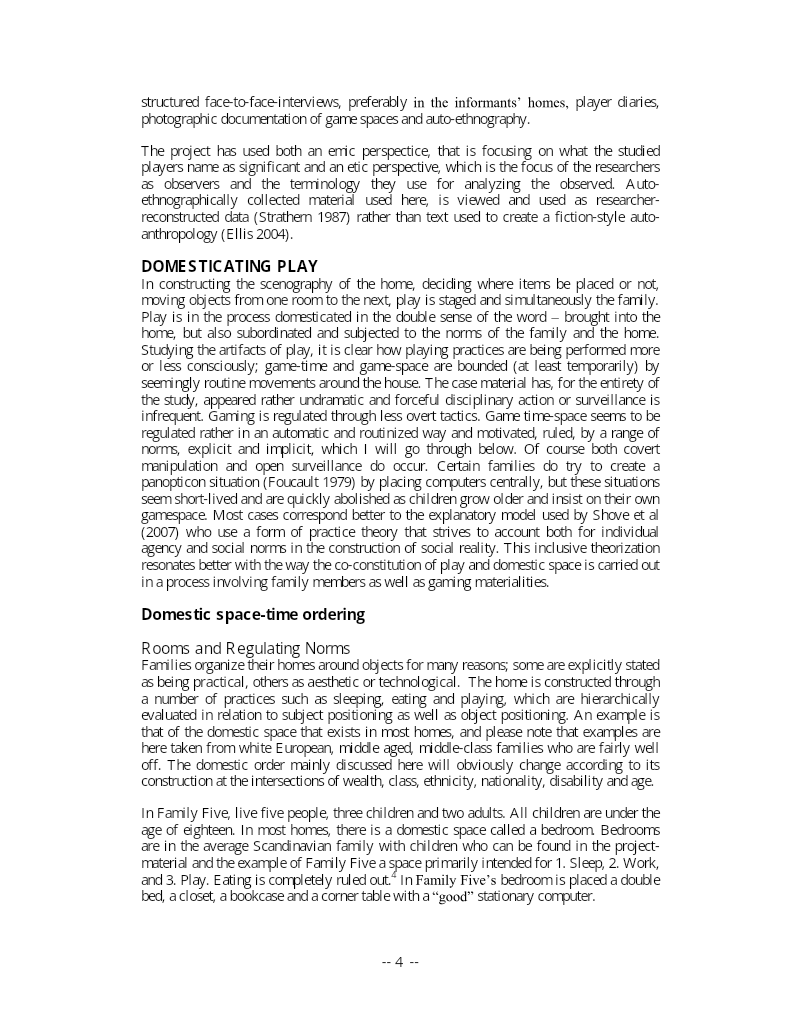
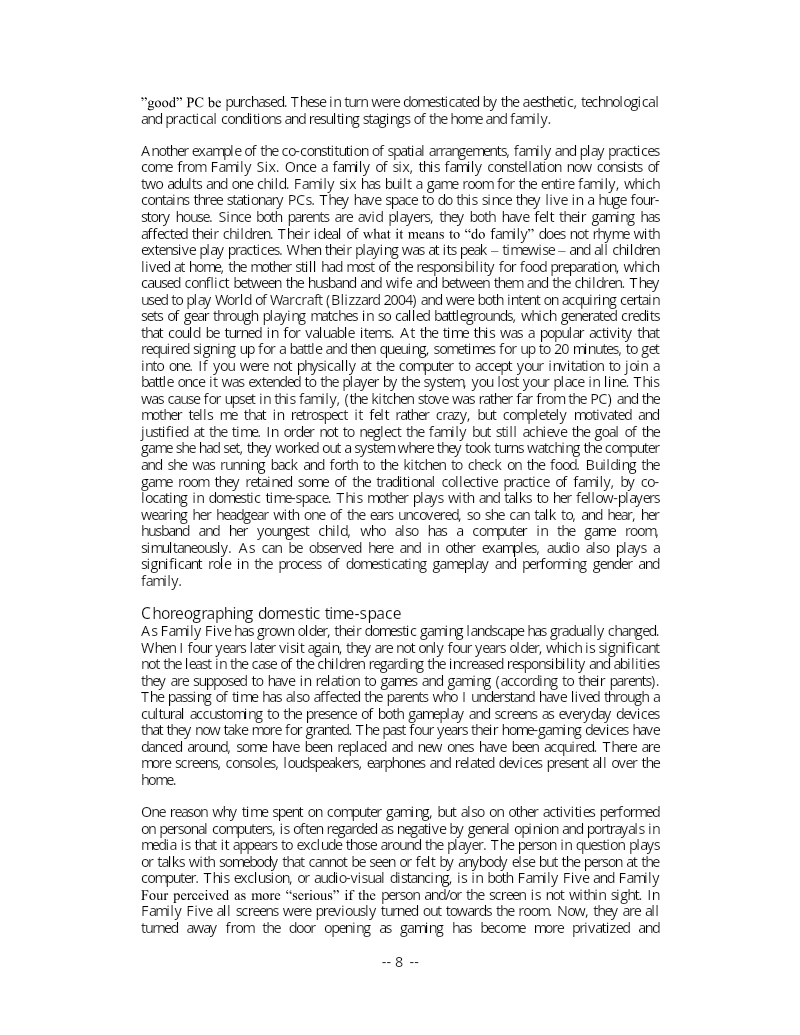
Enevold's paper argues that digital gaming is best understood through the domestic arrangement of its material objects, including screens, consoles, and handhelds, which families position and move around the home in ways that domesticate play and reflect broader norms of family, gender, and gaming.
- Digital gaming is best understood through the domestic arrangement of its devices (screens, consoles, handhelds), which families position and move around the home, and technology adoption and domestic design are mutually constitutive with family life rather than driven by individual choice.
- Play is consistently subordinated to sleep, food preparation, work, and joint family activities, with bedroom computers ranked by activity so that sleep takes priority over both work and play.
- Regulation of gaming operates mainly through routine and implicit household norms rather than overt surveillance, and mothers typically carry the greatest share of domestic labor, which shapes who gains access to play.
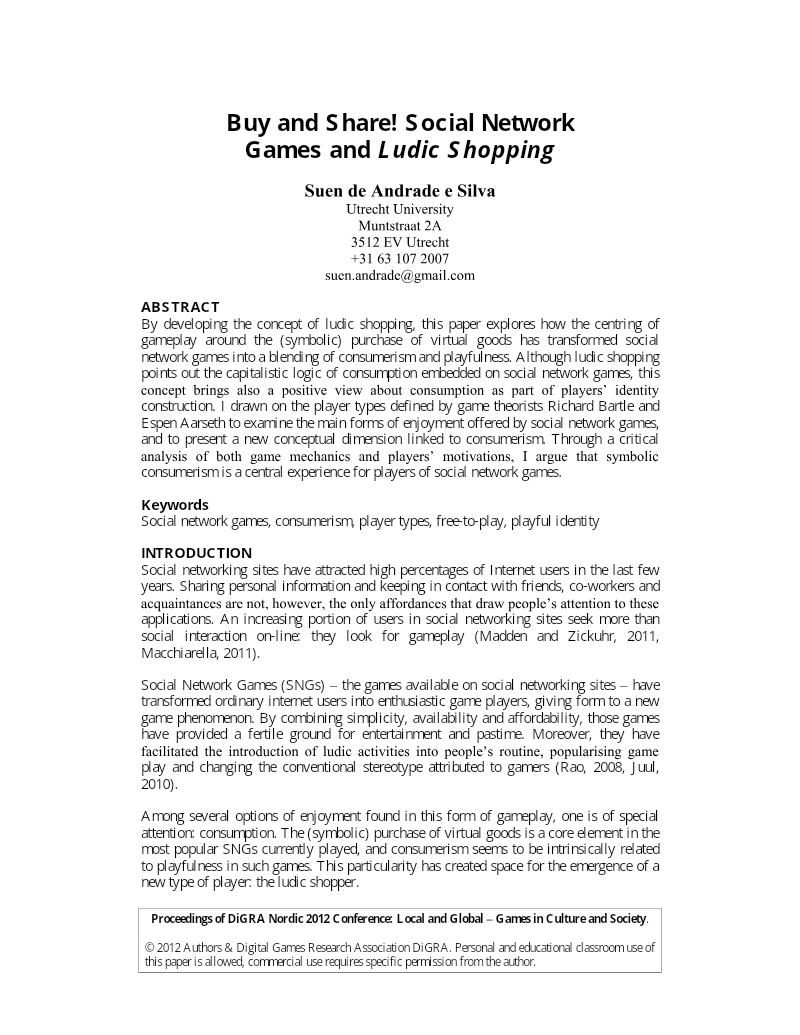
Buy and Share! Social Network Games and Ludic Shopping
This paper introduces the concept of "ludic shopping" to describe how social network games (SNGs) blend consumerism with playfulness, centring gameplay on the symbolic purchase of virtual goods.
- The paper introduces 'ludic shopping' and argues that symbolic consumption of virtual goods is a sixth, distinct form of play experience, alongside Bartle and Aarseth's exploration, achievement, killing, socialising, and cheating.
- The author frames social network game consumption as both a reflection of capitalist consumption logic and a positive means of identity construction, especially for players who cannot afford such experiences offline.
- The analysis is a critical reading of game mechanics and player motivations rather than original large-scale data collection, drawing mainly on secondary sources.
Framing Games
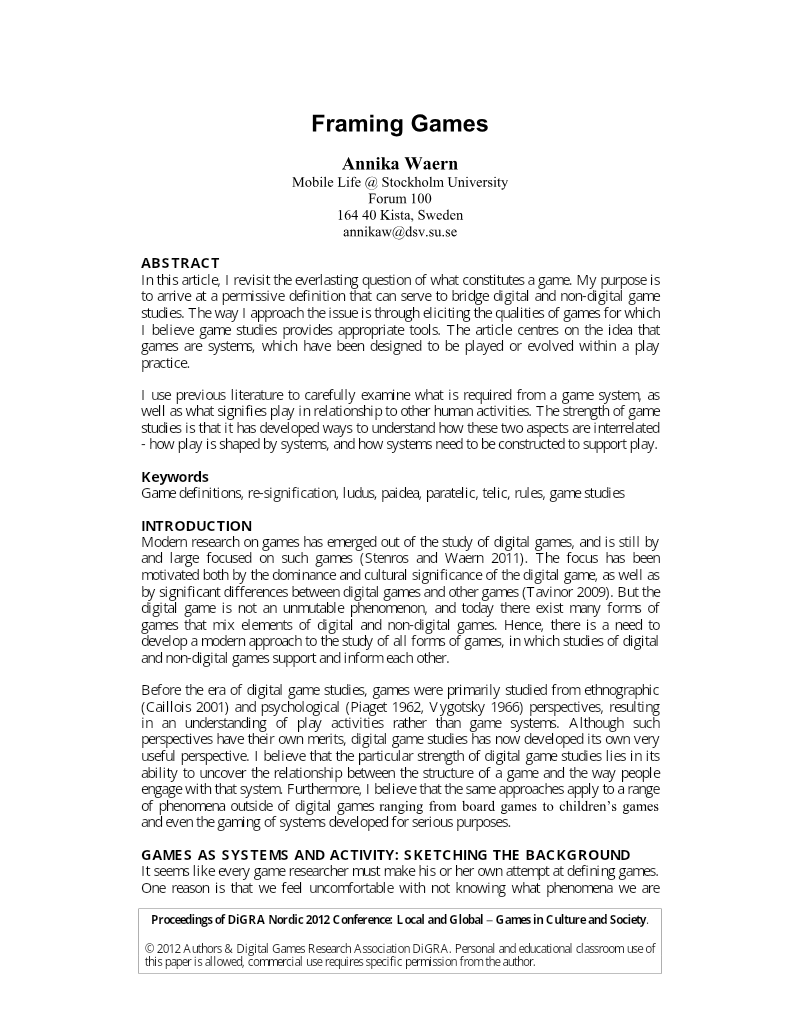
Annika Waern's "Framing Games," presented at DiGRA Nordic 2012, is a conceptual and theoretical work that seeks an essential, permissive definition of games capable of bridging digital and non-digital game studies.
- Annika Waern's 'Framing Games' (DiGRA Nordic 2012) proposes an essential, permissive definition of games meant to bridge digital and non-digital game studies: a game is a game-like system whose primary purpose is to be played.
- Play is defined as paratelic (motivated by intrinsic experience rather than external ends) and socioculturally bounded, voluntary, and set apart from ordinary life.
- The paper argues that play depends on a socially agreed re-signification of actions, a idea traced through Huizinga, Bateson, and Vygotsky.
The Stereotype of Online Gamers: New Characterization or Recycled Prototype?
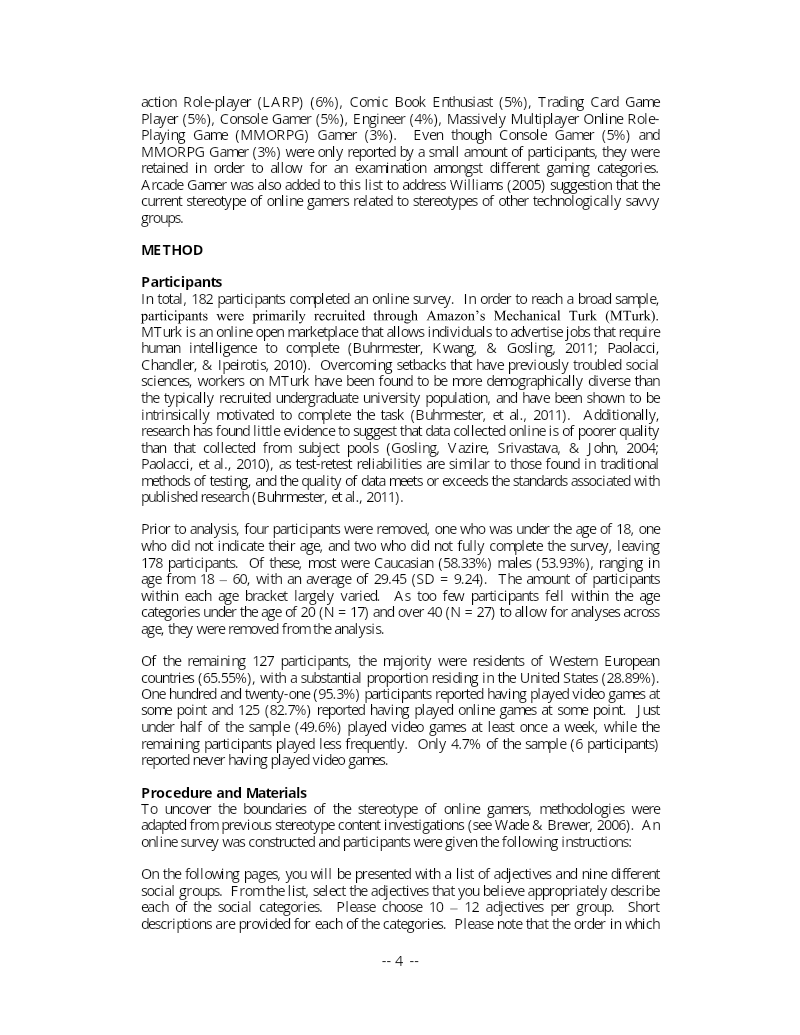
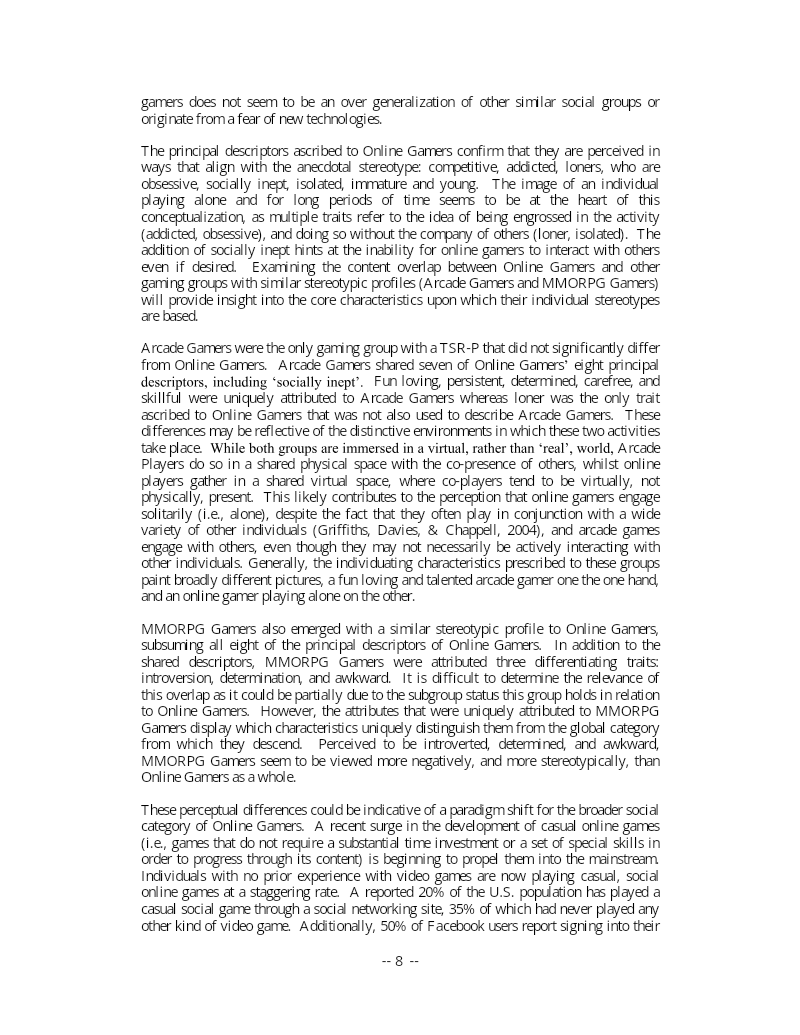
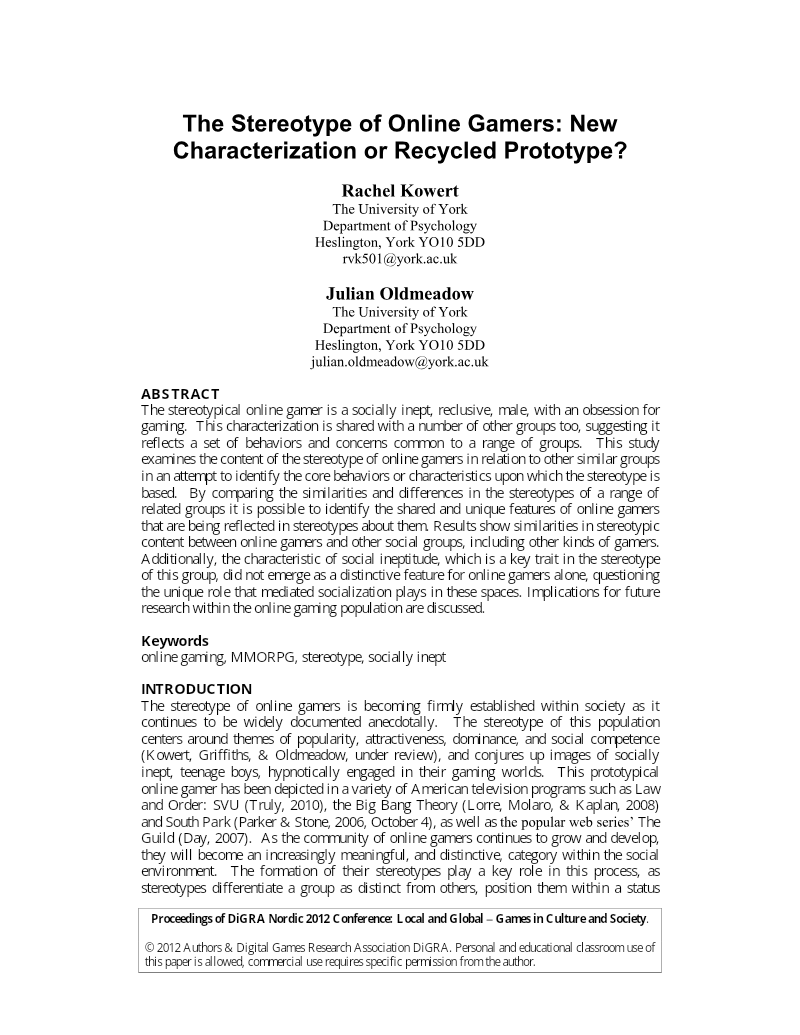
This study examines whether the stereotype of online gamers, characterized by social ineptitude, reclusiveness, obsessiveness, and maleness, is a distinctive modern characterization or a recycled prototype shared with other groups.
- The online gamer stereotype (socially inept, reclusive, obsessive, male) was attributed significantly more often than in 12 of 16 comparison groups, with only MMORPG players rated as more stereotypical.
- Online gamers' stereotypical profile did not differ significantly from those of Arcade Gamers, Dungeons & Dragons players, comic book enthusiasts, and geeks, pointing to substantial overlap across gaming and nerd subcultures.
- The stereotype appears to be a variant of an older prototype applied to a particular subculture, rather than an entirely new characterization, consistent with Williams (2005)'s argument about media-driven distrust of new technologies.