1 free read left. Create a free account for unlimited reading + AI research.
Create free accountArticle Breda University of Applied Sciences
1 free read left. Create a free account for unlimited reading + AI research.
Create free accountArticleBreda University of Applied Sciences
Introducing a named rival team can make players bond with their own team and hold a grudge against recurring enemies. The author draws on intergroup empathy bias to explain this.
Jonas Pastoors argues that introducing a named rival team into a game creates two emotional hooks from a single design decision: players bond more quickly with their own team, and they develop a personal grudge against recurring enemy characters. The piece draws on intergroup empathy bias, the human tendency to feel more empathy for one's own group and less for opposing groups, and treats it as a usable design tool rather than merely a social problem. The author frames FIFA's career mode, RimWorld's colonist-and-raider dynamic, and Fire Emblem: Three Houses as examples of how team-based conflict can be structured.
The article reports findings from the author's own small study, in which participants played a simple tactical game and were told they were part of a competing team. Empathy toward the in-group and counter-empathy toward the out-group appeared almost immediately after the team assignment. The bias also strengthened over the course of play and was strongest when the contest was close and the rival posed a real threat, while it weakened when the player easily dominated the opposition. The author concludes that keeping players in a challenging flow state heightens these effects, though details of the sample size and methodology are limited in the text.
The piece also stresses responsible implementation. Designers should avoid mapping rival teams onto real-world fault lines such as ethnicity, gender, or sexuality, since such divisions could reinforce existing prejudice and cause real harm. The author recommends that opponents be individuated enough to be recognized and tracked by players, and that they pose a genuine threat rather than serving as disposable targets. Comparing RimWorld's faceless raiders with FIFA's named opposing players, he argues that recurring, identifiable foes create more satisfying payoffs than mass combat against anonymous enemies.
Each row is a game or company this document names, each column a document, oldest first. A mark means that document names it. Select a row to see those documents.
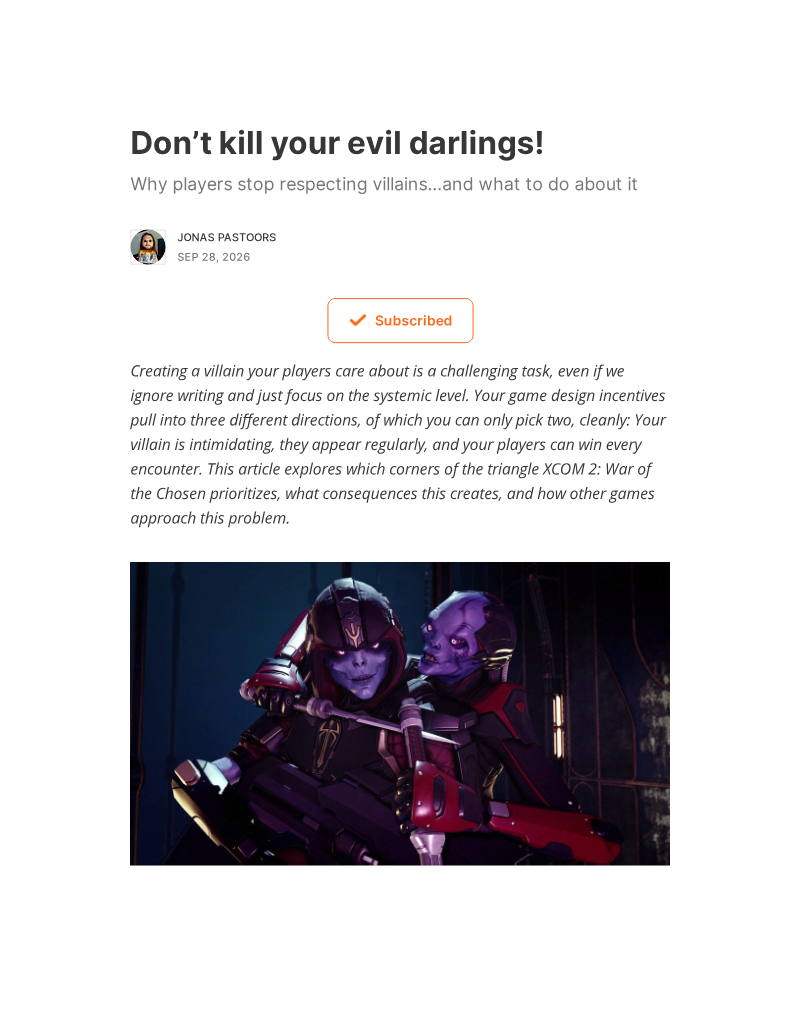
Breda University of Applied Sciences · 2026
Breda University of Applied Sciences · 2026
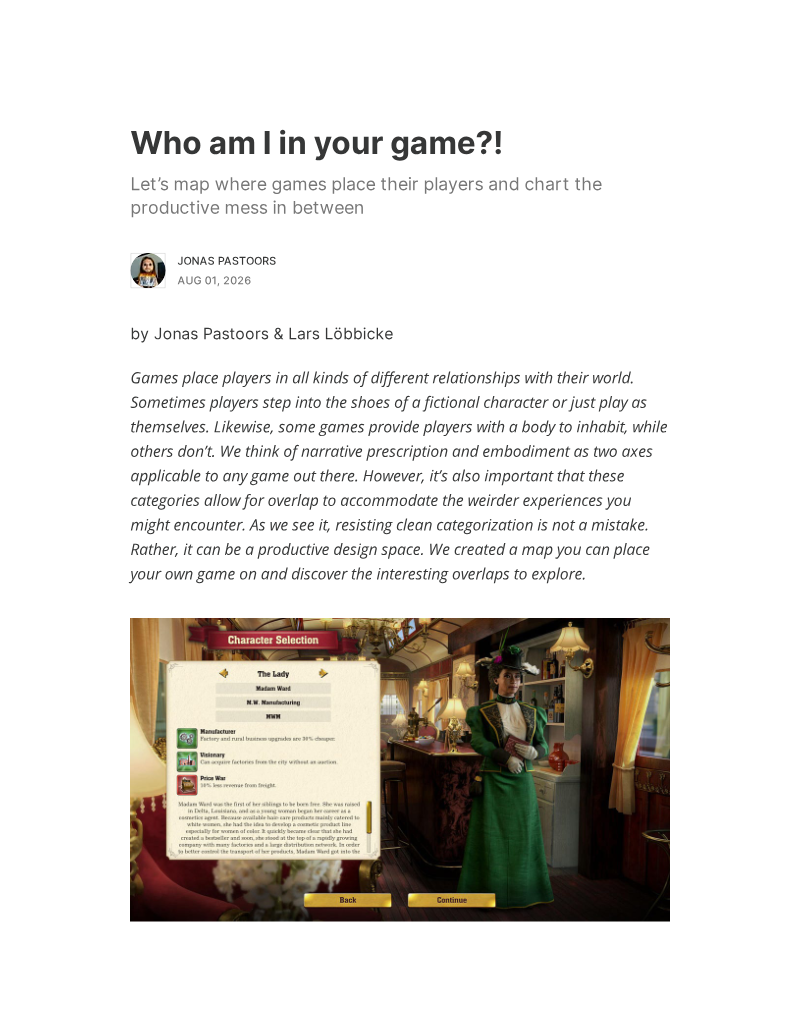
Breda University of Applied Sciences · 2026