1 free read left. Create a free account for unlimited reading + AI research.
Create free accountReport Breda University of Applied Sciences
1 free read left. Create a free account for unlimited reading + AI research.
Create free accountReportBreda University of Applied Sciences
The cultural and creative sectors employ roughly 3.8% of the European workforce. They contribute about 3.95% (around EUR 477 billion) to the EU economy.
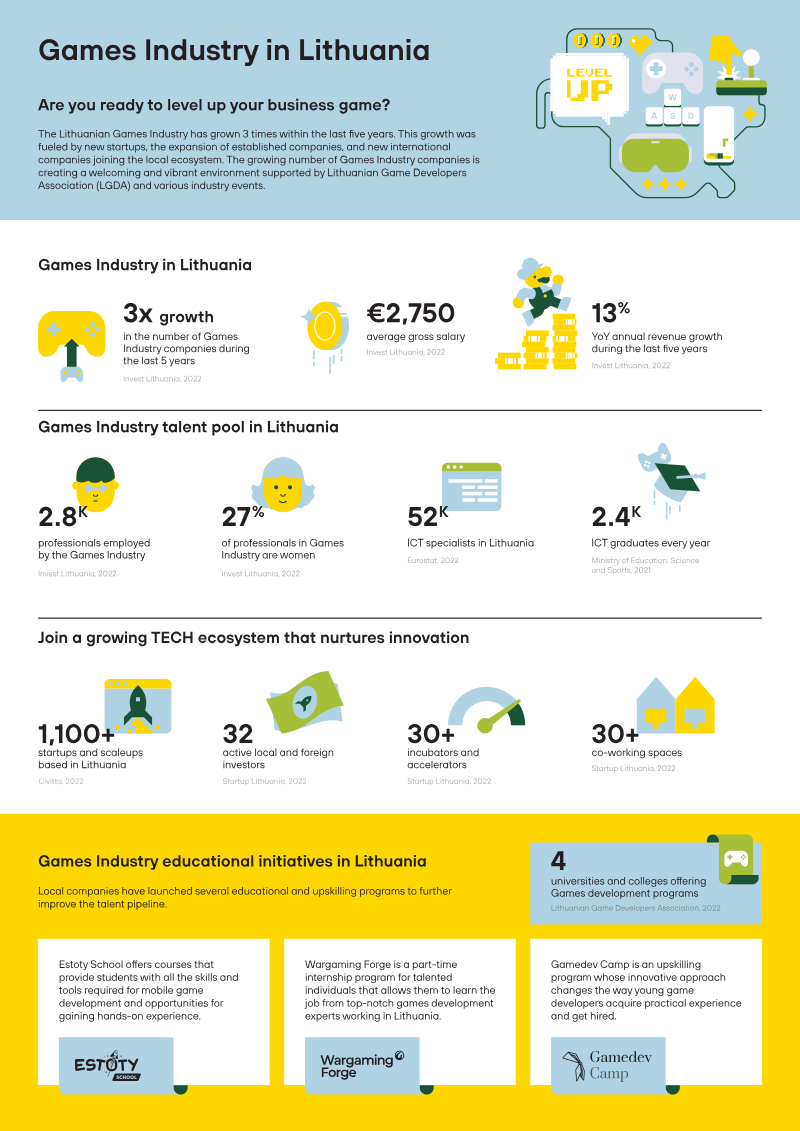
Scale. The European games market alone is worth nearly EUR 26.8 billion.
The Oscillations 1 report, produced under the AVENUE initiative in 2026, examines how hybrid skills, artificial intelligence, and education-industry alignment are reshaping five creative visual ecosystems: games, animation, visual storytelling, extended reality (XR), and virtual production (VP). Its central finding is that rapid adoption of real-time engines, AI-assisted workflows, and hybrid working is shifting demand toward collaborative, adaptable professionals who combine technical expertise with communication, teamwork, and business literacy, while slow curriculum revision cycles have widened the gap between education provision and industry expectations. The cultural and creative sectors employ roughly 3.8% of the European workforce and contribute about 3.95% (around EUR 477 billion) to the EU economy, with the European games market alone worth nearly EUR 26.8 billion.
Across interviews with studio leads, educators, and practitioners, a consistent picture emerges: technical skills are necessary for entry but insufficient alone, and communication, feedback receptiveness, pipeline awareness, and self-directed learning often function as practical hiring gatekeepers. AI is widely described as a productivity tool that accelerates administrative, previsualisation, and rendering tasks and raises the bar for seniority, yet it also introduces quality-assurance work, ethical and copyright concerns, and worries about over-reliance. Junior hiring has declined in several studios, and graduates frequently arrive trained in a single tool and unprepared for production realities such as time constraints and team dynamics.
The evidence also points to structural obstacles in education. Curricula and program approval processes lag industry change by one to two years, faculty face workload and skills-lag pressures, and virtual production teaching is hampered by high equipment costs, interdisciplinary workflow friction, and a limited validated pedagogical base. Responses proposed include modular micro-credentials, skills observatories, project-based and entrepreneurial learning, industry mentorships, and stronger school-studio partnerships. The report's scope is pan-European with case material from Ireland, Italy, Poland, France, Germany, and Finland, but it acknowledges that key knowledge gaps remain regarding career trajectories, comparative training effectiveness, and cross-border skill recognition.
Breda University of Applied Sciences · 2026
Breda University of Applied Sciences · 2026
Breda University of Applied Sciences · 2026



Breda University of Applied Sciences · 2026
Breda University of Applied Sciences · 2026
Breda University of Applied Sciences · 2026



Breda University of Applied Sciences · 2026
Breda University of Applied Sciences · 2026

Breda University of Applied Sciences · 2026
Breda University of Applied Sciences · 2026
Breda University of Applied Sciences · 2026

Breda University of Applied Sciences · 2025
New Zealand Game Developers Association · 2026